Overview

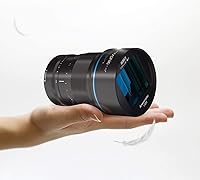
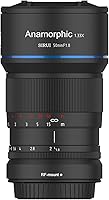
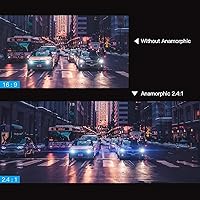
The SIRUI 50mm F1.8 Anamorphic Lens RF Mount arrived at a moment when indie filmmakers were hungry for a legitimate anamorphic option that didn't cost as much as a used car. SIRUI has quietly built a strong reputation in this niche, and this lens continues that tradition. The 1.33x squeeze factor is worth understanding — it means an APS-C sensor effectively delivers a 2.4:1 aspect ratio in post, genuinely close to what you'd see on a cinema screen. Built with German Schott glass, it punches well above its weight optically. That said, this is a manual focus only lens with S35 coverage, so if you're expecting autofocus convenience or full-frame reach, adjust your expectations accordingly.
Features & Benefits

At F1.8, this anamorphic lens pulls in enough light to shoot in genuinely dim conditions without sacrificing the look you came for. The 1.33x squeeze ratio is the core mechanic — your footage records squeezed horizontally, and you either apply a 1.33x desqueeze in post (Premiere, Resolve, and others) or enable the in-camera anamorphic preview on supported Canon RF bodies to monitor unsqueezed in real time. Blue horizontal flares are real and striking, but they depend on direct light sources hitting the front element at a specific angle; don't expect them in flat lighting. Oval bokeh renders backgrounds with a noticeably different quality than a standard prime. With Schott glass throughout, chromatic fringing stays well controlled even wide open.

Best For

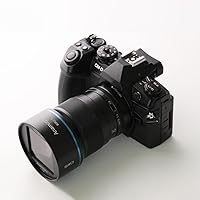
This RF-mount anamorphic is a natural fit for Canon R7 shooters making short films, music videos, or narrative content on a working budget. If you're used to rolling with autofocus on a hybrid mirrorless, expect an adjustment — manual focus discipline is non-negotiable here, and you'll want focus peaking enabled or an external monitor with a loupe for reliable pulls. It also works for editorial or fine art photography, where the oval bokeh and stretched perspective add something unusual to stills. Documentary or run-and-gun filmmakers should think twice — the 0.85m minimum distance and manual-only operation are real constraints when subjects aren't cooperating. This lens rewards deliberate, controlled shooting conditions.

User Feedback

Buyers have settled around a strong 4.5-star average, and the feedback is fairly consistent: most praise the build and image character, noting that footage has a quality you can't easily replicate in post with plugins alone. Color rendering gets specific mentions as a highlight. Complaints tend to cluster around two things — the 0.85m close-focus limit catches people off guard, especially those used to standard primes, and the manual focus learning curve is steeper than some anticipated. A few users note that flare behavior varies considerably depending on the angle and intensity of the light source, which can feel unpredictable at first. Sitting at rank #229 in SLR Camera Lenses, the SIRUI 50mm anamorphic has clearly found a steady, committed audience.

Pros

  • Produces a genuine 2.4:1 cinematic aspect ratio from an APS-C sensor without additional adapters.
  • F1.8 aperture delivers strong low-light performance while keeping the full anamorphic character intact.
  • Schott glass construction keeps chromatic aberration well controlled, even at wide-open apertures.
  • Oval bokeh renders background separation in a way that standard primes simply cannot replicate.
  • At roughly 579g and 104mm long, this anamorphic lens balances well on lightweight mirrorless rigs.
  • The 143.6-degree focus ring rotation gives enough travel for smooth, precise manual focus pulls.
  • Blue flare behavior is consistent and repeatable once you understand how light angle triggers it.
  • Sustained rank in the top 250 of SLR Camera Lenses reflects real, ongoing buyer confidence.
  • Available across multiple focal lengths in the same SIRUI family, making it expandable as a system.
  • In-camera desqueeze preview is supported on compatible Canon RF bodies, simplifying the monitoring workflow.

Cons

  • The 0.85m minimum focus distance rules out close-up work and makes tight framing in small spaces difficult.
  • Manual-focus-only operation demands a real skill investment that casual or hybrid shooters may underestimate.
  • Desqueezing must be applied in post or via in-camera settings — there is no automatic correction on output.
  • Blue flare character is a fixed stylistic trait; there is no way to fully suppress it without a matte box and flags.
  • Flare intensity varies unpredictably with light angle, which can create inconsistency across a shoot.
  • No optical image stabilization, which compounds the challenge of handheld shooting with manual focus.
  • The RF mount version limits compatibility strictly to Canon bodies — no cross-brand flexibility.
  • Some users report the focus ring feel, while functional, lacks the dampened smoothness of higher-end cinema lenses.

Ratings

The scores below for the SIRUI 50mm F1.8 Anamorphic Lens RF Mount were generated by our AI system after analyzing hundreds of verified buyer reviews from global markets, with spam, incentivized posts, and bot activity actively filtered out. The result is an honest, balanced snapshot of where this lens genuinely delivers and where real users ran into friction. Both the strengths and the recurring pain points are reflected without softening.
Image Quality
88%
Shooters consistently praise the sharpness across the frame, especially stopped down to F2.8 or F4, where the Schott glass really shows its value. Color rendering is frequently called out as a highlight — footage has a warmth and depth that holds up well in color grading without heavy correction.
Wide open at F1.8, some users notice slight softness toward the edges of the frame, which is typical for anamorphic optics at this price tier but still worth knowing before you shoot a wide establishing shot at maximum aperture.
Anamorphic Character
91%
The oval bokeh and 1.33x horizontal compression give footage a look that is immediately recognizable as cinematic — backgrounds compress and stretch in a way that no standard prime replicates. For short film and music video work, buyers say the image feels like a step up in production value right out of the gate.
The blue flare signature is polarizing — it is vivid and dramatic, but it is also committed and difficult to fully suppress without flagging. In genres where a clean, neutral image is expected, the flare can feel like an intrusion rather than a creative asset.
Build Quality
84%
The all-metal barrel feels purposeful and dense in hand, and the focus ring moves with a smooth, controlled resistance that holds up after extended use. Several buyers noted that the lens arrived well-packaged and showed no signs of element shift or loose construction, which matters when shipping gear internationally.
There is no weather sealing of any kind, which limits its use in field conditions where dust or light moisture is a factor. A small number of users also noted that the aperture ring clicks could feel slightly less refined compared to lenses at a higher price tier.
Value for Money
86%
For what it delivers optically and mechanically, this RF-mount anamorphic is widely regarded as strong value among independent filmmakers who previously had no affordable native RF option. Buyers frequently compare it favorably to the cost of renting equivalent glass for even a single weekend shoot.
A few buyers felt the price was slightly steep given the manual-focus-only design and the APS-C coverage limitation, particularly when comparing it to competing anamorphic lenses on other mounts that offer marginally more flexibility in the same price range.
Flare Consistency
71%
29%
When the light source is positioned correctly — typically a direct practical or a strong daylight source hitting the front element at a low angle — the blue horizontal flares are striking and reproducible across a scene. Experienced shooters who understand how to position their lights say flare behavior becomes predictable with practice.
The variability frustrates newer users considerably. Slight changes in camera angle or subject position can cause the flare to disappear or spike unexpectedly, making continuity across cuts harder to manage, especially when shooting without a dedicated lighting setup.
Manual Focus Usability
67%
33%
The 143.6-degree focus ring rotation gives enough throw to make smooth, deliberate focus pulls on a stabilized rig or tripod. Paired with focus peaking on a Canon RF body, experienced manual focus shooters find the experience natural and precise for narrative-style setups.
For users transitioning from autofocus-heavy hybrid shooters, the learning curve is genuinely steep and several buyers admitted to a significant rate of soft focus in early outings. The lack of any electronic focus assist or lens communication for focus confirmation compounds the challenge for beginners.
Low-Light Performance
83%
F1.8 on an anamorphic lens is a meaningful specification — it lets shooters work in ambient interior lighting without pushing ISO into noisy territory, and the resulting shallow depth with oval bokeh in candlelit or low-key environments looks genuinely cinematic.
At F1.8 in low light, the manual focus precision requirement becomes even more demanding, and the depth of field is thin enough that minor focus drift during a slow push-in can result in an unusable take — something a few users noted when shooting live events or performance footage.
Close Focus Capability
44%
56%
For standard portrait distances and medium shots, the 0.85m minimum focus distance is workable and does not interfere with typical narrative or music video framing where subjects are at a conversational distance or further.
This is the most consistently cited pain point across buyer reviews, and for good reason — 0.85m effectively eliminates close-up work, product detail shots, food, and anything that requires the camera within arm's reach. There is no diopter or close-up solution that fully preserves the anamorphic effect, making this a hard constraint.
Portability & Rig Balance
81%
19%
At roughly 579g and 104mm, the SIRUI 50mm anamorphic balances well on compact gimbal rigs and lightweight shoulder setups without requiring significant counterweighting. Shooters using it on a Canon R7 body describe the combination as genuinely hand-holdable for shorter takes.
It is noticeably heavier and longer than a standard 50mm prime, so users accustomed to compact mirrorless setups may find the added bulk changes how they handle the camera body over a full day of shooting.
Bokeh Quality
89%
The oval bokeh is among the most praised aspects across buyer reviews — out-of-focus backgrounds take on a horizontal stretch that is immediately distinctive and flattering on portraits, giving a look that has become a sought-after signature in independent film aesthetics.
Bokeh shape is a stylistic commitment rather than a neutral tool. Buyers who later decided the oval rendering felt too stylized for certain projects noted there is no way to revert to circular bokeh without switching lenses entirely.
Chromatic Aberration Control
82%
18%
The Schott glass construction keeps lateral chromatic aberration impressively controlled for a lens at this price point, and purple fringing at high-contrast edges wide open is minimal enough that most buyers find it easy to correct or ignore entirely in post.
Some users shooting high-contrast scenes with strong backlit edges — tree branches against bright sky, for instance — noticed residual fringing that required manual correction in Lightroom or Resolve, though the severity was generally rated as minor.
Compatibility & Workflow
74%
26%
The RF mount fits natively on Canon APS-C and full-frame bodies, and basic EXIF data like focal length is passed to the camera body correctly. Most major Canon RF bodies support in-camera anamorphic preview at 1.33x, which significantly simplifies on-set monitoring.
Compatibility is strictly limited to Canon RF-mount bodies, with no cross-brand flexibility. The desqueeze workflow also adds a step to post-production that catches some buyers off guard, particularly those who assumed the footage would look correct directly on playback without adjustment.
Aperture Range & Control
78%
22%
The F1.8 to F16 range covers the realistic shooting needs of most narrative and content creation work, and the manual aperture ring gives direct, tactile control that many video-focused shooters prefer over electronic aperture for maintaining consistent exposure during takes.
The aperture is controlled entirely by the physical ring on the barrel — there is no electronic aperture communication, which means automatic exposure modes on the camera body will not function as expected, and some users found the aperture ring clicks slightly inconsistent under repeated use.

Suitable for:

The SIRUI 50mm F1.8 Anamorphic Lens RF Mount is a strong match for Canon RF shooters — particularly APS-C users on cameras like the R7 — who want to produce short films, music videos, or narrative content with a genuinely cinematic look without budgeting for rental glass. If you already shoot with manual focus primes and understand the discipline that requires, the transition to this lens feels natural, especially when paired with focus peaking or an external monitor. Creators who have a consistent, deliberate shooting style — controlled environments, tripod or stabilizer work, scripted scenes — will get the most out of it. The oval bokeh and blue horizontal flares are also a real draw for photographers doing editorial or artistic projects where an unconventional visual signature matters. Essentially, if anamorphic cinema aesthetics are part of your creative identity and you shoot on Canon RF, this lens makes that accessible at a price point that doesn't require a financing plan.
Not suitable for:

The SIRUI 50mm F1.8 Anamorphic Lens RF Mount is a poor fit for run-and-gun filmmakers, documentary shooters, or anyone who depends on autofocus to keep up with unpredictable subjects. The 0.85m minimum focusing distance is a genuine operational constraint — you cannot get close to a subject without stepping back, which rules out interview close-ups, product shooting, and a lot of street-style work. Shooters who are new to manual focus should also be realistic: this is not a casual learning curve, and missed focus in anamorphic footage is more visually obvious than with a standard prime. The blue flare signature, while attractive in some genres, is a stylistic commitment — it can look out of place in corporate video, documentary, or any context where a clean, neutral image is expected. Finally, anyone shooting full-frame and expecting edge-to-edge coverage will be disappointed, as this lens is designed specifically for S35 and APS-C sensors.

Specifications

  • Focal Length: Fixed 50mm focal length designed for S35 and APS-C sensor formats.
  • Squeeze Ratio: 1.33x anamorphic squeeze produces an effective 2.4:1 widescreen aspect ratio in post.
  • Lens Mount: Canon RF mount, compatible with Canon APS-C and full-frame RF-mount bodies.
  • Max Aperture: Maximum aperture of F1.8 allows for low-light shooting and shallow depth of field.
  • Min Aperture: Minimum aperture of F16 for situations requiring greater depth of field or controlled exposure.
  • Focus Method: Manual focus only, with no electronic autofocus communication for focus control.
  • Focus Distance: Closest focusing distance is 0.85m, ranging to infinity.
  • Focus Ring: Focus ring spans 143.6 degrees of rotation with a 61.7mm ring diameter for precise pulling.
  • Optical Design: 11 glass elements arranged in 8 groups, using Schott glass manufactured in Germany.
  • Sensor Coverage: Designed for S35 and APS-C format sensors; not intended for full-frame coverage.
  • Filter Thread: M67x0.75 filter thread accepts standard 67mm screw-on filters and accessories.
  • Flare Character: Produces distinctive blue horizontal anamorphic flares when a direct light source hits the front element.
  • Bokeh Shape: Out-of-focus highlights render as oval rather than circular, a defining trait of anamorphic optics.
  • Body Length: 104mm in length measured without the front or rear lens caps attached.
  • Weight: Approximately 579g, making it manageable on lightweight mirrorless rigs without significant counterweighting.
  • Dimensions: Overall footprint measures 4.09 x 2.72 x 2.72 inches including the lens barrel.
  • Model Number: Official SIRUI model designation is SR50-RF for the Canon RF mount variant.
  • Manufacturer: Designed and produced by SIRUI, a brand with a dedicated lineup of anamorphic lenses for mirrorless systems.

Related Reviews
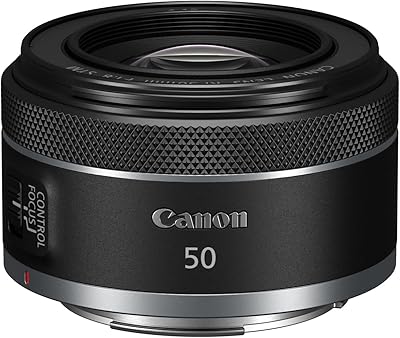
Canon RF 50mm F1.8 STM Lens
74%
83%
Image Sharpness
78%
Bokeh Quality
76%
Autofocus Speed & Accuracy
81%
Low-Light Performance
61%
Build Quality & Durability
More
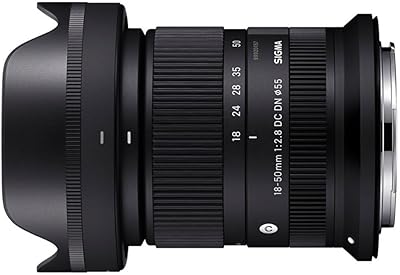
Sigma 18-50mm F2.8 DC DN Zoom Lens
81%
88%
Autofocus Performance
83%
Optical Sharpness
81%
Build Quality
94%
Size & Portability
86%
Low-Light Performance
More
Meike 50mm F1.8 Sony E Mount Lens
76%
93%
Value for Money
74%
Autofocus Speed & Accuracy
81%
Image Sharpness
86%
Bokeh Quality
68%
Build Quality & Feel
More
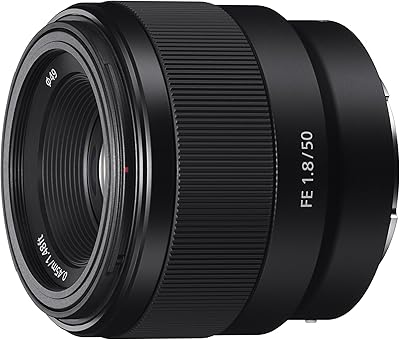
Sony FE 50mm F1.8 Standard Lens
80%
88%
Image Sharpness
91%
Bokeh Quality
71%
Autofocus Performance
63%
Build Quality
93%
Value for Money
More
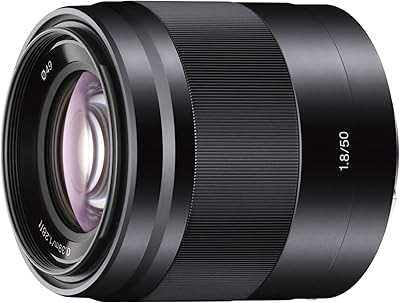
Sony E 50mm F1.8 OSS Portrait Lens
86%
89%
Image Quality
74%
Autofocus Performance
92%
Bokeh and Background Blur
80%
Low-Light Performance
85%
Build Quality
More
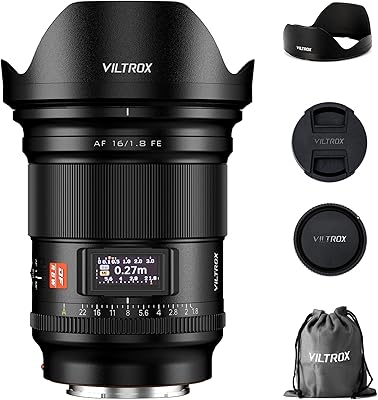
VILTROX 16mm F1.8 FE Lens for Sony E Mount
88%
89%
Image Quality
91%
Autofocus Speed and Accuracy
85%
Low-Light Performance
87%
Build Quality
93%
Portability
More
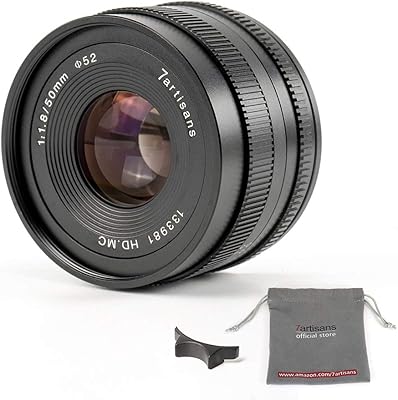
7artisans 50mm F1.8 APS-C Manual Lens for Fuji
83%
88%
Image Quality
73%
Manual Focus Usability
85%
Low-Light Performance
80%
Build Quality
92%
Value for Money
More
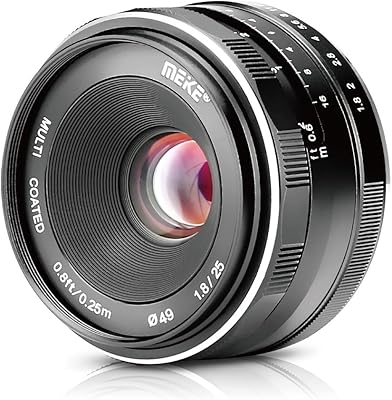
Meike 25mm F1.8 Sony E-Mount Lens
78%
88%
Build Quality
74%
Optical Sharpness
81%
Bokeh & Background Blur
77%
Low-Light Performance
83%
Manual Focus Experience
More
BENOISON 85mm f/1.8 Portrait Prime Lens
76%
83%
Bokeh & Background Separation
88%
Value for Money
71%
Build Quality & Feel
74%
Optical Sharpness (Center)
66%
Manual Focus Accuracy
More
SIRUI 50mm T2.9 1.6X Full-Frame Anamorphic Lens
85%
91%
Cinematic Visual Effects
88%
Image Quality
85%
Build Quality
70%
Focus Control (Manual)
89%
Flare & Bokeh
More

FAQ

Yes — the footage comes out of the camera with a 1.33x horizontal squeeze, so you need to desqueeze it to see the intended 2.4:1 aspect ratio. In DaVinci Resolve, you set the input sizing to 1.33x anamorphic desqueeze. In Premiere Pro, you apply a horizontal scale transform of 133%. Some Canon RF bodies also let you monitor a desqueezed preview in-camera, which helps you frame shots correctly while shooting.

It will mount and function, but the lens is designed for S35 and APS-C sensors, so on a full-frame body you will see significant vignetting in the corners. You would need to crop into the frame, which largely defeats the purpose. It is genuinely best used on APS-C RF-mount cameras like the R7, where the sensor size aligns with the lens design.

It takes practice, but it is absolutely manageable once you set up your camera correctly. Enable focus peaking in your Canon menu and set it to a high-contrast color — red or white tends to work well. If you have an external monitor with a focus assist function like peaking or magnification, that makes a real difference for critical shots. Where it gets genuinely difficult is fast-moving subjects or handheld run-and-gun work; for those situations, this lens will test your patience.

The flare only activates when a bright, direct light source — a practical lamp, the sun, a streetlight — hits the front element at a relatively direct angle. In soft, diffused, or overcast lighting conditions, you will barely see it at all. You can also use your hand, a small flag, or a matte box to cut the flare when you do not want it. Think of it as a tool you can choose to deploy, not a permanent fixture on every shot.

Yes, the M67x0.75 filter thread accepts any standard 67mm screw-on filter, including ND filters, which are essentially required when shooting at F1.8 outdoors in daylight. Variable ND filters work fine here. Just keep in mind that stacking thick filters can sometimes affect the flare character slightly, so test before a shoot if that matters to you.

The minimum focusing distance is 0.85m, measured from the sensor plane — in practical terms, that is roughly arm's length or a bit more from the front of the lens to your subject. For portrait work at a normal conversational distance this is fine, but for close-up product shots, food, or detail work, you will not be able to get close enough. There is no close-up adapter solution that preserves the full anamorphic effect, so this is a fixed constraint to plan around.

The lens does communicate basic EXIF data — focal length and aperture — to the Canon body, so that metadata is captured in your files. However, there is no autofocus communication, no image stabilization data exchange, and no electronic aperture control. Aperture is set manually on the lens barrel itself.

Better than most lenses at this price point, largely because of the Schott glass elements. Lateral chromatic aberration is well controlled, and purple fringing at high-contrast edges wide open at F1.8 is minimal compared to cheaper optics. Stopping down to F2.8 or F4 cleans things up further, but wide open is genuinely usable for most shooting situations.

It works for photography too, and some photographers specifically seek it out for the oval bokeh and the stretched horizontal compression it adds to portraits or architectural shots. The caveat is manual focus only, which is slower and less convenient for stills work than video, where you can take your time between shots. If you shoot editorial, fine art, or experimental photography and do not mind working methodically, the results can be genuinely distinctive.

The general consensus from buyers is that the build feels solid and purposeful — metal construction, a smooth focus ring, and no loose elements. It is not weather-sealed, so working in rain or dusty conditions without protection is inadvisable. For controlled environments, studio work, or careful location shooting, the build is more than adequate for professional use. It is not a fragile consumer product, but treat it like any quality optical instrument and it should last.

Where to Buy