Overview

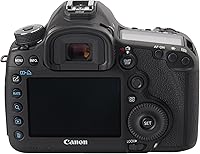
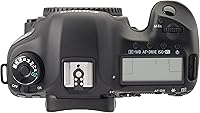
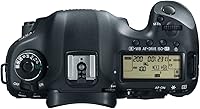
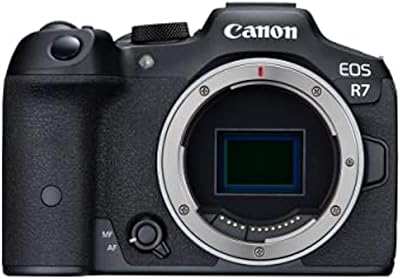
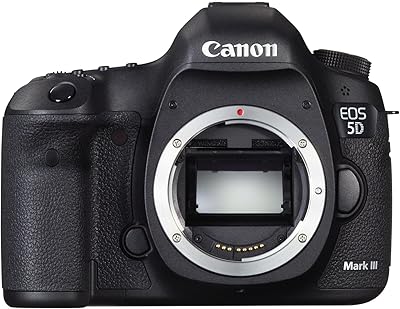
The Canon EOS 5D Mark III arrived at a moment when professional photographers needed a single body that could handle demanding editorial shoots and serious video work — and it largely delivered. Sold in body-only form, it lets you pair it with whatever Canon EF glass you already own or plan to invest in, keeping it versatile across budgets. The magnesium alloy construction and weather sealing mean it can take a beating on a rainy outdoor shoot without drama. That said, this is an older camera now, and buyers should go in with clear eyes — its real value today lives in the used and refurbished market, where it still earns genuine respect.
Features & Benefits

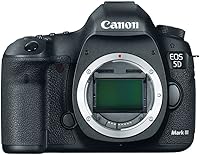
The 22.3MP full-frame sensor produces files with real tonal depth — the kind that holds up when you push shadows in post or crop hard on a tight frame. What genuinely sets the Mark III body apart from its predecessor is the autofocus: 61 points, 41 of them cross-type, tracking a moving subject through a crowd in a way older Canon bodies simply couldn't match reliably. The DIGIC 5+ processor keeps pace at 6 frames per second with a buffer that rarely frustrates. Dual card slots add real peace of mind on a paid job. Video is 1080p with manual controls and audio jacks — usable, but not a reason to choose this over a modern mirrorless camera.

Best For

Canon's workhorse DSLR makes the most sense for photographers already invested in Canon EF glass — adding a full-frame body to an existing lens collection is far more economical than switching systems entirely. Wedding and event photographers benefit most directly: the AF reliability at receptions and ceremonies, combined with solid high-ISO output, means fewer missed moments under mixed lighting. Portrait and studio shooters will appreciate the color rendering and resolution without needing the latest hardware. It's also a smart pick for someone buying used who wants professional capability without flagship pricing. Videographers considering it should know the 1080p ceiling upfront and factor that into their decision.

User Feedback

Long-term owners consistently report that this full-frame DSLR holds up through years of hard use — the body itself is rarely the weak point. Autofocus accuracy earns consistent praise, as does clean JPEG output in low light, and photographers genuinely value the dual-card backup on paying jobs. Criticisms cluster around familiar areas: no in-body stabilization, a menu system that can frustrate newcomers, and battery life that demands carrying spares on long shooting days. The CompactFlash slot is widely seen as dated. A recurring theme in less favorable reviews is the learning curve for those new to Canon, though experienced shooters rarely flag it as a problem.

Pros

  • The 61-point autofocus system is reliable and fast enough for weddings, events, and editorial work.
  • Full-frame files deliver real dynamic range and color depth that holds up in professional print contexts.
  • Magnesium alloy construction with weather sealing survives years of hard commercial use without issues.
  • Dual card slots provide genuine backup security on paid assignments where a card failure is unacceptable.
  • ISO 3200 performance is clean and usable for shooting in dimly lit venues without heavy noise reduction.
  • The deep grip and well-placed controls make all-day handheld shooting noticeably less fatiguing.
  • An enormous Canon EF lens library — first-party and third-party — means glass options at every budget.
  • On the used market, this full-frame DSLR offers professional capability at a fraction of new flagship pricing.
  • The optical viewfinder is bright and well-sized, making manual focus and composition feel natural.

Cons

  • No in-body image stabilization, which is now standard on competing cameras at this price tier.
  • Video is capped at 1080p — a real limitation for any photographer with serious hybrid ambitions.
  • The CompactFlash slot is increasingly inconvenient as CF cards become harder to source affordably.
  • No built-in Wi-Fi means wireless tethering requires an additional accessory purchase.
  • USB 2.0 transfer speeds feel painfully slow when offloading large batches of raw files.
  • Battery life under heavy shooting conditions requires carrying multiple spares as a baseline precaution.
  • The menu system has a steep learning curve that frustrates photographers switching from other brands.
  • The fixed LCD screen cannot tilt, making low-angle and overhead composition unnecessarily awkward.
  • The Canon EF mount is a legacy system with no new first-party lens development going forward.
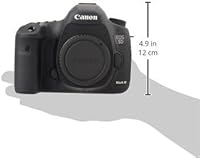
  • Body weight exceeds 30 ounces before a lens is attached, which adds up quickly on multi-hour shoots.

Ratings

The Canon EOS 5D Mark III has been put through its paces by working photographers worldwide, and our AI has analyzed thousands of verified purchase reviews — filtering out incentivized and bot-generated feedback — to produce the scores below. The results reflect where this full-frame DSLR genuinely excels and where its age is starting to show, with no soft-pedaling on either side.
Autofocus Performance
93%
Wedding and event photographers consistently single out the 61-point AF system as a turning point compared to older Canon bodies. Tracking an unpredictable subject — a first dance, a sprinting child — produces a hit rate that still holds up against many current mid-range cameras. Cross-type point coverage across the frame is genuinely wide.
In very low ambient light, the outer AF points can struggle to acquire focus reliably without an AF-assist beam. Sports shooters pushing the system to its absolute limits will notice it trails behind newer mirrorless phase-detect systems in sustained tracking consistency.
Image Quality
89%
The 22.3MP full-frame sensor produces files with real latitude in post — shadow recovery and highlight retention hold up well when exposure is slightly off, which matters on a fast-moving shoot. Color rendering is warm and natural, especially in portrait work, and JPEGs straight from the camera are consistently usable without editing.
At ISO 6400 and above, noise becomes a visible factor that requires careful processing, and the sensor's dynamic range falls short of what newer Sony-based sensors deliver. Landscape photographers who shoot in challenging light may find themselves wishing for a bit more headroom in the raw files.
Low-Light Capability
82%
18%
Shooting a dimly lit reception hall or a candlelit ceremony at ISO 3200 produces clean, printable results that most photographers find acceptable without heavy noise reduction. The combination of full-frame sensor size and DIGIC 5+ processing keeps images usable at sensitivities where older crop-sensor cameras fall apart entirely.
The expanded ISO range above 25600 is largely cosmetic — noise at H1 and H2 settings is heavy enough that most professionals avoid those stops in practice. It is a meaningful step behind current full-frame competition when shooting in near-darkness without fast lenses.
Build Quality & Durability
91%
The magnesium alloy body with weather sealing is one of the most frequently praised aspects by long-term owners. Photographers report using these bodies for years of hard commercial work — outdoor events in rain, dusty festival environments — without body-related failures. The grip is deep and comfortable during extended handheld sessions.
The body is noticeably heavier than modern mirrorless alternatives at over 30 ounces, which becomes a real fatigue factor during all-day shoots. Some users report that the rubber grip material degrades after several years of heavy use and requires replacement.
Video Capability
61%
39%
For its time, the manual control over video exposure was a meaningful differentiator, and the inclusion of both a headphone monitoring jack and a microphone input made it a credible hybrid tool. Short-form video shot at 1080p in good light still looks clean when viewed on standard screens.
1080p is a hard ceiling, and that limitation is impossible to ignore now that 4K is standard across mirrorless cameras at every price point. There is no in-body stabilization, rolling shutter is noticeable when panning, and anyone with serious video ambitions should look elsewhere without hesitation.
Burst Speed & Buffer
78%
22%
Six frames per second is enough for most event and portrait work, and the buffer handles extended bursts at this rate without grinding to a halt mid-sequence. Sports photographers covering steady-action subjects like a baseline rally or a track meet find it workable paired with a fast CompactFlash card.
Action photographers covering high-speed sports will find that 6 fps trails significantly behind current professional bodies. With a slower card, buffer clearing can become a genuine workflow interruption when shooting sustained sequences of fast-moving subjects.
Dual Card Slot Design
74%
26%
Having simultaneous write capability across two slots gives working professionals real backup security on paid assignments — knowing that a card failure will not cost a client's wedding images is a genuine workflow benefit that photographers with single-slot bodies genuinely miss.
The CompactFlash slot feels anachronistic in current use, as CF cards are increasingly hard to source affordably and are absent from most modern accessories. The SD slot operates at a slower write speed than the CF slot, making it the weaker backup option in practice.
Battery Life
67%
33%
Under moderate use — a half-day portrait session or a short event — the LP-E6 battery gets through a reasonable number of frames without issue. The battery system is widely compatible and grip extenders with dual-battery capacity are easy to find and affordable.
Heavy shooting days consistently generate battery complaints, particularly when using Live View frequently or shooting in cold weather conditions. Most professionals carry two or three batteries as a baseline, which adds to the overall kit cost and weight.
Ergonomics & Handling
86%
Photographers with larger hands consistently praise the deep grip and well-placed controls, noting that frequently used dials and buttons fall naturally under the thumb and forefinger without looking down. Long shooting days feel manageable partly because the balance with heavier lenses is well thought out.
The body is bulkier and heavier than most photographers want when traveling light or working in tight spaces. Those coming from smaller bodies or mirrorless systems often describe an adjustment period before the size feels natural rather than cumbersome.
Menu System & Usability
69%
31%
Experienced Canon users find the menu layout familiar and logically structured for quickly adjusting settings during a live shoot. Custom function depth is impressive, allowing photographers to configure the body precisely to their shooting style once they invest the time.
First-time Canon users and those switching from other systems regularly flag the menu depth as overwhelming and unintuitive. Finding specific settings without prior experience can eat into shooting time, and the lack of a touchscreen makes navigating submenus slower than necessary.
Viewfinder Experience
88%
The optical viewfinder with 0.71x magnification provides a bright, clear view that makes manual focusing and composition feel natural and precise. Photographers shooting events or portraits find the coverage and brightness genuinely satisfying compared to the electronic viewfinders on entry-level cameras.
There is no electronic overlay for features like live histogram in the viewfinder, which some photographers accustomed to mirrorless systems find limiting. The fixed LCD screen cannot tilt for low-angle or overhead composition, a gap that becomes frustrating in certain shooting situations.
Value for Money
83%
On the used and refurbished market, this full-frame DSLR offers a professional-grade sensor, exceptional autofocus, and a durable pro build at a price that would be impossible to match with a new mirrorless equivalent. For Canon EF lens owners specifically, the cost-per-capability ratio is hard to argue against.
Bought new at current retail pricing, the value calculation becomes much harder to justify against newer mirrorless competitors offering 4K video, in-body stabilization, and better high-ISO performance. Buyers paying full price should carefully weigh what they are giving up against what they gain.
Connectivity & Integration
59%
41%
HDMI output and a USB 2.0 port cover basic tethered shooting and monitor output needs reliably. The headphone and microphone jacks are genuinely useful additions for video work and remain functional for straightforward hybrid workflows.
There is no built-in Wi-Fi or Bluetooth, meaning wireless image transfer requires a separate accessory, and remote control options are limited without additional hardware. USB 2.0 transfer speeds feel sluggish when offloading large raw file batches compared to the USB 3.0 or USB-C connections standard on modern bodies.
Lens Ecosystem Compatibility
87%
The Canon EF mount has one of the deepest and most mature lens libraries in photography, with decades of first-party and third-party glass available across every focal length and budget. Photographers already owning EF lenses have an immediate and compelling reason to choose this body without spending an extra dollar on glass.
The EF mount is a legacy system that Canon is no longer actively developing, meaning new glass investment in EF is a diminishing return over the long term. Photographers without an existing EF collection may find it wiser to invest in a current mirrorless ecosystem rather than building around an older mount.

Suitable for:

The Canon EOS 5D Mark III is the right call for working photographers who need a proven, reliable body for high-pressure situations — wedding days, editorial assignments, corporate events — where autofocus accuracy and image consistency matter more than cutting-edge specs. If you already own Canon EF glass, this body lets you step into full-frame territory without rebuilding your entire kit from scratch, which is a genuinely compelling proposition. Portrait and studio photographers who care deeply about color rendering and file quality will find the 22.3MP sensor delivers results that hold up in professional print and commercial contexts. It also makes strong sense as a used or refurbished purchase for photographers entering serious work who cannot yet justify the cost of a current flagship — the build quality and core performance remain competitive at the right price point. Photojournalists and documentary shooters who value weather sealing and a deep, secure grip on long days in unpredictable conditions will feel well-served by the magnesium alloy construction.
Not suitable for:

Anyone with video at the center of their workflow should look elsewhere — the Canon EOS 5D Mark III tops out at 1080p, has no in-body stabilization, and sits well behind the 4K-capable mirrorless cameras available at similar or lower price points today. Photographers who are new to the Canon ecosystem and starting fresh with no existing EF lenses will find it harder to justify investing in a mount that Canon is no longer actively developing. Travelers and photographers who prioritize a light, compact kit will find the body size and weight a persistent frustration, especially paired with full-frame glass. Buyers who rely on wireless tethering or fast image transfer will need to budget for additional accessories, since there is no built-in Wi-Fi and USB 2.0 transfer speeds are slow by current standards. If fast burst shooting for high-speed sports is a primary need, the 6 fps ceiling and autofocus tracking will leave you wanting more compared to modern mirrorless alternatives.

Specifications

  • Sensor: 22.3MP full-frame CMOS sensor with 14-bit analog-to-digital conversion for wide tonal range and color depth.
  • Processor: DIGIC 5+ image processor handles noise reduction, burst buffering, and overall processing speed.
  • Autofocus System: 61-point High Density Reticular AF with 41 cross-type points and 5 dual diagonal points sensitive to f/2.8.
  • Burst Speed: Continuous shooting at up to 6 fps with a buffer capable of sustaining extended sequences with a fast CompactFlash card.
  • ISO Range: Native ISO 100–25600 with expanded settings down to ISO 50 and up to ISO 102400 for extreme low-light situations.
  • Shutter Speed: Mechanical shutter range from 1/8000s to 30 seconds, plus Bulb mode for long-exposure work.
  • Video: Full HD 1080p video recording via MPEG-4/H.264 with full manual exposure control and a maximum clip length of approximately 29.5 minutes.
  • Memory Slots: Dual card slots accept CompactFlash Type I (UDMA compatible) in slot 1 and SD/SDHC/SDXC in slot 2 for redundant backup.
  • Viewfinder: Optical pentaprism viewfinder with 0.71x magnification and approximately 100% field of view coverage.
  • LCD Screen: Fixed 3.2-inch LCD with a resolution of 1.04 million dots for image review and menu navigation.
  • Lens Mount: Canon EF mount compatible with the full range of Canon EF lenses; EF-S lenses are not compatible with this full-frame body.
  • Body Construction: Magnesium alloy chassis with extensive weather and dust sealing across buttons, dials, and body joints.
  • Weight: Body weighs approximately 30.34 oz (860g) without battery or memory card.
  • Flash Sync: Maximum flash sync speed of 1/200s, with a built-in pop-up flash and hot shoe for external flash units.
  • Connectivity: USB 2.0, mini HDMI output, 3.5mm stereo microphone input, and 3.5mm headphone monitoring jack.
  • Battery: Rechargeable LP-E6 Lithium-Ion battery rated for approximately 950 shots per charge under CIPA standard conditions.
  • Metering System: 63-zone dual-layer metering sensor supports evaluative, partial, spot, and center-weighted average metering modes.
  • White Balance: Auto white balance plus manual presets for daylight, shade, tungsten, fluorescent, flash, and custom kelvin input.
  • Exposure Modes: Full manual, program AE, aperture priority, shutter priority, and three custom user-defined exposure modes are available.
  • Warranty: Canon USA provides a one-year limited warranty covering parts and labor from the date of original purchase.

Related Reviews
Canon EOS 5D Mark IV
82%
93%
Image Quality
89%
Autofocus Performance
94%
Build Quality & Durability
61%
Video Capabilities
88%
Low-Light Performance
More
Canon EOS 5D Mark II Full Frame DSLR Camera
84%
94%
Image Quality
91%
Build Quality & Durability
72%
Autofocus Speed
89%
Video Recording Quality
85%
ISO Performance (Low Light)
More
Canon PowerShot G7 X Mark III
77%
91%
Image Quality
88%
Video Performance
93%
Portability & Form Factor
83%
Low-Light Performance
67%
Autofocus Performance
More
Canon EOS 7D Mark II
82%
93%
Autofocus Performance
88%
Continuous Shooting & Buffer
91%
Build Quality & Weather Sealing
86%
Image Quality (Base ISO)
67%
High-ISO & Low-Light Performance
More
Canon EOS 6D Mark II with EF 24-105mm f/4L IS II USM
81%
93%
Image Quality
79%
Autofocus Performance
57%
Video Capabilities
91%
Bundled Lens Quality
88%
Battery Life
More
Canon EOS R6 Mark II Mirrorless Camera RF24-105mm F4-7.1 IS STM Kit
86%
94%
Autofocus Speed
91%
Image Quality
89%
Video Performance (4K)
90%
Burst Shooting Speed
85%
Portability
More
Canon EOS R
Canon EOS R
88%
97%
Image Quality
94%
Autofocus Accuracy
91%
Video Performance
88%
Build Quality
90%
Ergonomics & Handling
More
Canon EOS R3 Mirrorless Camera
89%
96%
Autofocus Performance
94%
Image Quality in Low Light
92%
Build Quality and Durability
93%
Video Recording Capabilities
89%
Usability and Ergonomics
More
Canon EOS 60D DSLR Camera Body
85%
88%
Image Quality
91%
Build Quality
83%
Video Recording
86%
Autofocus Performance
89%
Ease of Use
More
Canon EOS R8
Canon EOS R8
75%
93%
Autofocus Performance
89%
Image Quality
84%
Video Quality
88%
Portability & Build
41%
Stabilization
More

FAQ

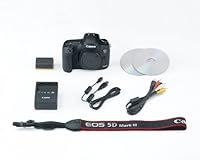
This is a body-only listing, so no lens is included. You will need to pair it with a Canon EF mount lens separately. If you already own EF glass, you are ready to go immediately; if not, Canon and third-party manufacturers offer EF lenses across a wide range of focal lengths and budgets.

The primary slot uses CompactFlash Type I cards — look for UDMA-compatible cards for the best burst performance. The second slot takes standard SD, SDHC, or SDXC cards. Most photographers use a fast CF card as their primary and an SD card as a real-time backup.

It depends entirely on what you need it for. For still photography — weddings, portraits, events, editorial — it remains a highly capable professional body, especially purchased used or refurbished. If video quality is important to you, the 1080p ceiling is a real limitation compared to modern mirrorless cameras, and you should probably look at something newer.

No. EF-S lenses are designed for APS-C crop sensors and will vignette heavily on this full-frame body. Only Canon EF lenses — not EF-S — are compatible. If you have been using an EF-S kit, you will need to factor in new glass when budgeting for this upgrade.

It performs well up to around ISO 3200 to 6400, producing clean, printable files that hold up without heavy noise reduction. Above that, noise becomes more pronounced and the expanded ISO settings above 25600 are best avoided in professional work. Paired with a fast prime lens, it handles dimly lit venues reliably.

No, there is no built-in Wi-Fi or Bluetooth. If you need wireless image transfer or remote control from a phone, you will need the optional Canon WFT-E7 wireless transmitter, which adds cost and bulk. For most studio and event photographers this is not a daily issue, but it is worth knowing upfront.

Under typical conditions you can expect somewhere around 950 shots per charge, but heavy use of Live View, video recording, or shooting in cold weather will reduce that significantly. Most working photographers carry at least two LP-E6 batteries as a standard practice, especially on full-day jobs.

Yes, the body has extensive weather and dust sealing at buttons, dials, and seams, making it well-suited for outdoor work in light rain or dusty conditions. That said, it is not waterproof — heavy downpours or immersion are not something it is designed for. Pairing it with a sealed Canon L-series lens gives you more complete protection.

The video is honest, capable 1080p Full HD with full manual control and proper audio jacks, which was genuinely impressive when this body launched. By current standards, however, 1080p is a hard limitation — most competing cameras now shoot 4K, and there is no in-body stabilization to smooth out handheld footage. It works well for straightforward interview or B-roll work, but dedicated video shooters will likely find it frustrating.

The core shooting controls are logically placed and intuitive once you spend a few hours with the body, but the custom function menu system is deep and can feel overwhelming at first. The biggest adjustment tends to be button mapping and menu navigation rather than the shooting experience itself. Give yourself a dedicated practice session before your first paid job with it.