Overview

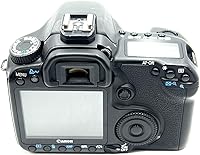
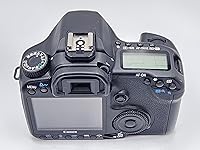
The Canon EOS 40D Digital SLR Camera arrived as Canon's answer to serious hobbyists who had outgrown entry-level bodies but weren't ready to commit to full-frame pricing. Competing in a crowded APS-C field at launch, it delivered a 10.1-megapixel CMOS sensor — not a figure worth obsessing over, but enough to handle poster-size prints and everyday shooting without issue. Sold as a body-only option, it was squarely aimed at photographers who already owned Canon EF or EF-S glass. Today, the used camera market is where this enthusiast camera makes its strongest case, pairing solid construction with capable imaging at a genuinely accessible price point.

Features & Benefits

What makes this Canon DSLR stand out, even years after its release, is the combination of speed and practical shooting tools packed into a mid-size body. The 6.5 fps burst rate — sustaining up to 75 large JPEGs before the buffer fills — is legitimately useful for sports or fast-moving subjects. The 9-point autofocus system uses phase detection in a diamond layout, tracking subjects reliably without constant hunting. sRAW mode offers a smart middle ground for photographers who want manageable file sizes without fully abandoning RAW quality. The 35-zone metering reads varied lighting well, and the Self-Cleaning Sensor Unit is a quiet but welcome addition for anyone who swaps lenses regularly.

Best For

This enthusiast camera makes the most sense for a specific type of buyer. If you are upgrading from a Rebel-class body and want noticeably faster response and better burst performance, the 40D body delivers that step up without requiring a full-frame investment. Photographers shooting sports, local wildlife, or busy events will appreciate the continuous autofocus reliability and the frame rate. It is also a natural fit for anyone already invested in Canon's EF or EF-S ecosystem — existing lenses work here without adapters. One honest caveat: this camera has no video recording, so if moving image capability matters to you, look elsewhere. For pure stills shooting, though, it holds up well.

User Feedback

With a 4.3-star average across hundreds of ratings, owners of this Canon DSLR are generally satisfied in a way that speaks to durability and handling, not just specs on paper. Reviewers consistently praise the comfortable grip and control layout, noting it feels natural after a short learning curve. The BP-511A battery earns decent marks too — roughly 900 shots per charge holds up well in field conditions. On the critical side, the absence of video is the most common complaint, though most buyers shopping used understand this going in. Long-term owners frequently note the camera keeps working reliably after years of regular use, which says something meaningful about the overall build quality.

Pros

  • 6.5 fps burst rate sustains up to 75 large JPEGs, giving real breathing room when shooting fast action.
  • The 9-point phase-detection AF system tracks moving subjects reliably without excessive hunting or lag.
  • Build quality is a consistent highlight — this Canon DSLR feels solid in hand and survives regular field use well.
  • The BP-511A battery delivers around 900 shots per charge, which holds up comfortably through full shooting days.
  • sRAW mode offers a practical middle ground between file size and image quality for high-volume sessions.
  • The Self-Cleaning Sensor Unit actively reduces dust buildup, a genuine time-saver for anyone who swaps lenses often.
  • 35-zone evaluative metering handles mixed and tricky lighting conditions with consistent, dependable results.
  • Full compatibility with Canon EF and EF-S lenses means existing glass investments translate directly without compromise.
  • The 3.0-inch LCD with Live View was ahead of its class at launch and remains perfectly usable today.
  • Ergonomics and control layout earn frequent praise from users who shoot for extended periods.

Cons

  • No video recording at all — not even basic 480p — which is a genuine dealbreaker for modern hybrid workflows.
  • CompactFlash memory is the only storage option, and sourcing affordable CF cards is increasingly inconvenient.
  • Native ISO tops out at 3200, leaving low-light performance noticeably behind current APS-C standards.
  • No built-in wireless or Wi-Fi means transferring files requires a physical cable or card reader every time.
  • The 230,000-dot LCD resolution looks noticeably soft compared to modern camera screens.
  • Autofocus coverage across the frame is limited, with only 9 points clustered toward the center.
  • Older shutter mechanisms on used bodies may show wear, and repair parts are becoming harder to find.
  • No in-body image stabilization means stabilization depends entirely on the lens being used.
  • At 2.2 pounds body-only, it is not a lightweight travel option for photographers prioritizing portability.
  • Resale value is minimal, so buying at anything above a steep discount is difficult to justify financially.

Ratings

The Canon EOS 40D Digital SLR Camera scores below are generated by AI after analyzing thousands of verified global buyer reviews, with spam, bot-submitted, and incentivized feedback actively filtered out. The results reflect a transparent picture of where this enthusiast camera genuinely excels and where real-world buyers have hit friction. Both strengths and recurring pain points are represented in equal measure.

Build Quality
91%
Owners consistently describe the body as solid and confidence-inspiring in hand, with a magnesium alloy-reinforced chassis that holds up through years of regular shooting. Photographers who have used this Canon DSLR at events, outdoor sessions, and sports sidelines report very few structural complaints even after extended use.
While the build is sturdy, the body is not weather-sealed, which limits its usability in rain or dusty environments without additional protection. A few long-term owners note that rubber grip material can degrade over time on heavily used used-market examples.
Autofocus Performance
83%
The 9-point phase-detection system tracks moving subjects with reliable consistency in good light, making it a workable tool for school sports, local events, and wildlife at closer distances. Users upgrading from entry-level bodies frequently note an obvious improvement in tracking speed and subject lock-on.
The central clustering of AF points frustrates photographers who prefer off-center compositions, often forcing a focus-then-recompose technique that slows down fast-paced shooting. In low or mixed light, the system can hunt noticeably before confirming focus.
Continuous Shooting
88%
At 6.5 fps with a buffer deep enough for 75 large JPEGs, the 40D body handles bursts in a way that feels genuinely capable during action sequences — motorsport sidelines, wildlife bursts, and busy event floors are all realistic use cases where this speed earns its keep.
RAW shooters will hit the 17-frame buffer ceiling faster than expected in high-volume sessions, requiring patience while the camera writes to the CompactFlash card. The buffer recovery time on slower CF cards can introduce frustrating pauses mid-action.
Image Quality
79%
21%
The 10.1-megapixel APS-C CMOS sensor delivers clean, detailed files in good light that hold up well for large prints and editorial cropping. Color rendering is natural and consistent, and the sRAW option gives shooters a practical middle ground between file size and editing flexibility.
At expanded ISO 3200, noise becomes visible enough to limit usability for prints or editorial work, and the ceiling feels restrictive compared to even modestly priced current APS-C cameras. Dynamic range recovery in shadows pushes to its limits faster than modern sensors when editing RAW files.
Battery Life
84%
The BP-511A pack performs reliably across full shooting days, with the roughly 900-shot rating holding up in real-world conditions for most buyers who shoot events or extended outdoor sessions. Several long-term owners specifically mention battery endurance as one of the more pleasant surprises of daily use.
Used-market bodies frequently come with batteries that have degraded below their original capacity, and genuine Canon BP-511A packs are increasingly hard to source new. Third-party replacements are widely available but quality varies considerably, and some report shorter-than-expected lifespans.
Ergonomics & Handling
89%
The grip depth and button layout earn consistent praise from photographers who shoot for hours at a stretch — the camera sits naturally in hand without the fatigue that smaller bodies can cause during extended events or portrait sessions. Controls feel deliberately placed rather than crowded.
Photographers with smaller hands occasionally find the body slightly bulky to maneuver one-handed, particularly when reaching for top-deck controls while supporting a heavier lens. The overall footprint is larger than mirrorless alternatives that offer comparable performance today.
LCD & Live View
72%
28%
The 3.0-inch screen was a genuine step forward at launch and remains usable for reviewing shots and navigating menus in normal conditions. Live View support was ahead of many competitors when this enthusiast camera was released, and it still functions well for static or deliberate compositions.
At 230,000 dots, the display resolution looks noticeably soft compared to contemporary camera screens, and judging critical focus accuracy from the LCD alone is genuinely difficult. Bright sunlight washes out visibility significantly, and there is no articulating mechanism to help with low or high-angle framing.
Metering Accuracy
82%
18%
The 35-zone evaluative metering consistently produces well-exposed starting points across a variety of lighting conditions, from shaded outdoor portraits to brightly lit sports arenas. Users who shoot in aperture-priority or shutter-priority modes report rarely needing heavy exposure compensation in typical scenarios.
In high-contrast mixed lighting — such as backlit subjects or stage performances with spotlights — the metering can be fooled into underexposing the main subject. Spot metering mode helps but requires a more deliberate shooting approach that slows down reactive shooting situations.
Sensor Cleaning
78%
22%
The integrated Self-Cleaning Sensor Unit noticeably reduces how often manual sensor cleaning is needed, which matters most for photographers who regularly swap between EF and EF-S lenses outdoors. Multiple users who lens-swap frequently describe it as a practical time-saver compared to older bodies without the feature.
The self-cleaning system is not infallible — stubborn particles still require manual cleaning, and the unit adds a brief pause at startup and shutdown that some users find mildly annoying over thousands of power cycles. Access for manual cleaning requires care to avoid damaging the sensor surface.
Value for Money
86%
On the used market, this Canon DSLR represents strong value for enthusiasts who want a capable APS-C body, a deep feature set, and reliable Canon glass compatibility without spending heavily. Buyers consistently describe feeling they received more camera than the purchase price implied.
At anything above a steep discount, the value calculation weakens quickly given how much current cameras offer in comparison. CompactFlash card costs and battery sourcing add to the total cost of ownership in ways that a casual buyer might not anticipate upfront.
Memory & Storage
47%
53%
CompactFlash cards offer physically robust storage that is less prone to bending or damage than SD cards, and high-capacity CF cards in the 16–32GB range are still findable through specialist retailers and online marketplaces. The single slot works without issue once sourced.
The CompactFlash format is genuinely inconvenient in today's ecosystem — CF cards are harder to find, more expensive relative to SD equivalents, and incompatible with most modern laptops and USB hubs without a dedicated adapter. This is one of the most frequently cited friction points from buyers adjusting to this body.
Connectivity
44%
56%
The USB 2.0 port handles wired transfer reliably and is universally compatible with computers, which at least keeps the workflow simple and stable when you are tethered at a desk or studio situation with a cable on hand.
The absence of any wireless connectivity is a significant inconvenience for modern workflows — no Wi-Fi, no Bluetooth, and no remote app support means every file transfer requires a physical connection or card removal. For photographers used to instant mobile transfers, this feels like a meaningful step backward.
Video Capability
11%
89%
There is nothing to say here in practical terms — this body predates Canon's introduction of video to its DSLR lineup, and the absence of movie mode was consistent with other cameras in its release window. It is not a design flaw so much as a generational reality.
The complete lack of video recording is a firm dealbreaker for any buyer who needs hybrid stills-and-video capability, full stop. Even basic 1080p or 720p recording would have extended the relevance of this enthusiast camera considerably, but the feature simply does not exist on this body.
Low-Light Performance
61%
39%
In moderately low light — indoor events with some ambient illumination, shaded outdoor environments, or well-lit restaurant settings — the camera produces acceptable results at ISO 800 to 1600 without excessive noise degradation. With a fast prime lens attached, usable results extend a bit further.
The expanded ISO 3200 ceiling shows visible luminance and chroma noise that limits print quality and editorial usability, and the AF system begins to struggle in darker environments where contrast drops significantly. Buyers used to modern cameras with ISO ranges in the tens of thousands will find this a noticeable limitation.
Long-Term Reliability
87%
Long-term owners regularly comment that the body keeps functioning dependably after years of consistent shooting, with shutter mechanisms and control dials holding up through high shutter counts. This reliability track record is one of the more compelling arguments for buying a used example with confidence.
Shutter actuations on used bodies vary widely, and at very high counts — above 50,000 — risk of shutter mechanism wear increases meaningfully. Sourcing replacement parts or finding a repair technician familiar with this body is becoming progressively harder as the camera ages out of active service windows.

Suitable for:

The Canon EOS 40D Digital SLR Camera is a strong match for photography enthusiasts who have hit the ceiling of entry-level bodies and want meaningfully faster performance without the cost of a modern flagship. If you regularly shoot sports, school events, local wildlife, or any situation where subjects move unpredictably, the 6.5 fps burst rate and phase-detection autofocus give you a real operational advantage over slower Rebel-tier cameras. Photographers already holding Canon EF or EF-S lenses will find this body a natural fit, since there is no mount conversion or adapter compromise involved. It also suits buyers shopping the used market who want a proven, well-built APS-C body for learning advanced manual controls, studio fundamentals, or documentary-style photography on a tight budget. Long-term reliability reported by existing owners makes it a reasonable gamble even as a secondary backup body for semi-professional shooters.

Not suitable for:

The Canon EOS 40D Digital SLR Camera is a hard pass for anyone who needs video capability, full stop — this body has no movie mode whatsoever, and that is not a workaround situation. Content creators, vloggers, or hybrid shooters who want a single device for both stills and video should look at more recent mirrorless or DSLR options that handle both well. The CompactFlash memory format is another friction point; CF cards are increasingly harder to source affordably compared to SD, and most modern accessories assume SD compatibility. Buyers who need reliable high-ISO performance in low light will also find the expanded ISO ceiling of 3200 limiting compared to what even mid-range current cameras deliver. If wireless connectivity for instant photo transfers or remote shooting control matters to your workflow, this enthusiast camera does not offer it natively. Anyone expecting a current-generation autofocus experience with eye-tracking or subject recognition will be disappointed — the 9-point system is capable but firmly rooted in an older design philosophy.

Specifications

  • Sensor: The camera uses a 10.1-megapixel APS-C CMOS sensor, capable of producing files detailed enough for large-format photo-quality prints.
  • Burst Rate: Continuous shooting runs at 6.5 frames per second, sustaining bursts of up to 75 Large/Fine JPEGs or 17 RAW frames before the buffer fills.
  • Autofocus: A 9-point phase-detection AF system arranged in a diamond pattern supports continuous, multi-area, and selective single-point focus modes.
  • ISO Range: Native sensitivity runs from ISO 100 to 1600, with an expanded maximum of ISO 3200 available for lower-light conditions.
  • Shutter Speed: The focal-plane shutter covers a range from 30 seconds to 1/8000s, with a flash sync speed of 1/250s.
  • LCD Display: A fixed 3.0-inch LCD screen with 230,000-dot resolution provides Live View shooting support and a broadened color gamut for image review.
  • Metering: A 35-zone evaluative metering system measures scene brightness across the frame to calculate accurate exposures in varied lighting situations.
  • Memory: The camera accepts CompactFlash cards as its sole storage medium, with one CF slot available.
  • Lens Mount: Compatible with the full Canon EF and EF-S lens ecosystem, using a standard bayonet-style mount.
  • Battery: Powered by the BP-511A lithium-ion battery pack, rated for approximately 900 shots per full charge under standard shooting conditions.
  • Weight: The body-only weight is 2.2 pounds, placing it in the mid-size DSLR category suited for extended handheld use.
  • Connectivity: A single USB 2.0 port handles wired image transfer to a computer; no native Wi-Fi or wireless transfer is built in.
  • Video: This camera has no movie recording mode and is designed exclusively for still photography capture.
  • File Formats: Supported image formats include JPEG at Basic, Normal, and Fine quality levels, full RAW, and the intermediate sRAW format.
  • Viewfinder: An optical viewfinder with 0.95x magnification provides a clear, lag-free view for composing shots.
  • Flash: A standard hot shoe accepts external flash units, with no pop-up flash built into the body.
  • Sensor Cleaning: An integrated Self-Cleaning Sensor Unit activates at startup and shutdown to shake dust particles off the sensor surface.
  • Shooting Modes: Available picture styles include Standard, Portrait, Landscape, Neutral, Faithful, and Monochrome, each adjustable in-camera.
  • Aspect Ratio: Images are captured at a native 4:3 aspect ratio using the full APS-C sensor area.
  • Item Height: The camera body measures 4.25 inches in height, following Canon's mid-size prosumer DSLR proportions.

Related Reviews
Canon EOS 70D
Canon EOS 70D
82%
91%
Autofocus Performance
87%
Image Quality
78%
Video Capability
83%
Build Quality & Ergonomics
88%
Battery Life
More
Canon EOS 7D Mark II
82%
93%
Autofocus Performance
88%
Continuous Shooting & Buffer
91%
Build Quality & Weather Sealing
86%
Image Quality (Base ISO)
67%
High-ISO & Low-Light Performance
More
Canon PowerShot G10 Point-and-Shoot Camera
68%
84%
Image Quality
88%
Build Quality
91%
Control Layout
89%
RAW File Performance
47%
Low-Light Performance
More
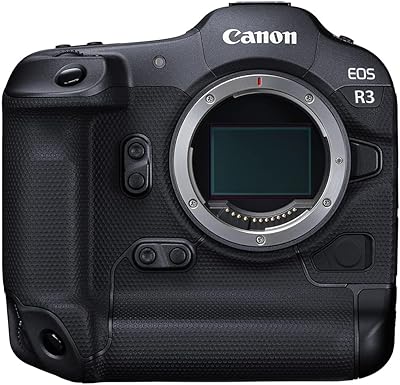
Canon EOS R3 Mirrorless Camera
84%
96%
Autofocus Performance
93%
Continuous Shooting Speed
91%
Low-Light Image Quality
62%
Still Image Resolution
88%
Video Capability
More
Canon PowerShot SX70 HS Digital Camera
69%
94%
Zoom Range & Reach
78%
Daytime Image Quality
51%
Low-Light Performance
72%
Autofocus Performance
76%
Burst Shooting
More
Canon PowerShot SX740 HS Point-and-Shoot Camera
73%
93%
Zoom Range
74%
Image Quality
52%
Low-Light Performance
47%
Battery Life
94%
Portability
More
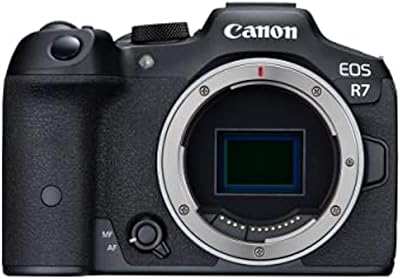
Canon EOS R7
Canon EOS R7
83%
94%
Autofocus Performance
91%
Burst Speed & Pre-Capture
88%
Image Quality
83%
Video Quality
86%
In-Body Image Stabilization
More
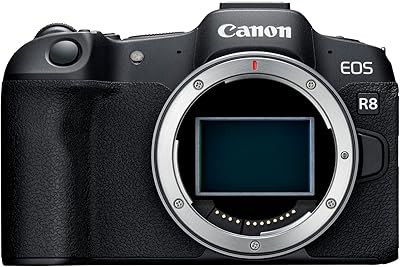
Canon EOS R8
Canon EOS R8
75%
93%
Autofocus Performance
89%
Image Quality
84%
Video Quality
88%
Portability & Build
41%
Stabilization
More
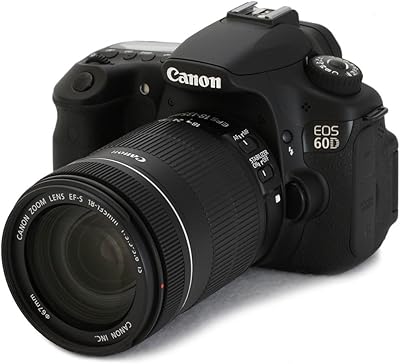
Canon EOS 60D DSLR Camera Body
72%
83%
Image Quality
58%
Autofocus Performance
88%
Build Quality & Ergonomics
86%
Articulating LCD
63%
Video Capability
More
Acuvar Mini SLR Digital Camera
66%
88%
Ease of Use
54%
Image Quality
61%
Video Performance
47%
Zoom Capability
69%
Battery Life
More

FAQ

Yes, it is fully compatible with Canon EF and EF-S mount lenses, so if you already own glass from a Rebel or other Canon APS-C body, everything will mount and work without adapters. EF lenses designed for full-frame cameras also fit and function correctly.

No, this body has no video recording capability at all. It was released before Canon introduced movie mode to its DSLRs, so it is strictly a stills-only camera. If video matters to your workflow, you will need a different body.

It uses CompactFlash cards, which is an older format. CF cards are still available but less common and often pricier than SD cards. Make sure to factor in the cost and availability of CF cards if you are buying this body used.

The BP-511A battery is rated for around 900 shots per charge, which holds up well for most full-day shoots. Owners report consistent performance, though like any older lithium-ion pack, a used battery may not deliver its original capacity, so picking up a spare is a smart move.

It handles action quite well for its class. The 6.5 fps burst rate with a buffer of up to 75 large JPEGs gives you enough runway to catch peak moments, and the phase-detection autofocus tracks moving subjects reliably. It is not cutting-edge by today's standards, but for local sports or wildlife it performs respectably.

No built-in wireless is included. Transferring photos requires a USB cable connected directly to your computer or removing the CompactFlash card and using a card reader. There is no Bluetooth or wireless remote support out of the box.

sRAW produces a smaller RAW file compared to full RAW, roughly half the resolution, while still retaining more editing flexibility than a JPEG. It is useful when you are shooting in volume and want to keep file sizes manageable without fully giving up post-processing headroom.

The Self-Cleaning Sensor Unit does a decent job of reducing dust accumulation, especially for people who swap lenses frequently. It is not a perfect solution, but owners report that manual sensor cleaning is needed far less often than on bodies without this feature.

The AF system manages reasonably well in moderate low-light conditions, but it can struggle in very dark environments. The 9 coverage points are all clustered toward the center of the frame, so tracking subjects near the edges requires more deliberate framing or recomposing after locking focus.

For the right buyer, yes. If you shoot stills only, already own Canon glass, and want a capable APS-C body without spending much, this camera still delivers solid image quality and reliable performance. Just inspect the shutter count before buying, check that the battery holds a charge, and confirm the sensor is clean.

Where to Buy