Overview

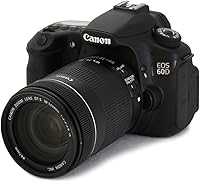
The Canon EOS 60D DSLR Camera Body arrived in 2010 as Canon's answer to photographers ready to leave entry-level territory behind — and years later, it holds up surprisingly well in the used market. This isn't a beginner's first camera; it's a body that rewards someone who already understands exposure and wants more control than a Rebel can offer. The articulating LCD was genuinely ahead of its time at launch and remains one of the most practical features for shooting in awkward positions. Since this listing covers the body only, buyers should already own or plan to acquire compatible Canon EF or EF-S glass before purchasing.
Features & Benefits

The 18MP APS-C sensor at the heart of the 60D produces clean, detailed images that hold up well for print and web alike — dynamic range is generous enough for landscape work, and high-ISO performance stays reasonable through ISO 1600 before noise becomes noticeable. The vari-angle LCD is legitimately useful, not a gimmick; it makes overhead shots, ground-level compositions, and self-monitored video framing far less awkward. Speaking of video, 1080p with manual exposure control plus a 3.5mm external microphone input gives budget-conscious shooters real creative options — just don't expect mirrorless-level autofocus during recording. A full suite of exposure modes and 5.3fps burst shooting round out a versatile, capable package.

Best For

The 60D is a natural fit for Rebel-series upgraders who have outgrown automatic modes and want a body that supports serious manual shooting without a large financial commitment. Landscape and travel photographers benefit especially from the flip-out screen — composing from a tripod or shooting from the hip becomes far more intuitive. Existing Canon glass owners get immediate value here too, since both EF and EF-S lenses mount natively without adapters. Budget videographers who need manual video controls and a mic input will find this mid-range DSLR punches above what its price suggests. Students and hobbyists who want a camera that grows with their skills, rather than one they'll quickly outgrow, are the ideal audience.

User Feedback

Buyers consistently praise the solid build quality and ergonomics of this Canon body — longtime Canon users in particular find the grip and button layout comfortable and logical. On the critical side, the 9-point autofocus system draws fair complaints: it handles good-light situations reliably but feels sluggish compared to anything released in the last several years, and the buffer can stall during extended bursts. Since this is a used listing, buyers should ask about shutter count and check for sensor dust or cosmetic wear — aged batteries may also hold reduced charge. That said, the included charger and strap make this a more complete package than many competing used listings, and that genuinely matters.

Pros

  • The 18MP APS-C sensor produces detailed, clean images that hold up well for print and web use.
  • The articulating LCD is genuinely practical for landscape, low-angle, and self-monitored video shooting.
  • Full manual exposure controls in video mode give budget videographers real creative flexibility.
  • The 60D accepts both Canon EF and EF-S lenses, so existing Canon users can hit the ground running.
  • RAW file support with multiple compression options gives serious photographers strong post-processing latitude.
  • ISO expandable to 25600 means usable shots in lower-light environments when needed.
  • The included battery, charger, and strap make this a more complete and ready-to-use used listing.
  • Build quality feels solid and substantial — the grip and button layout earn consistent praise from experienced Canon users.
  • A 3.5mm external microphone input is a notable practical feature for anyone recording audio-conscious video.
  • Shutter speed range from 1/8000s to 30s plus Bulb covers nearly every exposure scenario a stills shooter will encounter.

Cons

  • The 9-point autofocus system feels noticeably slow and limited compared to cameras from the past few years.
  • Continuous autofocus during video recording is unreliable — manual focusing is often the better option.
  • The buffer fills relatively quickly during sustained burst shooting, causing frustrating slowdowns.
  • Buying used means no manufacturer warranty, and shutter count should be verified before committing.
  • Aged batteries may no longer hold a full charge, even when included — budget for a spare.
  • The menu system and interface can feel dated and cluttered to anyone accustomed to modern camera UX.
  • No in-body image stabilization means sharp handheld shots depend entirely on stabilized lenses.
  • Video is capped at 1080p — buyers with 4K ambitions will need to look at a different generation of camera.
  • As a body-only listing, buyers without compatible lenses face additional upfront costs to get shooting.
  • Cosmetic wear is a realistic expectation on used units — inspect photos carefully before purchasing.

Ratings

The scores below for the Canon EOS 60D DSLR Camera Body were generated by our AI after analyzing thousands of verified purchase reviews from global buyers, with spam, bot activity, and incentivized feedback actively filtered out. Each category reflects the honest distribution of real user experiences — strengths and frustrations weighted equally — so you can make a genuinely informed decision before buying.
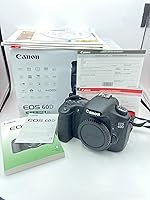
Image Quality
83%
For landscape, portrait, and everyday shooting, the 18MP APS-C sensor consistently delivers images users describe as sharp, well-exposed, and detailed enough for large prints. Dynamic range holds up well in mixed outdoor light, and RAW files respond favorably in post-processing.
High-ISO performance degrades noticeably above ISO 1600, with visible color noise that can limit usable shots in evening or indoor environments. Users comparing files against more recent APS-C sensors from the past five years often note that the 60D falls short in shadow recovery and fine texture rendering.
Autofocus Performance
58%
42%
In good light with stationary or slow-moving subjects, the 9-point all-cross-type system locks on accurately and consistently — portrait photographers working in controlled conditions rarely report missed focus. Single-point mode in particular draws praise for precision on deliberate, composed shots.
Buyers who shoot action, wildlife, or any fast-moving subject find the AF system frustratingly slow and prone to hunting in lower-contrast scenes. Compared to cameras released in the last five years, the focus tracking capability feels a full generation behind, and this is the most common complaint raised by users who upgraded from a newer body.
Build Quality & Ergonomics
88%
The body has a reassuringly solid feel in hand — heavier than a Rebel but in a way that inspires confidence rather than fatigue during a full day of shooting. Longtime Canon users consistently highlight the grip depth, button placement, and overall tactile quality as standout strengths for a mid-range body.
The lack of weather sealing is a real limitation for outdoor shooters who work in rain or dusty environments — users who move up to Canon's higher-tier bodies often cite this as the first thing they miss. A few buyers of used units also report that the rubber grip material can show wear or slight delamination on older examples.
Articulating LCD
86%
The vari-angle screen earns consistent praise from landscape photographers who use tripods — being able to compose at ground level or tilt the screen for waist-level street shooting without crouching is genuinely practical. Video shooters also appreciate it for self-monitoring without an external monitor.
The 1,040,000-dot resolution looks adequate indoors but can struggle in direct sunlight, where glare makes accurate exposure assessment difficult without shading the screen manually. The hinge mechanism on heavily used units can feel slightly loose, which some buyers of used bodies have flagged as a concern.
Video Capability
63%
37%
For budget video work, the combination of 1080p manual exposure control and a 3.5mm external microphone input gives users meaningful creative tools that many cheaper cameras simply do not offer. Users producing short films, event coverage, or YouTube content on a tight budget find it more capable than expected.
Continuous autofocus during video is largely unreliable, requiring manual focus pulls that demand practice and a steady hand. Anyone comparing this body to current mirrorless options will immediately feel the gap — no 4K, no in-body stabilization, and rolling shutter artifacts appear during panning shots, which is a dealbreaker for more demanding video projects.
Value for Money
77%
23%
As a used body with battery, charger, and strap included, the 60D offers a feature set — articulating LCD, full manual controls, RAW support, external mic input — that would cost considerably more in any current new-camera equivalent. Buyers who already own Canon EF or EF-S lenses get particularly strong utility from the investment.
At the current used market asking price, buyers need to weigh the 60D against newer used alternatives that offer better autofocus and video for a similar outlay. The price feels justified for Canon lens owners or those who specifically need the articulating screen, but less so for buyers starting fresh with no existing glass.
Continuous Shooting
67%
33%
At 5.3fps, the burst rate handles casual sports, kids at play, and opportunistic wildlife shots reasonably well — users shooting school events or outdoor activities find it sufficient for capturing peak moments without switching cameras.
The buffer fills quickly during extended bursts, causing the camera to stall and slow the frame rate noticeably until it clears — a frustration that users coming from faster bodies mention regularly. For serious sports or wildlife photographers, this limitation alone makes the 60D a difficult recommendation.
Battery Life
61%
39%
Under normal shooting conditions with a healthy battery, the LP-E6 cell delivers a reasonable number of shots per charge — enough for a full day of casual photography without needing to carry a spare on shorter outings.
Because this is a used listing, battery condition is a real variable — many buyers report that the included battery holds noticeably less charge than a new one, particularly if the camera has had heavy use. Purchasing a spare LP-E6 compatible battery is strongly recommended, as relying solely on an aged cell for any extended trip is a gamble.
Menu System & Usability
64%
36%
Experienced Canon users find the menu layout familiar and logical — the control wheel and quick-access dial system speeds up exposure adjustments without diving into menus, which photographers who shoot in dynamic conditions genuinely appreciate.
Buyers coming from modern mirrorless cameras or smartphones find the menu system noticeably dated — navigation feels layered and slow compared to touchscreen interfaces, and customization options are limited by current standards. True beginners have also flagged the sheer volume of settings as intimidating without a dedicated tutorial or course alongside it.
Low-Light Performance
62%
38%
At ISO 800 and below, images retain good detail and manageable noise levels — for indoor events with decent ambient light or golden-hour landscape shooting, the sensor performs respectably and produces files that clean up well in Lightroom.
Push past ISO 1600 and the quality drops off in a way that feels more pronounced than users accustomed to more recent sensors expect. The expanded ISO 25600 setting produces images that are largely too noisy for practical use beyond small web-sized output.
Connectivity & Compatibility
74%
26%
The combination of USB 2.0 for tethering, HDMI mini output for external monitors, and a 3.5mm mic jack covers the practical connectivity needs of most enthusiast shooters and budget videographers without requiring additional adapters.
USB 2.0 transfer speeds feel painfully slow when offloading large batches of RAW files to a computer — a limitation that becomes more noticeable as card capacities grow. There is no built-in Wi-Fi or Bluetooth, so wireless image transfer requires a compatible Eye-Fi or similar card rather than a native app-based solution.
Lens Ecosystem Access
89%
Compatibility with Canon's full EF and EF-S lens catalog is one of the strongest practical arguments for choosing this body — buyers who already own even one or two Canon lenses can immediately put a substantial glass collection to work without any adapters or compromises.
For buyers starting completely fresh with no existing Canon glass, this advantage disappears — and the breadth of the EF ecosystem can make choosing a first lens feel overwhelming without research. Used EF lenses vary widely in condition too, so pairing a used body with used lenses compounds the due-diligence required before buying.
Used Condition Reliability
59%
41%
Buyers who receive units in good condition — verified low shutter counts, clean sensors, intact grips — report high satisfaction and describe the camera as feeling barely used, which validates the appeal of the used market for this body specifically.
The used condition introduces meaningful variability that new-camera buyers never face — shutter count, sensor dust, aged seals, and battery degradation are all legitimate concerns that cannot be assessed from listing photos alone. Buyers who do not ask for shutter count data upfront are taking a real risk on long-term reliability.
Included Accessories
79%
21%
Getting the battery, charger, and strap included in a used body listing is genuinely appreciated by buyers — it means the camera is ready to shoot out of the box without additional purchases beyond a lens and memory card, which adds real practical value to the deal.
The included strap is Canon's basic neoprene model, which many experienced photographers replace quickly with a more comfortable aftermarket option. The battery charger is functional but slow compared to third-party dual-slot chargers that many active shooters prefer.

Suitable for:

The Canon EOS 60D DSLR Camera Body is a strong pick for photographers who have already learned the basics and are ready to shoot with full manual control — think someone who has maxed out a Rebel-series body and wants more customization without spending on a brand-new camera. If you already own Canon EF or EF-S lenses, this body lets you get real use out of that glass investment right away. Landscape and travel shooters will appreciate the articulating LCD in the field; being able to flip the screen for awkward compositions makes a genuine practical difference on location. Budget-conscious videographers who need 1080p footage with manual exposure and an external microphone input will find the 60D surprisingly capable for the money. Students studying photography or hobbyists building their skills will also benefit from a body that supports RAW shooting, multiple metering modes, and a full range of exposure controls.

Not suitable for:

Anyone expecting mirrorless-level speed or autofocus sophistication will be disappointed — the Canon EOS 60D DSLR Camera Body is a 2010-era design, and its 9-point AF system shows its age against anything released in the past five years, particularly for fast action or video autofocus. Complete beginners would likely be better served by a simpler entry-level body with more guided shooting modes and a less complex menu system. Buyers who need a primary camera for professional client work should think carefully about purchasing used gear without a verified shutter count, since a worn sensor or high-mileage shutter can surface problems at critical moments. This is also not the right fit if you have no Canon lenses and are starting fresh — at this price, it may be worth comparing against more modern used alternatives that offer better autofocus and video capabilities for a similar investment. Finally, anyone prioritizing video as their main use case and expecting modern features like 4K, in-body stabilization, or reliable continuous autofocus should look elsewhere.

Specifications

  • Sensor: The camera uses an 18MP APS-C CMOS sensor, which delivers solid resolving power and good dynamic range for stills and video.
  • ISO Range: Native ISO spans 100 to 6400, with expansion available up to ISO 25600 for lower-light situations.
  • Autofocus System: A 9-point all-cross-type TTL phase-detection AF system handles focusing duties, with single-point and automatic selection modes available.
  • Continuous Shooting: The body supports up to 5.3 frames per second during continuous burst shooting.
  • Shutter Speed: Electronically controlled focal-plane shutter covers 1/8000s to 30 seconds, plus a Bulb mode for long exposures.
  • Video Resolution: Full HD 1080p video recording is supported with manual exposure control and MOV file output using MPEG-4 AVC/H.264 compression.
  • LCD Display: A 3-inch vari-angle Clear View LCD with 1,040,000 dots provides flexible composition from a wide range of shooting angles.
  • Viewfinder: An optical pentaprism viewfinder offers approximately 0.95x magnification and 96% field of view coverage.
  • Lens Mount: The body uses Canon's EF mount and is fully compatible with both EF and EF-S lenses.
  • Storage Media: Images and video are written to SD, SDHC, or SDXC memory cards via a single card slot.
  • File Formats: Supported still formats include JPEG, RAW, M-RAW, and S-RAW, with simultaneous RAW and JPEG capture available; video saves as MOV.
  • Flash Sync: The maximum flash synchronization speed is 1/250 sec, with E-TTL II autoflash support via the hot shoe.
  • Connectivity: The body includes USB 2.0, HDMI mini (Type C) output, and a 3.5mm stereo mini-jack for an external microphone.
  • Body Weight: The camera body weighs approximately 570g without a lens or battery attached.
  • Battery Type: The body is powered by a Canon LP-E6 lithium-ion rechargeable battery, which is included with this listing along with the charger.
  • Metering Modes: Four metering modes are available: evaluative, center-weighted average, spot, and partial.
  • Exposure Modes: The mode dial covers Manual, Aperture-priority, Shutter-priority, Program AE, Bulb, Full Auto, and a range of scene modes.
  • White Balance: White balance options include Auto, Daylight, Shade, Cloudy, Tungsten, Fluorescent, Flash, and Custom, plus direct color temperature input.
  • Self-Timer: A built-in self-timer offers a 10-second delay for hands-free shooting.
  • Flash Sync Speed: The hot shoe supports external flash units with a sync speed up to 1/250 sec and wireless flash control capability.

Related Reviews
Canon EOS R7
Canon EOS R7
83%
94%
Autofocus Performance
91%
Burst Speed & Pre-Capture
88%
Image Quality
83%
Video Quality
86%
In-Body Image Stabilization
More
Canon EOS R8
Canon EOS R8
75%
93%
Autofocus Performance
89%
Image Quality
84%
Video Quality
88%
Portability & Build
41%
Stabilization
More
Canon EOS 70D
Canon EOS 70D
82%
91%
Autofocus Performance
87%
Image Quality
78%
Video Capability
83%
Build Quality & Ergonomics
88%
Battery Life
More
Canon EOS 80D DSLR Camera with 18-135mm Lens
81%
93%
Autofocus Performance
88%
Image Quality
61%
Video Capability
84%
Build Quality
86%
Battery Life
More
Canon EOS Rebel T1i DSLR Camera
70%
83%
Image Quality
88%
Ease of Use
74%
Build Quality
71%
Autofocus Performance
52%
Video Capability
More
Canon EOS Rebel T3i
Canon EOS Rebel T3i
76%
83%
Image Quality
91%
Ease of Use
67%
Video Performance
72%
Autofocus System
88%
Articulating Screen
More
Canon EOS 5D Mark II DSLR Camera
76%
93%
Image Quality
91%
Build Quality
86%
Low-Light Performance
58%
Autofocus Performance
84%
Value for Money
More
Canon EOS 7D Mark II
82%
93%
Autofocus Performance
88%
Continuous Shooting & Buffer
91%
Build Quality & Weather Sealing
86%
Image Quality (Base ISO)
67%
High-ISO & Low-Light Performance
More
Canon EOS Rebel T7
Canon EOS Rebel T7
76%
88%
Image Quality
91%
Ease of Use
74%
Autofocus Performance
82%
Build Quality & Handling
53%
Video Capability
More
Canon EOS Rebel T6i
Canon EOS Rebel T6i
79%
91%
Image Quality
83%
Autofocus Performance
88%
Ease of Use
79%
Build Quality & Handling
61%
Video Capabilities
More

FAQ

This is a body-only listing. No lens is included. The camera accepts Canon EF and EF-S lenses, so if you already own compatible glass, you are ready to go — otherwise, factor in the cost of a lens before purchasing.

Any Canon EF or EF-S lens will mount directly without an adapter. That covers a huge range of Canon's lineup, from budget kit zooms to professional L-series glass. Third-party lenses from brands like Sigma, Tamron, and Tokina that are built for the Canon EF mount will also work.

Shutter count is not displayed in the camera menu, but you can check it by taking a photo and uploading the file to a free online EXIF reader — sites like camerashuttercount.com can read this directly from Canon RAW or JPEG files. The Canon EOS 60D DSLR Camera Body has a rated shutter life of around 100,000 actuations, so knowing where a used unit sits matters a lot for assessing remaining lifespan.

That depends on the age and history of the specific battery included. Li-ion batteries degrade over charge cycles, and a battery that is several years old may only hold 60–70% of its original capacity. It is worth picking up a spare LP-E6 compatible battery regardless — they are widely available and relatively affordable.

For budget video work, the 60D is still a capable choice — you get 1080p recording with full manual exposure control and an external mic input, which is more than many cheap alternatives offer. The honest caveat is that continuous autofocus during video is unreliable, so you will want to pull focus manually or use a fixed focal point. Anyone needing 4K or reliable video autofocus should look at newer bodies.

For most still photography in decent light — portraits, landscapes, casual street work — the 9-point AF system does its job fine. Where it starts to feel its age is with fast-moving subjects or in lower light, where it can hunt and miss more than a modern camera would. It is a workable system, just not a quick one by today's standards.

Yes, genuinely. Being able to tilt and rotate the LCD is useful in more real-world situations than people expect — shooting from a low tripod without lying on the ground, holding the camera overhead in a crowd, or monitoring your own framing during video recording. It was a meaningful differentiator when this body launched, and it remains a practical feature today.

The 60D accepts SD, SDHC, and SDXC cards, so you have a wide range of options. For general shooting, a Class 10 or UHS-I card is fast enough to keep up with the 5.3fps burst rate and video recording. You do not need to spend on the fastest cards available — mid-range options from reputable brands like SanDisk or Lexar work perfectly well.

Honestly, it depends on your starting point. If you have already learned the basics of exposure on a simpler camera or through a course and you want a body that grows with you, the 60D is a smart choice. But if you are a complete beginner with no prior camera experience, the menu system and feature depth can feel overwhelming early on — a more guided entry-level body might serve you better to start.

Yes on both counts. The body has an HDMI mini output for connecting to a television or monitor, and a USB 2.0 port for tethered shooting or transferring files to a computer. Canon's EOS Utility software supports tethered capture and remote control from a Mac or Windows PC, which is useful for studio or macro work.