Overview

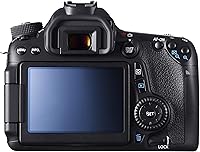
The Canon EOS 70D arrived at a sweet spot in Canon's lineup — capable enough for serious hobbyists, yet approachable enough that photographers stepping up from entry-level cameras wouldn't feel overwhelmed. Released in 2013, this Canon DSLR has aged better than many contemporaries, which is why it still circulates actively on the used and refurbished market. It's sold as a body-only unit, so buyers already invested in Canon EF glass will find it slots right in without extra hassle. Expect strong still-image output and video capabilities that genuinely surprised many users when this camera first launched — and hold up reasonably well today.

Features & Benefits

What made this Canon DSLR stand out when it launched — and still earns it attention today — is the Dual Pixel CMOS AF. Unlike contrast-detect systems that hunt and hesitate, this phase-detection approach built into the sensor tracks subjects smoothly during live view and video, which is a meaningful advantage for anyone shooting run-and-gun footage or recording interviews. The 20.2MP APS-C sensor delivers clean, detailed images well into the mid-ISO range, though noise does become noticeable past ISO 3200. The 19-point all-cross-type autofocus system, paired with a 7 fps burst rate, handles fast-moving subjects confidently. Add the articulating touchscreen and built-in Wi-Fi, and it's a genuinely well-rounded body.

Best For

The 70D body makes the most sense for a few specific types of buyers. Photographers coming from a Canon Rebel who feel limited by its speed and AF performance will find the step up genuinely worthwhile. It's also a solid choice for video content creators — the smooth live-view autofocus makes it easier to stay in focus without a dedicated camera operator. Birders, event shooters, and sports parents who need quick, accurate burst shooting will appreciate the responsive AF system. If you're already running Canon EF lenses, that's another strong reason to consider this mid-range Canon over switching ecosystems. Just budget for glass if you're starting fresh.

User Feedback

Owners consistently highlight the live-view autofocus as the standout feature, particularly those who use the camera for video work. Battery life is another common positive — the LP-E6 cell is rated for around 920 shots per charge, and real-world use tends to align closely with that figure. On the critical side, shooters who push the burst mode hard report that the buffer fills up faster than they'd like, causing brief slowdowns during sustained sequences. Ergonomics generally earn praise, especially from users with larger hands, though some find the grip less comfortable over long sessions. Weather sealing is a recurring point of confusion — the body offers some protection, but it's not rated for heavy use in wet conditions. Long-term owners tend to report solid reliability.

Pros

  • Live-view autofocus tracks moving subjects smoothly, making solo video recording genuinely practical.
  • The 20.2MP APS-C sensor delivers clean, detailed images with strong color rendering at moderate ISO levels.
  • A 7 fps burst rate with a 19-point all-cross-type AF system handles fast action confidently.
  • Battery life is reliable — most users get through a full day of stills shooting on a single charge.
  • The articulating touchscreen makes low-angle and overhead shots far less physically awkward.
  • Full Canon EF mount compatibility opens access to one of the widest lens ecosystems available.
  • Built-in Speedlite transmitter allows off-camera flash triggering without extra commander hardware.
  • Long-term owners consistently report durable, dependable performance well into high shutter counts.
  • The body strikes a practical balance between advanced controls and approachability for developing photographers.

Cons

  • Video is capped at 1080p — a significant disadvantage compared to modern mirrorless cameras at similar price points.
  • Buffer depth fills quickly during sustained bursts, causing slowdowns that can cost critical shots.
  • High-ISO performance degrades noticeably past ISO 3200, limiting usefulness in very dark environments.
  • Weather sealing is minimal despite the solid feel of the body — not suitable for shooting in rain or heavy dust.
  • The Canon wireless app experience is frustratingly clunky and slows down image transfer workflows.
  • A single SD card slot offers no backup redundancy for professional assignments where losing files is not an option.
  • No headphone monitoring port limits serious audio work during video recording without external hardware.
  • Rolling shutter is apparent during fast pans, which can undermine otherwise smooth video footage.
  • The EF lens ecosystem is no longer receiving new Canon investment, raising long-term compatibility concerns.

Ratings

Our scores for the Canon EOS 70D were generated by AI after analyzing thousands of verified buyer reviews from global markets, with spam, bot-submitted, and incentivized feedback actively filtered out. This mid-range Canon DSLR has accumulated a substantial and candid review base over the years, giving us high confidence in the patterns we identified. Both its genuine strengths and the real frustrations buyers encounter are reflected transparently in every category below.

Autofocus Performance
91%
The phase-detection system built into the sensor handles live-view and video tracking in a way that many reviewers describe as the single reason they chose this body. For YouTubers shooting solo or event photographers working without an assistant, the ability to stay locked on a moving subject during recording is a practical daily advantage.
In low-contrast or dimly lit scenes, the AF can occasionally hunt before locking, frustrating photographers used to optical viewfinder speed. A small number of users also noted that face detection, while present, is less reliable than what newer mirrorless systems offer.
Image Quality
87%
At base ISO the 20.2MP APS-C sensor produces files with strong detail and good dynamic range that hold up well when cropped or printed large. Landscape and portrait shooters routinely praised the color rendering straight out of camera, calling it natural without the oversaturated look of some competing sensors.
High-ISO performance starts to soften noticeably past ISO 3200, with noise and loss of fine detail becoming harder to correct in post. Photographers who frequently shoot in dark venues or under artificial light may find themselves wanting more from this sensor compared to more recent designs.
Video Capability
78%
22%
The smooth, confident continuous autofocus during video recording was a clear differentiator when this body launched, and it still performs better than many similarly priced DSLRs in live-view shooting. Vloggers and interview-style creators praised its ability to track a presenter without the jerky refocusing common in older systems.
The 1080p ceiling is a genuine limitation for buyers who expect at least 4K, which has become a baseline feature even on budget mirrorless cameras. Rolling shutter is also noticeable during fast pans, and the lack of a headphone monitoring port is a recurring complaint among more serious video users.
Build Quality & Ergonomics
83%
The body feels solid and well-assembled in hand, with a grip depth that most users with medium-to-large hands found comfortable during extended shooting sessions. Button placement is logical and the overall layout rewards users coming from other Canon bodies who want muscle-memory consistency.
Weather sealing expectations frequently exceed reality — the body has some protection but is not suited for shooting in rain or dusty environments without additional precautions. Users with smaller hands occasionally found the grip too deep and the weight tiring over a full day of shooting.
Battery Life
88%
The LP-E6 cell is rated for roughly 920 shots per charge, and real-world reports consistently confirm that figure is achievable under normal shooting conditions. Wedding and event photographers noted they could typically get through a full day of stills shooting on a single charge without anxiety.
Heavy use of live view or video drains the battery significantly faster than the rated figure suggests, sometimes cutting a session short for video-focused users. Buyers who do not already own LP-E6 batteries will need to factor in the cost of spares for longer assignments.
Burst Speed & Buffer
71%
29%
The 7 fps burst rate is genuinely useful for capturing decisive moments in sports or wildlife photography, and many users reported that the AF tracking kept up well through short bursts. For casual action shooting — youth sports, pets, street — the speed is more than adequate.
The buffer depth is where this body frustrates action-oriented shooters most. Sustained bursts fill the buffer relatively quickly, triggering a noticeable slowdown that can mean missing critical moments during fast sequences. Sports photographers who shoot in long continuous runs will likely find this limiting.
Touchscreen & Articulating Display
82%
18%
The vari-angle design genuinely opens up shooting angles that would otherwise require awkward positioning — overhead crowd shots, low ground-level framing, and self-recording at eye level all become practical rather than painful. The touch interface for selecting AF points in live view was praised for its responsiveness.
The screen resolution, while acceptable, looks dated compared to modern DSLR and mirrorless displays, making it harder to accurately judge focus and exposure in bright sunlight. A few users also noted the hinge mechanism feels less robust than the body itself over long-term heavy use.
Connectivity & Wireless
68%
32%
Built-in Wi-Fi allows image transfer to a smartphone and basic remote shutter control through Canon's companion app, which is genuinely convenient for quick social sharing or triggering the camera from a distance during solo shoots.
The Canon app experience has drawn consistent criticism for being clunky and slow compared to what competitors offer, with some users abandoning wireless transfer in favor of pulling the SD card directly. The absence of Bluetooth means the camera cannot maintain a low-power background connection the way modern bodies do.
Lens Ecosystem Compatibility
93%
Full compatibility with the extensive Canon EF and EF-S mount catalog is one of the strongest reasons existing Canon shooters choose this body. The breadth of available glass — from budget-friendly zooms to professional primes — means buyers are never short of options regardless of their shooting style or budget.
The EF mount is a legacy system, and Canon is no longer investing in new EF glass as it focuses on the RF ecosystem. Buyers thinking long-term about upgrading to Canon mirrorless will eventually face a transition that makes EF glass less relevant without an adapter.
Value for Money
79%
21%
On the used and refurbished market this body often represents a genuinely competitive option for enthusiasts who want proven DSLR performance without paying mirrorless prices. The combination of features at its typical secondhand price point is hard to argue with for stills-focused buyers.
At full retail price the calculus becomes trickier, with entry-level mirrorless cameras offering more modern feature sets for comparable or lower investment. Buyers need to weigh the maturity and reliability of this body against the future-proofing that a newer platform would offer.
Low-Light Performance
73%
27%
In practical indoor and evening shooting scenarios — family gatherings, restaurant settings, indoor sports — the camera handles itself well up to around ISO 1600 to 3200 without requiring heavy noise reduction in post. Many users praised the usability at moderate ISO levels for everyday real-life situations.
Push beyond ISO 6400 and images show clear degradation that limits printing size and crop flexibility. Photographers who regularly work in very low ambient light, such as concert or nightlife shooters, will find the expanded ISO range more of a marketing note than a practical tool.
Ease of Use & Learning Curve
85%
The menu system and physical controls strike a balance that works well for photographers moving up from simpler bodies — advanced enough to teach manual shooting habits, but not so complex as to overwhelm someone still building confidence. The Scene Intelligent Auto mode provides a reliable fallback when needed.
Users coming from non-Canon systems reported a steeper adjustment period with the menu layout, which can feel non-intuitive until muscle memory kicks in. Some of the more advanced customization options are buried in sub-menus in ways that feel unnecessarily complicated.
Flash & Lighting Integration
81%
19%
Having both a built-in flash and an integrated Speedlite transmitter in the same body is a meaningful practical benefit for photographers who use off-camera flash. Studio and portrait shooters appreciated being able to trigger external flashes wirelessly without purchasing a separate commander unit.
The built-in flash itself is modest in power and effective range, limiting its usefulness in larger spaces or as a fill light outdoors. Users expecting it to replace a dedicated external flash for event work will find it underwhelming in challenging lighting conditions.
Long-Term Reliability
89%
One of the more consistent themes across long-term owner reviews is that this body holds up well with regular use. Photographers who have run it through thousands of actuations report that shutter performance and autofocus reliability remain consistent without significant degradation.
As with any used-market purchase, shutter count and prior handling conditions vary significantly between units. Buyers sourcing secondhand copies should verify shutter actuations carefully, as bodies with heavy mileage may be approaching the end of their reliable service life.

Suitable for:

The Canon EOS 70D is a strong match for enthusiast photographers who have outgrown entry-level Rebel-series bodies and want more responsive autofocus, faster burst shooting, and greater manual control without jumping to professional-tier pricing. Canon EF lens owners in particular get immediate value here — there is no ecosystem switch, no adapter required, and a vast range of glass to draw from. Content creators and solo YouTubers who need the camera to track their face reliably while recording will find the live-view autofocus genuinely useful in daily practice. It also suits sports parents, birders, and event shooters who need a dependable burst mode and a deep autofocus system without carrying pro-grade weight. Buyers who prioritize long-term reliability over cutting-edge specs will appreciate that this body has a well-documented track record of consistent performance over years of regular use.

Not suitable for:

Photographers and videographers who expect 4K recording should look elsewhere — the Canon EOS 70D tops out at 1080p, and that gap has only widened as 4K has become standard even on budget mirrorless options. Buyers who shoot in adverse weather conditions regularly will also want to reconsider, since the body's protection against dust and moisture is limited and does not meet the expectations its build quality might imply. Action and wildlife photographers who shoot long, sustained bursts will run into buffer limitations that interrupt shooting at the worst moments. Anyone starting from scratch without existing Canon glass should account for the added cost of lenses, which can quickly make the total investment less competitive compared to mirrorless kits. Finally, photographers thinking about where their gear will be in three to five years should weigh the fact that Canon's development focus has shifted firmly toward the RF mirrorless system, making EF a legacy platform with a finite future.

Specifications

  • Sensor: The camera uses a 20.2MP APS-C CMOS sensor with 14-bit depth, delivering detailed files with good dynamic range for a crop-sensor body.
  • Processor: Canon's DIGIC 5+ image processor handles noise reduction, color rendering, and burst performance across all shooting modes.
  • Autofocus System: A 19-point all-cross-type AF system is used during viewfinder shooting, with Dual Pixel CMOS AF active during live view and video recording.
  • Burst Rate: The camera shoots at up to 7 fps in continuous mode, though the buffer depth limits how many frames can be captured in a single unbroken sequence.
  • ISO Range: Native ISO runs from 100 to 12800, with an expanded setting available up to ISO 25600 for very low-light situations.
  • Video: Video is recorded at up to FHD 1080p using MPEG-4 and H.264 compression, with no 4K option available on this body.
  • Screen: A 3″ vari-angle touchscreen LCD with 1,040,000 dots can be tilted and rotated to support self-recording, low-angle, and overhead shooting positions.
  • Shutter Speed: The mechanical shutter covers a range from 30 seconds down to 1/8000 sec, with a flash sync speed of 1/250 sec.
  • Battery Life: The LP-E6 lithium-ion battery is rated for approximately 920 shots per charge under standard CIPA test conditions.
  • Body Weight: The body alone weighs 755g, which places it in the mid-size SLR category — substantial enough to feel stable, light enough for all-day carry.
  • Lens Mount: The camera uses the Canon EF mount, accepting both EF and EF-S lenses without an adapter.
  • Memory: A single SD/SDHC/SDXC card slot is provided, with no secondary slot for backup or overflow.
  • Connectivity: The body includes built-in Wi-Fi, USB 2.0, and an HDMI output port for direct display connection or external recording.
  • Flash: A built-in pop-up flash is included alongside a hot shoe and an integrated Speedlite transmitter for triggering off-camera Canon flash units wirelessly.
  • Form Factor: The body follows a traditional mid-size SLR design with a deep grip, optical pentaprism viewfinder, and 0.95x viewfinder magnification.
  • Viewfinder: The optical pentaprism viewfinder provides approximately 98% frame coverage, meaning a small sliver of the final image may not appear in the finder.
  • AF Assist Beam: The built-in AF assist beam has an effective range of approximately 13.1 ft at the center and 11.5 ft at the periphery in low-light conditions.
  • Warranty: Canon provides a one-year manufacturer warranty covering both parts and labor from the date of original purchase.

Related Reviews
Canon EOS R
Canon EOS R
88%
97%
Image Quality
94%
Autofocus Accuracy
91%
Video Performance
88%
Build Quality
90%
Ergonomics & Handling
More
Canon EOS R3 Mirrorless Camera
89%
96%
Autofocus Performance
94%
Image Quality in Low Light
92%
Build Quality and Durability
93%
Video Recording Capabilities
89%
Usability and Ergonomics
More
Canon EOS 5D Mark III
79%
93%
Autofocus Performance
89%
Image Quality
82%
Low-Light Capability
91%
Build Quality & Durability
61%
Video Capability
More
Canon EOS 5D Mark IV
82%
93%
Image Quality
89%
Autofocus Performance
94%
Build Quality & Durability
61%
Video Capabilities
88%
Low-Light Performance
More
Canon EOS R7
Canon EOS R7
83%
94%
Autofocus Performance
91%
Burst Speed & Pre-Capture
88%
Image Quality
83%
Video Quality
86%
In-Body Image Stabilization
More
Canon EOS 60D DSLR Camera Body
85%
88%
Image Quality
91%
Build Quality
83%
Video Recording
86%
Autofocus Performance
89%
Ease of Use
More
Canon EOS R8
Canon EOS R8
75%
93%
Autofocus Performance
89%
Image Quality
84%
Video Quality
88%
Portability & Build
41%
Stabilization
More
Canon EOS 40D Digital SLR Camera
84%
90%
Image Quality
85%
Build Quality & Durability
87%
Battery Life
84%
Ease of Use
88%
Autofocus Performance
More
Canon EOS R6 Full-Frame Mirrorless Camera
87%
94%
Autofocus Performance
93%
Low-Light Performance
90%
Image Quality
85%
Ease of Use
91%
4K Video Quality
More
Canon EOS R10 with RF-S18-150mm F3.5-6.3 IS STM
82%
93%
Autofocus Performance
88%
Image Quality
81%
Video Capability
91%
Ease of Use
84%
Build Quality & Portability
More

FAQ

Yes, as long as your existing lenses use the Canon EF or EF-S mount they will fit and function normally. This is one of the strongest practical arguments for choosing this body if you are already in the Canon ecosystem — no adapters, no compatibility compromises.

It depends entirely on what you need it for. For stills photography — portraits, events, wildlife, casual shooting — it holds up well and can be found at attractive prices on the secondhand market. If you need 4K video or the latest autofocus tracking technology, newer mirrorless options at a similar price point will serve you better.

Yes, and this is actually one of its strongest use cases. The live-view autofocus tracks faces and subjects smoothly during video recording, which is a real practical advantage for solo creators who cannot operate the camera manually while on screen. Just keep in mind that video tops out at 1080p, which may feel limiting if your audience or platform favors higher resolution content.

It performs reasonably well up to around ISO 1600 to 3200, where images retain good detail and manageable noise. Above ISO 6400 the image quality drops off enough to limit your options in post-processing. It is not a low-light specialist, but it handles everyday indoor conditions without major issues.

The camera accepts standard SD, SDHC, and SDXC cards — any current SD card you own should work fine. Unfortunately there is only one card slot, so you cannot set up a backup or overflow card the way you can on higher-end professional bodies. For important shoots, that means being disciplined about card management.

The LP-E6 battery is rated at roughly 920 shots per charge, and most users confirm that figure is achievable when shooting primarily through the optical viewfinder. However, if you shoot a lot of video or use live view frequently, expect significantly fewer shots before you need to recharge. Picking up a spare battery is a smart move for full-day assignments.

This is a common point of confusion and it is worth being direct: the body offers some basic protection, but it is not officially weather-sealed in the way that Canon's higher-end bodies are. Shooting briefly in a light drizzle is something many users have done without incident, but relying on it in sustained rain or very dusty environments carries real risk. If weather resistance is a priority, look at bodies with formal sealing ratings.

It is genuinely useful and not a gimmick. Being able to flip the screen out and angle it toward yourself while recording makes a real difference for solo creators who need to monitor framing. It also helps for low-to-the-ground shots, overhead angles, and situations where holding the camera at eye level is not practical.

It can shoot RAW files (Canon CR2 format), JPEG, or both simultaneously. Shooting RAW gives you full control over processing in software like Lightroom or Capture One and is recommended if image quality and flexibility in post-processing matter to you.

The 7 fps burst rate is fast enough for most action scenarios — youth sports, birds in flight, pets in motion. The catch is the buffer, which fills up during extended high-speed bursts and causes the camera to slow down until it clears. Short, well-timed bursts work well; holding the shutter down continuously for many seconds will run into limitations.