Overview

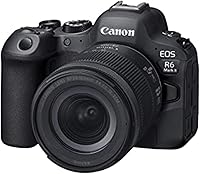
The Canon EOS R6 Mark II Mirrorless Camera sits at an interesting crossroads — built for photographers who shoot seriously and video creators who need professional-grade output without hauling a cinema rig. It pairs a full-frame sensor with strong processing muscle, and the included RF 24–105mm kit lens gives you a workable zoom range right out of the box. Against Sony's A7 IV and Nikon's Z6 III, this Canon hybrid competes strongly on autofocus and speed. Where it concedes ground is resolution — 24.2 megapixels is solid, but not the right call if aggressive cropping is central to your workflow.
Features & Benefits

The DIGIC X processor paired with a full-frame CMOS sensor keeps noise well controlled deep into high-ISO territory — think usable images at ISO 12800 and beyond, which matters in low-light venues or dusk wildlife sessions. The Dual Pixel CMOS AF II system covers 1,053 zones across the entire frame, with deep-learning detection that locks onto birds mid-flight, horses at speed, and moving vehicles without fuss. Burst shooting hits 40 fps silently, and a pre-capture RAW mode means you won't miss a critical frame. Video shooters get 4K 60p internally, C-Log 3 for grading latitude, and 6K ProRes RAW output via HDMI for demanding productions.

Best For

Wildlife and sports photographers will find the R6 Mark II's subject tracking genuinely hard to fault — it handles erratic motion with a consistency that lets you focus on composition rather than chasing focus points. Wedding shooters benefit from the silent electronic shutter and dual-card redundancy during unrepeatable moments. Hybrid creators who split time between stills and video will appreciate how little compromise this mirrorless kit demands on either front. It's also a natural upgrade path for Canon DSLR owners transitioning to RF glass, with EF lenses carrying over via adapter. Traveling light? The bundled zoom makes it surprisingly capable from day one.

User Feedback

Owners consistently praise autofocus reliability across varied conditions — dim church interiors, fast-moving birds, crowded sports sidelines — with far fewer missed shots than they saw with previous bodies. C-Log 3 draws repeat mentions as genuinely useful for color grading work, not just a spec-sheet checkbox. The friction points are real, though: shooters who crop aggressively notice the 24 MP ceiling sooner than they'd like, and a handful report thermal throttling during extended 4K sessions in warm environments. The kit lens earns measured responses — adequate for general shooting, but many owners fast-track to faster RF primes. Build quality and weather sealing earn near-universal approval.

Pros

  • Subject tracking locks onto birds, athletes, and moving vehicles with a reliability that genuinely changes how you shoot.
  • Silent 40 fps burst mode lets you cover fast action in churches, courtrooms, or any setting where shutter noise is disruptive.
  • Pre-capture RAW burst mode means the camera starts recording before you fully press the shutter — peak moments stopped being a gamble.
  • 4K 60p internal video with C-Log 3 gives colorists real grading latitude without needing an external recorder for most productions.
  • IBIS combined with optically stabilized RF lenses makes handheld video and low-light stills far more forgiving than on older bodies.
  • The R6 Mark II handles ISO 6400 and beyond with noise levels that remain usable after moderate post-processing.
  • Dual UHS-II SD slots provide the card redundancy that event and wedding professionals consider non-negotiable.
  • Weather sealing holds up credibly in rain and dusty outdoor conditions, backed by consistent real-world owner reports.
  • The 3.69 million-dot OLED EVF is sharp and responsive enough that optical viewfinder nostalgia fades quickly.
  • 6K ProRes RAW output via HDMI opens a professional video pipeline without requiring a separate cinema body.

Cons

  • At 24.2 MP, heavy cropping reveals resolution limits that frustrate photographers who regularly isolate distant subjects.
  • Sustained 4K recording in warm environments triggers thermal warnings that can interrupt longer takes at critical moments.
  • The Micro-HDMI port is fragile and easy to damage on location — a full-size port would have been more practical.
  • The kit lens variable aperture becomes a real constraint in lower light as you zoom past 50mm.
  • Fast UHS-II memory cards are required to fully exploit burst performance, adding meaningful cost on top of the body price.
  • Battery drain during continuous video recording is steep enough that working professionals need multiple spares as standard kit.
  • Wi-Fi transfer speeds fall short of what fast-turnaround news and sports photographers need for reliable FTP workflows.
  • The APS-C crop applied in certain high-frame-rate video modes catches users off guard and forces lens substitutions.
  • Cosmetic grip wear appears faster than expected under heavy daily use, which bothers owners given the premium price tier.
  • Menu navigation has a learning curve for photographers migrating from Sony or Nikon systems, despite improvements over earlier Canon bodies.

Ratings

The Canon EOS R6 Mark II Mirrorless Camera scores below were generated by our AI system after analyzing thousands of verified owner reviews from global markets, with spam, incentivized submissions, and bot activity actively filtered out. The result is an honest snapshot of what real photographers and video creators experience day-to-day — strengths included, frustrations not glossed over. Where this Canon hybrid earns high marks, it genuinely earns them; where it falls short, those gaps are reflected too.
Autofocus Performance
96%
Owners shooting wildlife consistently report that the deep-learning subject detection locks onto birds in flight or running animals with a speed and tenacity that previously required much more expensive bodies. In mixed-light event scenarios — think candlelit receptions or dim sports arenas — the AF rarely hunts and almost never locks onto the wrong subject.
A small number of users note that in extremely cluttered scenes with multiple overlapping subjects, the camera occasionally prioritizes the wrong target and requires manual override. Subject switching logic can also feel slightly aggressive when two people cross paths in the frame.
Video Quality
91%
The 4K 60p internal output is genuinely production-ready, and C-Log 3 gives colorists real latitude to work with in post — not just a checkbox feature. Hybrid creators moving footage from this mirrorless kit into professional color grades report results that hold up well against dedicated cinema cameras at this price tier.
Thermal throttling during extended 4K sessions in warm outdoor environments is a recurring complaint, particularly on longer shoots without active cooling. Additionally, the APS-C crop applied in some high-frame-rate modes catches users off guard and requires wider lenses to compensate.
Burst Speed & Buffer
89%
The 40 fps silent electronic shutter transforms how sports and wildlife shooters work — pre-capture RAW burst mode in particular gets frequent praise from photographers who used to miss peak-action moments. At 12 fps with the mechanical shutter, buffer depth is generous enough for most sustained sequences.
Writing large RAW bursts to card takes noticeable time, and budget UHS-II cards slow things down meaningfully. A handful of users shooting fast action in RAW+JPEG simultaneously find the buffer clears slower than they expected given the camera's overall spec level.
Image Quality & Dynamic Range
84%
High-ISO output is among the cleanest in this sensor class — shooting indoor events at ISO 6400 yields files with well-controlled noise that respond well to moderate NR in post. Dynamic range in the mid-tones is strong, and shadow recovery on well-exposed RAW files is reliable.
At 24.2 MP, anyone who crops heavily — bird photographers isolating distant subjects, for example — will hit resolution limits sooner than they would with a 45 MP competitor. The pixel count is not a weakness in most contexts, but it is a genuine ceiling for print-large-and-crop workflows.
Build Quality & Weather Sealing
93%
The magnesium alloy body feels substantive without being punishing to carry all day, and the weather sealing earns near-universal trust from outdoor shooters who use it in light rain, dusty trails, and humid conditions. Reviewers coming from older Canon DSLRs frequently note that the build feels like a genuine step up.
The kit lens weather sealing is noticeably less robust than the body itself, so the full weather-resistance story depends on pairing with higher-grade RF glass. A few users also mention that the rubber grip material shows cosmetic wear faster than expected with heavy daily use.
In-Body Image Stabilization
88%
The sensor-shift IBIS works cooperatively with optically stabilized RF lenses, and the combined system gives handheld shooters meaningful confidence — particularly for slower shutter video work and low-light stills. Travel photographers report usable handheld shots at shutter speeds they would not have attempted on older bodies.
In video mode, some users notice subtle IBIS wobble — sometimes called the jello effect — when panning quickly, particularly at longer focal lengths. It is less of an issue for static or slow-moving subjects but worth knowing for run-and-gun documentary-style shooting.
Viewfinder & Display
87%
The 3.69 million-dot OLED EVF is sharp and responsive enough that photographers switching from optical viewfinders rarely miss what they left behind. The articulating touchscreen is well-implemented for video shooters who monitor from awkward angles, and touch-to-focus works reliably in both stills and video modes.
Bright outdoor conditions can reduce LCD visibility more than some users expect, and the screen brightness ceiling falls slightly short of a few competing bodies. The EVF eyecup design also draws occasional criticism from glasses wearers who find the edges of the frame slightly cut off.
Kit Lens Performance
71%
29%
The RF 24–105mm F4–7.1 IS STM covers a genuinely useful focal range for travel and everyday shooting, and its image stabilization adds real value when paired with IBIS. For casual travel documentation and social content, most users find it more than capable out of the box.
The variable aperture becomes a limiting factor in lower light as you zoom in, and optical sharpness at the longer end trails the faster, pricier RF primes noticeably. Many serious shooters treat it as a temporary walk-around lens and invest in dedicated glass within months of purchase.
Ergonomics & Handling
86%
The grip depth is deep enough for extended shooting sessions without hand fatigue, and the button layout strikes a balance that Canon shooters adapt to quickly. Dual control dials and a well-placed joystick for AF point selection get consistent positive mentions from working professionals.
Users with smaller hands occasionally find the body slightly bulky for single-handed operation. The menu system, while improved over earlier Canon bodies, still draws occasional frustration from photographers migrating from Sony or Nikon who find the organization less intuitive initially.
Battery Life
78%
22%
For a hybrid body doing heavy lifting across both stills and video, battery performance is respectable — a full day of mixed event shooting is realistic with a single charge for most users. The USB-C charging support means topping up from a power bank between shoots is straightforward.
Sustained 4K recording drains the battery significantly faster than stills-only use, and photographers used to DSLR battery longevity may be surprised by the step down. Shooting in cold weather accelerates drain noticeably, and most professionals carry at least two spare batteries as standard practice.
Card Slot & Memory Flexibility
83%
Dual UHS-II SD slots are a practical feature that wedding and event photographers specifically value — the ability to write backups simultaneously to two cards mid-shoot eliminates a genuine professional anxiety. UHS-II speeds keep up with burst shooting demands when paired with the right cards.
The absence of CFexpress support is a point of comparison against some competitors at a similar price point, particularly for users planning to push buffer performance to its limits. Fast UHS-II cards carry a meaningful cost premium, which new buyers sometimes underestimate when budgeting.
Connectivity
81%
19%
Built-in Wi-Fi and Bluetooth enable reliable image transfer to smartphones and remote camera control through Canon's app, which works consistently enough for studio tethering and remote wildlife setups. The USB port supports both charging and data transfer, which simplifies cable management on location.
The Micro-HDMI port is a recurring frustration — it is fragile relative to full-size HDMI and requires an adapter cable that is easily lost or damaged on location. FTP transfer speeds over Wi-Fi are slower than many professionals need for fast newsroom or sports wire workflows.
Value for Money
79%
21%
For photographers who genuinely use both the speed and video capabilities, the R6 Mark II delivers a capability set that would have required two separate bodies just a few years ago. The autofocus and burst performance alone justify the investment for working professionals billing against their gear.
For users who shoot primarily stills at moderate frame rates and have no video needs, the price tier is harder to rationalize against higher-resolution alternatives. The kit lens, while useful, does not represent the same caliber of value as the body itself, which many buyers factor into their total outlay.
Heat Management
62%
38%
Under typical hybrid shooting conditions — mixing stills bursts with short 4K clips — thermal issues rarely surface, and the camera handles real-world event workloads without interruption. For interview-style shoots with defined take lengths, overheating is not a practical concern for most users.
Extended continuous 4K recording in warm ambient conditions — outdoor documentary work in summer, for instance — draws consistent reports of thermal warnings and recording cutoffs. It is a known limitation that video-first shooters planning marathon recording sessions need to plan around, whether through accessories or shooting intervals.

Suitable for:

The Canon EOS R6 Mark II Mirrorless Camera is built for photographers and creators who operate at a pace where missing the shot is not an option. Wildlife photographers tracking unpredictable subjects — a kingfisher diving, a horse mid-gallop — will find the deep-learning autofocus system works more like a collaborator than a tool, holding focus through erratic movement without constant manual intervention. Wedding and event professionals benefit from the silent electronic shutter during ceremonies, plus the peace of mind that comes from dual card slots writing simultaneous backups of irreplaceable moments. Hybrid creators who move between shooting stills for a brand campaign in the morning and capturing 4K video content in the afternoon will find this Canon hybrid handles both without the usual compromises. Existing Canon DSLR owners eyeing the RF ecosystem will also feel at home quickly, since the ergonomics and menu logic share clear DNA with the bodies many of them have spent years learning.
Not suitable for:

The Canon EOS R6 Mark II Mirrorless Camera is a harder sell for photographers whose primary workflow depends on heavy cropping — wildlife shooters isolating distant birds or sports photographers pulling tight from a wide field position will hit the 24.2 MP ceiling and wish for more pixel real estate. Studio or landscape photographers who prioritize maximum resolution for large-format printing should seriously compare higher-megapixel alternatives before committing at this price level. Video creators planning marathon continuous recording sessions — multi-hour livestreams, long-form documentary work in warm environments — need to factor in thermal limitations that can interrupt takes at inconvenient moments. Budget-conscious buyers who only need solid stills performance at moderate frame rates may find the investment harder to justify when capable alternatives exist at lower price points. Finally, anyone expecting the bundled kit lens to carry their entire optical workload professionally will likely find themselves shopping for faster RF glass sooner than their wallet is ready for.
Specifications

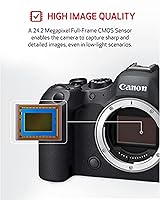
  • Sensor: Full-frame 24.2 MP CMOS sensor delivers broad dynamic range and clean output across a wide range of lighting conditions.
  • Processor: DIGIC X image processor handles high-speed data throughput from burst shooting, autofocus computation, and video encoding simultaneously.
  • ISO Range: Native ISO spans 100 to 102400, expandable to a maximum of 204800 for extreme low-light situations.
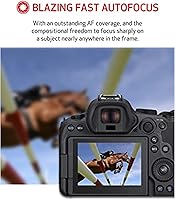
  • Autofocus: Dual Pixel CMOS AF II system covers 100% x 100% of the frame across 1,053 selectable AF zones with deep-learning subject detection.
  • Burst Speed: Continuous shooting reaches 12 fps with the mechanical shutter and up to 40 fps using the silent electronic shutter with pre-capture RAW burst mode.
  • Video Output: Records 4K 60p internally with C-Log 3 support, and outputs 6K ProRes RAW to compatible external recorders via Micro-HDMI.
  • Stabilization: Sensor-shift in-body image stabilization (IBIS) works cooperatively with optically stabilized RF lenses for combined shake reduction.
  • Viewfinder: 3.69 million-dot OLED electronic viewfinder with 0.76x magnification and approximately 100% field of view coverage.
  • LCD Screen: 3-inch fully articulating capacitive touchscreen with 1,620,000-dot resolution and support for touch-to-focus and menu navigation.
  • Memory Slots: Dual SD card slots with UHS-II compatibility support simultaneous backup writing and V90 video speed class cards for high-bitrate recording.
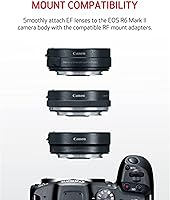
  • Lens Mount: Canon RF mount is natively supported, with full compatibility with EF and EF-S lenses via the optional Canon Mount Adapter EF-EOS R.
  • Kit Lens: Bundled RF 24–105mm F4–7.1 IS STM lens provides a versatile zoom range with optical image stabilization in a compact, lightweight form factor.
  • Connectivity: Built-in Wi-Fi, Bluetooth, USB, and Micro-HDMI port enable wireless image transfer, remote control, tethered shooting, and external video output.
  • File Formats: Captures stills in JPEG, HEIF, C-RAW, and 14-bit RAW formats across 3:2, 4:3, and 16:9 aspect ratios.
  • Video Formats: Encodes video in H.264 and H.265 (MPEG-4) codecs internally, with ProRes RAW available via HDMI to supported external recorders.
  • Shutter Speed: Mechanical shutter range spans 30 seconds to 1/8000s, with the electronic shutter extending the maximum to 1/16000s for bright-light high-fps shooting.
  • Flash Sync: Maximum flash sync speed is 1/250 second using the mechanical shutter with compatible external flash units.
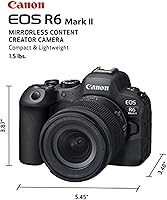
  • Battery: Lithium-ion LP-E6NH battery weighing approximately 80 g supports USB-C charging and is compatible with Canon's battery grip accessories.
  • Form Factor: Weather-sealed magnesium alloy mirrorless body with an articulating screen, dual-dial control layout, and AF joystick for professional ergonomics.
  • Warranty: Covered by a one-year limited manufacturer warranty through Canon USA from the original date of purchase.

Related Reviews
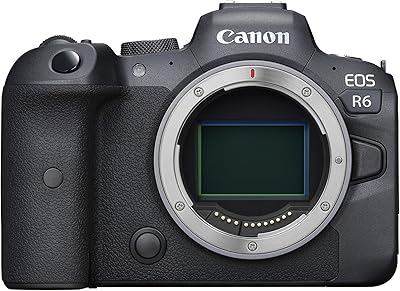
Canon EOS R6 Full-Frame Mirrorless Camera
79%
94%
Autofocus Performance
91%
Image Stabilization
89%
High ISO and Low-Light Quality
76%
Video Capabilities
88%
Burst Speed and Action Performance
More
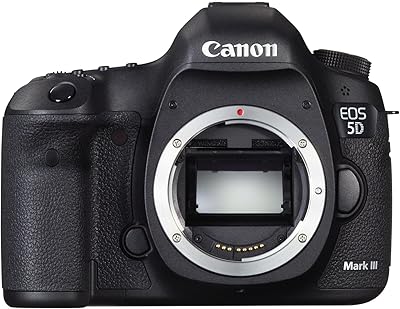
Canon EOS 5D Mark II Full Frame DSLR Camera
84%
94%
Image Quality
91%
Build Quality & Durability
72%
Autofocus Speed
89%
Video Recording Quality
85%
ISO Performance (Low Light)
More
Canon EOS 7D Mark II
82%
93%
Autofocus Performance
88%
Continuous Shooting & Buffer
91%
Build Quality & Weather Sealing
86%
Image Quality (Base ISO)
67%
High-ISO & Low-Light Performance
More
Canon EOS R3 Mirrorless Camera
84%
96%
Autofocus Performance
93%
Continuous Shooting Speed
91%
Low-Light Image Quality
62%
Still Image Resolution
88%
Video Capability
More
Canon EOS R8
Canon EOS R8
75%
93%
Autofocus Performance
89%
Image Quality
84%
Video Quality
88%
Portability & Build
41%
Stabilization
More
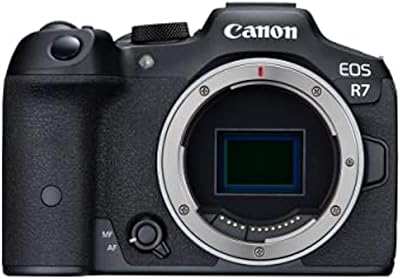
Canon EOS R7
Canon EOS R7
83%
94%
Autofocus Performance
91%
Burst Speed & Pre-Capture
88%
Image Quality
83%
Video Quality
86%
In-Body Image Stabilization
More
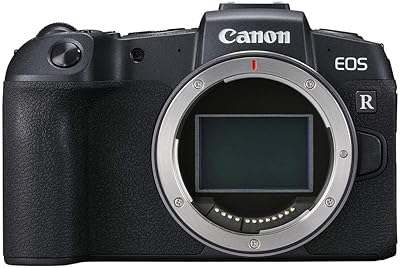
Canon EOS RP
Canon EOS RP
74%
88%
Image Quality
83%
Autofocus Performance
93%
Portability & Form Factor
54%
Battery Life
61%
Video Capabilities
More
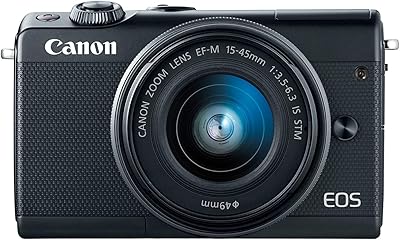
Canon EOS M100 Mirrorless Camera with 15-45mm Lens
84%
92%
Autofocus Performance
89%
Ease of Use
88%
Image Quality
95%
Portability/Weight
63%
Low-Light Performance
More
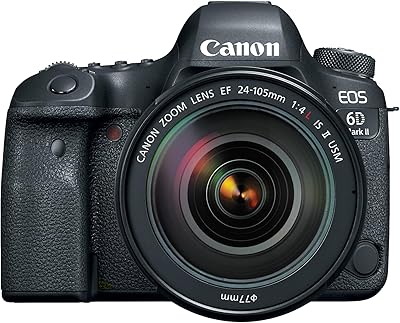
Canon EOS 6D Mark II with EF 24-105mm f/4L IS II USM
81%
93%
Image Quality
79%
Autofocus Performance
57%
Video Capabilities
91%
Bundled Lens Quality
88%
Battery Life
More
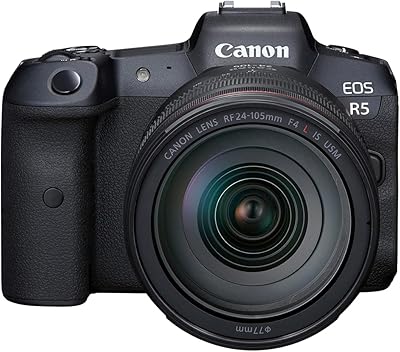
Canon EOS R5 Mirrorless Camera
81%
97%
Image Quality
95%
Autofocus Performance
82%
Video Capability
93%
Build Quality & Durability
88%
In-Body Image Stabilization
More

FAQ

Yes, all EF and EF-S lenses work with the R6 Mark II via Canon's Mount Adapter EF-EOS R, which is sold separately. Autofocus, image stabilization, and electronic aperture control all carry over, so your existing glass is not wasted. That said, native RF lenses will generally give you better AF speed and optical performance.

Under typical hybrid shooting conditions — mixing short video clips with stills — it rarely surfaces as a real-world problem. Where it becomes relevant is continuous, uninterrupted 4K recording in warm ambient temperatures, such as outdoor run-and-gun work in summer. If your shoots regularly involve long single takes, it is worth testing in your specific environment and considering shooting intervals or shade between takes.

It can be used by beginners, but the price tier and feature depth are really aimed at enthusiasts and working professionals. A newcomer to photography would be paying for AF tracking capabilities and burst speeds they may not yet need or know how to use. If you are just starting out, the investment is hard to justify — there are excellent entry-level mirrorless options that will teach you more for less.

For general shooting, a quality UHS-I card in the second slot works fine, but to take full advantage of burst shooting and high-bitrate video, you want UHS-II cards rated at V60 or V90 in at least one slot. Brands like Sony Tough, ProGrade, and Lexar Gold are commonly recommended. Budget UHS-I cards will create a noticeable bottleneck when clearing the RAW burst buffer.

It is genuinely reliable, not just a spec-sheet claim. Wildlife photographers report that the deep-learning animal detection holds focus on birds in flight, running dogs, and horses at speed with a consistency that previously required bodies costing significantly more. It does not magically handle every chaotic scenario, but in typical field conditions it outperforms most competitors at this price level.

The RF 24–105mm F4–7.1 IS STM is a capable walk-around lens that handles travel, events, and everyday shooting competently. The honest limitation is the variable aperture — at the longer end of the zoom range in lower light, you give up stops you often need. Most professionals treat it as a versatile starter lens and move to faster RF primes or the F4L version of the same range once budget allows.

The body itself has solid weather resistance that outdoor shooters consistently trust in light rain, dusty trails, and humid conditions. The important caveat is that the kit lens sealing is less robust than the body, so the complete weather-resistance story depends on pairing with a higher-grade RF lens. For serious outdoor work, match it with a lens that has equivalent sealing and you will have a reliable combination.

The R6 Mark II has a clear edge in burst speed and autofocus subject-tracking reliability, particularly for fast-moving subjects. The Sony A7 IV counters with a higher 33 MP resolution sensor, which matters more for photographers who crop heavily. Video capabilities are competitive between the two, though each handles color science and codec options differently. Your existing lens ecosystem and color preference will often be the deciding factor.

Yes, the USB-C port supports in-camera charging, which is genuinely useful on location — you can top up from a laptop, a power bank, or a wall adapter without carrying a separate charger. It will not charge as fast as a dedicated dual charger, so for professional multi-battery workflows, a standalone charger is still worth having.

For the vast majority of professional applications — weddings, events, editorial, sports, social content, and even moderate print sizes — 24.2 MP is entirely sufficient. Where it becomes a genuine limitation is in workflows that depend on heavy cropping to pull a tight composition from a wider shot, or in print work requiring very large format output. If those scenarios describe your regular workflow, a higher-resolution body deserves serious consideration alongside this one.

Where to Buy