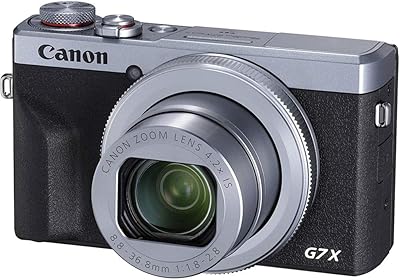
Canon EOS 7D Mark II
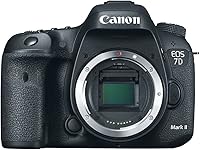
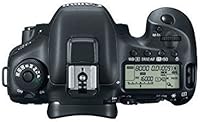
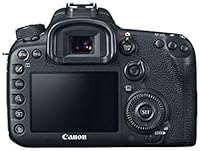
Overview
The Canon EOS 7D Mark II earned a strong reputation as Canon's most capable APS-C DSLR for photographers who shoot fast, unpredictable subjects. This is not an entry-level camera dressed up with extra buttons — it is a body built for people shooting motorsports on weekends or tracking birds in flight at dawn. The dual memory card slots alone signal its semi-professional intent, letting you write simultaneously to CompactFlash and SD cards as a live backup. It sits below Canon's full-frame lineup in sensor size, but that APS-C crop actually works in your favor when you need extra reach on a long telephoto lens.
Features & Benefits
The 65-point autofocus system is what most buyers come for, and every single point is cross-type — meaning the camera can lock onto a subject and hold it through genuinely erratic movement, whether that is a goalkeeper diving or a raptor banking mid-air. Paired with 10 frames per second continuous shooting, moments that would vanish with a slower body become catchable. The 20.2-megapixel sensor handles ISO well up to around 3200; push past 6400 and noise becomes noticeable, which is a real tradeoff versus full-frame rivals. Video shooters get Dual Pixel CMOS AF for responsive, smooth focus pulls — useful, though this remains a stills-first camera at heart.
Best For
This Canon DSLR makes the most sense for photographers who regularly chase fast-moving subjects — sports sidelines, wildlife reserves, or air shows. The APS-C crop factor gives telephoto lenses an effective reach multiplier, which matters enormously when your subject is hundreds of meters away and closing in fast. Event photographers needing dual-card redundancy will find the workflow practical and reassuring. If you already own Canon EF or EF-S glass, upgrading to this APS-C body without abandoning your lens collection is a cost-effective move. It is less compelling for studio or landscape work, where high-ISO performance and dynamic range carry considerably more weight.
User Feedback
Owners consistently praise the autofocus reliability in demanding conditions — tracking subjects through cluttered backgrounds, low light, and rapid direction changes that would trip up lesser systems. The weather-sealed magnesium alloy construction draws frequent compliments from photographers who work regularly in rain or dust. On the other side, buyers considering this camera at full price should weigh the high-ISO noise honestly; elevated sensitivities require more post-processing than a full-frame body at a comparable investment. Several reviewers flag that the body-only pricing stings if you do not already own compatible lenses. Long-term users, though, consistently report that it simply keeps performing — year after year without mechanical drama.
Pros
- The 65-point all-cross-type AF system tracks erratic, fast-moving subjects with a reliability that cheaper bodies cannot match.
- Ten frames per second gives action photographers genuine coverage of split-second moments across extended bursts.
- Weather-sealed magnesium alloy construction holds up to rain, dust, and rough field conditions without hesitation.
- Dual memory card slots allow simultaneous backup writing, a workflow safeguard event professionals genuinely depend on.
- The APS-C crop factor effectively extends telephoto reach, making long lenses punch further without additional glass.
- Battery life is strong enough to cover a full day of active shooting on a single charge in most conditions.
- The deep, secure grip handles heavy telephoto lenses comfortably during long handheld sessions.
- Dual Pixel CMOS AF makes video focus transitions smoother and more natural than most stills-first DSLRs offer.
- Full compatibility with Canon EF and EF-S lenses means an enormous native glass ecosystem with no adapter required.
- Long-term owners report exceptional mechanical reliability, with shutter durability that suits years of heavy professional use.
Cons
- High-ISO noise becomes a real problem past ISO 6400, limiting usefulness in genuinely dark environments.
- No built-in Wi-Fi or Bluetooth means wireless file transfer requires an additional accessory purchase.
- CompactFlash cards are increasingly hard to find at retail and cost more per gigabyte than modern SD alternatives.
- The body-only price is steep for buyers who still need to factor in compatible lens purchases on top.
- There is no in-body image stabilization, leaving handheld shooters entirely reliant on optically stabilized lenses.
- Video output is capped at 1080p, which sits behind the 4K standard that most current competing cameras now offer.
- The menu system is dense and takes meaningful time to learn before it can be navigated confidently under pressure.
- Body weight exceeds 900 grams before any lens is attached, which adds up over long shooting days.
- Rolling shutter during video pans requires deliberate, slow technique rather than natural handheld movement.
- Buyers considering long-term system migration to full-frame should note that EF-S lenses will not transfer to Canon full-frame bodies.
Ratings
The Canon EOS 7D Mark II scores below are generated by AI after analyzing thousands of verified buyer reviews worldwide, with spam, bot activity, and incentivized feedback actively filtered out. This APS-C DSLR has accumulated a substantial review record across sports, wildlife, and event photography communities, giving the data real depth. Both the strengths that keep photographers loyal to this body and the recurring frustrations that temper enthusiasm are reflected transparently in every category score.
Autofocus Performance
Continuous Shooting & Buffer
Build Quality & Weather Sealing
Image Quality (Base ISO)
High-ISO & Low-Light Performance
Autofocus Tracking (Moving Subjects)
Video Capabilities
Battery Life
Ergonomics & Handling
Dual Memory Card System
Viewfinder Experience
Value for Money
Lens Ecosystem Compatibility
Reliability & Longevity
Connectivity & Data Transfer
Suitable for:
The Canon EOS 7D Mark II was built for photographers who shoot subjects that refuse to stay still, and that remains its clearest strength today. Sports photographers covering sideline action — football, cycling, athletics — will find the autofocus system and burst rate genuinely competitive even by current standards. Wildlife photographers in particular benefit from the APS-C sensor's crop factor, which effectively extends the reach of any telephoto lens without requiring an extender that costs light and sharpness. Semi-professional event shooters who need a second card slot for real-time backup will feel the dual-slot setup as a practical necessity rather than a luxury. Photographers already invested in Canon EF glass are the natural audience for this APS-C body — it runs the full EF lens catalog natively without adapters or compromises. Even buyers approaching this camera secondhand will find it holds up as a workhorse body for demanding field use, backed by a magnesium alloy build that has proven its durability across years of professional service.
Not suitable for:
The Canon EOS 7D Mark II is a harder sell for photographers whose priorities sit outside action and tracking work. Shooters who regularly push into high ISO territory — covering dark concert halls, candlelit receptions, or indoor sports under poor artificial lighting — will encounter noise levels that a full-frame body at a comparable investment handles considerably more cleanly. Landscape and studio photographers will find little in this camera that justifies its price over smaller, lighter alternatives with better dynamic range in the APS-C category. It has no in-body image stabilization, which matters to anyone shooting handheld in low light or with longer focal lengths without optically stabilized lenses. Video-focused buyers should look elsewhere too — the 1080p ceiling and absence of 4K output put it well behind current mirrorless options. Anyone starting fresh without a Canon lens collection should carefully consider whether the total system investment makes sense before committing, rather than evaluating the body cost in isolation.
Specifications
- Sensor: The camera uses a 20.2-megapixel APS-C CMOS sensor with a crop factor of approximately 1.6x relative to full-frame.
- ISO Range: Native ISO spans 100 to 16000, expandable to a minimum of 100 and a maximum of 51200 for extreme low-light situations.
- Autofocus System: A 65-point all-cross-type phase-detection AF system handles subject acquisition, supplemented by on-sensor contrast detection for video.
- Continuous Shooting: The camera shoots at up to 10 frames per second in continuous burst mode with a mechanical shutter.
- Shutter Speed: Mechanical shutter range runs from 1/8000 sec at the fast end down to 30 seconds, plus a Bulb mode for long exposures.
- Video Resolution: Video recording is limited to Full HD 1080p with Dual Pixel CMOS AF active during capture for smooth continuous focus.
- Memory Slots: Two card slots are available simultaneously: one CompactFlash slot and one SD/SDHC/SDXC slot for dual-card backup or overflow workflows.
- Viewfinder: An optical pentaprism viewfinder provides approximately 100% field coverage at 1.0x magnification.
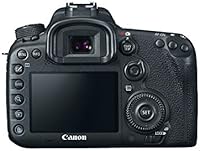
- Rear Screen: A fixed 3″ LCD screen with a resolution of 1,040,000 dots serves as the primary review and menu navigation display.
- Battery Life: Canon rates the LP-E6N battery pack at approximately 670 shots per charge under standard testing conditions.
- Body Weight: The body alone weighs approximately 910 grams, not including any lens, strap, battery, or memory cards.
- Weather Sealing: The magnesium alloy shell incorporates dust and moisture sealing at all major joints, dials, and port covers.
- Lens Mount: The camera accepts all Canon EF and EF-S mount lenses natively without any adapter required.
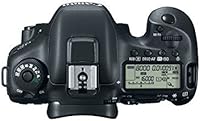
- Flash Sync: Maximum flash sync speed is 1/250 sec, with a dedicated hotshoe on the top plate for external flash units.
- Connectivity: External connections include one USB 3.0 port for tethered shooting and data transfer, plus a Mini HDMI output for monitor or recorder use.
- File Formats: Still images can be saved as JPEG at multiple quality levels or as 14-bit RAW files for maximum post-processing flexibility.
- Shooting Modes: Available exposure modes include Program AE, Shutter Priority, Aperture Priority, Manual, Bulb, and multiple Custom shooting modes.
- Metering System: Exposure metering options cover Evaluative (multi-zone), Center-weighted, Spot, and Partial patterns selectable per shot.
- Warranty: Canon provides a standard one-year limited warranty covering both parts and labor from the date of original purchase.
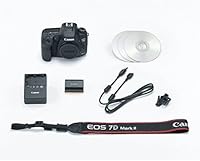
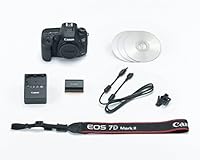
- In-Box Contents: The body-only package includes a battery charger LC-E6, battery pack LP-E6N, USB interface cable, cable protector, and wide neck strap.
Related Reviews
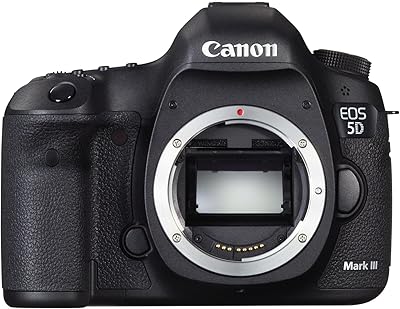
Canon EOS 5D Mark II DSLR Camera
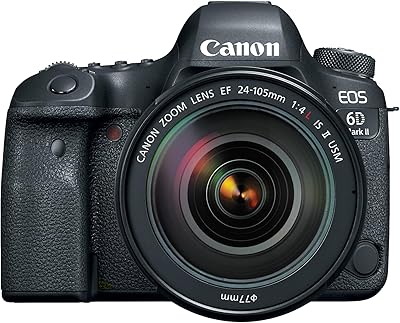
Canon EOS 6D Mark II with EF 24-105mm f/4L IS II USM
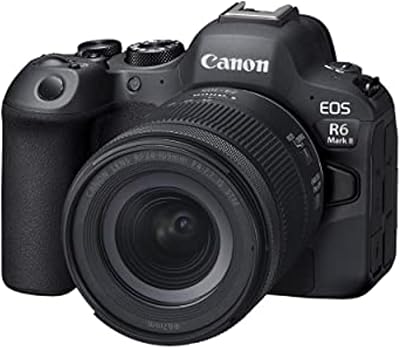
Canon EOS R6 Mark II Mirrorless Camera
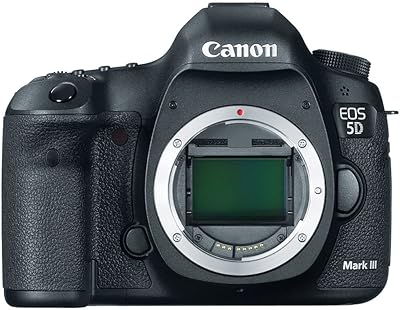
Canon EOS 5D Mark III
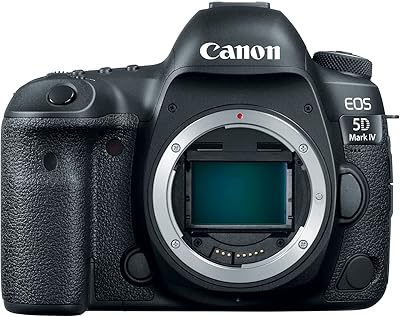
Canon EOS 5D Mark IV
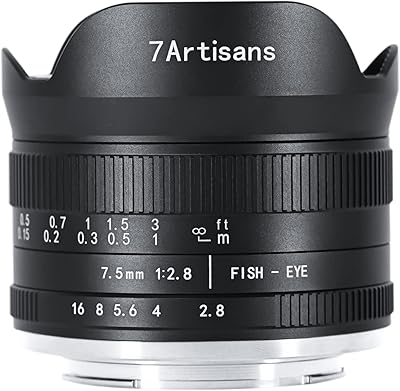
7artisans 7.5mm f2.8 Mark II Fisheye Lens
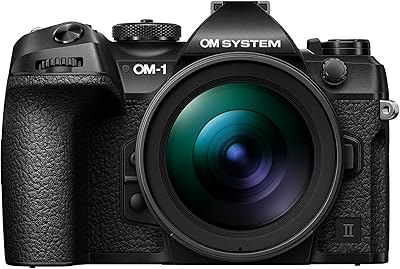
OM System OM-1 Mark II with M.Zuiko 12-40mm f/2.8 PRO II
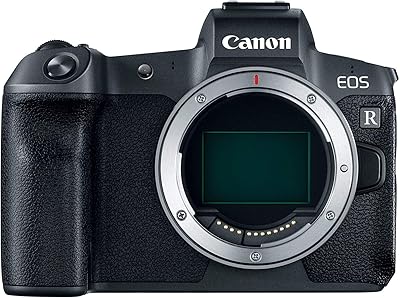
Canon EOS R Full-Frame Mirrorless Camera
Canon EOS R3 Mirrorless Camera