Overview

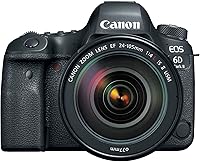
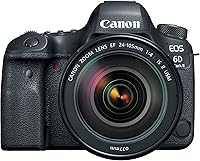
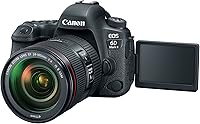
The Canon EOS 6D Mark II with EF 24-105mm f/4L IS II USM is Canon's answer to enthusiasts ready to leave crop-sensor limitations behind without spending flagship money. Compared to the original 6D, the improvements are meaningful: a higher-resolution 26.2 MP sensor, an articulating touchscreen, and Dual Pixel AF that the first generation never had. Bundled with a versatile L-series zoom, this full-frame Canon kit covers wide-angle city shots through short telephoto portrait work without touching a lens bag. It's a prosumer tool — capable and well-built, but not designed to compete with Canon's own 1D-series or speed-hungry sports shooters.
Features & Benefits

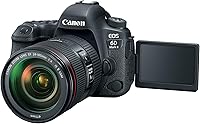
The 26.2 MP full-frame sensor is where this camera earns its keep. Shots taken at dusk or indoors hold detail and color that APS-C sensors simply can't match, and large prints stay sharp without aggressive sharpening in post. Dual Pixel CMOS AF is a genuine standout — in live view or while recording video, focus tracks subjects with a confidence and fluidity that contrast-only systems struggle to replicate. The flip-out touchscreen makes ground-level and overhead compositions far less awkward. Wi-Fi, NFC, and Bluetooth mean transferring images or triggering the shutter remotely doesn't require extra hardware. The 24-105mm L-series lens adds four stops of stabilization and a focal range that handles architecture, portraits, and compressed landscapes without switching glass.

Best For

This enthusiast DSLR is a natural fit for travel photographers who want to leave half their bag at home. One body, one lens, and you're covered from 24mm street shots to 105mm compressed portraits. Canon shooters upgrading from Rebel or 80D bodies will find the transition intuitive — the menu structure and EF lens compatibility mean nothing feels foreign. Hybrid content creators who care about smooth video autofocus will appreciate the flip screen and Dual Pixel tracking. Where it falls short is at the edges: if you're covering fast-moving sports or need 4K video for professional delivery, the 6D Mark II's 6.5 FPS burst rate and 1080p ceiling will leave you wanting a different body.

User Feedback

Owners consistently praise the low-light image quality and the bundled glass, with many noting the lens alone justifies a significant portion of the investment. Battery longevity gets frequent mentions — around 1,200 shots per charge is genuinely impressive for a full-day shoot. The articulating screen was, for many buyers, the single feature that pushed them to upgrade. That said, the criticism around no 4K recording is hard to ignore at this price point; it comes up often enough that it's clearly not a niche complaint. Autofocus in the optical viewfinder also draws mixed reactions — it works well in good light, but the live-view Dual Pixel experience is noticeably more reliable when tracking moving subjects.

Pros

  • The full-frame sensor produces low-light images that are genuinely hard to fault at this level of the market.
  • Dual Pixel AF in live view tracks subjects with a smoothness that other DSLRs in this category cannot match.
  • The bundled 24-105mm L-series lens covers an impressive range without any compromise on optical build quality.
  • Battery life of around 1,200 shots per charge means full travel days rarely require a mid-session swap.
  • The articulating touchscreen makes awkward angles, overhead shots, and solo recording genuinely practical.
  • Canon EF lens compatibility means existing glass investments carry forward without adapters or compromises.
  • Weather sealing on both the body and lens builds real confidence shooting outdoors in unpredictable conditions.
  • 14-bit RAW files give editors substantial flexibility in post, particularly for shadow recovery and white balance correction.
  • Ergonomics are comfortable and well-balanced for extended handheld shooting across long days.

Cons

  • No 4K video recording is a hard limitation that competitors at this price tier did not share at the same release window.
  • Optical viewfinder autofocus tracking is unreliable for fast or erratic subjects — a meaningful gap from the live view experience.
  • No in-body image stabilization means handheld low-light shooting depends entirely on whether the mounted lens has optical IS.
  • The wireless pairing app is clunky and prone to dropping Bluetooth connections at inconvenient moments.
  • At 6.5 FPS, burst shooting speed will frustrate anyone covering sports or unpredictable action sequences.
  • The articulating screen hinge feels less confidence-inspiring than the rest of the body after prolonged use.
  • Bright outdoor shooting with the LCD is a genuine visibility struggle even at maximum brightness settings.
  • The constant f/4 aperture on the bundled lens limits subject separation and struggles in very low ambient light without IS.
  • Compared to same-era mirrorless alternatives, the overall kit is noticeably heavier and bulkier for travel-focused buyers.

Ratings

The Canon EOS 6D Mark II with EF 24-105mm f/4L IS II USM has been scored below using AI analysis of thousands of verified global buyer reviews, with spam, bot-generated, and incentivized submissions actively filtered out. The scores reflect the full spectrum of real-world experience — from weekend travel shooters to hybrid content creators — and do not shy away from the legitimate frustrations owners have raised alongside the genuine strengths.
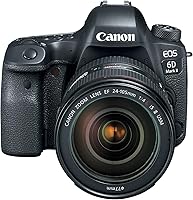
Image Quality
93%
The 26.2 MP full-frame sensor consistently earns high praise for its performance in low-light conditions — restaurants, golden-hour landscapes, and indoor events all yield shots with controlled noise and impressive tonal range. Owners printing large format work report the detail holds up well beyond A3 size.
In very high-contrast scenes, highlight recovery in JPEG mode can fall short of what competitors offer at the raw file level. Users doing heavy HDR work occasionally note the dynamic range, while good, trails slightly behind Sony's full-frame offerings from the same era.
Autofocus Performance
79%
21%
In live view, the Dual Pixel CMOS AF is a standout feature — it tracks faces and moving subjects with a smoothness that feels closer to mirrorless than traditional DSLR phase detection. Video shooters and vloggers frequently single this out as the feature that justified the purchase.
Switch to the optical viewfinder for fast subjects and the experience is notably less consistent. The 45-point AF system handles casual and portrait work fine, but owners shooting birds in flight or kids' sports find the tracking unreliable compared to higher-tier bodies.
Video Capabilities
57%
43%
1080p at 60 frames per second produces clean, smooth footage, and the Dual Pixel AF makes the 6D Mark II a genuinely usable video tool for content creators who shoot in controlled environments. The articulating screen is a real practical advantage during solo recording.
The absence of 4K recording is the single most cited complaint among buyers at this price point, and it is hard to argue otherwise. Competitors available at similar or lower prices during the same release window offered 4K, making this omission feel like a deliberate compromise rather than a technical limitation.
Bundled Lens Quality
91%
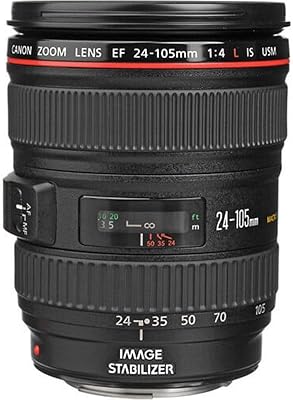
The EF 24-105mm f/4L IS II USM is not a token kit lens — it is a professional L-series optic with real optical image stabilization and weather sealing. Travel photographers report being able to leave their bag at home for full shooting days, covering architecture, street scenes, and portraits without touching a lens swap.
The constant f/4 maximum aperture means shallow depth-of-field portrait work requires either a fast prime or significant cropping. In genuinely low-light scenarios without stabilization being sufficient, users reaching for subject separation find the lens limiting compared to an f/2.8 zoom.
Battery Life
88%
Rated at approximately 1,200 shots per charge, real-world users confirm the LP-E6N battery holds up exceptionally well across full travel days. Landscape shooters report returning from multi-hour hikes with substantial charge remaining, even with moderate LCD use.
Heavy live view use and video recording drain the battery considerably faster than the rated figure suggests. Vloggers and hybrid shooters who rely on the flip screen rather than the viewfinder find themselves needing a spare battery as standard kit for all-day shoots.
Build Quality & Ergonomics
86%
The body feels solid in hand without being punishing to carry all day at 1.69 lbs. The grip is deep and comfortable for extended shooting, and weather sealing on both the body and the bundled L-series lens gives genuine confidence shooting in light rain or dusty conditions.
Some users upgrading from higher-tier Canon bodies note the control layout feels slightly simplified — particularly the lack of a joystick for AF point selection, which forces reliance on the touchscreen or directional pad in situations where speed matters.
Articulating Touchscreen
84%
The flip-out 3-inch touchscreen was a deliberate upgrade target for many buyers coming from the original 6D, and it delivers. Ground-level flower shots, overhead crowd captures, and self-recording setups all become significantly more practical with a screen that swings fully around.
The 1,040,000-dot resolution is adequate but not exceptional — in bright outdoor sunlight, visibility can be a struggle even at maximum brightness. A few users also note the hinge mechanism feels less robust than the body itself after extended articulation use.
Low-Light Performance
92%
This is where the full-frame sensor earns consistent admiration. Night street photography, candle-lit interiors, and astrophotography all benefit from the sensor's ability to pull clean detail at high ISO settings that APS-C bodies simply cannot match.
While ISO performance is strong, the lack of in-body image stabilization means that low-light handheld shooting depends entirely on the lens IS system. Users without stabilized glass on the body find the full-frame advantage partially offset at slower shutter speeds.
Wireless Connectivity
74%
26%
Built-in Wi-Fi, NFC, and Bluetooth cover the practical bases well. Pairing with Canon's mobile app for remote shutter triggering or quick social media transfers works reliably once the initial setup is done, which travel and event photographers appreciate.
The pairing process and app interface receive consistent criticism for being clunky and unintuitive compared to what smartphone users expect in a modern workflow. Several owners report the Bluetooth connection drops unexpectedly and requires re-pairing more often than it should.
Burst Shooting Speed
62%
38%
At 6.5 FPS, the continuous shooting speed is workable for casual wildlife, casual sports sideline coverage, and documentary-style shooting where the action is somewhat predictable. Nature photographers shooting stationary or slow-moving subjects report no frustration with the burst rate.
For anything requiring sustained high-speed tracking — fast birds, motorsport, children's athletics — 6.5 FPS falls noticeably short of what the competition offers at comparable or lower price points. This is one area where the prosumer positioning of the body is felt most acutely.
Value for Money
76%
24%
Considered as a bundle pairing a full-frame body with a professional-grade zoom lens, the overall package represents a meaningful long-term investment for an enthusiast stepping into the Canon L-series ecosystem. The lens alone carries substantial resale value.
The missing 4K video capability makes the price harder to justify for buyers who care about future-proofing their video workflow. At the time of release and in the years since, comparable investments in Sony or Nikon alternatives delivered 4K, making the value equation feel unbalanced for hybrid shooters.
Ease of Use for Upgraders
89%
Canon shooters moving up from Rebel or 80D bodies will find the menu structure, button layout, and EF lens compatibility immediately familiar. The learning curve is genuinely shallow compared to switching ecosystems, and the full-frame image quality improvement is immediately visible.
Complete beginners without any Canon background occasionally find the menu depth overwhelming, particularly around custom function settings. The manual and onboard guidance are considered thin by a portion of newer users who would benefit from more guided shooting modes.
Portability
81%
19%
For a full-frame DSLR with an L-series zoom attached, the combined package is reasonably manageable. Travel photographers report comfortably carrying the kit over a shoulder all day in cities like Tokyo or Rome without significant fatigue.
Against mirrorless alternatives in the same sensor class, the body-plus-lens combination is noticeably bulkier and heavier. Users who prioritize discretion or pack light for air travel find themselves occasionally wishing for a more compact full-frame option.
Raw File Flexibility
87%
14-bit RAW files from the full-frame CMOS sensor give editors substantial latitude in post-processing. Landscape and portrait photographers working in Lightroom or Capture One report confident shadow lifting and white balance correction without visible banding or posterization.
Canon's color science in RAW, while warm and pleasing straight out of camera, can require additional calibration work for photographers whose clients expect cooler, more neutral tones. A small segment of professional users find the default profile requires consistent correction.
Optical Viewfinder Experience
83%
The optical pentaprism viewfinder at 0.71x magnification provides a bright, clear view that still feels natural and responsive for traditional DSLR shooters. Sports and street photographers who prefer eye-level framing over live view find the viewfinder comfortable during extended sessions.
The viewfinder AF experience, as noted by many owners, does not match the quality of the Dual Pixel live view system. Photographers who primarily shoot action or moving subjects through the viewfinder often find the performance a step behind what the overall camera reputation might suggest.

Suitable for:

The Canon EOS 6D Mark II with EF 24-105mm f/4L IS II USM is purpose-built for enthusiast photographers who have outgrown what a crop-sensor body can deliver and want to make a meaningful, long-term investment in full-frame image quality without jumping to a professional flagship. It is an especially strong fit for travel photographers who want a single versatile lens covering wide cityscapes through compressed portrait distances, all in a weather-sealed package that can handle a dusty market or a light coastal drizzle. Canon shooters already invested in EF glass will find the transition completely frictionless — nothing about the menu logic or button layout feels foreign, which makes the upgrade feel like growth rather than a restart. Hybrid creators who want a flip-out screen and smooth video autofocus for solo vlogging or documentary-style clips will get genuine practical value from the Dual Pixel AF system in live view. Landscape and nature photographers working in lower-light conditions, or anyone regularly making large prints, will see the full-frame sensor's impact in the very first shoot.
Not suitable for:

The Canon EOS 6D Mark II with EF 24-105mm f/4L IS II USM is not the right call for anyone whose primary workflow depends on 4K video — that capability simply is not here, and at this investment level, that omission is difficult to rationalize for hybrid shooters comparing options side by side. Photographers who regularly cover fast-moving subjects — youth sports, wildlife in flight, motorsport — will find the 6.5 FPS burst rate and the optical viewfinder autofocus tracking fall short of what dedicated sports bodies or newer mirrorless alternatives deliver. Buyers who are completely new to interchangeable-lens photography may find the full system investment steep as a starting point when more affordable crop-sensor kits can cover the learning curve at a fraction of the cost. If portability is a top priority and the goal is to travel light, the combined weight and bulk of this full-frame DSLR kit will likely feel heavy compared to mirrorless full-frame systems that offer comparable image quality in a noticeably smaller form factor. Anyone primarily shooting in a professional commercial or studio environment where resolution, tethering reliability, and workflow speed are critical would be better served by a higher-tier body.
Specifications

  • Sensor: 26.2 MP full-frame CMOS sensor delivers high-resolution stills with strong dynamic range and low-light performance suitable for large-format printing.
  • Processor: DIGIC 7 image processor handles fast data throughput, enabling 6.5 FPS continuous shooting and smooth Full HD video rendering.
  • Autofocus: Dual Pixel CMOS AF with 45-point all cross-type phase detection provides reliable subject tracking in both optical viewfinder and live view modes.
  • Burst Rate: Continuous shooting is supported at up to 6.5 frames per second, suitable for moderate-action and documentary-style photography.
  • Video: Records Full HD 1080p video at up to 60 frames per second in MP4 format; 4K recording is not supported on this body.
  • Viewfinder: Optical pentaprism viewfinder offers 0.71x magnification, delivering a bright and natural eye-level framing experience.
  • LCD Screen: 3-inch fully articulating touchscreen LCD with 1,040,000-dot resolution supports touch-to-focus, swipe navigation, and flexible angle shooting.
  • ISO Range: Native ISO starts at 100 and is expandable, covering a broad sensitivity range for both daylight and low-light shooting conditions.
  • Battery Life: LP-E6N lithium-ion battery is rated for approximately 1,200 shots per charge under standard shooting conditions using the optical viewfinder.
  • Connectivity: Built-in Wi-Fi (IEEE 802.11b/g/n), NFC Forum Type 3/4 Tag compliant, and Bluetooth 4.1 (low energy) enable wireless image transfer and remote camera control.
  • Storage: Single SD card slot supports SD, SDHC, and SDXC media with UHS-I compatibility for high-speed writing; Eye-Fi cards are also supported.
  • Body Weight: Camera body weighs approximately 1.69 lbs (765 g) without lens, battery, or memory card attached.
  • Flash Sync: Maximum flash sync speed is 1/180 sec, with a hot shoe mount supporting Canon E-TTL compatible speedlites and third-party flashes.
  • Lens Included: Kit includes the EF 24-105mm f/4L IS II USM lens, a professional L-series optic built with 17 elements in 12 groups and a 77mm filter thread.
  • Lens Stabilization: The bundled lens features Canon's optical Image Stabilizer, providing up to four stops of compensation to reduce camera shake in handheld shooting.
  • Lens Mount: Canon EF mount is compatible with all Canon EF lenses; EF-S and EF-M lenses are not compatible with this full-frame body.
  • Focal Range: The included 24-105mm zoom covers a 4x optical zoom range, from 24mm wide-angle through to 105mm short telephoto, with a real angle of view of 84 degrees at the wide end.
  • Video Output: Mini-HDMI port enables direct output to external monitors or recorders during shooting or playback.
  • File Formats: Captures images in JPEG (Basic, Fine, Normal) and 14-bit RAW formats; video is recorded as MP4 files.
  • In-Box Contents: Package includes the camera body, EF 24-105mm f/4L IS II USM lens, LP-E6N battery pack, LC-E6 battery charger, wide neck strap, lens hood EW-83M, and lens caps.

Related Reviews
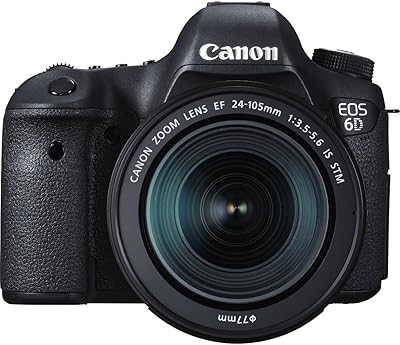
Canon EOS 6D DSLR Camera with EF 24-105mm f/3.5-5.6 IS STM Lens Kit
84%
94%
Image Quality
82%
Autofocus Performance
88%
Ease of Use
90%
Low-Light Performance
85%
Build Quality
More
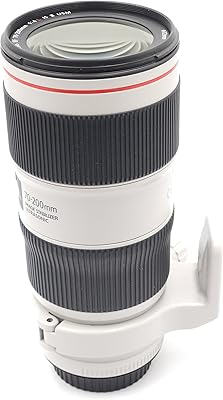
Canon EF 70-200mm f/4L IS II USM Lens
89%
94%
Image Quality
92%
Build Quality
88%
Ease of Use
90%
Weather Resistance
91%
Image Stabilization Performance
More
Canon EF 24-105mm f/4 L IS USM Lens
86%
94%
Image Quality
88%
Autofocus Performance
92%
Durability & Build Quality
90%
Versatility (Focal Length Range)
85%
Ease of Use
More
Canon EF 24-70mm f/2.8L II USM Lens
87%
94%
Image Quality
90%
Autofocus Performance
91%
Build Quality
86%
Usability
89%
Versatility
More
Canon EF 8-15mm f/4L Fisheye USM Ultra-Wide Zoom Lens
86%
93%
Image Quality
90%
Autofocus Performance
89%
Build Quality
88%
Versatility of Focal Range
85%
Weather Resistance
More
Canon EOS R5 Mirrorless Camera with RF 24-105mm F4 L IS USM Lens Kit
87%
95%
Autofocus Performance
93%
Image Quality
91%
8K Video Capabilities
67%
Battery Life
89%
Build Quality
More
Canon EOS R6 Mark II Mirrorless Camera RF24-105mm F4-7.1 IS STM Kit
86%
94%
Autofocus Speed
91%
Image Quality
89%
Video Performance (4K)
90%
Burst Shooting Speed
85%
Portability
More
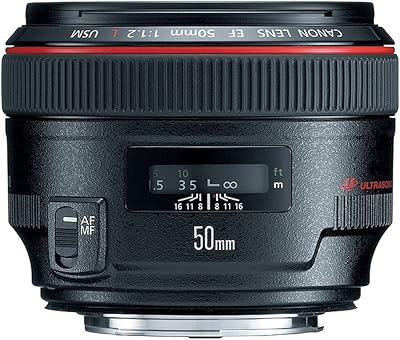
Canon EF 50mm f/1.2L USM
88%
94%
Image Quality
92%
Low-Light Performance
89%
Autofocus Speed
90%
Build Quality
91%
Bokeh Quality
More
Canon EF 85mm f/1.8 USM Lens
89%
94%
Image Quality
88%
Autofocus Performance
91%
Bokeh Quality
89%
Portability & Weight
85%
Build Quality
More
Canon EF 50mm f/1.4 USM Lens
87%
93%
Image Quality
90%
Low-Light Performance
87%
Autofocus Performance
88%
Build Quality
91%
Bokeh Quality
More

FAQ

No, it does not. The 6D Mark II tops out at Full HD 1080p at 60 frames per second. This is one of the most frequently raised criticisms of the camera, and it is worth being clear-eyed about if video quality is a major factor in your decision. For photographers who also shoot occasional video, 1080p 60p is perfectly usable — but dedicated hybrid shooters may find it limiting.

It is one of the most natural upgrade paths in the Canon ecosystem. The menu layout, button placement, and EF lens compatibility all carry over, so nothing feels unfamiliar. The jump to full-frame image quality — particularly in low light and for large prints — is immediately noticeable, and the bundled L-series lens is a meaningful step up from kit-grade glass.

No, EF-S lenses are not compatible with full-frame Canon bodies including the 6D Mark II. They are designed specifically for APS-C sensors and would cause vignetting or physical clearance issues on a full-frame body. Only Canon EF lenses (and third-party lenses with EF mounts) will work correctly.

In live view and video mode, the Dual Pixel CMOS AF is genuinely impressive — it tracks subjects smoothly and confidently in a way that most DSLRs cannot match. It is one of Canon's strongest differentiators in this body. Where autofocus is less reliable is when shooting through the optical viewfinder for fast-moving subjects, which is a separate, more traditional phase-detection system.

For a lot of photographers, the flip-out screen was the specific reason they upgraded to this body over the original 6D. It is genuinely practical for low-angle landscape shots, overhead crowd photography, and self-recording video. The main limitation is that the screen can be difficult to read in bright direct sunlight even at full brightness.

Battery life is one of the standout practical strengths of the 6D Mark II. The LP-E6N is rated for around 1,200 shots per charge using the viewfinder, and real-world travel shooters generally confirm this holds up well across long days. If you shoot heavily in live view or record a lot of video, drain is faster — carrying a spare battery is a sensible precaution for video-heavy days.

The EF 24-105mm f/4L IS II USM is a genuine professional L-series lens, not a basic kit optic. It has weather sealing, optical image stabilization, and optical quality that holds up in commercial and editorial work. The main trade-off is the constant f/4 maximum aperture, which limits background blur and struggles in very dim conditions without IS. For travel, portraits, and general photography, it is an excellent choice.

Both the body and the bundled 24-105mm lens carry weather sealing, which provides meaningful protection against light rain, dust, and moisture. This is not rated for submersion, but photographers shooting in drizzle, on beaches, or in dusty environments report genuine confidence from the sealing. It is one of the practical advantages of the L-series lens pairing over cheaper kit alternatives.

Canon's Camera Connect app handles wireless transfer and remote shutter control. In practice, the connection works once set up, but the pairing process and app interface are not as polished as users accustomed to modern smartphone apps might expect. Bluetooth is useful for maintaining a persistent low-energy connection, though some owners report it drops and requires re-pairing more often than it should.

Yes, this enthusiast DSLR is a solid choice for astrophotography and night landscape work. The full-frame sensor's performance at high ISO settings is one of its clearest practical strengths, and the ability to use wide-angle EF lenses — including fast primes like the Canon EF 24mm f/1.4L — makes it well-suited for Milky Way and star trail work. The absence of in-body image stabilization means long-exposure work should be done on a tripod, which is standard practice for this type of photography anyway.