Overview

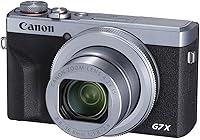
The Canon PowerShot G7 X Mark III is Canon’s answer to a growing crowd of creators who want serious image quality without hauling a full kit everywhere. Compared to its predecessor, the upgrades are meaningful: a stacked CMOS sensor, native 4K recording, and live-streaming support push this compact into genuinely useful territory for vloggers and travel shooters. It slips into a jacket pocket — the silver finish looks polished without being flashy. That said, this is an enthusiast-tier point-and-shoot, and the price reflects that reality. If you’re cross-shopping with the Sony RX100 VII, you’re in the right neighborhood — both cameras fight hard for the same buyer.
Features & Benefits

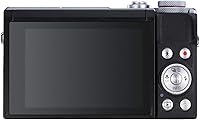
The heart of this compact camera is the 1-inch stacked sensor paired with the DIGIC 8 processor — together they produce noticeably cleaner images in dim cafés or evening street scenes where a smartphone would struggle. The 24–100mm equivalent zoom range with a fast f/1.8 aperture on the wide end covers most everyday shooting situations comfortably. Video shooters get 4K at 30fps and Full HD at a silky 120fps for slow-motion clips, plus a clean HDMI output that lets you use it as a proper webcam or live-streaming camera — a feature rivals still haven’t matched as neatly. The tilting touchscreen makes framing at awkward angles easy, and the 20 fps burst rate is genuinely useful for street or event work.

Best For

This Canon point-and-shoot is purpose-built for a specific type of user, and it shows. Travel vloggers will appreciate the combination of 4K video and live-streaming in a body that clears airport security without drama. Street photographers get a fast lens and a low-profile design that doesn’t attract attention the way a mirrorless setup does. For smartphone upgraders who want proper manual controls — aperture priority, shutter priority, full manual — without committing to interchangeable lenses, this is a natural step up. The wide f/1.8 aperture is a real advantage for anyone shooting portraits or interiors in poor lighting. Remote workers who want a dedicated webcam that actually looks good on video calls will find it fits that role cleanly too.

User Feedback

Owners consistently praise the G7 X Mark III for its image quality and how little space it takes up in a bag — a combination that’s hard to argue with. Vloggers highlight the vertical video support and live-streaming as features they actually use regularly. But the honest picture isn’t all positive. Battery life comes up repeatedly as a frustration; a single charge won’t survive a full day without a spare in your pocket. Extended 4K recording can trigger thermal throttling in warm conditions, which is worth knowing before a long outdoor shoot. The contrast-detection autofocus earns mixed marks — dependable for static subjects but noticeably slow on faster movement. Menu navigation also divides opinion, with newcomers finding the layout dense.

Pros

  • The 1-inch stacked sensor produces clean, detailed images in low-light conditions that comfortably outperform most smartphones.
  • 4K 30fps video and Full HD 120fps slow-motion give content creators genuine flexibility in a single compact body.
  • Live-streaming via clean HDMI output is a standout feature that few competitors in this category offer as cleanly.
  • The fast f/1.8 wide aperture makes a real, visible difference when shooting in dim restaurants, indoor venues, or at dusk.
  • At under a pound, the G7 X Mark III disappears into a jacket pocket without weighing down a travel day.
  • USB charging means one less dedicated charger to pack — a practical win for frequent travelers.
  • 20 fps continuous shooting and Raw Burst Mode give street and event photographers a real safety net for timing-critical shots.
  • The tilting touchscreen makes solo vlogging and low-angle or overhead shooting genuinely easy without a tripod arm.
  • RAW file output gives post-processing enthusiasts meaningful latitude to recover shadows and correct white balance.
  • Wi-Fi and NFC transfer work reliably for quick sharing to a smartphone without cumbersome cable workflows.

Cons

  • Battery life is genuinely short — active shooters and video creators should budget for at least one spare cell.
  • Overheating during extended 4K recording is a real pattern, not a rare edge case, especially in warm weather.
  • Contrast-detection autofocus noticeably struggles with fast or erratically moving subjects.
  • No weather sealing makes users cautious in light rain or dusty environments despite the travel-oriented design.
  • The screen washes out badly in direct sunlight, and there is no viewfinder to compensate.
  • The telephoto reach tops out at 100mm equivalent, which feels restrictive compared to rivals offering 200mm or more.
  • Buffer slowdown after sustained RAW burst sequences leaves the camera temporarily unresponsive at critical moments.
  • The menu system has a steep learning curve for newcomers and lacks the customizable shortcut layout experienced shooters expect.
  • No persistent Bluetooth connection means re-establishing Wi-Fi manually each time you want to transfer images.
  • The built-in microphone picks up wind noise easily outdoors, making an external mic a near-essential additional purchase for vloggers.

Ratings

The Canon PowerShot G7 X Mark III scores below were generated by our AI system after analyzing thousands of verified global user reviews, with spam, bot-submitted, and incentivized feedback actively filtered out. The result is an honest, weighted picture of what real buyers experience day-to-day — strengths and frustrations alike. From travel vloggers to street photographers, this compact camera attracts a passionate user base with some clear consensus on where it shines and where it falls short.

Image Quality
91%
The 1-inch stacked sensor consistently impresses users shooting in mixed or low light — indoor portraits, evening street scenes, and golden-hour travel shots all come back with genuine detail and natural color rendition. RAW files hold up well in post-processing, giving enthusiasts meaningful room to correct exposure.
At higher ISO settings, fine detail softens and noise management, while better than most compacts, still lags behind larger-sensor mirrorless cameras. A few users noted that JPEG processing can over-sharpen edges in high-contrast scenes.
Video Performance
88%
4K at 30fps delivers genuinely clean footage that holds up well on large screens, and the 120fps Full HD mode produces smooth slow-motion clips without heavy post-work. Vloggers specifically praise the vertical video support and the ability to connect via clean HDMI for live-streaming setups.
Overheating during extended 4K sessions is a recurring complaint — particularly in warm outdoor environments, where some users report the camera shutting down after 20 to 25 minutes of continuous recording. This is a real limitation for event or documentary-style shooters.
Portability & Form Factor
93%
This compact camera genuinely fits in a jacket pocket, and users repeatedly highlight how liberating that is on travel days when bag space is at a premium. The build feels solid rather than plasticky, and the silver finish attracts noticeably less street attention than a black DSLR would.
The compact body means a smaller grip, which some users with larger hands find tiring during long shooting sessions. A few reviewers also noted that the control layout feels slightly cramped, especially when trying to adjust settings quickly.
Low-Light Performance
83%
The fast f/1.8 aperture on the wide end is the real hero for low-light shooting — dim restaurant interiors, concert venues, and nighttime street photography are all significantly more usable compared to cameras with slower lenses. Users upgrading from smartphones notice an immediate difference.
As you zoom toward the telephoto end, the aperture narrows to f/2.8, which reduces the low-light advantage at longer focal lengths. Noise at ISO 3200 and above is manageable but noticeable, and some users expected cleaner results given the premium positioning.
Autofocus Performance
67%
33%
For stationary or slow-moving subjects — portraits, architecture, food photography — the contrast-detection autofocus locks on reliably and quickly enough that most users won't feel held back. Face detection works well in good lighting and is genuinely useful for vloggers recording themselves.
Fast-moving subjects expose the limits of contrast-detection AF — sports, kids, pets, and street candids all surface complaints about missed focus or hunting in low contrast situations. Users coming from phase-detection systems will feel the step down noticeably.
Battery Life
54%
46%
The battery charges via USB, which is a practical win for travelers who already carry a power bank — no separate charger required. Light users shooting sporadically throughout a day can often get through a half-day trip on a single charge.
Heavy users, especially those shooting 4K video or live-streaming, burn through a charge faster than expected — often within 90 minutes of active use. Buying a spare battery is effectively mandatory, and multiple reviewers called this out as a recurring frustration rather than a minor inconvenience.
Zoom Range & Lens Versatility
72%
28%
The 24–100mm equivalent range covers a solid spread of real-world scenarios: wide enough for architecture and landscapes, long enough for headshots or isolating a subject across a cafe table. The optical stabilizer helps at the longer end.
Against rivals like the Sony RX100 VII, which stretches to 200mm equivalent, the telephoto reach feels limited — wildlife, sports from a distance, or even zoo photography leave users wishing for more reach. Digital zoom degrades quality noticeably and most experienced users avoid it.
Vlogging & Content Creation
89%
The tilting touchscreen, vertical video support, built-in microphone input, and clean HDMI output combine to make this one of the most practical compact cameras for solo content creators. Users consistently highlight that it covers studio webcam, on-location vlogging, and social media clips in a single device.
The built-in microphone captures usable audio but struggles with wind outdoors — an external mic is worth budgeting for if audio quality matters. The microphone port is a 3.5mm input, which limits compatibility with some newer directional mics without an adapter.
Touchscreen & Display Usability
74%
26%
The 3-inch tilting touchscreen is sharp enough for accurate framing and touch-to-focus works responsively in most conditions. The tilt mechanism is smooth and opens up low-angle and overhead shots that would otherwise require guesswork.
The display washes out in direct sunlight, which makes outdoor shooting on bright days genuinely difficult without shade. Some users find the touch interface adds accidental taps during handling, and the lack of a viewfinder means there is no fallback option in harsh light.
Menu System & Ease of Use
63%
37%
Experienced Canon users will feel comfortable navigating the menu system fairly quickly, and the touchscreen does speed up some adjustments. Auto mode performs well enough that casual users can get good results without digging into settings.
New camera users frequently describe the menu structure as dense and non-intuitive — finding specific settings like custom white balance or focus area modes requires patience. There is no quick-access customizable button layout that rivals offer, which slows down experienced shooters who want fast adjustments.
Build Quality & Durability
78%
22%
The body feels more substantial than typical plastic point-and-shoots, and the button and dial action has a satisfying firmness that signals quality construction. Users report the camera holding up well through regular travel use, including backpack carry and variable weather.
There is no weather sealing, which makes users cautious in light rain or dusty environments — a limitation that feels meaningful given the travel-focused audience. A small number of reviewers reported that the zoom mechanism felt slightly looser after extended use.
Connectivity & Sharing
81%
19%
Wi-Fi and NFC make transferring photos to a smartphone fast and relatively painless — users who want to share images directly to Instagram or back up to cloud storage on the go find the workflow practical. The Canon Camera Connect app is functional and well-reviewed for basic remote control.
Bluetooth connectivity for maintaining a persistent low-power connection — standard on newer mirrorless cameras — is absent here, meaning the Wi-Fi connection has to be re-established manually each time. A small number of users reported inconsistent pairing behavior with certain Android devices.
Value for Money
69%
31%
For a specific type of user — the vlogger, the serious traveler, the content creator who wants dedicated hardware — the combination of features in a pocketable body is difficult to replicate at a lower price point. The live-streaming capability alone justifies a meaningful portion of the investment for creators.
At this price tier, the battery limitations, lack of weather sealing, and contrast-only autofocus feel like genuine compromises that buyers at this level shouldn't have to accept. Users comparing it directly to the Sony RX100 VII often feel the feature-per-dollar equation is closer than Canon's pricing implies.
Continuous Shooting & Burst Mode
82%
18%
Twenty frames per second is a strong spec for a compact camera and users report it performing reliably for street photography, kids at play, and event shooting where timing is everything. The Raw Burst Mode at 30fps gives post-processing flexibility that point-and-shoot users rarely expect to have.
Buffer depth limits how long a burst can sustain before slowing down, which catches some users off-guard during fast sequences. Writing RAW burst files to the card takes noticeable time, leaving the camera temporarily unresponsive for the next shot.

Suitable for:

The Canon PowerShot G7 X Mark III is purpose-built for creators and travelers who refuse to compromise on image quality but equally refuse to lug a full camera bag everywhere they go. Solo vloggers will find it particularly well-matched to their workflow — the tilting screen, vertical video mode, clean HDMI output, and live-streaming capability cover nearly every content format without requiring additional gear. Street photographers who want a fast lens and a low-profile body that doesn't draw attention will appreciate the f/1.8 aperture and discreet compact form. For smartphone users who feel genuinely held back by their phone camera in low light or when shooting video, this compact camera offers a meaningful upgrade path without the steep learning curve of interchangeable-lens systems. Remote workers and podcasters who want a dedicated webcam that actually produces professional-looking video will find the USB streaming setup straightforward and the output quality noticeably superior to any built-in laptop camera.
Not suitable for:

The Canon PowerShot G7 X Mark III will frustrate buyers who prioritize long telephoto reach — if you regularly shoot wildlife, sports from the stands, or any subject at a distance, the 100mm equivalent ceiling will feel limiting, and rivals in this price bracket offer considerably more zoom range. Action and sports photographers should also look elsewhere, since the contrast-detection autofocus struggles to track fast-moving subjects reliably, and missed shots in decisive moments are a real pattern in user feedback. Anyone planning extended video shoots in warm outdoor conditions needs to budget for overheating workarounds, as thermal throttling mid-recording is a documented limitation rather than an edge case. If battery longevity is non-negotiable for your workflow — think full-day travel shoots or multi-hour live streams — the short battery life will require carrying spares and a portable charger, adding friction that defeats some of the portability appeal. Finally, buyers who depend on an optical viewfinder in bright sunlight will find no fallback here, and the screen washout in direct light is a genuine usability problem the tilting display alone cannot solve.
Specifications

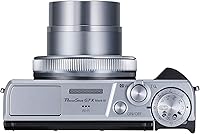
  • Sensor: 1-inch stacked CMOS sensor with 20.1 effective megapixels, delivering improved readout speeds and low-light performance over non-stacked designs.
  • Processor: DIGIC 8 image processor handles noise reduction, color science, and burst buffering for both stills and video capture.
  • Lens: Built-in 8.8–36.8mm lens (24–100mm equivalent in 35mm terms) with a variable aperture of f/1.8 at wide to f/2.8 at telephoto.
  • Optical Zoom: 4.2x optical zoom range covers wide-angle through short telephoto, with an additional 4x digital zoom available at reduced quality.
  • Video Modes: Records 4K UHD at 30fps and Full HD at up to 120fps, with footage stored in H.264/MP4 format to a single SD card slot.
  • ISO Range: Native ISO range of 125 to 12800, expandable to ISO 100 at the minimum end for controlled studio or bright daylight scenarios.
  • Continuous Shooting: Captures stills at up to 20fps in standard burst mode and up to 30fps in Raw Burst Mode, which saves a pre-shot buffer before the shutter is fully pressed.
  • Stabilization: Optical Image Stabilizer compensates for camera shake during handheld shooting, particularly useful at the telephoto end of the zoom range.
  • Display: 3-inch tilting touchscreen LCD with 1,040,000 dots of resolution; the tilt mechanism supports selfie angles and low or overhead framing.
  • Shutter Speed: Mechanical shutter range spans 30 seconds to 1/25600 of a second, covering long-exposure night photography through to freezing fast motion in bright light.
  • File Formats: Saves stills as JPEG or 14-bit RAW (CR3 format), giving photographers full latitude for post-processing exposure, white balance, and color grading.
  • Storage: Single card slot accepts SD, SDHC, and SDXC memory cards; UHS-I cards are supported, with a maximum write speed of 20fps sustained burst.
  • Connectivity: Built-in Wi-Fi and NFC for wireless image transfer and remote control via the Canon Camera Connect app on iOS and Android devices.
  • Outputs: Micro-HDMI port provides a clean video output for live-streaming or external recording, and a USB port supports both charging and webcam use via Canon software.
  • Audio Input: 3.5mm stereo microphone input allows connection of an external microphone for improved audio quality during video recording or live-streaming.
  • Battery: Rechargeable NB-13L lithium-ion battery (22g) charges in-camera via USB; CIPA-rated battery life is approximately 235 shots per charge under standard test conditions.
  • Weight: Body weighs approximately 0.82 lbs (304g) with battery and memory card installed, making it one of the lighter cameras in the premium compact segment.
  • Flash: Built-in pop-up flash with a guide number of approximately 7m at wide angle; supports Auto, On, Off, and Slow Sync flash modes.
  • Shooting Modes: Offers full Manual, Aperture Priority, Shutter Priority, and Program modes alongside Auto and scene-based options for users at any experience level.
  • Warranty: Covered by a one-year limited manufacturer warranty from Canon USA against defects in materials and workmanship under normal use conditions.

Related Reviews
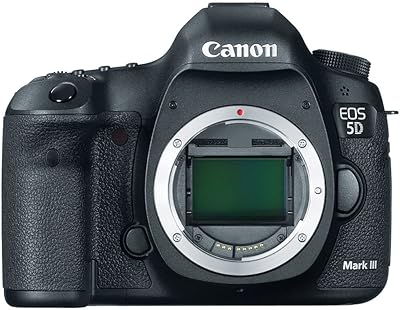
Canon EOS 5D Mark III
79%
93%
Autofocus Performance
89%
Image Quality
82%
Low-Light Capability
91%
Build Quality & Durability
61%
Video Capability
More
Canon PowerShot Zoom
84%
90%
Zoom Performance
88%
Image Stabilization
94%
Portability & Size
85%
Ease of Use
87%
Video Quality
More
Canon PowerShot V10 Vlog Camera
85%
92%
Portability
87%
Video Quality
88%
Audio Quality
90%
Ease of Use
85%
Stabilization
More
Canon PowerShot G10 Digital Camera
80%
90%
Image Quality
85%
Optical Zoom Performance
88%
Ease of Use
93%
Build Quality
80%
Portability
More
Canon PowerShot ELPH 510 HS
85%
88%
Image Quality
91%
Ease of Use
85%
Zoom Performance
84%
Video Quality
93%
Portability/Size
More
Canon EOS 5D Mark IV
82%
93%
Image Quality
89%
Autofocus Performance
94%
Build Quality & Durability
61%
Video Capabilities
88%
Low-Light Performance
More
Canon PowerShot ELPH 360 HS
84%
87%
Image Quality in Good Light
92%
Ease of Use for Beginners
89%
Zoom Range Flexibility
65%
Low-Light Performance
78%
Build Quality and Durability
More
Canon PowerShot SX740 HS Digital Camera
87%
94%
Portability
91%
Zoom Performance
88%
Image Quality
83%
Battery Life
89%
Ease of Use
More
Canon Powershot SX70 HS Digital Camera
84%
92%
Zoom Performance
88%
Image Quality
85%
Ease of Use
90%
Portability & Size
70%
Battery Life
More
Canon 12x36 Image Stabilization III Binoculars
84%
92%
Image Stabilization
89%
Portability
85%
Optical Clarity
88%
Build Quality
80%
Battery Efficiency
More

FAQ

Yes, and it works well. The Canon PowerShot G7 X Mark III supports clean HDMI output, which means you can connect it to a capture card for streaming platforms, or use Canon’s EOS Webcam Utility software on Mac and Windows to have it recognized directly as a USB webcam — no capture card needed for basic setups. The image quality is noticeably better than any built-in laptop camera.

It is genuinely the camera’s biggest practical weakness. Under real-world conditions — especially with 4K video, Wi-Fi transfers, and a bright screen — you can expect somewhere between 90 minutes and two hours of active use before needing a charge. Buying at least one spare NB-13L battery is strongly recommended, not optional. The upside is that the camera charges via USB, so a power bank keeps you going on travel days.

Yes, overheating during extended 4K recording is a documented limitation, not a rare defect. In warm outdoor conditions, some users report the camera shutting down after roughly 20 to 30 minutes of continuous 4K capture. For short vlogs or event clips this is rarely a problem, but anyone planning to record hour-long sessions should plan around this constraint or consider a dedicated video camera instead.

For kids who are relatively still — playing at a table, sitting, posing — the autofocus works reliably enough. For fast, unpredictable movement like running or jumping, the contrast-detection system can struggle to keep up and you will see missed or soft shots. If fast-moving subjects are your primary use case, a camera with phase-detection autofocus will serve you better.

The camera accepts standard SD, SDHC, and SDXC cards. For general photography a Class 10 card is fine, but if you plan to shoot 4K video or use Raw Burst Mode regularly, a UHS-I Speed Class 3 (U3) card is worth the small extra investment to avoid dropped frames or slow buffer clearing. Cards labeled V30 or higher are a reliable choice.

Yes, the camera saves RAW files in Canon’s CR3 format at 14-bit depth, which preserves far more tonal information than JPEG for post-processing. You can open CR3 files in Adobe Lightroom, Capture One, or Canon’s own free Digital Photo Professional software. Some older versions of editing software may require an update to support CR3 files, so check compatibility with your current setup before relying on it.

No, there is no weather sealing on this compact camera. Using it in light rain, near ocean spray, or in dusty environments carries a real risk of damage. If you regularly shoot outdoors in unpredictable conditions, a weather-sealed camera is worth the added investment — or at minimum, keep a waterproof pouch in your bag as a precaution.

The Sony RX100 VII stretches to 200mm equivalent, which is a meaningful advantage for wildlife, concerts, or any subject at distance. The G7 X Mark III’s 100mm equivalent handles everyday travel, street, and portrait shooting comfortably, but if longer reach is a regular need, the Sony wins that comparison outright. For most urban travel and vlogging scenarios, 100mm is adequate.

Yes, the screen tilts upward to approximately 180 degrees, which puts it fully visible when shooting toward yourself — practical for solo vlogging, self-portraits, or checking framing during live streams. It also tilts downward to around 45 degrees for low-angle shots without crouching. The touchscreen remains fully functional in both positions.

It is a solid choice if you want manual controls and are willing to spend time learning them, but it is not the most beginner-friendly camera on the market. The menu system has a learning curve, and the premium price means the stakes for the investment are real. That said, the Auto mode produces genuinely good results from day one, and the low-light and video performance will feel like a dramatic step up from any smartphone. If you plan to grow into manual shooting over time, it rewards that investment.