Overview
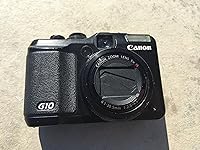
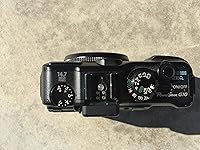
The Canon PowerShot G10 Point-and-Shoot Camera occupies an interesting niche — it's built for photographers who've outgrown basic compacts but aren't ready to commit to carrying a DSLR everywhere. Canon's G-series has always targeted the serious hobbyist, and this model delivers on that promise with a 14.7MP CCD sensor housed on a 1/1.7-inch chip, which is meaningfully larger than what most pocket cameras offered at its price tier. The physical control layout — dedicated dials for exposure compensation and shooting modes — feels intentional and satisfying. Buying used does require some due diligence, but for photographers who value capable optics and real manual control, the value proposition is hard to argue with.
Features & Benefits
The DIGIC 4 processor is the backbone of what makes the G10 feel snappier and more reliable than older compacts — autofocus locks in faster and face detection actually works in real shooting conditions. More importantly, the camera shoots in RAW, which means you're not locked into the camera's JPEG processing when you're editing later. The Optical Image Stabilizer earns its keep when shooting at the telephoto end of the zoom range or in dimmer indoor light. Manual and semi-manual exposure modes give you real control over aperture and shutter speed, while the nine-point autofocus system handles both static and moving subjects reasonably well.
Best For
Canon's G-series compact is a strong match for travel photographers who want genuine manual control without hauling a larger camera system around. The 28mm wide-angle starting point is genuinely useful for street photography and tight interior spaces, covering more of the scene than a typical 35mm-equivalent compact. It also works well for hobbyists learning exposure fundamentals — having physical dials to adjust aperture and shutter speed is more intuitive than digging through menus. Budget-conscious buyers picking this up used will find it holds up well as a capable, versatile shooter, provided they're shooting primarily in good light and treating it as a stills camera first.
User Feedback
Owners who've shot with the G10 for years tend to highlight two things above all else: base ISO sharpness and the satisfying physicality of the controls. The RAW files hold up surprisingly well for a camera of this age, giving editors real latitude in post. On the downside, high-ISO performance drops off noticeably past ISO 400 — grain becomes a real problem in low-light situations, which is worth knowing before you commit. Video maxes out at 480p, so don't expect it to pull double duty as a video tool. Buyers of used units occasionally report condition inconsistencies, so checking seller feedback carefully before purchasing is genuinely important.
Pros
- RAW file support provides real editing flexibility — a genuine rarity among compact cameras from this generation.
- The 14.7MP CCD sensor on a 1/1.7-inch chip delivers sharp, detailed images with strong color at base ISO.
- Physical dials for aperture, shutter, and exposure compensation make shooting intuitive rather than menu-dependent.
- Optical Image Stabilization meaningfully reduces blur when shooting handheld at the telephoto end or in softer light.
- The 28mm wide-angle starting focal length is genuinely practical for street, travel, and environmental photography.
- DIGIC 4 processing delivers faster autofocus and cleaner output compared to earlier G-series models.
- Long-term owners consistently report solid mechanical reliability across years of regular, real-world use.
- Buying used makes this a cost-effective entry point into serious manual-control compact photography.
- The 5x optical zoom range covers enough ground for most everyday and travel shooting situations.
Cons
- High-ISO noise is a persistent and honest weakness — image quality deteriorates noticeably above ISO 400.
- Video tops out at 480p, making the G10 impractical for anyone expecting usable motion footage.
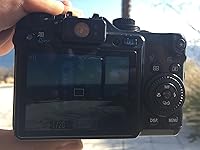
- The optical viewfinder offers limited magnification, leaving you dependent on the LCD for accurate framing.
- Used condition varies significantly across listings, with no consistency in cosmetic or functional state guaranteed.
- Battery life during extended shooting days can fall short, particularly without a backup NB-7L available.
- Dynamic range and shadow recovery trail noticeably behind what modern compact cameras with CMOS sensors produce.
- Autofocus performance weakens in genuinely dark conditions, even with the nine-point contrast-detection system engaged.
- The body is denser and heavier than many travel-focused compacts, which adds up over a long day of shooting.
Ratings
The Canon PowerShot G10 Point-and-Shoot Camera carries a 4.1-star average drawn from hundreds of real-world owner reviews, and the category scores below reflect that nuanced picture — strong where experienced photographers care most, with honest weaknesses that any serious buyer deserves to know about upfront. These ratings were generated by AI after analyzing verified purchase feedback from buyers worldwide, with spam, bot-submitted, and incentivized reviews actively filtered out before scoring. The result captures both what holds up about this G-series camera and where it falls genuinely short.
Image Quality
Build Quality
Control Layout
RAW File Performance
Low-Light Performance
Autofocus Speed
Optical Zoom Range
Image Stabilization
Battery Life
Display Quality
Value for Money
Video Capability
Portability
Viewfinder Quality
Connectivity
Suitable for:
The Canon PowerShot G10 Point-and-Shoot Camera is an especially good fit for enthusiast photographers who want real manual control — dedicated exposure dials, RAW file output, and a proper wide-angle starting point — without committing to an interchangeable-lens system. Travel and street photographers will appreciate the 28mm-equivalent focal length, which captures more of the environment in a single frame than the narrower starting points common on competing compacts of its era. Photography students learning to manage aperture, shutter speed, and exposure compensation hands-on will find physical dials far more instructive than digging through camera menus. Hobbyists coming from film who are curious about digital but reluctant to invest heavily in a modern mirrorless system will feel at home with the tactile, deliberate shooting experience this camera encourages. Buying a used unit is a legitimate path to a capable RAW-shooting compact at a sensible entry cost, provided you go in with clear expectations about sensor-era performance and verify the seller's track record carefully before purchasing.
Not suitable for:
The Canon PowerShot G10 Point-and-Shoot Camera is a poor choice for anyone whose shooting regularly takes them into low-light environments — high-ISO noise becomes a noticeable and frustrating problem above ISO 400, and no amount of post-processing fully rescues grain-heavy files from a push to ISO 800 or 1600. If video is part of your workflow at all, the 480p cap is not a minor inconvenience; it is a fundamental limitation that makes the camera essentially useless for motion capture by any current standard. Casual users who simply want a quick, hands-off shooting experience will find the control layout more overwhelming than empowering, since the G10 rewards those who engage with its settings rather than those who leave everything on auto. Buyers expecting a used unit to arrive in like-new condition should be cautious — cosmetic wear and functional variation are real risks with pre-owned listings, and this site cannot vouch for the condition of any individual unit. Anyone comparing this against modern compact cameras with BSI-CMOS sensors will also find the dynamic range and shadow recovery noticeably behind current expectations.
Specifications
- Sensor: The camera uses a 14.7-megapixel CCD sensor on a 1/1.7-inch chip, producing strong detail and accurate color rendition at low ISO settings.
- Processor: Canon's DIGIC 4 image processor manages autofocus calculations, noise reduction, and face detection with improved throughput compared to earlier G-series processors.
- Optical Zoom: A 5x optical zoom lens covers a 28–140mm equivalent focal range, spanning wide-angle environmental framing through short-telephoto reach.
- Aperture Range: The lens opens to a maximum aperture of f/3.5 at the wide end, with the maximum aperture narrowing progressively toward the telephoto end of the zoom range.
- Stabilization: An Optical Image Stabilizer built into the lens system compensates for camera shake during handheld shooting, particularly useful at longer focal lengths or in reduced light.
- ISO Range: Native ISO sensitivity runs from ISO 80 through ISO 1600, with image quality remaining cleanest between ISO 80 and ISO 200.
- Autofocus System: A nine-point contrast-detection autofocus system supports single and continuous focus modes, with AiAF subject-tracking logic across the frame.
- Display: The rear LCD is a fixed 3-inch PureColor LCD II panel with a resolution of 461,000 dots, providing accurate color for framing and image review.
- Viewfinder: An optical viewfinder with 5x magnification is included as a secondary framing option, though its limited coverage makes it less practical than the LCD for precise composition.
- File Formats: Still images can be recorded as JPEG at multiple quality levels or in Canon RAW format, with the option to capture both simultaneously in a single shot.
- Shutter Speed: The mechanical shutter covers a range from 15 seconds for long-exposure work down to 1/4000 second for stopping fast-moving subjects.
- Video: Video recording is available at 480p resolution with selectable frame rates of 24, 25, or 30 fps; the camera is fundamentally designed around still photography.
- Memory: A single card slot accepts SD and SDHC memory cards up to 32GB, with legacy MMC card compatibility also listed in the specifications.
- Battery: The camera is powered by a Canon NB-7L Lithium-Ion rechargeable battery, with a dedicated charger included in the retail bundle.
- Connectivity: Data transfer and tethering are handled through a single USB 2.0 port; no wireless connectivity of any kind is built into the camera.
- Body Weight: The camera body weighs approximately 0.86 lbs (around 390g), making it more substantial than ultra-slim compacts but still manageable for daily carry.
- Exposure Modes: Full manual (M), aperture-priority (Av), shutter-priority (Tv), program (P), and full automatic modes are available alongside a range of scene presets.
Related Reviews
Canon PowerShot V10 Vlogging Camera
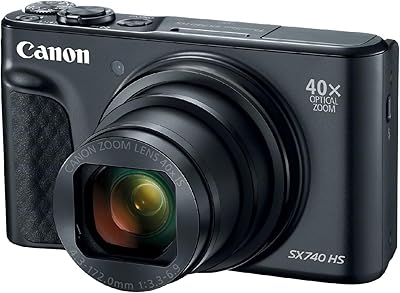
Canon PowerShot SX740 HS Point-and-Shoot Camera
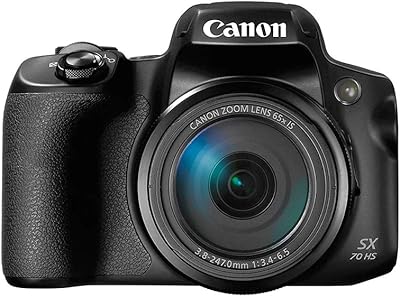
Canon PowerShot SX70 HS Digital Camera
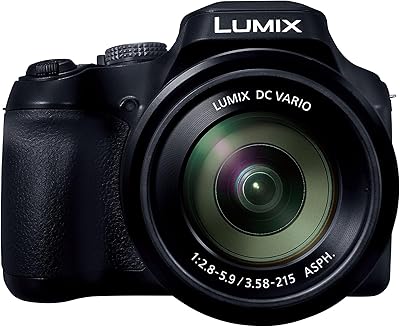
Panasonic LUMIX FZ80D
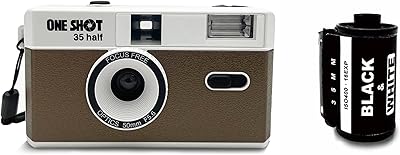
1 Shot VF208H Half Frame 35mm Film Camera
Canon PowerShot Zoom Compact Telephoto Monocular
Canon EOS R3 Mirrorless Camera
Canon PowerShot ELPH 510 HS Digital Camera
Canon PowerShot G7 X Mark III