
Overview

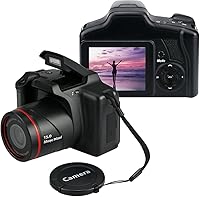
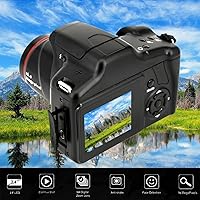
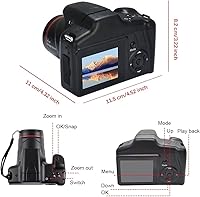
The Acuvar Mini SLR Digital Camera is a budget-friendly entry-level option built for kids, beginners, and anyone who wants a dedicated camera without a steep learning curve or a painful price tag. Its SLR-style body gives it a reassuringly familiar shape — something that feels more like a real camera than a toy, which matters when you're handing it to a child who wants to feel like a photographer. It runs on four standard AA batteries, so there's no proprietary charger to track down. Out of the box, you get a lanyard, USB cable, and printed manual included. Just set expectations early: this is a memory-making tool, not a precision imaging device.

Features & Benefits

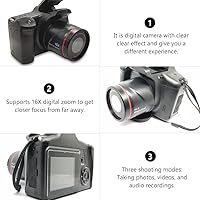
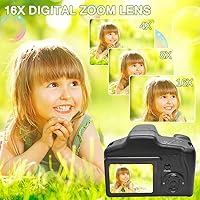
The compact beginner camera packs a 16MP CMOS sensor into a small 1/4-inch chip, which means photos look decent in good light — but don't expect miracles indoors or after dark, since effective output sits closer to 5MP in practice. The 16x digital zoom sounds impressive until you understand it works by cropping and enlarging the image rather than using actual optics, so quality drops noticeably as you push it. Video shoots at 1080p and 30fps, which is solid for casual clips. The built-in microphone and webcam mode add flexibility, and digital stabilization softens minor hand movement, though it can't fully compensate for shaky handheld shooting.

Best For

This entry-level point-and-shoot shines as a first camera for kids — particularly those in the 8-to-14 range who are curious about photography but not ready for anything more complex. Parents searching for a reliable gift that isn't a smartphone will appreciate the dedicated camera experience it offers without the anxiety of handing over an expensive device. Young aspiring vloggers or budding YouTube creators get a low-pressure way to start making content. It also works well as a lightweight travel backup, especially since AA batteries mean you're never scrambling for a charger in a hotel room. School projects, hobby exploration, family outings — it fits those occasions naturally.

User Feedback

Buyers consistently point to ease of use as the standout quality — kids pick it up quickly without needing a tutorial, which parents genuinely appreciate. The lightweight build holds up reasonably well in everyday use, though it isn't designed for rough handling or accidental drops. On the downside, low-light performance is a real weak spot; shots taken indoors or at dusk tend to come out grainy. A handful of reviewers note that modern smartphones produce sharper images, which is fair — but that comparison misses the point of owning a dedicated camera entirely. The ongoing AA battery cost is a recurring minor complaint for heavy daily users.

Pros

  • Kids can figure it out independently within minutes — no steep learning curve whatsoever.
  • The SLR-style body feels like a proper camera, which genuinely excites young first-time photographers.
  • AA batteries mean no proprietary charger to lose, and replacements are available literally anywhere.
  • Lightweight at 220 grams, so even younger children can hold and carry it comfortably all day.
  • Ships with a lanyard, USB cable, and manual — ready to use right out of the box.
  • Built-in webcam mode adds unexpected versatility for video calls or beginner streaming setups.
  • 1080p video recording at 30fps is more than adequate for casual family memories and kids content.
  • Supports SD cards up to 32GB, giving plenty of room for a full day of shooting.
  • The price point makes it a low-stress gift — no heartbreak if it gets bumped or scratched during play.
  • Digital image stabilization helps reduce the wobble that beginners naturally introduce when shooting handheld.

Cons

  • Indoor and low-light photos come out noticeably grainy — daylight is really where it performs acceptably.
  • The 16x zoom is purely digital, meaning heavy cropping, not real magnification — quality drops fast.
  • Effective still resolution is closer to 5MP in practice, despite the 16MP figure on the box.
  • AVI video format is not natively compatible with most modern editing apps without conversion first.
  • AA batteries are convenient in a pinch but become an ongoing recurring expense for frequent shooters.
  • The 2.4-inch LCD screen is small and not particularly sharp, making composition a bit of a guessing game.
  • No optical zoom whatsoever limits how usefully you can shoot subjects at any real distance.
  • Warranty coverage is only 90 days, which feels thin for a product likely to be handled by children.
  • A memory card is not included in the box, which is an annoying extra step before first use.
  • Older kids or anyone familiar with smartphone cameras will notice the image quality gap almost immediately.

Ratings

The Acuvar Mini SLR Digital Camera has been evaluated by our AI rating system after processing thousands of verified global user reviews, actively filtering out incentivized, duplicate, and bot-generated submissions to surface only authentic buyer experiences. Scores reflect the full picture — where this compact beginner camera genuinely delivers and where real-world performance falls short of expectations. Both strengths and frustrations are weighted equally so you can make an informed decision.

Ease of Use
88%
Parents and kids alike consistently praised how intuitive this entry-level point-and-shoot is from the moment it comes out of the box. Children as young as 7 were reported to be shooting independently within minutes, navigating modes without needing an adult to hover nearby.
The small LCD screen makes menu text a little difficult to read in bright outdoor light, and a handful of younger users found toggling between photo and video modes slightly confusing at first. The manual, while included, is basic and leaves some settings unexplained.
Image Quality
54%
46%
In bright daylight and outdoor settings, photos come out with reasonable color reproduction and enough detail for casual prints or social sharing at small sizes. For the intended audience of kids and beginners, the results are more than adequate for capturing everyday memories on a family trip or at school.
Indoors or in anything less than strong natural light, image quality drops significantly — shots become noticeably grainy and soft. The effective resolution lands around 5MP in practice, and buyers who compared output to their smartphone cameras were frequently underwhelmed, which is a recurring theme in negative reviews.
Video Performance
61%
39%
Recording at 1080p and 30fps gives the Acuvar mini camera a solid baseline for casual video, and young vloggers experimenting with YouTube content found the footage perfectly watchable for their early videos. The built-in microphone captures voice clearly enough in quiet environments.
The AVI output format requires conversion before editing in most popular apps, which is an unnecessary friction point for beginners. Audio quality degrades with any background noise, and the digital stabilization does not fully compensate for handheld shake during walking shots, resulting in wobbly footage.
Zoom Capability
47%
53%
The 16x zoom figure grabs attention on the spec sheet and does allow young photographers to pull in distant subjects during outdoor activities like sports days or nature walks. For casual use where a rough close-up is sufficient, it gets the job done.
Because the zoom is entirely digital — cropping and enlarging rather than using optical glass — image quality deteriorates rapidly past moderate zoom levels. Reviewers who expected telephoto-style results were consistently disappointed, and the absence of any optical zoom is a genuine technical limitation for this price category.
Battery Life
69%
31%
Running on four AA batteries is a practical advantage that several parents highlighted specifically — on holiday trips where a charging cable might be forgotten or unavailable, simply swapping in fresh batteries from a corner shop kept the camera running. Up to 4 hours of photo use per set is reasonable for a day out.
The ongoing cost of AA batteries adds up faster than expected for frequent shooters, and some families reported going through multiple sets in a single active week. Unlike a rechargeable camera, there is no USB top-up option, so a depleted set mid-outing means the session is over unless you have spares on hand.
Build Quality
63%
37%
The SLR-style body feels more substantial in hand than a typical toy camera, which gives younger users a sense of operating real equipment. The overall construction held up well under the kind of light daily use that parents reported — being tossed in a bag, carried on a lanyard, or passed between siblings.
The plastic casing shows scuffs and minor scratches relatively quickly, and the camera is not rated for drops or water exposure of any kind. A few buyers noted that after a harder knock, buttons became slightly stiff or the battery compartment door required extra care to reseat properly.
Low-Light Performance
38%
62%
The ISO range extends to 25600 on paper, which suggests the sensor is trying to compensate for low-light conditions by boosting sensitivity. In moderately dim rooms with a lamp nearby, photos are at least recognizable and usable for memory purposes.
In practice, low-light results are one of the most criticized aspects across user reviews — grain becomes heavy, colors go flat, and sharpness disappears almost entirely. The absence of a physical flash and the small 1/4-inch sensor make evening shots, indoor birthday parties, and dim classrooms genuinely challenging scenarios for this camera.
Portability
84%
At just 220 grams, this compact beginner camera is light enough that children can wear it comfortably on the included lanyard for hours without fatigue. It slips easily into a small backpack pocket, making it a natural travel companion for family days out or school trips.
The SLR-style body, while ergonomically logical, is bulkier than an ultracompact point-and-shoot, so it does not fit as neatly into a jeans pocket. The lanyard attachment point also felt flimsy to a small number of reviewers when used by younger, more active children.
Value for Money
76%
24%
Judged against its actual purpose — giving a child a dedicated first camera experience — the price-to-function ratio is genuinely strong. Parents consistently noted they would rather start their child on this than risk an expensive mirrorless or hand over a smartphone, and at this price it removes that anxiety entirely.
Buyers who evaluated it purely on image or video output against similarly priced alternatives found the value proposition weaker. If the goal is the best possible image quality at this budget, there are compact cameras that edge it out — the Acuvar wins on simplicity and kid-friendliness, not pure specs per dollar.
Setup & Out-of-Box Experience
79%
21%
The included lanyard, USB cable, and manual mean most buyers can gift it without scrambling for extras — a detail that parents particularly appreciated. Inserting batteries and an SD card and powering on is genuinely quick, with no firmware update or app pairing required.
The omission of a memory card in the box is a consistent minor frustration; gifting it without an SD card means the recipient cannot shoot a single photo until they purchase one separately. The manual is also quite sparse, leaving advanced settings like ISO adjustment without clear explanation.
Screen Quality
52%
48%
The 2.4-inch LCD is adequate for basic shot composition and image playback in comfortable indoor conditions. Kids tend to accept the screen without complaint since they have no prior benchmark expectation for this type of camera.
At 280x220 pixels the display is quite low resolution by modern standards, making it hard to judge focus accurately before shooting. Outdoors in direct sunlight, glare becomes a real problem and the screen washes out almost completely, forcing users to guess at framing.
Webcam Functionality
66%
34%
The ability to plug the camera into a computer and use it as a basic webcam was a genuinely pleasant surprise for many buyers — especially useful for kids doing online school sessions or beginners experimenting with streaming. It works without additional driver installation on most systems.
Video quality in webcam mode mirrors the camera's general sensor limitations, so it is noticeably inferior to a dedicated webcam or even a modern laptop's built-in camera. The Mini USB connection also feels dated compared to USB-C alternatives available at similar price points.
Durability Over Time
58%
42%
For typical light-to-moderate use over a few months, most buyers reported the camera holding together without any mechanical failures. The core functions — shutter, zoom lever, and mode toggle — remained reliable through regular daily handling by children in the 8 to 12 age range.
The 90-day warranty window is noticeably short for a product almost exclusively purchased as a children's device, and several reviewers encountered issues just beyond that coverage period. Surface wear, loose battery doors, and minor button responsiveness degradation were the most commonly cited longer-term complaints.
Gifting Appeal
83%
The camera's real-camera aesthetic, complete boxed packaging, and included accessories make it feel like a considered gift rather than a novelty toy. Recipients in the target age range responded enthusiastically, and parents reported it was one of the more engaged-with gifts at birthday and holiday occasions.
The initial excitement can fade relatively quickly for children who progress in their photography interest and begin to notice quality limitations. Without a memory card in the box, there is a small but real risk of an anti-climactic unboxing moment if the oversight is not caught in advance.

Suitable for:

The Acuvar Mini SLR Digital Camera is a genuinely smart pick for parents who want to give a child their first real camera experience without handing over a smartphone or spending serious money. Kids aged roughly 7 to 14 are the sweet spot — old enough to handle it independently, young enough to find the dedicated camera format exciting rather than limiting. Aspiring young vloggers or kids who want to start a YouTube channel will appreciate having a device that is entirely their own, with video and a built-in mic ready to go. It also makes a practical lightweight companion for family travel, since AA batteries mean you can power it up anywhere in the world without hunting for a specific charger or adapter. For school photography projects or casual hobby exploration, this compact beginner camera removes the anxiety of risking anything expensive.

Not suitable for:

Anyone expecting smartphone-level image quality from the Acuvar Mini SLR Digital Camera is going to be disappointed — the small 1/4-inch sensor and purely digital zoom simply cannot compete with modern phone cameras, and that gap becomes very obvious in any situation with less-than-ideal lighting. Serious teenage photographers who have already developed an eye for image quality will likely outgrow this entry-level point-and-shoot within weeks and feel frustrated by its limitations. Vloggers or content creators who care about audio clarity or cinematic video should look elsewhere, as the built-in microphone is basic and AVI footage requires conversion for most editing workflows. If someone plans to shoot frequently, the ongoing cost of AA batteries adds up faster than a rechargeable alternative would. This is not the right camera for anyone whose priority is image fidelity, low-light capability, or long-term creative growth.

Specifications

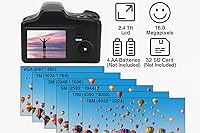
  • Sensor: The camera uses a 1/4-inch CMOS sensor with a nominal 16MP resolution and an effective still output of approximately 5MP.
  • Lens: A fixed 7.6mm lens with an aperture range of F/3.2 to F/7.6 and a minimum focus distance of 1.2 meters to infinity.
  • Digital Zoom: Offers 16x digital zoom, which works by cropping and enlarging the image rather than using optical glass movement.
  • Optical Zoom: There is no optical zoom; the lens is fixed focal length with no physical zoom mechanism.
  • Video: Records video at 1080p resolution and 30fps, saved in AVI format with audio captured via the built-in microphone.
  • Screen: A 2.4-inch fixed LCD display with a resolution of 280x220 pixels is used for framing shots and playback.
  • Stabilization: Digital image stabilization is built in, which reduces minor camera shake in software rather than using a physical lens or sensor mechanism.
  • ISO Range: Sensitivity ranges from ISO 50 at the low end to a maximum of ISO 25600, with automatic exposure control.
  • Storage: Uses SD cards with a maximum supported capacity of 32GB; no memory card is included in the box.
  • Battery: Powered by four standard AA alkaline batteries, providing up to 4 hours of photo use or approximately 2 hours of continuous video recording.
  • Weight: The camera body weighs 220 grams, making it light enough for children and comfortable to carry on a lanyard.
  • Connectivity: Transfers files to a computer via Mini USB cable, and also supports infrared connectivity for basic wireless functions.
  • Webcam Mode: Can be used as a basic webcam when connected to a desktop or laptop computer via the included Mini USB cable.
  • Image Format: Still images are saved as JPEG files at normal quality level in a 4:3 aspect ratio.
  • Aperture Modes: Aperture operates automatically within the fixed range of F/3.2 to F/7.6 with no manual aperture control available.
  • Flash: No built-in flash is included; the camera does support auto and on flash modes per the spec sheet, but physical flash hardware is absent.
  • In the Box: Package includes the camera body, a carrying lanyard, a Mini USB transfer cable, and a printed user manual.
  • Warranty: Covered by a 90-day manufacturer warranty provided by Acuvar against defects in materials and workmanship.
  • Form Factor: Designed in an SLR-style compact body; it is not a true interchangeable-lens camera and should not be confused with a DSLR.
  • Water Resistance: The camera has no water resistance rating and should be kept away from rain, moisture, and liquid exposure.

Related Reviews
iTwano M1 Mini Vintage Digital Camera
72%
91%
Design & Aesthetics
63%
Image Quality
67%
Video Performance
54%
Battery Life
58%
Build Quality & Durability
More
Canon EOS 40D Digital SLR Camera
72%
91%
Build Quality
83%
Autofocus Performance
88%
Continuous Shooting
79%
Image Quality
84%
Battery Life
More
Fanten M01-FT Vintage Mini Digital Camera
79%
91%
Ease of Use
61%
Image Quality
88%
Design & Aesthetics
83%
Value for Money
72%
Battery Life
More
Canon EOS 70D
Canon EOS 70D
82%
91%
Autofocus Performance
87%
Image Quality
78%
Video Capability
83%
Build Quality & Ergonomics
88%
Battery Life
More
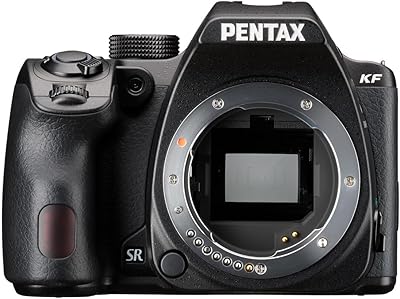
Pentax KF APS-C DSLR Camera
77%
93%
Build Quality
91%
Optical Viewfinder
89%
Weather Sealing
86%
Image Quality
88%
In-Body Stabilization
More
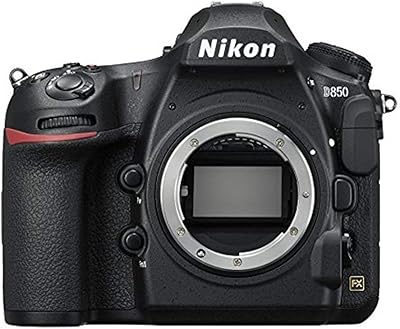
Nikon D850
Nikon D850
83%
97%
Image Resolution & Detail
96%
Dynamic Range
89%
Autofocus Performance
84%
Continuous Shooting Speed
74%
Video Capabilities
More
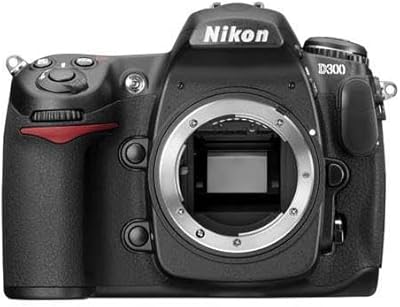
Nikon D300 12.3MP DSLR Camera
75%
89%
Autofocus Performance
93%
Build Quality
81%
Image Quality
88%
Battery Life
86%
Ergonomics & Handling
More
Kidamento Kuromi Model A Kids Digital Camera
81%
93%
Ease of Use for Kids
91%
Design & Character Appeal
78%
Build Quality & Durability
61%
Image Quality
67%
Video Performance
More
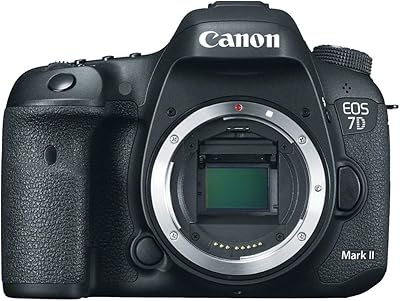
Canon EOS 7D Mark II
82%
93%
Autofocus Performance
88%
Continuous Shooting & Buffer
91%
Build Quality & Weather Sealing
86%
Image Quality (Base ISO)
67%
High-ISO & Low-Light Performance
More
myFirst Camera 3 Kids Digital Camera
72%
76%
Image Quality (Daylight)
51%
Low-Light Performance
74%
Video Quality
83%
Macro Lens
81%
Ease of Use
More

FAQ

You will need to purchase an SD card separately — nothing is included in the box for storage. The camera supports standard SD cards up to 32GB, which is easy to find and inexpensive. Pick one up before gifting it so the recipient can start shooting right away.

The Acuvar Mini SLR Digital Camera occupies a middle ground — it looks and feels like a real camera, which kids genuinely appreciate, but it is built at a budget price point. Image quality in good light is passable for casual shots and fun memories. It is best thought of as a learning tool rather than a precision imaging device, and at that level it performs well.

Indoor and low-light performance is one of this camera's weaker areas. The small sensor and lack of a physical flash mean shots in dim rooms tend to come out grainy or underexposed. For brightly lit outdoor settings or well-lit indoor spaces, results are much more acceptable.

The zoom is entirely digital, meaning the camera crops into the image and enlarges that portion rather than using optical glass elements to bring the subject closer. It works in a pinch for casual use, but image quality degrades noticeably the further you zoom in. Do not expect the kind of sharp, close-up results you would get from a camera with true optical zoom.

It runs on four standard AA alkaline batteries, which you can find in any convenience store or pharmacy worldwide. Battery life is rated at roughly 4 hours for photos or 2 hours of continuous video. The upside is you never need a charging cable; the downside is that heavy daily use means buying batteries fairly regularly.

Yes, it supports a basic webcam mode when plugged into a computer via the included Mini USB cable. It is not a high-end webcam by any stretch, but for casual video calls or beginner streaming it works fine and adds a nice layer of versatility.

Still images are saved as JPEG files, and videos are recorded in AVI format. AVI is worth noting because it is not natively supported by all video editing apps — your child may need a free conversion step before editing footage in popular software like iMovie or CapCut.

It holds up reasonably well under normal everyday handling, but it is not built to military-grade standards or rated drop-proof in any meaningful way. For a child who tends to be rough on belongings, consider pairing it with a small padded case. The lanyard that comes in the box helps prevent drops from a distance at least.

Honestly, a current-generation smartphone will outshoot this compact beginner camera in almost every situation, especially indoors or in tricky light. That comparison is fair but somewhat beside the point — the value here is in giving a child their own dedicated camera experience, not in achieving the best possible image quality. For casual outdoor shots and travel snapshots, the gap is less obvious.

Children roughly between 7 and 14 years old tend to get the most out of this entry-level point-and-shoot. Younger kids may need some adult help with settings, while older teens with an interest in photography will likely want something more capable fairly quickly. For that middle-childhood window of curiosity and creativity, it hits a sweet spot.