Overview

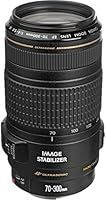
The Canon EF 70-300mm IS USM Telephoto Lens has quietly held its ground as one of the most practical mid-range telephoto options for Canon EOS shooters since its introduction back in 2005. That's nearly two decades on the market — and it still sells well, which tells you something. The 70-300mm range covers an impressive spread of real-world scenarios, from isolating a bird on a distant branch to framing a stage performer from the back of a venue. Expect strong image stabilization and reliable autofocus as the highlights, though wide-open sharpness at the long end does involve some compromise.
Features & Benefits

The 3-stop image stabilizer is the feature most shooters will notice first in the field — it means you can handhold at 300mm in conditions that would ordinarily force you onto a tripod. Paired with the ring-type USM autofocus, which locks on quickly and runs near-silently, this Canon zoom lens handles fast-moving subjects without disrupting nearby wildlife or performers. The electromagnetic diaphragm keeps exposure consistent during rapid burst sequences, a detail that matters more than people expect. Super Spectra coating keeps backlit shots clean and contrast intact, and the ability to focus as close as 1.5 meters adds a surprisingly useful macro-like capability to the mix.

Best For

Wildlife and bird photographers get the most obvious value from this telephoto zoom — the reach, fast autofocus, and stabilization all align with what that kind of shooting demands. Crop-sensor Canon users effectively stretch the focal range to a 112-480mm equivalent, which is a serious advantage for distant subjects. Sports and concert photographers will appreciate the quiet USM motor, since drawing attention or spooking animals is a real concern. Portrait shooters can use the 200-300mm end to create subject separation, though the variable aperture means background blur stays modest rather than dramatic. Travel photographers will value the compact form and single-lens flexibility.

User Feedback

Owners consistently point to the image stabilizer as the single biggest real-world win — handheld keepers in low light and at distance that simply wouldn't be possible otherwise. Autofocus accuracy earns strong marks across the board, from hobbyist wildlife shooters to working event photographers. The honest caveat worth knowing: softness at 300mm wide open is real and well-documented. Stopping down to around f/8 resolves it, but factor that in before buying. The plastic build quality draws periodic criticism from users expecting a more premium feel at this price tier, though long-term reliability reports are largely positive — it handles typical field use well despite lacking weather sealing.

Pros

  • The 3-stop image stabilizer delivers noticeably sharper handheld shots, especially at longer focal lengths where camera shake compounds fast.
  • Ring-type USM autofocus is quick, quiet, and accurate — a genuine asset for wildlife or event work where noise matters.
  • The 70-300mm focal range covers an impressive variety of shooting situations with a single lens.
  • Crop-sensor Canon users gain an effective reach well beyond 400mm equivalent, outstanding value for distant subjects.
  • Minimum focus distance of 1.5m gives this Canon zoom lens a useful close-focusing capability uncommon in telephoto zooms.
  • Super Spectra coating keeps backlit and high-contrast shots cleaner than you might expect at this price tier.
  • The electromagnetic diaphragm ensures consistent exposure during burst shooting, a quiet but meaningful advantage.
  • At roughly 1.4 lbs, the 70-300 IS USM is light enough for all-day carry without shoulder fatigue.
  • Long-term owners frequently report solid durability for everyday field use despite the non-pro build.
  • Strong resale value and wide compatibility across the entire Canon EOS SLR ecosystem.

Cons

  • Optical sharpness at 300mm wide open is soft enough to be a real issue — stopping down to f/8 is effectively required for critical work.
  • No weather sealing makes this telephoto zoom a genuine liability in rain, dust, or humid outdoor conditions.
  • The variable f/4-5.6 aperture limits low-light flexibility, particularly when you need reach and fast shutter speeds simultaneously.
  • Plastic construction feels noticeably less premium than the asking price suggests, especially next to metal-barreled alternatives.
  • No lens hood is included in the box, which is a frustrating omission at this price point.
  • Autofocus can hunt in very low-contrast or dim conditions, which is a common frustration in evening wildlife shooting.
  • The EF mount limits long-term compatibility for photographers moving toward Canon mirrorless bodies.
  • Background blur at shorter focal lengths is modest at best — buyers expecting dreamy bokeh will likely be underwhelmed.
  • At over two decades old, the optical design has been surpassed by newer competitors offering better wide-open performance.
  • Manual focus override requires a full autofocus-to-manual switch rather than offering instant full-time manual control.

Ratings

Our AI-generated scores for the Canon EF 70-300mm IS USM Telephoto Lens are built by analyzing thousands of verified global buyer reviews, with spam, incentivized feedback, and bot activity actively filtered out before scoring. The result is an honest, data-driven picture of where this telephoto zoom genuinely excels and where it falls short — no cherry-picking, no padding. Strengths and pain points are weighted equally so you can make a fully informed decision.
Image Stabilization
91%
The 3-stop IS system is consistently the feature owners mention most — not as a spec, but as a practical experience. Photographers report keeping shots sharp while tracking birds in flight or shooting a stage performer from a distance in dim venue light, situations where an unstabilized lens would produce blurred frames.
In very low light at 300mm, even 3-stop compensation has limits, and a small number of users note that stabilization delay can occasionally cause the first frame of a burst to look slightly soft before the IS system fully settles.
Autofocus Performance
87%
The ring-type USM motor earns consistent praise for being fast enough to track moving wildlife and quiet enough to use around skittish animals or in silent concert halls. Birders and sports shooters specifically call out focus acquisition speed as a genuine differentiator from cheaper telephoto alternatives.
In low-contrast scenes or dim indoor environments, the autofocus can hunt noticeably before locking, which is frustrating during fast-action shooting. A minority of users also report occasional front or back focus issues that required in-camera micro-adjustment to correct.
Optical Sharpness
72%
28%
From 70mm through roughly 200mm, sharpness is solid and more than adequate for casual wildlife, travel, and portrait work. Stopped down to f/8, even the 300mm end produces clean, detailed results that satisfy most non-professional use cases.
Wide open at 300mm, image softness is a documented and recurring complaint — this is arguably the lens's most significant optical limitation. Buyers expecting edge-to-edge crispness at full extension will be disappointed, and this characteristic holds the overall sharpness score down considerably.
Build Quality
61%
39%
Long-term owners frequently note that despite the predominantly plastic exterior, the lens has held up well through years of regular field use, hiking trips, and everyday carry. It does not feel flimsy in the hand, and internal construction appears solid enough for enthusiast-level abuse.
At this price tier, the plastic barrel construction is a recurring friction point — buyers who handle metal-barreled competitors or Canon L-series lenses immediately feel the difference. There is also no weather sealing, which is a meaningful omission for outdoor photographers who cannot always control their shooting environment.
Value for Money
78%
22%
For Canon EOS shooters who need a versatile telephoto zoom without committing to L-series pricing, the 70-300 IS USM represents a reasonable proposition — particularly given the IS system and USM autofocus, which are features absent from significantly cheaper alternatives. Crop-sensor users who gain the extended equivalent range get particularly strong value.
The price has crept upward since the lens launched in 2005, and at its current level buyers are increasingly comparing it to newer third-party options that offer competitive optical performance. Some reviewers feel the build quality no longer justifies the cost relative to what the market now offers.
Zoom Range Versatility
88%
The 70-300mm span genuinely covers a wide spread of real-world scenarios in a single lens — from moderate compression portraits at 70mm to distant wildlife frames at 300mm. Travel photographers especially appreciate not having to swap lenses mid-trip to cover these different shooting distances.
The variable aperture means you lose a full stop of light as you zoom toward 300mm, which creates exposure management challenges when shooting in changing light conditions. A fixed-aperture zoom covering a similar range would offer significantly more predictable behavior.
Portability & Size
84%
At under 1.4 lbs and just 5.63″ in length, this telephoto zoom is compact enough to carry all day without fatigue, which matters on long wildlife walks or travel days. It fits comfortably in a standard camera bag alongside a body and one or two other lenses.
While compact for a 300mm zoom, the lens still extends noticeably when zooming toward its long end, which can feel unwieldy when shooting quickly in tight spaces. Users coming from pancake or standard kit lenses will need some time adjusting to the added length and weight.
Close-Focus Capability
76%
24%
A minimum focus distance of 1.5m is genuinely useful and uncommon in this class of telephoto zoom — it opens up larger insect photography, detailed flower shots, and informal product-style frames that would normally require a dedicated macro lens.
True macro ratios are still out of reach, so dedicated close-up photographers will eventually want a purpose-built macro lens. The close-focus feature works best as a bonus capability rather than a primary reason to buy this Canon zoom lens.
Flare & Ghosting Resistance
79%
21%
Super Spectra coating noticeably reduces ghosting in backlit wildlife scenes and concert photography where strong light sources are often in or near the frame. Users shooting outdoor events in full sunlight report cleaner contrast and better color fidelity than they expected.
Without a lens hood included in the box, flare resistance is more limited than it should be at first use — the ET-65B hood is a near-mandatory purchase, and its absence from the retail package is a frustrating oversight. Extreme backlighting can still produce some veiling flare even with the coating.
Burst Shooting Consistency
81%
19%
The electromagnetic diaphragm performs quietly in the background during continuous shooting, keeping exposure consistent frame-to-frame during a fast burst sequence. Sports and wildlife photographers using burst mode report reliable results without the exposure drift that older mechanical diaphragms can cause.
While the EMD itself functions well, the lens does not support the highest continuous shooting speeds on some older Canon bodies as cleanly as native EF-S lenses designed specifically for those cameras. Most users will not encounter this, but it is worth checking body-specific compatibility.
Autofocus Noise Level
89%
The USM motor is whisper-quiet by nearly all accounts — nature photographers specifically mention being able to shoot without disturbing birds at close range, and event photographers report zero complaints from nearby subjects or audience members about audible focus noise.
While quiet overall, a very faint mechanical sound is audible in near-silent environments when listening closely to the lens barrel. This is unlikely to matter in any real-world shooting context but is occasionally mentioned by videographers recording ambient audio without a dedicated microphone.
Long-Term Reliability
77%
23%
Given that this lens has been on the market since 2005, real-world longevity data is unusually rich — and the picture is broadly positive. Many owners report years of heavy use with no mechanical or optical failures, which is reassuring for a lens at this price point.
The lack of weather sealing has led to moisture-related failures for a subset of outdoor shooters who pushed the lens into conditions it was not designed for. Repair costs, when issues do arise, can approach a meaningful percentage of the original purchase price.
Compatibility & Ecosystem Fit
73%
27%
The EF mount covers the entire Canon EOS SLR lineup without exception, and the lens also works on Canon mirrorless bodies via the EF-EOS R adapter. For long-time Canon DSLR users, it slots into an existing kit without any additional hardware or menu configuration.
Canon's strategic shift toward the RF mirrorless system means EF-mount lenses are increasingly a legacy investment — new Canon bodies going forward will be RF-mount only, and the adapter, while functional, adds cost and reduces the elegance of the system for mirrorless adopters.
Portrait Performance
68%
32%
At 200-300mm, subject compression and the working distance from the subject create naturally flattering portrait perspectives, and the EMD contributes to smoother background rendering than a standard diaphragm mechanism would produce at equivalent apertures.
Background blur is genuinely modest — the variable f/5.6 maximum at 300mm does not produce the creamy bokeh of a fast prime or an f/2.8 zoom. Photographers who prioritize dramatic subject separation in portraits will find this telephoto zoom falls short of expectations.
Included Accessories
44%
56%
The lens cap and rear cap are included as standard, which protects the optics during transport and storage. The 58mm filter thread accepts widely available, affordable third-party filters if you want to add polarizers or ND filters for outdoor work.
The absence of a lens hood from the retail package is a recurring and legitimate complaint at this price point — it should be standard. No carrying case, lens pouch, or strap is included either, and buyers expecting a more complete package will need to budget separately for accessories.

Suitable for:

The Canon EF 70-300mm IS USM Telephoto Lens is a strong fit for Canon EOS shooters who need versatile reach without hauling around a heavy, expensive prime. Wildlife and bird photographers in particular will find the combination of quiet USM autofocus and 3-stop image stabilization genuinely useful in the field — it keeps shots sharp when you're tracking an unpredictable subject from a distance. Crop-sensor camera users get an especially good deal here, since the effective focal range stretches well past 400mm equivalent, which is serious reach for the money. Sports and concert photographers will appreciate that the autofocus operates silently and locks on fast enough to keep up with moving subjects. Travel photographers looking to consolidate their kit down to a single telephoto will find this Canon zoom lens covers an unusually wide range of scenarios without demanding too much space in a bag.
Not suitable for:

The Canon EF 70-300mm IS USM Telephoto Lens is not the right tool for photographers who demand the sharpest possible results at 300mm wide open — real-world optical performance at the long end noticeably softens unless you stop down to around f/8, which limits flexibility in low light. Shooters working in rain, dust, or harsh outdoor conditions should also think carefully, since this telephoto zoom lacks weather sealing, meaning a sudden downpour puts your gear at genuine risk. Those chasing creamy, dramatic background blur in portrait work will likely be disappointed — the variable aperture tops out at f/5.6 at the long end, which simply does not produce the same subject isolation as a fast prime or an L-series zoom. Professionals or serious enthusiasts who expect a premium build feel may find the largely plastic construction underwhelming given the price point. Finally, photographers already shooting a mirrorless Canon system should note this is an EF-mount lens, so native mirrorless options may serve them better long-term.

Specifications

  • Focal Length: This telephoto zoom covers a 70-300mm focal range, suitable for wildlife, sports, portraits, and travel photography.
  • Maximum Aperture: The lens uses a variable maximum aperture of f/4 at 70mm, narrowing to f/5.6 at the 300mm end.
  • Image Stabilizer: A built-in 3-stop optical Image Stabilizer compensates for camera shake during handheld shooting at longer focal lengths.
  • Autofocus System: Ring-type Ultrasonic Motor (USM) autofocus provides fast, near-silent focus acquisition across the full zoom range.
  • Minimum Focus: The minimum focus distance is 1.5m, enabling closer subject framing than most telephoto zooms in this class.
  • Diaphragm: An electromagnetic diaphragm (EMD) ensures precise, consistent aperture control during continuous and burst shooting.
  • Lens Coating: Super Spectra multi-layer coating is applied to reduce flare, ghosting, and contrast loss in high-brightness or backlit scenes.
  • Filter Thread: The front element accepts 58mm screw-in filters, a common and affordable size widely available from third-party manufacturers.
  • Dimensions: The lens measures 3.03″ in diameter and 5.63″ in length, making it relatively compact for its focal range.
  • Weight: The lens weighs 22.2 oz (1.39 lbs), balancing portability with the structural requirements of a 300mm zoom.
  • Lens Mount: Canon EF mount provides full compatibility with Canon EOS SLR cameras, including both full-frame and APS-C crop-sensor bodies.
  • Weather Sealing: This lens does not include weather sealing, making it vulnerable to moisture and dust ingress in adverse conditions.
  • Construction: The lens barrel is primarily constructed from engineering-grade polycarbonate plastic with an internal optical element arrangement.
  • Lens Elements: The optical formula consists of 15 elements arranged in 10 groups, supporting image quality across the full zoom range.
  • Aperture Blades: The lens features 8 aperture blades, which contribute to reasonably smooth out-of-focus rendering at longer focal lengths.
  • Warranty: Canon includes a 1-year limited manufacturer warranty covering defects in materials and workmanship from the date of purchase.
  • Release Year: This lens was first made available in August 2005 and remains in active production without discontinuation by the manufacturer.
  • BSR Ranking: The lens holds a Best Sellers Rank of #163 in the SLR Camera Lenses category on Amazon, reflecting sustained market demand.

Related Reviews
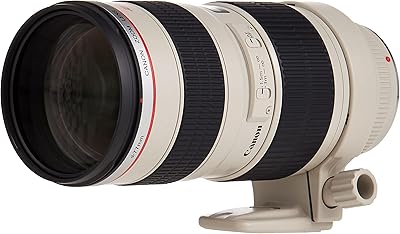
Canon EF 70-200mm f/2.8L USM Telephoto Zoom Lens
82%
91%
Autofocus Speed
93%
Image Sharpness
94%
Build Quality
92%
Aperture Consistency
89%
Bokeh & Subject Separation
More
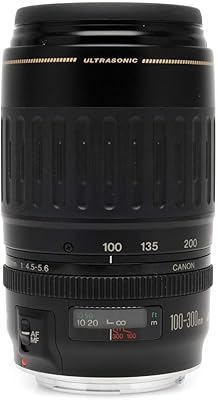
Canon EF 100-300mm f/4.5-5.6 Telephoto Zoom Lens
75%
88%
Autofocus Speed
91%
Autofocus Noise
67%
Image Sharpness
43%
Image Stabilization
78%
Build Quality
More
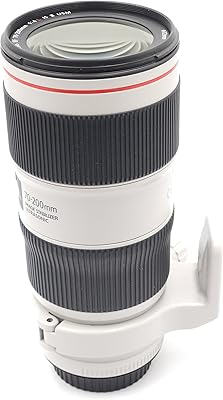
Canon EF 70-200mm f/4L IS II Lens
85%
94%
Optical Sharpness
91%
Image Stabilization
88%
Autofocus Performance
93%
Build Quality
89%
Portability & Weight
More
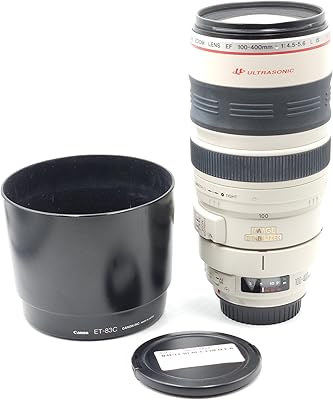
Canon EF 100-400mm f/4.5-5.6L Telephoto Zoom Lens
81%
91%
Autofocus Speed & Accuracy
88%
Image Stabilization
86%
Optical Sharpness
93%
Build Quality & Weather Sealing
67%
Push-Pull Zoom Mechanism
More
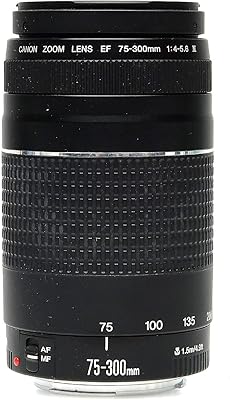
Canon EF 75-300mm III Telephoto Zoom Lens
70%
74%
Image Sharpness
58%
Autofocus Speed
69%
Build Quality
83%
Zoom Smoothness
88%
Value for Money
More
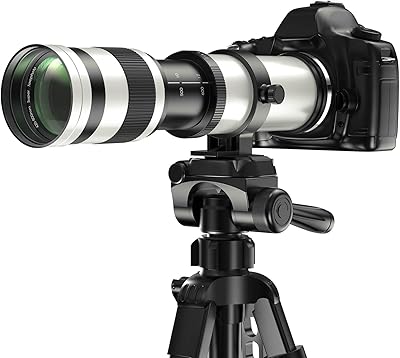
Lightdow 420-800mm F8.3 Telephoto Zoom Lens
68%
83%
Value for Money
61%
Image Sharpness
69%
Manual Focus Usability
58%
Build Quality
72%
Setup & Compatibility
More
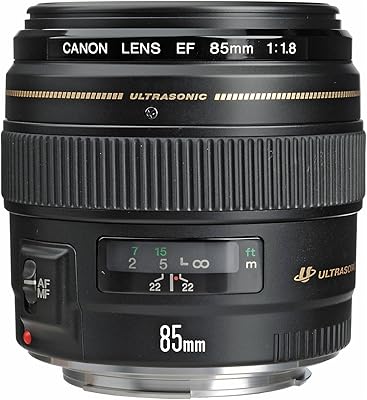
Canon EF 85mm f/1.8 USM Lens
86%
91%
Image Sharpness
93%
Bokeh Quality
88%
Autofocus Speed
94%
Autofocus Noise
86%
Low-Light Performance
More
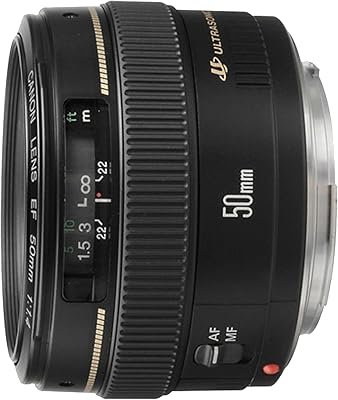
Canon EF 50mm f/1.4 USM Camera Lens
80%
91%
Bokeh & Background Separation
88%
Low-Light Performance
84%
Autofocus Speed & Accuracy
63%
Sharpness Wide Open
78%
Build Quality & Feel
More
JINTU 420-1600mm Telephoto Zoom Lens for Canon EF Mount
79%
91%
Magnification Range
85%
Build Quality
65%
Manual Focus Usability
55%
Weight & Portability
87%
Value for Money
More
Canon EF 24-105mm f/4L IS USM Lens
76%
83%
Image Sharpness
89%
Autofocus Performance
78%
Image Stabilization
91%
Build Quality
88%
Focal Range Versatility
More

FAQ

Yes, the EF mount is compatible with every Canon EOS SLR body ever made, including all Rebel series and mid-range bodies like the 90D. On APS-C crop-sensor cameras, the effective focal range becomes approximately 112-480mm equivalent, which is a meaningful bonus for distant subjects.

It genuinely makes a practical difference at this focal length. Handholding at 300mm without stabilization almost always results in blur from camera shake, and the 3-stop compensation here gives you real recovery — most users find they can shoot at shutter speeds two to three stops slower than they otherwise could and still get sharp results.

Honestly, wide open at 300mm it is noticeably softer than at shorter focal lengths — this is a known and well-documented characteristic of the lens. If sharpness at full extension matters to you, stopping down to around f/8 resolves most of the softness. It is not an issue for casual shooting, but pixel-peepers should be aware of it.

Not safely, no. The 70-300 IS USM has no weather sealing, so rain, heavy mist, or dusty environments pose a real risk to the internal components. If you regularly shoot in harsh outdoor conditions, you should either use a rain cover or look at a weather-sealed alternative.

It will physically mount using Canon's EF-EOS R adapter, and autofocus does work through the adapter. That said, if you are fully invested in a mirrorless system, a native RF-mount telephoto is worth considering for the best long-term compatibility and performance. The adapter solution is solid but adds cost and length.

No, Canon does not include a hood with this telephoto zoom, which is a common complaint given the price. The compatible hood is the ET-65B, and it is worth picking up separately — it helps reduce flare in backlit situations and offers basic front element protection.

The ring-type USM motor is very quiet in operation — you can hear a faint mechanical movement up close, but it would not startle nearby wildlife or be noticeable in a concert setting. This is one of the practical strengths of this Canon zoom lens for candid and nature work.

The plastic construction does feel less premium than you might expect, but long-term owners consistently report that the lens holds up well under normal field use. It is not a tank, and you should treat it accordingly, but durability is generally not a major complaint among buyers who have used it for years.

Not true macro, but the 1.5m minimum focus distance is closer than most telephoto zooms allow, which gives you some flexibility for larger insects, flowers, or product-style shots. If dedicated macro work is a priority you will still want a purpose-built macro lens, but this is a useful bonus capability.

The L-series lenses offer better wide-open sharpness, weather sealing, more robust build quality, and faster maximum apertures — but they also cost significantly more. The 70-300 IS USM sits comfortably as a capable non-L option for enthusiasts and hobbyists who do not need professional-grade optical performance or environmental protection.

Where to Buy