Overview

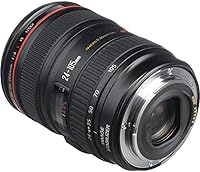
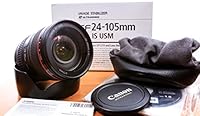
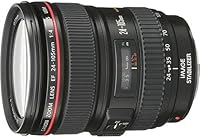
The Canon EF 24-105mm f/4L IS USM Lens has been a staple in Canon shooters' bags since 2005, and for good reason. Part of Canon's prestigious L-series lineup, it covers a genuinely useful focal range — from wide-angle to short telephoto — making it one of the most practical walkaround lenses made for EOS cameras. This particular listing is the white box variant, meaning bulk or gray-market packaging: no lens hood, no case, no printed documentation. The lens itself is identical to retail versions, but buyers should factor that in. Build quality is solid and unmistakably professional, with a price point to match.
Features & Benefits

The constant f/4 aperture is one of this Canon L-series zoom's most practical traits — you always know what you're working with across the entire range, no surprise exposure shifts mid-zoom. The Image Stabilizer is genuinely useful in real-world situations: shooting in dim reception halls, walking city streets at dusk, or capturing handheld video where a tripod isn't an option. Three stops of compensation is meaningful. Autofocus via the ring-type USM motor is fast and near-silent, with full-time manual override that works smoothly mid-shoot. Optically, the Super UD element and aspherical lenses keep chromatic aberration well controlled. Dust and moisture resistance adds practical durability for outdoor and event work.

Best For

This walkaround lens is practically built for travel photographers who refuse to carry multiple primes — the focal range handles street scenes, portraits, and compressed backgrounds without swapping glass. On Canon full-frame bodies like the 5D series, it truly shines; on crop sensors it behaves more like a mid-telephoto zoom, which changes its character considerably. Event and wedding photographers will appreciate the quiet autofocus and stabilization in dark venues. It's also a capable video lens for Canon EOS shooters who need IS and silent focus pulls. Worth noting: if you shoot wide open constantly in low light, an f/2.8 alternative might serve you better — this lens rewards those who can work with f/4.

User Feedback

Among the 1,000-plus owners who have rated the 24-105 f/4L, sharpness earns frequent praise — particularly in the 50–85mm sweet spot where images are crisp and contrasty. Autofocus draws consistent compliments for speed and reliability. On the critical side, some users flag mild softness at the wide end when shooting wide open, and a few note that newer generations have improved stabilization technology, making this design feel slightly dated by comparison. The white box packaging catches some buyers off guard — no hood, no pouch. Overall, the 4.2-star average across a large sample reflects a lens that delivers consistent professional results, with realistic expectations required.

Pros

  • Constant f/4 aperture across the full zoom range means predictable, consistent exposures at every focal length.
  • Optical image stabilization delivers real, usable handheld shots in low-contrast or dim conditions.
  • Ring-type USM autofocus is fast, accurate, and quiet enough for video and event work.
  • Dust- and moisture-resistant build holds up well in outdoor and unpredictable shooting environments.
  • Sharp and contrasty performance in the 50–85mm range is a consistent highlight among long-term owners.
  • The 24–105mm focal range is one of the most genuinely versatile spans available in a single zoom.
  • At 23.6 ounces, this walkaround lens is manageable for all-day carry compared to heavier L-series alternatives.
  • Full-time manual focus override works smoothly without needing to flip any switches mid-shoot.
  • The 24-105 f/4L has a long, proven track record dating back to 2005 with a large user community.
  • White box pricing often makes this an accessible entry point into Canon L-series glass.

Cons

  • The f/4 maximum aperture is a genuine limitation in very low-light situations without IS assistance.
  • Slight softness wide open at 24mm is a known optical weakness that pixel-peepers will notice.
  • Image stabilization technology lags behind more recent Canon lens generations in effective performance.
  • White box packaging means no lens hood included — a 77mm hood is an extra purchase you will likely need.
  • No retail documentation or accessories means warranty support may be less straightforward than a boxed version.
  • On APS-C crop bodies, the effective wide-angle coverage is significantly reduced, limiting versatility.
  • Chromatic aberration, while controlled, is still visible in high-contrast scenes at the extremes of the zoom range.
  • The one-year warranty is shorter than what some competing professional zoom lenses offer at a similar price tier.

Ratings

Our AI rating system analyzed thousands of verified global reviews for the Canon EF 24-105mm f/4L IS USM Lens, actively filtering out incentivized, duplicate, and bot-generated feedback to surface what real buyers actually experience. The scores below reflect both where this Canon L-series zoom genuinely earns its reputation and where it falls short for specific shooting needs. Strengths and frustrations are represented with equal transparency so you can make a fully informed decision.

Image Sharpness
83%
In the 50–85mm sweet spot, sharpness is consistently impressive — portraits, product shots, and street photography all benefit from the crisp rendering and strong micro-contrast. Stopped down to f/5.6 or f/8, even the corners improve noticeably and hold up well under close scrutiny.
Wide open at 24mm, corner sharpness takes a visible hit that landscape and architecture shooters frequently flag. At 105mm there is also a slight rolloff at the edges that, while acceptable for most use cases, can frustrate pixel-peepers expecting consistent edge-to-edge performance.
Autofocus Performance
89%
The ring-type USM motor is a real highlight — fast, accurate, and quiet enough that it barely registers during event shooting or video capture. Photographers shooting candid moments at weddings report confident subject acquisition even in mixed indoor lighting.
In very low contrast or dim conditions, the AF can hunt momentarily before locking, which occasionally costs a shot. It is not a tracking powerhouse compared to newer lens-and-body AF systems, so fast and erratic subject motion — like kids running at a birthday party — can produce a higher miss rate than expected.
Image Stabilization
78%
22%
In practical handheld situations — walking through a dim museum, shooting a speech at an indoor event — the stabilizer makes a tangible difference, allowing keepers at shutter speeds that would otherwise guarantee blur. Many videographers rely on it as their primary shake reduction tool in run-and-gun situations.
Compared to Canon lenses released in the years since this design was finalized, the IS system feels a generation behind. Reviewers who later upgraded to bodies with in-sensor stabilization or lenses with newer IS modes noticed a clear improvement, highlighting how much the 24-105 f/4L has aged in this specific area.
Build Quality
91%
The L-series construction is immediately apparent in hand — the zoom ring is smooth and damped, the barrel does not flex, and the overall feel is unmistakably professional. Photographers who carry this walkaround lens to outdoor events, dusty markets, or light rain report that it holds up without any sealing failures or mechanical degradation.
The white box variant occasionally arrives with minor cosmetic marks or without the original protective materials, which some buyers interpret as a quality concern even when the optics are fine. Long-term heavy use can introduce some zoom creep, which is a known characteristic of this barrel design that a few users find annoying.
Focal Range Versatility
88%
The 24–105mm span is one of the most genuinely practical ranges available in a single zoom — wide enough for environmental portraits and cramped interiors, long enough for compressing backgrounds on a 50mm street shot or reaching across a room at a wedding reception. Travel photographers consistently rate this as the one lens they would choose if limited to a single focal length.
On APS-C bodies the effective range shifts to roughly 38–168mm equivalent, which eliminates the wide end that many buyers specifically want. Shooters who primarily need wide-angle coverage and own a crop sensor body will find the lens serves a very different purpose than advertised.
Aperture Performance
71%
29%
The constant f/4 across the entire zoom range is genuinely useful — unlike variable aperture kit lenses, exposure settings stay consistent when zooming, which simplifies shooting in tricky mixed lighting without constantly adjusting. For outdoor daylight shooting, f/4 produces excellent subject separation and rendering.
Against competing professional zooms, f/4 is a real limiting factor in low-light environments. Photographers who moved up from this lens to an f/2.8 alternative consistently describe the extra stop as a significant practical upgrade for evening events, stage performances, and indoor sports situations where flash is not permitted.
Chromatic Aberration Control
79%
21%
For a zoom lens with this much range, the control of chromatic aberration is genuinely commendable — the Super UD element does meaningful work, and in most shooting situations fringing is minimal and easy to correct in post-processing. Architectural shots and high-contrast scenes come out cleaner than comparable lenses without specialized glass elements.
At the wide end and at maximum aperture, some lateral chromatic aberration remains visible on high-contrast edges — tree branches against bright sky, for instance. It is rarely a deal-breaker but adds a small correction step to workflows for shooters who demand clean files straight from the camera.
Video Usability
82%
18%
The near-silent USM autofocus and optical stabilization make this walkaround lens a practical choice for solo videographers and content creators who cannot use a gimbal on every shoot. Focus pulls during recording are smooth enough for documentary-style work, and the IS handles gentle walking movement reasonably well.
There is some focus breathing — a slight change in framing when shifting focus distance — which more experienced videographers notice and find limiting in controlled productions. The f/4 aperture also means shallow-focus cinematic looks are harder to achieve in low-light setups without pushing ISO uncomfortably high.
Weight and Portability
84%
At 23.6 ounces, the 24-105 f/4L hits a reasonable balance for an L-series zoom — heavy enough to feel substantial and well-built, but not so punishing that all-day carry becomes a chore. Travel photographers who pair it with a mirrorless adapter or a mid-size EOS body find the combination manageable for long days on foot.
Compared to consumer-grade kit zooms, it is noticeably heavier, which occasionally surprises buyers upgrading for the first time. Some users report shoulder fatigue during extended shooting sessions, particularly when combined with a heavier full-frame body like the original 5D Mark IV without a peak-design strap or similar ergonomic aid.
Value for Money
74%
26%
The white box pricing often brings this lens within reach of photographers who want L-series optical quality without paying full retail, and for that audience the value proposition is strong — you get a proven professional optic at a meaningfully reduced cost. The lens holds resale value well, so the total cost of ownership over time is relatively low.
At full price, the value calculation gets tighter given that newer Canon RF-mount lenses offer more advanced IS, better wide-end sharpness, and autofocus performance improvements. EF-mount shooters staying on DSLRs will find it justified, but those considering a future mirrorless transition should factor in the additional adapter cost.
Distortion Control
73%
27%
At mid-range focal lengths the distortion is well controlled and produces clean, natural-looking results for portraits and general photography. Most editing software including Canon's own tools includes lens correction profiles that bring the remaining distortion into line with minimal effort.
At 24mm the barrel distortion is noticeable in architectural and real estate photography without correction applied — straight lines along the edges of a room bow visibly. At 105mm, slight pincushion distortion appears, and while both are correctable in post, shooters who want clean straight-out-of-camera files will need to factor in that extra step.
Packaging and Accessories
44%
56%
The lens itself arrives in perfectly usable condition in the white box format, and for buyers who already own compatible Canon accessories from previous lenses, the lack of bundled extras is largely a non-issue. The cost savings over a retail box can offset the separately purchased hood with room to spare.
The absence of a lens hood, carry pouch, and documentation consistently catches buyers off guard — particularly those new to gray-market purchasing. The EW-83H hood is close to essential for managing flare in backlit outdoor shooting, and having to track it down and purchase it separately right after unboxing creates frustration that shows up repeatedly in user feedback.
Flare Resistance
68%
32%
With the lens hood properly attached, flare is controlled reasonably well across most shooting situations, including backlit portrait work outdoors and stage lighting at events. The L-series coatings do meaningful work in diffusing the impact of stray light in most practical scenarios.
Without the hood — which is the default state for white box buyers — shooting into or near bright light sources produces noticeable flare artifacts and contrast reduction. Even with the hood, shooting directly toward harsh light at wider focal lengths reveals the limits of a design that has not been updated to incorporate Canon's more modern anti-flare coatings.
Minimum Focus Distance
66%
34%
At 1.48 ft (0.45m), the close focus capability allows for decent detail shots of food, objects, and environmental subjects during travel without needing a dedicated macro lens. For a standard zoom, being able to fill the frame with a relatively small subject at 105mm is a practical convenience that gets used more often than many buyers expect.
The maximum magnification ratio remains modest, meaning dedicated close-up or macro photographers will find this walkaround lens insufficient for serious detail work. Buyers hoping to shoot insects, flowers, or product close-ups at meaningful scale will need either a dedicated macro lens or extension tubes to bridge the gap.

Suitable for:

The Canon EF 24-105mm f/4L IS USM Lens is an excellent choice for Canon EOS shooters who want a single, dependable zoom that can handle a wide range of situations without constantly swapping glass. Travel photographers will find the 24–105mm range covers almost everything — architecture, street scenes, environmental portraits — in one compact package. Wedding and event photographers benefit particularly from the near-silent USM autofocus and optical stabilization, which together make handheld shooting in dim reception venues far more reliable. Videographers working on Canon EOS bodies will appreciate the smooth, quiet focus pulls and the stabilization that reduces the need for a gimbal in casual run-and-gun scenarios. Full-frame shooters, especially those using bodies like the 5D series, get the most out of this walkaround lens since the focal range behaves exactly as intended on a 35mm sensor.
Not suitable for:

The Canon EF 24-105mm f/4L IS USM Lens is not the right call for photographers who regularly shoot in very low light and depend on a fast maximum aperture to get the shot. If you frequently work in dark environments — clubs, dimly lit stages, nighttime events without flash — the f/4 ceiling will force you toward higher ISOs, and an f/2.8 zoom or a fast prime will serve you better. Shooters on APS-C crop bodies should also think carefully: the effective focal range shifts toward mid-to-telephoto territory, largely eliminating the wide-angle coverage that makes this lens so versatile on full-frame. Sports and wildlife photographers who need the reach of a longer telephoto will outgrow the 105mm limit quickly. Finally, buyers who expect a full retail kit — lens hood, carry case, documentation — should know this white box listing ships without those accessories, which adds a small but real additional cost if you want them.
Specifications

  • Focal Length: This lens covers a 24–105mm zoom range, spanning wide-angle to short telephoto in a single barrel.
  • Maximum Aperture: A constant f/4 maximum aperture is maintained across the entire focal length range, ensuring consistent exposure without adjustment when zooming.
  • Lens Mount: Designed exclusively for the Canon EF mount, making it compatible with all Canon EOS SLR cameras including both full-frame and APS-C sensor bodies.
  • Optical Design: The lens comprises 18 elements arranged in 13 groups, incorporating 1 Super UD glass element and 3 aspherical lenses to control aberration and distortion.
  • Image Stabilizer: Canon's Image Stabilizer technology compensates for camera shake equivalent to up to 3 stops, aiding handheld shooting in lower-light or slower-shutter situations.
  • Autofocus System: A ring-type Ultrasonic Motor (USM) drives autofocus quickly and near-silently, with full-time manual focus override available without switching out of AF mode.
  • Filter Thread: The front element accepts standard 77mm screw-in filters, a common size across Canon L-series lenses for easy filter sharing.
  • Minimum Focus: The closest focusing distance is 1.48 ft (0.45m), allowing reasonably close subject work across the zoom range though not true macro performance.
  • Weight: The lens weighs 23.6 ounces (approximately 670g), which is relatively manageable for a professional-grade zoom of this focal range.
  • Dimensions: It measures 3.3 inches (83.5mm) in diameter and 4.2 inches (107mm) in length, compact enough for all-day carry in a standard camera bag.
  • Weather Sealing: The lens barrel includes dust- and moisture-resistant construction, providing practical protection during outdoor shoots and unpredictable weather conditions.
  • Zoom Ratio: The 4.375x zoom ratio makes this one of the more flexible standard zooms available for Canon EOS bodies in terms of range coverage.
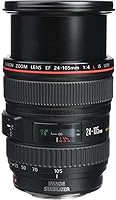
  • Brand and Series: Manufactured by Canon Cameras US, this lens belongs to the premium L-series lineup, identifiable by its red ring and professional-grade build standards.
  • Packaging: This listing is a white box (bulk or gray-market) variant; the lens itself is identical to the retail version but ships without a lens hood, carry case, or printed documentation.
  • Warranty: A 1-year manufacturer warranty is included, though coverage terms may vary depending on regional Canon support policies for gray-market units.
  • Availability: Originally introduced on August 22, 2005, the lens remains in active production and is not discontinued by the manufacturer as of current records.
  • Minimum Aperture: The minimum aperture is f/22, providing flexibility for long-exposure or high-depth-of-field shooting scenarios in bright conditions.
  • Best Sellers Rank: This lens holds a rank of #344 in the SLR Camera Lenses category on Amazon, reflecting sustained and consistent buyer demand over many years.

Related Reviews
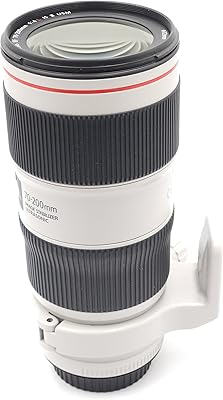
Canon EF 70-200mm f/4L IS II Lens
85%
94%
Optical Sharpness
91%
Image Stabilization
88%
Autofocus Performance
93%
Build Quality
89%
Portability & Weight
More
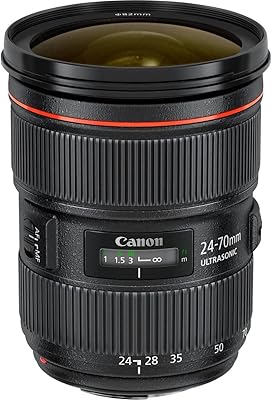
Canon EF 24-70mm f/2.8L II Zoom Lens
78%
94%
Optical Sharpness
91%
Autofocus Performance
93%
Build Quality & Durability
62%
Value for Money
38%
Image Stabilization
More
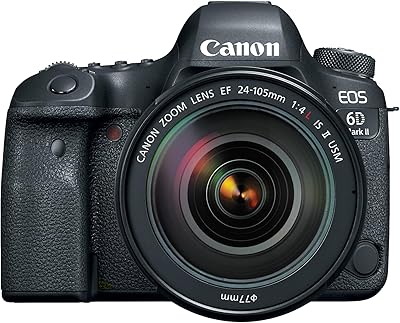
Canon EOS 6D Mark II with EF 24-105mm f/4L IS II USM
81%
93%
Image Quality
79%
Autofocus Performance
57%
Video Capabilities
91%
Bundled Lens Quality
88%
Battery Life
More
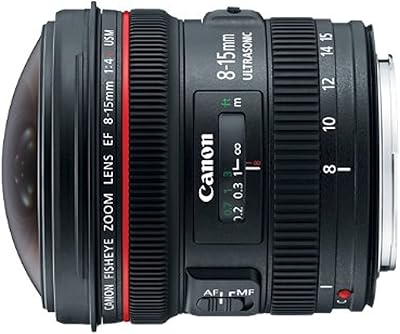
Canon EF 8-15mm f/4L Fisheye Zoom Lens
82%
93%
Optical Sharpness
91%
Zoom Versatility
88%
Autofocus Performance
94%
Build Quality
61%
Low-Light Capability
More
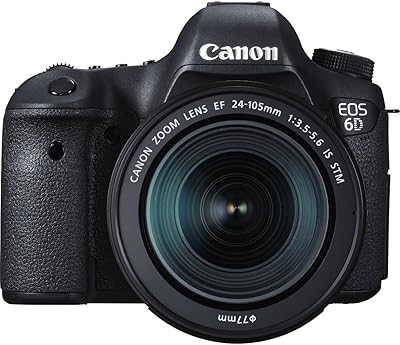
Canon EOS 6D DSLR Camera with EF 24-105mm f/3.5-5.6 IS STM Lens Kit
84%
94%
Image Quality
82%
Autofocus Performance
88%
Ease of Use
90%
Low-Light Performance
85%
Build Quality
More
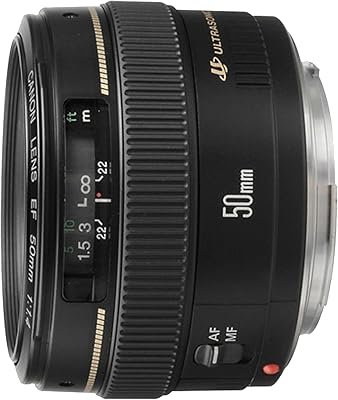
Canon EF 50mm f/1.4 USM Camera Lens
80%
91%
Bokeh & Background Separation
88%
Low-Light Performance
84%
Autofocus Speed & Accuracy
63%
Sharpness Wide Open
78%
Build Quality & Feel
More
Canon EF 85mm f/1.8 USM Lens
86%
91%
Image Sharpness
93%
Bokeh Quality
88%
Autofocus Speed
94%
Autofocus Noise
86%
Low-Light Performance
More
Canon EF 100mm f/2.8L IS USM Macro Lens
88%
96%
Image Stabilization
92%
Autofocus Speed & Accuracy
94%
Sharpness & Detail
91%
Build Quality & Durability
88%
Weather Resistance
More
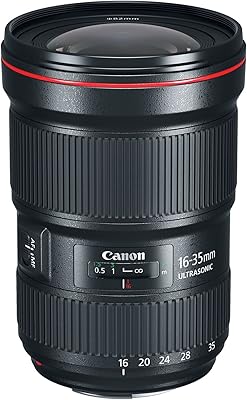
Canon EF 16–35mm f/2.8L III USM Lens
88%
95%
Image Quality
93%
Build Quality & Durability
91%
Autofocus Speed & Accuracy
89%
Low-Light Performance
90%
Weather Sealing
More
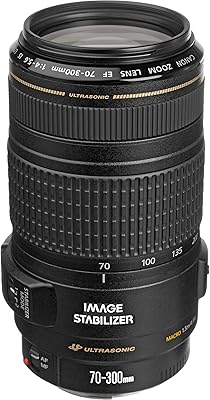
Canon EF 70-300mm IS USM Telephoto Lens
77%
91%
Image Stabilization
87%
Autofocus Performance
72%
Optical Sharpness
61%
Build Quality
78%
Value for Money
More

FAQ

Yes, it physically fits any Canon EOS body with an EF mount, including APS-C crop sensor cameras. The catch is that the crop factor shifts the effective focal range to roughly 38–168mm equivalent, so you lose much of the wide-angle coverage that makes this lens so versatile. On a full-frame body it performs as intended; on a crop body it behaves more like a mid-range telephoto zoom.

The lens optics, autofocus, and build are identical to the standard retail version. White box simply means it was packaged for bulk or gray-market distribution, so it arrives without the lens hood, soft case, or printed documentation that come with a retail box. You will want to budget for a separate 77mm lens hood if you need one, as shooting without it can increase flare in backlit conditions.

It works well for video in many situations. The ring-type USM autofocus is quiet enough that it rarely bleeds into on-camera audio, and the image stabilizer helps smooth out minor handheld movement. Full-time manual focus override also makes it easy to pull focus mid-clip. It is not a cinema lens, but for travel videos, event coverage, and documentary-style work it is a capable and practical choice.

The 3-stop compensation claim is realistic in practice. Shooting handheld in a dim indoor venue at 1/30s focal lengths around 50mm, you can get clean, sharp results that would otherwise require a tripod. It is less effective at the longer end if your subject is also moving, since IS only compensates for camera shake, not subject motion. On a tripod, remember to switch IS off to avoid the system hunting and potentially introducing blur.

At 24mm wide open, there is a noticeable drop in sharpness toward the corners compared to the center of the frame. Stopped down to f/5.6 or f/8, it improves significantly and becomes quite usable. For casual travel or documentary work it is rarely a deal-breaker, but if you are frequently shooting architecture or landscapes wide open at 24mm and expecting edge-to-edge sharpness, you may find it disappointing.

The Canon EW-83H is the correct dedicated lens hood for this lens. It is a petal-style hood designed specifically for the 24–105mm focal length range to minimize vignetting at the wide end while still blocking flare effectively. You can find it from Canon directly or through third-party manufacturers as a more affordable option.

It can handle casual sports and wildlife in good light — the USM autofocus is fast and tracking is decent. The 105mm maximum reach is the real limiting factor; most serious wildlife and sports work benefits from 300mm or longer. For stadium sports from a distance or safari-style wildlife photography, you will want a longer telephoto. For something like sideline youth sports or birds at a feeder close by, it is workable.

The two lenses serve somewhat different purposes. The 24-70mm f/2.8L gives you a faster aperture — genuinely useful in low light and for shallower depth of field — but tops out at 70mm and is heavier. The 24-105 f/4L trades that extra stop of light for an extended zoom range and image stabilization. If you shoot a lot in dark environments or need that background separation from f/2.8, the 24-70 is worth the trade-off. If you want one flexible all-day lens with IS, the 24-105 makes more practical sense for most shooters.

The dust- and moisture-resistant construction offers meaningful protection for light rain, dusty environments, and outdoor event work, but it is not fully waterproof. Canon describes it as resistant, not sealed to any IP standard. Shooting in a light drizzle with a weather-sealed body like a 5D Mark III or later is generally fine, but you would not want to shoot in heavy downpour without additional protection for the lens and body combination.

Generally yes — L-series glass from Canon tends to hold resale value better than consumer-grade lenses because of the build quality and sustained demand. The white box origin should not significantly affect resale price since buyers are purchasing the optical performance, not the packaging. Keeping it in good cosmetic condition and retaining any accessories you purchase separately will help at resale time.

Where to Buy