Overview

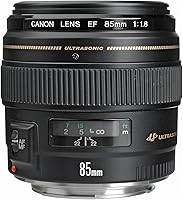
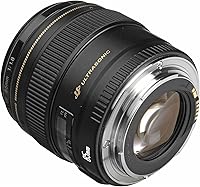
The Canon EF 85mm f/1.8 USM Lens has been a staple in Canon's prime lineup since 2002, and it has earned that longevity honestly. Portrait and event photographers on a realistic mid-range budget have long gravitated toward it because it punches well above its price class. It is compact enough — weighing just 15 ounces — that you can carry it all day without fatigue, yet optically it leaves kit lenses far behind. The f/1.8 maximum aperture alone is a revelation if you have only ever shot with a standard zoom. Just know going in: this is a fixed 85mm, Canon EF mount only, and there is no image stabilization on board.

Features & Benefits

The ring-type USM autofocus is one of the first things you notice — it locks on fast and runs so quietly you could use it mid-conversation without drawing attention. That matters enormously at weddings or in any situation where discretion counts. The 85mm focal length is genuinely flattering for faces: it compresses perspective just enough to avoid the distortion that wider lenses can introduce. You can get surprisingly close — under three feet — for a tight headshot, which is more flexible than many photographers expect from a telephoto prime. It works across full-frame and APS-C Canon bodies, so it remains useful if you upgrade your camera down the line.

Best For

This portrait lens is an obvious recommendation for anyone shooting people — whether that is formal portraits, candid street work, or the controlled chaos of a wedding reception. If you have been relying on a kit zoom and wonder what all the fuss about background blur is, one afternoon with this 85mm prime will answer that clearly. It is also a capable tool for Canon DSLR video shooters who need a fast, quiet prime that does not distract on set. Travel photographers appreciate the compact footprint. It is not the right pick if you need a flexible zoom, shoot in tricky low light without stabilization, or use a non-Canon mount.

User Feedback

The consensus among long-term owners is that sharpness wide open is impressive and improves further by f/2.8 or so — a result that regularly surprises people new to fast primes. The USM autofocus draws near-universal praise for its speed and near-silent operation. That said, some users flag slight chromatic aberration and corner softness at f/1.8, which is worth knowing if pixel-peeping matters to you. The most common point of comparison is the Canon 85mm f/1.4L — a significantly pricier lens — and most owners conclude the value gap is hard to justify for non-professionals. The one consistent complaint: no image stabilization, which video shooters in particular feel keenly.

Pros

  • Near-silent USM autofocus is fast, reliable, and discreet enough for wedding ceremonies and quiet environments.
  • The f/1.8 aperture produces smooth, creamy background blur that flatters portraits and isolates subjects beautifully.
  • Sharpness wide open is genuinely impressive for a lens at this price point — center sharpness especially stands out.
  • At just 15 ounces, this portrait lens is light enough to carry comfortably through a full day of shooting.
  • Works across both full-frame and APS-C Canon EF-mount bodies, so it stays useful as you upgrade camera bodies.
  • The 85mm focal length renders faces naturally, avoiding the distortion that wider lenses can introduce.
  • A closest focusing distance under three feet gives more compositional flexibility than most telephoto primes offer.
  • Owners frequently report using this 85mm prime for years without any drop in performance or mechanical issues.
  • Represents outstanding value compared to Canon L-series alternatives, delivering professional results at a fraction of the cost.
  • Eight aperture blades produce a round, pleasing bokeh shape that holds up well even slightly stopped down.

Cons

  • No image stabilization makes handheld low-light or video shooting noticeably riskier than on stabilized alternatives.
  • Minor chromatic aberration and corner softness are visible at f/1.8, requiring post-processing or stopping down to correct.
  • Fixed focal length means you move your feet constantly — frustrating in tight spaces where backing up is not an option.
  • Autofocus can occasionally hunt in very low contrast or dim conditions, missing the mark on fast-moving subjects.
  • The EF mount limits this lens to DSLR bodies; mirrorless Canon R-series users need an adapter, which adds cost and bulk.
  • No weather sealing means shooting in rain, dust, or humid conditions carries real risk of damage over time.
  • Manual focus ring feel is functional but uninspiring — photographers who prefer precise manual focus control may find it imprecise.
  • On APS-C bodies the effective focal length becomes around 136mm, which can feel uncomfortably tight indoors.

Ratings

The Canon EF 85mm f/1.8 USM Lens has accumulated thousands of verified buyer reviews worldwide, and our AI rating engine has analyzed that feedback in full — filtering out incentivized, bot-generated, and outlier submissions to surface what real photographers actually experience day to day. The scores below reflect both what this 85mm prime genuinely excels at and where it asks for compromise, giving you a transparent, unvarnished picture before you buy.

Image Sharpness
91%
Center sharpness wide open at f/1.8 consistently draws praise from portrait and event photographers who compare output directly against far pricier glass. By f/2.8, edge-to-edge rendering tightens up considerably, and at mid-apertures the results are difficult to fault for a lens at this price tier.
Corner softness at f/1.8 is a recurring note from technically minded users who pixel-peep their files. Chromatic aberration along high-contrast edges — tree branches against bright sky, for instance — appears often enough that some photographers build a correction step into their standard editing workflow.
Bokeh Quality
93%
The eight rounded aperture blades produce a smooth, circular out-of-focus rendering that flatters portrait subjects in a way that zoom lenses at similar prices simply cannot match. Photographers shooting outdoor sessions in dappled light frequently describe the background transitions as among the most natural they have used at this focal length.
At very close focusing distances, some users notice slightly busy bokeh on specular highlights — small bright spots that render as slightly edged rather than perfectly smooth circles. It is a minor criticism but one that appears in comparisons against the f/1.4L version of this portrait lens.
Autofocus Speed
88%
The ring-type USM motor acquires focus quickly enough to handle candid moments at events and receptions without noticeable hunting or hesitation. Wedding photographers in particular praise how confidently it tracks a moving subject across a dimly lit venue compared to older Canon prime designs.
In very low contrast or near-darkness conditions, focus hunting becomes more pronounced and can mean missed shots. A small number of users on APS-C bodies also report slightly less snappy performance than on full-frame bodies, though this may relate to the camera body's AF system rather than the lens itself.
Autofocus Noise
94%
The near-silent USM operation is one of the most consistently praised aspects of this portrait lens across all buyer segments. Shooters who regularly photograph ceremonies, theatre performances, or sleeping newborns describe it as genuinely unobtrusive in ways that older Canon primes are not.
A handful of video users shooting in completely silent environments with the camera's internal microphone report faintly audible focus movement in their audio tracks. It is not a widespread complaint, but it surfaces often enough among dedicated DSLR filmmakers that it warrants mention.
Low-Light Performance
86%
The f/1.8 maximum aperture gives this 85mm prime a meaningful real-world advantage over kit zooms in evening events, indoor receptions, and any situation where flash is unwelcome. Photographers report confidently shooting at ISO settings they would never risk with a slower lens and still pulling usable, clean frames.
The absence of image stabilization places the burden entirely on shutter speed and technique, which matters most when light drops to the point where even f/1.8 demands slower exposures. Handheld shots below 1/100s in genuinely dim conditions carry real shake risk that a stabilized body only partially compensates for.
Build Quality
78%
22%
For a lens that has been in continuous production since 2002, durability reports are remarkably positive — many owners describe using the same copy for a decade or more without mechanical degradation or optical shifts. The barrel feels solid in hand without being unnecessarily heavy for a day of shooting.
There is no weather sealing of any kind, which limits confident use in light rain, mist, or dusty outdoor environments. A few users note the plastic barrel construction feels less premium than Canon L-series glass, and the included lens cap and rear cap are considered basic rather than reassuring for a lens of this value.
Value for Money
96%
Across thousands of reviews, the consensus is remarkably clear: this portrait lens delivers image quality that competes with glass costing two to three times more. Photographers who have used both this lens and the Canon 85mm f/1.4L overwhelmingly describe the price-to-performance ratio here as difficult to beat for non-professionals.
The value equation shifts if your shooting demands weather sealing, faster autofocus tracking for sports, or the marginal optical gains of the L-series version. For that narrow category of buyer, the lower price tag does not offset the capability gap, and the step up may genuinely be worthwhile.
Portability
83%
At 15 ounces and under three inches long, this 85mm prime travels well as a single-lens kit for portrait sessions, street work, or travel days where bag weight is a real concern. Photographers who switch between this and a wide prime report that the combination stays manageable across long outdoor shoots.
On smaller APS-C bodies, the lens-to-body proportion can feel slightly front-heavy, and the effective 136mm equivalent focal length on crop sensors means you need more physical space to compose than on full-frame. Neither issue is a dealbreaker, but both affect the ergonomic experience depending on your setup.
Portrait Rendering
92%
The 85mm focal length is widely regarded as one of the most flattering focal lengths for human subjects, and this lens executes that perspective naturally — faces render without the subtle distortion that wider focal lengths introduce. Photographers moving from a 50mm or kit zoom often describe the shift in subject rendering as immediately noticeable.
The fixed focal length means tight headshots in small rooms require backing up more than many photographers expect, and there is no flexibility to zoom out for an environmental portrait without physically moving. Shooters who want one lens for both close and wider framing on a prime body will find this limiting.
Video Usability
68%
32%
The quiet USM motor and smooth manual focus ring make this portrait lens a reasonable choice for DSLR video on a modest production budget. Shooters using a stabilized body or a gimbal report clean, cinematic results from the wide aperture that would cost significantly more to replicate with dedicated cinema glass.
Without image stabilization, handheld video footage is noticeably shakier than with stabilized alternatives — particularly at longer focus distances where camera movement is amplified. Focus breathing (a slight zoom-like shift when pulling focus) is also visible enough during video pulls to be a concern for more demanding productions.
Compatibility Range
74%
26%
The EF mount covers an enormous range of Canon DSLRs spanning over two decades of production, meaning most Canon DSLR users can use this 85mm prime without any additional hardware. Canon's official EF-to-RF adapter extends usability to the mirrorless lineup with reliable autofocus performance in most conditions.
Non-Canon shooters are excluded entirely without a third-party adapter, and even Canon RF mirrorless users face the added cost and slight bulk of the adapter. The crop factor on APS-C bodies also meaningfully changes the shooting experience — the effective 136mm equivalent is less versatile than the intended 85mm framing.
Durability Over Time
89%
Long-term ownership reports are a genuine strength for the Canon 85 f/1.8 — users who have shot thousands of frames over many years consistently report that optics remain sharp and the focus motor remains reliable with normal use and basic care. It is the kind of lens that holds its value on the used market for good reason.
The lack of weather sealing means that durability depends heavily on how carefully the lens is handled in the field. A few users report front element scratches from storage without a protective case or filter, and the plastic barrel is susceptible to cosmetic scuffs that do not affect function but do affect resale appearance.
Ease of Use
87%
There is very little learning curve for any Canon DSLR shooter — mount it, set your aperture, and the USM autofocus handles the rest reliably. Beginners stepping up from a kit zoom find the transition straightforward, and the full-time manual focus override means experienced shooters are never locked out of fine-tuning focus.
The fixed 85mm focal length demands that photographers learn to work with their feet rather than a zoom ring, which is an adjustment for those accustomed to zoom flexibility. First-time prime users sometimes underestimate how much physical movement is required to recompose shots at a single focal length across varied subjects.

Suitable for:

The Canon EF 85mm f/1.8 USM Lens is purpose-built for anyone who photographs people — and does it well enough that it has remained relevant for over two decades. Portrait photographers shooting in natural light will notice immediately how the wide aperture separates subjects from their backgrounds in a way that kit zooms simply cannot replicate. Wedding and event photographers will appreciate the near-silent USM autofocus, which locks on reliably in dim reception halls without drawing attention or disrupting a moment. Hobbyists ready to move beyond a starter zoom will find this 85mm prime a genuine revelation — the jump in image quality and creative control is hard to overstate. DSLR filmmakers looking for a fast, quiet prime that does not hum or hunt on camera will find it performs well in that role too. It also suits travel photographers who want one compact, fast prime for environmental portraits without hauling heavy glass across a city.

Not suitable for:

The Canon EF 85mm f/1.8 USM Lens is not the right tool for every situation, and it is worth being honest about where it falls short before you commit. Because it is a fixed focal length, photographers who rely on zoom flexibility — covering wide establishing shots and tight close-ups in the same session — will find it frustrating. The lack of image stabilization is a real limitation: handheld shooting in low light at slower shutter speeds introduces blur risk, and video shooters without a stabilized rig or a body with in-body stabilization will struggle with footage that looks shaky. It is also Canon EF mount only, which means it is off the table entirely for mirrorless shooters or anyone on a Nikon, Sony, or Fujifilm system without an adapter. If you shoot a lot of macro, architecture, or sports from close range, the 85mm focal length is simply not the right focal length for those disciplines.

Specifications

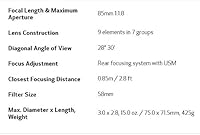
  • Focal Length: This is a fixed 85mm prime lens, meaning there is no zoom — what you see at 85mm is what you get.
  • Maximum Aperture: The lens opens to a maximum aperture of f/1.8, allowing substantial light intake and strong subject-background separation.
  • Minimum Aperture: The smallest available aperture is f/22, useful for maximizing depth of field in bright outdoor conditions.
  • Autofocus System: A ring-type Ultrasonic Motor (USM) drives autofocus, delivering fast acquisition and near-silent operation during stills and video.
  • Closest Focus: The minimum focusing distance is 2.8 feet (0.85m), enabling tight framing for headshots without excessive subject distance.
  • Mount Type: This lens uses the Canon EF mount, compatible with Canon full-frame and APS-C DSLRs; it is not natively compatible with RF-mount mirrorless bodies without an adapter.
  • Weight: The lens weighs 15 ounces (approximately 425g), which is manageable for extended handheld shooting sessions.
  • Dimensions: The barrel measures 2.83″ in diameter and 2.95″ in length, making it notably compact relative to its optical performance.
  • Filter Thread: The front element accepts 58mm screw-in filters, a common and affordable size widely available from third-party manufacturers.
  • Aperture Blades: Eight aperture blades form a near-circular diaphragm that contributes to smooth, rounded bokeh even when the lens is stopped down slightly.
  • Image Stabilization: There is no optical image stabilization on this lens; users must rely on shutter speed, body-based stabilization, or physical support to manage camera shake.
  • Lens Type: This is a prime (fixed focal length) telephoto lens, not a zoom; its optical formula is optimized specifically for the 85mm focal length.
  • Construction: The lens features a multi-element optical design with Canon's Super Spectra lens coatings applied to reduce flare and ghosting in backlit conditions.
  • Manual Focus: A dedicated manual focus ring is included and can be used at any time without switching AF off, thanks to the full-time manual override feature.
  • Lens Hood: The lens ships compatible with Canon's ES-71 II lens hood (sold separately), which helps reduce stray light and provides minor front-element protection.
  • Warranty: Canon covers this lens with a one-year limited warranty through the manufacturer against defects in materials and workmanship.
  • Model Number: The official Canon model number is 2519A012, and the Amazon ASIN is B00007GQLU for reference when ordering or verifying authenticity.
  • Manufacturer: This lens is designed and manufactured by Canon Cameras US, a division of Canon Inc., and has been in continuous production since November 2002.

Related Reviews
JINTU 85mm f/1.8 Portrait Lens for Canon EF/EF-S Mount
81%
91%
Image Quality
88%
Build Quality
85%
Manual Focus Control
92%
Aperture Performance
87%
Value for Money
More
Canon EF 50mm f/1.8 STM Lens
79%
83%
Image Sharpness
88%
Bokeh & Background Separation
81%
Low-Light Performance
72%
Autofocus Speed & Accuracy
91%
Autofocus Noise
More
Canon EF 50mm f/1.4 USM Camera Lens
80%
91%
Bokeh & Background Separation
88%
Low-Light Performance
84%
Autofocus Speed & Accuracy
63%
Sharpness Wide Open
78%
Build Quality & Feel
More
Meike 85mm f/1.8 Canon EF Telephoto Lens
71%
88%
Value for Money
71%
Optical Sharpness
66%
Autofocus Performance
74%
Bokeh Quality
58%
Build Quality
More
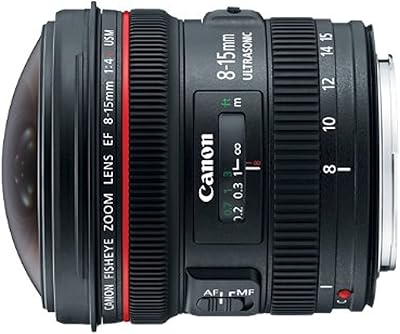
Canon EF 8-15mm f/4L Fisheye Zoom Lens
82%
93%
Optical Sharpness
91%
Zoom Versatility
88%
Autofocus Performance
94%
Build Quality
61%
Low-Light Capability
More
Sony SEL85F18 85mm F/1.8 Prime Lens
81%
91%
Autofocus Speed & Accuracy
93%
Bokeh Quality
88%
Image Sharpness
82%
Chromatic Aberration Control
89%
Autofocus Noise
More
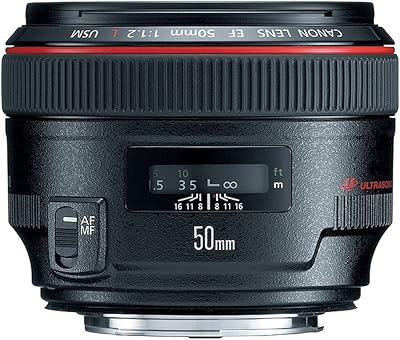
Canon EF 50mm f/1.2L USM
88%
94%
Image Quality
92%
Low-Light Performance
89%
Autofocus Speed
90%
Build Quality
91%
Bokeh Quality
More
Canon EF 100mm f/2.8L IS USM Macro Lens
88%
96%
Image Stabilization
92%
Autofocus Speed & Accuracy
94%
Sharpness & Detail
91%
Build Quality & Durability
88%
Weather Resistance
More
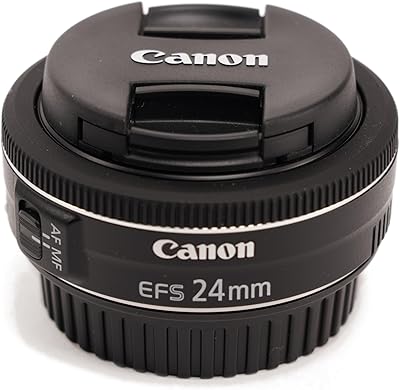
Canon EF-S 24mm f/2.8 STM Lens
79%
88%
Image Sharpness
82%
Autofocus Performance
61%
Build Quality
96%
Portability & Size
74%
Low-Light Capability
More
Canon EF 70-200mm f/4L IS II Lens
85%
94%
Optical Sharpness
91%
Image Stabilization
88%
Autofocus Performance
93%
Build Quality
89%
Portability & Weight
More

FAQ

This portrait lens uses the Canon EF mount, which is designed for DSLR bodies. It will not attach directly to Canon RF-mount mirrorless cameras like the R5 or R6, but Canon's official EF-to-RF adapter solves that cleanly. Autofocus and aperture control generally work well through the adapter, though some advanced features may behave differently depending on your specific body.

It can, depending on the room. For a standard living room or small studio, you will need to back up a fair distance to fit a full-body shot. Where this 85mm prime really shines is in moderately sized spaces — think event venues, outdoor sessions, or any situation where you have room to move. For tight indoor environments, many photographers pair it with a wider lens and swap as needed.

The L-series version is sharper wide open, has better corner performance, and includes weather sealing — but it costs substantially more. For most portrait and event photographers, the difference in real-world images is difficult to justify at that price gap. The Canon 85 f/1.8 delivers results that impress clients and even experienced photographers; the L lens is really for working pros who need every marginal advantage and shoot regularly in adverse weather.

The USM motor on this lens is genuinely quiet — far quieter than older micro-motor lenses. In most video situations it will not cause issues, especially if you are using an external microphone. Some users have reported very faint focus noise in completely silent environments with the camera's internal mic, but it is rarely a practical problem.

It is compatible with any Canon DSLR that uses the EF mount, which covers a wide range of bodies from entry-level Rebels to full-frame models like the 5D and 6D series. On APS-C bodies, the effective field of view is equivalent to roughly 136mm due to the crop factor, which makes it feel even more telephoto.

Yes, the front element accepts 58mm screw-in filters, which is a very common size. Circular polarizers, UV filters, and ND filters are all widely available at this thread size and tend to be reasonably priced compared to larger filter sizes used by bigger telephoto lenses.

For static subjects in decent light, it is essentially a non-issue — the fast f/1.8 aperture lets you use fast enough shutter speeds to freeze any camera shake. Where it becomes relevant is in low light with slower shutter speeds, or for video work where smooth handheld footage is harder to achieve. If you shoot video regularly, a gimbal or a camera with in-body stabilization makes a big difference.

The Canon EF 85mm f/1.8 USM Lens is known for producing pleasing bokeh even when stopped down to f/2.8 or f/4. The eight rounded aperture blades help maintain a smooth, circular blur shape across a decent aperture range. It will not match the absolute smoothness of a faster lens at equivalent settings, but for most portrait work the background separation is well beyond what most photographers need.

It is one of the most recommended first primes for Canon shooters, and for good reason. The jump from a kit zoom to this 85mm prime — in terms of low-light capability, background blur, and overall rendering — is immediately noticeable. The main adjustment is learning to work with a fixed focal length, which most photographers find improves their compositional instincts over time.

Long-term owners consistently report that this portrait lens holds up well over years of regular shooting. The build quality is solid without being tank-like, and there is no weather sealing, so it is worth being careful in rain or dusty environments. Optically, users rarely report any degradation in performance over time as long as the glass is kept clean and the lens is stored properly.

Where to Buy

Willoughby's Photo Emporium
In stock $399.00
Mojo Computers
In stock $419.00
Deals All Year
In stock $489.99
The Photo Center
In stock $499.99
Omega Broadcast & Cinema
In stock $499.99
Cameragraphics
In stock $499.99