Overview

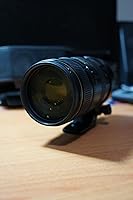
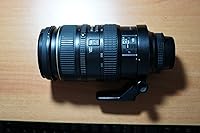
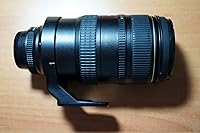
The Nikon 80-400mm f/4.5-5.6D VR Telephoto Lens is a legacy zoom that carved out a loyal following among Nikon F-mount DSLR shooters who needed serious reach without hauling a prime. It has been discontinued by Nikon, but that has not made it irrelevant — far from it. On the used and refurbished market, this telephoto zoom still surfaces regularly, and for good reason. The 80-400mm range is genuinely useful for wildlife and sports shooting, covering everything from medium-distance portraits to far-off subjects. With a 4-star average across 200 ratings, it has earned a measured but real respect from photographers who knew exactly what they were buying.
Features & Benefits

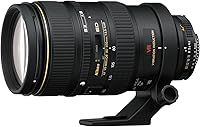
What keeps this old 80-400mm Nikkor in the conversation is the optical quality. Three ED glass elements do meaningful work here, cutting down chromatic aberration and keeping colors accurate even at the long end of the zoom. The nine-blade rounded diaphragm is a nice touch — backgrounds go soft in a natural, not harsh, way. The Vibration Reduction system, offering a roughly three-stop compensation, remains effective by today's standards for handheld shooting. VR also detects panning automatically, which matters when you're tracking a bird in flight. For its size and weight — under three pounds — this telephoto zoom punches respectably.

Best For

This legacy Nikon lens makes the most sense for a specific type of buyer. If you shoot wildlife, birds, or occasional sports on a Nikon F-mount body and do not need the latest autofocus technology, this telephoto zoom covers a lot of ground at a fraction of current retail pricing for newer glass. Safari photographers and airshow regulars find the zoom range practical for real-world use. It also suits enthusiasts who have outgrown their kit lens but are not ready to spend on a modern flagship telephoto. One important note: this lens is F-mount only. Z-mount mirrorless users would need a compatible adapter, which adds cost and extra considerations.

User Feedback

Across its 200 reviews, a clear picture emerges. Photographers consistently praise the image quality and the VR system's effectiveness, calling it a reliable performer for the price on the used market. Build quality gets positive mentions too — it feels solid in hand. Where the criticism lands, though, is on autofocus. Reviewers frequently note that the AF is noticeably slower than what you would get from Nikon's updated successor, and it can struggle in lower light or with fast-moving subjects. A recurring theme: those who go in understanding the lens's age tend to be satisfied; those expecting modern performance come away disappointed. Manage expectations, and it still delivers.

Pros

  • The 80-400mm zoom range is genuinely versatile for wildlife, travel, and outdoor sports in a single lens.
  • Vibration Reduction performs well even by current standards, making handheld shooting at longer focal lengths much more viable.
  • Three ED glass elements deliver sharp, accurate images with minimal chromatic aberration.
  • The nine-blade rounded diaphragm produces natural, attractive background blur that holds up in portrait-style wildlife shots.
  • At under three pounds, this telephoto zoom is manageable for extended handheld use compared to heavier super-telephoto alternatives.
  • Automatic panning detection in VR mode is a practical feature for tracking birds or vehicles in motion.
  • Compatible with both FX full-frame and DX crop-sensor Nikon bodies, broadening its usable range.
  • On the used market, this old 80-400mm Nikkor offers meaningful optical quality at a fraction of new telephoto pricing.
  • A 4-star average across 200 ratings reflects a consistent track record among real-world photographers.
  • Build quality feels solid and confidence-inspiring without being unnecessarily heavy.

Cons

  • Autofocus speed is a well-documented weak point, trailing modern telephoto zooms by a noticeable margin.
  • Low-light autofocus performance in particular can be unreliable and frustrating for indoor or dusk shooting.
  • No weather sealing means wet or dusty conditions pose a genuine risk to the lens.
  • Discontinued by the manufacturer, so warranty support and new spare parts are no longer available.
  • Z-mount mirrorless users must budget for and manage the added complexity of an adapter.
  • Some reviewers report the zoom ring action feels stiff, especially on older used examples.
  • At f/5.6 at the long end, you will need fast shutter speeds in bright conditions, limiting flexibility in lower light.
  • The AF motor can produce noticeable noise during operation, which may disturb wildlife subjects at close range.
  • Compared to its successor, the overall autofocus system feels dated enough to be a practical limitation, not just a spec difference.
  • Sourcing a well-maintained used copy requires care, as condition varies significantly across the second-hand market.

Ratings

The scores below reflect our AI-driven analysis of verified buyer reviews for the Nikon 80-400mm f/4.5-5.6D VR Telephoto Lens, drawn from hundreds of real-world accounts worldwide — with spam, incentivized reviews, and bot activity actively filtered out before scoring. Every category captures both what users genuinely praised and what frustrated them in practice. Nothing has been softened to protect the product's reputation.

Optical Quality
83%
Photographers consistently single out the sharpness and color accuracy delivered by the three ED glass elements, particularly in the 80-200mm portion of the zoom range. On good light days at a safari or nature reserve, images hold detail well even when cropped for publication.
At 400mm and wide open, some reviewers notice a softening in corner sharpness that requires stopping down to recover. The lens also shows its age compared to modern optics when shooting high-contrast scenes, where fringing can occasionally creep in.
Autofocus Speed
51%
49%
The AF system is functional and accurate enough for stationary or slow-moving subjects like perched birds, grazing animals, or posed portraits at distance. Users who primarily shoot in controlled, predictable scenarios report acceptable results.
This is the most consistently flagged weakness across all user feedback. Tracking fast-moving subjects — birds in flight, athletes, or vehicles — frequently results in missed focus or hunting, especially in lower light. It trails the updated successor by a margin that is hard to overlook for action-oriented shooters.
Vibration Reduction
81%
19%
The VR system draws genuine praise, with many users impressed that a stabilization system of this age still holds up in handheld shooting. At 200-300mm, photographers report crisp results at shutter speeds they would not attempt without stabilization.
At the 400mm end, the three-stop compensation can be pushed to its limit, particularly in windy conditions or when fatigue sets in during long sessions. It is not the latest generation of VR, and side-by-side with newer Nikon glass, the difference in smoothness becomes clear.
Build Quality
72%
28%
The physical construction earns solid marks for feeling substantial and reliable in hand, with a barrel that does not flex or rattle when handled. Many users who have owned this legacy Nikon lens for years report no mechanical failures, which speaks to its durability over time.
The absence of weather sealing is a real limitation that users mention specifically when caught in light rain or dusty field conditions. Some older used examples also develop zoom ring stiffness, which suggests the internal greasing degrades over extended use.
Value for Money
78%
22%
On the used market, this telephoto zoom represents a compelling entry point into serious long-reach photography for Nikon F-mount shooters who cannot justify the cost of newer glass. Reviewers who bought it secondhand in good condition frequently express satisfaction with the cost-to-output ratio.
Buyers who paid closer to original retail pricing or who purchased poorly maintained used copies tend to feel the value proposition weakens considerably given the AF limitations. If the used price creeps up toward newer alternatives, the case for choosing this lens becomes harder to make.
Zoom Range Versatility
84%
The 80-400mm span is a practical, real-world range that travel and wildlife photographers genuinely appreciate — it covers medium telephoto through serious long-range reach in one optic. Safari shooters in particular cite the ability to go from a herd shot at 80mm to a close crop of a single animal at 400mm without swapping lenses.
At the wide end, 80mm is not particularly wide for a zoom that starts as your telephoto option, leaving a gap if you are shooting in tighter environments. Users who need anything below 80mm must carry a second lens, which somewhat limits its all-in-one appeal.
Handling & Ergonomics
74%
26%
At under three pounds, this telephoto zoom is lighter than many comparable focal length options, and users doing extended wildlife walks or handheld shooting from vehicles appreciate that it does not cause fatigue quickly. The balance on a mid-sized Nikon DSLR body is described as comfortable by most reviewers.
The zoom ring action on used copies varies — some feel smooth, others feel noticeably stiff, and there is no guarantee which you will get secondhand. A few users also note that the manual focus ring requires more deliberate effort than they would prefer when fine-tuning focus on stationary subjects.
Low-Light Performance
49%
51%
In bright outdoor conditions — midday safaris, open sports fields, or well-lit airshows — this legacy Nikon lens produces results that satisfy most enthusiast-level photographers and holds its own on image quality.
The f/5.6 maximum aperture at 400mm, combined with the slower AF motor, makes low-light and dusk shooting a genuine challenge. Reviewers who pushed it into golden-hour wildlife photography frequently noted that keeper rates dropped and ISO noise became a secondary problem when trying to compensate with faster shutter speeds.
Autofocus Accuracy
67%
33%
When the AF system does lock on, the accuracy is generally reliable for stationary subjects, and users report consistent results when shooting at moderate focal lengths in good light. Single-shot AF in predictable conditions earns better marks than continuous tracking.
In continuous AF mode with moving subjects, accuracy drops noticeably, and focus hunting in transitional light situations is a recurring complaint. This is not a lens that forgives split-second timing errors the way modern AF systems do.
Bokeh & Background Blur
79%
21%
The nine-blade rounded diaphragm produces background blur that users describe as soft and organic rather than harsh or mechanical-looking. Wildlife portrait shots at 300-400mm show smooth subject separation that reviewers find pleasing in final images.
At shorter focal lengths within the range, background separation is naturally less pronounced, which can disappoint photographers expecting the same subject isolation across the full zoom. Specular highlights in the background can occasionally take on a slightly busy rendering in some lighting conditions.
Compatibility
77%
23%
The Nikon F mount is one of the most widely used DSLR mounts, and this telephoto zoom works across a large installed base of FX and DX bodies without any adapter or configuration required. For longtime Nikon DSLR users, dropping it onto their existing body is completely straightforward.
Z-mount mirrorless users need an FTZ adapter, which adds cost, potential AF performance degradation, and an extra point of failure at the mount connection. As Nikon's user base shifts toward mirrorless, the native compatibility advantage of this lens narrows over time.
Sharpness at 400mm
62%
38%
Stopped down to f/8, reviewers note that sharpness at the 400mm end improves meaningfully and delivers acceptable results for wildlife and nature subjects viewed at typical output sizes. For web publishing or moderate print sizes, center-frame sharpness holds up reasonably well.
Wide open at f/5.6 and 400mm, the sharpness drops to a level that more critical photographers find limiting, especially when heavy cropping is required. This is a known optical characteristic of the lens design rather than a copy-to-copy variation, so it cannot be resolved by finding a better sample.
Noise During AF
58%
42%
In general outdoor environments — open fields, game parks, or sports sidelines — the AF motor noise is not a major practical issue and does not draw attention in the way that louder lenses might.
In quiet environments like hides, birdwatching blinds, or any situation where minimizing disturbance is essential, the audible motor whir is a genuine nuisance that can disturb wildlife subjects or nearby observers. Reviewers specifically flag this as a reason to consider the updated successor if stealth matters.
Long-Term Reliability
71%
29%
Users who purchased this lens new or in excellent used condition report years of reliable service without significant mechanical issues, suggesting the core construction is durable when well maintained. Several long-term owners describe it as a lens that simply keeps working without drawing attention to itself.
As units age in the used market, the risk of degraded zoom ring performance, VR calibration drift, or AF motor wear increases in ways that are difficult to assess before purchasing. With no manufacturer support remaining, any significant repair now depends entirely on third-party service availability.

Suitable for:

The Nikon 80-400mm f/4.5-5.6D VR Telephoto Lens is a strong match for Nikon F-mount DSLR shooters who want a flexible telephoto zoom without paying a premium for the latest glass. Wildlife enthusiasts — think safari-goers, birders, or nature photographers who work mostly in decent light — will find the zoom range genuinely practical and the Vibration Reduction system a real help when handholding at longer focal lengths. Sports photographers on a tighter budget, particularly those shooting at outdoor events where lighting is cooperative, can also get solid results from this telephoto zoom. Travel photographers who want one lens that bridges a wide range of long-distance scenarios, from airshows to coastal wildlife, will appreciate that it covers 80mm through 400mm without swapping glass. Enthusiast-level shooters who are ready to move beyond a kit lens but are not yet looking to invest in a flagship telephoto prime will find this old 80-400mm Nikkor a meaningful and cost-effective upgrade on the used market.
Not suitable for:

Buyers who need fast, reliable autofocus for unpredictable or high-speed action should think carefully before committing to this legacy Nikon lens. The autofocus system is a product of its era — it works, but it is noticeably slower than what you would get from Nikon's updated successor or any modern telephoto zoom, and it can struggle when light drops off. Photographers who frequently work in rain, mist, or dusty conditions should also be aware that this telephoto zoom is not weather-sealed, which limits its usefulness in challenging outdoor environments. Anyone transitioning to Nikon's Z-mount mirrorless system will need a compatible adapter to use this lens, adding cost and introducing potential compatibility constraints that undercut the value proposition. Finally, if your primary subjects are fast-moving animals, motorsport, or athletes in motion, the AF limitations of the Nikon 80-400mm f/4.5-5.6D VR Telephoto Lens are a real and well-documented frustration that newer glass would largely solve.
Specifications

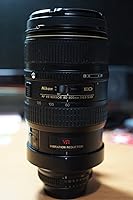
  • Focal Length: This telephoto zoom covers a range of 80mm to 400mm, suitable for a wide variety of distant subjects.
  • Maximum Aperture: The lens offers a variable maximum aperture of f/4.5 at 80mm, stepping down to f/5.6 at 400mm.
  • Lens Type: It is a telephoto zoom lens designed for long-distance subjects such as wildlife, sports, and travel photography.
  • Mount Compatibility: The lens is built for the Nikon F (FX) mount and is compatible with both full-frame FX and crop-sensor DX Nikon DSLR bodies.
  • Vibration Reduction: The integrated VR system provides approximately three stops of camera shake compensation, with automatic panning detection built in.
  • ED Glass Elements: Three Extra-low Dispersion glass elements are included to minimize chromatic aberration and improve color accuracy across the zoom range.
  • Diaphragm: A nine-blade rounded diaphragm is used to produce smooth, natural-looking background blur in out-of-focus areas.
  • Autofocus: The lens features built-in autofocus driven by an internal AF motor, compatible with all Nikon F-mount AF-capable bodies.
  • Dimensions: The lens measures 6.73 x 3.58 x 3.58 inches (length x diameter) when not extended.
  • Weight: It weighs 2.95 pounds, which is relatively manageable for a telephoto zoom covering this focal range.
  • Weather Sealing: This lens does not include weather sealing, making it vulnerable to moisture and dust ingress in challenging outdoor conditions.
  • Sensor Format: It is compatible with both FX full-frame and DX APS-C crop-sensor Nikon DSLR cameras.
  • Manufacturer Status: This lens has been officially discontinued by Nikon and is no longer in production, making the used and refurbished market the primary source.
  • Average Rating: Based on 200 customer ratings, this telephoto zoom holds an average score of 4.0 out of 5 stars.
  • Market Rank: It holds a Best Sellers Rank of #449 in the SLR Camera Lenses category at time of reference.
  • First Available: This lens was first made available for purchase in November 2002, reflecting its status as a long-standing legacy optic.
  • Model Number: The official Nikon item model number for this lens is 1996.
  • ASIN: The Amazon Standard Identification Number for this product is B00005LEOO.

Related Reviews

Canon EF 100-400mm f/4.5-5.6L Telephoto Zoom Lens
81%
91%
Autofocus Speed & Accuracy
88%
Image Stabilization
86%
Optical Sharpness
93%
Build Quality & Weather Sealing
67%
Push-Pull Zoom Mechanism
More
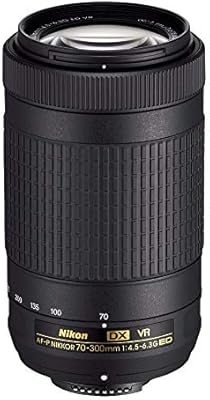
Nikon AF-S VR 70-300mm Telephoto Zoom Lens
78%
76%
Image Sharpness
88%
Vibration Reduction
71%
Autofocus Speed
91%
Value for Money
63%
Build Quality
More
Nikon AF-S DX NIKKOR 55-300mm Zoom Lens
71%
78%
Image Sharpness
67%
Autofocus Performance
84%
Vibration Reduction
54%
Aperture Range
61%
Build Quality
More
Nikon NIKKOR Z 28-400mm f/4-8 VR Lens
79%
96%
Zoom Range Versatility
91%
Image Stabilization (VR)
78%
Optical Sharpness
76%
Autofocus Performance
73%
Build Quality & Durability
More
Nikon 55-200mm f/4-5.6G VR Telephoto Zoom Lens
78%
91%
Value for Money
78%
Image Sharpness
88%
Vibration Reduction
73%
Autofocus Speed
62%
Build Quality
More
Nikon AF-P DX NIKKOR 70-300mm Telephoto Lens
78%
91%
Autofocus Performance
78%
Image Sharpness
86%
Vibration Reduction (VR)
47%
Camera Compatibility
72%
Build Quality & Handling
More
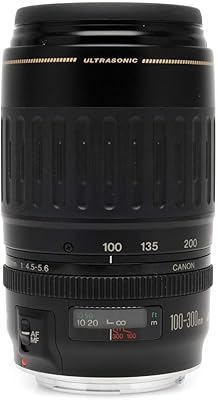
Canon EF 100-300mm f/4.5-5.6 Telephoto Zoom Lens
75%
88%
Autofocus Speed
91%
Autofocus Noise
67%
Image Sharpness
43%
Image Stabilization
78%
Build Quality
More
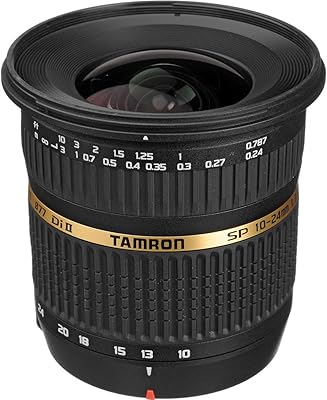
Tamron 10-24mm f/3.5-4.5 SP Di II LD Aspherical (IF) Lens for Nikon
85%
87%
Image Quality
82%
Autofocus Speed
80%
Build Quality
91%
Portability
70%
Low-Light Performance
More
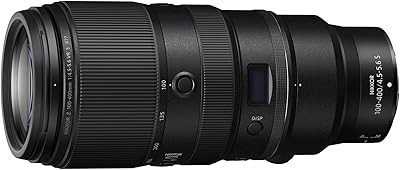
Nikon NIKKOR Z 100-400mm VR S Telephoto Lens
84%
93%
Autofocus Performance
91%
Image Sharpness
89%
Vibration Reduction Effectiveness
88%
Build Quality & Weather Sealing
74%
Value for Money
More
Nikon Z5 Full-Frame Mirrorless Camera
81%
92%
Image Quality
88%
Low-Light Performance
83%
Autofocus Performance
91%
In-Body Image Stabilization
86%
Build Quality & Ergonomics
More

FAQ

Yes, it will. This telephoto zoom is built for the Nikon F mount, which fits both full-frame FX bodies and crop-sensor DX bodies without any adapter. On a DX camera, the 400mm end effectively becomes a longer equivalent focal length due to the crop factor, which can actually be a bonus for wildlife shooting.

Not directly. The old 80-400mm Nikkor is an F-mount lens, so you would need Nikon's FTZ or FTZ II mount adapter to attach it to a Z-series mirrorless body. The adapter works, but autofocus performance may be further reduced compared to using it on a native F-mount DSLR, so it is worth factoring that in before buying.

Honestly, it depends on what you are shooting. For slower-moving subjects like perched birds, grazing animals, or relatively predictable sports action, the AF is workable. Where it struggles is with fast, erratic movement — think birds in flight or motorsport. If that is your main subject matter, this is a real limitation worth taking seriously.

Surprisingly, yes. The VR in this legacy Nikon lens delivers roughly three stops of compensation, and real-world users consistently report it still performs well for handheld shooting at longer focal lengths. It is not the latest generation of stabilization, but it is far from obsolete.

Nikon no longer offers official warranty support for this lens, but many independent camera repair shops are familiar with it and can service it. The bigger practical concern is sourcing spare parts if something mechanical fails, which can be harder to guarantee as time goes on. Buying a clean, well-maintained used copy upfront reduces that risk considerably.

No, it does not. There is no weather sealing on this telephoto zoom, so shooting in rain, heavy mist, or very dusty environments carries real risk of damage. If you plan to use it regularly in tough outdoor conditions, a rain sleeve or lens cover is a sensible precaution.

The updated version — the AF-S Nikkor 80-400mm f/4.5-5.6G ED VR — is a meaningful upgrade in autofocus speed and overall AF responsiveness, thanks to its Silent Wave Motor. Optically, the older model still holds up respectably, but if fast AF is critical to your work, the newer version is noticeably better. The tradeoff is a significantly higher price, which is why many buyers still seek out this older model on the used market.

The Nikon 80-400mm f/4.5-5.6D VR Telephoto Lens is best matched to wildlife, nature, and travel photography where subjects are not moving at extreme speed. Safari shooting, birding at perched subjects, airshows, and outdoor sports in good light are all practical use cases. It is less ideal for professional action or sports work where AF tracking speed is critical.
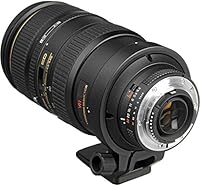
Most users describe the physical handling as solid and confidence-inspiring for its weight class. That said, some older used examples have developed a stiffness in the zoom ring over time, so it is worth checking that specifically if you are buying secondhand. At under three pounds, it is manageable for extended handheld sessions, though a monopod is helpful at 400mm.

Yes, this telephoto zoom accepts 77mm screw-in filters at the front element, which is a common and well-supported filter size. Circular polarizers and neutral density filters in 77mm are widely available, making it easy to find compatible accessories from most major filter brands.

Where to Buy