Overview

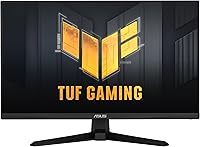
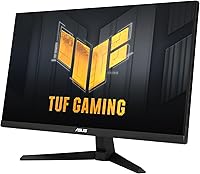
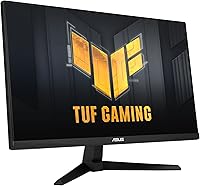
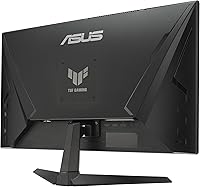
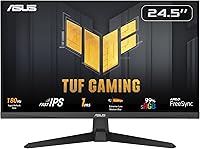
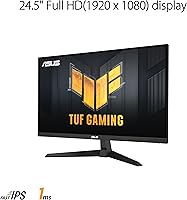
The ASUS VG259Q3A 25-inch FHD Gaming Monitor arrived in early 2024 as one of the more compelling options in the budget competitive gaming space — and it is easy to see why it caught attention quickly. At its core, you are getting a 24.5-inch Fast IPS panel at a price point where TN screens used to dominate. Yes, 1080p feels modest in 2024, but for esports and fast-paced shooters, pixel density is rarely the priority — frame rate is. The TUF Gaming line has always signaled solid build quality without flagship pricing, and the 3-year warranty backing this monitor is a genuine reassurance that most rivals at this price simply do not offer.
Features & Benefits

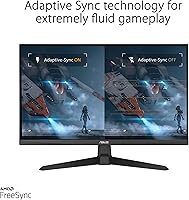
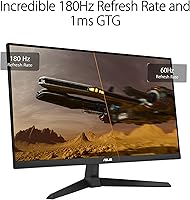
The 180Hz refresh rate is where this TUF Gaming monitor really earns its keep. In practice, jumping from 60Hz to 180Hz makes tracking fast-moving targets feel physically different — crosshairs snap more accurately, and screen tearing becomes a non-issue when paired with FreeSync Premium. The Fast IPS panel brings noticeably better color and viewing angles than older TN alternatives, covering 99% sRGB with results that look punchy without heavy calibration. Shadow Boost does useful work in dark game environments, lifting shadow detail without blowing out highlights. One important note: ELMB and FreeSync cannot run simultaneously, so you will need to choose based on your setup. Variable Overdrive adds flexibility across different frame rate conditions.

Best For

The VG259Q3A was clearly designed with competitive esports players in mind. If you are grinding ranked matches in CS2, Valorant, or Apex Legends, the combination of 180Hz and fast IPS response is genuinely useful — not just a spec sheet figure. It is also a smart pick for anyone upgrading from a 60Hz or 75Hz display on a tight budget; the improvement in motion clarity is immediate and obvious. The 24.5-inch footprint suits smaller desk setups well, and the monitor's relatively light weight makes it a decent choice for LAN events or a secondary station. This one is not built for creative work or productivity — the resolution makes that clear.

User Feedback

Across thousands of ratings, this 180Hz IPS panel holds a strong 4.7-star average — which, at this price tier, suggests buyers are genuinely satisfied rather than just not complaining. The most consistent praise centers on motion clarity and surprisingly vibrant color reproduction for a budget display. The build feels solid and the non-glare coating is well-regarded. The criticism that surfaces most reliably is the stand: it tilts, and that is about it — no height adjustment, no swivel. For anyone who cares about ergonomics, that is a real drawback. The built-in speakers are adequate for background audio but will not replace a decent headset. A handful of buyers also note that 1080p feels limiting for everyday desktop tasks outside of gaming.

Pros

  • 180Hz refresh rate makes motion in fast-paced games feel noticeably smoother compared to standard 60Hz panels.
  • Fast IPS technology delivers better color accuracy and viewing angles than TN alternatives at this price point.
  • 1ms GTG response time keeps ghosting minimal even during rapid, high-speed gameplay.
  • FreeSync Premium support effectively eliminates screen tearing across a wide frame rate range.
  • Shadow Boost improves dark-area visibility in games without washing out brighter parts of the scene.
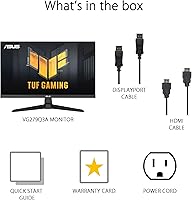
  • Both a DisplayPort and HDMI cable are included in the box, so you can set up immediately without extra purchases.
  • 99% sRGB coverage produces punchy, vibrant colors that outperform what most budget monitors deliver.
  • The 3-year warranty provides genuine long-term peace of mind that is uncommon at this price tier.
  • Non-glare screen coating handles ambient light well, reducing reflections in typical room conditions.
  • Power consumption stays under 18W, making it one of the more energy-efficient options in its class.

Cons

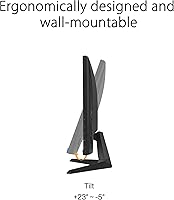
  • The stand only tilts — no height adjustment, no swivel, no pivot — which is a real ergonomic compromise for many users.
  • ELMB and FreeSync cannot run at the same time, forcing users to choose between the two features depending on their setup.
  • 1080p resolution feels limiting for desktop productivity, text clarity, or any creative work done outside of gaming.
  • Built-in speakers are thin and lack bass, making them a poor substitute for even a basic headset or external audio.
  • No native G-Sync compatibility means Nvidia GPU users will not get the full benefit of adaptive sync on this panel.
  • The 24.5-inch screen size may feel cramped for users who prefer wider, more immersive single-player gaming experiences.
  • VESA mount compatibility would require checking against third-party arm specs, as the stock stand severely limits positioning.
  • No USB hub is built in, which is a convenience miss at a price point where some rivals include at least one port.

Ratings

The scores below reflect an AI-driven analysis of thousands of verified global user reviews for the ASUS VG259Q3A 25-inch FHD Gaming Monitor, with spam, bot submissions, and incentivized feedback actively filtered out to ensure reliability. Each category is scored based on real buyer sentiment patterns, capturing both what genuinely impressed users and what frustrated them. No score has been softened — the pain points are represented just as honestly as the strengths.

Motion Performance
93%
Competitive gamers consistently report that tracking fast-moving targets in shooters feels noticeably cleaner than on their previous 144Hz or lower-refresh panels. The 180Hz ceiling combined with the 1ms GTG response time means that even during chaotic team fights or rapid flick shots, the image holds together without trailing artifacts.
A small number of users noticed that the overdrive setting required manual tuning to avoid inverse ghosting at certain frame rates. Those running below 100fps consistently may not feel the full benefit of the 180Hz ceiling without a capable GPU to match it.
Panel Color Quality
84%
For a monitor at this price point, the Fast IPS panel delivers color vibrancy that regularly surprises buyers upgrading from TN screens. Game environments look punchy and well-saturated out of the box, and the 99% sRGB coverage holds up well without needing a custom profile for most gaming use cases.
Buyers with calibration experience noted that factory accuracy leaves some room for improvement, particularly in the green-yellow range. It is not a panel for photo editing or color-critical work, and those expecting Delta E performance comparable to professional displays will come away disappointed.
Adaptive Sync
81%
19%
FreeSync Premium works reliably on this panel for AMD GPU users, with screen tearing effectively eliminated across a wide operational frame rate range. Users who previously gamed on non-adaptive-sync monitors describe the tear-free experience as one of the most immediately noticeable improvements after setup.
The monitor lacks G-Sync Compatible certification, which leaves Nvidia GPU owners without adaptive sync functionality entirely. The mutual exclusivity of ELMB and FreeSync also means users have to make a deliberate trade-off rather than benefiting from both technologies at once.
Ergonomics & Stand
41%
59%
The stand is stable enough that the monitor does not wobble during desk use, and the base footprint is reasonably compact for smaller setups. For users who happen to sit at exactly the right height relative to their desk, the tilt-only adjustment is not an immediate problem.
This is the single most consistent complaint across user reviews — the stand only tilts, with zero height adjustment, swivel, or portrait mode. Users who spend long gaming or work sessions at this monitor frequently report neck and posture discomfort, and many end up purchasing a separate monitor arm just to get a usable viewing angle.
Value for Money
88%
The combination of Fast IPS, 180Hz, and a 3-year warranty at this price tier is genuinely difficult to match from competing brands. Buyers who researched alternatives consistently landed back on this monitor because the specifications-per-dollar ratio holds up well, and the included cable bundle removes a common hidden setup cost.
A portion of buyers feel that the tilt-only stand and missing height adjustment partially undercut the value proposition, since a quality monitor arm adds to the real-world cost. Those expecting a fully ergonomic out-of-box experience may find the total spend creeps higher than the initial price suggests.
Build Quality
79%
21%
The chassis feels solidly assembled for a budget TUF Gaming product, with minimal flex in the panel housing and a matte plastic finish that resists minor scuffs and fingerprints reasonably well. Users who have owned the monitor for six-plus months report no structural degradation or wobble developing over time.
The overall aesthetic is functional rather than refined — some buyers describe the back panel as looking cheap up close, and the cable management options are minimal. It is clearly designed around cost efficiency, so expectations should be calibrated to its price segment rather than ASUS premium product lines.
Resolution & Sharpness
63%
37%
At 24.5 inches, 1080p produces a pixel density that holds together well enough for gaming where you are focused on movement rather than texture detail. Buyers using this exclusively as a gaming panel at typical viewing distances of 50–60cm report no strong dissatisfaction with sharpness in game environments.
Outside of gaming, the limitations become obvious quickly. Text on desktop applications looks noticeably softer than on a 1440p screen, and users who split time between productivity and gaming frequently describe 1080p as the monitor's biggest weakness in 2024. Those who have used a higher-resolution panel before will feel the step down.
Response Time Accuracy
77%
23%
The 1ms GTG spec translates into genuinely clean pixel transitions during high-frame-rate gameplay, and most users report that ghosting is well controlled in the default overdrive setting. Competitive players coming from slower IPS panels notice the difference in clarity during rapid camera movement.
Some technically inclined users who tested the panel with blur-reduction tools found that the real-world response curve slightly exceeds the rated spec under certain overdrive conditions. Inverse ghosting becomes visible when overdrive is pushed too aggressively, requiring tuning that casual buyers may not know to perform.
Shadow Boost Utility
72%
28%
In games with dark map areas — underground sections, nighttime environments, or heavily shadowed interiors — Shadow Boost makes a practical difference by lifting visibility without creating an obviously unnatural look. Players who compete in games where spotting enemies in shadows matters report it as a legitimately useful feature.
The feature does introduce a degree of image processing that some purists find artificially softens the intended visual style of certain games. It is also an all-or-nothing toggle, with no granularity control, which limits how precisely users can dial in the effect to suit different game types.
Viewing Angles
82%
18%
The IPS panel maintains color consistency across a wide horizontal and vertical arc, which matters for users who share their screen with others or who shift seating positions during long sessions. Color does not wash out or shift noticeably until viewing angles become quite extreme.
IPS glow is present in dark scenes when viewed off-axis or even straight-on in very dark rooms, which is a known characteristic of the panel technology rather than a defect. Users who game in low-light environments and prefer deep blacks will find this glow more distracting than they would on a VA panel.
Built-in Audio
38%
62%
The dual 1.5W speakers handle basic tasks like listening to a video in the background or catching in-game audio cues at low volume without needing a separate device. For users setting up a minimal desk without external speakers, they serve as a basic fallback option.
Volume headroom is limited, bass is essentially absent, and any sound with dynamic range quickly sounds thin and distorted at higher settings. Almost every buyer who mentions the speakers frames them as a nice-to-have at best — no serious gamer or casual media viewer will find them adequate as a primary audio source.
Setup & Out-of-Box Experience
86%
Assembly is straightforward and takes most users under ten minutes, with the stand clicking into the panel without tools. The inclusion of both DisplayPort and HDMI cables means buyers can connect immediately without hunting for additional accessories, which is a convenience that gets frequently called out positively in reviews.
The quick start guide is minimal, and buyers unfamiliar with display settings like overdrive or ELMB configuration may not discover those features without researching externally. The on-screen display menu is functional but not the most intuitive to navigate, especially for first-time gaming monitor owners.
Glare & Anti-Reflective Coating
78%
22%
The matte non-glare coating performs well in standard indoor lighting conditions, effectively diffusing overhead lights and window reflections that would be visually disruptive on a glossy panel. Users who game in rooms with windows opposite the display report that ambient glare is a non-issue during daytime sessions.
The matte coating introduces a slight graininess that becomes more noticeable when viewing static high-contrast content or white backgrounds for extended periods. It is a minor issue for gaming use but another mark against this monitor for anyone considering it for design, photography, or document work.
Warranty & Long-Term Reliability
91%
The 3-year warranty coverage stands out clearly in this product category, where one or two years is the typical offering from competing brands at similar price points. Buyers who have needed to engage ASUS support report that the process is manageable and that the warranty terms are honored without significant friction.
A small subset of users reported dead pixels or backlight uniformity issues emerging within the first year, and while the warranty covers these, the returns process can take time. Warranty coverage also does not eliminate the inconvenience of shipping a monitor back for service, which is more disruptive than returning a smaller product.

Suitable for:

The ASUS VG259Q3A 25-inch FHD Gaming Monitor is a strong fit for competitive gamers who care more about how smoothly a game moves than how sharp a desktop icon looks. If you play fast-paced shooters like Valorant, CS2, or Apex Legends, the 180Hz refresh rate and 1ms response time will make a tangible difference in how responsive your experience feels — especially if you are coming from a 60Hz or 75Hz panel. The 24.5-inch size is practical for smaller setups, keeping your field of view tight and comfortable during long sessions without requiring a wide desk. Budget-conscious buyers upgrading from older TN monitors will also find the Fast IPS color and viewing angles a genuine step up. It also works well as a secondary display or a dedicated LAN event monitor where portability, value, and raw performance matter more than anything else.
Not suitable for:

The ASUS VG259Q3A 25-inch FHD Gaming Monitor is not the right call if you plan to use your display for anything beyond gaming as your primary activity. At 1080p on a 2024 monitor, text rendering in productivity apps and fine detail in photos or video editing will feel noticeably soft if you have ever worked on a 1440p or higher-resolution screen. The stand is a genuine problem for anyone with ergonomic needs — it only tilts, with no height adjustment or swivel, which means you are either at the right height or you are not. Creative professionals who need accurate color reproduction beyond sRGB, or anyone invested in an Nvidia GPU looking for G-Sync compatibility, should also look elsewhere. If a large, immersive screen is what you are after, the 24.5-inch size may feel limiting for cinematic single-player games or media consumption.
Specifications

  • Panel Type: This monitor uses a Fast IPS panel, which provides quicker pixel response than standard IPS while retaining the color accuracy and wide viewing angles the technology is known for.
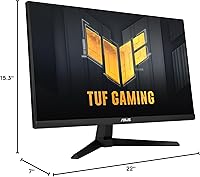
  • Screen Size: The viewable screen area measures 24.5 inches diagonally, housed within a physical form factor of 22 x 15.3 x 7 inches including the stand.
  • Resolution: Native resolution is 1920x1080 (Full HD), delivering a pixel density well-suited to fast gaming at this screen size.
  • Refresh Rate: The panel supports a maximum refresh rate of 180Hz, enabling significantly smoother motion rendering compared to standard 60Hz or 144Hz displays.
  • Response Time: Gray-to-gray response time is rated at 1ms, which minimizes trailing artifacts and ghosting during rapid on-screen movement.
  • Adaptive Sync: AMD FreeSync Premium is supported, dynamically matching the display refresh rate to the GPU output to reduce tearing and stutter during gameplay.
  • Motion Blur Tech: ASUS Extreme Low Motion Blur (ELMB) technology is available as an alternative to FreeSync, though the two features cannot be enabled at the same time.
  • Color Gamut: The display covers 99% of the sRGB color space, producing accurate and vibrant colors without requiring manual calibration for most users.
  • Screen Surface: The panel features a non-glare matte coating that reduces reflections from ambient light sources in typical indoor environments.
  • Aspect Ratio: The monitor uses a standard 16:9 widescreen aspect ratio, compatible with all modern gaming resolutions and video content formats.
  • Speakers: Two built-in 1.5W stereo speakers are included, providing basic audio output without the need for external devices for casual use.
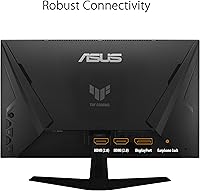
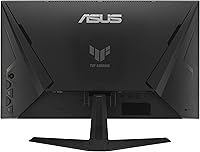
  • Connectivity: The monitor includes one DisplayPort and one HDMI input, with both corresponding cables included in the box for immediate setup.
  • Stand Adjustment: The included stand supports tilt adjustment only, with no height, swivel, or pivot functionality available without a third-party VESA mount.
  • Weight: The complete unit with stand weighs 7.9 pounds, making it manageable for single-person setup and reasonably portable for LAN use.
  • Power Draw: Active power consumption is rated at under 18W, dropping to under 0.5W in power-saving mode and under 0.3W when fully powered off.
  • Input Voltage: The monitor accepts a wide voltage range of 100–240V at 50/60Hz, making it compatible with power standards across most regions globally.
  • Warranty: ASUS covers this monitor with a 3-year manufacturer warranty, which is notably generous for a display in the budget competitive gaming segment.
  • Variable Overdrive: Variable Overdrive automatically adjusts pixel overdrive intensity based on the current frame rate, helping maintain consistent image quality across varying performance conditions.
  • Shadow Boost: Shadow Boost is an on-monitor image processing feature that brightens dark areas of a scene to improve visibility without overexposing the brighter regions.
  • Release Date: The VG259Q3A was first made available in March 2024, positioning it as a current-generation option within the budget 180Hz monitor category.

Related Reviews
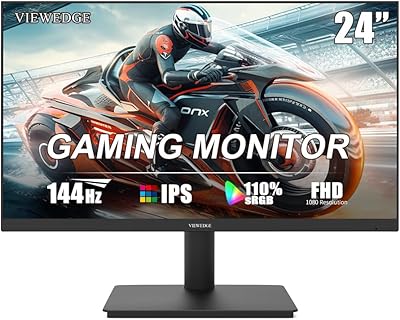
Amzfast AMZG25F6F 25-inch 320Hz Gaming Monitor
70%
88%
Refresh Rate Performance
83%
Panel Clarity & Motion
77%
Color Accuracy
91%
Value for Money
61%
Build Quality
More
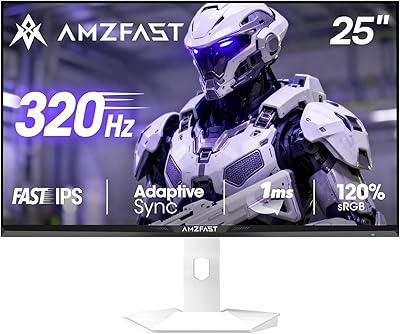
Viewedge USC2412FDA-P 24-inch FHD 144Hz Gaming Monitor
71%
83%
Value for Money
79%
Gaming Performance
76%
Image Quality
81%
Eye Comfort
63%
Build Quality
More
KOORUI G2511XC 25-inch Curved Gaming Monitor
74%
93%
Refresh Rate Performance
89%
Value for Money
91%
Motion Clarity
78%
Color Quality
54%
HDR Experience
More
ASUS VP228HE 21.5-inch Gaming Monitor
71%
83%
Value for Money
74%
Image Quality
71%
Gaming Performance
86%
Eye Care & Comfort
44%
Ergonomics & Stand
More
Sceptre E255B 25-inch 240Hz Gaming Monitor
69%
91%
Refresh Rate Performance
88%
Response Time & Motion Clarity
54%
Image Quality & Color Accuracy
89%
Value for Money
63%
Build Quality & Design
More
ASUS VZ279QG1R 27-inch Gaming Monitor
75%
83%
Color Accuracy
71%
Motion Performance
62%
Resolution & Sharpness
88%
Value for Money
79%
Build Quality
More
Viewedge 27-Inch FHD 144Hz Gaming Monitor
71%
88%
Value for Money
83%
Image Quality
86%
Refresh Rate Performance
81%
Eye Comfort
44%
Stand & Ergonomics
More
ReHisk 241KV2 24-inch Gaming Monitor
73%
91%
Refresh Rate Performance
88%
Adaptive Sync
79%
Panel & Color Quality
54%
Brightness & HDR
67%
Build Quality
More
ASUS TUF Gaming VG32UQA1A 32-inch Gaming Monitor
74%
88%
Image Clarity
83%
Refresh Rate Performance
91%
Console Compatibility
54%
HDR Quality
84%
Motion Handling
More
ASUS TUF Gaming VG277Q1A 27″ Gaming Monitor
78%
93%
Refresh Rate Performance
88%
Motion Clarity & Response Time
91%
Adaptive Sync & Tear-Free Gaming
74%
Out-of-Box Color Quality
82%
Shadow Boost & Dark Scene Visibility
More

FAQ

Yes, the VG259Q3A connects to both consoles via HDMI and will display at 1080p with no issues. Keep in mind that FreeSync only functions over DisplayPort or compatible HDMI connections on supported devices, so you may not get adaptive sync on consoles depending on your setup.

Unfortunately, no. ELMB and FreeSync Premium are mutually exclusive on this panel — you have to pick one or the other from the monitor menu. For most PC gaming setups with a capable AMD GPU, FreeSync is the more practical choice. ELMB is worth enabling if you are playing at a fixed high frame rate and want to minimize motion blur specifically.

For competitive gaming, yes — 1080p at 180Hz is still the preferred setup for many esports players because lower resolution demands less from your GPU, making it easier to hit and sustain high frame rates. Where 1080p starts to show its age is in single-player games with detailed environments or in desktop productivity work, where text and fine detail can look noticeably softer compared to a 1440p screen.

No, the stand only supports tilt adjustment. There is no height adjustment, swivel, or portrait pivot available out of the box. If ergonomics matter to you — especially if you are using this monitor for long sessions at a fixed desk — you will likely want to pick up a VESA-compatible monitor arm separately.

Shadow Boost is a display processing mode that lifts the brightness in darker parts of the image, making it easier to spot enemies or environmental details in shadowy scenes. It does this without blowing out the bright areas of the screen. Whether to leave it on depends on your taste — in games with a lot of dark environments it can be genuinely useful, but some users find it slightly washes out the intended visual atmosphere of games.

Yes, it will work with Nvidia graphics cards for standard display output at full 180Hz. However, FreeSync Premium is an AMD technology, and this monitor is not certified as G-Sync Compatible, so Nvidia users will not get adaptive sync functionality. You will still get the full 180Hz refresh rate — just without tear elimination from variable sync.

They are fine for background noise or occasional video playback, but do not expect much. At 1.5W per channel, they are thin on bass and volume. Most buyers who game seriously will want a headset regardless, so think of the built-in speakers as a convenience feature for casual use rather than a genuine audio solution.

ASUS includes both a DisplayPort cable and an HDMI cable, along with a power cord. That is a genuinely useful inclusion — many monitors at this price only bundle one cable type, so you can connect immediately without a separate purchase.

Not ideally. The 99% sRGB coverage is respectable, but the 1080p resolution limits fine detail work, and the panel is not factory-calibrated for color-critical tasks. If creative work is your primary use case, a higher-resolution display with wider color gamut coverage would serve you better. The VG259Q3A is optimized for gaming performance, not color grading.

ASUS backs this TUF Gaming monitor with a 3-year manufacturer warranty, which covers manufacturing defects and panel issues. Three years is actually above average for budget gaming monitors, where one or two years is more common. It is a meaningful differentiator if you plan to use the display daily and want some protection against early failures.