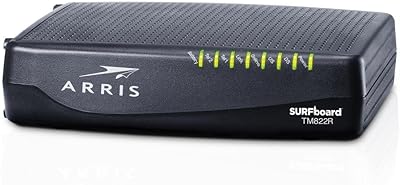
Overview

The ARRIS TM822G DOCSIS 3.0 Telephony Modem is one of those straightforward, no-drama devices that does exactly what it promises: deliver broadband internet and home phone service through a single box. It launched back in 2012, and the fact that it still sells says something about its staying power. This is a mid-range cable modem-phone combo built for households that bundle internet and voice through providers like AT&T or Verizon. If you only need data, this is not your device — the built-in telephone adapter is the whole point. Think of it as a practical replacement for whatever your ISP has been quietly billing you to rent each month.

Features & Benefits

The 8x4 channel bonding gives this telephony modem solid throughput for typical household use — streaming, browsing, video calls — without breaking a sweat. You get two separate VoIP lines, meaning two people can be on the phone at the same time while the internet keeps humming along. PacketCable 2.0 support (available via firmware) means the voice quality meets carrier-grade standards, not the choppy experience some cheaper units deliver. There is also built-in support for battery backup, which is genuinely useful if your area loses power and you still need to make a phone call. IPv6 support rounds things out for long-term compatibility as ISPs continue updating their networks.

Best For

This cable modem-phone combo makes the most sense for households that have held onto a home phone line — whether out of habit, for elderly family members, or because the bundle pricing from their ISP still works out. It is a strong pick for anyone currently renting a modem from AT&T or Verizon who wants to cut the monthly fee. Small home offices that need reliable simultaneous voice and data will appreciate the dual-line setup. If you live somewhere power outages are common, the battery backup option adds real practical value. Just confirm your specific ISP approves the device before purchasing — compatibility is the one variable that can turn a smooth experience sour.

User Feedback

Across more than 1,500 ratings, the ARRIS TM822G earns its 4.2-star standing fairly. Most buyers highlight easy setup and long-term stability, with many noting they have run the unit for years without trouble. The savings from eliminating the ISP rental fee come up repeatedly and seem to be a major purchase driver. On the downside, a notable share of reviewers ran into trouble during ISP activation — getting a provider to provision a customer-owned device can require real patience. Some owners mention the unit runs noticeably warm during extended use, and a handful flagged friction when trying to transfer it to a different carrier. Firmware updates cause occasional headaches, though not at a rate that dominates the overall feedback.

Pros

  • Eliminates the monthly ISP modem rental fee, typically recovering the purchase cost within a few billing cycles.
  • Two independent VoIP lines let two people take calls at the same time without any impact on internet speeds.
  • Battery backup support keeps phone lines working during power outages — a real advantage in storm-prone areas.
  • Long-term owners consistently praise the build quality, reporting reliable daily operation over several years.
  • PacketCable 2.0 compliance ensures carrier-grade call quality on both voice lines.
  • Compatible with AT&T and Verizon broadband, covering two of the largest ISP customer bases in the country.
  • IPv6 support means this telephony modem is not likely to become network-obsolete in the near term.
  • Backward compatibility with older DOCSIS standards makes setup straightforward on most cable infrastructure.
  • Setup is widely described as easy and quick, with most users getting online and phones active the same day.
  • At its price point, the value proposition for bundle subscribers is hard to argue with over a two-year horizon.

Cons

  • ISP activation can be a time-consuming ordeal — calling support multiple times to provision the device is a reported pattern.
  • The unit runs noticeably warm during extended use, which may be a concern in enclosed or poorly ventilated spaces.
  • Firmware updates occasionally cause instability, and the update process is not always straightforward for non-technical users.
  • Switching the device to a different ISP after initial activation has caused compatibility headaches for a subset of owners.
  • DOCSIS 3.0 8x4 is not a current-generation standard and will bottleneck very high-speed internet tiers.
  • The battery for backup telephony is sold separately, adding to the true out-of-pocket cost.
  • Limited direct customer support from the manufacturer means buyers often rely on ISP technicians who may be unfamiliar with the device.
  • Buyers outside AT&T and Verizon networks face real uncertainty around whether activation will succeed at all.

Ratings

The scores below reflect an AI-driven analysis of verified buyer reviews for the ARRIS TM822G DOCSIS 3.0 Telephony Modem, drawn from thousands of real-world user experiences worldwide — with spam, bot activity, and incentivized feedback actively filtered out. Each category score weighs both the enthusiastic praise and the honest frustrations that surface across long-term owners and first-time buyers alike. The result is a transparent, balanced picture of where this cable modem-phone combo genuinely earns its keep and where it falls short.

Value for Money
88%
For households paying a recurring modem rental fee every month, owning this telephony modem typically breaks even within a few billing cycles. Long-term owners frequently highlight this as the single best reason to buy, and over a two or three year period the savings are substantial and tangible.
The value equation only holds if your ISP activates the device without excessive friction. Buyers who run into prolonged activation issues or discover their provider does not support it may find the upfront cost harder to justify if they end up returning the unit.
Internet Performance
78%
22%
For typical household workloads — streaming video, video conferencing, casual gaming, and general browsing — the 8x4 channel bonding delivers a reliable and consistent experience. Most users on standard broadband plans report no noticeable buffering or slowdowns during everyday use.
DOCSIS 3.0 is a mature standard, and buyers on high-tier plans above 400 Mbps will start to feel the ceiling. This cable modem-phone combo is not built for gigabit speeds, and power users who have upgraded to faster ISP tiers may find their modem is now the bottleneck.
Voice Call Quality
84%
Both VoIP lines deliver clear, stable call audio that holds up well during simultaneous internet use — a genuine concern with cheaper eMTA units. PacketCable compliance means the voice experience meets the standards most people expect from a traditional landline, not a shaky internet call.
A minority of users report occasional voice artifacts or brief dropouts, typically correlated with firmware issues rather than the hardware itself. Call quality can also degrade if the ISP's provisioning of the VoIP service is not properly configured during activation.
Setup & Activation
58%
42%
The physical setup is genuinely easy — coax cable in, router plugged into Ethernet, phone into the RJ-11 port, and you are largely done on the hardware side. Most users on supported ISPs report getting their internet connection up within minutes of powering the device on.
ISP activation of the telephony lines is where this process regularly falls apart. Numerous owners describe spending extended time on hold, being transferred between departments, or being told by frontline agents that the device cannot be activated — only to succeed eventually after escalating. It is the most consistent pain point across reviews.
Long-Term Reliability
86%
Multi-year owners are among the most vocal supporters of the ARRIS TM822G, with many reporting uninterrupted operation over three, four, and even five-plus years. For a device running 24 hours a day, that kind of durability track record carries real weight.
A subset of users report that firmware updates — which happen automatically on some ISP configurations — can temporarily destabilize the connection or affect VoIP functionality. While these episodes tend to resolve on their own, they are unpredictable and frustrating when they occur.
ISP Compatibility
63%
37%
For AT&T and Verizon broadband subscribers, this cable modem-phone combo sits on the approved device list, which meaningfully reduces the risk of activation refusal. Having official ISP backing is not a small thing — it is the difference between a same-day setup and a customer service nightmare.
Outside of those two providers, compatibility is genuinely uncertain. Several reviewers discovered their ISP would not provision the device after purchase, and transferring it to a new provider after an initial activation has also caused problems for a notable share of owners.
Build Quality
77%
23%
The housing feels solid and purposeful — this is not a cheap plastic shell. The vertical form factor is stable on a shelf and takes up a modest footprint, which matters in the cramped spaces where most people tuck their networking gear.
The unit runs warm during extended use, which is a common and consistent observation among long-term owners. While it has not caused widespread hardware failures in reported feedback, it is worth ensuring adequate ventilation around the device, particularly in enclosed media cabinets.
Battery Backup
61%
39%
The hardware support for battery-backed telephony is a practical differentiator that most data-only modems simply do not offer. For households in areas with frequent power outages, having phone access during an outage — even when the internet is down — has real emergency value.
The battery pack is sold separately, which means many buyers do not realize the backup feature requires an additional purchase until after the fact. The omission is not hidden, but it is frequently overlooked, and the cost of the battery can take some of the shine off the overall value proposition.
Firmware & Software
54%
46%
On stable firmware versions, the device runs quietly in the background without requiring any user intervention — which is exactly what you want from networking hardware. Most users never need to think about firmware at all under normal operating conditions.
When firmware updates do cause issues, the path to resolution is not straightforward for non-technical users. There is no consumer-friendly management interface to roll back updates or diagnose problems, and support from both ARRIS and ISPs on firmware-specific issues is inconsistently helpful.
ISP Rental Savings
91%
Replacing an ISP-provided modem-phone unit with this telephony modem is one of the more straightforward ways to reduce a recurring monthly bill without sacrificing service quality. The math is simple and the payoff is fast for most subscribers on monthly rental plans.
The savings calculation assumes a smooth activation with no return shipping, extended troubleshooting calls, or need to revert to the ISP rental unit temporarily. For a minority of buyers, the hidden time cost of a difficult activation partially offsets the financial upside.
Dual-Line VoIP
82%
18%
Having two independent phone lines in a single device is genuinely useful for households where multiple adults need dedicated phone access — or for small home offices that need a business line separate from the personal one. Both lines operate without crosstalk or interference.
Two lines is the ceiling, so larger households or micro-businesses needing more than two simultaneous extensions will need to look at a different solution. There is no built-in expansion capability beyond the two physical RJ-11 ports.
Form Factor & Size
74%
26%
The vertical upright design is space-efficient and tidier than older horizontal modem designs. At 2 pounds it is easy to reposition, and the black finish is neutral enough to blend into most home or office setups without looking out of place.
The 9-inch height means it does not tuck neatly into very compact spaces or low-clearance shelves. The external power adapter also adds cable clutter that some users find annoying in tight networking setups.
IPv6 Readiness
79%
21%
Supporting both IPv4 and IPv6 addressing means this cable modem-phone combo is not going to become network-obsolete as ISPs continue their transition away from IPv4-only infrastructure. For buyers planning to use the device for several years, this is a quiet but meaningful technical safeguard.
IPv6 support is largely invisible to end users under normal conditions, so its practical impact on day-to-day experience is minimal. Its value is more about avoiding future incompatibility than delivering any noticeable benefit today.

Suitable for:

The ARRIS TM822G DOCSIS 3.0 Telephony Modem is purpose-built for households that still rely on a home phone line alongside their broadband connection — a combination that is more common than people assume, especially among older adults, families with children, or anyone who simply prefers a dedicated landline for emergencies. It is an especially smart buy for AT&T or Verizon customers who are currently paying a monthly modem rental fee, since owning this cable modem-phone combo typically recoups the purchase cost within a few months. Homes in areas with frequent power outages will appreciate the battery backup support, which keeps at least the phone lines active when the lights go out. Small home offices that need reliable simultaneous voice and data — without paying for two separate devices — will find the dual-line VoIP setup genuinely practical. Long-term users report consistent performance over multiple years, making this a sensible investment for anyone who values stability over chasing the latest hardware.

Not suitable for:

If you have already dropped your home phone service and only need a cable modem for internet, this telephony modem is simply the wrong tool — you would be paying for VoIP hardware you will never use, and a data-only DOCSIS modem would serve you better at a lower cost. Buyers on providers other than AT&T or Verizon should do serious homework before purchasing, because ISP compatibility is not guaranteed and activating a customer-owned eMTA can be a frustrating experience even with supported carriers. Power users chasing the fastest possible speeds should also look elsewhere; DOCSIS 3.0 with 8x4 bonding is solid for everyday use, but it is not a current-generation standard and will not max out a high-tier gigabit internet plan. Anyone who anticipates switching ISPs in the near future should be cautious, as several owners have reported friction when trying to move this cable modem-phone combo to a new provider. Finally, if your home has five or more heavy users streaming and gaming simultaneously, a newer DOCSIS 3.1 device would be a more future-proof choice.

Specifications

  • Modem Standard: This device complies with DOCSIS 3.0 and is also backward compatible with DOCSIS 1.0, 1.1, and 2.0 infrastructure.
  • Channel Bonding: Supports 8 downstream and 4 upstream channel bonding for strong throughput on standard cable broadband plans.
  • VoIP Lines: Includes two independent embedded telephone adapter lines, allowing simultaneous carrier-grade voice calls.
  • Voice Protocol: Compatible with both PacketCable NCS and SIP voice protocols, covering a wide range of ISP telephony deployments.
  • PacketCable Support: Supports PacketCable 1.0 and 1.5 natively, with PacketCable 2.0 available through a firmware upgrade.
  • IP Addressing: Supports both IPv4 and IPv6 addressing modes for the DOCSIS cable modem layer.
  • Battery Backup: The unit supports an optional external battery pack to maintain telephone service during power outages; the battery is sold separately.
  • Power Source: Operates on standard AC power with an optional Lithium Polymer battery for telephony backup during outages.
  • Dimensions: The unit measures 4 x 9 x 9 inches and is designed as a standalone vertical form factor.
  • Weight: The device weighs 2 pounds, making it light enough to place on a shelf or mount discreetly.
  • Color: Available in black, with a clean upright housing intended to blend into standard home or office networking setups.
  • ISP Compatibility: Certified for use with AT&T and Verizon broadband service; buyers on other providers should confirm compatibility before purchasing.
  • Connectivity Type: Uses DOCSIS coaxial cable connectivity and is compatible with laptops, desktops, routers, smartphones, and tablets via a connected router.
  • Manufacturer: Designed and produced by ARRIS, a well-established name in broadband and cable networking hardware.
  • Model Number: The official model identifier is TM822G, also referenced in some listings as FBA_822G.
  • First Available: This product was first listed in January 2012 and has remained in continuous availability since then.
  • Average Rating: Holds a 4.2 out of 5 star average based on over 1,500 customer ratings on Amazon.
  • Sales Rank: Ranked #128 in Computer Networking Modems on Amazon, reflecting consistent long-term demand in its category.

Related Reviews
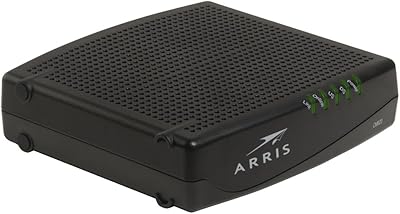
ARRIS CM820A DOCSIS 3.0 Cable Modem
74%
83%
Connection Stability
78%
Ease of Setup
74%
ISP Compatibility
81%
Long-Term Reliability
88%
Value for Money
More
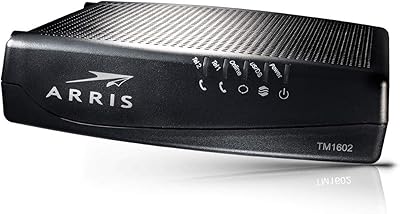
ARRIS Touchstone TM1602A 16x4 DOCSIS 3.0 Modem
82%
88%
Performance
91%
Ease of Setup
93%
ISP Compatibility
85%
Connection Stability
80%
Latency/Buffering
More
ARRIS TM822R DOCSIS 3.0 Cable Modem
75%
93%
Xfinity Compatibility
88%
Value for Money
74%
VoIP Phone Performance
81%
Internet Speed Performance
86%
Setup & Installation
More
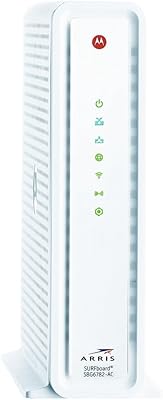
ARRIS SBG6782 DOCSIS 3.0 Cable Modem Router
78%
88%
Value for Money
91%
Setup & Installation
86%
Connection Stability
69%
Wi-Fi Performance
63%
Wi-Fi Range
More
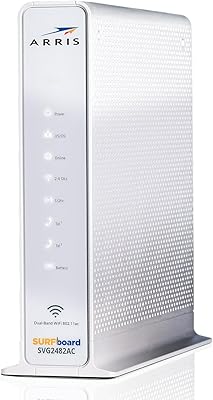
ARRIS SURFboard SVG2482AC Cable Modem Router Combo
74%
72%
ISP Compatibility
81%
Internet Performance
63%
Wi-Fi Coverage
79%
Setup Experience
76%
Build Quality
More
Motorola MB7420 DOCSIS 3.0 Cable Modem
87%
94%
Connection Stability
91%
Download Speed Performance
89%
Setup & Installation
92%
Provider Compatibility
85%
Build Quality
More
NETGEAR CM500 DOCSIS 3.0 Cable Modem
77%
91%
Value for Money
88%
Setup & Activation
84%
Connection Stability
63%
Refurbished Condition Consistency
72%
ISP Compatibility
More
Arris CM8200A DOCSIS 3.1 Cable Modem
74%
88%
Internet Speed Performance
79%
Ease of Setup & Activation
74%
ISP Compatibility
83%
Build Quality & Durability
71%
Thermal Management
More
Linksys CM3024 DOCSIS 3.0 Cable Modem
75%
88%
Value for Money
84%
Setup & Installation
79%
Download Speed Performance
53%
Latency & Ping Stability
86%
ISP Compatibility
More
ARRIS SURFboard G36
ARRIS SURFboard G36
72%
83%
Setup & Activation
76%
Wi-Fi Speed & Throughput
61%
Wi-Fi Range & Coverage
58%
Connection Stability
88%
DOCSIS 3.1 Modem Performance
More

FAQ

The ARRIS TM822G DOCSIS 3.0 Telephony Modem is listed as compatible with AT&T and Verizon broadband. Comcast Xfinity is not on the confirmed compatibility list, so you should check Comcast's approved device list on their website before purchasing — using an unapproved modem can result in activation being refused outright.

Yes, this is purely a modem and telephone adapter — it does not include a built-in Wi-Fi router. You will need to connect a separate router to the Ethernet port to get wireless internet throughout your home. Most people pair it with a standalone router they already own or purchase alongside it.

The process typically involves calling your ISP, providing the device's MAC address and serial number, and asking them to provision it on your account. With AT&T and Verizon this is generally straightforward, but it can require patience — some customer service agents are less familiar with customer-owned telephony modems than standard data-only units. Having the device's model number and documentation handy before you call helps a lot.

No, the battery pack is sold separately. The unit has the hardware to support battery backup for telephone service during power outages, but you will need to purchase a compatible Lithium Polymer battery pack if that feature matters to you.

Yes, both VoIP lines operate independently. Two people in the household can be on separate phone calls simultaneously without either call affecting the other or causing any slowdown on your internet connection.

For plans up to roughly 300–400 Mbps, DOCSIS 3.0 with 8x4 bonding handles things comfortably for everyday use like streaming and video calls. If your ISP plan is at or above gigabit speeds, you would want a DOCSIS 3.1 device instead, as this cable modem-phone combo was not designed for those tiers.

A number of long-term owners mention that the device runs noticeably warm, especially during extended periods of high activity. It is not an unusual trait for cable modems and is generally not a sign of malfunction, but you should avoid placing it in a fully enclosed cabinet or directly against other electronics where heat can build up.

Potentially, but this is one area where caution is warranted. Some owners report complications when trying to activate the ARRIS TM822G on a new provider after originally setting it up with a different ISP. The device itself is not locked, but not all ISPs will provision a customer-owned telephony modem, so confirming compatibility with your new provider before you move is the smart move.

ISP modem rental fees typically range from around eight to fifteen dollars per month depending on the provider. At that rate, a device at this price point tends to pay for itself within a few months, after which you are pocketing the savings outright. Over two or three years the difference adds up to a meaningful amount.

Any standard analog telephone with an RJ-11 connector will work with the two phone ports on this telephony modem. You do not need a special IP phone — your regular corded or cordless home phone plugs straight in and works just like it did through a traditional phone line.

Where to Buy