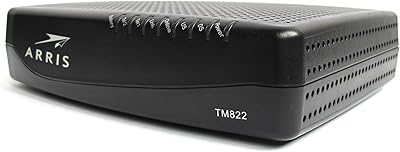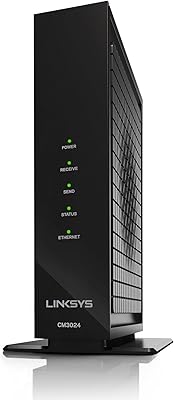
Overview

The ARRIS TM1602A DOCSIS 3.0 Cable Modem is one of those quiet workhorses that earned its place by doing one thing well: cutting the monthly modem rental that Spectrum, Optimum, and Charter quietly add to your bill. DOCSIS 3.0 is simply the communication standard governing how your modem talks to the ISP's network — reliable, mature, and widely supported. Launched in early 2017, this ARRIS modem has aged reasonably well for mid-tier plans, though DOCSIS 3.1 hardware has since raised the ceiling. With a 3.8 out of 5 rating across more than 500 buyers, it's a credible, honest performer — not a flagship, but not pretending to be.

Features & Benefits

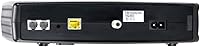
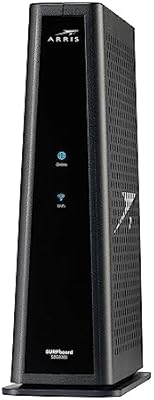
The TM1602A uses 16x4 channel bonding, which means it pulls together 16 downstream and 4 upstream channels simultaneously — keeping speeds steadier during congested hours, not just under ideal conditions. Theoretical downstream tops out around 680 Mbps, which comfortably covers streaming, remote work, and video calls on most mid-tier plans. The feature that genuinely sets this cable modem apart at this price point is the built-in MTA, a Multimedia Terminal Adaptor that lets you connect a VoIP home phone line directly from the same box. It runs silently with no fan noise, and connects through a standard RJ-45 Ethernet port plus two RJ-11 phone jacks.

Best For

This cable modem makes the most sense for households on mid-tier internet plans — roughly 400 to 500 Mbps — who are tired of paying a monthly rental fee for hardware they never actually own. It's especially practical if you also have a cable VoIP phone line, since one box handles both services. Renters and budget-conscious buyers will find the setup refreshingly uncomplicated: typically just a call to the ISP to provision the device. That said, if you're on a gigabit plan or your ISP has migrated to DOCSIS 3.1 requirements, the TM1602A will become the bottleneck. Always confirm ISP approval on the current device list before buying — it changes more often than people expect.

User Feedback

Across hundreds of reviews, two things surface consistently: easy setup and long-term connection stability. Most buyers describe installation as a non-event — call the ISP, get provisioned, done. Build quality and thermal management earn quiet but reliable praise as well. Where things get more complicated is with ISP-pushed firmware updates, which a notable number of users report triggered unexpected disconnects requiring a manual reboot. Some Spectrum customers have also hit compatibility friction with newer plan tiers, making the current approved device list worth checking rather than assuming. A smaller group eventually moved on to DOCSIS 3.1 hardware once their internet plan grew — not because this failed them, but because they simply outgrew the hardware.

Pros

  • Eliminates the monthly modem rental fee charged by Spectrum, Optimum, Charter, and Cablevision.
  • Built-in MTA handles VoIP phone service alongside internet, removing the need for a separate phone adapter.
  • 16x4 channel bonding keeps download speeds stable even during peak network hours.
  • Passive cooling design means zero fan noise and reliable thermal performance over months of continuous use.
  • Self-installation is consistently described as quick and uncomplicated by a wide range of buyers.
  • Compact footprint takes up minimal shelf or desk space compared to bulkier modem-router combos.
  • Broad ISP approval across multiple major cable providers adds purchasing flexibility.
  • Still actively supported by the manufacturer — not a discontinued or orphaned device.
  • Dual RJ-11 phone ports allow for two separate phone lines if your VoIP plan supports it.

Cons

  • Not compatible with DOCSIS 3.1-only ISP requirements, limiting its lifespan for some subscribers.
  • ISP-pushed firmware updates have triggered unexpected disconnects for a notable number of users.
  • Does not support gigabit internet plans — buyers on high-speed tiers will hit a hard speed ceiling.
  • Some Spectrum customers on newer, higher-speed plan tiers have reported compatibility friction.
  • No built-in Wi-Fi router — you will still need a separate router to create a wireless network.
  • ISP approval lists change over time, so verified compatibility today does not guarantee it permanently.
  • A subset of long-term users found themselves needing to upgrade once their internet plan outgrew the hardware.
  • Occasional reboot required after ISP firmware updates — not a set-and-forget experience for everyone.

Ratings

The scores below were generated by AI after systematically analyzing verified buyer reviews for the ARRIS TM1602A DOCSIS 3.0 Cable Modem from multiple global sources, with spam, bot-generated feedback, and incentivized reviews actively filtered out before scoring. Each category reflects the honest distribution of real user sentiment — not a curated highlight reel. Where buyers consistently praised or struggled, those patterns are represented proportionally in both the numeric scores and the written breakdowns.

Value for Money
88%
For buyers paying a monthly rental fee to their ISP, the TM1602A pays for itself within a few months and keeps saving money year after year. At its price point, the inclusion of a built-in MTA — which normally requires a separate adapter — makes it an even stronger value proposition for households with a cable phone line.
The value calculation shifts noticeably if you factor in that DOCSIS 3.1 hardware is only modestly more expensive and offers a significantly longer useful lifespan. Buyers who upgrade their internet plan within a couple of years may find the savings window shorter than expected.
Setup & Installation
91%
Getting this ARRIS modem online is one area where users are consistently impressed — the process typically comes down to connecting the coax cable, powering it on, and making a single call to the ISP for provisioning. Most buyers, including those who describe themselves as non-technical, report being up and running within 20 to 30 minutes.
A minority of users encounter friction when ISPs push back on self-installation and insist on a technician visit, which adds time and cost that the modem itself cannot control. Activation issues are more common when switching from a previously rented modem on the same account.
Connection Stability
76%
24%
Under normal operating conditions, day-to-day connection stability is solid — streaming, video calls, and general browsing hold up well without frequent interruptions. Many long-term owners report going months without needing to reboot the device, which is the kind of quiet reliability most households actually need.
The recurring pain point across reviews is ISP-triggered firmware updates that can cause unexpected drops requiring a manual reboot to recover. While this is partly an ISP behavior issue rather than a hardware flaw, it happens often enough that a consistent group of users finds it genuinely disruptive.
Speed Performance
73%
27%
On mid-tier internet plans in the 200 to 500 Mbps range, the TM1602A delivers speeds that hold up well for households doing simultaneous streaming, remote work, and casual gaming. The 16x4 channel bonding helps maintain consistency during peak hours rather than just hitting high numbers under ideal conditions.
The DOCSIS 3.0 ceiling becomes a real limitation for anyone whose plan approaches or exceeds 500 Mbps, and some Spectrum users on higher-tier plans have reported that actual delivered speeds fall short of what their plan promises. Gigabit subscribers will not come close to their subscribed speeds through this hardware.
VoIP Integration
84%
The built-in MTA is a genuine differentiator — most cable modems at this price strip out phone support entirely, forcing users to buy a separate adapter. Having two RJ-11 jacks on a single unit simplifies the home network and eliminates one extra box drawing power on the shelf.
VoIP call quality depends on ISP provisioning and line quality, not just the modem hardware, so some users report audio issues that turn out to be ISP-side problems. A small number of buyers also found one of the two phone ports not functioning correctly straight out of the box.
ISP Compatibility
77%
23%
Approval across Spectrum, Optimum, Cablevision, Charter, and Time Warner Cable covers a meaningful portion of the U.S. cable market, making this a practical option for a wide range of households without requiring additional research into provider-specific hardware alternatives.
ISP approval is not permanent — Spectrum in particular has updated its approved device list and removed older modems as it upgrades its infrastructure, and some users have discovered mid-ownership that their plan tier no longer works as expected with this device.
Build Quality
82%
18%
The physical construction feels solid and purposeful for a device in this class — it does not flex under handling, ports feel secure, and the housing stays intact even after years of continuous use in warm, enclosed entertainment center setups.
The all-plastic casing, while durable, does pick up scratches and scuffs over time, and the matte finish collects dust fairly readily in open-shelf placements. Nothing about the build is a dealbreaker, but it does not feel premium either.
Thermal Management
86%
Passive cooling works reliably here — the unit stays warm but never uncomfortably hot even during extended continuous use, and a number of long-term owners specifically mention its thermal stability as a reason for their continued confidence in the hardware.
In poorly ventilated setups — inside a closed cabinet or stacked tightly against other hardware — heat accumulation is more noticeable and may marginally affect long-term component longevity, though this is largely an installation decision rather than an inherent design flaw.
Long-term Reliability
74%
26%
Hardware failures are uncommon in the review record, and owners who have run the TM1602A continuously for three or more years report it still functioning as expected with no port degradation or connectivity deterioration beyond what ISP-side changes have introduced.
Long-term reliability is increasingly tied to ISP policy rather than hardware durability — as providers phase out DOCSIS 3.0 support on certain plan tiers, the device effectively becomes unreliable through no fault of its own physical components.
Future-proofing
43%
57%
For buyers on stable, moderate-speed plans who have no intention of upgrading their service in the next two to three years, the TM1602A still delivers functional value and avoids the need to spend more on DOCSIS 3.1 hardware right now.
DOCSIS 3.0 is an aging standard with a visible expiration date — ISPs are actively transitioning infrastructure to DOCSIS 3.1 and beyond, and hardware first released in 2017 carries a narrowing compatibility window that makes it a difficult long-term bet regardless of current performance.
Ease of Use
89%
Day-to-day operation requires essentially no user interaction — once provisioned, this cable modem runs in the background without demanding attention, reboots, or manual updates. Non-technical users consistently describe it as the kind of device you install once and stop thinking about.
The lack of any user-facing web interface or status display means troubleshooting is limited to power cycling and calling the ISP, which some users find frustrating when trying to determine whether a problem is hardware- or network-related.
Port Selection
67%
33%
Two RJ-11 phone jacks is a practical inclusion for households with a multi-line VoIP setup, and the single RJ-45 Ethernet port handles the standard modem-to-router configuration that the vast majority of home networks rely on.
A single Ethernet port means you cannot connect more than one wired device directly to the modem without adding a router or switch, and the absence of a USB port removes any possibility of secondary functionality — a noticeable limitation in more complex home setups.
Noise Level
93%
The completely fanless passive cooling design produces zero operational noise under any load — a small but widely appreciated detail for users who place their modem in a living room, bedroom, or home office where ambient sound actually matters.
There is little to criticize here from a noise standpoint, as passive cooling produces no sound by design. The only real trade-off is that without active airflow, the unit relies entirely on ambient air circulation for heat dissipation in warmer or confined environments.

Suitable for:

The ARRIS TM1602A DOCSIS 3.0 Cable Modem is a smart, practical pick for anyone currently paying a monthly modem rental fee to Spectrum, Optimum, Charter, or Cablevision — the kind of charge that quietly adds up to well over a hundred dollars a year for hardware you never own. It fits best in households running mid-tier internet plans topping out around 400 to 500 Mbps, where the 16x4 channel bonding delivers genuinely consistent performance for everyday streaming, video calls, and working from home. If you also subscribe to a cable VoIP home phone line, the built-in MTA makes this a particularly compelling choice, since it consolidates your modem and phone adapter into a single, compact unit. Renters and budget-conscious buyers who just want something reliable to plug in and forget about will find the setup experience straightforward, and the hardware holds up well over time without running hot or making noise.

Not suitable for:

If you are on a gigabit internet plan or your ISP has already transitioned to requiring DOCSIS 3.1 hardware, the ARRIS TM1602A DOCSIS 3.0 Cable Modem will be the ceiling in your setup — not a complement to it. DOCSIS 3.0 has a theoretical downstream limit that simply cannot saturate a true gigabit connection, and buying this modem in that scenario means paying twice when you inevitably need to upgrade. Some newer Spectrum plan tiers have also pushed the edges of what this hardware can handle, so users on higher-speed Spectrum packages should verify compatibility carefully before purchasing rather than assuming approval carries over. Those who prioritize future-proofing should be aware that DOCSIS 3.1 modems are increasingly the standard, and the long-term runway on a 2017-era DOCSIS 3.0 device is limited. Anyone whose ISP is not on the verified approval list — or whose ISP has recently updated that list — should confirm before buying, as ISP certification can change without much notice.

Specifications

  • Cable Standard: This modem operates on the DOCSIS 3.0 standard, which is widely supported by major U.S. cable internet providers.
  • Channel Bonding: Features 16x4 channel bonding, combining 16 downstream and 4 upstream channels for more consistent real-world throughput.
  • Max Downstream: Theoretical maximum downstream speed is approximately 680 Mbps under optimal network conditions.
  • Max Upstream: Theoretical maximum upstream speed reaches approximately 122 Mbps under optimal network conditions.
  • VoIP Support: Includes a built-in Multimedia Terminal Adaptor (MTA) that supports cable-based VoIP telephone service without a separate adapter.
  • Ethernet Port: Equipped with one RJ-45 Ethernet port for connecting directly to a router or a single wired device.
  • Phone Ports: Provides two RJ-11 telephone jacks for connecting up to two VoIP phone lines simultaneously.
  • Dimensions: The unit measures 9.65 x 7.56 x 2.24 inches, making it compact enough to sit flat on a shelf or media cabinet.
  • Weight: The device weighs approximately 1 pound, making it easy to reposition or wall-mount if needed.
  • Cooling System: Uses passive cooling with no internal fan, resulting in silent operation and no moving parts to wear out over time.
  • Color: Available in black, with a low-profile design that blends into most home networking setups.
  • ISP Approval: Certified for use with Spectrum, Optimum, Cablevision, Charter, and Time Warner Cable; always verify current approval status on your ISP's website before purchasing.
  • Manufacturer: Manufactured by ARRIS, a well-established brand in the cable networking and broadband equipment industry.
  • Model Number: The official model number is TM1602A, sometimes referenced as an upgrade path from the older ARRIS 822G.
  • Availability: First made available in January 2017 and has not been discontinued by the manufacturer as of the latest available information.

Related Reviews
ARRIS CM820A DOCSIS 3.0 Cable Modem
74%
83%
Connection Stability
78%
Ease of Setup
74%
ISP Compatibility
81%
Long-Term Reliability
88%
Value for Money
More
ARRIS TM822R DOCSIS 3.0 Cable Modem
75%
93%
Xfinity Compatibility
88%
Value for Money
74%
VoIP Phone Performance
81%
Internet Speed Performance
86%
Setup & Installation
More
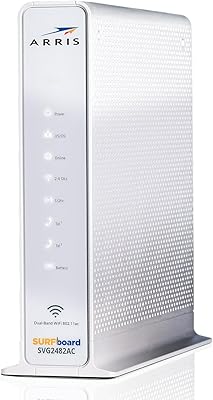
ARRIS SBG6782 DOCSIS 3.0 Cable Modem Router
78%
88%
Value for Money
91%
Setup & Installation
86%
Connection Stability
69%
Wi-Fi Performance
63%
Wi-Fi Range
More
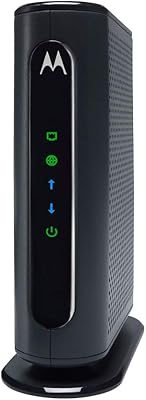
ARRIS SURFboard SVG2482AC Cable Modem Router Combo
74%
72%
ISP Compatibility
81%
Internet Performance
63%
Wi-Fi Coverage
79%
Setup Experience
76%
Build Quality
More
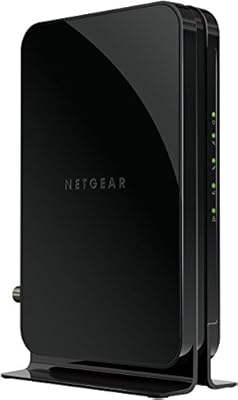
ARRIS TM822G DOCSIS 3.0 Telephony Modem
75%
88%
Value for Money
78%
Internet Performance
84%
Voice Call Quality
58%
Setup & Activation
86%
Long-Term Reliability
More
Motorola MB7420 16x4 Cable Modem
77%
86%
Connection Stability
88%
Setup & Activation
79%
Speed Performance
91%
Value for Money
74%
Build Quality & Design
More
Arris CM8200A DOCSIS 3.1 Cable Modem
74%
88%
Internet Speed Performance
79%
Ease of Setup & Activation
74%
ISP Compatibility
83%
Build Quality & Durability
71%
Thermal Management
More
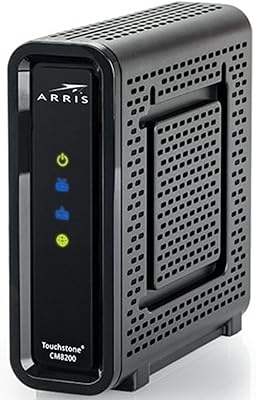
NETGEAR CM500 DOCSIS 3.0 Cable Modem
77%
91%
Value for Money
88%
Setup & Activation
84%
Connection Stability
63%
Refurbished Condition Consistency
72%
ISP Compatibility
More
ARRIS SURFboard G36
ARRIS SURFboard G36
72%
83%
Setup & Activation
76%
Wi-Fi Speed & Throughput
61%
Wi-Fi Range & Coverage
58%
Connection Stability
88%
DOCSIS 3.1 Modem Performance
More
Linksys CM3024 DOCSIS 3.0 Cable Modem
75%
88%
Value for Money
84%
Setup & Installation
79%
Download Speed Performance
53%
Latency & Ping Stability
86%
ISP Compatibility
More

FAQ

The ARRIS TM1602A DOCSIS 3.0 Cable Modem is on Spectrum's approved device list, but that list does get updated periodically. Before buying, head to Spectrum's website and search their approved modem list to confirm it still works with your specific plan tier — especially if you are subscribed to a higher-speed package.

Yes. This device is a modem only and does not include built-in Wi-Fi. You will need to connect a separate wireless router to the RJ-45 Ethernet port if you want wireless connectivity in your home. If you want a single device that does both, you would need to look at modem-router combo units instead.

Absolutely — that is one of this unit's standout features. The built-in MTA supports cable VoIP phone service, and there are two RJ-11 phone jacks on the back so you can hook up to two separate phone lines. Just keep in mind your ISP still needs to provision the phone service on their end.

Setup is generally straightforward: connect the coaxial cable from your wall to the modem, plug in the power adapter, then connect your router via the Ethernet port. After that, you call your ISP to provision the modem using its MAC address and CM MAC, which are printed on the label on the bottom. Most users report the whole process takes under 30 minutes.

No, it will not. DOCSIS 3.0 hardware cannot saturate a true gigabit connection regardless of your plan speed. If your ISP offers or requires gigabit service, you will need a DOCSIS 3.1 modem to take full advantage of those speeds. Buying this modem for a gigabit plan means paying for bandwidth you cannot actually use.

DOCSIS 3.0 and 3.1 are two generations of the cable modem communication standard. DOCSIS 3.1 supports significantly faster speeds — up to multi-gigabit territory — and is increasingly required by ISPs upgrading their infrastructure. For most households on plans under 500 Mbps, DOCSIS 3.0 still works fine today, but DOCSIS 3.1 is the more future-proof choice if you plan to keep the hardware for several years.

A recurring pattern in user reviews involves disconnects following ISP-pushed firmware updates, which can affect stability until the modem fully adjusts or is rebooted. If you experience drop-outs, a simple power cycle often resolves the issue. That said, persistent problems are worth reporting to your ISP, since they control the firmware being pushed to the device.

Yes, the TM1602A is approved for both Optimum and Cablevision. That said, ISP approval lists do change, so it is worth a quick check on Optimum's device support page before placing your order, just to make sure nothing has shifted since you last looked.

Most buyers report stable, trouble-free performance for several years with no hardware issues. The passive cooling design means no fan to fail, which is a meaningful durability advantage over active-cooled devices. The more practical limitation is not hardware failure but obsolescence — as ISPs upgrade their infrastructure, DOCSIS 3.0 devices will eventually lose support, though there is no specific timeline for that with this modem right now.

The TM1602A is not listed on Xfinity or Cox's approved device lists, so using it with those providers is not recommended and may not work at all. ISP certification is not interchangeable across providers — always check your specific ISP's approved modem list before purchasing any cable modem, regardless of brand or model.

Where to Buy