Overview

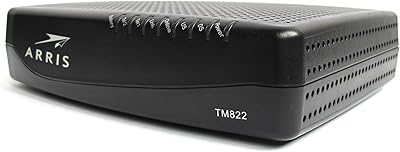
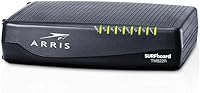
The ARRIS TM822R DOCSIS 3.0 Cable Modem is one of the more practical options for Xfinity subscribers tired of paying a monthly equipment rental fee that quietly adds up year after year. What makes this cable modem stand out from purely internet-focused devices is its ability to handle home phone service alongside broadband, all through a single unit. It sits comfortably in the mid-range tier — not the cheapest option available, but backed by a 2-year manufacturer warranty that adds real peace of mind. One thing to be absolutely clear about before purchasing: this modem is certified for Xfinity only, so if your service is through Spectrum, Cox, or any other provider, this is not the device for you.
Features & Benefits

This ARRIS modem uses 8x4 channel bonding to support download speeds up to 343 Mbps — a realistic ceiling for most mid-tier Xfinity internet plans, though your actual speeds will depend on your subscribed plan and network conditions. The standout capability is its dual VoIP phone lines, letting households maintain a traditional home phone without purchasing a separate adapter. It also supports battery backup, which means your connection and phone service can survive a brief power outage — just know the battery itself is not included and must be bought separately. A single Gigabit Ethernet port handles the connection to your router, and dual IPv4 and IPv6 support keeps it compatible with both current and older network setups.

Best For

The TM822R makes the most sense for Xfinity voice subscribers who currently rent their modem and want to break even on the hardware cost within roughly a year. It is also a strong fit for households that still depend on a landline — whether for elderly family members, a home office, or simple preference — and want to consolidate everything into one device. Users on plans up to around 300 Mbps will find this cable modem more than adequate. That said, if you have already upgraded to a gigabit Xfinity plan or you are not an Xfinity customer at all, look elsewhere; this modem will not serve those needs well.

User Feedback

Across more than 550 ratings, the TM822R holds a solid 4.3-star average, and the praise is fairly consistent: buyers highlight straightforward Xfinity activation, dependable day-to-day performance, and genuine savings compared to the ongoing rental cost. However, the picture is not entirely rosy. A notable portion of reviewers report friction when activating the VoIP lines specifically, which can require multiple calls to Xfinity support to resolve — an annoyance that has nothing to do with the hardware itself but still affects the experience. Some longer-term owners mention intermittent connectivity drops after a year or more of use. To be fair, a few of those complaints appear tied to ISP provisioning issues rather than device failures, so context matters when reading the negative reviews.

Pros

  • Eliminates the Xfinity monthly modem rental fee, typically recovering its cost within about a year.
  • Bundles internet and dual VoIP phone lines into one device, removing the need for a separate telephone adapter.
  • Activates quickly on the Xfinity network, with most users reporting a smooth transition from rental equipment.
  • Handles real-world speeds on plans up to 300 Mbps without bottlenecking household traffic.
  • The 2-year manufacturer warranty provides meaningful coverage and peace of mind for a mid-range purchase.
  • Battery backup support means the hardware is ready when you find a compatible battery, useful in outage-prone areas.
  • Compact and lightweight design fits neatly on a shelf without requiring dedicated space or extra ventilation effort.
  • Dual IPv4 and IPv6 support keeps the modem compatible with Xfinity's current and near-future network infrastructure.
  • Build quality feels solid and consistent with what users expect from an established networking hardware brand.

Cons

  • Certified for Xfinity only — using it with any other ISP is simply not possible, full stop.
  • The 343 Mbps speed ceiling becomes a real problem if you upgrade to a faster Xfinity plan later.
  • VoIP line activation frequently requires multiple calls to Xfinity support, frustrating users who expected a simple setup.
  • The battery for backup power is not included, making the advertised feature incomplete straight out of the box.
  • Only one Ethernet port limits flexibility for users who want to connect a router and a wired device simultaneously.
  • Some owners report intermittent connectivity issues appearing after the first year or so of continuous use.
  • Post-warranty customer support from ARRIS has drawn consistent criticism for slow response times and limited resolution.
  • Documentation for VoIP setup and battery compatibility is thin, leaving users to figure out key features on their own.
  • The DOCSIS 3.0 standard is aging and offers no upgrade path for users whose internet needs grow beyond its limits.

Ratings

The ARRIS TM822R DOCSIS 3.0 Cable Modem earns a nuanced scorecard built from AI analysis of verified global buyer reviews, with spam, bot-submitted, and incentivized feedback actively filtered out before scoring. Ratings reflect what real Xfinity households experienced over weeks and months of daily use — not just out-of-box impressions. Both the genuine strengths and the recurring frustrations are represented here without sugarcoating.

Xfinity Compatibility
93%
For Xfinity subscribers, activation is largely plug-and-play. Most users reported their internet and phone services were provisioned within minutes of calling Xfinity, with the modem recognized immediately on the network. That kind of friction-free onboarding is a real confidence booster when you are replacing rented equipment.
The compatibility is a hard wall — this modem is certified exclusively for Xfinity and will not work with Spectrum, Cox, or any other major ISP regardless of what the packaging might suggest. Buyers who misread the fine print have returned it in frustration, which drags down the overall perception of the product unfairly.
Value for Money
88%
For households paying a monthly modem rental fee, the TM822R typically pays for itself within ten to fourteen months depending on the Xfinity plan tier. Combining internet and VoIP into one owned device rather than two rental units makes the financial case even stronger for phone subscribers specifically.
The sticker price is not trivial, and buyers who later discover their Xfinity plan has been upgraded beyond this modem's speed ceiling feel the investment did not age well. The lack of an included battery for the backup feature also feels like a small but annoying omission at this price point.
VoIP Phone Performance
74%
26%
When properly activated, both carrier-grade VoIP lines deliver clear, stable call quality that is indistinguishable from what Xfinity's rental equipment provides. Households that rely on a home phone for elderly relatives or a home-based business found it performed reliably day to day once everything was provisioned correctly.
Getting those VoIP lines activated is where a meaningful number of users hit a wall. Multiple calls to Xfinity support were required in enough cases to establish a clear pattern. The issue is largely on the ISP provisioning side, but the end experience still falls on the modem's reputation.
Internet Speed Performance
81%
19%
For Xfinity plans in the 100 to 300 Mbps range, this cable modem handles real-world loads comfortably — streaming in 4K on multiple devices, video calls, and online gaming without noticeable bottlenecks. The 8x4 channel bonding keeps throughput steady even during peak household usage hours.
The 343 Mbps ceiling becomes a genuine limitation as Xfinity continues to expand gigabit-tier plans. Users who upgraded their service plan after purchasing the TM822R found they were immediately capped below what they were paying for, effectively making the modem obsolete ahead of schedule.
Setup & Installation
86%
The physical setup is straightforward — connect the coax cable, plug in Ethernet to your router, and make one call to Xfinity to activate. Most reviewers with zero networking experience completed the swap from rental equipment in under thirty minutes, which speaks well to the hardware's approachability.
The setup experience is notably less smooth when VoIP activation is part of the process. Xfinity's backend provisioning for telephone lines can take hours or require repeat calls, and some users were left without phone service for a full day or more during the transition.
Connection Stability
77%
23%
Out of the box and through the first year of use, the majority of reviewers described rock-solid connectivity with no random dropouts. For typical household internet use — browsing, streaming, remote work — the TM822R held its connection without requiring reboots or manual intervention.
A recurring theme among longer-term owners is intermittent disconnections appearing after twelve to eighteen months of continuous use. Whether this reflects firmware aging, hardware wear, or specific unit variability is unclear, but enough users reported it to suggest it is not an isolated issue.
Long-Term Reliability
69%
31%
A solid portion of buyers reported two or more years of trouble-free operation, which aligns with the 2-year warranty window. For moderate-use households that do not push the hardware hard, the TM822R has a reasonable track record of lasting through its warranty period without incident.
Beyond the two-year mark, failure rates appear to climb based on reviewer patterns. Units that developed connectivity issues outside the warranty window left owners with no recourse, and the out-of-warranty support experience was described as limited by several users who reached out to ARRIS directly.
Battery Backup Readiness
58%
42%
The hardware architecture supports battery backup, which is a meaningful feature for households in areas with frequent brief power outages. Having both internet and phone service survive a short outage can be genuinely useful, particularly for users who rely on VoIP for emergency calls.
The battery is not included, and finding a compatible unit requires additional research that many buyers did not anticipate. Several reviewers felt the feature was presented more prominently than warranted given that the modem ships without the core component needed to actually use it.
Build Quality & Design
79%
21%
The TM822R feels solid and well-constructed for its weight class. At two pounds with a compact 8.5 x 7 x 2 inch footprint, it sits discreetly on a shelf or cable box without drawing attention. The ventilation design keeps it running cool even during extended high-traffic periods.
The aesthetic is purely utilitarian — there are no status LED labels that are easy to read at a glance, and a few users found the indicator lights difficult to interpret without consulting the manual. Nothing structurally concerning, but the design has not been refreshed since its 2017 introduction.
Ethernet Port Configuration
63%
37%
The single Gigabit Ethernet port is all most users need when connecting the modem to a dedicated router. The gigabit rating means it will not bottleneck even moderately fast plans, and the port itself reported no physical durability complaints across the review pool.
Having only one Ethernet port limits flexibility for users who want to connect both a router and a wired device simultaneously. Power users who expected a multi-port setup were genuinely caught off guard, as this is a common feature on modems at a similar price point from competing brands.
IPv6 Support
82%
18%
Dual IPv4 and IPv6 support ensures the TM822R is compatible with Xfinity's current network infrastructure and is prepared for continued IPv6 expansion. For most home users this is invisible, but network-aware buyers appreciated not having to worry about address compatibility issues down the line.
There are no notable user complaints specific to IPv6 performance, but the DOCSIS 3.0 standard itself — rather than DOCSIS 3.1 — means the modem is operating on aging protocol infrastructure regardless of its IP stack support. Future-proofing only goes so far on a 2017-era platform.
Warranty & Support Experience
66%
34%
The 2-year warranty is genuinely above average for this product category and reflects a degree of manufacturer confidence in the hardware. Several users who experienced early failures reported successful replacements through ARRIS within the warranty window without excessive friction.
Post-warranty support received notably lower marks. Users who contacted ARRIS after the coverage period often described difficulty reaching helpful representatives, and resolution times for reported issues were slower than expected for a mid-range product from an established networking brand.
Documentation & Guidance
61%
39%
The included documentation covers the basic physical setup clearly enough that most users could get the hardware connected without external help. For straightforward internet-only activation on Xfinity, the guidance provided is sufficient to complete the process independently.
The documentation around VoIP setup and battery backup configuration is noticeably thin. Users trying to activate phone lines or source a compatible battery had to rely on third-party guides and community forums, which should not be necessary for features the manufacturer actively promotes on the box.

Suitable for:

The ARRIS TM822R DOCSIS 3.0 Cable Modem was built with a specific type of household in mind, and it delivers best when the fit is right. If you are an Xfinity subscriber currently paying a monthly modem rental fee and your household still relies on a home phone line, this device directly addresses both costs in one purchase. Families or individuals on Xfinity internet plans in the 100 to 300 Mbps range will find the performance entirely adequate for streaming, remote work, and everyday browsing without hitting any practical ceiling. It also appeals to people in areas prone to brief power outages who want a modem capable of supporting battery backup — provided they are willing to source the battery separately. The 2-year warranty adds a layer of reassurance that makes the upfront investment feel less risky for buyers who plan to hold the hardware for several years.

Not suitable for:

The ARRIS TM822R DOCSIS 3.0 Cable Modem has a hard compatibility wall that disqualifies a large portion of potential buyers before anything else: it is certified exclusively for Xfinity, and it will not function on Spectrum, Cox, Optimum, or any other ISP regardless of their DOCSIS 3.0 support. Beyond the ISP restriction, customers who have already upgraded to gigabit-tier Xfinity plans will find this modem immediately limiting, as its 343 Mbps ceiling means you would be paying for speeds you cannot actually receive. Power users who need the flexibility of connecting multiple wired devices directly to the modem will also find its single Ethernet port frustrating. Buyers expecting a true out-of-box battery backup solution should look elsewhere or budget for an additional purchase, since the modem ships without the battery needed to use that feature. And anyone who anticipates keeping their hardware beyond two to three years should factor in the documented pattern of reliability issues that some owners experience outside the warranty window.

Specifications

  • Model Number: The unit carries the official model designation TM822R, manufactured by ARRIS Solutions, Inc.
  • DOCSIS Version: This cable modem operates on the DOCSIS 3.0 standard, which governs how it communicates with Xfinity's cable internet infrastructure.
  • Channel Bonding: It uses 8 downstream and 4 upstream channel bonding to aggregate bandwidth across multiple channels simultaneously.
  • Max Download Speed: The rated maximum download throughput is 343 Mbps under optimal signal and plan conditions.
  • VoIP Lines: Two carrier-grade Voice over IP lines are built in, allowing simultaneous use of two separate telephone numbers through Xfinity voice service.
  • Telephone Ports: The rear panel includes 2 standard RJ-11 telephone ports for connecting corded or cordless home phones directly to the modem.
  • Ethernet Port: A single RJ-45 Gigabit Ethernet port provides the wired connection between the modem and a router or a single networked device.
  • IP Support: The modem supports both IPv4 and IPv6 addressing, ensuring compatibility with current and transitional Xfinity network configurations.
  • ISP Compatibility: This modem is certified exclusively for use with Comcast Xfinity internet and voice service and will not function on other cable providers.
  • Battery Backup: The hardware supports optional battery backup for continued operation during power outages, though the required battery is not included in the box.
  • Dimensions: The unit measures 8.5 x 7 x 2 inches (L x W x H), making it compact enough to fit on most shelving or entertainment center surfaces.
  • Weight: The modem weighs 2 pounds, which is typical for a full-featured telephony cable modem in this class.
  • Color: The TM822R ships in a matte black finish with no color variants available.
  • Warranty: ARRIS provides a 2-year limited manufacturer warranty covering defects in materials and workmanship from the original purchase date.
  • First Available: This model was first made available for consumer purchase in March 2017 and has not been discontinued by the manufacturer.
  • Power Requirement: The modem requires an external AC power adapter, which is included in the package, and also accepts an optional backup battery for outage scenarios.
  • Coax Connection: A standard F-type coaxial connector on the rear panel links the modem directly to the cable wall outlet provided by Xfinity.

Related Reviews
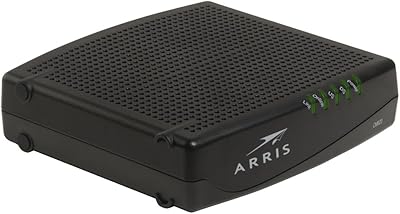
ARRIS CM820A DOCSIS 3.0 Cable Modem
74%
83%
Connection Stability
78%
Ease of Setup
74%
ISP Compatibility
81%
Long-Term Reliability
88%
Value for Money
More
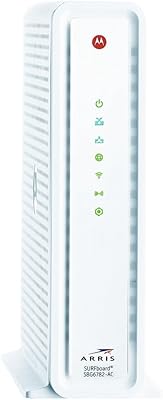
ARRIS SBG6782 DOCSIS 3.0 Cable Modem Router
78%
88%
Value for Money
91%
Setup & Installation
86%
Connection Stability
69%
Wi-Fi Performance
63%
Wi-Fi Range
More
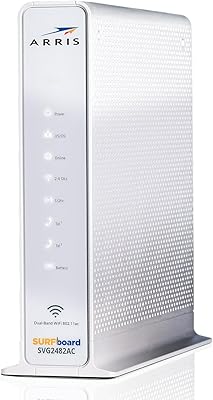
ARRIS SURFboard SVG2482AC Cable Modem Router Combo
74%
72%
ISP Compatibility
81%
Internet Performance
63%
Wi-Fi Coverage
79%
Setup Experience
76%
Build Quality
More
ARRIS TM822G DOCSIS 3.0 Telephony Modem
75%
88%
Value for Money
78%
Internet Performance
84%
Voice Call Quality
58%
Setup & Activation
86%
Long-Term Reliability
More
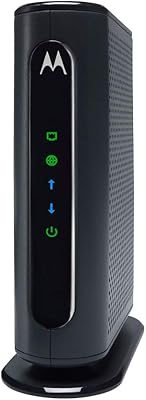
Motorola MB7420 DOCSIS 3.0 Cable Modem
87%
94%
Connection Stability
91%
Download Speed Performance
89%
Setup & Installation
92%
Provider Compatibility
85%
Build Quality
More
ARRIS Touchstone TM1602A 16x4 DOCSIS 3.0 Modem
82%
88%
Performance
91%
Ease of Setup
93%
ISP Compatibility
85%
Connection Stability
80%
Latency/Buffering
More
NETGEAR CM500 DOCSIS 3.0 Cable Modem
77%
91%
Value for Money
88%
Setup & Activation
84%
Connection Stability
63%
Refurbished Condition Consistency
72%
ISP Compatibility
More
Arris CM8200A DOCSIS 3.1 Cable Modem
74%
88%
Internet Speed Performance
79%
Ease of Setup & Activation
74%
ISP Compatibility
83%
Build Quality & Durability
71%
Thermal Management
More
ARRIS SURFboard SBG8300 DOCSIS 3.1 Cable Modem Router Combo
84%
91%
Performance & Speed
88%
Wi-Fi Coverage & Stability
80%
Ease of Setup
84%
Compatibility with ISPs
92%
Value for Money
More
Linksys CM3024 DOCSIS 3.0 Cable Modem
75%
88%
Value for Money
84%
Setup & Installation
79%
Download Speed Performance
53%
Latency & Ping Stability
86%
ISP Compatibility
More

FAQ

No, it will not. The TM822R is certified exclusively for Comcast Xfinity and is not compatible with Spectrum, Cox, Optimum, or any other cable provider. If you buy this for a non-Xfinity connection, it simply will not activate, regardless of whether your ISP also uses DOCSIS 3.0 infrastructure.

You will need a separate router. This cable modem handles the connection between your home and Xfinity's network, but it does not include any wireless functionality. Connect a router to its single Gigabit Ethernet port and the router handles all your Wi-Fi.

The process is straightforward: connect the coaxial cable from your wall outlet to the modem, plug it into power, connect it to your router, and then call Xfinity to provision the device using the modem's MAC address and serial number printed on the label. Most users complete the internet activation quickly, though activating the phone lines sometimes requires a separate call or a short wait for provisioning to complete on Xfinity's end.

Most likely not. VoIP line activation on Xfinity is a separate provisioning step from internet activation, and it is common for lines to be inactive for several hours or require a follow-up call to Xfinity's voice support team. Give it a few hours first, then call Xfinity specifically about telephone provisioning if the lines are still not working — this is an ISP-side process, not a hardware fault in most cases.

The ARRIS TM822R DOCSIS 3.0 Cable Modem is compatible with a standard 12V sealed lead-acid battery, similar to those used in alarm systems. The battery is not included in the box, so you will need to source it separately — it is widely available from electronics retailers and online marketplaces. Check the modem's documentation or ARRIS's support site for the exact specifications before purchasing.

No, not effectively. The modem's hardware ceiling is 343 Mbps, so even if Xfinity activates it on a gigabit plan, your speeds will be capped well below what you are paying for. If you are on or planning to upgrade to a gigabit-tier plan, you need a DOCSIS 3.1 modem to take full advantage of those speeds.

No splitter needed. The modem has two dedicated RJ-11 telephone ports on the back, so you can plug two standard phones directly into it, one per port. Each port corresponds to a separate VoIP line that Xfinity can provision independently with its own number if desired.

It depends entirely on your situation. If you are on an Xfinity voice plan with internet speeds under 300 Mbps and you are currently renting equipment, this cable modem still does its job well and will save you money over time. However, if you are on a faster plan or expect to upgrade soon, a newer DOCSIS 3.1 modem would be a smarter long-term investment.

Once the warranty period ends, ARRIS support becomes largely a paid-service or self-resolve situation. You would typically need to purchase a replacement unit, as out-of-warranty repairs are rarely practical or cost-effective for consumer networking hardware. This is worth factoring into your decision if you plan to use the device for four or more years.

Your existing standard corded or cordless home phones will work fine. You plug them directly into the RJ-11 telephone ports just as you would with a traditional phone jack — no VoIP-specific handset is required. The modem handles the voice-over-IP conversion internally, so the phone itself does not need to be internet-aware.

Where to Buy