Overview

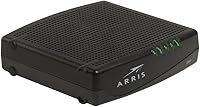
The ARRIS CM820A DOCSIS 3.0 Cable Modem has been around since 2013, and yet it keeps showing up on recommended lists for a straightforward reason — it handles everyday internet needs without drama. For households tired of paying a monthly rental fee to their ISP, this cable modem offers a clean way out. It works with Xfinity, Cox, Spectrum, and Optimum, covering the majority of cable subscribers across the U.S. Just keep expectations calibrated: this is a dependable performer for mid-tier internet plans, not a contender for gigabit-tier service. Think of it as a reliable workhorse built for the households that need it most.
Features & Benefits

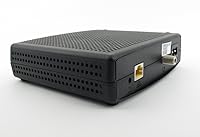
The CM820A bonds eight downstream channels and four upstream channels simultaneously, which translates to a noticeably more stable connection compared to older single-channel modems — especially during peak hours when neighborhood network congestion kicks in. Two independent 96MHz RF tuners let it scan a wide slice of the cable spectrum, helping it lock onto downstream signals more efficiently. There is also a built-in MoCA immunity filter, genuinely useful when coax wiring is shared with other home devices like a whole-home DVR. One thing worth knowing upfront: this ARRIS unit has a single Ethernet port and no built-in Wi-Fi, so a separate router is required for wireless connectivity.

Best For

This cable modem makes the most sense for people on cable plans topping out around 200 to 300 Mbps who want to stop renting hardware from their provider. If you already run a standalone router or mesh system, the CM820A plugs right in without any fuss. Cox, Xfinity, Spectrum, and Optimum subscribers will find it on their approved device lists, which simplifies activation considerably. That said, if your ISP offers gigabit tiers or an upgrade is on the horizon, this unit will become the bottleneck — DOCSIS 3.0 has real throughput ceilings, and in that case a DOCSIS 3.1 modem is the smarter long-term call.

User Feedback

With over 760 ratings and a 4.0-star average, the CM820A has earned genuinely solid marks from real-world owners. The most consistent praise centers on hassle-free activation — most buyers report getting online quickly after a brief call to their ISP, with no unusual complications. Long-term owners frequently note the hardware stays stable for years without constant reboots or firmware issues. On the downside, a handful of users ran into sluggish activation responses from ISP support lines, though most acknowledge the modem itself was not at fault. A few Spectrum and Optimum users flagged occasional provisioning friction, so confirming your specific plan is supported before purchasing is a smart move.

Pros

  • Eliminates the ISP modem rental fee, which typically recoups the purchase cost within a few months.
  • Eight bonded downstream channels deliver noticeably more stable speeds compared to older basic modems.
  • Approved by Cox, Xfinity, Spectrum, and Optimum, so activation is straightforward for most cable subscribers.
  • The built-in MoCA immunity filter reduces interference when coax lines are shared with other home devices.
  • Compact design tucks away neatly without taking up significant shelf or desk space.
  • Long-term owners consistently report stable, reboot-free performance lasting several years.
  • Dual RF tuners help the unit lock onto cable signals efficiently across a wide frequency range.
  • Setup process is genuinely plug-and-play for most users on supported ISPs.
  • Solid build quality that meets industry surge and radiated immunity standards for everyday durability.
  • At its price point, this ARRIS unit offers a strong value proposition for moderate internet users.

Cons

  • DOCSIS 3.0 caps out well below gigabit speeds, making it obsolete for high-tier internet plans.
  • No built-in Wi-Fi means you must purchase and manage a separate router to get wireless connectivity.
  • Only four supported ISPs — subscribers on other providers cannot use this modem at all.
  • Some users on Spectrum and Optimum have reported occasional provisioning friction during initial activation.
  • ISP activation calls can sometimes take longer than expected, creating a frustrating setup delay.
  • The hardware is over a decade old, meaning firmware updates and long-term vendor support are uncertain.
  • Upload performance may feel limiting for users with heavy upstream needs like cloud backups or live streaming.
  • No USB port or additional connectivity options for expanded home network configurations.

Ratings

The ARRIS CM820A DOCSIS 3.0 Cable Modem has been scored by our AI system after analyzing hundreds of verified buyer reviews from global sources, with spam, bot-generated, and incentivized feedback actively filtered out. The scores below reflect a transparent synthesis of real-world user experience — strengths and frustrations alike — so you can make a genuinely informed decision before purchasing.
Connection Stability
83%
Owners consistently report that once the CM820A is set up and provisioned, it simply stays connected. Households using it for daily streaming, remote work video calls, and regular browsing rarely encounter unexpected drops or the need to reboot the unit.
A smaller subset of users on certain Spectrum and Optimum plans reported occasional hiccups during peak evening hours, though it is difficult to isolate whether the modem or the ISP network itself was responsible in most of those cases.
Ease of Setup
78%
22%
For the majority of Cox and Xfinity subscribers, getting this cable modem online requires little more than connecting the coax, plugging into a router, and making a short activation call. Most users describe the hardware side of the process as genuinely painless.
The activation experience varies noticeably by ISP. Some Spectrum users and a handful of Optimum subscribers reported longer-than-expected provisioning wait times, which created frustration even though the modem hardware itself was functioning correctly throughout.
ISP Compatibility
74%
26%
Being on the approved device lists for four of the largest U.S. cable providers is a real advantage. Cox and Xfinity subscribers in particular report smooth compatibility with minimal back-and-forth with ISP support during activation.
The modem is strictly limited to those four providers. Anyone on a smaller regional cable company, a fiber provider, or a DSL service is simply out of luck, and a few buyers have left negative reviews after discovering this incompatibility post-purchase.
Long-Term Reliability
81%
19%
Multiple reviewers mention using the CM820A for three, four, or even five years without hardware failure. For a device that runs around the clock, that kind of quiet longevity is genuinely valued by households who want to buy once and forget about it.
As the hardware ages, a small number of users report gradual performance degradation, particularly in homes with older coaxial wiring. There is also the underlying concern that older DOCSIS 3.0 devices may eventually be deprecated from ISP-approved lists.
Value for Money
88%
Eliminating a monthly ISP modem rental fee means this ARRIS unit typically pays for itself within a few billing cycles. For budget-conscious households on stable mid-tier plans, the math works clearly in the buyer's favor over a two- to three-year ownership window.
Buyers who upgrade to a faster internet plan within a year or two may find they need a DOCSIS 3.1 modem sooner than expected, effectively shortening the payback period and reducing the overall value proposition for plan-upgraders.
Throughput Performance
71%
29%
The 8x4 channel bonding delivers a noticeably more stable and consistent experience compared to older 4x4 or entry-level modems, especially during congested evening hours when multiple devices are active simultaneously in the home.
DOCSIS 3.0 has a hard ceiling, and users who have since upgraded to 400 Mbps or higher plans have noted the modem becomes the limiting factor in their setup. It is a capable performer within its design range, but that range has a definite edge.
Build Quality
76%
24%
The housing feels solid and unobtrusive — it runs cool and quiet in day-to-day use. Its compact 7 x 7 x 2 inch footprint sits discreetly on a shelf or behind a TV stand without drawing attention, which users with tidy home setups tend to appreciate.
A few users noted the unit feels lightweight in a way that reads as slightly cheap rather than refined. The design has also not been updated since the product launched in 2013, so it lacks any modern touches like status LED customization or ventilation improvements.
Signal Reception
79%
21%
The dual 96MHz RF tuners help the modem pull in downstream signals across a wide spectrum, which translates to better performance in homes where coaxial signal quality is less than ideal — such as older buildings or homes with long cable runs from the street.
In environments with significant signal attenuation or where the cable line has not been serviced in years, a few users found that even good hardware could not fully compensate for weak incoming signal quality without an ISP technician visit.
MoCA Interference Handling
82%
18%
The built-in MoCA immunity filter is a quietly useful feature that most buyers do not think about until they need it. In multi-unit buildings or homes with whole-home DVR systems sharing the coax lines, it visibly reduces unexplained connection instability.
The filter is passive and built-in, so there is no way to toggle it or adjust its behavior. For users who intentionally run a MoCA network for wired backhaul, this built-in filtering can interfere with their intended home network configuration.
Upstream Performance
67%
33%
For typical household upload tasks — video calls, sending files, uploading to cloud storage — the four bonded upstream channels handle daily demand without complaint. Most users on plans with moderate upload speeds report no noticeable upload bottlenecks.
Content creators, remote workers with heavy upload workloads, or households with multiple simultaneous video streamers pushing data outbound will find the 4-channel upstream bonding limiting compared to what newer DOCSIS 3.1 modems can deliver.
Compatibility With Routers
86%
Because the CM820A outputs a clean standard Ethernet connection, it pairs effortlessly with virtually any router on the market — from budget single-band units to high-end mesh systems. Users upgrading their router do not need to worry about modem compatibility at all.
Having a single Ethernet output does mean that users without a router are not able to share the connection to multiple wired devices without adding a switch. It is a minor point, but worth knowing for users building a very simple direct-connection setup.
Documentation & Support
58%
42%
The physical setup process is intuitive enough that most buyers do not need to consult documentation at all. The coax-in, Ethernet-out configuration is self-explanatory, and ARRIS does provide basic online resources for the CM820A.
Given the product's age, finding up-to-date official support documentation is increasingly difficult. ARRIS-provided resources are sparse, and buyers troubleshooting edge-case issues often end up relying on third-party community forums rather than first-party guidance.
Future-Proofing
44%
56%
For buyers who are firmly locked into a mid-tier cable plan with no near-term upgrade plans, the CM820A will continue serving its purpose reliably for the foreseeable future as long as their ISP maintains DOCSIS 3.0 support on the network.
DOCSIS 3.0 is a genuinely aging standard, and as ISPs accelerate their rollout of multi-gigabit tiers, older modems like this one face a real risk of being phased off approved device lists. Buyers planning ahead by even two or three years should factor this in carefully.

Suitable for:

The ARRIS CM820A DOCSIS 3.0 Cable Modem is a practical pick for households on mid-tier cable internet plans — think anything up to around 300 Mbps — who want to stop handing their ISP a recurring rental fee every month. It fits especially well for renters or homeowners who already own a separate router and just need a dependable modem to anchor their home network. Subscribers on Cox, Xfinity, Spectrum, or Optimum will find this unit on their approved device lists, which removes the guesswork around compatibility. It also suits buyers who prioritize long-term hardware reliability over cutting-edge specs — people who set it up once and want it to quietly do its job for years. If your internet usage revolves around streaming, video calls, and general browsing rather than demanding multi-gigabit workloads, this cable modem covers that ground comfortably.

Not suitable for:

The ARRIS CM820A DOCSIS 3.0 Cable Modem is not the right tool for anyone eyeing gigabit or near-gigabit internet service, as DOCSIS 3.0 has a hard throughput ceiling that will cap your real-world speeds regardless of what your ISP plan promises. Users who need an all-in-one gateway solution — something that handles both modem and Wi-Fi routing in a single box — will need to look elsewhere, since this unit outputs to a single Ethernet port and requires a separate router for wireless connectivity. Anyone outside of the four supported ISPs (Cox, Xfinity, Spectrum, and Optimum) should verify compatibility carefully before buying, as this modem is not universally provisioned. Power users who work from home with heavy upload demands — video production, large cloud backups, live streaming — may also find the 4-channel upstream bonding limiting compared to newer DOCSIS 3.1 hardware. Finally, buyers planning to upgrade to a higher-tier internet plan in the near future should factor in that this unit may become the bottleneck sooner than expected.

Specifications

  • DOCSIS Standard: This cable modem operates on DOCSIS 3.0, the widely deployed cable internet standard that supports reliable speeds for mid-tier residential plans.
  • Downstream Channels: Eight bonded downstream channels allow the modem to aggregate multiple cable frequencies simultaneously for more consistent throughput.
  • Upstream Channels: Four bonded upstream channels handle outgoing traffic, covering typical upload demands like video calls and cloud backups on standard cable plans.
  • RF Tuners: Two independent 96MHz wide RF tuners enable the unit to receive downstream channels across a broad cable spectrum reaching up to 1GHz.
  • MoCA Filter: A built-in MoCA immunity filter reduces interference caused by MoCA-enabled devices sharing the same coaxial wiring in the home.
  • Connectivity: A single Ethernet port provides wired output to a router or directly to a computer; no Wi-Fi is built into this unit.
  • Compatible ISPs: Officially compatible with Cox, Optimum, Spectrum, and Xfinity; buyers on other providers should confirm support before purchasing.
  • Dimensions: The unit measures 7 x 7 x 2 inches, giving it a low-profile footprint suitable for shelves or home office setups.
  • Color: Available in black, a neutral finish that blends into most home network or entertainment center environments.
  • Surge Protection: The hardware is designed to meet or exceed industry standards for radiated immunity and surge resistance, adding a layer of protection against electrical fluctuations.
  • First Available: This model has been on the market since August 2013, making it a long-standing option with a well-documented real-world track record.
  • Ratings: The modem holds a 4.0 out of 5 stars average across 762 customer ratings on Amazon as of the time of this review.
  • Sales Rank: Ranked #95 in Computer Networking Modems on Amazon, indicating steady and consistent demand relative to the broader modem category.
  • Manufacturer: Made by ARRIS, a telecommunications equipment company with an established history in cable modem and gateway hardware.
  • Power Source: The unit is powered via an AC adapter; it does not operate on battery power and requires a wall outlet near the install location.

Related Reviews
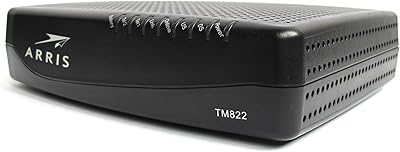
ARRIS TM822R DOCSIS 3.0 Cable Modem
75%
93%
Xfinity Compatibility
88%
Value for Money
74%
VoIP Phone Performance
81%
Internet Speed Performance
86%
Setup & Installation
More
ARRIS SBG6782 DOCSIS 3.0 Cable Modem Router
78%
88%
Value for Money
91%
Setup & Installation
86%
Connection Stability
69%
Wi-Fi Performance
63%
Wi-Fi Range
More
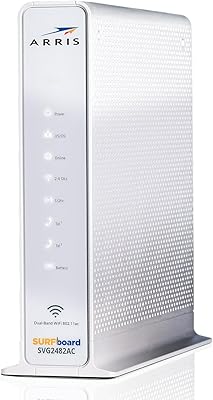
ARRIS SURFboard SVG2482AC Cable Modem Router Combo
74%
72%
ISP Compatibility
81%
Internet Performance
63%
Wi-Fi Coverage
79%
Setup Experience
76%
Build Quality
More
ARRIS TM822G DOCSIS 3.0 Telephony Modem
75%
88%
Value for Money
78%
Internet Performance
84%
Voice Call Quality
58%
Setup & Activation
86%
Long-Term Reliability
More
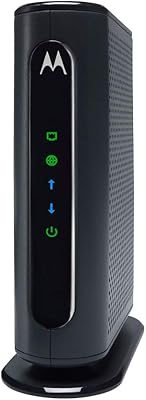
Motorola MB7420 DOCSIS 3.0 Cable Modem
87%
94%
Connection Stability
91%
Download Speed Performance
89%
Setup & Installation
92%
Provider Compatibility
85%
Build Quality
More
ARRIS Touchstone TM1602A 16x4 DOCSIS 3.0 Modem
82%
88%
Performance
91%
Ease of Setup
93%
ISP Compatibility
85%
Connection Stability
80%
Latency/Buffering
More
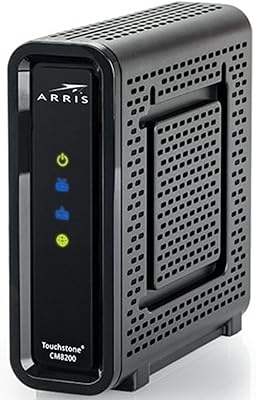
Arris CM8200A DOCSIS 3.1 Cable Modem
74%
88%
Internet Speed Performance
79%
Ease of Setup & Activation
74%
ISP Compatibility
83%
Build Quality & Durability
71%
Thermal Management
More
NETGEAR CM500 DOCSIS 3.0 Cable Modem
77%
91%
Value for Money
88%
Setup & Activation
84%
Connection Stability
63%
Refurbished Condition Consistency
72%
ISP Compatibility
More
ARRIS SURFboard G36
ARRIS SURFboard G36
72%
83%
Setup & Activation
76%
Wi-Fi Speed & Throughput
61%
Wi-Fi Range & Coverage
58%
Connection Stability
88%
DOCSIS 3.1 Modem Performance
More
NETGEAR C3700 N600 Cable Modem Router
73%
91%
Ease of Setup
88%
Connection Reliability
58%
WiFi Speed & Performance
61%
WiFi Range & Coverage
83%
Modem Speed & Throughput
More

FAQ

No, it does not. The CM820A is a standalone modem with a single Ethernet output port. You will need a separate router or wireless access point to get Wi-Fi in your home. This is an important distinction if you are replacing an ISP-provided gateway that handled both functions.

The four officially supported providers are Cox, Optimum, Spectrum, and Xfinity. If your service is through a smaller regional provider or a fiber-based ISP, this modem almost certainly will not work, so it is worth a quick check with your provider before buying.

DOCSIS 3.0 with 8 downstream channels can theoretically support speeds well over 300 Mbps under ideal conditions, but real-world performance depends heavily on your ISP plan and local network conditions. If you are on a plan topping out around 150 to 300 Mbps, this modem will handle it comfortably. For gigabit service, you would need a DOCSIS 3.1 modem instead.

For most users on the four supported ISPs, setup is straightforward. You connect the coax cable, plug in the Ethernet to your router, power the unit on, and then call or chat with your ISP to provision the modem to your account. The activation call is the step that trips some people up — not the hardware itself.

Yes, absolutely. Since the CM820A outputs a standard Ethernet connection, it pairs with any router including mesh systems from brands like Eero, Orbi, or Google. You just connect the modem to the primary mesh node the same way you would any wired router.

Most cable ISPs charge a monthly equipment rental fee for the modem they provide. Owning your own modem eliminates that fee entirely. Depending on your provider, the rental charge can range from roughly 10 to 15 dollars a month, so the purchase price of this unit pays for itself within a few months of use.

It depends on your internet plan. If you are on a mid-tier cable plan and your ISP still actively supports DOCSIS 3.0 devices, the CM820A remains a solid and cost-effective choice. However, if you are eyeing a plan upgrade or your provider is phasing out DOCSIS 3.0 support in your area, investing in a newer DOCSIS 3.1 modem would be the smarter long-term move.

MoCA stands for Multimedia over Coax Alliance — it is a technology some ISPs and home systems use to send data over existing coaxial cables. Without a filter, MoCA signals from a neighbor's system or your own home devices can interfere with your cable modem signal. The built-in MoCA immunity filter in this ARRIS unit blocks that interference, which is a genuinely useful feature if your coax lines are shared or run through a multi-unit building.

Probably not. Slow activation is almost always on the ISP side, not the hardware. The modem needs to be provisioned to your account in their system, and depending on the time of day or how busy their support queue is, that process can take anywhere from a few minutes to over an hour. If the modem power lights look normal, give it time and follow up with your ISP if it drags beyond a couple of hours.

Generally, no manual intervention is needed. DOCSIS modems receive firmware updates automatically from your ISP when you are connected to their network. You do not need to log into a dashboard or push updates yourself. The main thing to watch over the years is whether your ISP continues to certify and support the device, as older modems can eventually be deprecated from provider approved lists.

Where to Buy