Overview

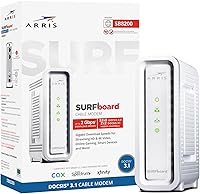
The ARRIS SURFboard SB8200 is a standalone DOCSIS 3.1 cable modem built for households that want to push the limits of their high-speed cable internet plan. One of its most compelling practical arguments is simple: stop paying rental fees to your ISP and own your equipment outright — most buyers recover the cost within 12 to 18 months. It is certified for use with Xfinity, Cox, and Spectrum, though always confirm compatibility with your specific provider before buying. One thing worth stating clearly upfront: no Wi-Fi router is included. This is a modem only, and you will need a separate router or mesh system to get wireless coverage throughout your home.
Features & Benefits

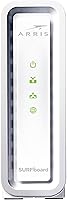
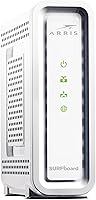
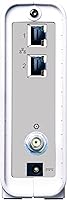
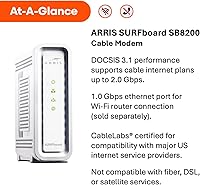
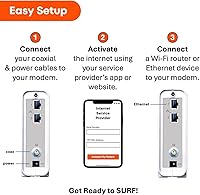
The SB8200 runs on the DOCSIS 3.1 standard, which means it can handle cable internet plans well beyond what most households currently subscribe to — up to 2 Gbps theoretically, though real-world speeds depend heavily on your ISP plan and the quality of your coaxial wiring. Where it stands apart from many competitors is its dual Gigabit Ethernet ports: you can connect two wired devices simultaneously or use link aggregation with a compatible router. Getting it up and running is simple — connect the coax cable, power it on, and activate with your provider by phone or online. The compact vertical design takes up minimal shelf space, and the LED indicators give you an instant read on connection status without any app required.

Best For

This ARRIS modem makes the most sense for cable internet subscribers — and only cable subscribers, since it does not work with fiber, DSL, or satellite connections. The clearest use case is someone currently renting a modem from Xfinity, Cox, or Spectrum who wants to cut that monthly charge. Remote workers on gigabit cable plans will appreciate the stable, high-throughput performance, and households with heavy streaming or online gaming demands will notice the difference over ISP-grade equipment. It also suits anyone building a custom network around a preferred router or mesh system, since it hands off cleanly to whatever you connect. If your plan is under 400 Mbps, a less expensive DOCSIS 3.0 modem might be sufficient.

User Feedback

Owners of this SURFboard modem consistently report noticeable speed improvements right out of the box compared to whatever the ISP shipped them, and the dual Ethernet ports get called out repeatedly as a genuine differentiator. Setup tends to go smoothly for Xfinity and Cox users in particular. That said, a meaningful number of reviewers have experienced intermittent disconnects — not universal, but frequent enough to take seriously. ISP activation support can also be hit or miss; some providers are quicker to recognize third-party equipment than others. The good news is that long-term owners — those past the two or three year mark — generally report solid reliability. It is a well-regarded modem, but not entirely without flaws.

Pros

  • Eliminating the ISP modem rental fee typically recoups the purchase cost within 12 to 18 months.
  • DOCSIS 3.1 support handles current gigabit plans and leaves room for future speed upgrades.
  • Dual Gigabit Ethernet ports allow link aggregation with compatible routers — rare at this price point.
  • Most Xfinity and Cox users report a smooth, sub-15-minute activation process.
  • Long-term owners consistently praise the SB8200 for holding up reliably over two or more years.
  • Compact vertical footprint fits easily into tight media cabinets or crowded shelving.
  • CableLabs certification removes most guesswork around compatibility with major US cable providers.
  • Users switching from ISP-supplied equipment frequently notice an immediate speed improvement.
  • LED status indicators make it easy to quickly diagnose connection issues without any app or login.

Cons

  • Intermittent disconnect reports are frequent enough across reviews to treat as a real, known risk.
  • No Wi-Fi is included — budget for a separate router or mesh system on top of the purchase price.
  • Activation experience with Spectrum can be inconsistent, sometimes requiring multiple support calls.
  • Real-world speeds depend heavily on in-home coax wiring quality, not just the modem itself.
  • End users have little control over firmware update timing on ISP-managed deployments.
  • The included Ethernet cable is too short and not rated for multi-gigabit use — plan to replace it.
  • Troubleshooting resources from the manufacturer are thin; most solutions get crowd-sourced online.
  • No wall or rack mounting option limits placement flexibility for more intentional network setups.
  • Buyers on sub-400 Mbps plans are paying a premium for DOCSIS 3.1 capability they may never use.

Ratings

The ARRIS SURFboard SB8200 earns its place as one of the most consistently recommended DOCSIS 3.1 modems among cable internet subscribers in the US, and the scores below reflect what real buyers actually experience — not marketing claims. Our AI analyzed thousands of verified purchase reviews worldwide, actively filtering out incentivized, bot-generated, and spam submissions to surface genuine signal. Both the hardware strengths and the recurring pain points are represented honestly here.
Connection Speed & Throughput
88%
Users on Xfinity and Cox gigabit plans frequently report that switching to the SB8200 unlocked speeds their ISP-supplied equipment was quietly throttling. Remote workers running video calls alongside large file transfers noticed a meaningful improvement in consistency, not just peak numbers.
Real-world throughput is ultimately capped by the ISP plan and the quality of in-home coax wiring — something a number of buyers discovered the hard way. If your coax infrastructure is aging, the modem alone will not compensate for signal degradation upstream.
Connection Stability & Reliability
74%
26%
Long-term owners — those who have run the SB8200 continuously for two or three years — generally describe it as a set-and-forget device. For the majority of households, it simply stays online and requires almost no attention after initial setup.
A notable minority of reviewers report intermittent disconnects, sometimes occurring weeks or months after a stable start. The root cause is debated — some point to firmware, others to ISP signal issues — but the pattern appears often enough that it cannot be dismissed as isolated incidents.
Value for Money
83%
For households currently paying a monthly modem rental fee to their cable provider, the math works out favorably within roughly 12 to 18 months of ownership. After that break-even point, every month becomes pure savings, which is a compelling argument for anyone planning to stay with their ISP long-term.
The upfront cost sits in a mid-to-premium range, which can feel steep compared to budget DOCSIS 3.0 alternatives — especially for subscribers on plans under 400 Mbps who would never use the SB8200's full capability. Buyers should honestly assess whether their current or near-future plan justifies the investment.
Setup & Activation
79%
21%
The physical setup is genuinely straightforward: connect the coax, plug in power, and contact your provider to swap the registered modem on your account. Most Xfinity and Cox users report the online activation process taking under 15 minutes without needing a technician visit.
Activation experience varies significantly by ISP. Spectrum users in particular report a higher rate of friction, with some needing multiple calls or escalations before the device was fully recognized on their account. ISP support quality is an external variable the hardware cannot control, but it affects first impressions.
Dual Ethernet Port Utility
91%
Having two 1 Gbps Ethernet ports is a practical differentiator that buyers on multi-gig plans specifically seek out. Users with link-aggregation-capable routers can bond both ports to push closer to the modem's theoretical throughput ceiling, which is rare at this price point.
Link aggregation requires a router that explicitly supports it — a detail that catches some buyers off guard. Without that router-side support, the second port functions as a straightforward secondary connection rather than a speed multiplier, which limits its value for users who do not plan ahead.
ISP Compatibility
76%
24%
CableLabs certification gives the SB8200 a solid foundation for working across major US cable providers, and verified compatibility with Xfinity, Cox, and Spectrum covers a large share of the US cable internet market. Most buyers in those ecosystems report no compatibility issues after activation.
The modem is strictly cable-only — it will not function with fiber, DSL, or satellite services, and smaller regional cable providers may not officially support it. Buyers must verify device approval with their specific ISP before purchasing, as provider support lists do change over time.
Build Quality & Durability
81%
19%
The SB8200 has a solid, dense feel for its compact size, and owners who have run it for extended periods rarely mention physical deterioration or heat-related shutdowns under normal operating conditions. The vertical stand keeps it stable on a shelf or entertainment unit.
The plastic casing is functional rather than premium, and the matte finish attracts dust more than some users would like. A few reviewers note the unit runs warm after extended uptime, though this does not appear to translate into performance issues for most households.
Design & Form Factor
84%
The compact vertical footprint — just over 5 inches tall — makes it easy to tuck behind a router or fit into a cramped media cabinet without dominating the space. The restrained LED indicators are visible enough to be useful without lighting up a dark room at night.
The SB8200 does not stand out as a design object, and some buyers accustomed to more stylized networking hardware find it bland. There is no mounting option for wall or rack installation, which limits placement flexibility in more intentional home network setups.
DOCSIS 3.1 Future-Proofing
87%
DOCSIS 3.1 support means this modem is technically capable of handling multi-gigabit cable plans that most US providers are still in the process of rolling out. Buyers who anticipate upgrading their internet plan in the next few years will not need to replace the hardware to do so.
Future-proofing is only relevant if your cable provider actually deploys DOCSIS 3.1 infrastructure in your area — which is not yet universal. Buyers in markets where providers have not yet upgraded their plant are essentially paying for headroom they may not access for several years.
LED Status Indicators
78%
22%
The four LED indicators — covering power, upstream, downstream, and online status — give users a fast way to diagnose connectivity problems without logging into a management interface. Experienced users find this useful for quickly ruling out modem-side issues during an outage.
The indicator legend is not printed on the unit itself, so new users often need to consult the manual or a quick web search to interpret blinking patterns. There is also no way to dim or disable the LEDs for users who keep networking gear in a bedroom or sleeping space.
Long-Term Ownership Cost
86%
Once the break-even point against rental fees is cleared, the ongoing cost of ownership drops to essentially zero. Buyers who have held onto the SB8200 for two or more years consistently frame it as one of the better financial decisions they made on their home network.
Cable modem technology does have a generational shelf life — if providers eventually transition beyond DOCSIS 3.1 or if your specific unit develops firmware issues without manufacturer support, replacement becomes necessary. Vantiva's long-term support commitment is something to monitor.
Software & Firmware
63%
37%
The SB8200 handles firmware updates automatically in most ISP-managed deployments, meaning the average user never needs to manually intervene. For a device designed to stay in the background, this hands-off update approach suits most households well.
Some of the intermittent disconnect issues reported by users have been tentatively linked to specific firmware versions, and the end user has little control over update timing on ISP-managed devices. A small but vocal group of technically inclined users find the lack of granular firmware control frustrating.
Documentation & Support
67%
33%
The included quick-start guide covers the basics clearly enough that most users can complete physical setup without consulting anything beyond the box. ARRIS also maintains an online knowledge base with activation walkthroughs for the major supported ISPs.
When problems arise beyond initial setup — particularly the disconnect issues some users encounter — official support resources are thin. Users often end up crowd-sourcing solutions through Reddit or third-party forums rather than finding definitive guidance from the manufacturer.
Packaging & Unboxing
72%
28%
The box includes the modem, power adapter, and a short Ethernet cable, which covers everything needed to get started. The packaging is practical and protective without excess waste, which aligns with what most buyers expect from a networking device at this tier.
The included Ethernet cable is short and not rated for multi-gigabit use, so users with higher-end setups will replace it immediately. The packaging does not include a coax cable, which can catch first-time modem buyers off guard if they do not already have a spare at home.

Suitable for:

The ARRIS SURFboard SB8200 is a strong fit for cable internet subscribers who are tired of paying a monthly modem rental fee and want to own their equipment outright — the math typically favors ownership within 12 to 18 months, and every month after that is money saved. It makes the most sense for households on gigabit or near-gigabit cable plans, where the DOCSIS 3.1 standard actually gets to flex its capabilities rather than sitting underutilized. Remote workers who depend on a stable, high-throughput connection throughout the day will appreciate the consistent performance edge over ISP-issued hardware. Gamers and households with multiple 4K streams running simultaneously are also well served here, especially when the dual Ethernet ports are used to connect a capable router directly. Anyone building a custom home network around a preferred router brand or a mesh Wi-Fi system will find the SB8200 a clean, reliable foundation that stays out of the way and does its job.

Not suitable for:

The ARRIS SURFboard SB8200 is a cable-only device — full stop — so anyone on a fiber, DSL, or satellite connection should stop reading here, because it simply will not work with those service types. Buyers on modest internet plans well under 400 Mbps are likely overspending for headroom they will never realistically use; a less expensive DOCSIS 3.0 modem would serve them just as well at a lower upfront cost. This is also not the right purchase for anyone expecting Wi-Fi out of the box — there is no wireless radio built in, and a separate router or mesh system is a hard requirement, not an optional accessory. Shoppers with smaller regional cable providers should verify device compatibility before buying, since the supported ISP list does not cover every cable operator in the country. Finally, buyers who have experienced recurring disconnect issues with previous modems and suspect line-quality problems in their home should address that infrastructure first, as no modem — regardless of spec — can fully compensate for a degraded coaxial signal.
Specifications

  • DOCSIS Standard: The modem uses DOCSIS 3.1, the current generation cable internet standard supporting multi-gigabit downstream and upstream channels.
  • Max Plan Speed: Supports cable internet plans up to 2 Gbps download, making it compatible with the fastest residential cable tiers currently available in the US.
  • Ethernet Ports: Equipped with two 1 Gbps Ethernet ports, enabling either dual-device wired connections or link aggregation with a compatible router.
  • Wi-Fi: No wireless radio is built in; a separate Wi-Fi router or mesh system is required to provide wireless coverage throughout the home.
  • Dimensions: The unit measures 5.13″ long by 1.75″ wide by 5.25″ tall in its standard vertical orientation.
  • Weight: The modem weighs 1.34 lbs, making it lightweight enough to reposition or relocate without tools or mounting hardware.
  • Form Factor: Compact vertical stand design with a small footprint suited for placement on a shelf, desk, or inside a media cabinet.
  • LED Indicators: Four LED indicators display the status of power, upstream channel, downstream channel, and online connectivity at a glance.
  • Certification: CableLabs certified under the DOCSIS 3.1 specification, confirming interoperability with compliant cable plant infrastructure across the US.
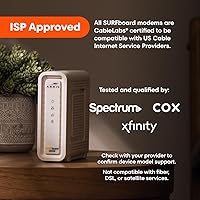
  • Compatible ISPs: Tested and approved for use with Xfinity, Cox, and Spectrum; compatibility with other regional cable providers should be verified directly with the provider.
  • Incompatible Services: Not compatible with fiber optic, DSL, or satellite internet services — designed exclusively for hybrid fiber-coaxial cable infrastructure.
  • Downstream Channels: Supports up to 32 DOCSIS 3.0 bonded downstream channels alongside OFDM channels under DOCSIS 3.1, providing broad channel bonding flexibility.
  • Upstream Channels: Supports up to 8 DOCSIS 3.0 bonded upstream channels plus an OFDMA upstream channel under DOCSIS 3.1 for improved upload performance.
  • Power Input: Operates on a standard AC power adapter included in the box; no external battery or UPS is built into the device.
  • Manufacturer: Designed and originally released under the ARRIS brand; the product is now manufactured by Vantiva, which acquired the ARRIS consumer networking division.
  • Model Number: The official model designation is SB8200, which is the identifier used when registering the device with your cable provider during activation.
  • In-Box Contents: The package includes the modem unit, an AC power adapter, a short Cat 5e Ethernet cable, and a quick-start setup guide.
  • Router Required: A separate Wi-Fi router or mesh networking system must be purchased independently; none is included with or bundled into this modem.

Related Reviews

ARRIS SURFboard SBG7400AC2
85%
88%
Wi-Fi Performance
93%
Ease of Setup
75%
Compatibility with ISPs
87%
Value for Money
91%
App Experience
More
ARRIS SURFboard SBV3202 Cable Modem
85%
93%
Value for Money
89%
Setup and Installation
91%
Performance for Streaming & Gaming
85%
Voice Service Compatibility
78%
Connectivity and Stability
More
ARRIS Motorola SurfBoard SB6141 Cable Modem
84%
88%
Performance
92%
Ease of Setup
80%
ISP Compatibility
90%
Build Quality
85%
Reliability
More
ARRIS SURFboard SBG7600AC2 Cable Modem Router Combo
86%
89%
Performance
92%
Setup Ease
91%
Value for Money
86%
Wi-Fi Range & Speed
82%
Parental Controls
More
ARRIS SURFboard SBG7580AC Cable Modem / Wi-Fi Router
83%
94%
Ease of Setup
88%
Wi-Fi Performance
92%
Value for Money
83%
Build Quality
89%
Reliability
More
ARRIS SURFboard SBG6580 Cable Modem/ Wi-Fi Router
84%
85%
Performance (Speed and Connectivity)
92%
Setup and Installation
78%
Wi-Fi Range and Signal Strength
88%
Ethernet Port Performance
90%
ISP Compatibility
More
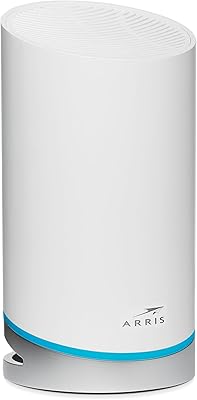
ARRIS Surfboard mAX W21 Tri-Band WiFi 6 Router
87%
91%
WiFi Performance
93%
Ease of Setup
81%
Coverage Area
87%
Mesh Expansion
89%
Gaming Performance
More
ARRIS SURFboard SBG6900AC Cable Modem/ Wi-Fi AC1900 Router
83%
85%
Performance
92%
Setup/Installation
88%
Wi-Fi Range & Coverage
80%
Reliability
83%
Build Quality
More
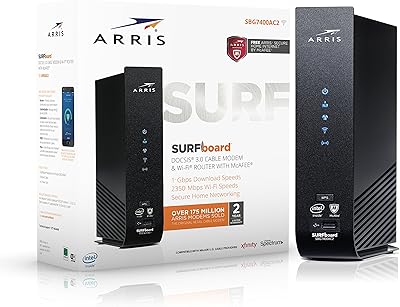
ARRIS Surfboard SBG7400AC2 Cable Modem/Wi-Fi Router with McAfee
83%
93%
Setup and Installation
88%
Wi-Fi Performance
91%
Security Features (McAfee)
90%
Compatibility with ISPs
86%
Value for Money
More
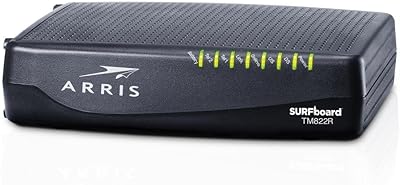
ARRIS SURFboard mAX TM822R DOCSIS 3.0 Cable Modem
82%
87%
Performance
92%
Setup & Installation
75%
Voice Support (Xfinity Voice)
90%
Download Speed (Up to 343 Mbps)
88%
Compatibility with Xfinity Services
More

FAQ

You will need a separate router — the ARRIS SURFboard SB8200 is a modem only and has no wireless radio inside. Think of it as the device that brings internet into your home from the cable line; a router (or mesh system) is then what distributes that connection wirelessly to your phones, laptops, and smart devices. This is one of the most common points of confusion buyers run into, so it is worth budgeting for both upfront.
Yes, the SB8200 is one of the modems Xfinity has tested and approved for use on their network, including gigabit-tier plans. After you buy it, you just need to call Xfinity or go through their online activation portal to swap out the registered equipment on your account. Most users report the Xfinity activation process taking under 15 minutes.

It depends on what your ISP charges for modem rental, but the typical break-even point falls somewhere between 12 and 18 months. After that, you are keeping money that would otherwise go straight to your provider every single month. Over two or three years of ownership, the savings add up to a meaningful amount.

It is on Spectrum's approved device list, but Spectrum has a reputation among SB8200 users for being more difficult to activate than Xfinity or Cox. Some buyers have needed to call multiple times or escalate before the modem was fully recognized. It works — just go in with realistic expectations around the activation process if you are a Spectrum customer.

Yes, both ports are active and usable. The most common configuration is to connect a router to one port and leave the second available for a direct wired connection to a PC or gaming console. If your router supports link aggregation (also called LAG or bonding), you can connect both ports to that router and combine the bandwidth for improved throughput on plans that support it.

It is a real pattern worth acknowledging. A meaningful portion of reviewers — not a small fringe — have reported intermittent drops, sometimes appearing weeks or months after initial setup. The cause is not definitively pinned down; some users suspect specific firmware versions, others point to coax signal quality issues that were always present but become more apparent with more sensitive hardware. If you experience this, checking your coax cable and splitter setup is a good first diagnostic step before assuming the modem itself is the problem.

No — this is a cable modem designed specifically for hybrid fiber-coaxial infrastructure, which is the type of cable internet most major providers like Xfinity, Cox, and Spectrum deliver over a coax line to your home. Fiber internet (like AT&T Fiber or Google Fiber) uses a completely different physical connection and requires different equipment, typically provided by the ISP.

If your current or planned internet package is at or above 400 to 500 Mbps, a DOCSIS 3.1 modem like the SB8200 starts making real sense — both for handling those speeds comfortably and for leaving room to upgrade later without replacing hardware. If you are on a plan well under that threshold, an older DOCSIS 3.0 modem would likely handle your speeds just fine at a lower cost.

The physical setup is simple: disconnect your old modem, connect the coaxial cable to the new unit, plug in the power adapter, and wait for the lights to stabilize. Then contact your ISP — either by phone or through their online activation portal — and give them the modem's MAC address and serial number, both printed on the label on the bottom of the device. Your provider will update their records and provision the connection, usually within a few minutes.

Long-term owners frequently report two to three years of solid performance with no issues, and some have run them even longer. The main variable beyond hardware reliability is technology lifecycle — if cable providers in your area eventually transition beyond DOCSIS 3.1 infrastructure, older modems would need replacement. For most households in 2025, that transition is not imminent, so the SB8200 still represents a reasonable multi-year investment.