


Overview

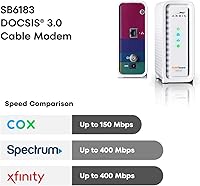
The ARRIS SB6183 DOCSIS 3.0 Cable Modem has been a reliable workhorse in the mid-range modem market since its 2014 debut — and for many households, it still makes a compelling case. If you're paying a monthly rental fee to Xfinity, Cox, Spectrum, Suddenlink, or Mediacom, this modem is worth a serious look. It handles internet plans up to 400 Mbps comfortably, which covers the majority of residential cable subscribers. Push it toward a gigabit plan, though, and you'll hit its ceiling fast. Newer DOCSIS 3.1 modems offer more headroom, but they cost more — and for most people's actual usage, the SB6183 remains more than enough.

Features & Benefits

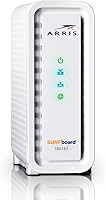
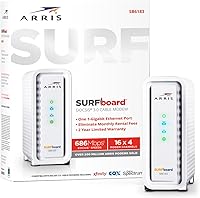
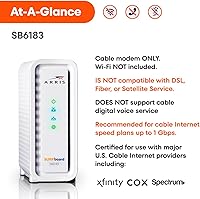
At its core, the SB6183 uses 16x4 channel bonding — combining 16 downstream and 4 upstream data channels simultaneously, giving your connection more lanes to pull traffic through rather than squeezing everything into one pipe. The result is a noticeably stable connection under normal household load. There's a single Gigabit Ethernet port on the back, so you'll plug this into your own router — it does not broadcast Wi-Fi on its own, which is actually a smart setup if you prefer controlling your network separately. It supports both IPv4 and IPv6 without any fuss. The compact unit weighs under 1.5 pounds and tucks away easily, with a one-year warranty from ARRIS rounding things out.

Best For

This ARRIS modem makes the most sense for people actively paying a monthly rental fee to their cable provider who want to stop. ISPs typically charge a recurring fee for equipment you'll never own, and this cable modem tends to pay for itself relatively quickly. It's also a natural fit for households on plans in the 200 to 400 Mbps range — you're not paying for DOCSIS 3.1 capability you don't actually need. If you already own a standalone Wi-Fi router, the SB6183 slots right in without any redundancy. Less technical users will find ISP activation refreshingly simple — usually a quick call or an online form, with no advanced configuration required.

User Feedback

With nearly 9,000 ratings and a 4.3-star average, buyer sentiment skews clearly positive — most people who bought this modem are glad they did. The most consistent praise centers on how painless ISP activation tends to be and how stable the connection stays day-to-day. That said, a meaningful number of reviewers report connectivity drops after several months of use or following ISP firmware pushes, which is worth factoring in. Some negative reviews trace back to mismatched ISP compatibility or setup errors rather than a hardware defect. On the longevity front, plenty of users clock multiple years without incident, while a smaller group sees failure within the first year.

Pros

  • Eliminates the recurring ISP modem rental fee, typically paying for itself within a matter of months.
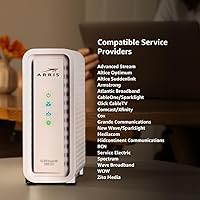
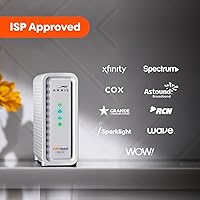
  • Broadly compatible with major U.S. cable providers including Xfinity, Cox, Spectrum, Suddenlink, and Mediacom.
  • 16x4 channel bonding keeps connections stable even during peak household usage hours.
  • ISP activation is consistently reported as quick and straightforward, even for non-technical users.
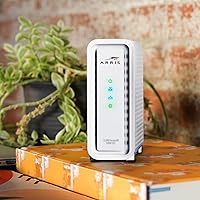
  • Compact size makes it easy to tuck behind a router or on a small shelf without taking up much space.
  • The SB6183 supports both IPv4 and IPv6, so it won't become obsolete if your ISP completes an IP transition.
  • Over a decade on the market means extensive compatibility data, community troubleshooting resources, and well-documented ISP support.
  • Single Gigabit Ethernet port connects cleanly to any modern router without speed bottlenecks on plans up to 400 Mbps.
  • A one-year manufacturer warranty from ARRIS provides a reasonable baseline of purchase protection.
  • Performs reliably for years according to a large portion of long-term owners, making it a solid set-and-forget device.

Cons

  • Hard capped at DOCSIS 3.0, making it incompatible with gigabit or multi-gig internet plans.
  • Some users report intermittent connectivity drops after several months of use or following ISP firmware updates.
  • No built-in Wi-Fi means you must budget for and manage a separate router to get wireless coverage.
  • A subset of units appear to fail within the first year, which is concerning given the one-year warranty limit.
  • The hardware design has not changed since 2014, so there is no prospect of feature updates or improvements.
  • Speeds advertised as theoretical maximums; real-world performance depends entirely on your ISP plan and local network conditions.
  • Only one Ethernet port on the device, offering no flexibility for direct wired connections beyond a single router.
  • Negative reviews suggest occasional activation headaches with certain ISP account configurations or regional systems.
  • As cable providers continue rolling out faster tiers, this modem may become a bottleneck sooner than buyers expect.
  • No DOCSIS 3.1 support means it lacks the advanced error correction and efficiency features that newer modems offer.

Ratings

The scores below were generated by AI after analyzing thousands of verified buyer reviews for the ARRIS SB6183 DOCSIS 3.0 Cable Modem, with active filtering applied to remove suspected spam, bot activity, and incentivized feedback. The results reflect a balanced synthesis of what real households genuinely praise and where frustrations consistently surface — nothing is glossed over.

Value for Money
91%
For households paying a monthly modem rental fee to their ISP, the financial case for this cable modem is hard to argue with — most buyers report recouping the purchase price within just a few months. That straightforward math is the single most celebrated aspect across thousands of reviews, and it holds up whether you're on Xfinity, Cox, or Spectrum.
As DOCSIS 3.1 modems have become more accessible in price, the value gap has narrowed — buyers on faster plans may find they're paying for capability this modem can't fully utilize, making the investment feel less efficient over a multi-year horizon.
Connection Stability
78%
22%
The majority of long-term owners describe a rock-solid connection for everyday use — streaming, video calls, and general browsing rarely hiccup under normal household load. The 16x4 channel bonding genuinely helps smooth out congestion during peak evening hours compared to entry-level single-channel modems.
A recurring thread in negative reviews involves intermittent drops appearing months into ownership, often coinciding with ISP-pushed firmware updates. This isn't universal, but it's consistent enough across unrelated reviewers that it can't be dismissed as isolated bad luck.
ISP Compatibility
83%
Coverage across the five major compatible ISPs — Xfinity, Cox, Spectrum, Suddenlink, and Mediacom — is broad enough to satisfy most U.S. cable internet subscribers. Buyers on these providers consistently report smooth provisioning with minimal friction during setup.
The compatibility list is fixed and non-negotiable; buyers on smaller regional cable providers, fiber services, or DSL networks have no path to making this modem work regardless of how it's configured. A meaningful slice of negative reviews traces directly to buyers who skipped this compatibility check before purchasing.
Setup & Activation
86%
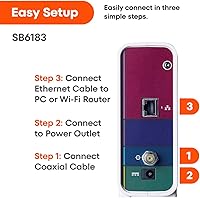
Most buyers — including self-described non-technical users — describe activation as genuinely simple: plug in the coaxial cable, power it on, and complete a quick registration with the ISP online or by phone. For the majority, the whole process takes under 30 minutes from unboxing to a live connection.
A subset of buyers runs into friction with ISP account configurations, particularly when swapping from a rented modem mid-billing cycle or when regional provisioning systems are slow to respond. These issues are largely ISP-side, but they still land as a negative experience tied to this hardware purchase.
Speed Performance
74%
26%
For households subscribed to plans in the 100 to 300 Mbps range, real-world throughput is consistently described as matching or closely approaching plan speeds. The 16 downstream channels mean the modem rarely becomes the limiting factor at these tiers under typical household usage.
The DOCSIS 3.0 ceiling becomes a tangible problem as plan speeds climb toward 400 Mbps and beyond — buyers on higher-tier plans regularly report that advertised speeds aren't being reached, and the modem itself is identified as the bottleneck. Theoretical maximums bear little resemblance to everyday performance on aggressive plans.
Build Quality
72%
28%
The physical construction feels adequately sturdy for a device that sits stationary on a shelf or desk. The compact white casing doesn't attract attention, ventilation appears sufficient for normal operating temperatures, and the unit doesn't run noticeably hot during extended use.
The hardware hasn't been refreshed since 2014, and the construction shows its age in feel — it doesn't match the premium material quality of newer networking hardware. Some users report that the unit feels slightly lightweight in a way that raises minor durability questions, though most don't experience outright physical failures.
Longevity & Durability
69%
31%
A genuine bright spot in long-term feedback is the number of buyers who report two, three, or even four-plus years of uninterrupted service. When the hardware works well out of the box, it tends to keep working — many reviewers explicitly mention it as a set-and-forget device that requires no attention.
The failure rate within the first year is higher than what buyers reasonably expect from networking hardware at this price point. Reports of units dying within six to twelve months appear with enough regularity to suggest quality control isn't perfectly consistent across manufacturing batches.
Firmware & Software
58%
42%
The modem handles ISP-delivered firmware updates in the background without requiring user action, which most buyers never even notice — a reasonable baseline for a device that is meant to be largely invisible in day-to-day operation.
ISP firmware pushes are the most frequently cited trigger for sudden connectivity drops, and users have no mechanism to roll back or manage these updates themselves. The lack of any user-accessible firmware controls is a genuine frustration for more technically inclined owners who want stability over automatic changes.
Ease of Use
88%
Beyond initial activation, there is essentially nothing to manage — no app to install, no settings interface to configure, and no ongoing maintenance required. For buyers who just want the internet to work without thinking about it, this level of simplicity is exactly what they're after.
The complete absence of any user interface also means there is no visibility into signal levels, channel status, or diagnostic data when something goes wrong. Troubleshooting a connectivity problem requires either calling the ISP or making educated guesses, which frustrates users who want to self-diagnose issues.
Physical Design
81%
19%
The footprint is small enough that it genuinely disappears behind a router or on a crowded shelf without demanding real estate. At under 1.5 pounds, it's light enough to reposition easily, and the vertical orientation keeps the cable connections tidy and accessible.
There is only one Ethernet port, which is fine for connecting to a router but leaves no flexibility for direct wired connections without additional hardware. Buyers occasionally note that the port placement makes cable routing slightly awkward depending on where the modem needs to sit.
Future-Proofing
47%
53%
Dual IPv4 and IPv6 support means the modem won't become incompatible as ISPs complete their transition away from IPv4-only networks — a minor but genuine form of forward compatibility that at least removes one potential obsolescence trigger.
DOCSIS 3.0 is a maturing standard, and as ISPs roll out faster residential tiers, this modem's 400 Mbps practical ceiling will increasingly become a limiting factor rather than an acceptable trade-off. Buyers planning to upgrade their internet plan within the next couple of years may find they've outgrown the hardware sooner than expected.
ISP Support & Documentation
77%
23%
Over a decade on the market means the SB6183 has been provisioned millions of times, and ISP support staff universally recognize it. Online resources, community forums, and compatibility databases are well-populated with specific troubleshooting guidance that newer models simply don't yet have.
Because the device is aging, some ISPs have begun deprioritizing support for DOCSIS 3.0 hardware on their faster plan tiers. A handful of buyers report being told by ISP representatives that the modem is no longer recommended for their specific plan, which creates uncertainty about its long-term supportability.
Packaging & Unboxing
79%
21%
The box includes everything needed to get started — the modem, a power adapter, and an Ethernet cable — so buyers aren't immediately hunting for additional components. The included documentation is clear enough that most users find activation instructions accessible without going online.
The included Ethernet cable is functional but short, which can be a minor inconvenience depending on how far the modem needs to sit from the router. There's no coaxial cable included, which isn't unusual for modems but still occasionally catches less experienced buyers off-guard.

Suitable for:

The ARRIS SB6183 DOCSIS 3.0 Cable Modem is an excellent fit for households that are tired of paying a recurring modem rental fee to their ISP and want a proven, no-fuss replacement. If your cable plan tops out somewhere between 200 and 400 Mbps — which covers the majority of residential subscribers on Xfinity, Cox, Spectrum, Suddenlink, or Mediacom — this modem handles that load without breaking a sweat. It works especially well for people who already own a standalone Wi-Fi router, since the SB6183 is a pure modem and slots neatly into that kind of two-device setup. Less technical buyers will appreciate that ISP activation is typically straightforward, often just a phone call or a quick online form. If your internet habits revolve around streaming, video calls, and general browsing for a small to mid-size household, this cable modem delivers consistent, dependable performance at a price point that makes practical sense.

Not suitable for:

Anyone subscribed to a gigabit internet plan — or planning to upgrade to one soon — should look past the ARRIS SB6183 DOCSIS 3.0 Cable Modem and invest in a DOCSIS 3.1 device instead, since this modem simply cannot keep pace with those speeds by design. The same goes for users on multi-gig plans, which are increasingly common in urban areas. If you're hoping to get a modem and Wi-Fi in one box to simplify your setup, this ARRIS modem won't satisfy that — it has no wireless capability whatsoever, so you'll still need a separate router. Buyers who expect long-term future-proofing from a single purchase may also find the DOCSIS 3.0 standard limiting, as ISPs continue pushing higher-tier plans that will eventually outpace what this hardware supports. And if your ISP isn't on the compatibility list — particularly if you're on a fiber, DSL, or satellite service — this modem simply won't work, full stop.

Specifications

  • Cable Standard: This modem operates on DOCSIS 3.0, the widely supported cable internet standard compatible with most U.S. cable providers.
  • Download Channels: It bonds up to 16 downstream channels simultaneously, distributing incoming traffic across multiple data lanes for a more stable connection.
  • Upload Channels: Four upstream channels are bonded for outgoing traffic, supporting smooth uploads, video calls, and cloud backups.
  • Max Download Speed: Theoretical maximum download speed reaches up to 686 Mbps, though real-world performance depends entirely on your ISP plan and local network conditions.
  • Max Upload Speed: Theoretical maximum upload speed is up to 131 Mbps under ideal conditions as determined by your cable provider.
  • Recommended Plan Cap: This modem is best matched to cable internet plans offering up to 400 Mbps; plans above that tier will outpace its practical capability.
  • LAN Port: A single Gigabit Ethernet port on the rear connects the modem to one router or wired device at a time.
  • IP Support: The modem supports both IPv4 and IPv6 networking standards, making it compatible with current and transitioning ISP network configurations.
  • Wi-Fi: This is a standalone modem only — it has no built-in wireless radio, so a separate Wi-Fi router is required for wireless access.
  • Dimensions: The unit measures approximately 2.13″ wide by 5″ deep by 5.25″ tall, making it compact enough to fit on most shelves or behind a router.
  • Weight: At 1.41 pounds, the modem is lightweight and easy to reposition or mount without any special hardware.
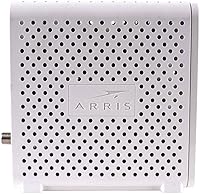
  • Color: The modem ships in a clean white finish that blends into most home or office network setups without drawing attention.
  • Compatible ISPs: Confirmed compatible providers include Xfinity, Cox, Spectrum, Suddenlink, and Mediacom; buyers on other ISPs should verify support before purchasing.
  • Warranty: ARRIS covers this modem with a one-year limited manufacturer warranty against defects in materials and workmanship.
  • Manufacturer: The SB6183 is manufactured by CommScope under the ARRIS SURFboard brand, a well-established name in consumer cable networking hardware.
  • Release Date: This modem was first made available in July 2014, giving it over a decade of real-world deployment data and community support resources.

Related Reviews
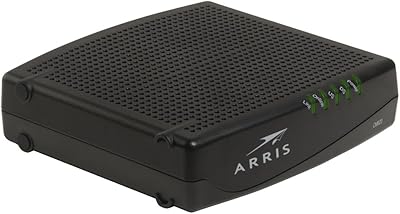
ARRIS CM820A DOCSIS 3.0 Cable Modem
74%
83%
Connection Stability
78%
Ease of Setup
74%
ISP Compatibility
81%
Long-Term Reliability
88%
Value for Money
More
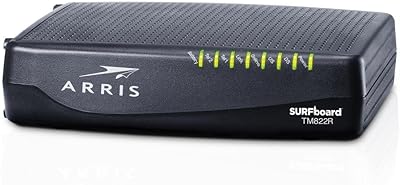
ARRIS TM822R DOCSIS 3.0 Cable Modem
75%
93%
Xfinity Compatibility
88%
Value for Money
74%
VoIP Phone Performance
81%
Internet Speed Performance
86%
Setup & Installation
More
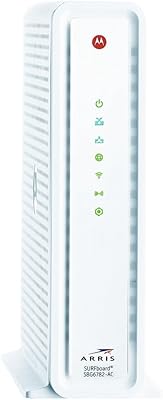
ARRIS SBG6782 DOCSIS 3.0 Cable Modem Router
78%
88%
Value for Money
91%
Setup & Installation
86%
Connection Stability
69%
Wi-Fi Performance
63%
Wi-Fi Range
More
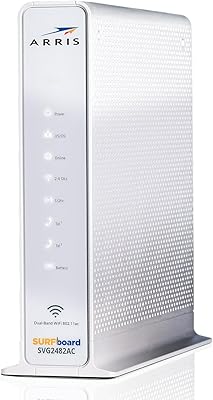
ARRIS SURFboard SVG2482AC Cable Modem Router Combo
74%
72%
ISP Compatibility
81%
Internet Performance
63%
Wi-Fi Coverage
79%
Setup Experience
76%
Build Quality
More
ARRIS TM822G DOCSIS 3.0 Telephony Modem
75%
88%
Value for Money
78%
Internet Performance
84%
Voice Call Quality
58%
Setup & Activation
86%
Long-Term Reliability
More
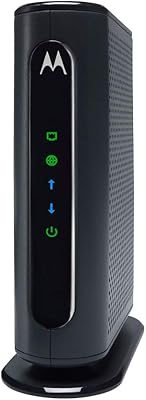
Motorola MB7420 DOCSIS 3.0 Cable Modem
87%
94%
Connection Stability
91%
Download Speed Performance
89%
Setup & Installation
92%
Provider Compatibility
85%
Build Quality
More
NETGEAR CM500 DOCSIS 3.0 Cable Modem
77%
91%
Value for Money
88%
Setup & Activation
84%
Connection Stability
63%
Refurbished Condition Consistency
72%
ISP Compatibility
More
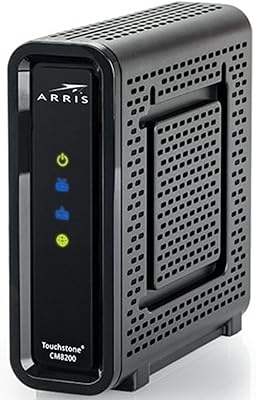
Arris CM8200A DOCSIS 3.1 Cable Modem
74%
88%
Internet Speed Performance
79%
Ease of Setup & Activation
74%
ISP Compatibility
83%
Build Quality & Durability
71%
Thermal Management
More
ARRIS Touchstone TM1602A 16x4 DOCSIS 3.0 Modem
82%
88%
Performance
91%
Ease of Setup
93%
ISP Compatibility
85%
Connection Stability
80%
Latency/Buffering
More
Linksys CM3024 DOCSIS 3.0 Cable Modem
75%
88%
Value for Money
84%
Setup & Installation
79%
Download Speed Performance
53%
Latency & Ping Stability
86%
ISP Compatibility
More
ARRIS SURFboard SBG8300 DOCSIS 3.1 Cable Modem Router Combo
84%
91%
Performance & Speed
88%
Wi-Fi Coverage & Stability
80%
Ease of Setup
84%
Compatibility with ISPs
92%
Value for Money
More

FAQ

Yes, the SB6183 is on Xfinity's approved modem list for cable internet plans. That said, it is only compatible with Xfinity's cable internet service — it will not work with their fiber (Xfinity XFi Complete) tiers. Always double-check the current approved device list on Xfinity's website before buying, as ISP approval lists do get updated.

No — the ARRIS SB6183 DOCSIS 3.0 Cable Modem is a pure modem with no wireless capability whatsoever. You will need a separate Wi-Fi router plugged into its Ethernet port to get wireless coverage in your home. Many buyers pair it with a standalone router they already own, which is actually a great setup for independent control over your network.

Activation is usually straightforward. You connect the modem to your coaxial cable outlet and power it on, then either call your ISP's activation line or visit their website to register the modem's MAC address — which is printed on the label on the bottom of the unit. Most ISPs complete the process within 15 to 30 minutes. If you run into trouble, your ISP's support line can walk you through it.

Technically it can get close, but it is not the right tool for that job. This modem is realistically rated for plans up to 400 Mbps, and anything above that starts pushing past its comfortable operating range. If your plan is at 500 Mbps or higher, you would be better served by a DOCSIS 3.1 modem like the ARRIS SB8200, which has the headroom to actually deliver those speeds.

It depends entirely on your internet plan. If you are on a plan up to 400 Mbps and just want a reliable, widely supported modem to avoid paying a rental fee, it still holds up well. But if you are on or planning to upgrade to a gigabit plan, the DOCSIS 3.0 standard will hold you back. For moderate-speed households, the value proposition remains solid — you just need to be honest about where cable internet plans are headed in your area.

Yes, you will need to notify your ISP so they can deactivate the rental equipment and register your new modem on their system. Most ISPs have an online swap process or a dedicated activation line. Once you return the rented modem, they will stop charging the monthly equipment fee. Doing this in the right order — register the new modem first, then return the old one — avoids any gap in service.

It does come up in reviews, but context matters. Some reported drops are tied to ISP firmware updates pushing to the modem remotely, which is outside the user's control. Others trace back to coaxial cable signal issues or splitters in the home rather than the modem itself. The hardware genuinely works well for most buyers over multiple years, but there is a minority of units that exhibit instability — and a small percentage appear to fail within the first year.

It is compatible with Spectrum's cable internet plans in the speed range this modem supports. Spectrum does not charge a modem rental fee the way some other ISPs do, so the financial case for buying your own is slightly different here — but the modem will still work if you prefer owning your equipment. Always verify compatibility with Spectrum's approved device list for your specific region before finalizing your purchase.

Not directly — the SB6183 has only one Ethernet port, so it connects to a single device. In practice, that device is almost always a Wi-Fi router, which then handles the distribution of the connection to all your phones, computers, and smart home devices. If you need to hardwire multiple devices, a router with multiple LAN ports is the way to handle that, not the modem itself.

ARRIS covers this modem for one year from the date of purchase under their limited warranty. If the unit fails due to a manufacturing defect within that window, you can contact ARRIS directly to arrange a replacement. Keep your purchase receipt, as you will likely need proof of purchase date. Outside of that one-year window, you are on your own — which is worth keeping in mind given that some users do report early failures.

Where to Buy