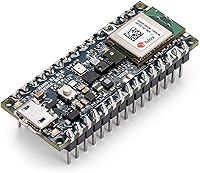
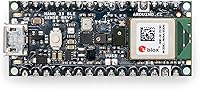
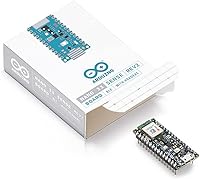
Arduino Nano 33 BLE Sense Rev2 (ABX00070)
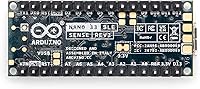
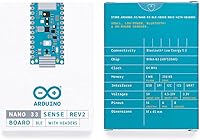
Overview
The Arduino Nano 33 BLE Sense Rev2 (ABX00070) is Arduino's most capable compact board for anyone serious about edge AI and IoT prototyping. The Rev2 isn't a minor refresh — it swaps several sensor ICs for more reliable alternatives and tightens the hardware design compared to the original. At its core sits Nordic's nRF52840 microcontroller, an ARM Cortex-M4 chip that handles lightweight on-device machine learning without much fuss. Worth noting upfront: this Arduino board runs at 3.3V logic, so older 5V shields will need level shifters. Pitched at hobbyists, students, and embedded ML experimenters, it occupies a practical mid-range position between budget beginner boards and pricier development kits.
Features & Benefits
What makes the Nano 33 BLE Sense Rev2 worth attention is its sensor density — a 9-axis IMU, PDM microphone, temperature, humidity, pressure, color, and ambient light sensors all live on the board itself, no extra modules required. Pair that with TensorFlow Lite support and you can train and deploy gesture or sound recognition models that run entirely on-device. The nRF52840's BLE 5.0 handles wireless communication reliably to phones and tablets. On the hardware side, 1 MB flash and 256 KB SRAM are comfortable for most TinyML workloads — just don't expect to run large models. The pre-soldered headers on this variant are a small but appreciated touch for anyone who prototypes on a breadboard regularly.
Best For
This AI microcontroller is a natural fit for first-time TinyML explorers — students building gesture-controlled interfaces, makers prototyping wearable sensor nodes, or educators running hands-on AI workshops where an all-in-one platform saves real setup time. The combination of multiple environmental sensors makes it equally useful for compact monitoring rigs that need to track temperature, humidity, and pressure simultaneously. If your goal is edge inference — running voice keyword detection or motion classification without any cloud dependency — this board handles it well within its memory constraints. It's less suited for projects requiring 5V compatibility or models with large parameter counts, so keep that in mind when scoping your design.
User Feedback
The Nano 33 BLE Sense Rev2 holds a 4.6-star average across around 74 ratings — encouraging, though not yet a large enough pool to draw firm conclusions. The recurring theme in positive reviews is that out-of-box reliability is strong: sensors work as expected, BLE pairs without fuss, and Arduino's documentation covers the most common use cases well. On the critical side, the 3.3V logic requirement trips up builders who mix older 5V components without catching the incompatibility in time. Several reviewers also note that TinyML deployment carries a steeper learning curve than the hardware implies — getting a trained model onto the board takes meaningful effort for anyone new to embedded machine learning workflows.
Pros
- Seven distinct onboard sensors eliminate the need to buy, wire, or debug separate breakout modules.
- The Nano 33 BLE Sense Rev2 runs TensorFlow Lite models fully on-device, with zero cloud dependency.
- BLE 5.0 connects reliably to Android and iOS devices for wireless data streaming and control.
- Pre-soldered headers mean this Arduino board drops straight onto a breadboard with no prep work.
- The Nano form factor is small enough to embed into wearables, badges, and compact enclosures.
- Active Arduino community means most common problems have a documented fix or forum thread.
- Rev2 sensor updates improve reliability over the original, making it a worthwhile upgrade for returning buyers.
- A single board covers gesture, audio, motion, and environmental sensing — ideal for multi-modal AI demos.
- Official Arduino IDE support keeps the toolchain familiar for anyone already in the ecosystem.
Cons
- 3.3V-only logic is incompatible with most 5V accessories without adding level shifters.
- 1 MB flash fills up quickly once a TensorFlow Lite model, BLE stack, and app code share the space.
- Deploying a trained ML model onto the board is significantly harder than getting started with basic sensors.
- No onboard storage means projects requiring local data logging must add external hardware.
- Running all sensors and BLE simultaneously draws enough current to strain small battery builds.
- The review base is still modest, so early feedback patterns may not reflect long-term reliability trends.
- Library version conflicts between TinyML toolchains and Arduino cores have tripped up multiple users.
- Microphone performance degrades noticeably in electrically noisy or acoustically challenging environments.
- IMU drift over time requires software compensation, which adds complexity to precision motion projects.
Ratings
The Arduino Nano 33 BLE Sense Rev2 (ABX00070) has been evaluated by our AI rating system after analyzing verified global user reviews, with automated filters applied to remove incentivized, bot-generated, and duplicate feedback. The scores below reflect a candid picture of where this AI microcontroller genuinely excels and where real builders have run into friction — no spin, no cherry-picking.
Sensor Integration
TinyML & Edge AI Capability
Bluetooth Low Energy (BLE) Performance
Form Factor & Build Quality
Ease of Getting Started
Processing Performance
Memory & Storage
Power Consumption
3.3V Compatibility
Documentation & Community Support
Value for Money
IMU Accuracy & Motion Sensing
Microphone & Audio Sensing
GPIO & Expansion Flexibility
Suitable for:
The Arduino Nano 33 BLE Sense Rev2 (ABX00070) is purpose-built for makers, students, and educators who want a single compact board that covers the full range of TinyML experimentation without assembling a pile of breakout modules. If you are prototyping a wearable device that needs to detect motion, track environmental conditions, and stay in wireless contact with a phone app — all within a thumbnail-sized footprint — this board is genuinely hard to beat at its price point. University courses and coding bootcamps focused on embedded AI will find it an ideal lab kit, since one board covers gesture recognition, voice keyword detection, and sensor fusion in a single package. Developers building proof-of-concept smart home sensors or low-power environmental monitors will also feel right at home, especially if they are already familiar with the Arduino ecosystem and want to add on-device intelligence without switching to a more complex platform. The pre-soldered headers make it breadboard-ready out of the box, which matters more than it sounds when you are iterating fast on early prototypes.
Not suitable for:
If your parts bin is full of 5V Arduino shields, older sensors, or classic servo controllers, the Arduino Nano 33 BLE Sense Rev2 (ABX00070) will create headaches — its 3.3V logic is non-negotiable, and connecting 5V peripherals without level shifters risks damaging the board. Builders who need to deploy large neural networks, run multiple concurrent RTOS tasks, or log substantial amounts of data locally will quickly feel constrained by the 1 MB flash and 256 KB SRAM, and should look at boards with external flash or more headroom. Complete beginners with no prior Arduino experience who expect a smooth, guided path into machine learning may find the jump from blinking an LED to deploying a TensorFlow Lite model unexpectedly steep — the hardware is ready, but the software workflow demands patience and tolerance for debugging. Similarly, anyone needing precision inertial sensing, broadcast-range wireless, or high-fidelity audio capture should look at more specialized hardware, as the onboard sensors are well-suited for prototyping but are not professional-grade instruments.
Specifications
- Microcontroller: Powered by the Nordic nRF52840, an ARM Cortex-M4 processor running at 64 MHz with a hardware floating-point unit.
- Flash Memory: Onboard flash storage totals 1 MB, shared between the bootloader, application firmware, and any stored ML model weights.
- SRAM: 256 KB of SRAM is available for runtime variables, sensor buffers, and inference working memory during operation.
- Operating Voltage: All GPIO pins operate at 3.3V logic; connecting 5V peripherals directly without level shifting risks damaging the board.
- Wireless: Bluetooth Low Energy 5.0 is provided natively by the nRF52840 SoC, supporting central, peripheral, and broadcaster roles.
- IMU: A 9-axis inertial measurement unit combines a 3-axis accelerometer, 3-axis gyroscope, and 3-axis magnetometer for full motion and orientation sensing.
- Microphone: An onboard PDM (Pulse Density Modulation) digital microphone enables audio capture for keyword spotting and basic sound classification tasks.
- Environmental Sensors: Dedicated sensors measure ambient temperature, relative humidity, and barometric pressure independently without requiring any external modules.
- Optical Sensors: An integrated optical sensor package detects ambient light intensity, RGB color values, and proximity distance in a single chip.
- Digital I/O Pins: Fourteen digital input/output pins are available, with several supporting PWM output for controlling servos, LEDs, and motor drivers.
- Analog Inputs: Eight analog input pins support ADC readings, useful for interfacing potentiometers, analog sensors, and variable voltage signals.
- Form Factor: The board follows the standard Arduino Nano footprint, measuring approximately 48.3 mm x 18 mm, making it compatible with Nano-sized carrier boards.
- Weight: The board weighs 0.317 ounces (approximately 9 g), keeping it light enough for most wearable and embedded enclosure applications.
- Headers: The ABX00070 variant ships with pre-soldered male headers, allowing direct insertion into a standard breadboard without any soldering required.
- TinyML Support: The board is fully compatible with TensorFlow Lite for Microcontrollers, enabling on-device inference for gesture, audio, and motion classification models.
- USB Interface: Programming and power delivery are handled via a Micro-USB connector, which also exposes a native USB serial port for debugging and serial output.
- Communication Buses: Hardware SPI, I2C, and UART interfaces are all exposed on the pin headers, supporting a wide range of standard peripheral modules and sensors.
- Clock Speed: The ARM Cortex-M4 core runs at 64 MHz, providing sufficient throughput for real-time sensor acquisition and lightweight ML inference simultaneously.
Related Reviews
Arduino Nano 33 IoT with Headers
Arduino Nano A000005
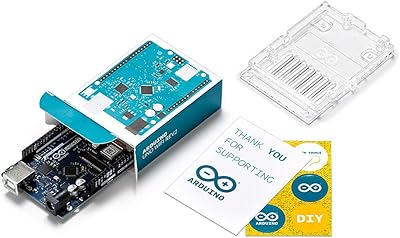
Arduino UNO WiFi REV2 Microcontroller Board
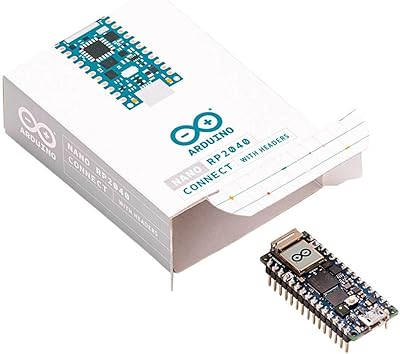
Arduino Nano RP2040 Connect with Headers
Fitbit Sense Smartwatch
FiiO Retro Nano Bluetooth DAC AMP
Bluesound Node Nano
Arduino Due A000062
JBL SoundGear Sense Open-Ear Wireless Earbuds