Arduino Micro A000093 Microcontroller Board
Overview
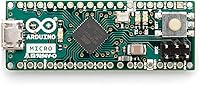
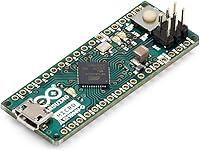
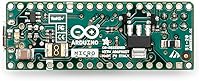
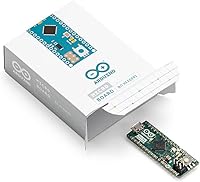
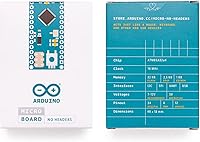
The Arduino Micro A000093 Microcontroller Board is a compact, headerless board built around Microchip's ATmega32U4 chip, and it occupies a clear niche in the Arduino lineup. Unlike the Uno or Mega, this compact microcontroller is purpose-built for projects where size and native USB communication matter more than raw pin count. Its breadboard-friendly footprint — roughly 1.8″ x 0.7″ — makes it a natural fit for wearables, embedded enclosures, and anything that needs to squeeze into a tight space. That said, this is not a beginner board. If you have never soldered a header or navigated the Arduino IDE with confidence, you will want to start somewhere else.
Features & Benefits
The ATmega32U4 runs at 16MHz with 32KB of flash — enough headroom for most embedded sketches, but tight enough to keep your code focused. What really sets the Arduino Micro apart from similarly sized boards is its native USB HID support: the chip handles USB communication directly, so you can program it to act as a keyboard, mouse, or gamepad without extra hardware. You also get 20 digital I/O pins, seven of which support PWM, plus 12 analog inputs — solid coverage for sensor-driven and actuator-heavy builds. And because headers arrive not pre-soldered, you have full control over how and where connections are made.
Best For
This headerless board shines brightest in custom USB peripheral builds — think macro keyboards, MIDI controllers, or accessibility input devices where the board communicates directly with a host computer without a driver. It also performs well in wearable electronics and compact robotics, where its tiny footprint lets you tuck it into enclosures that would reject anything larger. Developers already comfortable with the Arduino IDE who want to explore USB communication projects will find it a logical next step. It is not the right pick for beginners or anyone who does not own a soldering iron and know how to use it.
User Feedback
Rated 4.7 out of 5 stars across more than 650 reviews, this compact microcontroller has earned genuine respect from the maker community. USB HID reliability draws the most praise — buyers report keyboard and mouse emulation working right out of the box. The compact size earns consistent approval from wearable and robotics builders. On the downside, the absence of pre-soldered headers surprises some buyers, and a few users have struggled with ATmega32U4 bootloader behavior during initial setup. Memory constraints also come up occasionally for more complex sketches. For those who go in with realistic expectations, overall satisfaction is high.
Pros
- Native USB HID support lets the board emulate keyboards, mice, and gamepads with no extra hardware required.
- The 1.8″ x 0.7″ footprint is genuinely tiny, making it one of the most space-efficient official Arduino boards available.
- Breadboard-compatible layout means you can prototype quickly once headers are soldered into place.
- Full Arduino IDE compatibility gives you access to a massive library ecosystem and active community support.
- With 20 digital I/O pins, 7 PWM outputs, and 12 analog inputs, the board handles complex sensor and actuator setups well.
- USB HID functionality is consistently praised by buyers as reliable and easy to configure with standard Arduino libraries.
- The headerless design gives builders the freedom to solder exactly the connections their project requires, nothing more.
- At its price point, you are getting genuine Arduino hardware with the quality control that entails, not a clone.
- Wearable and robotics builders consistently report that the compact form factor performs exactly as expected in tight builds.
Cons
- Headers are not included or pre-soldered, so you must own and know how to use a soldering iron before the board is usable.
- 32KB of flash memory fills up quickly on sketches that import multiple libraries, which limits project complexity.
- The ATmega32U4 bootloader behaves differently from the Uno, and first-time setup can trip up even experienced Arduino users.
- 2.5KB of SRAM is tight for any project that buffers data, handles strings heavily, or uses memory-hungry libraries.
- No wireless connectivity of any kind — Wi-Fi or Bluetooth requires additional external modules and wiring.
- The lack of onboard voltage regulation detail in documentation can create confusion when powering from non-USB sources.
- Replacement or repair is harder than with larger boards because the compact layout leaves little room for rework.
- Users expecting a ready-to-use prototyping experience out of the box will be frustrated by the assembly required.
Ratings
The Arduino Micro A000093 Microcontroller Board earns its strong reputation across a highly engaged maker community, and the scores below reflect what real buyers actually experienced — not marketing claims. Our AI rating engine analyzed verified global reviews, actively filtering out incentivized, duplicate, and bot-generated submissions, then weighted feedback by verified purchase status and project context. Both the standout strengths and the friction points that frustrated some buyers are transparently represented here.
USB HID Performance
Form Factor & Size
Build Quality
Arduino IDE Compatibility
Memory & Processing Headroom
Pin Flexibility
Ease of Setup
Value for Money
Documentation & Community Support
Breadboard Compatibility
Headerless Design Utility
Reliability Over Time
Suitable for:
The Arduino Micro A000093 Microcontroller Board is the right pick for makers and developers who already know their way around the Arduino ecosystem and want a board purpose-built for USB communication and compact deployment. If you are building a custom macro keyboard, a DIY MIDI controller, or an accessibility input device that needs to talk to a computer as a native HID peripheral, this compact microcontroller handles that without any additional hardware or drivers. Wearable electronics designers and robotics hobbyists will appreciate just how small and light this board is — it fits into enclosures and form factors that most other development boards simply cannot. Engineers who plan to permanently embed a board into a finished product will also benefit from the headerless design, which keeps the vertical profile as low as possible. Essentially, if your project has a defined size constraint or requires direct USB device emulation, this is one of the most capable tools in its class at this scale.
Not suitable for:
The Arduino Micro A000093 Microcontroller Board is a poor match for anyone who is new to microcontrollers or electronics in general. Because headers are not pre-soldered, you need soldering skills before you can even get started — this is not a plug-and-play experience, and that catches more buyers off guard than it should. The ATmega32U4 also has its own bootloader quirks that differ subtly from other Arduino chips, and troubleshooting those issues assumes a level of familiarity that true beginners often lack. On the memory side, 32KB of flash and 2.5KB of SRAM will feel constraining if your sketch relies on heavy libraries or processes large data structures — this headerless board is not a replacement for an Arduino Mega or even an Uno when raw program space matters. Anyone shopping for a general-purpose prototyping board to learn Arduino basics should look at the Uno or Nano first and come back to this one once they have a specific USB-focused project in mind.
Specifications
- Microcontroller: Powered by the Microchip ATmega32U4, an 8-bit AVR microcontroller with native USB support built directly into the chip.
- Clock Speed: Operates at 16MHz, providing sufficient processing speed for the vast majority of embedded and USB HID applications.
- Flash Memory: Includes 32KB of flash memory, of which approximately 4KB is reserved for the bootloader, leaving around 28KB available for user sketches.
- SRAM: Provides 2.5KB of SRAM for runtime data storage, which is adequate for moderate sketches but can constrain projects using memory-heavy libraries.
- EEPROM: Offers 1KB of EEPROM for persistent non-volatile storage, useful for saving settings or calibration values between power cycles.
- Digital I/O Pins: Features 20 digital input/output pins, each capable of operating at 5V logic for interfacing with standard sensors, actuators, and modules.
- PWM Outputs: Seven of the 20 digital pins support PWM output, enabling analog-like control of motors, LEDs, and other variable-output components.
- Analog Inputs: Includes 12 analog input channels connected to the ATmega32U4's onboard ADC, supporting 10-bit resolution for sensor reading tasks.
- USB HID Support: Natively supports USB Human Interface Device protocols, allowing the board to emulate a keyboard, mouse, or gamepad without additional hardware or drivers.
- Board Dimensions: Measures 1.8″ x 0.7″ (approximately 48mm x 18mm), making it one of the smallest form factors in the official Arduino lineup.
- Weight: Weighs just 0.352 ounces (approximately 10 grams), contributing to its suitability for lightweight wearable and portable applications.
- Headers: Ships without pre-soldered headers, giving builders the flexibility to attach only the connections their specific project requires.
- Form Factor: Designed to be breadboard-compatible, with pin spacing that fits standard 0.1″ pitch breadboards once appropriate headers are soldered on.
- IDE Compatibility: Fully supported by the Arduino IDE across Windows, macOS, and Linux, with no additional board manager installation required for basic use.
- Operating Voltage: Runs at 5V operating voltage with an input voltage range of 7V to 12V when powered via the VIN pin rather than USB.
- USB Connector: Uses a Micro-USB connector for both programming and power delivery, which is the same port used for HID device emulation during operation.
- Manufacturer: Designed and manufactured by Arduino (in partnership with Microchip Technology), ensuring adherence to official hardware quality and compatibility standards.
- Model Number: Officially designated as model A000093, which distinguishes this headerless variant from any header-equipped versions of the Micro board.
Related Reviews
Arduino MKR Zero ABX00012
Boogie Board Scribble n' Play Drawing Board
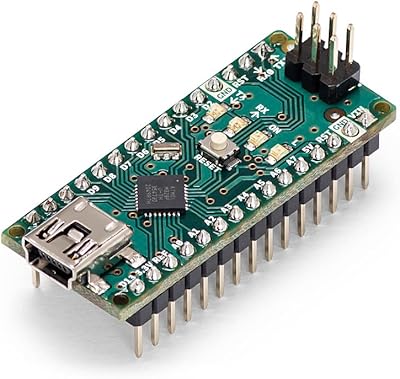
Arduino Nano A000005
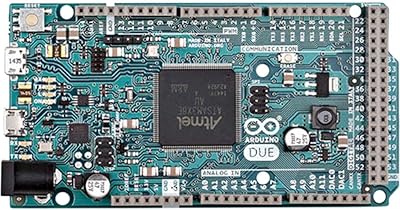
Arduino Due A000062
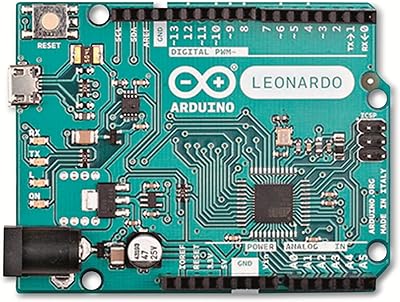
Arduino Leonardo A000057
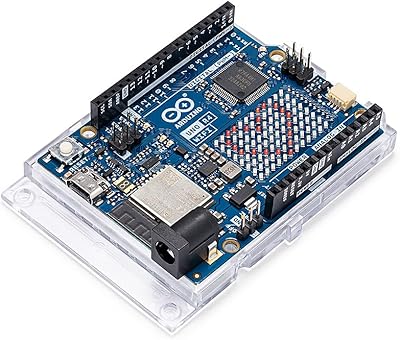
Arduino UNO R4 WiFi
Arduino Mega 2560 REV3
Arduino Student Kit AKX00025
SVS 3000 Micro Sealed Subwoofer