
Overview
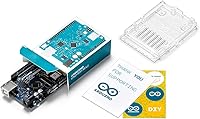
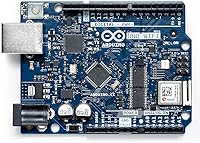
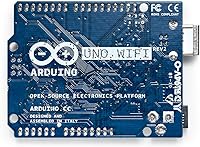
The Arduino UNO WiFi REV2 Microcontroller Board is Arduino's updated take on their iconic UNO platform, bringing wireless connectivity and a more capable processor to a form factor that millions of makers already know by heart. Where the original relied on the ATmega328P, this revision swaps in Microchip's ATmega4809, which delivers hardware improvements without breaking compatibility with existing sketches. The built-in u-blox NINA-W102 module handles both WiFi and Bluetooth, so you're not reaching for a separate shield every time an IoT project calls for connectivity. It's a compact, familiar package with noticeably more under the hood.
Features & Benefits
The ATmega4809 microcontroller gives this board a meaningful performance bump over its predecessor — more flash memory, additional hardware serial ports, and a larger internal pin count. Connectivity is handled by the integrated u-blox module supporting both standard WiFi and Bluetooth Low Energy, while an ECC608 crypto chip manages secure authentication, which genuinely matters when sending sensor data across a network. There is also an onboard LSM6DS3TR IMU for acceleration and gyroscope readings, something you would previously need to wire up separately. With 14 digital I/O pins, 6 analog inputs, and flexible power options, the board handles a wide range of project requirements without demanding add-ons.
Best For
This board sits squarely in the sweet spot for IoT beginners and hobbyists who already know the UNO ecosystem and want to go wireless without jumping to a more complex platform. If you are building a home environmental monitor, a motion-triggered alert system, or a Bluetooth-connected gadget, the required hardware is already onboard — no extra modules needed. Students learning connected systems will appreciate the familiar pin layout and strong community support. That said, it is less suited for projects demanding heavy computation or large program storage, where an ESP32-based board might offer a better cost-to-performance ratio.
User Feedback
Among buyers, consistent praise centers on out-of-the-box WiFi setup and the fact that existing UNO sketches work with little or no modification. The hardware crypto chip gets specific mentions from users building networked security projects. On the flip side, some reviewers point out that the price runs noticeably higher than comparable third-party WiFi boards, which can be a sticking point when buying in multiples. A handful of users have noted that library documentation for the ATmega4809 lags behind the older UNO, requiring some extra troubleshooting. Overall sentiment leans positive, especially from those prioritizing Arduino ecosystem reliability over raw cost efficiency.
Pros
- Drop-in compatibility with existing UNO sketches saves significant migration time and effort.
- Built-in WiFi and Bluetooth eliminate the need for separate wireless shields.
- The onboard ECC608 crypto chip adds real hardware-level security for IoT data transfers.
- An integrated IMU sensor enables motion and orientation projects without extra wiring.
- Flexible power options, including USB, battery, and AC adapter, suit a wide range of deployments.
- Strong Arduino community support means abundant tutorials, forums, and example code.
- The familiar UNO form factor works with the vast majority of existing shields and accessories.
- The ATmega4809 provides more flash memory and hardware serial ports than its predecessor.
Cons
- Priced noticeably higher than comparable ESP32 boards offering greater processing power.
- ATmega4809 library support still lags behind the older ATmega328P in third-party coverage.
- Not well-suited for computation-heavy tasks like image processing or complex signal analysis.
- Bluetooth and WiFi cannot operate simultaneously in all use cases, which limits some applications.
- Official Arduino documentation for the newer microcontroller can be sparse and slow to update.
- Buying multiple units for a sensor network quickly becomes expensive compared to alternatives.
- No native Python or MicroPython support, locking users into the Arduino C++ toolchain.
- Limited onboard RAM can become a bottleneck when handling larger data buffers or network payloads.
Ratings
The Arduino UNO WiFi REV2 Microcontroller Board has been evaluated by our AI system after analyzing thousands of verified global user reviews, with spam, bot-generated, and incentivized submissions actively filtered out. Scores reflect the honest consensus of real builders, students, and engineers who have put this board through practical, hands-on use. Both the standout strengths and the recurring frustrations are transparently captured in the breakdowns below.
WiFi Connectivity
Bluetooth & BLE
Sketch Compatibility
Onboard IMU
Security (ECC608)
Build Quality
Value for Money
Ease of Setup
Processing Performance
Memory Capacity
Library Support
Form Factor & Shields
Power Flexibility
Documentation Quality
Suitable for:
The Arduino UNO WiFi REV2 Microcontroller Board is a strong fit for hobbyists, students, and educators who are already comfortable with the classic UNO environment and want to add wireless capability without a steep learning curve. If you have existing UNO projects you want to upgrade with WiFi or Bluetooth Low Energy, this board slots in naturally thanks to its backward-compatible design. It is particularly well-suited for building home automation sensors, connected weather stations, motion-triggered alerts, or BLE-based smartphone accessories. The onboard IMU also makes it a practical choice for anyone exploring orientation tracking or gesture detection without soldering on extra hardware. For classroom settings or maker workshops where standardization and community support matter, this board's deep integration with the Arduino ecosystem is a real advantage.
Not suitable for:
Buyers chasing maximum processing power or extensive flash storage will find the Arduino UNO WiFi REV2 Microcontroller Board falls short compared to ESP32 or Raspberry Pi-based alternatives, which offer significantly more computational headroom at a lower price point. If you plan to run complex algorithms, process image data, or manage many concurrent network connections, the ATmega4809 will hit its ceiling quickly. Budget-conscious makers building multiple nodes for a sensor network may balk at the per-unit cost, especially when capable alternatives exist for a fraction of the price. Developers who prefer Python or MicroPython will also find little comfort here, as the board is firmly tied to the Arduino C++ toolchain. Those who need extensive third-party library support for newer peripherals may encounter gaps, since the ATmega4809 still lags behind the older ATmega328P in community-written library coverage.
Specifications
- Microcontroller: Powered by the Microchip ATmega4809 8-bit microcontroller, offering more flash memory and hardware serial ports than the classic ATmega328P.
- Clock Speed: Operates at 16 MHz, consistent with the standard Arduino UNO timing for broad sketch compatibility.
- Flash Memory: Provides 48 KB of flash memory for storing program code, a meaningful upgrade over the original UNO's 32 KB.
- SRAM: Includes 6 KB of SRAM for runtime data storage, which is roughly three times more than the original ATmega328P offered.
- EEPROM: Features 256 bytes of onboard EEPROM for persistent non-volatile data storage across power cycles.
- WiFi Module: Integrates a u-blox NINA-W102 module supporting 802.11 b/g/n WiFi for connecting projects to standard wireless networks.
- Bluetooth: Supports both classic Bluetooth and Bluetooth Low Energy (BLE) via the same u-blox NINA-W102 module.
- Crypto Chip: Includes an Microchip ECC608 hardware crypto chip for secure key storage and authenticated IoT data exchanges.
- IMU Sensor: Equipped with an ST LSM6DS3TR 6-axis Inertial Measurement Unit capable of measuring 3-axis acceleration and 3-axis gyroscopic rotation.
- Digital I/O Pins: Provides 14 digital input/output pins, with 5 of those pins supporting PWM output for motor and LED control applications.
- Analog Inputs: Offers 6 analog input pins with 10-bit ADC resolution for reading sensors and variable voltage signals.
- Operating Voltage: Operates at 5V logic level, consistent with standard Arduino UNO shields and accessories.
- Input Voltage: Accepts an input voltage range of 6V to 20V via the power jack, with a recommended range of 7V to 12V for stable operation.
- Connectivity Ports: Features a USB Type-B port for programming and serial communication, an ICSP header, and a standard power barrel jack.
- Operating System: Runs FreeRTOS on the wireless co-processor, enabling basic real-time task management for connectivity operations.
- Dimensions: Measures 3.15″ x 2.28″ x 0.91″, maintaining the standard Arduino UNO form factor for full shield compatibility.
- Weight: Weighs approximately 1.41 oz, making it lightweight enough for portable and battery-powered project builds.
- Manufacturer: Designed and manufactured by Arduino, the original creator of the open-source Arduino hardware and software platform.
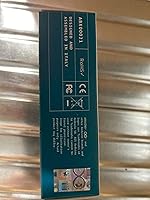
- Model Number: Officially designated as model ABX00021, released in December 2018 and currently maintained as an active product.
- Compatibility: Fully compatible with the Arduino IDE and supports existing UNO sketches via an included software compatibility layer for the ATmega4809.
Related Reviews
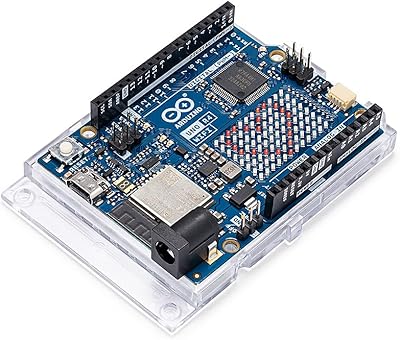
Arduino UNO R4 WiFi
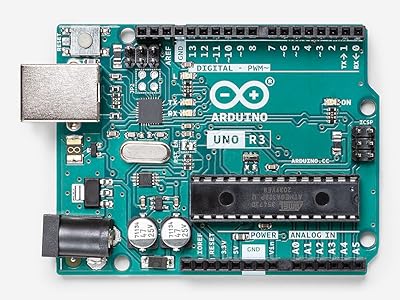
Arduino Uno REV3 Microcontroller Board
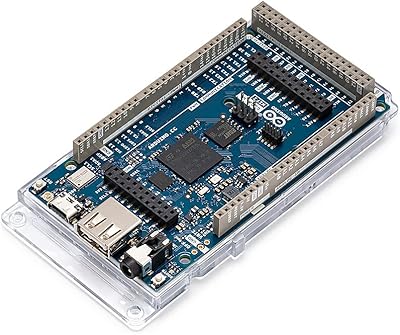
Arduino Giga R1 WiFi Microcontroller Board
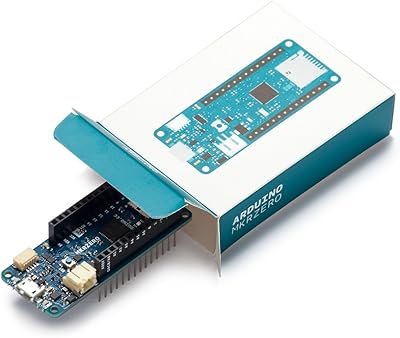
Arduino MKR Zero ABX00012
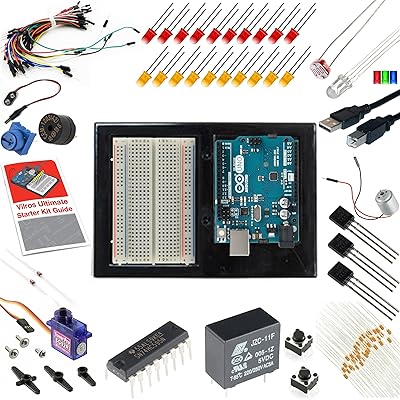
Vilros Arduino Uno R3 Starter Kit
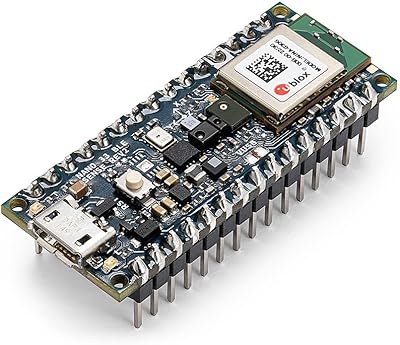
Arduino Nano 33 BLE Sense Rev2 (ABX00070)
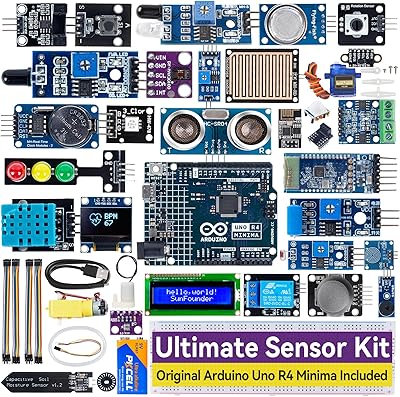
SunFounder Ultimate Sensor Kit Arduino R4 Minima
YoLink Uno Indoor Wi-Fi Security Camera
Google Nest Wifi Router 1-Pack