Arduino MKR Zero ABX00012




Overview
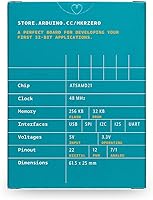
The Arduino MKR Zero ABX00012 sits in a sweet spot within Arduino's lineup — compact enough for embedded builds, yet capable enough to handle projects that would overwhelm an Uno or Nano. The MKR family was designed with IoT and real-world deployment in mind, and this board reflects that clearly. At its core is the SAMD21 Cortex-M0+, a 32-bit ARM processor running at 48 MHz — a meaningful jump from the 8-bit AVR chips found in older Arduino boards. One thing to keep in mind early on: this development board runs at 3.3V logic, which matters if you're used to 5V components. It's best suited for hobbyists, students, and audio or IoT builders who already have some Arduino experience under their belt.
Features & Benefits
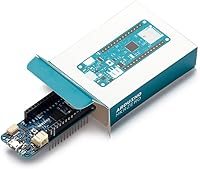
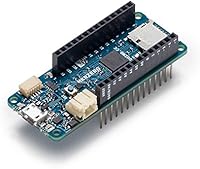
The most immediately useful addition on this Arduino board is the built-in SD card slot. No extra shield, no awkward wiring — just slot in a card and start logging data or playing back WAV files. For MP3 playback you'll need a library, but WAV works natively, and that alone opens up a lot of project possibilities. The I2S audio interface pairs well with the SD slot for clean sound output. Beyond audio, 22 digital I/O pins and 12 PWM outputs give you plenty of room to grow a complex circuit. The LiPo battery connector means you can cut the USB cable and build something truly portable without any hardware modification whatsoever.
Best For
The MKR Zero finds its best audience among makers who know their way around the Arduino IDE but are ready to push past what 8-bit boards can do. If you're building a portable audio player, a field data logger, or a compact IoT sensor node, this development board is a strong fit. Students stepping into 32-bit ARM development will appreciate the familiar Arduino environment paired with meaningfully more processing power. It also makes sense for anyone already working with MKR-compatible shields, since the ecosystem carries over directly. If you're a complete beginner still learning the basics, an Uno is a better starting point — this board rewards those with prior experience.
User Feedback
With a 4.6-star rating across a focused, technically capable user base, the overall reception for this Arduino board is strongly positive. Buyers consistently call out the SD card integration as a time-saver — fewer components, cleaner builds. The Arduino IDE support is reliable, and the available example sketches and libraries are well-maintained, which matters when you're trying to move quickly on a project. The criticism that comes up most often involves the 3.3V logic level: users migrating from 5V boards occasionally run into compatibility issues with sensors and modules. It's a real consideration, not a dealbreaker — but worth researching before you start purchasing peripherals.
Pros
- Built-in SD card slot eliminates the need for an extra shield, keeping builds clean and wiring minimal.
- The 32-bit ARM Cortex-M0+ at 48 MHz handles tasks that would overwhelm older 8-bit AVR boards.
- LiPo connector makes truly portable, battery-powered projects possible without any extra circuitry.
- Native I2S audio interface pairs naturally with the SD slot for capable WAV-based audio playback.
- Compact MKR footprint fits a standard breadboard cleanly, with both pin rows remaining accessible.
- Stable Arduino IDE support and well-maintained SAMD core libraries reduce toolchain headaches significantly.
- MKR shield compatibility lets existing Arduino ecosystem users expand connectivity without custom wiring.
- 22 digital I/O pins and 12 PWM outputs provide ample room for complex, multi-component project builds.
- Official Arduino manufacturing means consistent build quality with no surprise hardware defects.
- FreeRTOS compatibility opens basic multi-tasking possibilities well beyond what classic AVR boards allow.
Cons
- The 3.3V logic level causes real compatibility friction for builders with existing 5V sensors or shields.
- Only 32 KB of SRAM limits how ambitious your code can realistically get before memory becomes a bottleneck.
- MP3 playback is not native — it requires a third-party library that takes time to source and configure correctly.
- Documentation on advanced topics like DMA audio streaming and low-power optimization is scattered and thin.
- No onboard battery protection circuit means you need a LiPo with its own protection or you add one yourself.
- Some batches ship without pre-soldered pin headers, adding an extra step before the board is ready to use.
- The MKR shield ecosystem is notably narrower than the classic UNO form factor, with fewer third-party options.
- Driver installation on Windows can be inconsistent, particularly on older operating system versions.
- This development board carries a price premium over third-party SAMD21 alternatives with similar raw specs.
- Absolute beginners may find the learning curve steeper than expected with limited in-box documentation.
Ratings
The Arduino MKR Zero ABX00012 earns its strong reputation among a technically discerning crowd — our AI has analyzed verified buyer reviews from around the world, actively filtering out incentivized and bot-generated feedback, to surface what real makers actually experience. The scores below reflect both the genuine strengths that keep users coming back to this development board and the friction points that occasionally trip up even experienced builders.
Processing Performance
Built-in SD Card Integration
Audio Capability
Portability & Power Options
3.3V Logic Compatibility
GPIO & I/O Flexibility
Form Factor & Build Quality
Arduino IDE & Software Support
Documentation & Learning Resources
Value for Money
MKR Shield Ecosystem
Breadboard Prototyping Experience
FreeRTOS Compatibility
Out-of-Box Experience
Suitable for:
The Arduino MKR Zero ABX00012 is a strong pick for makers and students who have already worked through the basics on an Uno or Nano and are ready to tackle more demanding projects. If you want to build a portable audio player, a field data logger, or a compact IoT sensor node and you want to do it cleanly without stacking extra shields, this development board has the hardware you need already onboard. The combination of a 32-bit ARM processor, a built-in SD card slot, and a LiPo connector covers the core requirements for a surprising range of mid-complexity embedded builds. Educators who want to introduce students to 32-bit ARM architecture without abandoning the familiar Arduino IDE will find the transition well-supported. Anyone already working within the MKR ecosystem — with shields or existing MKR-based code — will slot this board in without friction.
Not suitable for:
The Arduino MKR Zero ABX00012 is not the right board for absolute beginners who are still learning what a digital pin or a PWM signal actually does. The 3.3V logic architecture is a practical barrier for anyone who has built up a collection of 5V sensors, shields, or actuators — you will either need to add level shifters or replace those components, and neither option is trivial. If your project involves heavy computation, machine learning inference, or managing large amounts of concurrent data, the 32 KB of SRAM will run out faster than you expect. Users hoping for out-of-the-box MP3 playback will need to manage their expectations — WAV works natively, but MP3 requires sourcing and configuring a third-party library. And if you are comparing this against cheaper third-party SAMD21 boards, you are partly paying for the official Arduino brand, ecosystem trust, and IDE polish — value that matters to some buyers and not at all to others.
Specifications
- Microcontroller: Powered by the Microchip SAMD21 Cortex-M0+ 32-bit ARM processor, a significant architectural step up from the 8-bit AVR chips used in classic Arduino boards.
- CPU Speed: The processor runs at 48 MHz, providing ample headroom for real-time sensor processing, audio handling, and responsive IoT applications.
- Flash Memory: 256 KB of onboard flash storage holds your compiled program code, supporting moderately complex sketches and multi-library projects.
- SRAM: 32 KB of SRAM is available for runtime variables, buffers, and stack allocation during program execution.
- Operating Voltage: The board operates at 3.3V logic, with built-in protection circuitry — not compatible with 5V logic signals without a level shifter.
- Digital I/O Pins: 22 digital input/output pins are available, offering broad flexibility for connecting sensors, actuators, displays, and communication modules.
- PWM Outputs: 12 of the digital pins support PWM output, enabling smooth control of servos, motors, LED brightness, and audio signal generation.
- Analog Inputs: 7 analog input pins are present, allowing connection of analog sensors such as potentiometers, microphones, and light-dependent resistors.
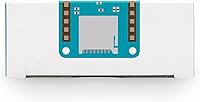
- SD Card Slot: An onboard microSD card slot is integrated directly into the board, supporting FAT16 and FAT32 formatted cards for audio playback and data logging.
- Audio Interface: A hardware I2S interface enables direct connection to external I2S DACs and audio amplifier modules for clean digital audio output.
- Battery Connector: A JST connector for single-cell 3.7V LiPo batteries is included, with onboard charging circuitry when powered via USB simultaneously.
- USB Interface: Native USB support allows the board to enumerate as a USB device or host, enabling HID keyboard/mouse emulation and USB serial communication.
- Dimensions: The board measures 3.15 x 2.28 x 0.91 inches (approximately 61.5 x 25 mm in the MKR footprint), fitting cleanly on a standard breadboard.
- Weight: The board weighs 0.635 ounces (approximately 18 grams), making it suitable for weight-sensitive portable and wearable project builds.
- Form Factor: The MKR form factor places all pins along two parallel rows, keeping breadboard lanes free on both sides for component connections.
- Operating System: The SAMD21 architecture is compatible with FreeRTOS, enabling basic cooperative and preemptive multi-tasking within the constraints of available SRAM.
- Power Input: The board accepts power via a Micro-USB connector (5V input) or a connected LiPo battery, with an onboard voltage regulator handling the conversion to 3.3V.
- Manufacturer: Designed and manufactured by Arduino (officially branded hardware), ensuring consistent production quality and long-term IDE and library support.
- Communication Buses: The board exposes UART, SPI, and I2C interfaces, covering the standard communication protocols used by the vast majority of sensors and peripheral modules.
- Release Date: The MKR Zero was first made available in August 2018 and remains an active, non-discontinued product in the official Arduino catalog.
Related Reviews
Arduino Nano A000005
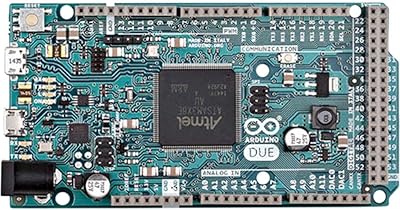
Arduino Due A000062
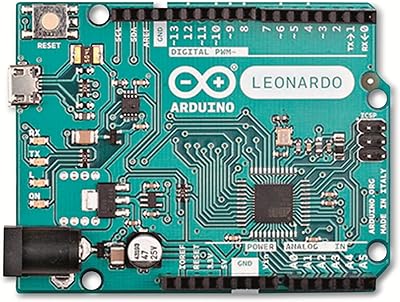
Arduino Leonardo A000057
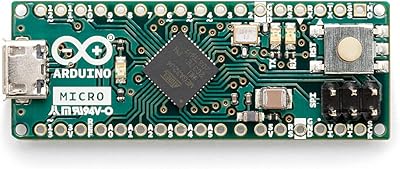
Arduino Micro A000093 Microcontroller Board
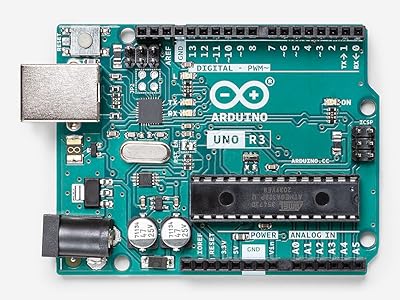
Arduino Uno REV3 Microcontroller Board
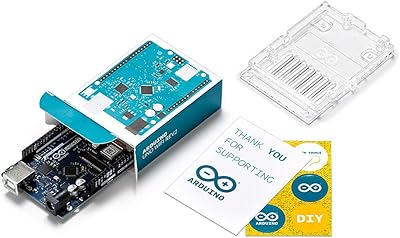
Arduino UNO WiFi REV2 Microcontroller Board
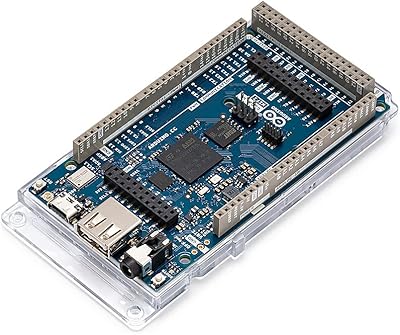
Arduino Giga R1 WiFi Microcontroller Board
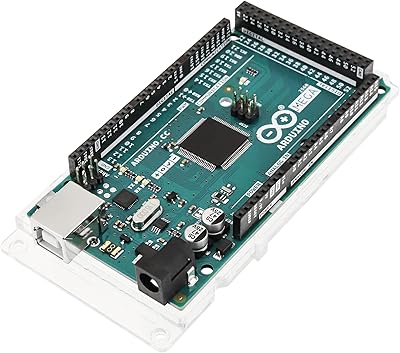
Arduino Mega 2560 REV3
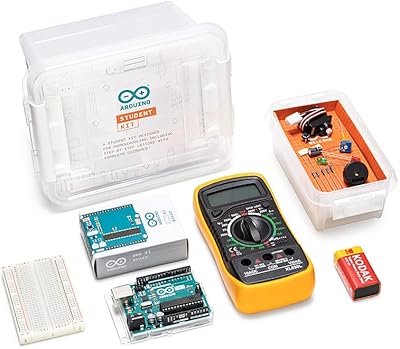
Arduino Student Kit AKX00025