
Overview
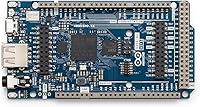
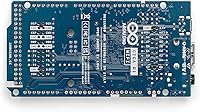
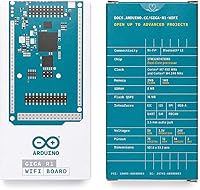
The Arduino Giga R1 WiFi Microcontroller Board represents Arduino's most ambitious step yet — a board designed to bridge the gap between rapid prototyping and production-grade hardware. Where most Arduino boards offer a single core and modest clock speeds, this high-performance Arduino board runs a dual-core STM32H747XI with both processors operating simultaneously, which fundamentally changes how you approach complex embedded projects. It targets intermediate-to-advanced makers, engineers, and IoT developers who have outgrown the Uno or Nano and need real processing headroom. Not a beginner board by any stretch, it does retain Arduino IDE familiarity and shield compatibility, making the learning curve shorter than competing platforms at this performance tier.
Features & Benefits
The Giga R1 WiFi's processing setup is its defining characteristic: the Cortex-M7 runs at 480 MHz while the Cortex-M4 handles background tasks at 240 MHz, letting you run sensor fusion and communication protocols without one interfering with the other. Memory is generous — 16MB of Flash gives you room for substantial codebases or TinyML models, while 1MB of SRAM handles fast in-memory operations. Wireless connectivity comes via a Murata module covering Wi-Fi and Bluetooth 5.0, solid for IoT deployments that need stable, low-latency links. A USB-C port speeds up firmware uploads considerably, and onboard camera and display connectors open up vision-based or HMI-heavy projects without requiring additional breakout boards.
Best For
This dual-core microcontroller is most at home in projects that need to do several demanding things at once. Edge AI and TinyML workloads benefit most — you can run inference locally on sensor data without routing everything through a cloud API, which matters in latency-sensitive or bandwidth-constrained environments. Robotics builders will appreciate the ability to run motor control loops on one core while handling wireless telemetry on the other. It is also a strong choice for IoT prototypes that need to scale, since the hardware is robust enough to survive a transition from bench to small-scale production. If you already work in the Arduino ecosystem, the jump from an Uno or Mega is far less painful than switching platforms entirely.
User Feedback
With a 4.6 out of 5 rating across 162 reviews, the Giga R1 WiFi earns its reputation among experienced makers. The most common praise centers on processing headroom — users report that even complex sketches involving multiple sensor streams run without the stuttering they experienced on less capable boards. Existing Arduino libraries work reliably, which removes a major friction point when migrating existing projects. The honest criticisms are worth noting: core-to-core communication via RPC has a real learning curve, and a handful of reviewers mention the board generates noticeable heat under sustained heavy loads. Neither issue is a dealbreaker for an experienced developer, but both deserve consideration if you plan to run it at full capacity inside a sealed enclosure.
Pros
- The dual-core processor handles parallel workloads that would stall or bottleneck any standard Arduino board.
- 16MB of Flash gives you enough room for complex codebases, ML model weights, and large data buffers.
- Bluetooth 5.0 and Wi-Fi connectivity are reliable and well-suited to production IoT deployments, not just bench testing.
- Onboard camera and display connectors reduce the need for additional breakout hardware in vision or HMI projects.
- Full compatibility with existing Arduino libraries means most of your existing code migrates without painful rewrites.
- USB-C makes firmware uploads noticeably faster compared to older micro-USB boards.
- Shield compatibility with MKR and standard Arduino shields preserves a large existing hardware ecosystem.
- A 4.6 out of 5 rating from real buyers signals strong satisfaction among the experienced developers this board targets.
- The Arduino IDE and Arduino Cloud support lower the barrier compared to fully custom embedded toolchains.
- At its performance tier, the Giga R1 WiFi competes well against alternatives that require steeper platform learning curves.
Cons
- Core-to-core communication via RPC has a meaningful learning curve that documentation does not always make easy.
- The board generates noticeable heat under sustained heavy loads, which requires thermal planning for enclosed builds.
- The price point is hard to justify for projects that do not actually need dual-core processing power.
- TinyML capabilities, while real, are constrained compared to platforms running full embedded Linux with ML frameworks.
- Community resources specifically covering advanced dual-core workflows on this board are still relatively limited.
- No onboard display or camera included — the connectors are there, but peripherals add cost and complexity separately.
- 3.3V operating voltage requires level-shifting care when integrating legacy 5V sensors or modules.
- Occasional reports of inconsistent behavior when pushing both cores hard simultaneously suggest thermal throttling may be a factor.
Ratings
The Arduino Giga R1 WiFi Microcontroller Board earns its reputation as one of the most capable boards in the Arduino lineup, and these scores reflect that — but also its real limitations. Our AI analyzed verified buyer reviews from global sources, actively filtering out incentivized, bot-generated, and unverified feedback to surface what experienced makers and engineers actually think. Both the genuine strengths and the friction points are reflected here without sugarcoating.
Processing Performance
Wireless Reliability
Memory & Storage
Ease of Setup
Build Quality
I/O Flexibility
TinyML & Edge AI
Value for Money
Documentation & Support
Thermal Management
Ecosystem Compatibility
Wireless Setup Experience
Form Factor
Suitable for:
The Arduino Giga R1 WiFi Microcontroller Board is the right tool for engineers, advanced hobbyists, and professional makers who have hit the ceiling of conventional Arduino hardware and need substantially more processing power without abandoning a familiar development environment. If you are building edge AI or TinyML applications that require local inference — think anomaly detection on industrial sensors, gesture recognition, or predictive maintenance — the dual-core architecture gives you the compute margin to actually run those models without offloading everything to the cloud. Robotics developers who need to manage real-time motor control loops alongside wireless telemetry will find the ability to split workloads across two cores genuinely useful rather than just a spec sheet talking point. It also suits IoT prototype builders who want a platform capable of surviving the journey from bench testing to small-scale deployment, since the hardware is robust and the wireless stack is production-worthy. Anyone already comfortable with the Arduino IDE and ecosystem will find the transition far less painful than jumping to an entirely different platform.
Not suitable for:
The Arduino Giga R1 WiFi Microcontroller Board is not the right starting point for beginners or casual hobbyists who are still learning embedded programming fundamentals. The dual-core setup is genuinely powerful, but unlocking that power requires understanding inter-core communication via RPC, which adds real complexity that can frustrate anyone without a solid programming foundation. If your project is a simple sensor readout, a basic LED controller, or anything a standard Uno handles comfortably, spending this much on this board is overkill and the extra capability will go entirely unused. Budget-conscious buyers should also weigh this carefully — there are capable single-core boards at a fraction of the price that handle most intermediate projects without issue. Finally, if you need a full Linux environment with package management and high-level scripting, this board runs RTOS or lightweight embedded Linux at best; for that use case, a Raspberry Pi or similar single-board computer is a more practical choice.
Specifications
- Primary Core: The main processor is an ARM Cortex-M7 running at 480 MHz, handling compute-intensive tasks such as signal processing and ML inference.
- Secondary Core: A second ARM Cortex-M4 core runs at 240 MHz in parallel, dedicated to background tasks like communication handling or peripheral management.
- Processor Chip: Both cores are integrated into a single STMicroelectronics STM32H747XI microcontroller package.
- Flash Memory: The board provides 16MB of onboard Flash storage, sufficient for large application binaries, TinyML model weights, and data logging.
- SRAM: Total SRAM is 1MB, split as 512KB accessible per core, enabling fast in-memory data operations without Flash read bottlenecks.
- Wireless: Wireless connectivity is handled by a Murata module supporting Wi-Fi 802.11 b/g/n and Bluetooth 5.0 for stable IoT and device-to-device communication.
- USB Interface: A high-speed USB-C port handles both firmware uploads and power delivery, replacing the older micro-USB standard found on previous Arduino boards.
- I/O Interfaces: The board exposes digital and analog I/O pins alongside PWM, SPI, I2C, and UART interfaces for broad peripheral and sensor integration.
- Shield Support: Both Arduino MKR-format and standard Arduino shields are physically and electrically compatible, preserving access to a wide existing hardware ecosystem.
- Camera Connector: An onboard camera connector allows direct integration of compatible camera modules for machine vision and image capture applications.
- Display Connector: A dedicated onboard display connector supports external screens for HMI or data visualization without requiring additional driver boards.
- Operating Voltage: Logic and I/O operate at 3.3V, which requires level-shifting precautions when connecting legacy 5V sensors or modules.
- Dimensions: The board measures 3.54 x 1.18 inches (approximately 90 x 30mm), keeping it compact relative to its feature set.
- Weight: The board weighs 0.317 ounces (approximately 9 grams), making it light enough for weight-sensitive embedded or wearable installations.
- IDE Support: Programming is supported natively through the Arduino IDE and Arduino Cloud, with no requirement for third-party toolchains to get started.
- Operating System: The board can run RTOS-based firmware or a lightweight embedded Linux distribution depending on the application requirements.
- Market Rank: As of available data, the board holds a top-100 ranking in the Single Board Computers category on Amazon, reflecting strong adoption among experienced users.
Related Reviews
Arduino UNO R4 WiFi
Arduino UNO WiFi REV2 Microcontroller Board
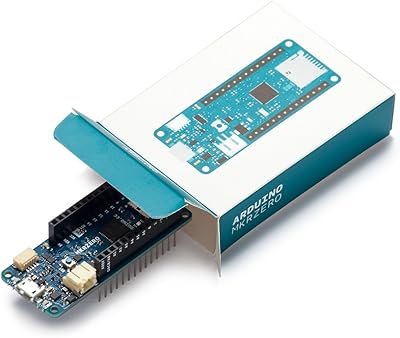
Arduino MKR Zero ABX00012

Z-Edge R1 WiFi Dual Dash Cam
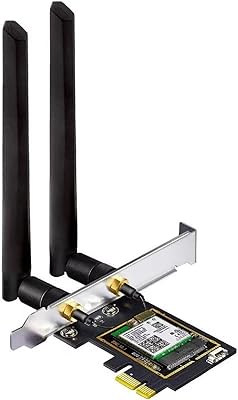
OKN AX210 WiFi 6E PCIe Card
Boogie Board Scribble n' Play Drawing Board
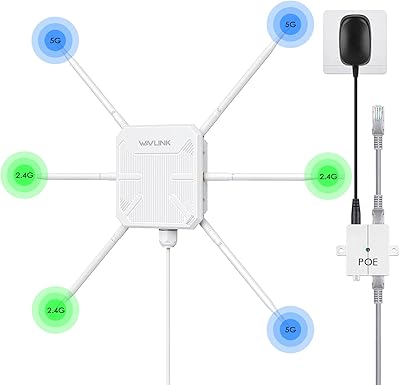
WAVLINK WN588HX3 WiFi 6 Outdoor Access Point
Google Nest Wifi Router 1-Pack
Cudy WE9300 WiFi 7 PCIe Card