Overview

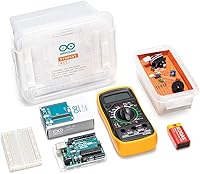
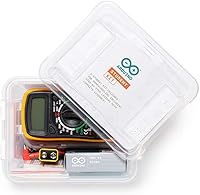
The Arduino Student Kit AKX00025 is Arduino's own take on a structured beginner kit — not a generic bundle from a third-party reseller, but an official Arduino package built around a real curriculum. Inside the compact box you get an Arduino Uno board, a breadboard, a multimeter, a servo motor, temperature and light sensors, and enough passive components to keep a student busy for weeks. What separates it from cheaper alternatives is the online learning platform that comes bundled in — video tutorials, step-by-step lessons, and a digital logbook to track progress. The mid-range price reflects that added structure, not just the hardware inside the box.
Features & Benefits

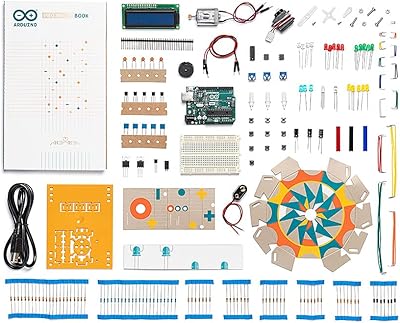
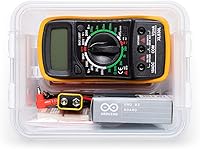
The Arduino Uno board at the heart of this Arduino kit runs on the ATmega328P chip — one of the most documented microcontrollers out there, which means students are never far from a helpful community resource when they hit a wall. The guided projects earn their keep: building a traffic light, a motion-triggered alarm, or a light-sensitive lamp teaches real circuit logic in a way that abstract theory simply cannot. One standout inclusion is the multimeter, a diagnostic tool that most budget kits skip entirely — having it lets students test circuits as they build, not just hope for the best. The 9V battery and snap are included too, so the board can run without a laptop nearby.

Best For

The Student Kit is well-suited to middle and high school students taking their first electronics or coding class, but it extends well beyond that. Teachers will appreciate that the online curriculum does a lot of the instructional heavy lifting — lesson plans, progression, and project structure are all built in, cutting prep time considerably. Parents shopping for a structured STEM gift will find this more purposeful than a generic component bag; there are actual goals to work toward. Maker clubs and after-school programs benefit from the repeatable project format. Total beginners going at their own pace are equally well served, provided they have reliable internet access for the online platform.

User Feedback

Sitting at 4.5 stars across nearly 200 ratings, this learning set has built a solid reputation through consistent buyer satisfaction. Frequent praise points to the quality of the curriculum and the credibility of buying directly from the Arduino brand rather than a clone kit. Teachers in particular note how much the structured lessons reduce the burden of building lesson plans from scratch. The honest criticism worth noting: component counts are on the lean side for students who want to push beyond the guided projects — additional resistors or LEDs may be needed. A few buyers also flag that internet access is non-negotiable for full platform value. Overall, most feel the premium over budget kits is well justified.

Pros

  • Official Arduino brand means the Uno board and documentation are trustworthy and community-supported.
  • The bundled online curriculum saves students and teachers hours of lesson planning and self-directed searching.
  • A multimeter is included — a genuinely useful diagnostic tool that most competing kits at this price omit.
  • Guided projects teach real-world concepts like motion detection and light sensing, not just blinking LEDs.
  • The 9V battery and snap connector allow portable, laptop-free demonstrations at science fairs or presentations.
  • Component variety covers LEDs, sensors, a servo motor, capacitors, and a piezo — enough to support all guided projects.
  • The digital logbook and invention spotlights encourage creative thinking beyond the core lesson content.
  • Holds a 4.5-star average across nearly 200 ratings, suggesting consistent satisfaction rather than polarized opinions.
  • Compact box dimensions make this learning set easy to store in a classroom, backpack, or on a desk.

Cons

  • Component counts are lean — students burning or losing parts will run short before finishing all projects.
  • The online platform requires stable internet access, which is a real barrier in some schools and homes.
  • Experienced beginners will outgrow the curriculum in a few weeks, leaving the kit feeling underutilized.
  • The included breadboard loosens with repeated use and may need replacing after a few months of classroom handling.
  • No clear upgrade pathway is built into the kit — motivated students are left to figure out next steps alone.
  • Bulk classroom purchasing at this price point adds up fast, limiting accessibility for underfunded programs.
  • The multimeter is entry-level only; students developing serious electronics interest will need to buy a better one.
  • Arduino IDE setup can be confusing for younger students or non-technical parents without additional guidance.
  • Platform account registration has been flagged as cumbersome when setting up for an entire class simultaneously.

Ratings

The Arduino Student Kit AKX00025 earns a strong overall standing based on AI-driven analysis of verified global buyer reviews, with spam, bot activity, and incentivized feedback actively filtered out before scoring. Across categories spanning curriculum quality and component value to hardware reliability and setup experience, both consistent strengths and recurring frustrations are reflected honestly in the scores below.
Curriculum Quality
91%
The structured online curriculum is what most buyers single out as the kit's defining advantage over generic alternatives. Teachers appreciate that lessons progress logically, and students working independently rarely feel lost thanks to the video walkthroughs and digital logbook keeping them on track.
A handful of users note the platform requires a stable internet connection, which creates friction in schools with inconsistent Wi-Fi or for students studying in low-connectivity environments. The curriculum depth also drops off after the core projects, leaving advanced learners wanting more.
Component Quality
84%
The hardware included — the Arduino Uno board, breadboard, servo motor, and sensors — meets the quality standard buyers expect from an official Arduino product rather than a no-brand clone. The components arrive well-organized, and the Uno board itself feels robust enough to survive repeated classroom handling.
Some buyers report that a few passive components like jumper wires can feel flimsy after extended use. The servo motor is functional for the included projects but limited in torque, which frustrates students who try to adapt it for more ambitious builds outside the curriculum.
Value for Money
76%
24%
For buyers who factor in the online curriculum access, the official Arduino brand assurance, and the multimeter inclusion, the price makes reasonable sense. Parents and educators treating this as a complete learning solution rather than a hardware bundle tend to feel the cost is well justified.
Buyers who compare the hardware list item-for-item against cheaper third-party kits often feel underserved, since the component count is not exceptional at this price point. If the online platform is not actively used, the value proposition weakens considerably.
Ease of Getting Started
88%
The step-by-step project instructions are clear enough that complete beginners — including younger students with no prior electronics exposure — can assemble their first working circuit within an hour. The traffic light and light-sensitive lamp projects are well-chosen entry points that deliver quick wins and build confidence early.
A few users mention that setting up the Arduino IDE for the first time can trip up younger students or non-technical parents without guidance. The online platform account registration process has also been flagged as mildly clunky for classroom-scale deployment.
Component Quantity
63%
37%
The variety of included components — LEDs in four colors, multiple resistor values, a piezo, a phototransistor, potentiometers, and capacitors — is genuinely broad for a kit at this tier. Students completing the full guided curriculum will find they have just enough of what they need for each planned project.
The counts are tight. With only 20 LEDs total and a limited resistor assortment, students who accidentally burn components or want to extend beyond the guided projects quickly run short. Several reviewers mention needing to order supplemental components within the first few weeks of use.
Hardware Reliability
86%
The Arduino Uno board is one of the most battle-tested microcontroller boards available, and units in this kit behave as expected — consistent performance across USB and battery power, reliable pin connections, and no reported issues with the ATmega328P chip failing prematurely.
The breadboard included is functional but not premium — the contact tension loosens with repeated use over several months. A small number of buyers have received kits where one or two passive components were faulty out of the box, though this appears to be an exception rather than the norm.
Instructional Clarity
89%
Written instructions are well-structured and avoid overwhelming beginners with technical jargon upfront, gradually introducing concepts like analog versus digital signals in context. The accompanying video tutorials are particularly appreciated by visual learners who find schematic diagrams harder to follow in written form.
Occasionally the written materials and the online platform content fall slightly out of sync, causing minor confusion when a step described in print differs subtly from what appears on screen. Some users also feel the explanations of underlying electronics theory could go deeper for students who want to understand the why, not just the how.
Packaging & Organization
81%
19%
Components arrive sorted and labeled in a way that makes initial setup straightforward, and the compact box dimensions mean this learning set stores neatly on a desk or in a classroom cabinet without taking up excessive space. The overall unboxing experience feels intentional rather than haphazard.
After the first few projects, keeping all small components organized becomes the student's responsibility, and the box does not include dedicated compartments for long-term storage. Several reviewers mention small components like resistors and pushbuttons going missing quickly without an external organizer.
Multimeter Usefulness
83%
Including a multimeter in a student kit is a genuinely practical decision that sets this learning set apart. Students learn to test voltage and continuity as part of the debugging process, which is a real skill that transfers directly to professional electronics work — not something a typical cheap kit teaches.
The included multimeter is entry-level and sufficient only for the basic measurements required by the curriculum. Students who develop a serious interest in electronics will outgrow it quickly and need to invest in a proper unit, but as a learning tool for beginners, it does the job well enough.
Project Variety
78%
22%
The guided projects cover a satisfying range of real-world concepts — light sensing, motion detection, sound output, motor control — which means students are not just repeating the same circuit type in different configurations. Each project introduces at least one new concept or component, keeping the experience fresh through the curriculum.
The total number of guided projects is finite, and engaged students can work through the entire curriculum in a matter of weeks. Once the structured content is exhausted, the kit does not offer a clear next step or advanced project pathway, which can leave motivated learners at a loose end.
Classroom Suitability
82%
18%
Teachers using this kit in a classroom context consistently highlight how much time the pre-built curriculum saves versus assembling lesson plans from scratch. The kit format is repeatable and consistent enough that multiple students can progress through the same material in parallel without diverging experiences.
The dependency on the online platform is a practical concern for schools — internet outages or platform downtime can disrupt an entire lesson. Bulk purchasing for a full class also adds up quickly at this price point, which limits adoption in underfunded school programs.
Battery Power Flexibility
74%
26%
The inclusion of a 9V battery and snap connector means students can demonstrate projects away from a laptop — useful for science fairs, presentations, or simply working on the floor away from a desk. It is a small but thoughtful addition that adds genuine portability to the learning experience.
The 9V battery drains relatively quickly under active use, and replacement costs add up for students who spend significant time working off-grid. The kit includes only one battery, with no rechargeable option, which feels like a missed opportunity for a sustainability-conscious product.
Brand Trust & Support
92%
Buying directly from Arduino rather than a third-party clone manufacturer carries meaningful weight for parents and educators. The Arduino community is enormous, documentation is extensive, and the brand has a decade-long track record of supporting learners — all of which adds long-term value well beyond the kit itself.
Official Arduino customer support for end consumers has historically been slow, and buyers who encounter hardware issues may find resolution takes longer than expected. The brand reputation is strong, but direct after-sales support does not always match the quality of the product itself.

Suitable for:

The Arduino Student Kit AKX00025 is a strong fit for middle and high school students who are stepping into electronics and coding for the first time and need more than just a bag of components to get going. The built-in curriculum does a lot of the heavy lifting — it gives students a clear path to follow, which matters enormously when the alternative is piecing together random YouTube tutorials and hoping they connect. Teachers will find real value here too, since the lesson structure, project progression, and digital logbook reduce the time spent building course materials from scratch. Parents who want to give a STEM-oriented gift that actually gets used — rather than sitting in a drawer after one confusing evening — will appreciate that this learning set has a defined beginning, middle, and end to work through. Self-taught learners who prefer official documentation over forum rabbit holes are also well served, and maker clubs or after-school programs that need a repeatable, documented format for rotating student cohorts will find the kit scales reasonably well for that purpose.
Not suitable for:

The Arduino Student Kit AKX00025 is not the right call for anyone who already has foundational electronics experience or who has previously worked with an Arduino Uno board — they will exhaust the curriculum quickly and likely feel they overpaid for components they mostly already own. Budget-conscious buyers purely focused on hardware value will be disappointed too, since cheaper third-party kits offer comparable or larger component counts at a lower price point; the premium here lives in the curriculum and brand, not the parts list. Students or classrooms without reliable internet access will also find the kit's core differentiator largely inaccessible, since the online platform is central to the structured learning experience. Buyers expecting the component quantity to support extended freeform projects beyond the guided curriculum will need to supplement with additional resistors, LEDs, and wires fairly quickly. Finally, anyone looking for a kit that covers more advanced topics — sensors arrays, wireless communication, display modules — should look at higher-tier options, as this learning set is intentionally scoped to foundational concepts only.
Specifications

  • Brand: Manufactured and sold directly by Arduino, the original creator of the Arduino open-source hardware platform.
  • Model Number: The official model identifier for this kit is AKX00025, as designated by Arduino.
  • Microcontroller: Includes one Arduino Uno board built around the ATmega328P microcontroller chip, running at 16 MHz with 32KB of flash memory.
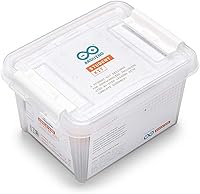
  • Box Dimensions: The retail box measures 8.27″ long by 6.69″ wide by 5.12″ high, making it compact enough to store in a school locker or desk drawer.
  • Power Supply: The board can be powered via the included USB cable connected to a computer, or independently using the included 9V battery with snap connector.
  • USB Connectivity: One USB-B to USB-A cable is included for connecting the Arduino Uno to a Windows, macOS, or Linux computer for programming via the Arduino IDE.
  • Sensors Included: The kit includes one NTC temperature sensor for measuring ambient heat and one phototransistor for detecting ambient light levels in projects.
  • Motor: One small servo motor is included, suitable for basic positional movement projects within the guided curriculum.
  • LEDs: Twenty LEDs are included in total — five each of red, green, yellow, and blue — providing enough variety for the traffic light and indicator-based projects.
  • Resistors: The kit includes resistors across five values: 220 Ohm (x5), 560 Ohm (x5), 1kOhm (x1), 4.7kOhm (x2), and 10kOhm (x1) for circuit protection and voltage divider applications.
  • Other Components: Additional components include a breadboard, potentiometers, capacitors, jumper wires, pushbuttons, a phototransistor, a piezo buzzer, and a set of nuts and bolts for mechanical mounting.
  • Multimeter: A basic entry-level multimeter is included for measuring voltage and continuity, enabling students to diagnose circuit issues during hands-on projects.
  • Mounting Base: A dedicated board mounting base is included to securely hold the Arduino Uno during project work, reducing accidental disconnections on a desk.
  • Online Curriculum: Purchase includes access to an official Arduino online learning platform featuring step-by-step lessons, video tutorials, invention spotlights, and a digital logbook with solutions.
  • Item Weight: The complete kit weighs approximately 3.53 ounces, making the individual box lightweight despite the range of components inside.
  • Compatibility: The Arduino Uno board is compatible with Windows, macOS, and Linux operating systems via the free Arduino IDE software.
  • Release Date: This kit was first made available for purchase in May 2020 and has been sold continuously since then without a major hardware revision.
  • Customer Rating: The kit holds an average rating of 4.5 out of 5 stars based on approximately 194 verified ratings on the Amazon marketplace.

Related Reviews

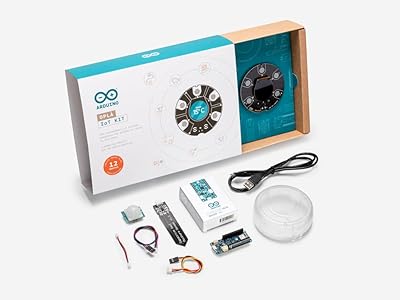
Arduino OPLA IoT Kit AKX00026
87%
88%
Ease of Use
91%
Learning Resources
90%
Sensor Quality and Variety
89%
Wireless Connectivity Options
95%
Compatibility with Arduino IDE
More
Arduino Starter Kit K000007
84%
91%
Component Quality
93%
Project Book Quality
92%
Beginner Accessibility
72%
Value for Money
74%
Scope & Depth of Projects
More
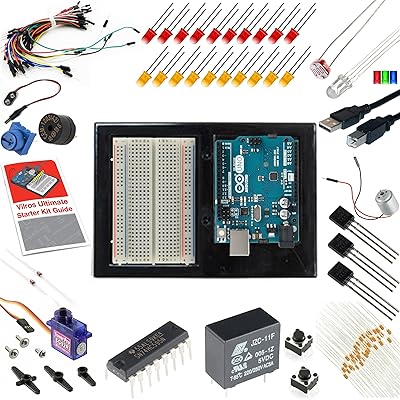
Vilros Arduino Uno Starter Kit
82%
92%
Value for Money
88%
Ease of Use
90%
Component Quality
85%
Instruction Manual
82%
Learning Curve
More
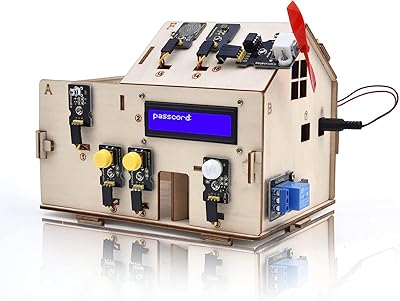
KEYESTUDIO Smart Home Starter Kit for Arduino KS0085
83%
88%
Value for Money
91%
Ease of Use for Beginners
94%
Educational Value
82%
Build Quality
74%
App Control Functionality
More
KEYESTUDIO Robot Arm Starter Kit 4DOF for Arduino
84%
88%
Learning Experience
80%
Build Quality
84%
Ease of Setup
91%
Control Flexibility
92%
Compatibility with Arduino
More
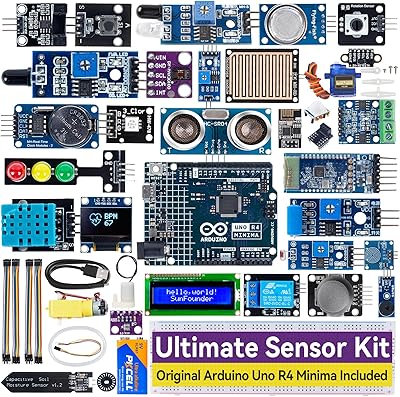
SunFounder Ultimate Sensor Kit with Arduino Uno R4 Minima
86%
88%
Ease of Use
90%
Tutorial Quality
87%
Sensor Variety
85%
Performance (Processor)
84%
Project Range
More
Mehron Makeup Mini-Pro Student Makeup Kit (Medium/Olive)
85%
88%
Value for Money
91%
Ease of Use
85%
Shade Versatility
90%
Educational Value
82%
Foundation Coverage
More
GiGi Professional Waxing Hair Removal Student Starter Kit + Honee Wax, 14 Ounces
84%
88%
Effectiveness of Hair Removal
85%
Ease of Use for Beginners
91%
Skin Sensitivity/Compatibility
82%
Comfort During Application
92%
Value for Money
More
Convenience Kits International Men's 11 Piece Travel Kit & Women's 10 Piece Deluxe Travel Kit
86%
89%
Convenience of Travel Size
91%
Ease of Use
96%
TSA Compliance
87%
Quality of Included Brands
93%
Compactness & Portability
More
DIY Gift Kits Bath Bomb Making Kit
87%
88%
Ease of Use
91%
Creativity & Customization
83%
Scent Quality
92%
Ingredient Quality
86%
Packaging & Materials
More

FAQ

None at all. The Arduino Student Kit AKX00025 is specifically designed for complete beginners. The online curriculum starts from absolute zero, explaining what each component does before asking you to use it, so prior experience with circuits or programming is not required to get started.
In practice, most users find it well-suited for ages 12 and up. Younger students around 10 or 11 can work through it with some adult support, but the programming concepts and circuit logic are genuinely pitched at middle school level and above. Adults learning for the first time will also find it completely accessible.

Arduino does not publicly advertise a strict expiry date on curriculum access tied to this kit, but as with any web-based platform, ongoing access depends on the platform remaining active. There is no evidence of access being revoked after a short window, and most buyers report using it freely after purchase.

The hardware projects themselves — building circuits on the breadboard, connecting sensors — can be done without internet once you have the Arduino IDE installed on your computer. However, the step-by-step online curriculum, video tutorials, and digital logbook all require a stable internet connection, so offline use is significantly more limited.

Yes, the Arduino IDE is completely free and available directly from the Arduino website for Windows, macOS, and Linux. Installation is straightforward for most users, though first-timers occasionally run into driver setup issues on Windows. The online curriculum does walk you through the installation process, which helps.

Yes, the component quantities are calibrated to get you through the official guided projects without needing anything extra. The counts are tight though — if you burn out a resistor or lose a few LEDs along the way, you may find yourself short before finishing. Keeping a small backup supply of basic resistors and LEDs on hand is a sensible precaution.

Each kit is designed for one student or one workstation. For classroom use, you would need one kit per student or per pair of students working together. Teachers have reported success using it in a shared format where two students work from one kit, but the component counts are not generous enough for a full class to share a single set.

Once you work through the curriculum, the hardware is still fully functional and can be used for any Arduino project you find online. The broader Arduino community has thousands of free tutorials, project ideas, and libraries available — so the kit itself has a long life beyond the bundled content. You may just need to buy additional components for more ambitious builds.

For the purposes of the included projects — checking voltage, testing continuity, verifying simple circuits — yes, it does the job. It is a basic entry-level unit and will not satisfy anyone doing serious electronics work, but for a beginner learning to diagnose circuits for the first time, it is a genuinely useful tool that most competing kits at this price simply do not include.

The main difference is structure and source. Generic third-party kits often pack in more components at a lower price, but they typically come with minimal or scattered instructions and no cohesive curriculum. This kit trades raw component count for an official, organized learning path, the brand reliability of genuine Arduino hardware, and a multimeter that most budget kits skip. Which is better depends entirely on whether the buyer needs guided structure or just parts to experiment with freely.