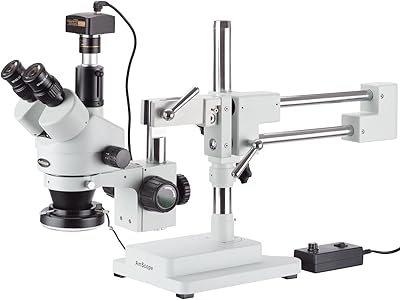
Overview

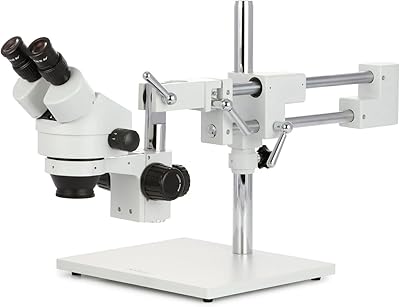
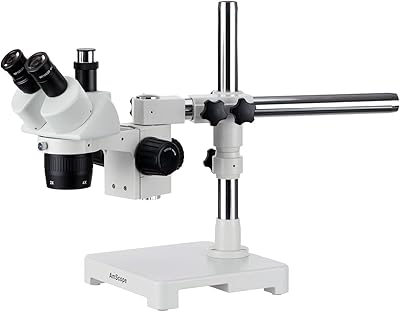
The AmScope SE400-Z Binocular Stereo Microscope has been a steady presence on the market since 2011 — and that kind of staying power usually means something. Built for technicians, hobbyists, and light professional use, its real standout over a typical benchtop scope is the long working distance: you genuinely have room beneath the lens to work with your hands, not just observe. That 9-inch vertical clearance changes how you interact with whatever you're inspecting. At its price tier, buyers reasonably expect solid optics, durable construction, and a setup that doesn't require an engineering degree — and this stereo microscope largely delivers on all three counts.
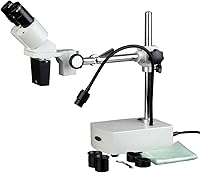
Features & Benefits

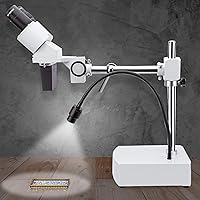
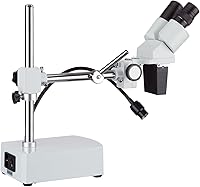
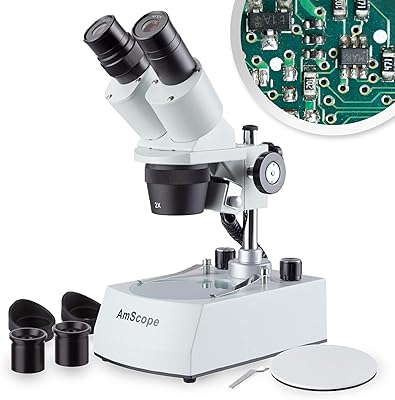
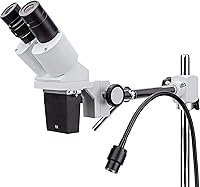
The binocular head ships with two interchangeable widefield eyepiece pairs — 10x and 20x — which swap out in seconds. At 10x you get a broad, comfortable view for general inspection; 20x pulls you closer for spotting fine solder joints or hairline cracks. The fixed 30-degree inclination keeps eyepieces at a natural angle during long sessions, which matters more than most buyers anticipate before they actually sit down to use it. The adjustable boom arm repositions on both axes, freeing up your entire work surface in a way a pillar stand simply cannot match. Add the gooseneck LED for targeted lighting and steel construction for stability, and the package holds together well — though 14-plus pounds means this scope stays exactly where you put it.

Best For

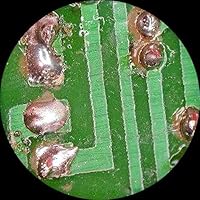
This binocular scope is most at home on an electronics repair bench. Soldering, reworking PCBs, tracing circuit paths — the combination of hands-free viewing and real working clearance makes all of that noticeably easier. Jewelers and dental lab technicians will find it equally valuable for tasks where you need both eyes engaged and your hands actively in the frame. It also suits classroom settings where durability matters more than cutting-edge optics. That said, keep expectations calibrated: 20x maximum magnification is a modest ceiling by any measure. If your work involves biological slides or demands serious optical power, this is the wrong tool. It is purpose-built for large-scale inspection and hands-on manipulation, not fine-detail scientific research.

User Feedback

With a 4.3-star average across more than 580 reviews, the AmScope boom-arm scope earns consistent marks from a wide range of buyers. Ease of assembly and the solidity of the steel frame come up repeatedly as genuine strengths — most users report being operational within minutes of unboxing. The boom arm's flexibility is frequently cited as a practical differentiator. On the downside, some buyers wish the magnification range extended further, and a handful feel the eyepiece quality doesn't fully match the robustness of the frame. Shipping packaging draws occasional criticism. One detail worth flagging: the product listing references conflicting voltage specs in different sections, so double-check power compatibility before ordering if you're outside a standard North American setup.

Pros

  • The 9-inch vertical working distance is a practical game-changer for hands-on inspection tasks that pillar-stand scopes cannot accommodate.
  • Steel construction gives this stereo microscope a planted, rattle-free stability that holds up through years of daily bench use.
  • The 12-inch adjustable boom arm repositions freely over a workbench without requiring you to move the base.
  • Swapping between 10x and 20x widefield eyepiece pairs takes seconds and requires no tools or recalibration.
  • The fixed 30-degree eyepiece angle noticeably reduces neck and shoulder fatigue during long working sessions.
  • The flexible gooseneck LED lets you direct light at precise angles, which matters when inspecting recessed or reflective surfaces.
  • Assembly is fast and intuitive — most buyers are fully set up within 20 minutes of opening the box.
  • A 4.3-star average across hundreds of verified reviews reflects genuinely consistent buyer satisfaction over many years on the market.
  • Adjustable interpupillary distance accommodates a wide range of users without requiring separate accessories.

Cons

  • The 20x magnification ceiling is a hard limit that will frustrate buyers who underestimate how quickly they reach it.
  • At 14-plus pounds, relocating the scope between workstations is a two-handed job and a minor daily annoyance.
  • The LED has no brightness adjustment, which becomes a real issue when working with polished or reflective surfaces.
  • Gooseneck arm tension weakens over time with frequent repositioning, eventually requiring manual correction to hold its angle.
  • The product listing contains contradictory voltage specifications, creating unnecessary confusion for international buyers.
  • Packaging has received recurring criticism for not adequately protecting the scope during transit, leading to cosmetic damage on arrival.
  • The included documentation is thin and offers little guidance for users who want to fine-tune optical or mechanical adjustments.
  • Adding a camera adapter or higher-magnification objective requires separate purchases that are not clearly flagged in the base listing.

Ratings

The AmScope SE400-Z Binocular Stereo Microscope scores below are generated by AI after analyzing verified global user reviews, with spam, bot-generated, and incentivized feedback actively filtered out. Across hundreds of real-world assessments from electronics technicians, hobbyists, and lab professionals, both the genuine strengths and the recurring frustrations are transparently reflected in every category score.
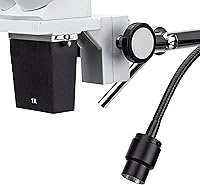
Build Quality
88%
The all-steel chassis is the first thing most buyers comment on — it feels solid and purposeful right out of the box. For bench work that involves frequent repositioning and occasional knocks, that rigidity translates directly into confidence. Long-term owners regularly note the scope holds up without any creaking or loosening of joints.
At 14-plus pounds, the same steel build that inspires confidence makes relocation between workstations genuinely inconvenient. A small number of users also noted minor paint inconsistencies or surface blemishes on arrival, which felt out of place at this price tier.
Optical Clarity
79%
21%
For stereo inspection work at 10x and 20x, the widefield eyepieces produce a sharp, well-defined image across most of the field of view. Users performing PCB inspection and jewelry evaluation consistently describe the image as clean and fatigue-free during extended sessions.
Edge distortion becomes noticeable at 20x, which is a limitation some buyers did not anticipate. A portion of reviewers feel the eyepiece glass quality doesn't fully match the robustness of the frame, and optical clarity doesn't quite reach the level of dedicated lab-grade scopes in the same price range.
Working Distance & Clearance
93%
The 9-inch vertical clearance is the single most praised practical feature across the entire review base. Technicians soldering live boards, jewelers setting stones, and dental lab workers all point to this as the reason the scope works where others fail — there is genuinely enough room to use both hands freely beneath the lens.
A very small subset of users working with unusually tall assemblies or bulky fixtures wished for even more vertical clearance. It is not a common complaint, but worth noting for anyone with exceptionally large workpieces in mind.
Boom Arm Flexibility
86%
The adjustable 12-inch boom arm is consistently cited as a differentiator that pillar-stand alternatives simply cannot match. Being able to swing the scope laterally and reposition over different areas of a workbench without moving the base is a real workflow advantage that buyers notice immediately.
Some users report that the boom arm can drift slightly under the weight of the head over time, requiring periodic tightening to maintain precise positioning. It is not a structural failure, but it does require occasional maintenance attention that a stiffer setup would not.
Eyepiece Comfort & Ergonomics
81%
19%
The fixed 30-degree eyepiece inclination is genuinely well-chosen for extended bench sessions. Users who previously worked with flat-eyepiece scopes frequently mention reduced neck and shoulder strain after switching. The adjustable interpupillary distance accommodates a wide range of users without fuss.
The inclination angle, while comfortable for most, is fixed — users who prefer a steeper or shallower viewing angle have no option to adjust. A handful of buyers with narrower or wider than average interpupillary distance also found the adjustment range slightly limiting.
LED Lighting Quality
74%
26%
The flexible gooseneck LED allows targeted illumination, which is more useful in practice than a fixed ring light for tasks involving shadows, surface texture inspection, or angled components. Most users find the brightness sufficient for standard bench conditions.
The LED does not offer adjustable brightness, which becomes a noticeable limitation when working with reflective surfaces like solder pads or polished metal. Several reviewers specifically requested a dimmer or intensity control as a missing feature at this price point.
Magnification Range
61%
39%
For the target audience — electronics repair, specimen inspection, jewelry work — the 10x and 20x options cover the most common practical needs without overcomplicating the setup. Swapping between the two eyepiece pairs takes only seconds and requires no tools.
A 20x ceiling is genuinely modest, and buyers who discover this after purchase are among the most disappointed reviewers. The scope is not suitable for anyone whose work edges toward fine biological or materials science examination, and the listing does not always make this ceiling prominent enough upfront.
Setup & Assembly
91%
An overwhelming majority of buyers report being fully operational within 15 to 20 minutes of opening the box, with no tools and minimal instruction-reading required. The straightforward assembly process is frequently highlighted by first-time microscope owners as a confidence-building experience.
The included documentation is basic and does not cover advanced adjustments or troubleshooting in any meaningful depth. Users who want to fine-tune diopter settings or optimize the boom arm tension are largely left to figure things out independently.
Value for Money
76%
24%
Buyers who purchase this scope knowing exactly what it is — a robust, practical inspection tool with excellent working clearance — tend to feel well-served by the investment. The steel construction and boom-arm design are features that comparable competitors often charge significantly more to match.
Users who expected the optical performance of a dedicated laboratory scope at this price point tend to feel let down. The value proposition is real, but only if the buyer's needs align with what the scope actually does well — otherwise it can feel like an expensive mismatch.
Stability & Vibration Control
83%
The weighted steel base and robust boom arm clamp keep the scope impressively stable during active hand work beneath the lens. Users doing fine soldering particularly appreciate that minor table vibrations or hand movements don't cause the view to wobble.
On very light or flexible workbench surfaces, some users noticed minor vibration transmission affecting image stability at 20x. This is more a workbench issue than a scope issue, but it is worth flagging for anyone working on an unstable surface.
Packaging & First Impressions
67%
33%
Most buyers describe the unboxing experience as acceptable, with components adequately protected for standard shipping. The scope typically arrives without optical or structural damage, and the inclusion of both eyepiece sets adds immediate perceived value.
A notable minority of reviewers report cosmetic damage on arrival — scratched surfaces, loose foam inserts, or minor dents — which creates a poor first impression for a scope at this price. The packaging does not appear to have been updated to reflect the scope's weight and fragility requirements.
Interpupillary Adjustment
78%
22%
The interpupillary distance adjustment is smooth and covers a practical range that suits the majority of adult users. Most buyers find a comfortable setting quickly and the adjustment holds reliably without drifting during use.
Users at the extreme ends of the interpupillary range — whether unusually close-set or wide-set — occasionally report being unable to achieve a fully merged binocular image, which defeats part of the purpose of a binocular scope. This is a minority issue but a real one.
Gooseneck Arm Usability
72%
28%
The flexible gooseneck neck on the LED light is praised for letting users direct illumination into awkward angles that a fixed light source would miss entirely. For inspecting recessed components or casting shadows for surface texture, this flexibility is genuinely useful.
Over time, some users find the gooseneck loses its ability to hold a position firmly, gradually drooping away from the targeted angle. This appears to worsen with regular repositioning and is a recurring complaint among longer-term owners.
Compatibility & Accessory Options
69%
31%
The SE400-Z accepts standard eyepiece accessories and is compatible with the broader AmScope accessory ecosystem, which gives technically inclined users room to expand. Camera adapters and additional objective options are available for those who want to grow the setup over time.
Out of the box, the accessory range is limited to what ships in the package. Users who want to add a camera mount or upgrade to higher magnification objectives quickly discover that additional investment is required, which some felt should have been clearer from the product listing.
Voltage & Listing Accuracy
54%
46%
For North American buyers on standard 110V to 120V household current, the scope operates without any power concerns. The LED lighting works reliably from day one and has not been a source of hardware complaints among domestic users.
The product listing contains conflicting voltage references — 110V to 120V in the title versus 220V in the specifications — which has caused genuine confusion and, in some cases, incorrect purchasing decisions for international buyers. This inconsistency remains unresolved and undermines trust in the listing's accuracy.

Suitable for:

The AmScope SE400-Z Binocular Stereo Microscope was built for people who need to see what they're doing while their hands are still doing it. Electronics repair technicians and hobbyists will find it particularly well-matched to soldering, reworking PCBs, and tracing fine circuit traces — the 9-inch vertical clearance means both hands fit comfortably beneath the lens without contorting your body around the stand. Jewelers and dental lab technicians share a similar profile: work that demands steady visual guidance over extended periods, on objects too large and three-dimensional for a slide-based compound scope. Educators setting up a durable, low-maintenance inspection station will also find this binocular scope fits the brief cleanly, since it is straightforward enough for students to use without supervision. If your work involves inspecting, assembling, or manipulating real-world objects rather than preparing biological specimens, this scope covers that ground confidently.
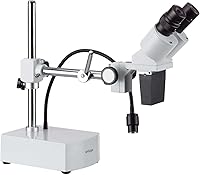
Not suitable for:

The AmScope SE400-Z Binocular Stereo Microscope is simply the wrong tool for anyone whose work requires serious magnification power or fine optical precision beyond 20x. Biologists, pathologists, or researchers working with cell-level specimens will hit the magnification ceiling almost immediately and feel the absence of a compound optical system. Users who work across multiple bench locations or move their equipment frequently will find the 14-plus-pound steel frame more burden than benefit — this is a scope you set up once and leave in place. International buyers should also proceed cautiously: the product listing contains conflicting voltage information, and confirming power compatibility before purchase is genuinely necessary rather than optional. Finally, buyers expecting premium optical glass that matches the robustness of the steel frame may find the eyepiece quality underwhelming at closer inspection — the optics are competent, not exceptional.

Specifications

  • Brand: Manufactured by United Scope LLC under the AmScope brand, a company specializing in optical instruments for professional and educational use.
  • Model: The specific model designation is SE400-Z, a boom-arm stereo microscope that has been commercially available since March 2011.
  • Magnification: Provides two magnification levels — 10x and 20x — achieved by swapping between the included WF10x and WF20x widefield eyepiece pairs.
  • Objective Lens: Fitted with a single 1x objective lens, which prioritizes a wide field of view and generous working distance over high magnification power.
  • Eyepieces: Includes two interchangeable widefield eyepiece pairs: WF10x and WF20x, both designed for comfortable extended viewing with reduced eye strain.
  • Viewing Head: Binocular head fixed at a 30-degree vertical inclination to reduce neck and eye fatigue during prolonged inspection sessions.
  • Interpupillary Distance: The interpupillary distance on the binocular head is adjustable to accommodate a range of users with different eye spacing.
  • Working Distance: Offers 9 inches of vertical working distance beneath the objective, allowing large or three-dimensional objects to be inspected and manipulated hands-free.
  • Boom Arm: Features an adjustable 12-inch boom arm that repositions the scope on both X and Y axes, freeing up the entire work surface below.
  • Lighting: Equipped with a flexible gooseneck LED light that can be directed to illuminate specimens from multiple angles without repositioning the scope itself.
  • Power Supply: Rated for 110V–120V AC power, suitable for standard North American electrical outlets; international buyers should verify compatibility before ordering.
  • Body Material: The main structure is constructed from steel, contributing to long-term durability and a stable, vibration-resistant platform during active bench work.
  • Dimensions: Overall product dimensions measure 17 inches long by 16 inches wide by 8 inches high, requiring a dedicated footprint on the work surface.
  • Weight: The complete assembled unit weighs 14.32 pounds, reflecting its all-steel construction and making it a fixed-position rather than portable instrument.
  • Amazon Rating: Holds a 4.3-out-of-5-star average rating based on 582 verified buyer reviews, indicating consistent satisfaction across a broad and diverse user base.

Related Reviews

AmScope SE508 8X Magnification Binocular Stereo Microscope
85%
91%
Build Quality
88%
Usability & Ergonomics
80%
Magnification Performance
85%
LED Illumination Effectiveness
93%
Stability
More
AmScope SM-4B Stereo Zoom Microscope Boom Stand
76%
93%
Build Quality
88%
Optical Clarity
91%
Boom Stand Versatility
41%
Illumination
82%
Ergonomics
More
AmScope B490B Compound Binocular Microscope
85%
94%
Optical Clarity
90%
Build Quality
85%
Ease of Use
92%
Value for Money
93%
Magnification Range
More
AmScope SE305R-PZ Stereo Microscope
75%
86%
Build Quality
78%
Optical Clarity
71%
Lighting System
91%
Ease of Setup
82%
Ergonomics & Comfort
More
AmScope SM-3B Binocular Zoom Stereo Microscope
73%
88%
Optical Clarity
91%
Zoom Range & Versatility
83%
Boom Stand Design
86%
LED Ring Light
84%
Build Quality & Durability
More
AmScope SE306R-PZ-LED Stereo Microscope
84%
88%
Value for Money
91%
Build Quality
85%
Ease of Use
78%
Magnification Range
89%
Lighting Performance
More
AmScope B100B-MS Compound Binocular Microscope
69%
83%
Build Quality
74%
Optical Clarity
61%
Illumination
69%
Magnification Range
71%
Mechanical Stage
More
AmScope SW-3T24Z Trinocular Stereo Microscope
87%
92%
Magnification Quality
88%
Ergonomics & Comfort
84%
Boom Stand Adjustability
91%
Image Clarity
85%
Build Quality & Durability
More
Swift S306S Binocular Stereo Microscope
79%
83%
Optical Clarity
79%
Build Quality
88%
Illumination System
71%
Magnification Range
91%
Head Design & Ergonomics
More
AmScope B120C-E5 Binocular Compound Microscope
78%
88%
Optical Clarity
76%
Build Quality
91%
Illumination Quality
84%
Ergonomics & Comfort
67%
USB Camera Quality
More

FAQ

Absolutely — this is one of the most common and well-suited use cases for this stereo microscope. The 9-inch vertical clearance means you can hold a soldering iron or tweezers comfortably beneath the lens while keeping both eyes on the work. The boom arm also lets you position the scope precisely over any section of a board without moving your workspace.

The maximum magnification is 20x, achieved with the included WF20x eyepieces. For circuit board inspection, jewelry work, and general specimen viewing, this is sufficient for most practical tasks. If your work requires magnification beyond 20x — for example, examining biological specimens or very fine microelectronics — you will hit a hard ceiling with this scope and should consider a different model.

Setup is straightforward. Most users report being fully operational within 15 to 20 minutes with no tools required. The boom arm clamps onto the included base, the head mounts to the arm, and you simply attach whichever eyepiece pair you want to start with. The gooseneck LED plugs in separately and can be positioned before or after assembly.

Initially the boom arm holds position well, but some longer-term users report that the joint gradually loosens with repeated repositioning. The good news is that this is typically a simple tightening fix — most boom arm designs use a clamping bolt that can be snugged down when needed. It is worth checking tension periodically rather than waiting for noticeable drift.

The AmScope SE400-Z Binocular Stereo Microscope is not shipped with a camera adapter in the base package, but the eyepiece diameter is a standard size that is compatible with various third-party camera and trinocular adapters available separately through AmScope and other suppliers. If photography is a priority, factor in the additional accessory cost before purchasing.
This is worth checking carefully before you order. The title lists 110V–120V, which is standard for North America, but one section of the product listing references 220V, creating genuine confusion. If you are in a region with a different voltage standard, contact the seller directly to confirm the correct specification for the unit being shipped. Do not assume one way or the other based on the listing alone.

The 30-degree inclination is fixed and cannot be changed. For most people seated at a standard bench height, this angle is comfortable for extended sessions and is one of the scope's ergonomic strengths. However, if you have a strong personal preference for a different viewing angle — or if your bench setup is unusually high or low — this is something to consider before purchasing.

The 9-inch vertical clearance and the boom arm design handle a remarkably wide range of object sizes, including full-sized circuit boards, assembled jewelry pieces, and dental appliances. Where you will run into limits is with extremely tall three-dimensional assemblies that exceed that clearance, or very wide objects that extend beyond the comfortable range of the boom arm's lateral reach.

Use a soft lens brush or a bulb blower to remove loose dust first — never wipe dry. For smudges or fingerprints, a lens cleaning tissue or microfiber cloth with a small amount of optical lens cleaning solution works well. Avoid household glass cleaners, which can leave residue or damage lens coatings. Cleaning the eyepieces regularly makes a noticeable difference in image clarity over time.

Yes, with some supervision considerations. The scope is durable enough for shared use and simple enough for students to operate without specialist training. The main practical concern in a classroom is the weight — at over 14 pounds on a boom arm, it is not something you want younger students repositioning unsupervised. For a fixed demonstration station managed by an instructor, it works very well.