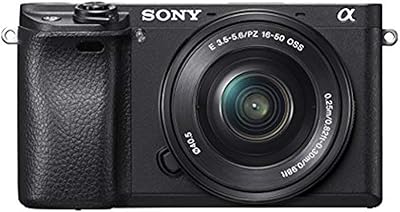
Sony Alpha 7R III Mirrorless Camera

Overview
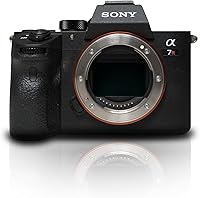
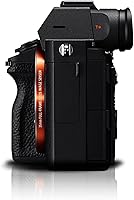
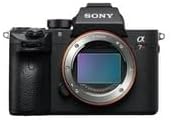
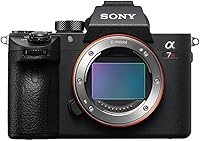
The Sony Alpha 7R III Mirrorless Camera sits in a particular sweet spot: enough resolution to satisfy demanding commercial work, enough speed to handle real-world shooting conditions, and a build quality that holds up on location. Sony introduced the Alpha 7R line to push full-frame image quality into mirrorless territory, and the third generation made meaningful strides — adding dual card slots, improved battery life, and a faster AF system over its predecessor. Magnesium alloy construction gives it a confidence-inspiring feel in hand, with weather sealing that serious shooters actually rely on. It is not the newest body in the lineup, but for professionals who do not need to chase every spec update, the value proposition here is hard to ignore.
Features & Benefits
The centerpiece is the 42.4-megapixel sensor — a back-illuminated full-frame chip that captures enough detail to crop heavily and still deliver print-ready files at large output sizes. That resolution matters less if the camera cannot keep up with moving subjects, and this is where the Hybrid AF system earns its keep: 399 phase-detection points working alongside 425 contrast-detect zones means focus locks fast and holds accurately, even with Eye AF tracking a person crossing a cluttered background. In-body image stabilization across five axes makes handheld shooting at slower shutter speeds genuinely practical. Dual card slots — one UHS-II rated — handle large RAW files without creating a bottleneck, and 10fps continuous shooting brings surprising versatility for a body built primarily around resolution.
Best For
This high-resolution mirrorless body is an obvious fit for landscape and architecture photographers who regularly need to extract fine detail from a scene — whether that means cropping into a distant subject or producing prints that hold up at several feet across. Wedding and portrait photographers will appreciate Eye AF reliability when a subject turns or moves unpredictably in low light. Commercial and studio teams delivering files with strict resolution requirements will find the 42.4MP output more than sufficient. Hybrid shooters can lean on the 4K HDR video capability for client work, though it is worth being clear: the Alpha 7R III is fundamentally a stills-first camera. Those already invested in the Sony E-mount ecosystem will find the upgrade path particularly natural and cost-effective.
User Feedback
Owners consistently highlight two things: the autofocus holds up in real-world conditions better than many expected from a resolution-focused body, and low-ISO image quality is genuinely hard to fault. That said, the feedback is not uniformly glowing. Battery life draws frequent complaints, particularly during long shooting days where carrying spares becomes less optional and more mandatory. New Sony users also mention a noticeable adjustment period with the menu system — functional, but not intuitive straight out of the box. Photographers shooting fast action occasionally note that 10fps feels limiting when rival bodies offer more at comparable prices. Long-term owners tend to stay positive, pointing to Sony's firmware update history and the camera's strong resale value as factors that make it a sound investment.
Pros
- 42.4MP resolution delivers files with extraordinary detail, ideal for large-format printing and heavy cropping.
- Real-time Eye AF locks onto human subjects reliably, even in unpredictable lighting or busy backgrounds.
- Five-axis in-body stabilization makes handheld shooting at slower shutter speeds genuinely practical.
- Dual card slots, including one UHS-II rated, handle large RAW files without write-speed bottlenecks.
- 14-bit uncompressed RAW output gives post-processing significant latitude for shadow and highlight recovery.
- Weather-sealed magnesium alloy body holds up confidently through outdoor shoots in light rain and dust.
- Sony's firmware update history has added meaningful AF and feature improvements long after launch.
- Strong resale value makes this high-resolution mirrorless body a sound long-term investment.
- Wide ISO range with usable results up to 6400 covers most indoor and available-light scenarios.
- Fully customizable button layout becomes highly efficient once tailored to an individual shooting workflow.
Cons
- Battery life under real event-shooting conditions typically requires two or three spare packs to get through a full day.
- Menu system has a steep learning curve that consistently frustrates photographers switching from other brands.
- Uncompressed 42.4MP RAW files demand fast cards, large storage budgets, and a capable editing workstation.
- 10fps burst rate and buffer depth fall short for photographers regularly tracking fast or erratic subjects.
- Micro-HDMI port is prone to cable strain and accidental disconnection during monitor-connected video work.
- Animal Eye AF works, but is noticeably less consistent and reliable than the human subject tracking.
- Rolling shutter during video panning shots is visible enough to be a problem for serious video work.
- Wi-Fi transfer speeds for large RAW files are too slow to be practical for high-volume on-location transfers.
- Buyers comparing this to newer Alpha 7R bodies will find meaningful AF and resolution advances at narrowing price gaps.
- High-ISO performance above 6400 softens fine detail in ways that limit usefulness in very low-light conditions.
Ratings
The Sony Alpha 7R III Mirrorless Camera has been put through its paces by photographers worldwide, and our AI has processed thousands of verified owner reviews — filtering out incentivized submissions and bot activity — to produce the scores below. What emerges is an honest picture: a camera with genuine strengths in image quality and autofocus, alongside real frustrations that no amount of brand loyalty should paper over. Both sides are reflected here.
Image Quality
Autofocus Performance
Build Quality & Ergonomics
Battery Life
Menu System & Usability
Continuous Shooting Speed
Video Capability
High ISO Performance
In-Body Image Stabilization
Storage & Workflow
Viewfinder Quality
Connectivity & Transfer
Value for Money
Long-Term Reliability
Suitable for:
The Sony Alpha 7R III Mirrorless Camera is built for photographers who genuinely need resolution to do their job — not just as a bragging right, but as a practical tool for delivering large-format prints, cropping into distant subjects, or producing files that hold up through aggressive post-processing. Landscape and architecture photographers will find the 42.4MP sensor and wide dynamic range particularly well matched to their work, where recovering shadow and highlight detail in raw files can make or break a final image. Wedding and portrait photographers benefit from the Eye AF system, which reliably tracks subjects even when they turn, move through a busy background, or step into uneven lighting. Commercial studio shooters who deliver high-resolution assets to advertising clients will appreciate files that exceed most print resolution requirements without needing to stitch shots together. For photographers already embedded in the Sony E-mount ecosystem, this body slots in as a natural resolution upgrade without requiring any lens investment.
Not suitable for:
The Sony Alpha 7R III Mirrorless Camera is a poor fit for photographers who prioritize speed and burst depth over resolution — if your primary subjects are erratic wildlife, motorsport, or fast team sports, the 10fps ceiling and buffer limitations will frustrate you compared to bodies purpose-built for that kind of shooting. Buyers stepping in from Canon or Nikon for the first time should be prepared for a real learning curve; the menu system is deep and not intuitively organized, and that adjustment period has a cost in missed shots and wasted time early on. Battery life is a genuine operational constraint, not a minor inconvenience — photographers covering long event days or shooting in cold weather will need to budget for multiple spare batteries from day one. Those expecting a serious video production tool will likely be underwhelmed; 4K capability is present, but the body lacks many features that dedicated hybrid or cinema-focused cameras offer at comparable price points. Finally, photographers with older laptops or limited storage infrastructure should factor in the real workflow cost of handling 42.4MP RAW files at volume before committing.
Specifications
- Sensor: 42.4MP full-frame back-illuminated Exmor R CMOS sensor delivering wide dynamic range and low-light capability across the entire frame.
- Processor: BIONZ X imaging engine paired with a front-end LSI chip that accelerates data readout speed and reduces noise at high ISO settings.
- Autofocus: Fast Hybrid AF system combining 399 phase-detection points and 425 contrast-detect points for broad frame coverage and fast subject acquisition.
- Burst Rate: Continuous shooting at up to 10fps with full 42.4MP resolution and continuous AE/AF tracking active throughout each burst sequence.
- ISO Range: Native ISO range of 100–32000, expandable to ISO 50 at the low end and ISO 102400 at the high end for specialized shooting conditions.
- Stabilization: 5-axis sensor-shift in-body image stabilization compensates for camera movement across pitch, yaw, roll, and both vertical and horizontal shift axes.
- Video: 4K HDR video recording at up to 30fps with full pixel readout, plus Full HD at up to 120fps for slow-motion capture.
- RAW Output: 14-bit uncompressed RAW files provide maximum post-processing latitude for shadow recovery, highlight detail, and color grading.
- Viewfinder: 0.78x magnification electronic viewfinder with real-time shooting data overlay for accurate framing and manual focus confirmation.
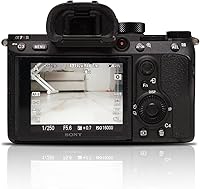
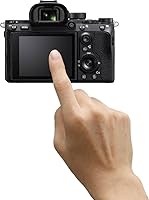
- Screen: 3-inch tilting LCD touchscreen with 1,440,000-dot resolution, enabling low-angle and overhead composition without removing the camera from your eye.
- Card Slots: Dual card slots with Slot 1 supporting UHS-II speed-class SD cards and Slot 2 supporting UHS-I SD and Memory Stick Duo Hybrid media.
- Lens Mount: Sony E-mount with full-frame coverage, compatible with all FE-series lenses and A-mount lenses via the optional LA-EA3 or LA-EA4 adapter.
- Connectivity: Built-in Wi-Fi, Bluetooth 4.1, NFC, Micro-HDMI output, USB 3.0 Type-A, 3.5mm headphone jack, and 3.5mm microphone input.
- Flash Sync: Maximum flash sync speed of 1/250 sec, with TTL metering support and a standard ISO hot shoe for compatible flash units.
- Body Weight: Body-only weight of 16 oz (approximately 565g) without battery or memory card, making it manageable for extended handheld shooting sessions.
- Battery: NP-FZ100 rechargeable lithium-ion battery rated for approximately 650 shots per charge under CIPA standard test conditions.
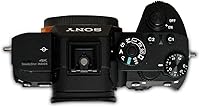
- Weather Sealing: Magnesium alloy body construction with dust and moisture resistance sealing at key joints, buttons, and dials for outdoor shooting reliability.
- File Formats: Captures stills in JPEG (Fine, Normal, Basic) and 14-bit RAW, with simultaneous RAW plus JPEG recording available across both card slots.
- Shutter Speed: Mechanical shutter range spans from 1/8000 sec to 30 seconds, with a silent electronic shutter mode available for noise-sensitive environments.
- Warranty: Covered by a 1-year limited manufacturer warranty from Sony, applicable to the camera body and included accessories under normal use conditions.
Related Reviews
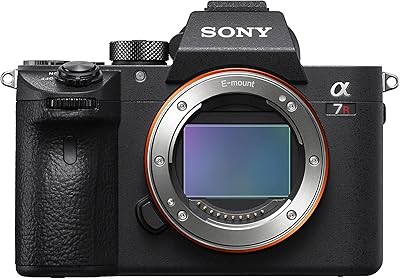
Sony Alpha 7R IV Full-Frame Mirrorless Camera
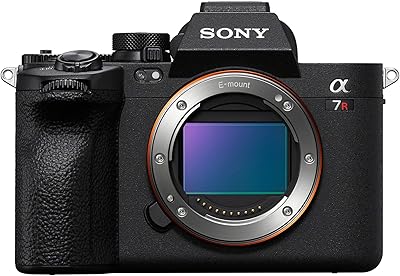
Sony Alpha a7R V
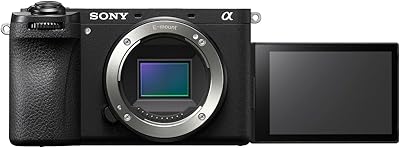
Sony Alpha 6700
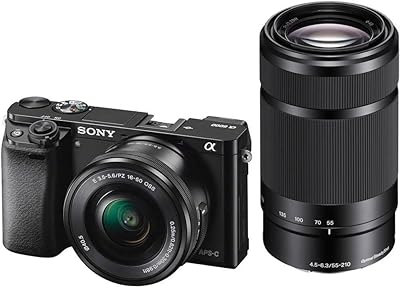
Sony Alpha a6000 Mirrorless Digital Camera
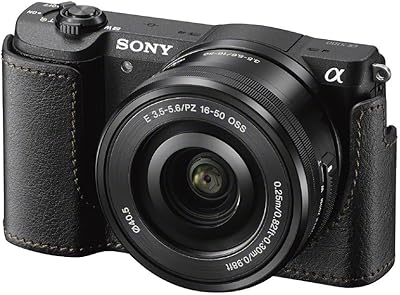
Sony Alpha a5100 16-50mm Mirrorless Camera
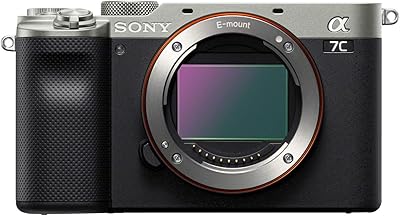
Sony Alpha 7C Full-Frame Mirrorless Camera
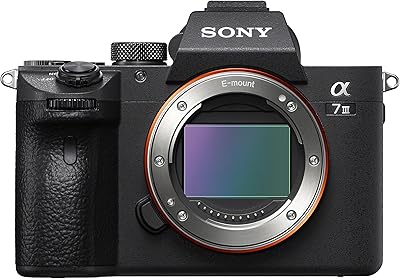
Sony a7 III
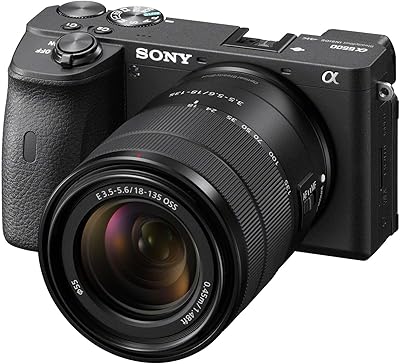
Sony Alpha A6600 Mirrorless Camera with 18-135mm Lens
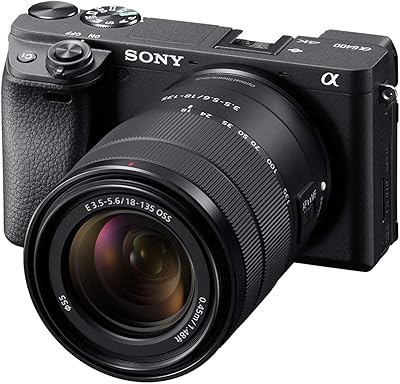
Sony Alpha a6400 18-135mm Mirrorless Camera