Overview

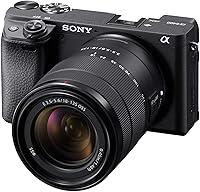
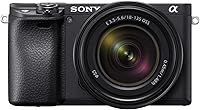
The Sony Alpha a6400 18-135mm Mirrorless Camera sits at an interesting crossroads: not Sony's cheapest APS-C body, nor their most advanced, but arguably the most practical kit for enthusiasts ready to move beyond beginner gear. Paired with the 18-135mm travel zoom, you get genuine wide-to-telephoto flexibility in a single compact package — a real advantage when you don't want to swap lenses mid-trip. The pricing reflects professional-grade autofocus and video capabilities that genuinely compete above this camera's category. If you're a content creator, travel photographer, or dedicated hobbyist wanting serious performance without jumping to full-frame costs, this APS-C camera deserves a close look.
Features & Benefits

The a6400 packs 425-point hybrid autofocus — phase and contrast detection combined — covering 84% of the frame, with real-time Eye AF that locks onto faces with remarkable consistency. Burst shooting reaches 11 fps at full 24.2MP resolution, which is legitimately competitive for sports or fast-moving subjects. The 14-bit RAW files give you solid latitude in post-processing. For video, there's 4K recording alongside built-in slow-motion and time-lapse modes, though 4K does apply a modest crop worth knowing about. The flip-up touchscreen handles self-recording situations well. Wi-Fi and Bluetooth round things out for wireless image transfers and smartphone remote control.

Best For

This APS-C camera makes the most sense for a particular kind of shooter. Travel photographers benefit most from the 18-135mm range — roughly 27mm to 202mm in full-frame equivalent — covering most situations without a second lens in the bag. Solo video creators will appreciate the flip screen and reliable subject tracking for self-recording without needing an operator. Those upgrading from a crop-sensor DSLR will notice the autofocus speed difference almost immediately. Budget-conscious sports and wildlife photographers will find the burst rate genuinely competitive. It's less ideal for professional videographers who need clean, stabilized handheld footage without additional rigging or a gimbal.

User Feedback

Owners consistently point to autofocus reliability as the standout strength — Eye AF earns high marks for portrait and video work in real conditions. The flip screen draws consistent appreciation from solo shooters. That said, two criticisms surface repeatedly: the absence of in-body image stabilization and the NP-FW50 battery's limited endurance. The stabilization gap is felt most during handheld video, and since the bundled lens relies solely on optical stabilization, this matters more than the spec sheet implies. Carrying spare batteries is practically non-negotiable for full-day use. Sony's menu system also frustrates users coming from simpler cameras. Overall satisfaction among hybrid shooters remains high; dedicated video professionals find the workflow constraints more restrictive.

Pros

  • Real-time Eye AF locks onto faces with exceptional speed and holds focus reliably through portraits and video.
  • The 18-135mm focal range handles landscapes, street scenes, and short telephoto portraits without a lens swap.
  • 11 fps continuous shooting at full 24.2MP resolution keeps up with fast-moving subjects effectively.
  • The flip-up touchscreen makes solo video recording practical without any additional monitor accessories.
  • 4K video with built-in slow-motion and time-lapse modes delivers polished results directly from the camera.
  • 14-bit RAW files give photographers strong post-processing latitude for exposure and color corrections.
  • The OLED electronic viewfinder is sharp and color-accurate enough to use comfortably in bright sunlight.
  • Wi-Fi and Bluetooth connectivity supports wireless image transfer and smartphone remote control.
  • The Sony E-mount opens access to a wide and mature ecosystem of native lenses for future upgrades.
  • Compact and travel-friendly weight keeps the kit manageable for all-day shooting without fatigue.

Cons

  • No in-body image stabilization makes handheld video noticeably shaky without a gimbal or external stabilizer.
  • Battery life on the NP-FW50 is genuinely short — plan on buying two or three spares before any serious shoot.
  • 4K recording applies a crop that narrows the field of view beyond what the focal length suggests on paper.
  • Sony's menu system is disorganized and takes significant time to learn, frustrating users coming from simpler cameras.
  • The single memory card slot offers no backup redundancy, which matters for professional or irreplaceable shooting situations.
  • Corner sharpness on the 18-135mm lens softens noticeably wide open, particularly at the extremes of the zoom range.
  • The f/5.6 maximum aperture at 135mm performs poorly in low-light telephoto situations like indoor events.
  • Buffer depth limits sustained RAW bursts, requiring a pause between sequences during prolonged fast-action shooting.
  • No weather sealing on the body limits confidence when shooting in rain or dusty outdoor environments.
  • The tilting screen only moves on a single axis, making portrait-orientation vertical video framing awkward.

Ratings

The Sony Alpha a6400 18-135mm Mirrorless Camera scores below are generated by AI after analyzing thousands of verified global user reviews, with spam, bot submissions, and incentivized feedback actively filtered out. The a6400 earns strong marks in several critical areas — particularly autofocus and subject tracking — but real buyer frustrations around battery life and stabilization are reflected transparently in the numbers. Both what this APS-C camera does exceptionally well and where it falls short are represented honestly across every category.

Autofocus Performance
96%
The real-time Eye AF is genuinely class-leading for an APS-C body — portrait photographers report near-instant lock-on even when subjects turn away or move unpredictably. For video work, the continuous subject tracking holds focus through complex scenes without the hunting behavior that plagues many competitors in this price range.
In very low light, some users note occasional hesitation before the AF confirms, and the tracking can momentarily lose a subject if a large obstruction passes across the frame. These are edge cases rather than everyday failures, but they do occur.
Video Quality
81%
19%
4K footage looks detailed and color-accurate straight from the camera, and the built-in slow-motion and time-lapse modes are genuinely useful for content creators who want finished results without heavy post-processing. The XAVC S codec holds up well for YouTube and social media delivery.
The 4K mode applies a noticeable crop, which narrows the effective field of view more than some users expect — especially relevant when shooting in tighter spaces. Without in-body stabilization, handheld 4K footage can look shaky unless you use a gimbal or rely on digital stabilization, which further crops the image.
Image Quality
88%
The 24.2MP APS-C sensor produces clean, detailed files with strong dynamic range, and 14-bit RAW output gives photographers solid latitude for exposure and color corrections in editing. Colors in JPEG output are natural rather than oversaturated, which experienced shooters tend to appreciate.
At higher expanded ISO values — above 25600 — noise becomes visibly intrusive and fine detail starts to soften noticeably. The sensor is competitive for its class, but full-frame bodies at similar price points do pull ahead in low-light latitude.
Battery Life
47%
53%
The NP-FW50 charges via USB, which is a practical convenience for travelers topping up from a power bank overnight. For short shooting sessions or casual day trips with disciplined screen usage, the battery can get you through a morning comfortably.
This is the most consistently cited frustration across user reviews. A single charge realistically covers 250 to 350 shots under normal conditions — far below what most enthusiasts expect at this price point. Owners who shoot events, travel days, or extended video sessions almost universally buy two or three spare batteries before their first serious outing.
Image Stabilization
53%
47%
The 18-135mm lens does include optical stabilization, which helps meaningfully during still photography at slower shutter speeds. For everyday handheld stills, the lens-based OSS does a reasonable job reducing blur caused by minor camera movement.
The absence of in-body image stabilization is a genuine limitation, particularly for video. Without IBIS, even walking shots produce noticeable wobble, and the lens stabilization alone cannot compensate for full-body movement. Users shooting video handheld without a stabilizer rig will find the footage unusable in many situations.
Build Quality & Ergonomics
77%
23%
The body feels solid and well-assembled for its compact size, with a grip that works comfortably for medium-sized hands during extended shooting. The overall weight with the 18-135mm attached stays manageable enough for all-day travel use without causing fatigue.
There is no weather sealing on the a6400 body, which limits confidence when shooting in light rain or dusty environments — a real concern for travel photographers. The button layout can feel cramped, and users with larger hands sometimes struggle with precise control adjustments during shooting.
Flip Screen & Display
83%
The fully tilting LCD is genuinely useful for vloggers and solo shooters — flipping it forward lets you monitor your framing without guessing, which makes a real practical difference for anyone recording themselves regularly. The touchscreen functionality for focus point selection is responsive and intuitive.
The screen only tilts on a single axis, so it cannot rotate fully sideways for portrait-orientation vertical content, which is increasingly important for short-form video creators. At 921,600 dots the resolution is adequate but not sharp enough to accurately judge fine focus in bright outdoor conditions.
Lens Performance (18-135mm)
74%
26%
The 18-135mm focal range is remarkably versatile as a single travel lens, covering architecture and landscapes at the wide end and reaching usable telephoto compression at 135mm. Sharpness in the center of the frame is strong at mid-range focal lengths, and the 7-blade aperture produces pleasant enough background rendering for portraits.
Corner sharpness is noticeably softer wide open, and some chromatic aberration is visible at the extremes of the zoom range. The maximum aperture of f/5.6 at the long end makes it a poor choice in low light at telephoto distances, which limits its usefulness for indoor sports or dimly lit events.
Continuous Shooting & Buffer
79%
21%
11 fps at full 24.2MP resolution is a strong specification for an APS-C body, and in practice the burst mode is fast enough to capture decisive moments in sports and wildlife scenarios that would challenge many competitors in the same category.
The buffer depth is not unlimited — sustained RAW bursts will slow down after roughly 46 frames, requiring a pause before the camera can continue at full speed. Using slower memory cards compounds this issue noticeably, so fast UHS-I cards are effectively a required accessory.
Viewfinder Quality
82%
18%
The XGA OLED electronic viewfinder with 2.36 million dots is a step up from what you typically find at this price tier, delivering a clear, color-accurate view that holds up in bright sunlight where rear screens struggle. Magnification at 1.07x feels natural for eye-level shooting.
In very fast action sequences, some users detect slight lag in the EVF refresh that takes adjustment if you are coming from an optical viewfinder. The eyecup is also on the smaller side, making it less comfortable for extended use with glasses.
Menu System & Usability
58%
42%
Once configured to your preferences, the customizable function menu and assignable buttons make the day-to-day shooting experience reasonably efficient. Experienced Sony users will feel at home quickly, and the touchscreen helps navigate menus faster than button-only systems.
Sony's legacy menu architecture is genuinely confusing for new users — settings are scattered across tabs without obvious logic, and finding specific options for the first time often requires a manual search. Several professional video users cite menu complexity as a persistent frustration even after months of ownership.
Wireless Connectivity
71%
29%
Both Wi-Fi and Bluetooth are present, and the Imaging Edge Mobile app allows wireless image transfer and basic remote control from a smartphone. Bluetooth maintains a persistent low-power connection for location tagging, which is a useful feature for travel photography workflows.
Transfer speeds over Wi-Fi are slower than a direct USB or card reader transfer, making it impractical for moving large RAW batches. The companion app has a mixed reputation for stability on some Android and iOS versions, and users occasionally report dropped connections requiring a camera restart.
Value for Money
72%
28%
For buyers who genuinely need the autofocus performance and 4K video capability, the a6400 kit delivers tangible capability that justifies the premium over budget mirrorless options. The included 18-135mm lens adds significant value by covering a range that would otherwise require two or three primes.
At this price point, the lack of IBIS and the weak battery feel harder to forgive than they might on a cheaper body. Buyers who primarily shoot stills and do not need the advanced AF can find comparable image quality at meaningfully lower cost from competing APS-C systems.
Low-Light Performance
76%
24%
Up to ISO 3200 the a6400 produces clean, usable files with good detail retention, and the real-time Eye AF maintains impressive accuracy even in dimly lit indoor environments where other systems start hunting. For concert photography or indoor events at moderate ISO settings, results are consistently solid.
Above ISO 6400, luminance noise becomes visible and color noise begins to affect skin tones in ways that require careful noise reduction in post-processing. The cropped sensor simply cannot match the light-gathering ability of full-frame alternatives at the same expanded ISO settings.

Suitable for:

The Sony Alpha a6400 18-135mm Mirrorless Camera is built for shooters who want genuinely capable autofocus and hybrid photo-video performance without committing to a full-frame system. Travel photographers will get the most out of this kit — the 18-135mm range covers the vast majority of real-world shooting situations in a single lens, which is a meaningful practical advantage when you are moving between cities or hiking with limited bag space. Solo content creators and vloggers benefit particularly from the flip screen combined with real-time Eye AF, since you can record yourself without a second person operating the camera and trust the focus to stay locked. Enthusiasts upgrading from a crop-sensor DSLR will notice an immediate and significant improvement in autofocus speed and subject tracking, making the transition feel like a genuine step forward rather than a lateral move. The a6400 also suits sports and wildlife photographers working within a tighter budget who need 11 fps burst shooting and reliable tracking AF — capabilities that used to require spending considerably more.
Not suitable for:

Buyers who prioritize smooth, stabilized handheld video should think carefully before committing to the Sony Alpha a6400 18-135mm Mirrorless Camera. Without in-body image stabilization, any walking or moving footage will require a gimbal or stabilizer rig to look polished — the lens-based optical stabilization helps for static shots but does not compensate for full-body movement during video. Photographers who shoot long days without access to charging — wedding shooters, full-day event photographers, or backcountry hikers — will find the NP-FW50 battery frustrating unless they are prepared to carry multiple spares as a matter of routine. Professional video operators who need a clean, deep menu system and reliable on-set workflow will likely find Sony's legacy interface cumbersome compared to more video-centric alternatives. Buyers primarily interested in still photography at a more modest budget should also consider whether the advanced AF system justifies the price premium over competing APS-C bodies that offer comparable image quality at a lower cost.

Specifications

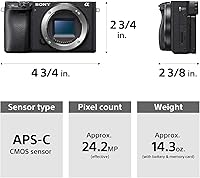
  • Sensor: 24.2MP APS-C Exmor CMOS sensor with 14-bit RAW output and an expanded ISO range of 100 to 102400.
  • Autofocus System: Hybrid phase and contrast detection autofocus with 425 phase-detection points and 425 contrast-detection points covering 84% of the sensor area.
  • AF Speed: Real-time Eye AF and subject tracking with an autofocus acquisition speed of approximately 0.02 seconds under ideal conditions.
  • Continuous Shooting: Up to 11 fps continuous shooting at full 24.2MP resolution with continuous autofocus and auto-exposure active.
  • Video Recording: Records 4K (2160p) video in XAVC S and AVCHD formats, with built-in slow-motion, quick-motion, and time-lapse movie modes.
  • Viewfinder: XGA OLED Tru-Finder electronic viewfinder with 2.36 million dots, 1.07x magnification, and approximately 100% frame coverage.
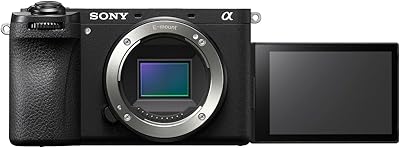
  • LCD Screen: 2.95-inch tilting touchscreen LCD with 921,600 dots that flips 180 degrees upward for self-recording and vlogging use.
  • Lens Included: Sony E-mount 18-135mm f/3.5-5.6 OSS zoom lens with a 35mm equivalent focal range of 27mm to 202.5mm and 7-blade aperture.
  • Image Stabilization: Optical SteadyShot stabilization is provided by the included lens only; the camera body does not include in-body image stabilization (IBIS).
  • Memory Storage: Single card slot compatible with SD, SDHC, SDXC, and Memory Stick Duo media with UHS-I bus interface support up to U3 speed class.
  • Battery: Powered by the NP-FW50 rechargeable Lithium-Ion battery, rated for approximately 360 shots per charge under CIPA standard testing conditions.
  • Connectivity: Built-in Wi-Fi and Bluetooth for wireless image transfer and remote control, plus Micro-HDMI video output and a Micro-USB port for charging and tethering.
  • Lens Mount: Sony E-mount, fully compatible with all native Sony E-mount lenses including full-frame FE lenses used in APS-C crop mode.
  • File Formats: Captures still images in JPEG and RAW (ARW) formats, and records video in AVCHD, XAVC S (H.264), and MPEG-4 formats.
  • Shutter Speed: Mechanical shutter range spans from 30 seconds to 1/4000 second, with a maximum flash sync speed of 1/160 second.
  • Shooting Modes: Includes single shooting, continuous Hi/Mid/Lo burst, self-timer (2, 5, and 10 seconds), single and continuous bracket, white balance bracket, and DRO bracket modes.
  • Weight: Approximately 1.6 lbs (725g) with the 18-135mm lens attached, battery, and memory card included.
  • Warranty: Covered by a 1-year limited manufacturer warranty from Sony covering defects in materials and workmanship under normal use conditions.

Related Reviews
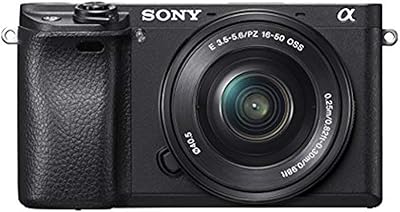
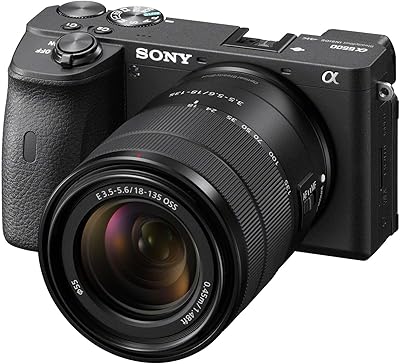
Sony Alpha A6600 Mirrorless Camera with 18-135mm Lens
87%
96%
Autofocus Performance
92%
Image Quality
91%
Video Quality
85%
Ease of Use
89%
Build Quality
More
Sony Alpha A6300 Mirrorless Camera with 18-135mm Lens
84%
93%
Autofocus Performance
89%
Image Quality
91%
4K Video Recording
88%
Build Quality
90%
Portability/Weight
More
Sony Alpha 6700
Sony Alpha 6700
82%
93%
Autofocus Performance
91%
Video Quality
89%
Image Quality & Sensor
86%
Image Stabilization
58%
Battery Life
More
Sony Alpha a6000 Mirrorless Digital Camera
84%
96%
Autofocus Speed
91%
Image Quality
63%
Battery Life
88%
Portability/Weight
84%
Build Quality
More
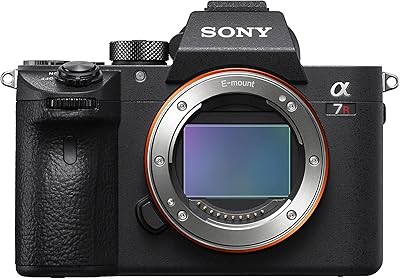
Sony Alpha 7R III Mirrorless Camera
78%
96%
Image Quality
91%
Autofocus Performance
89%
Build Quality & Ergonomics
53%
Battery Life
58%
Menu System & Usability
More
Sony Alpha 7C Full-Frame Mirrorless Camera
80%
93%
Autofocus Performance
91%
Image Quality
94%
Portability & Size
86%
Video Capability
62%
Battery Life
More
Sony Alpha a5100 16-50mm Mirrorless Camera
84%
91%
Image Quality
88%
Autofocus Performance
89%
Video Recording Quality
94%
Portability & Size
85%
Ease of Use
More
Sony Alpha 7R IV Full-Frame Mirrorless Camera
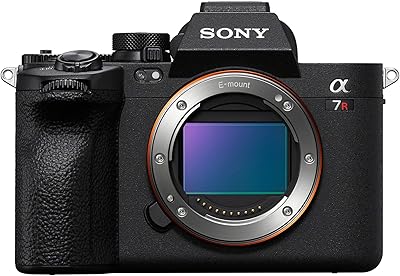
80%
97%
Image Quality & Resolution
91%
Autofocus Performance
94%
Dynamic Range
78%
Continuous Shooting Speed
83%
In-Body Image Stabilization
More
Sony Alpha a7R V
Sony Alpha a7R V
78%
97%
Image Quality
91%
Autofocus Performance
78%
Video Capabilities
88%
Autofocus Tracking Consistency
84%
Build Quality & Ergonomics
More
Sony ZV-E1
Sony ZV-E1
78%
94%
Video Quality
92%
Autofocus Reliability
91%
Image Stabilization
89%
Low-Light Performance
78%
Build Quality & Ergonomics
More

FAQ

No, it does not. The camera body itself has no built-in stabilization — the only stabilization you get comes from the optical SteadyShot system inside the included 18-135mm lens. For still photography this works reasonably well, but for handheld video it is not enough on its own. If smooth video is important to you, budget for a gimbal stabilizer alongside this kit.

It is a legitimate concern. Under real-world shooting conditions — especially with the LCD on and autofocus active — you can expect somewhere between 250 and 380 shots per charge. For a casual afternoon shoot that may be enough, but for travel days, events, or extended video sessions it is not. Most owners buy at least two spare NP-FW50 batteries before their first serious trip, and that is genuinely good advice.

The a6400 uses the Sony E-mount, so it is natively compatible with all Sony E-mount and FE lenses. For lenses from other mounts — Canon EF, Nikon F, Sigma, Tamron, and others — you can use third-party adapters, though autofocus performance will vary depending on the adapter quality and the specific lens. Native E-mount lenses will always give you the best AF speed and Eye AF compatibility.

There is a crop. When shooting in 4K, the a6400 reads from a portion of the sensor rather than the full width, which effectively narrows your field of view beyond what the lens focal length suggests. At 18mm, you will not be getting a true ultra-wide angle in 4K. If wide-angle 4K coverage matters to you, factor this in — or use 1080p, which does not apply the same crop.

It is genuinely useful for solo recording. The screen tilts fully forward so you can see yourself while filming, which makes a real practical difference when shooting YouTube content, travel vlogs, or tutorials without an assistant. The touchscreen lets you tap to adjust focus while recording as well. The main limitation is that it only tilts on one axis, so if you need to shoot vertical content for Instagram Reels or TikTok while monitoring your framing, the angle is awkward.

It is one of the strongest selling points of this APS-C camera and it holds up well in practice. For portrait photography, the camera locks onto eyes quickly and maintains focus even when subjects turn their heads or move unpredictably. In video, it smoothly tracks a subject across the frame without the sudden hunting or refocusing jumps you see in some competitors. Low-light performance is solid up to moderate ISO levels, though very dark environments will challenge it like any system.

You want a UHS-I card rated at V30 or U3 speed class at minimum — this is especially important if you plan to shoot 4K video or sustained RAW bursts. Cards from reputable brands like Sony, SanDisk, or Lexar in the 64GB to 128GB range are a practical choice. Avoid cheap no-name cards; they can throttle the buffer performance during fast continuous shooting and occasionally cause write errors during 4K recording.

It handles sports and wildlife better than you might expect from an APS-C body at this price tier. The 11 fps burst rate and real-time subject tracking work well for capturing fast action, and the 18-135mm lens gives you useful reach at the telephoto end. The main limitation is the f/5.6 maximum aperture at 135mm, which struggles in lower light conditions like indoor sports or overcast wildlife settings. For outdoor daytime action, it is a genuinely capable option.

Yes, the NP-FW50 battery can be charged in-body via the Micro-USB port, which is convenient for travel when you want to top up from a laptop or power bank overnight. That said, USB charging is slower than using a dedicated external charger. If you are buying spare batteries — which is strongly recommended — consider also picking up a dual-slot external charger so you can charge two batteries simultaneously.

The core shooting experience is straightforward enough — the auto and scene modes work well without touching the manual settings. The real challenge is Sony's menu system, which is notoriously deep and somewhat scattered in its organization. Finding specific settings for the first time often requires searching the manual. Most new users spend a few sessions getting comfortable with the layout before things click, but the touchscreen and customizable function buttons help considerably once you set them up to match your workflow.

Where to Buy