Overview

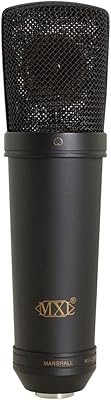
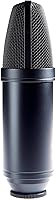
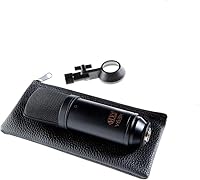
The MXL V63M Condenser Studio Microphone has been a quiet constant in the home recording world since 2008, and that longevity is worth noting. This isn't a mic that reinvents anything — it's a large-diaphragm condenser built around a brass housing, bundled with a shockmount, and designed for people who are ready to record seriously. One thing to clarify early: XLR-only connectivity means you cannot plug this directly into a computer. You will need an audio interface or mixer. That adds to the total cost, so factor it in before purchasing. Treat it as a deliberate studio tool rather than a plug-and-play solution, and it fits its niche well.

Features & Benefits

The V63M's 76 dB signal-to-noise ratio is a solid baseline for vocal and voice-over work — it means the mic stays quiet in the background and lets your actual recording breathe. The cardioid polar pattern handles rear rejection reasonably well, though it will still pick up reflections and ambient noise in an untreated room, so don't expect miracles without some acoustic treatment. Full-range frequency response from 20 Hz to 20 kHz ensures nothing obvious gets cut off at either end. The brass body adds weight and rigidity that cheap plastic-chassis mics simply don't have. And the bundled shockmount isn't an afterthought — it genuinely isolates the capsule from desk vibrations and handling rumble from day one.

Best For

This studio microphone makes the most sense for someone who already has — or is planning to buy — an audio interface and wants a capable condenser without spending heavily. Home studio vocalists will get the most out of it, especially those recording in a somewhat treated space. Podcasters and streamers who've outgrown their USB mic and want to step into a proper XLR chain will find it a practical upgrade. Voice-over artists doing commercial or narration work in a home booth should feel comfortable with its output. It also tracks acoustic instruments like guitar and piano with decent results. Where it struggles is in completely bare rooms — if your recording space is untreated, manage your expectations accordingly.

User Feedback

Among buyers, the condenser mic holds a 4.4-star average, and the recurring themes in reviews tell a fairly consistent story. On the positive side, people consistently mention the warm tonal character and the surprisingly solid build quality for the price tier. The included shockmount draws genuine appreciation — most buyers say it works well out of the box with no additional gear needed. The criticism that comes up most often is sensitivity to room noise; several users noted that recordings in untreated spaces sound noticeably roomy. A handful of first-time buyers were caught off guard by the need for a separate audio interface. Nobody who already owned one seemed to mind. Overall, complaints tend to reflect environment or setup rather than any core flaw in the mic itself.

Pros

  • Warm, full-bodied tone that flatters vocals and acoustic instruments right out of the box.
  • 76 dB signal-to-noise ratio keeps background self-noise impressively low for this price tier.
  • Brass body construction feels solid and durable — nothing rattles or flexes under normal handling.
  • Bundled shockmount is genuinely functional and reduces vibration noise without any extra spending.
  • Full 20 Hz to 20 kHz frequency response means no obvious roll-off at either end of the spectrum.
  • Cardioid polar pattern provides useful rear rejection, helping isolate the source in semi-treated spaces.
  • Has maintained a consistent positive reputation since 2008, signaling real-world staying power.
  • Compact and lightweight enough to work comfortably on most standard mic stands and boom arms.
  • Strong 4.4-star average across verified buyers reflects genuine satisfaction, not just early hype.

Cons

  • Requires a separate audio interface for phantom power — beginners often underestimate this added cost.
  • Highly sensitive to room acoustics; recordings in bare, untreated spaces can sound noticeably roomy.
  • Fixed cardioid pattern only — no multi-pattern flexibility for more advanced recording scenarios.
  • No onboard controls such as a pad switch or high-pass filter, limiting versatility in louder environments.
  • The included shockmount, while functional, can feel a bit lightweight compared to aftermarket options.
  • With only 23 ratings on Amazon, the review pool is small, making it harder to assess long-term durability trends.
  • Not well-suited for loud sound sources like close-miked guitar amps without external attenuation.
  • Competes in a crowded entry-level condenser segment where newer rivals offer more features at similar prices.

Ratings

The scores below reflect an AI-driven analysis of verified buyer reviews for the MXL V63M Condenser Studio Microphone, sourced globally and filtered to remove incentivized, bot-generated, and outlier feedback. Every category is scored on the basis of what real users consistently reported — both the strengths that kept buyers satisfied and the friction points that caused genuine frustration. The result is an honest, balanced picture of where this studio microphone earns its reputation and where it falls short.

Sound Quality
83%
Buyers recording vocals and acoustic instruments consistently praised the warm, natural character of the audio output — particularly for singing and voice-over work where harshness or thinness would be immediately noticeable. The full 20 Hz to 20 kHz response means nothing useful gets cut off at either end of the frequency range.
A portion of users found the tone slightly colored rather than neutral, which can be a drawback for those who prefer a flatter, more transparent capture. In direct comparisons with newer competing models, some reviewers noted the V63M's high-frequency detail felt slightly rolled off.
Build Quality
81%
19%
The brass body construction gives this condenser mic a noticeably solid feel that buyers consistently commented on — especially those upgrading from plastic-chassis budget mics. Reviewers noted it feels properly weighted and stable on a stand, and nothing rattles or flexes under everyday studio handling.
The finish on some units showed minor scuffing after extended use, and a small number of buyers reported that the brass body was susceptible to fingerprints and smudging in visible ways. It feels durable, but it is not quite at the level of mics built with aerospace-grade materials.
Vocal Performance
86%
Home studio singers were among the most satisfied buyers, with many noting the mic captures vocal warmth and mid-range body without requiring heavy post-processing EQ. For spoken word recording — podcasts, audiobooks, voice-over sessions — the output was consistently described as smooth and broadcast-ready in a treated space.
Vocalists with naturally bright or sibilant voices occasionally found the mic exaggerated those qualities slightly, requiring de-essing in post. The mic also demands a relatively consistent source level, and dynamic vocalists who move around a lot reported uneven capture compared to mics with tighter proximity handling.
Noise Performance
74%
26%
The 76 dB signal-to-noise ratio is genuinely competitive for an entry-to-mid-tier condenser, and users recording in treated home booths found the self-noise impressively low during quiet vocal passages and delicate acoustic instrument takes. The capsule stays out of its own way when the recording environment cooperates.
In untreated rooms — which describes the majority of first-time home studio setups — the mic's sensitivity becomes a liability, picking up air conditioning hum, computer fan noise, and room reflections with uncomfortable clarity. Several buyers specifically warned that this is not a forgiving mic for imperfect recording environments.
Value for Money
79%
21%
Most buyers who understood the XLR requirement going in felt the V63M delivered strong results relative to what they paid, especially when factoring in the bundled shockmount that would cost extra elsewhere. The brass build and above-average noise floor make it feel like a step up from similarly priced plastic-body competitors.
The total cost of ownership is higher than the sticker price suggests once you add an audio interface, making it less of a budget buy than it initially appears. A growing number of competing mics at a similar price now include features like built-in pads or high-pass filters, making the V63M feel slightly bare by comparison.
Shockmount Quality
71%
29%
Unlike many microphones in this range that ship without any mounting accessory, the included shockmount is a functional, day-one addition that meaningfully reduces handling vibrations and desk rumble. Buyers appreciated not having to source a compatible shockmount separately, which can be a surprisingly annoying compatibility puzzle.
Several users noted the shockmount feels lighter than the mic itself, and a few reported that the elastic suspension showed wear after several months of regular use. It does the job, but buyers who intend to use the mic heavily over a long period may eventually want to invest in a more robust third-party alternative.
Ease of Setup
62%
38%
For buyers who already own an audio interface, setup is genuinely straightforward — connect the XLR cable, enable phantom power, and the mic is ready to record. Experienced home studio users reported being up and running within minutes, with no driver installation or software configuration required.
First-time buyers who were unaware of the phantom power and interface requirement hit a wall immediately upon unboxing. A meaningful portion of negative reviews stemmed specifically from this setup barrier, with some buyers returning the mic because they had no way to power it — a frustration that better product marketing could have prevented.
Polar Pattern Usefulness
69%
31%
The fixed cardioid pattern is the right choice for the majority of solo recording scenarios — it provides useful rear rejection that helps isolate a single voice or instrument from the rest of the room, which is what most home studio users actually need on a daily basis.
The lack of any pattern switching means the V63M cannot be repurposed for stereo recording techniques, room miking, or interview scenarios where an omni or figure-eight pattern would be useful. Users who want a mic that can grow with their skills into more advanced applications will eventually feel constrained by this limitation.
Instrument Recording
72%
28%
Buyers who used this studio microphone on acoustic guitar and piano reported pleasing, natural results — the full-range capsule captures string resonance and key transients without sounding artificially hyped. For home demo recordings and content creation, it performed well above what its price tier might suggest.
It is not an ideal choice for loud sources like close-miked amplifiers or drum overheads, lacking a pad switch to handle high SPL without distorting. Recording brass or louder woodwinds at close range also proved challenging for some users, as the mic clips before a dynamic alternative would.
Durability Over Time
77%
23%
The fact that this mic has remained on the market since 2008 without being discontinued is a quiet but meaningful endorsement — products that fail in the field at scale tend to disappear. Long-term owners who reviewed the mic after years of use generally reported consistent, stable performance with no degradation in output quality.
Condenser capsules are inherently more sensitive to humidity and dust than dynamic mics, and a handful of long-term reviewers noted gradual tonal changes after years of use in non-climate-controlled spaces. Storage in a case when not in use was a recurring recommendation from users who had owned the mic for extended periods.
Compatibility
84%
Standard 3-pin XLR means this condenser mic plays nicely with virtually any interface, mixer, or preamp on the market — there are no proprietary connectors or unusual power requirements to worry about. DAW compatibility is a non-issue; once the interface is recognized by the computer, the mic just works.
The XLR-only design is both a strength and a bottleneck — it completely locks out buyers who work exclusively with USB-equipped computers, tablets, or mobile devices without an adapter chain. As mobile and hybrid recording setups grow more common, this limitation will feel increasingly narrow for a segment of potential buyers.
Room Sensitivity
55%
45%
For buyers recording in purpose-built booths or rooms with dedicated acoustic treatment, this sensitivity is actually an asset — the mic picks up subtle room character and natural reverb that helps recordings sound alive rather than sterile.
In the vast majority of real-world home setups — spare bedrooms, home offices, living rooms — the mic's high sensitivity translates directly into frustrating background noise, HVAC rumble, and echo artifacts. This was the single most consistent complaint across negative reviews and genuinely limits who can get the best out of this mic.
Frequency Accuracy
76%
24%
The full 20 Hz to 20 kHz response captures the complete audible spectrum, and buyers recording vocals noted a pleasing presence boost in the upper mids that adds intelligibility without excessive sharpness — useful for podcast and voice-over work where spoken word clarity matters.
The frequency character is not perfectly flat, and more analytical listeners noticed a slight warmth bias that can make certain sound sources feel slightly colored compared to reference-grade condensers. Mix engineers working with multiple tracked sources occasionally flagged the need for corrective EQ to sit the V63M's output cleanly in a busy mix.

Suitable for:

The MXL V63M Condenser Studio Microphone is a strong fit for anyone building their first serious home recording setup around an XLR-based signal chain. Home studio vocalists who record singing or spoken word will appreciate its warm tone and full-range capture, especially if they already own a capable audio interface. Podcasters and streamers who have outgrown USB mics and want cleaner, more professional-sounding audio without a steep investment will find the V63M a practical and well-rounded step up. Voice-over artists working in a reasonably treated home booth should get reliable, consistent results from session to session. Beginner musicians looking to track acoustic guitar, piano, or similar instruments will also find this condenser mic performs well beyond what budget plastic-body alternatives typically offer. The bundled shockmount means you can get started immediately without hunting for compatible accessories, which is a genuine time-and-money saver for new studio builders.

Not suitable for:

The MXL V63M Condenser Studio Microphone is a poor choice for anyone expecting a true plug-and-play experience — this mic requires phantom power delivered through an audio interface or mixer, which is a separate purchase that adds meaningfully to the total cost. If you are a complete beginner who just wants to record directly into a laptop or PC with no additional gear, a USB microphone will serve you far better without the extra complexity. Buyers recording in completely untreated rooms — bare walls, hard floors, no acoustic panels — will likely be frustrated by how much ambient noise and room reflection this condenser mic picks up; cardioid does not mean noise-immune. Professional voice-over artists or musicians who need ultra-low noise floors and pristine transient detail for commercial-grade deliverables may find this studio microphone sits just below the threshold of what their clients expect. And anyone who wants multi-pattern capability — switching between cardioid, omni, and figure-eight — will need to look elsewhere, as the V63M offers only a fixed cardioid pattern.

Specifications

  • Brand: Manufactured by MXL, a brand under Marshall Electronics known for producing accessible professional-grade audio equipment.
  • Model: The V63M is the specific model designation for this large-diaphragm condenser microphone, sold as a kit including a shockmount.
  • Mic Type: Large-diaphragm condenser microphone, designed to capture nuanced vocal and instrument recordings with sensitivity and warmth.
  • Polar Pattern: Fixed cardioid (unidirectional) pattern, which picks up sound primarily from the front and naturally rejects noise from the rear.
  • Frequency Response: Captures audio across the full 20 Hz to 20 kHz range, covering the complete audible spectrum relevant to vocals and acoustic instruments.
  • Signal-to-Noise: Rated at 76 dB signal-to-noise ratio, indicating a quiet capsule that minimizes self-noise during clean vocal and voice-over recordings.
  • Connector: Uses a standard 3-pin XLR connector, requiring a compatible audio interface, mixer, or preamp to deliver phantom power and pass audio signal.
  • Power Source: Powered exclusively by 48V phantom power supplied through the XLR connection from a compatible audio interface or mixer — no batteries or USB.
  • Body Material: The microphone body and capsule housing are constructed from brass, contributing to its durability and slightly warm tonal character.
  • Dimensions: The microphone body measures approximately 55 mm x 190 mm (roughly 1.85 in. x 7.48 in.), a standard size for large-diaphragm studio condensers.
  • Weight: The microphone weighs 1.4 pounds (approximately 635 g), which is typical for a brass-bodied large-diaphragm condenser in this class.
  • Channels: Mono configuration with a single output channel, suitable for solo vocal recording, voice-over, and standard single-source instrument tracking.
  • Included Accessories: Comes bundled with a shockmount designed to isolate the capsule from handling vibrations and desk or stand rumble during recording sessions.
  • Compatible Devices: Works with any device that provides 48V phantom power via XLR, including desktop and laptop computers connected through an audio interface.
  • Color: Available in black, with the brass body finished to give the microphone a clean, professional studio aesthetic.
  • Market Availability: First made available on July 20, 2008, and remains in active production, indicating consistent market demand and ongoing manufacturer support.

Related Reviews
MXL V250 Condenser Microphone
73%
76%
Vocal Sound Quality
84%
Value for Money
61%
Noise Floor & Sensitivity
67%
Build Quality
81%
Ease of Setup
More
MXL MCA-SP1 Studio Condenser Microphone
73%
77%
Audio Clarity
84%
Build Quality
81%
Value for Money
58%
Ease of Setup
69%
Noise Rejection
More
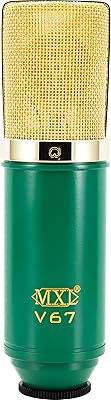
MXL V67G Large-diaphragm Condenser Microphone
77%
83%
Sound Quality
88%
Value for Money
76%
Build Quality
61%
Ease of Setup
74%
Noise Performance
More
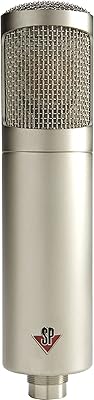
Studio Projects C1 Large-Diaphragm Condenser Microphone
80%
91%
Sound Quality
89%
Capsule Performance
88%
Build Quality
86%
Value for Money
47%
Accessories Included
More
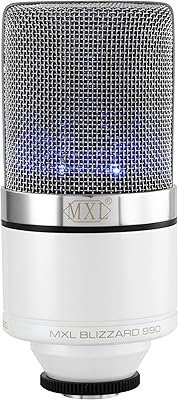
MXL 990 Blizzard Condenser Microphone
85%
91%
Sound Quality
89%
Ease of Use
85%
Background Noise Rejection
82%
Build Quality
78%
LED Lighting Appeal
More
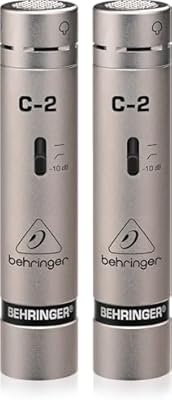
Behringer C-2 Stereo Condenser Microphone Pair
79%
91%
Value for Money
78%
Sound Quality
74%
Stereo Matching Accuracy
83%
Build Quality
86%
Ease of Setup
More
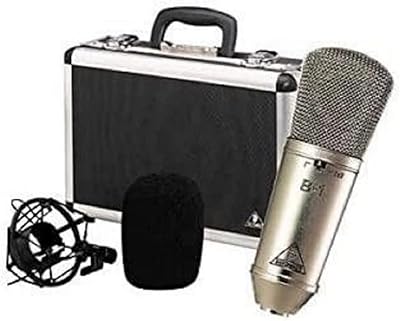
Behringer B-1
Behringer B-1
82%
88%
Vocal Clarity
91%
Build Quality & Durability
94%
Value for Money
86%
Acoustic Instrument Tracking
79%
Background Noise Rejection
More
MXL 2003A Large-Diaphragm Condenser Microphone
77%
78%
Sound Character
61%
Self-Noise Level
82%
Build Quality
84%
Value for Money
86%
Included Accessories
More
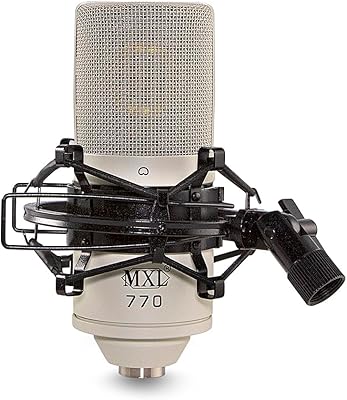
MXL 770
MXL 770
85%
88%
Vocal Clarity
93%
Build Durability
96%
Value for Money
74%
Background Noise Rejection
89%
Feature Versatility
More
MXL V87 Low-Noise Condenser Microphone
78%
86%
Vocal Sound Quality
88%
Build Quality
79%
Value for Money
91%
Noise Performance
41%
Included Accessories
More

FAQ

You will need a separate audio interface or mixer — this mic cannot connect directly to a computer via USB. It uses an XLR connector and requires 48V phantom power to operate. Budget for an interface alongside the mic if you don't already own one.

Any interface that provides 48V phantom power through an XLR preamp input will work — popular options from Focusrite, PreSonus, or Behringer in the entry-to-mid price range are all compatible. Just make sure the interface has at least one XLR input with phantom power enabled.

It's genuinely functional for most setups. It holds the mic securely and does a reasonable job isolating the capsule from vibrations traveling up a stand or boom arm. It's not a boutique spider shockmount, but most users find it does exactly what it's supposed to do without needing an upgrade right away.

Honestly, not as well as some buyers hope. The cardioid polar pattern helps reject noise from behind the mic, but this condenser is still quite sensitive to reflections and ambient room sound. If your recording space has bare walls and hard surfaces, you'll likely hear the room in your recordings. Some basic acoustic treatment makes a real difference.

It's a solid choice if you already have an interface or are planning to buy one. The warm tone works well for spoken word, and the low self-noise keeps your voice clean and upfront. If you want dead-simple USB setup with no extra gear, a USB mic might suit you better — but for audio quality, this condenser mic is a step above most USB options.

It handles acoustic instruments well. The full-range frequency response and sensitive large-diaphragm capsule capture the natural detail of acoustic guitar and piano without sounding harsh or thin. It's not a specialty instrument mic, but it performs capably in a typical home studio context.

Most audio interfaces have a dedicated button labeled 48V or P48 — you enable it per channel or globally depending on your interface model. The mic won't pass any signal without it, so if you're getting silence or a very faint output, that's usually the first thing to check. Always turn phantom power off before unplugging the XLR cable.

A long production run is generally a good sign — it means the mic has held up in the real world and MXL has kept supporting it. The core specs hold up well against modern competition at a similar price point. It isn't the newest design on the market, but it's a known quantity with a genuine track record.

It can absolutely work for streaming, but your room matters more than usual with a condenser mic like this. If you're gaming in a treated office or a space with soft furnishings, you'll get great results. In a live, echoing room, you may prefer a dynamic mic that's naturally less sensitive to ambient noise.

Condenser mics like the V63M are more sensitive and capture more detail and nuance — great for studio vocals, acoustic instruments, and voice-over work in controlled environments. Dynamic mics are more rugged and forgiving in noisy or untreated rooms. If you're recording in a quiet, treated space and care about audio quality, this studio microphone is the stronger choice; if you need something more forgiving of your environment, a dynamic mic is worth considering instead.

Where to Buy