Studio Projects C1 Large-Diaphragm Condenser Microphone
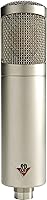
Studio Projects C1 Large-Diaphragm Condenser Microphone — image 1
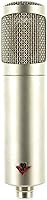
Studio Projects C1 Large-Diaphragm Condenser Microphone — image 2
80%
20%

Overview

The Studio Projects C1 Large-Diaphragm Condenser Microphone has been a quiet fixture in the project studio world since its 2004 release — not flashy, not heavily marketed, but still available and still earning respect. Its fixed cardioid polar pattern and transformerless output circuitry reflect deliberate engineering choices rather than spec-sheet padding, keeping the signal path clean and honest. This sits comfortably in the mid-range condenser category: a meaningful step above plug-and-play USB options, aimed at home studio owners who are ready to invest in a real interface and phantom power setup. The 4.9-star rating across 17 Amazon reviews suggests strong satisfaction, though that sample size warrants some caution.

Features & Benefits

The C1 mic's 27mm mylar diaphragm is the heart of the story. Larger capsules pick up more of the low-frequency detail and air that smaller diaphragms can miss — on acoustic guitar or lead vocals, this translates to a fuller, more natural capture. The switchable pad (-10dB or -20dB) means you can point it at a loud guitar amp or brass instrument without saturating your preamp. The dual high-pass filter options at 75Hz and 150Hz are genuinely useful: flip to 150Hz in a room with heavy AC rumble and the low-end mush clears right up. A 77dB signal-to-noise ratio keeps quiet passages — fingerpicked guitar, breathy vocals — clean and usable.

Best For

This large-diaphragm condenser earns its keep in treated recording spaces — home studios with acoustic panels, vocal booths, or at minimum a room with soft furnishings to tame reflections. Vocalists chasing a transparent, detailed sound rather than heavy coloration will find it suits that goal well. It also handles acoustic instruments — guitar, piano, light strings — with natural ease. Voice-over artists and podcasters who record in controlled environments are solid candidates too. Where it struggles is in bare, reflective rooms: like any large-diaphragm condenser, the C1 mic will pick up every flutter echo and HVAC hum. That's not a flaw; it's just the nature of the format. Plan for room treatment before you buy.

User Feedback

With a 4.9-star average from 17 ratings, the Studio Projects C1 has a small but notably enthusiastic ownership base. Owners consistently point to the tonal character and build quality as highlights — the mic feels and sounds like something made with intention rather than cost-cutting. A few reviewers note it compares favorably to large-diaphragm condensers at higher price points. On the critical side, some buyers wish a shockmount were included; it does not appear to ship with one, which adds to the total cost of ownership. Long-term durability feedback is positive given the model has been in circulation since 2004, though the limited review count means you should weigh the technical merits as much as the rating.

Pros

  • The 27mm diaphragm delivers a full, warm low end that smaller capsule mics simply cannot match.
  • A transformerless output keeps the signal path clean and free of coloration, ideal for transparent vocal tracks.
  • Switchable -10dB and -20dB pads let you close-mike loud sources like guitar amps without clipping your preamp.
  • Dual high-pass filter options at 75Hz and 150Hz give practical, real-time control over low-end room rumble.
  • A 77dB signal-to-noise ratio keeps quiet acoustic sessions — fingerpicked guitar, breathy vocals — clean and usable.
  • The fixed cardioid pattern offers predictable, reliable off-axis rejection well-suited to typical home studio layouts.
  • Owners consistently praise the build quality and tonal character relative to similarly priced large-diaphragm condensers.
  • The model has remained in continuous production since 2004, a strong signal of sustained real-world performance.
  • Versatile enough to handle vocals, acoustic guitar, piano, and voice-over without needing a different mic for each source.

Cons

  • No shockmount appears to be included in the box, so budget for one separately to control handling and stand-borne noise.
  • Only 17 Amazon ratings is a thin dataset — too limited to draw confident conclusions about long-term reliability trends.
  • Requires a phantom-powered audio interface to function at all, adding cost for buyers who are starting completely from scratch.
  • The fixed cardioid polar pattern offers no multi-pattern flexibility for engineers who occasionally need figure-eight or omnidirectional options.
  • At 3.54 pounds and over 13 inches tall, this large-diaphragm condenser demands a heavy-duty stand and secure mounting solution.
  • High sensitivity to room acoustics means results in untreated spaces are likely to disappoint regardless of the mic's quality.
  • No carrying case appears to be bundled, leaving storage and safe transport entirely to the buyer's own resources.
  • The limited accessory package means total out-of-pocket cost — interface, stand, shockmount, cables — will exceed the mic price alone.

Ratings

The scores below are generated by AI after analyzing verified owner reviews for the Studio Projects C1 Large-Diaphragm Condenser Microphone, with spam, bot-driven ratings, and incentivized feedback actively filtered out to preserve accuracy. This analysis covers both what owners consistently praise and where real frustrations surfaced — from transparent sonic character and solid long-term build to the notable absence of a shockmount in the box. Each category score reflects the weight of genuine buyer experience, giving you a clear-eyed picture of where this large-diaphragm condenser excels and where it genuinely falls short.

Sound Quality
91%
Owners consistently describe the tonal character as transparent and detailed without artificial brightness or low-end exaggeration — exactly what vocalists and acoustic instrument players want. On vocal tracks, the 27mm capsule captures nuance and air that entry-level condensers tend to compress or smear, giving recordings a noticeably professional quality even in modest home studio setups.
Because the output is so transparent, any deficiencies in the signal chain — a noisy budget preamp, a poor-quality cable — become more audible than they might with a more forgiving mic. The C1 mic does not flatter or mask; what you feed into the chain is what you hear back, which can expose weaknesses elsewhere in the rig.
Capsule Performance
89%
The 27mm mylar diaphragm handles low-frequency warmth and high-frequency air with an even-handed sensitivity that is rare at this price tier. On acoustic guitar and piano, owners report that the capsule captures transients cleanly without smearing attack or introducing the harshness that cheaper capsules often exhibit under dynamic playing conditions.
The same sensitivity that makes this capsule perform well in a treated room can work against you in noisier environments. Slight phantom power instability from a budget interface, or electrical interference from nearby gear, can affect capsule behavior more perceptibly than it would with a less sensitive design.
Build Quality
88%
The physical construction feels purposeful and solid — owners describe a mic that sits reassuringly heavy in the hand and looks as serious as its price tier suggests. Multiple reviewers with years of ownership note no deterioration in body integrity, hardware finish, or physical switch action, which is meaningful for a mic that has been in continuous production since 2004.
With only 17 Amazon ratings, the ownership dataset is too small to identify failure patterns or long-term component trends with statistical confidence. Without a broader review pool, hidden durability issues — capsule aging, switch contact degradation — could remain undetected across what is ultimately a thin sample size.
Value for Money
86%
For a large-diaphragm condenser with a transformerless output, switchable pad, and dual high-pass filter settings, the C1 mic delivers a compelling amount of recording capability relative to its price tier. Owners regularly note that it competes favorably against microphones priced considerably higher, making it a sensible choice for producers building a serious first mic locker without overspending.
The value calculation shifts when you factor in the missing shockmount and carrying case — both of which any condenser owner will need and neither of which appears to be included in the box. Add a compatible shockmount and a sturdy stand to the total cost, and the initial price advantage narrows against competitors that bundle more accessories from the start.
Accessories Included
47%
53%
For buyers who already own a quality shockmount, a sturdy mic stand, and a carry case from a previous microphone, the sparse accessory package is genuinely a non-issue. In that context, you are not paying a price markup for cheap bundled accessories you would likely replace anyway.
For most buyers, the apparent absence of a shockmount in the box is an immediate and practical problem — using a large-diaphragm condenser without one means stand vibrations travel directly into the capsule and appear as low-frequency rumble in recordings. No protective carrying case means storage and transport safety also fall entirely on the buyer, adding friction and expense from day one.
Low-End Response
87%
The large-diaphragm capsule captures low-frequency content with a warmth and fullness that smaller capsule designs struggle to match, which is immediately noticeable on bass-heavy vocals and close-miked acoustic instruments. On piano and acoustic bass, owners report a bottom end that feels substantial and natural without veering into exaggerated or boomy territory under normal recording conditions.
That same low-end sensitivity amplifies the importance of using the high-pass filter in rooms with bass buildup or proximity effect from close-miked vocalists. Without careful placement or judicious use of the 75Hz or 150Hz rolloff settings, the low end can quickly become muddy in less-than-ideal acoustic environments.
Versatility
83%
The pad and high-pass filter combination means this large-diaphragm condenser can shift between vocal tracking, acoustic guitar, piano, and even moderately loud instrument sources without needing a separate mic for each application. For a home studio producer who wants one well-rounded condenser to cover most everyday recording scenarios, the C1 mic handles more ground than its fixed-cardioid design might initially suggest.
The fixed cardioid polar pattern is the main versatility constraint — there is no figure-eight mode for mid-side stereo work and no omnidirectional option for ambient room capture. Engineers who regularly work with multi-pattern recording techniques or need a single mic to cover a wider range of configurations will feel this limitation as a genuine ceiling.
Onboard Controls
82%
18%
The combination of two pad levels and two high-pass filter points gives this mic real-world flexibility that many competing condensers at this price omit entirely. Engaging the -20dB pad when close-miking brass, or switching to the 150Hz high-pass rolloff during a vocal session in a room with persistent AC hum, are practical tools that genuinely expand what a single mic can handle.
The switches offer only two fixed positions per control rather than a continuous or three-position option, which can feel limiting for engineers who prefer fine-grained adjustment between sessions. In low-light studio conditions, the labeling on the switch positions can be difficult to read quickly, which is a minor but real inconvenience mid-session.
Signal-to-Noise Ratio
84%
A 77dB SNR means that during a quiet acoustic guitar passage or a soft voice-over session, the background noise floor stays comfortably below the signal level, leaving clean and usable audio without heavy noise reduction in post-production. Owners recording gentle sources consistently appreciate that the mic does not add audible hiss to quiet recordings.
While 77dB SNR is solid within this price tier, it does not match the ultra-low noise floors found in higher-end transformerless condensers pushing 80dB or beyond. In demanding professional contexts where an absolutely minimal noise floor is critical — such as recording extremely quiet classical instruments in an isolated booth — more specialized options may outperform it on this specific metric.
Ease of Setup
73%
27%
For anyone already running an audio interface with 48V phantom power, getting the C1 mic operational is genuinely straightforward — connect the XLR cable, engage phantom power, and recording can begin. The fixed cardioid pattern removes polar pattern decision-making from the setup workflow entirely, which simplifies mic placement for less experienced users.
For buyers who do not yet own a phantom-powered audio interface, the setup chain adds meaningful cost and complexity before a single note can be recorded. Unlike USB condenser microphones that need only a cable and a free computer port, this mic requires an interface, an XLR cable, a sturdy stand, and ideally a shockmount — a non-trivial barrier for first-time studio builders.
Room Sensitivity
62%
38%
In professionally treated spaces or dedicated vocal booths, the high sensitivity of this large-diaphragm condenser is a clear asset — it captures the natural character of the room in a flattering, open way that rewards good acoustic environments. Voice-over studios and treated home recording spaces benefit directly from that sensitivity, producing recordings with a sense of space and air that cheaper mics cannot replicate.
In untreated or semi-treated rooms, the same sensitivity becomes a significant liability — every reflective surface, HVAC hum, and ambient noise source gets captured with the same diligence as the intended signal. Buyers without meaningful acoustic treatment in place are likely to be frustrated regardless of mic quality, and no amount of post-processing fully corrects a reverberant room captured at this level of detail.
Long-Term Durability
85%
The C1 mic's uninterrupted 20-plus year production run is itself a meaningful endorsement — microphones that fail structurally or sonically at scale tend to disappear from catalogs, and this one has not. Owners who have used theirs across multiple years report no meaningful shift in tonal character or mechanical performance, which speaks well to the underlying build consistency.
The review pool remains too small to draw statistically confident conclusions about failure rates, capsule aging over time, or switch contact reliability across extended use. Durability assessments ultimately rest more on the mic's sustained production status and a handful of positive long-term observations than on hard, large-sample data from the field.
Off-Axis Rejection
79%
21%
The fixed cardioid pattern handles off-axis rejection predictably and cleanly for a mic in this class, meaning sources positioned behind or to the sides of the capsule are attenuated without introducing unpleasant coloration in the rejected signal. In practical tracking sessions, this helps keep monitor bleed and room reflections reasonably controlled without requiring extreme placement compromises.
Like most cardioid condensers, the null points are fixed rather than adjustable, and the pattern is not as tight as a supercardioid or hypercardioid design would be. In shared-space recordings where multiple sources are tracked simultaneously, the standard cardioid pickup may allow more room bleed and adjacent source contamination than tighter polar patterns would permit.

Suitable for:

The Studio Projects C1 Large-Diaphragm Condenser Microphone is a strong match for home and project studio owners who have already invested in a proper audio interface with 48V phantom power and are committed to building a real recording workflow. Vocalists who prioritize transparency and natural detail over heavily colored or artificially hyped sound will find the fixed cardioid pattern and clean transformerless output well-aligned with that goal. Acoustic instrument players — particularly guitarists, pianists, and those recording light strings — will benefit from the 27mm capsule's ability to capture low-end warmth and natural overtones without introducing unwanted artifacts. The switchable pad and dual high-pass filter settings make it a practical choice for producers who need one mic to cover multiple scenarios, from close-miking a loud guitar amp to tracking a delicate acoustic performance. Voice-over artists and podcasters working in treated spaces, whether a dedicated booth or a well-dampened home office, will also find this large-diaphragm condenser delivers the full, present character that professional voice work demands.

Not suitable for:

Buyers recording in untreated rooms — bare walls, hard floors, minimal soft furnishings — should think carefully before committing, because the Studio Projects C1 Large-Diaphragm Condenser Microphone, like any sensitive large-diaphragm condenser, will expose room problems that a dynamic mic would largely absorb or ignore. Flutter echoes, HVAC hum, and ambient noise that might go unnoticed through a dynamic will be captured clearly and often unforgivably by a 27mm capsule with this level of sensitivity. This mic is also not designed for live stage use or on-location field recording — the condenser design is optimized purely for controlled studio environments with consistent power. If you don't already own an audio interface capable of supplying phantom power, that represents a real additional expense to factor in before budgeting for the mic itself. Buyers seeking a plug-and-play, minimal-setup solution — a USB mic for casual streaming, conference calls, or bedroom content creation — will find this C1 mic more complex and demanding than their use case warrants.

Specifications

  • Capsule Size: The microphone uses a 27mm (1.06″) mylar diaphragm, placing it firmly in the large-diaphragm category for enhanced sensitivity and low-frequency warmth.
  • Polar Pattern: Fixed cardioid (unidirectional) polar pattern provides consistent front-address pickup with natural off-axis rejection at the sides and rear.
  • Pad Settings: A switchable attenuation pad offers two settings — -10dB or -20dB — to handle high-SPL sources without overloading the microphone's input stage.
  • High-Pass Filter: The onboard high-pass filter operates at 6dB per octave and can be set to roll off at either 75Hz or 150Hz to reduce low-frequency rumble and proximity effect.
  • Signal-to-Noise: A signal-to-noise ratio of 77dB ensures that quiet sources such as fingerpicked acoustic guitar or breathy voice-over remain clean and free of intrusive self-noise.
  • Sensitivity: Audio sensitivity is rated at 37dB, reflecting how efficiently the capsule converts acoustic energy into an electrical signal across the frequency range.
  • Output Type: The balanced, transformerless XLR output minimizes tonal coloration and keeps the noise floor low throughout the signal chain from mic to preamp.
  • Power Source: Operation requires 48V phantom power delivered through the XLR connection via a compatible audio interface or standalone preamp — no battery or USB option is available.
  • Connectivity: A standard 3-pin XLR connector serves as the sole audio output, ensuring broad compatibility with professional and prosumer audio interfaces and preamps.
  • Channels: The microphone captures a single mono audio channel per recording pass, designed exclusively for single-source studio applications.
  • Weight: The unit weighs 3.54 pounds, reflecting a solid, full-size large-diaphragm body construction that requires a sturdy mic stand or heavy-duty boom arm for stable support.
  • Dimensions: The microphone body measures 13 x 5 x 10 inches, making it a large-format studio condenser that demands adequate clearance on a stand or boom mount.
  • Diaphragm Material: The capsule diaphragm is constructed from mylar, a thin polyester film widely used in condenser microphone capsules for its acoustic responsiveness and long-term dimensional stability.
  • Manufacturer: Designed and marketed by Studio Projects, a brand under PMI Audio Group, a manufacturer of professional studio microphones with roots in the early 2000s.
  • Model Number: The official model designation is C1, and the product is listed as not discontinued by the manufacturer as of the most recently available product data.
  • Year Introduced: The C1 first became available in April 2004, giving it over two decades of continuous market presence and an established track record in home and project studio environments.

Related Reviews
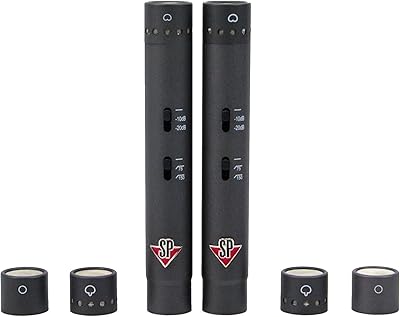
Studio Projects C4 Small-diaphragm Condenser Microphone Pair
76%
83%
Sound Quality
81%
Stereo Matching
74%
Capsule System
78%
Build Quality
79%
Value for Money
More
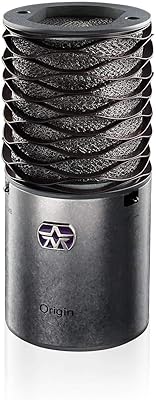
Aston Microphones Origin
85%
94%
Build Quality
89%
Vocal Clarity
92%
Instrument Response
71%
Internal Pop Filtering
91%
Price-to-Performance Ratio
More
Aston Microphones Spirit Large-Diaphragm Condenser Microphone
85%
93%
Sound Quality
96%
Build Quality
89%
Polar Pattern Versatility
88%
Built-in Pop Filter
84%
Value for Money
More
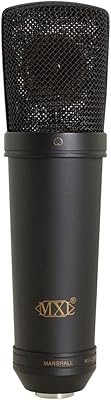
MXL 2003A Large-Diaphragm Condenser Microphone
77%
78%
Sound Character
61%
Self-Noise Level
82%
Build Quality
84%
Value for Money
86%
Included Accessories
More
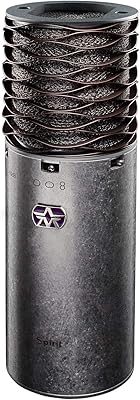
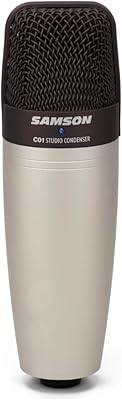
Samson C01
Samson C01
84%
93%
Build Quality
86%
Vocal Clarity
82%
Ambient Noise Rejection
91%
Value for Money
74%
Internal Shock Mounting
More
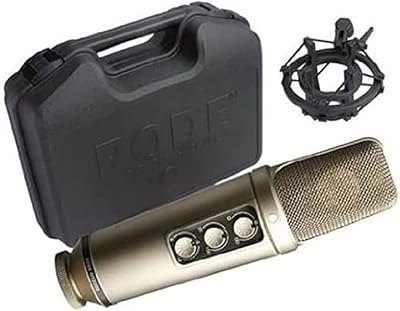
Rode NT2000 Large-Diaphragm Condenser Microphone
82%
94%
Polar Pattern Versatility
91%
Control Flexibility
89%
Sound Quality
66%
Build Quality
93%
Warranty & Long-Term Value
More
Rode NTK
Rode NTK
77%
94%
Vocal Tone & Warmth
91%
Self-Noise & Signal Clarity
88%
Build Quality & Durability
54%
Stand & Mounting Requirements
61%
Ease of Setup
More
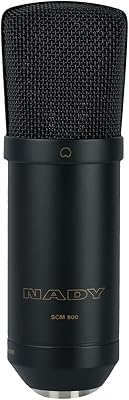
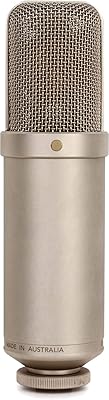
Nady SCM-800 Large Diaphragm Condenser Microphone
71%
74%
Sound Quality
81%
Build Quality
83%
Value for Money
57%
Ease of Setup
71%
Noise Performance
More
Neumann TLM 193 Large-Diaphragm Condenser Microphone
82%
94%
Sound Transparency
91%
Self-Noise Performance
88%
Build Quality
54%
Polar Pattern Versatility
61%
Room Sensitivity
More
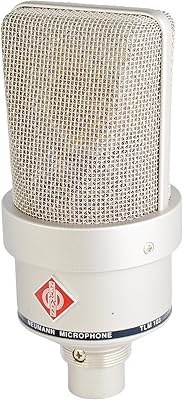
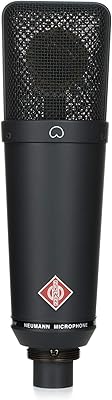
Neumann TLM 103 Large-Diaphragm Condenser Microphone
88%
96%
Sound Transparency
94%
Self-Noise Performance
93%
Build Quality
91%
SPL Handling & Headroom
83%
Sensitivity & Preamp Friendliness
More

FAQ

You'll need an audio interface that supplies 48V phantom power — the C1 mic runs entirely on phantom power through its XLR cable and has no USB connection. Most entry-level interfaces from brands like Focusrite or PreSonus include phantom power, so if you already own one, you're likely covered. If you're starting from scratch, factor the interface cost into your total budget before buying the mic itself.

Based on available product information, a shockmount and carrying case do not appear to be included. This is worth knowing upfront, because a shockmount is essentially a necessity for any large-diaphragm condenser — without one, stand vibrations travel directly into the capsule and show up as low-frequency rumble in recordings. Budget for a compatible shockmount separately before you start tracking.

It's an excellent vocal mic for home studio use, provided your recording space has at least some basic acoustic treatment. The transparent, detailed character of the 27mm cardioid capsule suits both sung vocals and spoken word well. Keep in mind that any large-diaphragm condenser will pick up room acoustics — reflections, air conditioning noise, and street bleed — far more readily than a dynamic mic would. In a reasonably well-treated room, the results can be impressive.

The pad reduces the signal level before it reaches the microphone's internal electronics, protecting the capsule from distorting when facing very loud sources. The -10dB setting handles moderately loud situations like an aggressive acoustic guitarist or a close-miked loud vocalist. The -20dB setting is for genuinely high-SPL scenarios such as a cranked guitar amp or a brass instrument pointed directly at the mic. If you mostly record voice and quiet acoustic instruments, you may rarely touch it — but it's a practical safeguard to have available.

The high-pass filter rolls off low-frequency content below the selected point, which is useful in a few distinct situations. The 75Hz setting is a gentle cut suited for reducing distant rumble — HVAC noise, traffic, building footsteps — while preserving the natural warmth of a voice or instrument. The 150Hz setting is more aggressive and works well when proximity effect is stacking up excessive bass from a close-talking vocalist, or when room acoustics cause persistent low-end muddiness. Start at 75Hz and only step up to 150Hz if the low end still sounds bloated after repositioning the mic or the performer.

It can work for podcasting, but the setup demands may be more than most podcasters want. This large-diaphragm condenser requires a phantom-powered audio interface, a sturdy stand, and ideally a shockmount — that's more infrastructure than a typical podcast workflow calls for. If you're already running an interface-based studio setup and you record in a treated space, the mic will give your voice a full, broadcast-quality character. For podcasters who want simplicity and portability, a dedicated dynamic or USB podcast mic is usually a more practical fit.

It holds up well. The transformerless output design and 27mm capsule are features commonly associated with microphones priced considerably higher, and owners consistently highlight the tonal character and build quality as genuine strengths. That said, only 17 Amazon ratings exist for this mic, so comparative praise should be taken in context rather than treated as a broad consensus. Against popular mid-range condenser competitors, the C1 tends to be recognized for transparency and solidity rather than any artificially brightened or hyped top end.

In a completely untreated room, you'll likely run into real problems. This large-diaphragm condenser is highly sensitive by design, and that sensitivity picks up the room just as readily as it picks up your voice or instrument. Hard parallel walls create flutter echoes, bare floors add slap reverb, and any HVAC system will bleed into your recordings. None of that is a flaw in the mic — it's simply how large-diaphragm condensers behave. If you can add even basic treatment, like acoustic panels behind you or a heavy curtain, results improve noticeably. Otherwise, a cardioid dynamic mic will be more forgiving in an untreated space.

Studio Projects has not publicly announced any significant capsule or circuit revisions since the original 2004 release, and the core specifications remain consistent with what was documented at launch. The fact that the mic has remained in continuous production for over two decades without a publicized major redesign suggests the underlying engineering has held up well in the market. If any quiet manufacturing refinements occurred over the years, they are not reflected in the official product documentation available to date.

Given the size and weight — 3.54 pounds and a 13-inch body — you'll want a solid, heavy-duty stand or boom arm. Lightweight desktop stands designed for compact USB mics will struggle with this large-diaphragm condenser and may tip or sag over time. A floor-based boom stand with a stable tripod base, or a robust desk-mounted boom arm rated for studio condensers, is a much safer choice. Pair it with a compatible shockmount to isolate the capsule from vibrations traveling through the stand itself.

Where to Buy