Overview

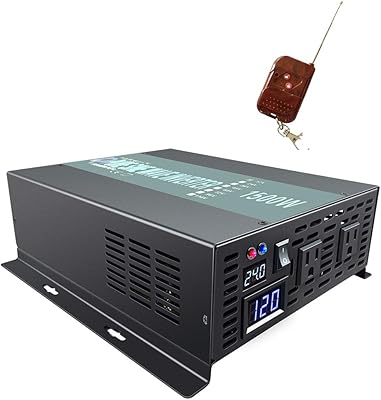
The Yinleader 4000W 24V Pure Sine Wave Inverter is a mid-range option aimed at RV owners, off-grid solar builders, and anyone who needs a reliable AC source when the grid is unavailable. One important detail to flag upfront: this unit requires a 24V DC input, not 12V — a distinction that catches many buyers off guard. Yinleader is a Shenzhen-based manufacturer with limited brand recognition in North America, so temper expectations accordingly. That said, 4000 watts of continuous output with an 8000W surge capacity is genuinely useful — enough to run a full-size microwave and a refrigerator simultaneously. The wireless remote and LED display are practical additions you do not always see at this price point.
Features & Benefits

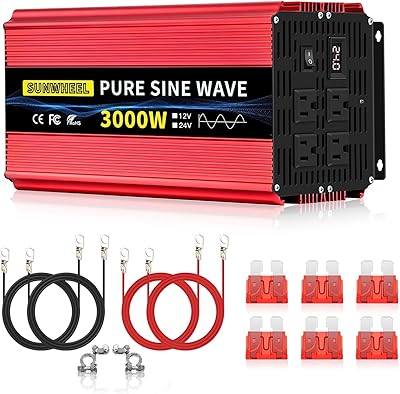
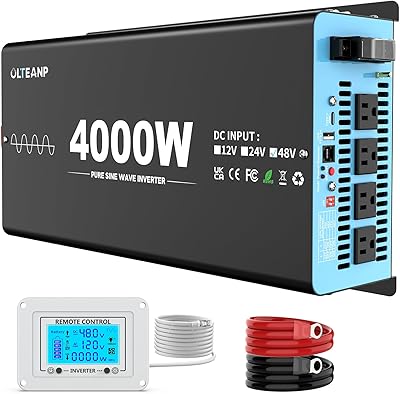
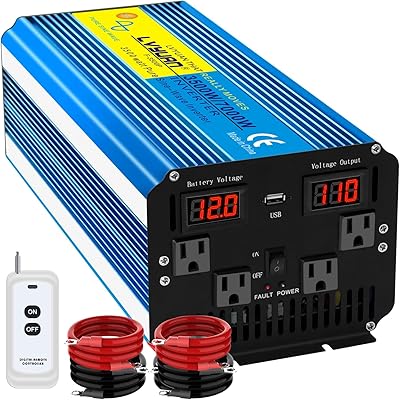
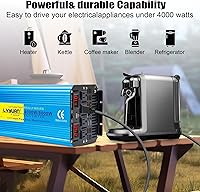
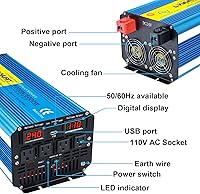
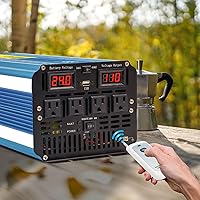
What separates this 4000W inverter from cheaper modified sine wave alternatives is the quality of its electrical output. Pure sine wave power — with harmonic distortion held below 3% — means CPAP machines, modern refrigerators, and sensitive electronics run cleanly without motor hum or erratic behavior. The wireless remote control is a real convenience when the inverter is mounted in a tight compartment; you are not crawling under the bed to flip a switch. Four AC outlets handle multiple loads at once, and the USB port adds a handy direct-charging option. The built-in protection suite covers overload, reverse polarity, and thermal shutdown, while the temperature-triggered fan stays quiet under lighter loads.

Best For

This pure sine wave inverter makes the most sense for people who already have a 24V battery bank established — RV builds, camper vans, and solar installations where that voltage was chosen for efficiency at scale. Truck drivers who want to brew coffee or heat a meal without idling their engine will find the capacity more than sufficient. It also works well for emergency home backup, provided a compatible battery system is in place. Budget-conscious buyers comparing this against established names like Renogy or Victron will find the wattage-to-price ratio hard to argue with — though they should weigh the brand's limited support infrastructure before deciding.

User Feedback

Across roughly 277 ratings, the Yinleader unit holds a 4.0-star average — solid, but worth examining closely. Buyers who measured actual output found it delivered close to its rated wattage, which is not guaranteed with lesser-known brands. Installation consistently drew praise for being uncomplicated. On the downside, the remote control's effective range fell short for some users, and a portion of longer-term owners reported failures after sustained heavy draws. Customer support has been hit-or-miss, which matters when you are counting on the 24-month warranty. The honest read: this inverter performs well out of the box, but approach the warranty as a helpful bonus rather than a dependable backstop.

Pros

  • Delivers genuine pure sine wave output, making it safe for sensitive electronics like CPAP machines and modern refrigerators.
  • Actual wattage output tested close to the rated 4000W — a meaningful differentiator among budget-friendly inverters.
  • The 8000W surge capacity handles the high startup draws of compressors and motors without tripping.
  • Wireless remote is a practical convenience when the unit is tucked into a hard-to-reach compartment.
  • Four AC outlets plus a USB port let you power multiple devices without a separate power strip.
  • Temperature-controlled fan stays quiet during lighter loads, which matters in a sleeping space or cab.
  • LED display gives a live read on battery voltage and load, helping you avoid over-discharging your bank.
  • Comprehensive protection circuitry — including reverse polarity and thermal shutdown — adds a real safety margin.
  • At 11 pounds and a compact 18 x 7 x 5.5-inch footprint, it installs without demanding much real estate.
  • The 24-month warranty is longer than many competitors at this price tier, offering at least some peace of mind.

Cons

  • Strictly requires a 24V DC input — buyers with a 12V system cannot use this unit without rewiring.
  • Yinleader has virtually no established service network in North America, making warranty claims a slow and uncertain process.
  • Remote control range falls short in installations where metal panels or walls are in the way.
  • A subset of owners report unit failures after months of sustained near-capacity use — longevity under heavy loads is a question mark.
  • Customer support responsiveness has been inconsistent, with some buyers receiving little help after reporting issues.
  • The brand carries no meaningful third-party certifications or well-known compliance marks that North American buyers might look for.
  • No low-battery display warning beyond the alarm threshold, so monitoring requires attention to the LED readout.
  • Battery cables included in the package are functional but short — longer runs will require separate cable purchases.
  • Limited community resources or forums exist for troubleshooting, unlike established brands with active user bases.
  • Surge power is rated for under one second, which may not be sufficient for appliances with unusually long startup cycles.

Ratings

The Yinleader 4000W 24V Pure Sine Wave Inverter has been scored by our AI system after analyzing verified global buyer reviews, with spam, bot-generated, and incentivized feedback actively filtered out. The scores below reflect a balanced picture — where this inverter genuinely earns its place and where real buyers have run into friction. Both the standout strengths and the recurring pain points are represented honestly across each category.
Power Output Accuracy
83%
A meaningful number of buyers who tested the actual output with a watt meter found it delivered close to the rated 4000W — a genuinely positive result for a brand at this price tier. RV users running microwaves and refrigerators simultaneously reported no voltage sag or unexpected shutdowns under normal operating conditions.
A smaller segment of users noted slightly inconsistent output under sustained near-capacity loads, particularly after the unit had been running warm for extended periods. This is not a dealbreaker for most use cases, but it is worth monitoring if you are regularly pushing the unit close to its ceiling.
Pure Sine Wave Quality
86%
Owners running CPAP machines, modern laptops, and variable-speed refrigerators reported clean, stable operation with no motor hum or erratic behavior — which is the core reason to choose this over a modified sine wave unit. The sub-3% harmonic distortion holds up well in practice for the typical loads this inverter is marketed toward.
There are no widely reported failures tied specifically to wave quality, but the absence of independent third-party testing means buyers are taking the manufacturer's THD figure on faith. For truly sensitive medical or audio equipment, that uncertainty may be enough to push some buyers toward a more established brand.
Build Quality
67%
33%
The chassis feels reasonably solid for the price category, and initial out-of-box impressions from most buyers are positive. The included battery cables, fuses, and remote are functional and practical additions that save a separate hardware trip for most installs.
Long-term durability is where confidence starts to slip — a notable portion of reviewers reported failures after several months of sustained heavy use, suggesting internal component quality may not match the robustness of the exterior. For buyers who plan to run this inverter hard on a daily basis, longevity is a real open question.
Value for Money
79%
21%
When the unit performs as expected, the price-to-wattage ratio is difficult to beat for buyers who need pure sine wave output but cannot stretch to a Victron or Renogy. DIY solar builders and part-time RV users in particular tend to rate the value favorably because their use patterns stay well within the unit's comfort zone.
The value calculation shifts if you factor in the support infrastructure — or lack of it. Buyers who have had to navigate warranty claims report slow and frustrating experiences, which erodes the upfront savings if a replacement or repair is eventually needed.
Ease of Installation
84%
Installation consistently draws positive feedback across buyer reviews — the terminal layout is logical, the included cables cover a basic setup, and the manual is clear enough for most DIYers to get up and running without outside help. Van builders and truck drivers appreciate that it does not require an electrician.
The included battery cables are on the short side, which means buyers with battery banks mounted any distance from the inverter will need to source longer cables separately. A handful of users also noted that the mounting hardware could be more robust for permanent installs in high-vibration environments.
Wireless Remote Control
58%
42%
The concept is well-suited to RV and van installations where the inverter ends up inside a cabinet or under a bed — being able to switch it on and off without crawling into a compartment is a genuine convenience. Buyers with straightforward line-of-sight installations generally report it working as expected.
Range reliability is the most frequently cited complaint tied to this feature. Metal panels, cabinetry, and even moderate wall thickness noticeably degrade the signal, and some users find the remote unreliable beyond short distances in real-world installs. The limited functionality — on and off only — also disappoints buyers expecting more control.
Cooling & Noise
77%
23%
The temperature-controlled fan design earns consistent praise from buyers who use the inverter in sleeping quarters or small van cabins — it stays completely silent during light loads and only spins up when the unit actually needs it. For overnight off-grid camping scenarios, this behavior is noticeably better than always-on fan designs.
Under heavier sustained loads, the fan does produce meaningful airflow noise that some users describe as intrusive in quiet enclosed spaces. A few buyers also reported the fan running at high speed more frequently than expected, which may indicate thermal management is working harder than ideal under real-world conditions.
Protection Circuitry
81%
19%
The built-in protection suite — covering reverse polarity, overload, short circuit, and thermal shutdown — has performed reliably for most buyers, with the unit shutting down cleanly rather than failing catastrophically when limits are hit. The low-voltage alarm is genuinely useful for protecting battery health in off-grid setups.
Some users report that the overload protection triggers at loads they expected the unit to handle without issue, suggesting the actual protection thresholds may be more conservative than the rated specs imply. Once tripped, resetting is straightforward, but repeated unexpected shutdowns frustrate users running demanding appliances.
LED Display Usefulness
73%
27%
Having a live voltage and load readout is a practical advantage for anyone managing battery health in a solar or off-grid setup — buyers appreciate not needing a separate battery monitor for basic awareness. The display is readable in daylight and clearly labeled for the core metrics users care about.
The display lacks granularity that more experienced off-grid users would want, such as amperage draw or a percentage-based battery indicator. It communicates enough to prevent critical mistakes but falls short of replacing a proper battery management system for serious installations.
Surge Handling
74%
26%
The 8000W surge rating handles the startup spikes of refrigerator compressors and power tools adequately in most reported use cases, which is a practical necessity for anyone running motor-driven appliances. Buyers starting up small air compressors or well pumps have generally reported success.
The surge window is rated at under one second, which is shorter than some competing units and may not cover appliances with unusually long startup cycles. A few buyers noted unexpected shutdowns when starting certain compressor-type loads, suggesting the surge tolerance is less generous in practice than the headline number implies.
Brand Reliability & Support
44%
56%
A portion of buyers who contacted Yinleader support did receive responses and, in some cases, replacement units under warranty — so the support channel is not entirely absent. For buyers who never need to use it, the 24-month warranty period is longer than many competitors at this price point.
The overall picture from buyer reports is inconsistent and frequently frustrating — response times are slow, communication requires persistence, and outcomes vary widely. For a product that operates in safety-critical or full-time off-grid scenarios, the lack of a reliable, accessible support network is a meaningful risk that buyers should weigh seriously.
Long-Term Durability
61%
39%
Buyers who use this inverter intermittently — weekend camping trips, occasional emergency backup, part-time van travel — tend to report solid reliability over time. For lighter duty-cycle applications, the unit appears to hold up without issues for a reasonable ownership period.
Sustained daily heavy use is where durability concerns cluster most densely in the review record. A notable subset of buyers report failures appearing after three to nine months of regular near-capacity operation, which raises legitimate questions about internal component ratings versus real-world thermal and electrical stress tolerance.
Package & Accessories
71%
29%
Including six spare 50A fuses, battery cables, and a remote controller out of the box means most buyers can complete a functional install without an immediate trip to a hardware store. The spare fuses in particular are a thoughtful inclusion that reflects an understanding of how these units actually get used in the field.
The battery cables included are functional but short, limiting flexibility in real installations where the battery bank and inverter are not immediately adjacent. The remote controller, while included, offers only basic on/off functionality — a charging cable or DC input voltage tester would have rounded out the package more usefully.
Form Factor & Mounting
76%
24%
At 11 pounds and an 18 x 7 x 5.5-inch footprint, the unit fits comfortably in under-bed compartments, cabinet installs, and cargo area mounts that are common in van builds and RV conversions. Most single-person installations are straightforward without needing assistance.
The mounting bracket design has drawn minor criticism for not being as sturdy as users would prefer in high-vibration environments like off-road vehicles or work trucks. A few buyers also noted that the ventilation clearance requirements leave less flexible placement than the physical dimensions alone suggest.

Suitable for:

The Yinleader 4000W 24V Pure Sine Wave Inverter is a strong match for anyone who has already committed to a 24V battery architecture — think full-time RV dwellers, camper van builders, and off-grid solar enthusiasts who need a capable AC conversion stage without the premium brand markup. With 4000 watts of continuous output, it can comfortably handle a mid-size microwave, a residential refrigerator, or a combination of smaller appliances running at the same time — that kind of real-world headroom is genuinely useful on the road or in an off-grid cabin. Truck drivers who want to cook a meal or run a small appliance during rest stops will find it well-suited to those intermittent, high-draw tasks. It also works for emergency home backup situations where a 24V battery bank is already installed and grid outages are a recurring concern. For buyers who want pure sine wave output quality — the kind that plays nicely with CPAP machines, modern laptops, and variable-speed appliances — but cannot justify spending significantly more on a Victron or Renogy unit, this inverter occupies a reasonable middle ground.
Not suitable for:

Buyers running a 12V system should stop here — the Yinleader 4000W 24V Pure Sine Wave Inverter is strictly a 24V input device, and this detail trips up a surprising number of shoppers. Anyone who depends on rock-solid manufacturer support or fast warranty resolution should also think carefully; Yinleader has a limited service footprint outside China, and real-world reports suggest after-sales responsiveness is inconsistent at best. This is not the right inverter for mission-critical or medical applications where a unit failure carries serious consequences — the brand simply does not carry the reliability track record to justify that kind of trust yet. Users who need to install the inverter in a very confined or permanently fixed location may find the remote control range frustrating, particularly if walls or metal panels sit between the remote and the unit. Finally, buyers who anticipate sustained heavy loads over many months should budget for the possibility of a replacement, as a subset of long-term users have reported failures under extended high-draw conditions.
Specifications

  • Continuous Output: Delivers 4000 watts of continuous AC power, enough to run a full-size microwave and a refrigerator at the same time.
  • Surge Power: Handles peak loads up to 8000 watts for under one second, covering the startup spikes of compressors and motor-driven appliances.
  • Input Voltage: Requires a 24V DC battery source — not compatible with 12V systems without significant electrical rewiring.
  • Output Voltage: Produces 110V to 120V AC power suitable for standard North American appliances and devices.
  • Wave Form: Outputs a pure sine wave with total harmonic distortion held below 3%, matching the quality of standard grid power.
  • Frequency: Maintains a stable output frequency of 60Hz with a tolerance of plus or minus 0.5Hz, consistent with the North American grid standard.
  • Efficiency: Operates at 92% efficiency or better under typical load conditions, minimizing wasted energy drawn from the battery bank.
  • AC Outlets: Includes four standard AC outlets, allowing multiple devices to be powered simultaneously without an external power strip.
  • USB Port: Features one USB charging port rated at 3.1A for direct charging of phones, tablets, or other USB-powered devices.
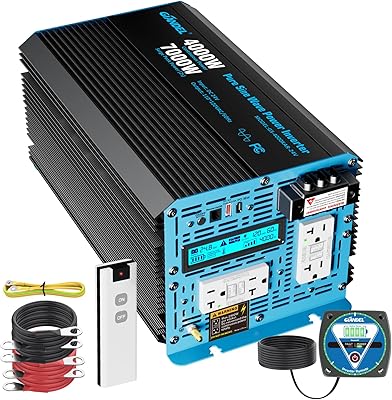
  • Remote Control: Ships with a wireless remote that handles on and off switching only, useful when the inverter is mounted in a confined or hard-to-reach space.
  • Display: An LED panel provides real-time readouts of input voltage and load status, helping users keep track of battery drain.
  • Cooling System: A temperature-controlled internal fan activates automatically when the unit reaches 104°F, staying off and silent during lighter loads.
  • Protections: Built-in safeguards cover overload, short circuit, overheating, reverse polarity connection, and both under-voltage and over-voltage conditions.
  • Low-Voltage Alarm: Triggers an audible alert when battery input drops to approximately 19V, warning the user before the bank is critically discharged.
  • Over-Voltage Cutoff: Automatically shuts down the unit if input voltage exceeds 30V DC, protecting internal components from damage.
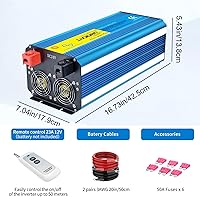
  • Dimensions: The unit measures 18 x 7 x 5.5 inches, offering a compact profile that suits under-bed or cabinet installations in RVs and vans.
  • Weight: At 11 pounds, the inverter is manageable for a single person to mount in most vehicle or solar installations.
  • Included Accessories: Package contains the inverter, one wireless remote, one pair of battery cables, six 50A replacement fuses, and a user manual.
  • Warranty: Covered by a 24-month manufacturer warranty, though buyers should note that after-sales support is handled by the Shenzhen-based manufacturer.
  • Manufacturer: Made by ShenZhen YinHang ZheKe Technology Co., Ltd., a Chinese electronics manufacturer with limited brand presence in the North American market.

Related Reviews

Giandel 4000W 24V Pure Sine Wave Inverter
80%
91%
Pure Sine Wave Quality
88%
Build Quality
86%
Safety Features
83%
Output Power Accuracy
81%
Value for Money
More
SUNWHEEL 3000W 24V Pure Sine Wave Inverter
78%
88%
Output Power Quality
83%
Value for Money
86%
Ease of Installation
81%
Surge Handling
79%
Noise Level
More
Yinleader 3500W Pure Sine Wave Power Inverter
73%
83%
Power Output Quality
61%
Build Quality
67%
Thermal Management
63%
Surge Performance
86%
Ease of Setup
More
OLTEANP TK-3 3000W Pure Sine Wave Inverter
78%
92%
Power Output Quality
88%
Lithium Battery Compatibility
74%
Build Quality
61%
Fan Noise
86%
LCD Display & Usability
More
Novopal 2000W 24V Pure Sine Wave Inverter
79%
88%
Power Output Quality
83%
Build Quality
79%
Value for Money
74%
Ease of Installation
81%
Remote Control Functionality
More
OLTEANP 48V 4000W Pure Sine Wave Inverter
83%
90%
Performance Under Load
65%
Ease of Setup
88%
Battery Compatibility & Longevity
91%
Noise & Operation Smoothness
83%
Build Quality
More
WZRELB 1500W 24V Pure Sine Wave Inverter
73%
88%
Output Power Quality
61%
Reliability & Longevity
84%
Cooling & Noise
82%
Ease of Installation
71%
Remote Control Function
More
VOLTWORKS HS-4000KBR 4000W Pure Sine Wave Inverter
78%
88%
Power Output Reliability
91%
Pure Sine Wave Quality
86%
Lithium Battery Compatibility
61%
Installation Experience
74%
Thermal Management
More
LEESKY HS-4000KAR 4000W Pure Sine Wave Inverter
80%
88%
Power Output Reliability
93%
Waveform Quality
86%
Lithium Battery Compatibility
84%
Build Quality
81%
LCD Display Accuracy
More
Ampinvt 5000W 24V Split Phase Power Inverter
72%
83%
Power Output Reliability
78%
Build Quality
86%
Pure Sine Wave Quality
81%
Battery Charger Performance
54%
Installation Experience
More

FAQ

No — the Yinleader 4000W 24V Pure Sine Wave Inverter is designed exclusively for 24V DC input. Connecting it to a 12V system will not work and could damage the unit. If you are running 12V, you will need a different inverter rated for that voltage.
A standard 700W to 1200W countertop microwave is well within range. A small portable air conditioner might be manageable depending on its rated draw, but a full-size window AC unit could push the continuous limit. Always check the running wattage of the appliance, not just the peak rating, before assuming it will run safely.

For basic resistive loads like incandescent lights or simple heating elements, modified sine wave inverters work fine. But for anything with a motor, a modern power supply, or sensitive electronics — think CPAP machines, variable-speed appliances, laptops, and newer refrigerators — pure sine wave genuinely matters. Modified sine wave can cause humming, overheating, or reduced lifespan in those devices.

Under ideal open-air conditions, the remote works at a reasonable distance, but real-world performance depends heavily on obstructions. Metal panels, walls, or cabinetry between the remote and the inverter noticeably reduce range. Some users have found it unreliable beyond 15 to 20 feet in typical vehicle installations.

Running close to 4000W from a 24V bank means drawing roughly 167 amps continuously — that demands a large, high-discharge battery setup. Most practical users pair this inverter with 200Ah to 400Ah of lithium battery capacity for sustained use. Lead-acid batteries can work but will drain much faster and suffer more cycle wear at those draw rates.

The fan is temperature-controlled, so it stays off when the inverter is running light loads or sitting idle. Under heavier draws it does spin up and produces noticeable airflow noise, but most users report it is not disruptive at normal operating levels. If you are running it hard in a small van overnight, you may notice it.

The 24-month warranty exists on paper, but the manufacturer is based in Shenzhen, China, and does not have a local service center or distributor network in North America. Some buyers have had positive warranty experiences; others report slow or unresponsive support. Treat the warranty as a helpful safety net rather than a guarantee of quick resolution.

It is designed for permanent or semi-permanent installation. The included battery cables and terminal connections are meant for hard-wiring to your battery bank. The wireless remote makes it easier to operate once it is fixed in place. Most van and RV builders mount it in a vented cabinet or under a bed platform.

In no-load or very light-load states, the fan stays off and the unit is essentially silent aside from a faint electrical hum that most users find unnoticeable. The fan only activates once internal temperature climbs, so quiet operation under standby conditions is one of its practical advantages.

Renogy and Victron carry stronger reputations for long-term reliability, better-documented performance testing, and more accessible support channels — and their pricing reflects that. The Yinleader unit trades some of that brand assurance for a noticeably lower price point. For buyers who want pure sine wave output and have a limited budget, it is a reasonable compromise; for mission-critical or full-time off-grid setups where a failure is a serious problem, the premium brands are worth the extra cost.