Yinleader 3500W Pure Sine Wave Power Inverter
Yinleader 3500W Pure Sine Wave Power Inverter — image 1
Yinleader 3500W Pure Sine Wave Power Inverter — image 2
Yinleader 3500W Pure Sine Wave Power Inverter — image 3
Yinleader 3500W Pure Sine Wave Power Inverter — image 4
Yinleader 3500W Pure Sine Wave Power Inverter — image 5
Yinleader 3500W Pure Sine Wave Power Inverter — image 6
Yinleader 3500W Pure Sine Wave Power Inverter — image 7
73%
27%

Overview

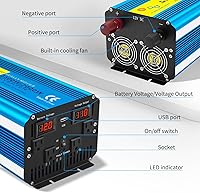
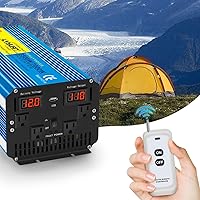
The Yinleader 3500W Pure Sine Wave Power Inverter is a mid-range unit that converts 12V DC battery power into clean 110V/120V AC — the kind of power your sensitive electronics actually need. It launched in late 2023 and comes from a Shenzhen-based manufacturer that isn't a household name yet, so you're buying on specs and early user experiences rather than a long reputation. At 14.5 x 7 x 5.5 inches and just over 13 pounds, it fits reasonably well in an RV cabinet or under a boat console. An LCD display and wireless remote controller round out the package, letting you monitor and switch the unit without crawling into a tight space.

Features & Benefits

What separates this inverter from cheaper modified sine wave alternatives is the quality of power it delivers. Pure sine wave output means your CPAP machine, laptop charger, or any motor-driven appliance gets electricity that closely mimics what comes out of a wall socket — no buzzing, no overheating, no fried components. The 7000W surge rating helps briefly start compressors or power tools, though surge claims can be optimistic on budget-tier units, so avoid sizing your load right at the edge. A temperature-controlled fan keeps things quiet under light use, and the 1.2A no-load draw is low enough that you won't drain your battery simply leaving the unit on standby.

Best For

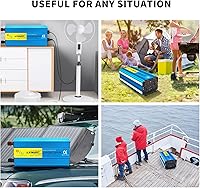
This 3500W inverter hits a sweet spot for people who need real AC power on the go without a major investment. RV and van builds are the most obvious fit — running a microwave, charging laptops, or keeping a CPAP going overnight all fall comfortably within its output range. Boaters can use it to power galley equipment or navigation electronics when away from a marina. It also works as a short-term emergency backup at home, keeping essential devices running during an outage. Budget-conscious buyers who want clean pure sine wave output without climbing into premium territory will find this inverter a reasonable place to start.

User Feedback

The Yinleader unit carries a 3.5-star average, which is an honest signal worth paying attention to. On the positive side, buyers generally appreciate the clean power output and how straightforward the initial setup is — the included battery cables and remote make it reasonably plug-and-play. Where things get mixed is durability under sustained heavy loads; some users report the unit running noticeably warm, and a handful have raised concerns about long-term build quality. Customer support responsiveness has also drawn criticism in isolated cases. Given this inverter only reached the market in late 2023, the review pool is still fairly thin. Temper your expectations and treat it as a capable budget option rather than a heavy-duty workhorse.

Pros

  • Pure sine wave output delivers clean power safe for CPAP machines, laptops, and other sensitive devices.
  • Four AC outlets let you run multiple appliances at once without needing a power strip.
  • The wireless remote is genuinely convenient when the unit is mounted in a hard-to-reach spot.
  • A temperature-controlled fan stays quiet during light use, which matters overnight in an RV or cabin.
  • Low no-load current draw helps preserve battery charge when the inverter is on standby.
  • Built-in LCD display gives you a clear read on what the unit is doing without guesswork.
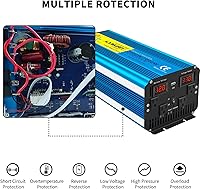
  • Comprehensive protection suite covers overload, short circuit, reverse polarity, and thermal shutdown.
  • The compact footprint fits into tight spaces where larger inverters simply would not go.
  • Included battery cables and remote mean you can get up and running without hunting for accessories.
  • Efficiency rated at 95% or higher means less energy wasted as heat during normal operation.

Cons

  • The brand is new to market with limited long-term reliability data to draw on.
  • Some buyers report the unit runs noticeably hot under sustained heavy loads.
  • A 3.5-star average rating signals enough mixed experiences to warrant cautious expectations.
  • Customer support responsiveness has drawn criticism from a portion of buyers who needed help.
  • The real-world surge capacity may not consistently match the 7000W peak figure under tough motor loads.
  • Review volume is still thin given the late 2023 launch date, making patterns harder to confirm.
  • No UL or ETL certification is mentioned, which may matter for insurance or installation compliance.
  • Build quality concerns appear in user feedback, particularly around longevity under regular use.

Ratings

The scores below reflect an AI-driven analysis of verified buyer reviews for the Yinleader 3500W Pure Sine Wave Power Inverter, sourced globally and filtered to remove incentivized, spam, and bot-generated feedback. Both the genuine strengths and the recurring frustrations reported by real users are weighted into every score, so you get an honest picture rather than a polished one. This inverter sits in a competitive budget-to-mid-range tier, and the ratings reflect exactly where it earns its place and where it falls short.

Power Output Quality
83%
Users running CPAP machines, laptops, and small kitchen appliances consistently report clean, stable power with no buzzing or flickering. The sub-3% THD figure translates into real-world confidence for sensitive electronics, and several buyers specifically noted their devices ran cooler and quieter compared to their previous modified sine wave units.
A handful of buyers questioned whether the actual output remained stable under high simultaneous loads, noting occasional voltage irregularities when pushing close to the rated limit. This is not a widespread complaint, but it is enough to keep the score from reaching the high eighties.
Build Quality
61%
39%
The casing feels solid enough for occasional RV or camping use, and the terminal connections are sturdy when cables are properly seated. For buyers using it in light-duty cycles — weekends, short trips, seasonal backup — the construction holds up acceptably well.
Several reviewers raised durability concerns after moderate use, citing housing that feels thin relative to competitors at similar price points and internal components that show signs of wear sooner than expected. This is the category most responsible for the mixed overall rating.
Thermal Management
67%
33%
The temperature-controlled fan design is a genuine plus during lighter loads — the unit runs silently when not under stress, which matters a lot in an RV bedroom or boat cabin overnight. The thermal shutdown protection does its job as a last line of defense.
Under sustained heavy loads, multiple buyers report the unit running noticeably hot, with the fan cycling on more aggressively and the chassis becoming warm to the touch. A few noted the inverter shut down mid-use during extended operation, pointing to a cooling system that is adequate for moderate but not continuous heavy use.
Surge Performance
63%
37%
For brief startup spikes — a drill, a small refrigerator compressor kicking on, or a shop vac — the inverter generally handles the transient demand without tripping. Buyers running moderate motor loads in van builds and on boats have found it adequate for everyday startup events.
The 7000W peak claim is difficult to verify in practice, and several users report the unit cutting out when attempting to start larger motor loads that a true 7000W surge should handle comfortably. Budget inverters across the category tend to overstate surge ratings, and this unit appears to follow that pattern.
Ease of Setup
86%
Buyers consistently praise how straightforward the initial installation is — the included battery cables, clearly labeled terminals, and simple manual mean most people have the unit running within an hour. For RV owners who are not electricians, that accessibility is a meaningful advantage.
The included cable gauge may not be adequate for longer battery-to-inverter runs at full load, and the manual does not always make this clear. A small number of users had to source heavier cables separately before their installation performed properly.
Remote Control
81%
19%
The wireless remote is one of the most praised features among buyers who have the inverter mounted in a cabinet, under a bench, or in a tight engine room. Being able to switch the unit on and off without crawling to it is a practical convenience that gets mentioned repeatedly in positive reviews.
Range and reliability of the remote are occasionally inconsistent, with some buyers noting it stops responding after a few months of use. Replacement remotes are not easy to source given the brand's limited retail presence.
LCD Display
77%
23%
The display gives a useful at-a-glance status readout and is bright enough to read in most conditions. For buyers who want to monitor their system without installing separate metering equipment, it covers the basics well.
The display provides only limited data points — primarily on/off status and basic fault codes — and more technically minded users looking for voltage readouts, wattage consumption, or battery state information will find it falls short of what dedicated monitoring displays offer.
Noise Level
78%
22%
During standby and light operation the inverter is impressively quiet, making it well-suited for overnight use in sleeping spaces. The thermally controlled fan means it is not running constantly, which is a noticeable quality-of-life improvement over fixed-speed fan designs.
When temperatures climb under sustained load, the fan becomes audibly noticeable — not loud enough to be disruptive in most settings, but present enough that buyers using it in quiet environments have commented on it. Fan noise is not a dealbreaker here, but it is real.
Value for Money
72%
28%
For buyers who need pure sine wave output on a tight budget and plan to use the inverter for moderate, intermittent loads, the price-to-capability ratio is reasonable. Getting clean AC power in this output range from a brand-name unit would cost considerably more.
The value proposition erodes if the unit needs to be replaced within a year or two due to build quality issues, which some buyers have experienced. At this price tier you are making a calculated trade-off between upfront savings and long-term confidence.
Protection Features
79%
21%
The full suite of protections — reverse polarity, over and under voltage, short circuit, overload, and thermal cutoff — gives buyers reasonable confidence that a wiring mistake or power event will not destroy the unit or connected devices in most scenarios.
While the protections work as advertised in basic tests, a few users report that repeated protection events — particularly thermal shutdowns — seem to degrade performance over time, suggesting the components involved are not rated for frequent cycling.
Portability
82%
18%
At just over 13 pounds and with a compact footprint, this inverter is easy to move between a vehicle, a boat, and a home backup setup. Buyers who use it across multiple applications rather than a single fixed install find the size genuinely convenient.
The included battery cables add bulk when transporting the unit, and there is no carry handle or mounting bracket included in the box, which is a minor but noticeable omission for a product used across mobile applications.
Brand Support
44%
56%
The product ships with a user manual and basic contact information, and some buyers report receiving responses to warranty inquiries. For straightforward cases the support path exists, even if it is not fast.
Customer support responsiveness is a consistent sore point in negative reviews, with buyers describing slow replies, language barriers, and difficulty obtaining replacements or refunds. For a brand with limited retail presence and a short track record, this is a real risk buyers should weigh before purchasing.
Installation Flexibility
74%
26%
Four AC outlets, a remote control, and a compact chassis give buyers several options for how and where to mount this inverter in a vehicle or vessel. The form factor works in underseat compartments, overhead cabinets, and engine-room adjacent spaces that larger units would not fit.
No dedicated mounting bracket or hardware is included, leaving buyers to improvise their own fastening solution. In mobile applications where vibration is a concern, this omission requires extra effort to ensure the unit stays securely positioned.

Suitable for:

The Yinleader 3500W Pure Sine Wave Power Inverter is a practical choice for RV owners, van-lifers, and boaters who need reliable AC power drawn from a 12V house battery bank. If your typical load includes a CPAP machine, laptop, small kitchen appliance, or a mix of devices running simultaneously across the four AC outlets, this inverter covers those needs with clean power that won't stress sensitive electronics. Overlanders and weekend campers who occasionally need to run a power tool or charge multiple devices will find the output range fits their usage pattern well. It also serves as a reasonable short-term emergency backup at home — enough to keep a refrigerator, phone chargers, and a few essential devices running during a brief grid outage. Budget-conscious buyers who understand they are trading some brand assurance for a lower price point, and who plan to use the unit for moderate rather than heavy-duty continuous loads, will get solid value here.

Not suitable for:

The Yinleader 3500W Pure Sine Wave Power Inverter is not the right fit for buyers who need a workhorse unit running at or near full capacity for extended periods. Users who depend on an inverter for mission-critical applications — medical equipment in a permanent off-grid setup, a full-time liveaboard boat, or a business that cannot afford downtime — should invest in a brand with a longer track record and more verified reliability data. The 3.5-star rating and reported heat issues under sustained load suggest this inverter performs best when it is not constantly pushed hard. Anyone running large motor loads like well pumps or heavy air conditioning compressors should also be cautious, since real-world surge performance on budget units often falls short of the stated peak figure. If strong manufacturer support and a responsive warranty process are non-negotiable for you, the limited feedback on this relatively new brand makes it a risky choice.

Specifications

  • Continuous Output: This inverter delivers a steady 3500W of continuous AC power for running appliances and electronics simultaneously.
  • Surge Power: Peak surge capacity reaches 7000W for under one second, helping start motor-driven equipment that draws extra current at startup.
  • Input Voltage: Designed to connect to a 12V DC battery bank, such as those found in RVs, boats, and vehicles.
  • Output Voltage: Produces 110V to 120V AC output at 60Hz, matching standard North American household current.
  • Wave Form: Pure sine wave output keeps total harmonic distortion below 3%, making it safe for sensitive and motor-driven electronics.
  • AC Outlets: Four standard AC outlets allow multiple devices to be connected and powered at the same time.
  • Efficiency: Rated at 95% or higher efficiency, meaning very little input energy is lost as heat under normal operating conditions.
  • No-Load Draw: When idle with nothing connected, the unit consumes only 1.2A from the battery, reducing unnecessary drain during standby.
  • Low Voltage Alarm: An audible alert triggers at approximately 10V DC to warn you before the connected battery drops to a damaging level.
  • Overvoltage Cutoff: The inverter automatically shuts off input power if battery voltage exceeds 15.5V DC to protect connected devices.
  • Thermal Shutdown: An automatic thermal cutoff activates if the internal temperature exceeds 167°F (75°C), preventing damage from overheating.
  • Cooling System: A temperature-controlled internal fan activates automatically at 104°F and runs only as needed to keep noise low during light use.
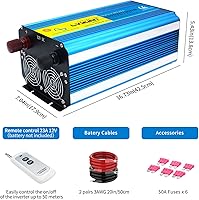
  • Dimensions: The unit measures 14.5 x 7 x 5.5 inches, a compact footprint suited for installation in tighter spaces.
  • Weight: At 13.07 pounds, this inverter is manageable to handle and mount without requiring two people for installation.
  • Protection Suite: Built-in protections cover overload, short circuit, overheating, reverse polarity connection, and both under- and over-voltage conditions.
  • Remote Control: A wireless remote controller is included, allowing the unit to be switched on or off from a distance.
  • Display: An LCD panel on the unit shows operational status, making it easy to monitor without specialized equipment.
  • In The Box: Package includes the inverter, two pairs of battery cables, a remote controller, and a printed user manual.

Related Reviews
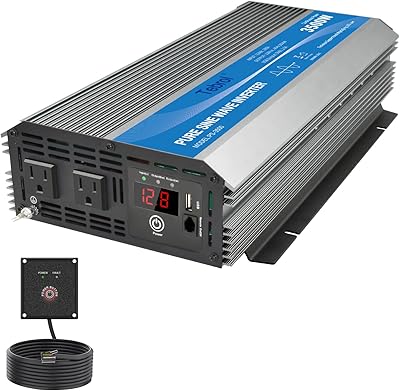
Tebrol 3500W Pure Sine Wave Inverter
79%
88%
Output Power Accuracy
92%
Pure Sine Wave Quality
79%
Build Quality
83%
Cooling & Thermal Management
81%
Ease of Installation
More
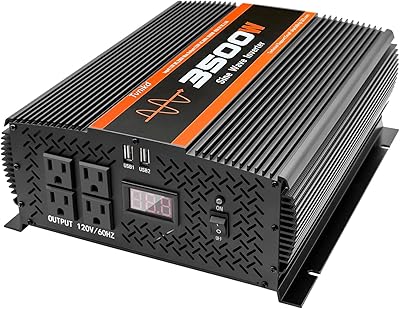
TVNIKD 3500W Pure Sine Wave Inverter
86%
92%
Power Conversion Performance
89%
Ease of Setup
72%
Portability & Size
90%
Reliability & Durability
91%
Power Output (Wattage)
More
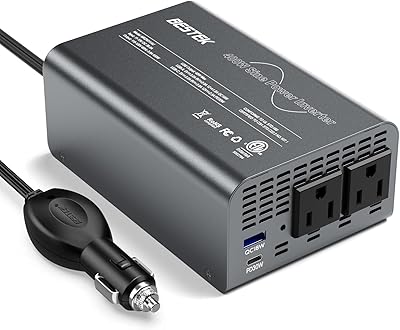
BESTEK 400W Pure Sine Wave Power Inverter
81%
91%
Power Output Quality
74%
Real-World Wattage Reliability
88%
USB Charging Speed
83%
Fan Noise
76%
Build Quality & Durability
More
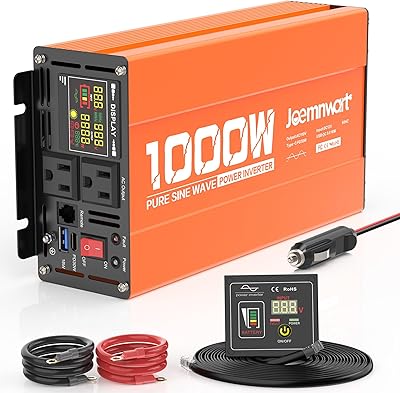
Joemnwart 1000W Pure Sine Wave Power Inverter
79%
88%
Power Output Quality
79%
Build Quality
84%
USB Charging Performance
86%
Safety Protection System
82%
Noise Level
More
Homkeep 3000W Pure Sine Wave Power Inverter
88%
93%
Power Performance
88%
Ease of Use
90%
Build Quality
85%
Noise Level
91%
Safety Features
More
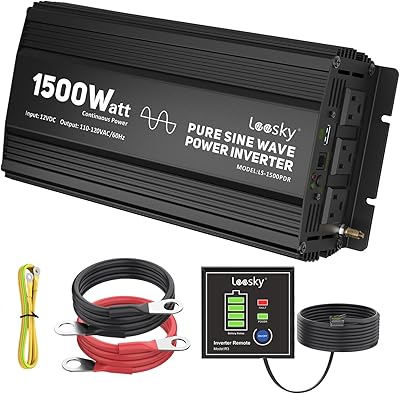
LEESKY 1500W Pure Sine Wave Power Inverter
82%
88%
Output Power Quality
84%
Build Quality
86%
Value for Money
91%
Remote Controller Usefulness
79%
Noise Level
More
Ampinvt 5000W 24V Split Phase Power Inverter
72%
83%
Power Output Reliability
78%
Build Quality
86%
Pure Sine Wave Quality
81%
Battery Charger Performance
54%
Installation Experience
More
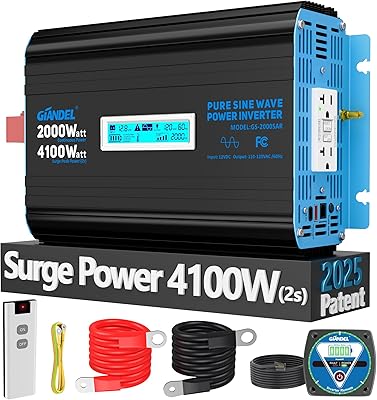
Giandel 2000W Pure Sine Wave Power Inverter
81%
88%
Power Output Reliability
91%
Pure Sine Wave Quality
86%
Build Quality
74%
Noise Level
79%
LCD Display & Monitoring
More
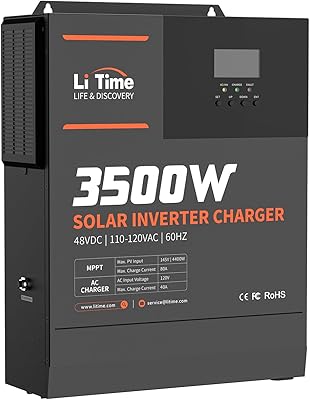
LiTime 3500W 48V Solar Inverter Charger
74%
83%
Value for Money
76%
Ease of Installation
81%
Power Output & Reliability
86%
Pure Sine Wave Quality
84%
Battery Compatibility
More
Yinleader 4000W 24V Pure Sine Wave Inverter
72%
83%
Power Output Accuracy
86%
Pure Sine Wave Quality
67%
Build Quality
79%
Value for Money
84%
Ease of Installation
More

FAQ

At 3500W continuous output from a 12V system, you are drawing roughly 290 to 300 amps from your batteries. For any sustained heavy load, you want a large AGM or lithium battery bank — ideally 200Ah or more — and heavy-gauge cables to avoid voltage drop and heat. Running at full tilt off a small battery will drain it very fast and may trigger the low-voltage alarm.

Yes, pure sine wave output is exactly what CPAP machines and similar medical devices require. A modified sine wave inverter can cause those devices to run louder, run hot, or malfunction, so the clean output here is a genuine advantage. Just make sure your battery bank has enough capacity to cover a full night of draw at your machine's wattage.

It works well for short-term outages where you need to keep essentials running — a refrigerator, phone chargers, a router, and lights, for example. You would need to connect it to a 12V battery bank or vehicle battery, not the home grid. It is not a substitute for a whole-house standby generator, but for targeted backup use it is practical.

The fan only kicks on when internal temperatures climb, so during light loads you may not hear it at all. Under heavier use it runs audibly but is not described by users as unusually loud. For overnight RV use with moderate loads, most people find it unobtrusive.

Surge ratings on budget inverters should be treated as approximate guidelines rather than guaranteed figures. The 7000W peak is rated for under one second, which covers brief motor-start spikes. If you are regularly starting large compressors or demanding tools, test carefully and avoid loading the unit at its absolute ceiling consistently.

For a 3500W inverter on a 12V system, you should use at least 2/0 AWG (two-aught) welding or battery cable for any run longer than a few feet, and keep the cable run as short as possible. Undersized cables cause voltage drop, heat, and efficiency loss. The included cables are a starting point but check their gauge against your installation distance.

Yes, it is designed with permanent or semi-permanent installation in mind. Keep it in a ventilated spot so the cooling fan has airflow, away from flammable materials, and secure it so it cannot shift while driving. The remote control makes a fixed installation much more practical since you do not need physical access to switch it on and off.

No UL or ETL listing is mentioned in the product documentation. That is worth knowing if your installation requires certified equipment — some insurance policies or marine regulations specify listed inverters. For casual off-grid or RV use it is a common trade-off at this price tier, but confirm with your insurer or marina if compliance matters to you.

The built-in reverse polarity protection is designed to prevent damage in that scenario — it should shut the unit down rather than allow current to flow incorrectly. That said, reverse polarity is hard on any electronics, so double-check your connections before powering on. Red to positive, black to negative, every time.

The four outlets let you split the load across devices, and as long as the combined wattage stays within the 3500W continuous rating you are fine. Where people run into trouble is underestimating the startup surge of motor-based appliances — a refrigerator compressor kicking on while other things are running can spike the total demand briefly. Keep a rough tally of your connected loads to stay within a safe margin.