Overview

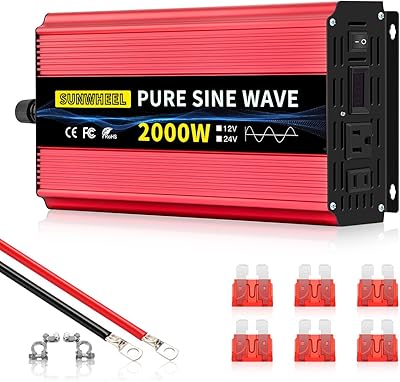
The SUNWHEEL 3000W 24V Pure Sine Wave Inverter entered the market in early 2025 as a value-focused option for RV owners, van-lifers, and off-grid households who need dependable AC power without paying premium brand prices. One important detail upfront: this is a 24V DC input unit, not 12V — a spec that trips up a surprising number of buyers and leads to unnecessary returns. It converts your 24V battery bank to clean 110V/120V AC at up to 3000W continuous. Weighing just under 9.5 lbs and measuring roughly 12 by 7 by 6 inches, it is compact enough to fit in a van cabinet or a tight utility closet without much trouble.
Features & Benefits

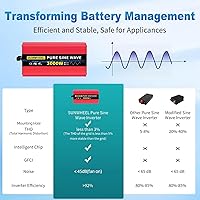
What makes this 24V inverter worth considering over a modified sine wave unit is the quality of its output. Pure sine wave power keeps a CPAP machine running smoothly overnight, prevents laptops from misbehaving under load, and stops newer refrigerator compressors from complaining. The unit handles 6000W peak surge on startup, which matters for anything motor-driven. Four AC outlets mean you are not scrambling for a power strip, and the LCD display gives you real visibility into input voltage and current draw. Running at 92% efficiency, it wastes noticeably less battery energy than cheaper alternatives, and seven onboard protections handle everything from reverse polarity to overheating without requiring manual intervention.

Best For

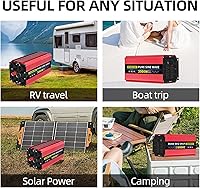
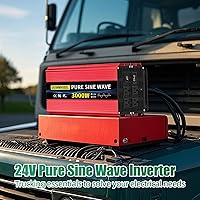
This pure sine wave unit fits best in setups where a 24V battery bank is already in place. RV owners and van converters running dual-battery or lithium systems are the natural match — stable AC power for a coffee maker, TV, or small fridge without generator noise. Truck drivers with factory 24V electrical systems will find it a practical fit for cab appliances. It also serves well as a home backup inverter tied to a solar battery bank. That said, manage expectations: this is not a whole-home solution. Pushing it toward a large air conditioner or heavy power tools continuously is asking too much — the 3000W ceiling is real.

User Feedback

Holding a 4.0-star average from just over 200 reviews, the SUNWHEEL inverter earns a solid but not exceptional reputation. Buyers regularly highlight easy installation and quiet operation at moderate loads — the cooling fan stays unobtrusive until the unit is really working. Sensitive device owners, including CPAP and laptop users, report clean and stable output with no interference. On the other side, some reviewers question the LCD readout precision under variable loads, and a handful mention fan noise increases noticeably when pushing near capacity. Durability under daily heavy use is an open question given the product's recent launch date. Occasional and moderate users consistently walk away satisfied; daily high-demand users should weigh that carefully.

Pros

  • Pure sine wave output safely powers sensitive electronics like CPAP machines, laptops, and modern appliances.
  • Six thousand watts of peak surge capacity handles the startup spike of refrigerators and other motor-driven devices.
  • Running at 92% efficiency, this 24V inverter draws meaningfully less from your battery than lower-quality alternatives.
  • Four built-in AC outlets let you run multiple devices simultaneously with no power strip needed.
  • The LCD display gives you a real-time read on input voltage and load, so you are never guessing.
  • At under 9.5 lbs, it is light and compact enough to mount in a van, RV compartment, or tight utility space.
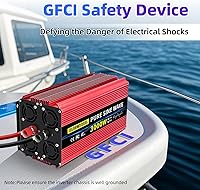
  • Seven onboard protection systems guard against the most common failure scenarios, from short circuits to reverse polarity.
  • Operation stays quiet at moderate loads, making it a practical choice for sleeping spaces like RV bedrooms or truck cabs.
  • A two-year warranty provides a reasonable safety net for a product in this price tier.
  • Setup is straightforward enough that most buyers report getting it running without professional help.

Cons

  • Strictly requires a 24V DC input — incompatible with the far more common 12V vehicle and battery systems.
  • Fan noise climbs noticeably when the unit is pushed toward its upper wattage limit, which can be disruptive.
  • Some users report doubts about the LCD readout accuracy under fluctuating or heavy loads.
  • Long-term durability under daily high-demand use is an open question given the brand launched only in early 2025.
  • The 3000W continuous ceiling rules out sustained use of large power tools or central air conditioning units.
  • SUNWHEEL is a relatively new and unfamiliar brand, which makes warranty claim follow-through harder to verify historically.
  • No USB charging ports on the unit itself, which is a minor but real inconvenience for modern device users.
  • Buyers pushing the inverter hard in hot environments may encounter thermal throttling sooner than the specs imply.
  • The aluminum chassis feels functional rather than robust — buyers expecting industrial-grade build quality may be disappointed.
  • Limited community support and third-party repair resources compared to established inverter brands.

Ratings

The scores below were generated by AI after analyzing verified buyer reviews for the SUNWHEEL 3000W 24V Pure Sine Wave Inverter from across global marketplaces, with spam, bot-submitted, and likely incentivized feedback actively filtered out. Each category reflects what real owners experienced during day-to-day use — not spec-sheet promises. Both the genuine strengths and the recurring frustrations are represented transparently so you can make a fully informed call.
Output Power Quality
88%
The pure sine wave output is the unit's most praised technical trait — owners running CPAP machines, laptops, and newer refrigerators consistently report stable, interference-free power. Sensitive devices that would hum or malfunction on a modified sine wave inverter work cleanly here.
A handful of users noted minor voltage fluctuations under rapidly shifting loads, which is not unusual at this price tier but worth knowing if your setup involves highly voltage-sensitive equipment like certain medical devices or audio gear.
Value for Money
83%
Getting pure sine wave output, four AC outlets, an LCD display, and a solid protection suite at this price point stands out in a category where comparable specs from premium brands cost significantly more. Budget-conscious RV and van buyers feel they are getting meaningful bang for their money.
The value equation shifts if you need to replace the unit after heavy daily use inside a short timeframe — then the lower upfront cost looks less impressive. A few buyers felt the overall build finish did not fully justify even the mid-range price when held alongside more established competitors.
Ease of Installation
86%
Most buyers describe the setup process as straightforward, with clear terminal connections and no complicated configuration steps. Van converters and RV owners with basic electrical knowledge get it running in under an hour, and the compact footprint makes mounting in tight spaces manageable.
The unit does not ship with battery cables, which surprises some buyers and adds to the out-of-pocket cost. Users who underestimated the cable gauge required for 24V at full load ran into heating issues that pointed back to wiring choices rather than the inverter itself.
Surge Handling
81%
19%
The 6000W peak surge rating means motor-heavy appliances like full-size refrigerators and sump pumps start up without tripping the inverter, which is a real-world test many cheaper units fail. Truck drivers and RV owners running compressor-based equipment appreciate this headroom.
When multiple motor-driven devices are started near-simultaneously, the surge buffer gets consumed quickly and the inverter can trip into protection mode. Users powering combined loads with overlapping startup cycles need to stagger their device startups deliberately.
Noise Level
79%
21%
At light to moderate loads, the variable-speed fan stays genuinely quiet — campers and truck drivers who run it overnight in a sleeping space rarely mention fan noise as a problem at lower wattages. The sub-45dB rating holds up reasonably well in practice for everyday use.
Push this 24V inverter above roughly two-thirds of its rated capacity and the fan becomes noticeably louder, which several owners flagged as disruptive in enclosed spaces like a van bedroom or truck cab. It is not abnormal for the category, but it is the most commonly cited complaint in reviews.
Build Quality
69%
31%
The aluminum alloy chassis helps with heat dissipation and keeps the unit lighter than plastic-housed alternatives. The overall assembly feels solid enough for standard RV and off-grid use, and the terminal connections are robust rather than flimsy.
Several buyers noted that the housing finish feels more functional than premium, and minor cosmetic imperfections at the seams were reported out of the box. For daily heavy-duty use, there are open questions about how the internal components hold up beyond the first year given the brand's limited track record.
LCD Display Accuracy
67%
33%
Having any live readout of battery voltage and output load at this price point is genuinely useful — most budget inverters offer nothing. Users doing basic system monitoring find it helpful for spotting when a battery is getting low or when the load is approaching the limit.
A recurring theme in negative reviews is that the LCD readings can drift or feel inconsistent under varying or rapidly changing load conditions. It functions well enough as a rough reference but should not be relied on as a precise metering tool for critical applications.
Thermal Management
74%
26%
The intelligent variable-speed fan does a reasonable job keeping temperatures in check under sustained moderate loads, and the aluminum chassis aids passive heat transfer. Buyers running it at 60 to 70 percent capacity in well-ventilated installs rarely report overheating events.
In hot ambient environments — a van in summer or a battery compartment without good airflow — the unit reaches its thermal protection threshold faster than expected. A few users in warm climates experienced unexpected shutdowns during what they considered normal operating loads.
Protection Systems
84%
Seven onboard protections covering reverse polarity, short circuit, overload, and over-temperature give buyers real peace of mind, especially in mobile setups where wiring mistakes happen. Multiple owners credited the reverse polarity protection specifically for saving the unit during installation errors.
While the protection suite is comprehensive on paper, recovery after a protection-triggered shutdown is not always smooth — some users reported needing to fully disconnect and reconnect the unit before it would restart normally, which is inconvenient during an outing.
Compatibility
62%
38%
For buyers with an established 24V system — whether a commercial truck, a dual-battery RV setup, or a solar bank — this pure sine wave unit slots in cleanly and works with a wide range of 110V/120V appliances right out of the box.
The 24V-only input requirement is a hard limitation that makes this inverter a non-starter for the majority of consumer vehicle owners who run 12V systems. This single compatibility constraint generates more negative reviews and returns than any other single factor.
Warranty & Support
71%
29%
A two-year warranty is above average for this price tier, and buyers who contacted SUNWHEEL support for technical questions generally describe the initial response as prompt and helpful. The brand appears to be actively managing its post-sale reputation.
Because SUNWHEEL is a relatively new brand with limited history, the actual reliability of long-term warranty claims is still unproven. Buyers who have needed physical replacements report variable wait times, and there is no established third-party repair network to fall back on.
Portability
87%
At under 9.5 lbs and with a footprint not much larger than a shoebox, this is genuinely one of the more portable options in the 3000W class. Buyers who move it between vehicles or carry it for emergency prep find the weight and size a real practical advantage.
The unit lacks integrated carrying handles, which makes one-handed transport awkward despite the low weight. Users who reposition it frequently noted that the terminal connections could feel slightly stressed when the unit is moved without first disconnecting cables.
Efficiency in Real Use
82%
18%
The 92% conversion efficiency rating shows up meaningfully in practice — buyers comparing battery runtime before and after switching from modified sine wave inverters report noticeably longer draws from the same battery capacity, which matters on multi-day off-grid trips.
Efficiency drops more steeply than expected when the unit runs at very low load percentages, a common characteristic of inverter design that SUNWHEEL does not highlight. Running a single small device on a 3000W inverter for extended periods wastes more battery than buyers anticipate.

Suitable for:

The SUNWHEEL 3000W 24V Pure Sine Wave Inverter is a strong fit for anyone who already runs a 24V battery system and needs clean, reliable AC power without paying a premium brand price. RV owners and camper van builders are the clearest match — whether you need to run a small fridge overnight, keep a CPAP machine going, or charge multiple devices at once, this unit handles those everyday demands without drama. Truck drivers with factory 24V electrical systems will also find it a practical upgrade for powering cab appliances on long hauls. Off-grid solar households that have a 24V battery bank in place can use this as a capable AC output stage for occasional home appliances or emergency power during outages. Budget-conscious buyers who understand what pure sine wave actually means — and why it matters for motor-driven and sensitive electronic equipment — will appreciate getting that quality at this price point.
Not suitable for:

If your vehicle or battery setup runs on a standard 12V system, stop here — the SUNWHEEL 3000W 24V Pure Sine Wave Inverter simply will not work for you, and this mismatch is the single most avoidable return mistake buyers make. Anyone expecting to run a central air conditioner, a workshop-grade power tool, or other sustained high-draw appliances will also hit a wall; 3000W continuous is meaningful power, but it is not unlimited, and real-world thermal limits can reduce effective headroom under prolonged heavy loads. Buyers who need a whole-home backup solution during extended outages should look at higher-capacity or stackable inverter systems instead. If long-term daily heavy use is your plan, the brand's limited track record — given its early 2025 launch — means you are accepting some uncertainty around multi-year durability that a more established name would not carry. Finally, anyone who needs certified compliance for medical-grade equipment or commercial installations should verify whether this unit meets the relevant regulatory standards before purchasing.
Specifications

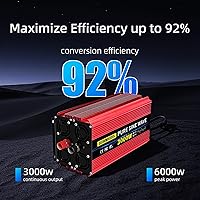
  • Rated Power: Delivers a continuous output of 3000W, suitable for running multiple household-grade appliances simultaneously.
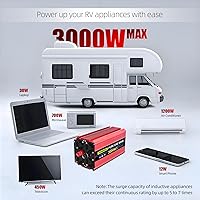
  • Peak Surge Power: Handles up to 6000W of peak surge power to manage the startup spike of motor-driven devices like refrigerators.
  • Input Voltage: Requires a 24V DC battery source as input — not compatible with standard 12V vehicle or battery systems.
  • Output Voltage: Produces 110V/120V AC output, matching the standard household current used across North America.
  • Waveform Type: Generates a pure sine wave output, which is safe for sensitive electronics including CPAP machines, laptops, and modern appliances.
  • Efficiency: Operates at approximately 92% conversion efficiency, reducing unnecessary battery drain compared to lower-quality inverter designs.
  • AC Outlets: Features four standard AC outlets, allowing up to four devices to be powered at the same time without an external power strip.
  • Display: Equipped with an LCD screen that shows real-time data including input voltage, output load, and basic system status.
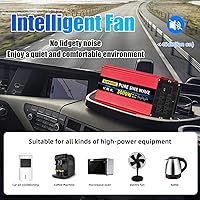
  • Cooling System: Uses an intelligent variable-speed fan that adjusts its speed based on internal temperature, staying quiet at lighter loads.
  • Noise Level: Operates at under 45dB under normal load conditions, making it practical for use in living spaces and sleeping areas.
  • Housing Material: Built with an aluminum alloy chassis that aids heat dissipation while keeping the overall unit weight low.
  • Dimensions: Measures 11.8 x 7.09 x 5.91 inches, compact enough to mount inside an RV cabinet or a van utility compartment.
  • Weight: Weighs 9.38 pounds, making it light enough to reposition or carry without needing additional tools or assistance.
  • Protections: Includes seven built-in protection systems covering overload, over-temperature, short circuit, low voltage, high voltage, reverse polarity, and over-current conditions.
  • Warranty: Backed by a two-year manufacturer warranty covering product quality defects, with technical and replacement support provided by the brand.
  • Availability Date: First became available in January 2025, making it a relatively new product with a growing but still limited long-term track record.

Related Reviews

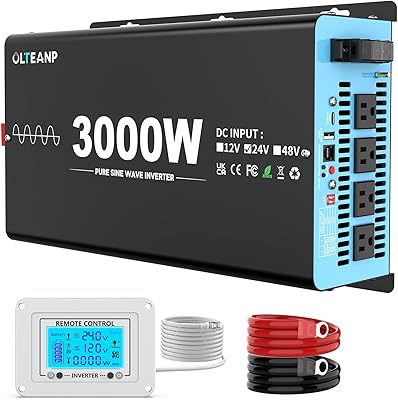
OLTEANP TK-3 3000W Pure Sine Wave Inverter
78%
92%
Power Output Quality
88%
Lithium Battery Compatibility
74%
Build Quality
61%
Fan Noise
86%
LCD Display & Usability
More
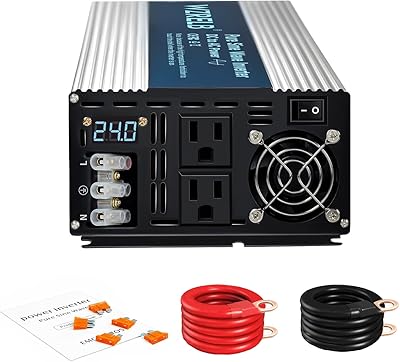
WZRELB 3000W 24V Pure Sine Wave Inverter
76%
91%
Output Power Quality
84%
Build Quality
78%
Thermal Management
61%
Fan Noise
66%
Voltage Display Accuracy
More
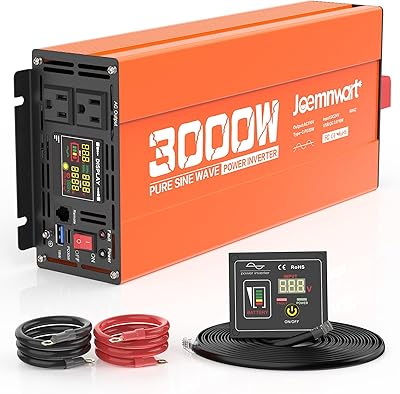
Joemnwart 3000W 24V Pure Sine Wave Inverter
78%
88%
Waveform Quality
74%
Power Output Accuracy
72%
Build Quality
83%
Value for Money
86%
Noise Level
More
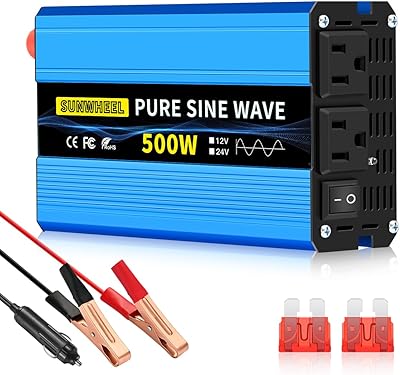
SUNWHEEL 500W Pure Sine Wave Inverter
86%
92%
Power Conversion Efficiency
88%
Noise Level
85%
Build Quality & Durability
80%
Cooling System
83%
Portability
More
SUNWHEEL 2000W Pure Sine Wave Inverter
80%
86%
Power Output Reliability
91%
Waveform Quality
83%
Build Quality
88%
Noise Level
67%
LCD Display Usefulness
More
VOLTWORKS VS-3000PCR 3000W Pure Sine Wave Inverter
79%
83%
Output Power Accuracy
91%
Output Signal Quality
88%
Cooling & Noise Level
79%
Build Quality & Housing
86%
Installation Ease
More
LiTime 3000W Pure Sine Wave Inverter Charger
76%
83%
Power Output Accuracy
91%
Sine Wave Quality
79%
UPS Performance
87%
Charging Versatility
74%
Build Quality
More
Homkeep 3000W Pure Sine Wave Power Inverter
88%
93%
Power Performance
88%
Ease of Use
90%
Build Quality
85%
Noise Level
91%
Safety Features
More
Novopal 2000W 24V Pure Sine Wave Inverter
79%
88%
Power Output Quality
83%
Build Quality
79%
Value for Money
74%
Ease of Installation
81%
Remote Control Functionality
More
WZRELB 1500W 24V Pure Sine Wave Inverter
73%
88%
Output Power Quality
61%
Reliability & Longevity
84%
Cooling & Noise
82%
Ease of Installation
71%
Remote Control Function
More

FAQ

No, it will not. This is strictly a 24V input inverter, which means it only works with a 24V battery system. If your vehicle or battery bank runs on 12V — which is by far the most common setup in consumer vehicles — this unit is not compatible and you will need a 12V inverter instead. Double-check your battery system voltage before purchasing to avoid a return.

Yes, in most cases. The 6000W peak surge capacity handles the startup spike that refrigerator compressors require, and the 3000W continuous rating is well above what a typical household or RV fridge draws while running. Just make sure your total connected load — fridge plus anything else running at the same time — stays within the 3000W continuous limit.

For basic resistive loads like lights or a simple heater, a modified sine wave inverter will often do the job. But for anything with a motor, a switching power supply, or sensitive electronics — think CPAP machines, modern refrigerators, laptops, or LED TVs — pure sine wave really does matter. Modified sine wave can cause humming, reduced efficiency, overheating, or outright damage in those devices. If you are powering mixed or unknown loads, pure sine wave is the safer and smarter choice.

The SUNWHEEL 3000W 24V Pure Sine Wave Inverter connects directly to your 24V battery bank using DC cables attached to its input terminals. You will want to use appropriately sized cables — at 3000W and 24V, you are pulling up to around 125 amps, so undersized wiring creates a real fire risk. Most installers also recommend adding an inline fuse or circuit breaker close to the battery for safety. If you are not confident with electrical work, having a professional do the wiring is worth the cost.

It depends on the size of the AC unit. Small window air conditioners with a running draw under 2500W and a startup surge under 6000W could technically work, but you would be pushing this inverter close to its limits. Running it at or near maximum capacity for extended periods is hard on any inverter, and it may shorten the unit's lifespan. For regular air conditioning use, a higher-capacity inverter is a more practical and durable choice.

At light to moderate loads, the fan is genuinely quiet — under 45dB, which is roughly the noise level of a quiet library. At heavier loads, the fan speeds up noticeably and some users have flagged the increased noise as a minor annoyance in enclosed spaces like a truck cab or van bedroom. It is not disruptive for most situations, but if you are a light sleeper or running it near a sleeping area at high load, it is worth being aware of.

No, the unit only provides four standard AC outlets and does not include built-in USB charging ports. You can easily plug a USB wall charger into one of the AC outlets, but if USB ports are important to your setup, you will need to bring your own adapter.

The display shows input voltage from your battery, the current AC output load, and basic system status. It gives you a quick read on whether your battery is in a healthy voltage range and how hard the inverter is working at any given moment. Some users have noted that the readout accuracy can feel inconsistent under rapidly fluctuating loads, so treat it as a useful reference rather than a precision meter.

The inverter has built-in reverse polarity protection, which is designed to prevent damage if you connect positive and negative cables the wrong way around. That said, reverse polarity protection is a safeguard, not a guarantee — it is always better to double-check your connections before powering on. Good installation practice includes labeling cables clearly to avoid the mistake in the first place.

That is genuinely hard to answer with confidence since this product only launched in early 2025, and long-term durability data is still thin. Reviews so far suggest it holds up well under moderate, occasional use. Buyers who plan to run it hard every single day — say, as a primary power source in a full-time live-aboard van or off-grid home — should factor in that the brand and product are still relatively unproven at that intensity. The two-year warranty provides a reasonable cushion, but heavy daily users may want to consider a more established brand with a longer field history.

Where to Buy