Overview

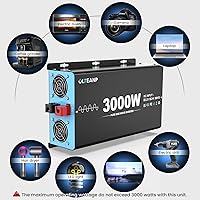
The OLTEANP TK-3 3000W Pure Sine Wave Inverter arrived on the market in November 2024, and it has already carved out a solid niche among RV owners, van-lifers, and anyone building a home backup power setup. OLTEANP isn't a household name yet, but this model signals the brand is taking the space seriously. You get 3000 watts continuous with a 6000-watt surge ceiling — enough to run a refrigerator, a TV, and charge multiple devices at the same time. That said, real-world performance hinges heavily on your battery bank size. Pair this inverter with an undersized bank and you'll hit limitations fast.
Features & Benefits

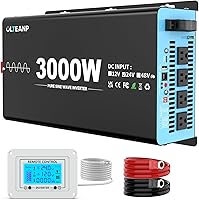
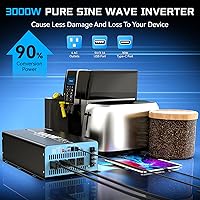
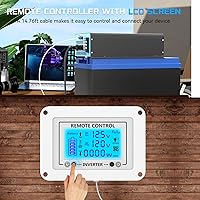
The biggest reason to choose a pure sine wave output over a modified sine wave inverter comes down to compatibility — sensitive gear like CPAP machines, variable-speed tools, and modern laptops can behave erratically on a choppy waveform. This 3000-watt inverter delivers the clean, utility-grade signal those devices expect. The adjustable input voltage feature is especially useful for lithium battery users, letting you fine-tune the draw to reduce long-term stress on your cells. An LCD display and included remote make monitoring practical when the unit is tucked into a cabinet or under a van bed. Four AC outlets, a 30W USB-C, and a 5V USB-A port mean fewer adapters cluttering your setup overall.

Best For

This pure sine wave unit fits naturally into several real-world scenarios. Van-lifers and RV campers will appreciate the clean output and port variety for running entertainment setups, small appliances, and charging multiple devices at once. It's also a practical choice for homeowners who want a battery-backed inverter on standby for outages — just keep in mind it's a targeted backup solution, not a whole-home generator replacement. Truck drivers running a compact refrigerator or a coffee maker on long hauls will find the capacity comfortable. And for anyone building a DIY solar setup around lithium batteries, the adjustable input voltage makes integration considerably more straightforward than most competitors in this price range offer.

User Feedback

With 257 ratings and a 4.5-star average — solid for a product that launched just months ago — buyer sentiment leans positive, though the review pool is still relatively small. Users consistently highlight the clean power output, noting that sensitive electronics run without the hum or flicker common with cheaper alternatives. The LCD readability earns regular praise, and multiple buyers cited OLTEANP's customer support as genuinely responsive. On the downside, some users flagged fan noise under load as more pronounced than expected, and a few mentioned the cable terminals felt less solid than the rest of the build. Occasional packaging damage was reported, though the inverter itself typically arrived in working condition.

Pros

  • Pure sine wave output runs sensitive electronics cleanly, including CPAP machines, laptops, and modern TVs.
  • The 6000-watt surge capacity handles the startup spike of compressor-based appliances like mini-fridges without issue.
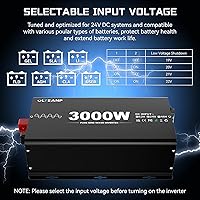
  • Adjustable input voltage is a genuine benefit for lithium battery users looking to reduce long-term cell stress.
  • Four AC outlets plus a 30W USB-C and USB-A port cover most real-world charging needs without extra adapters.
  • The included remote control is genuinely practical when the inverter is mounted in a hard-to-reach cabinet or under a van bench.
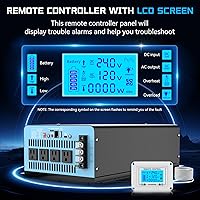
  • LCD display communicates inverter status and fault codes clearly, making troubleshooting much less guesswork.
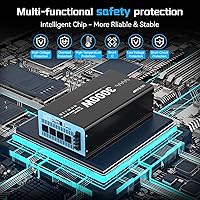
  • Spark-free protection circuitry adds a meaningful layer of safety for users who are less experienced with DC wiring.
  • Early buyers report OLTEANP customer support is responsive, which matters for a newer brand still establishing trust.
  • At 11 pounds, the unit is heavy enough to feel substantial but manageable for a permanent vehicle or RV installation.
  • Ranking in the top 100 Power Inverters within months of launch suggests solid real-world reception relative to competitors.

Cons

  • The cooling fan can get noticeably loud under sustained heavy load, which some users found more disruptive than expected.
  • Cable terminal build quality has been flagged by a handful of buyers as feeling less solid than the rest of the unit.
  • With only a few months on the market, the review pool is still small, making long-term reliability harder to judge confidently.
  • Exclusively 24V input means it is incompatible with the far more common 12V battery setups many buyers already own.
  • Some units arrived with shipping damage to packaging, raising concerns about how well the product is protected in transit.
  • No built-in battery charger or transfer switch — you will need additional components for a complete backup power installation.
  • Heat management under prolonged high-wattage draw has been a minor but recurring concern worth monitoring in warm climates.
  • At nearly 18 inches long, finding a clean mounting spot in a tight van or truck cab requires careful planning upfront.

Ratings

Our editorial AI analyzed verified purchase reviews for the OLTEANP TK-3 3000W Pure Sine Wave Inverter from buyers worldwide, actively filtering out incentivized, bot-generated, and low-credibility submissions to surface genuine user sentiment. The scores below reflect a transparent synthesis of both what buyers loved and where real frustrations emerged — nothing is glossed over. This 3000-watt inverter earns strong marks in several key areas, with a few legitimate trade-offs that serious buyers should weigh before committing.
Power Output Quality
92%
Buyers consistently report that the pure sine wave output runs sensitive electronics without the hum, flicker, or interference common with modified sine wave alternatives. CPAP users and laptop owners in particular note that devices behave exactly as they would on grid power, which is the core promise of this technology.
A small number of buyers noted minor voltage fluctuation under loads approaching the 3000-watt ceiling, which is not unusual at this price tier but worth noting for anyone running precision-sensitive equipment near full capacity.
Lithium Battery Compatibility
88%
The adjustable input voltage feature is genuinely well-regarded among buyers running lithium battery banks, who confirm it prevents premature cutoff and reduces unnecessary cell stress during discharge cycles. DIY solar builders specifically called this out as a differentiating factor versus similarly priced competitors.
The voltage adjustment must be made with the inverter powered off, which a surprising number of buyers overlooked initially, causing temporary confusion. The setting options could also be better documented in the included manual, which several reviewers described as thin on detail.
Build Quality
74%
26%
The inverter housing feels sturdy overall, and the cooling fins and chassis construction give a reasonable impression of durability for a mid-range unit. Most buyers who installed it permanently in vans or RVs reported no structural issues after months of use.
The cable terminals drew repeated criticism for feeling less solid than the rest of the build — a meaningful concern given that connection quality directly affects safety and performance. A few buyers also flagged minor cosmetic inconsistencies that suggested quality control is not yet perfectly consistent.
Fan Noise
61%
39%
At light to moderate loads, the cooling fan is quiet enough that most buyers in van or RV setups barely noticed it during daytime use. The thermal management system does keep the unit from running excessively hot during normal operation, which is its intended job.
Under sustained heavy loads, the fan ramps up to a level that multiple buyers described as noticeably intrusive — particularly frustrating in overnight or quiet workspace scenarios. This is arguably the most consistent complaint in the review pool and should factor heavily into purchasing decisions for noise-sensitive installs.
LCD Display & Usability
86%
The LCD screen earns consistent praise for being easy to read at a glance, clearly showing battery voltage, load level, and fault indicators without requiring the user to decode cryptic symbols. Buyers who mounted the inverter in tight spots appreciated having real-time status visibility without physically inspecting the unit.
The display backlight can be hard to read in direct sunlight when the inverter is installed in an exposed position, and the fault code legend in the manual is sparse enough that some buyers had to search online forums to interpret specific warnings.
Remote Control
83%
The wired remote is praised for its reliability — no pairing issues, no signal dropouts, no batteries to replace — and buyers who installed the inverter under a van bed or inside a rear cabinet found it genuinely practical for daily on/off control without contorting to reach the unit.
The wired nature means routing the cable requires some planning during installation, and the cable length may not be sufficient for every layout without an extension. A wireless option would be more versatile, though admittedly that adds cost and complexity.
Port Selection & Charging
81%
19%
Having four AC outlets alongside a 30W USB-C and a 5V USB-A port on a single inverter eliminates the need for additional power strips or adapters in most van and RV setups. Buyers running a mix of legacy and modern devices found the port combination genuinely practical for day-to-day use.
The USB-A output at 3.1A is adequate but not class-leading — buyers with high-drain devices noted slower charge times than they expected. The USB-C at 30W is solid for most laptops but falls short for power-hungry models that require 65W or more for full-speed charging.
Safety Protection
89%
The spark-free protection circuit performed as advertised in buyer reports, with the inverter shutting down cleanly on improper connections rather than allowing dangerous arcing. For less experienced builders tackling their first off-grid install, this safety layer provided real peace of mind during initial wiring.
A few buyers reported that the overload protection triggered somewhat conservatively — cutting out at loads that felt well below the rated 3000-watt ceiling — which suggests the protection thresholds may be calibrated cautiously. While that is arguably safer, it can be annoying when trying to run appliances at high but legitimate wattages.
Installation & Mounting
72%
28%
At 11 pounds and with a standardized rectangular footprint, the unit installs cleanly into purpose-built inverter brackets or DIY mounting boards in most RV and van configurations. Buyers with prior inverter installation experience reported a straightforward setup process overall.
The nearly 18-inch length is a tight fit in compact installations, and adequate ventilation clearance on all sides is non-negotiable for safe operation — something that limits placement options in small cabinets. The included documentation on mounting requirements and clearance minimums is underdeveloped.
Shipping & Packaging
67%
33%
The majority of buyers received the unit in working condition, and those who did experience shipping issues generally reported that OLTEANP customer support responded promptly to resolve the situation, which softened the impact of the packaging shortfalls.
A recurring theme in negative reviews was packaging that provided insufficient protection during transit — dented boxes, loose components, and occasionally cosmetic damage to the unit itself. For a device that ships at this weight, the protective foam and outer carton quality appears to lag behind what the product warrants.
Customer Support
84%
For a relatively young brand, OLTEANP's responsiveness stands out — multiple buyers praised direct, helpful replies to pre-purchase technical questions and post-purchase troubleshooting requests. That kind of accessible support matters when buyers are wiring this into a vehicle or off-grid system.
Support quality appears to vary by channel and timing, with some buyers waiting longer than expected for follow-up responses. Documentation quality — manuals, setup guides — lags behind the support team itself, meaning buyers often have to contact support for information that should be printed clearly in the box.
Value for Money
79%
21%
The combination of pure sine wave output, lithium battery compatibility, remote control, LCD display, and a mixed port array at this price point represents a genuinely competitive package for the mid-range inverter segment. Buyers who compared alternatives at a similar price consistently felt this 3000-watt inverter offered more usable features per dollar.
The value equation tilts less favorably when minor build quality concerns — particularly terminal quality and fan noise — are factored in, since those are the components most likely to affect long-term reliability. Buyers who prioritize proven durability over feature count may prefer paying a premium for an established brand.
Brand Reliability & Track Record
63%
37%
Early adopters who bought this unit within months of its November 2024 launch have reported consistent operation through regular use cycles, and the brand's engagement with buyer feedback signals a degree of accountability that newer manufacturers sometimes lack.
With fewer than six months on the market and just over 250 reviews, there simply is not enough long-term data to assess multi-year reliability with confidence. Buyers who place heavy weight on proven brand history will reasonably view OLTEANP as an unknown quantity at this stage.

Suitable for:

The OLTEANP TK-3 3000W Pure Sine Wave Inverter is a strong fit for anyone building or upgrading an off-grid power setup around a 24V battery bank — particularly van-lifers, RV campers, and full-time road dwellers who need reliable AC power without hauling a generator. If you run a CPAP machine, power a laptop, or watch TV off-battery, the pure sine wave output matters more than most buyers realize, and this unit delivers exactly that. Truck drivers looking to run a compact refrigerator or brew coffee on long hauls will find the 3000-watt continuous capacity more than adequate for those loads. Homeowners who want a capable standby inverter to bridge short power outages — paired with a proper 24V lithium bank — will also find this unit practical and reasonably easy to integrate. DIY solar builders, especially those using lithium batteries, will appreciate the adjustable input voltage feature, which is genuinely useful for protecting battery health over the long term.
Not suitable for:

If your battery system runs on 12V, this is simply the wrong inverter — the OLTEANP TK-3 3000W Pure Sine Wave Inverter is built exclusively for 24V DC input, so 12V users need to look elsewhere. Anyone expecting to run a central air conditioner, a well pump, or a large electric range will hit a hard ceiling here; 3000 watts continuous is useful for selective loads, not whole-home coverage. Buyers who prioritize a long-established brand with years of field-proven reliability may hesitate, given that OLTEANP is still building its track record and the TK-3 has only been on the market since late 2024. If you are highly sensitive to fan noise — for example, using the inverter in a bedroom or quiet workspace — the cooling fan under heavy load has drawn complaints and could be a real annoyance. Finally, anyone who needs a compact, ultra-lightweight unit for frequent repositioning will find the 11-pound weight and nearly 18-inch length a bit cumbersome to move around regularly.
Specifications

  • Continuous Power: Delivers 3000 watts of continuous AC power output for sustained operation of appliances and electronics.
  • Peak Surge Power: Handles surge loads up to 6000 watts to accommodate the startup spikes of compressor-based appliances like refrigerators.
  • Input Voltage: Accepts 24V DC input exclusively, requiring a 24V battery bank or compatible power source.
  • Output Voltage: Produces 110V/120V AC output suitable for standard North American household devices and appliances.
  • Waveform Type: Generates a pure sine wave signal, identical in quality to utility grid power, safe for sensitive electronics.
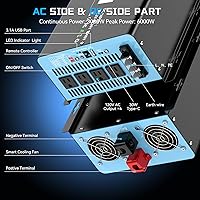
  • AC Outlets: Equipped with 4 standard AC outlets, allowing multiple devices to be powered simultaneously.
  • USB-A Port: Includes one 5V/3.1A USB-A port for charging smartphones and other USB-powered devices.
  • USB-C Port: Features one 30W USB-C port capable of fast-charging modern laptops, tablets, and smartphones.
  • Input Voltage Adjust: Offers an adjustable input voltage setting designed to improve compatibility with lithium battery systems and reduce unnecessary battery draw.
  • Display: Built-in LCD screen communicates real-time inverter status, fault indicators, and battery information at a glance.
  • Remote Control: Ships with a wired remote control unit for convenient on/off operation when the inverter is mounted out of direct reach.
  • Protection System: Incorporates a spark-free protection circuit that automatically cuts output in the event of a short circuit or improper connection.
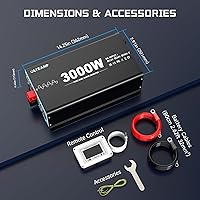
  • Dimensions: Measures 17.48 x 11.77 x 6.65 inches, requiring adequate mounting clearance for ventilation on all sides.
  • Weight: Weighs 11 pounds, making it practical for permanent vehicle or RV installation but less suited for frequent repositioning.
  • Model Number: Manufactured under the model designation TK-3 by OLTEANP.
  • Availability: First made available for purchase in November 2024, making it a recently introduced product with a still-growing review base.
  • Market Rank: Holds a Best Sellers Rank of #65 in the Power Inverters category on Amazon as of early 2025.
  • Brand: Produced by OLTEANP, an emerging manufacturer in the portable and vehicle power inverter segment.

Related Reviews

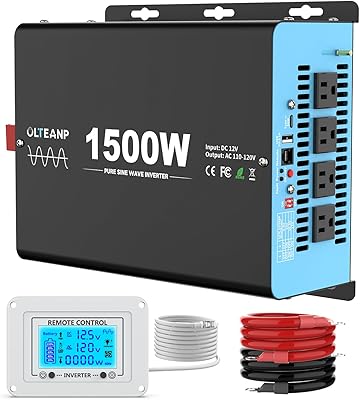
OLTEANP TK-1500W 1500W Pure Sine Wave Inverter
87%
89%
Power Performance
92%
Value for Money
85%
Ease of Use
90%
Portability & Size
93%
Safety Features
More
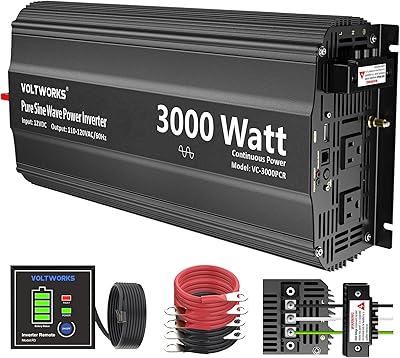
VOLTWORKS VS-3000PCR 3000W Pure Sine Wave Inverter
79%
83%
Output Power Accuracy
91%
Output Signal Quality
88%
Cooling & Noise Level
79%
Build Quality & Housing
86%
Installation Ease
More
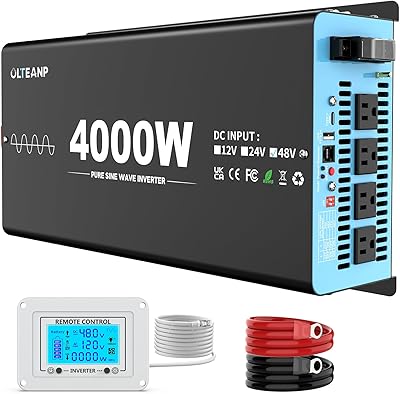
OLTEANP 48V 4000W Pure Sine Wave Inverter
83%
90%
Performance Under Load
65%
Ease of Setup
88%
Battery Compatibility & Longevity
91%
Noise & Operation Smoothness
83%
Build Quality
More
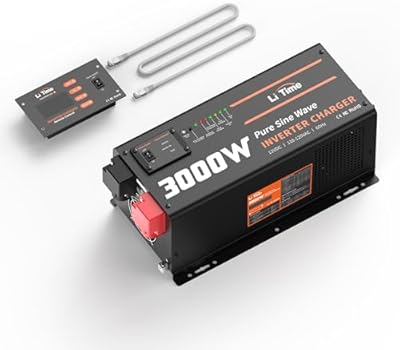
LiTime 3000W Pure Sine Wave Inverter Charger
76%
83%
Power Output Accuracy
91%
Sine Wave Quality
79%
UPS Performance
87%
Charging Versatility
74%
Build Quality
More
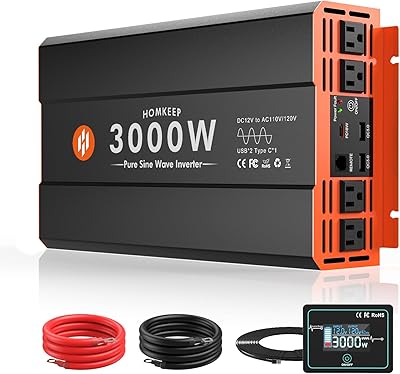
Homkeep 3000W Pure Sine Wave Power Inverter
88%
93%
Power Performance
88%
Ease of Use
90%
Build Quality
85%
Noise Level
91%
Safety Features
More
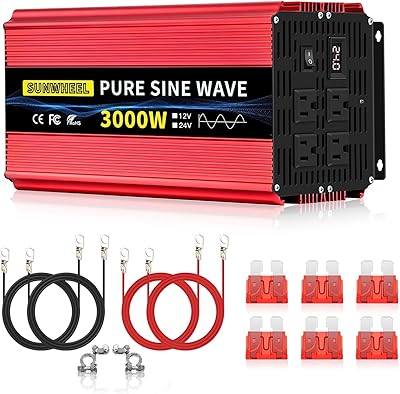
SUNWHEEL 3000W 24V Pure Sine Wave Inverter
78%
88%
Output Power Quality
83%
Value for Money
86%
Ease of Installation
81%
Surge Handling
79%
Noise Level
More
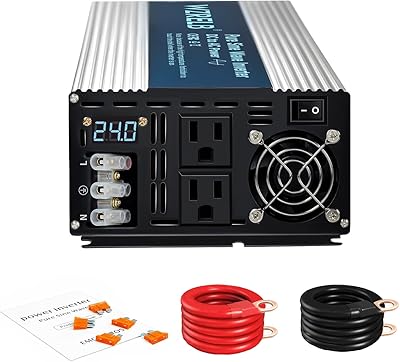
WZRELB 3000W 24V Pure Sine Wave Inverter
76%
91%
Output Power Quality
84%
Build Quality
78%
Thermal Management
61%
Fan Noise
66%
Voltage Display Accuracy
More
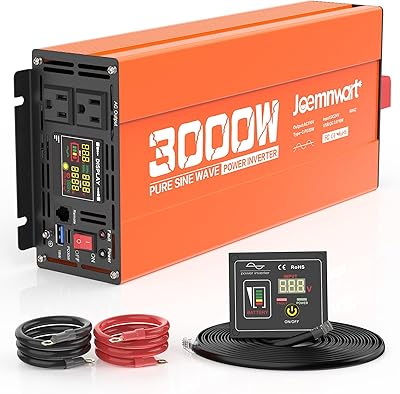
Joemnwart 3000W 24V Pure Sine Wave Inverter
78%
88%
Waveform Quality
74%
Power Output Accuracy
72%
Build Quality
83%
Value for Money
86%
Noise Level
More
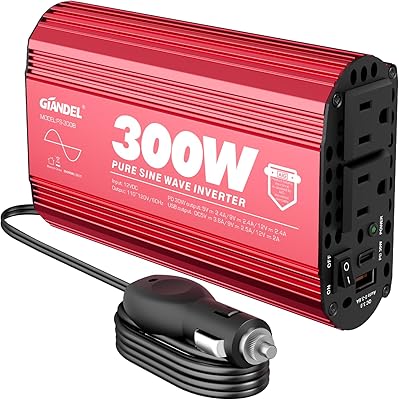
Giandel PS-300B 300W Pure Sine Wave Inverter
84%
93%
Power Output Quality
88%
USB Charging Speed
86%
Noise Level
82%
Build Quality
63%
Plug & Connection Reliability
More
Tebrol 3500W Pure Sine Wave Inverter
79%
88%
Output Power Accuracy
92%
Pure Sine Wave Quality
79%
Build Quality
83%
Cooling & Thermal Management
81%
Ease of Installation
More

FAQ

No, it will not. The OLTEANP TK-3 3000W Pure Sine Wave Inverter is designed exclusively for 24V DC input. If your battery bank runs at 12V, you will need a different inverter built for that voltage. Connecting it to a 12V source could damage both the inverter and your batteries.
Yes, and this is actually one of the better use cases for a pure sine wave inverter. CPAP machines are sensitive to power quality and often malfunction or produce noise when run on modified sine wave inverters. This unit outputs clean sine wave power that CPAP machines handle without issue. Just factor in your battery capacity to make sure you have enough runtime through the night.

The adjustable input voltage setting lets you configure the minimum and maximum voltage thresholds at which the inverter operates. For lithium battery users, this is useful because lithium cells have a different discharge curve than lead-acid batteries, and setting the cutoff voltage correctly prevents you from over-discharging your cells. One important note: you must make this adjustment while the inverter is powered off, not while it is running.

It depends on your load level. At low to moderate loads, the fan is fairly quiet and unlikely to bother most people. Under sustained heavy loads — running multiple appliances close to the 3000-watt ceiling — the fan ramps up noticeably. A few buyers have flagged this as more disruptive than they expected, so if you plan to use it in a quiet sleeping space at high loads, it is worth keeping in mind.

The remote control is wired, not wireless. It connects to the inverter via a cable, so the usable range depends entirely on the cable length provided. This is actually reliable for permanent installs — no signal interference, no batteries to replace — but it does mean you need to route the cable to wherever you want the control panel to sit.

Yes, comfortably. A standard mini-fridge draws around 100 to 200 watts while running, with a startup surge that this inverter handles easily given its 6000-watt peak capacity. A laptop typically draws 45 to 100 watts. Running both simultaneously puts you well within the 3000-watt continuous limit, leaving plenty of headroom for additional devices.

The display shows key operational data including the current battery voltage, output load level, and any active fault codes or warning symbols. It gives you a quick read on whether the inverter is operating normally or flagging a problem like overload, overheating, or a wiring issue. It is genuinely useful rather than just decorative.

For most standard power tools, yes. Drills, circular saws, and similar tools typically work fine on pure sine wave power. The 6000-watt surge capacity helps handle the startup draw of motor-driven tools. That said, very large tools like table saws or air compressors can spike well beyond what this inverter is designed to sustain, so check your tool's rated wattage before assuming it will work.

You will need appropriately sized battery cables — generally 2/0 AWG or larger for a 3000-watt inverter at 24V — with the shortest possible cable run to minimize voltage drop. Connect positive to positive and negative to negative, and use an inline fuse or breaker on the positive cable close to the battery for safety. If you are not confident with DC wiring, having an electrician or experienced installer handle this is worth it.

OLTEANP is a relatively new brand, and warranty terms can vary, so it is worth checking the current documentation that ships with the unit or contacting them directly for specifics. Several buyers have noted that customer support was responsive when they reached out with questions or issues, which is a reasonable sign for a newer manufacturer. Purchasing through Amazon also gives you standard A-to-Z buyer protection as a fallback.