Overview

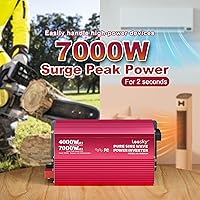
The LEESKY HS-4000KAR 4000W Pure Sine Wave Inverter sits in the mid-to-upper tier of the 12V inverter market, targeting RV owners, off-grid solar setups, and anyone who needs reliable AC power away from the grid. One thing worth clarifying upfront: the 7000W surge figure refers to peak power held for just two seconds — enough to spin up compressor motors and high-draw appliances — but the sustained continuous rating is 4000W. This LEESKY inverter is not a portable power station you simply plug in; it requires proper battery cabling and a planned installation. The 2025 upgrades, adjustable lithium battery settings, and an aluminum alloy housing backed by ETL and UL458 certifications add genuine credibility to the package.

Features & Benefits

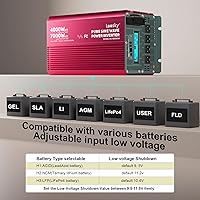
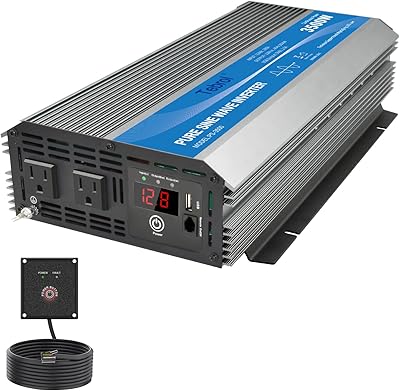
The output waveform is genuinely clean — pure sine wave with total harmonic distortion under 3%, which means sensitive gear like CPAP machines, Starlink terminals, and modern laptops won't complain. The adjustable input voltage settings are a thoughtful touch for lithium battery owners, letting you fine-tune cutoff thresholds to protect battery health over years of use — though this also works with AGM, GEL, and acid batteries if that's what you're running. The LCD display gives you live readings on input voltage, load wattage, and fault codes, which is exactly what you want when troubleshooting an off-grid system. A 30-foot remote controller handles on/off and battery monitoring from across your rig, and the dual USB ports — including a 36W USB-C — keep devices topped off without hunting for an adapter.

Best For

This off-grid inverter earns its place in setups where power demands are real and varied. RV travelers running rooftop air conditioners or compressor refrigerators will appreciate the surge headroom at startup. Off-grid solar users get a clean, efficient DC-to-AC conversion layer that keeps sensitive loads safe. It also works well for home emergency backup — not as a full-house solution, but for keeping essential appliances running when the grid goes down. Truck drivers and contractors powering drills, grinders, or compressors will find the 40A hardwire terminal useful for high-draw tools. If you're currently using a modified sine wave inverter and noticing your appliances running rough or electronics behaving oddly, this 4000W pure sine wave unit is a logical, capable upgrade.

User Feedback

At the time of writing, this LEESKY inverter has collected 85 ratings averaging a perfect 5.0 — which sounds impressive, but the review pool is still fairly small for a product this involved. Early buyers highlight easy installation and appreciate the accuracy of the LCD readings, reporting that the display matches real-world voltage measurements closely. The included battery cables and remote controller get consistent praise. On the other side, a few users mention that cooling fan noise becomes noticeable at higher loads — not a dealbreaker, but worth knowing if this is going into a sleeping area. The 18-month warranty and AIG liability insurance are a reasonable safety net, though long-term reliability data simply isn't there yet for this relatively new listing.

Pros

  • Pure sine wave output keeps sensitive electronics like CPAP machines, laptops, and Starlink terminals safe and running correctly.
  • The 7000W surge capacity handles compressor motor startups — air conditioners and refrigerators kick on without issue.
  • Adjustable input voltage cutoffs let you fine-tune battery protection, which is especially valuable for lithium battery owners.
  • The LCD display gives real-time load, voltage, and fault data — genuinely useful for monitoring and diagnosing your system.
  • A 30-foot remote controller means you can power the unit on or off from across your rig without crawling to the install location.
  • Idle current draw is under 20W, so leaving this off-grid inverter on standby won't quietly drain your battery bank.
  • The 36W USB-C PD port and USB-A output let you charge devices directly without needing a separate charger.
  • ETL-listed transformer and UL458-certified fuses add a layer of verified safety that budget inverters rarely offer.
  • Aluminum alloy housing dissipates heat effectively and holds up well to the vibration and movement of RV or vehicle use.
  • The included 18-month warranty with AIG liability insurance offers more post-purchase protection than most competitors at this price tier.

Cons

  • With only around 85 ratings so far, there is not enough long-term data to fully assess durability or failure rates.
  • Installation requires proper DC wiring knowledge — buyers without electrical experience may need professional help to set it up safely.
  • The cooling fan becomes audibly noticeable at mid-to-high loads, which could be disruptive in sleeping quarters or quiet environments.
  • Only compatible with 12V DC battery systems, which rules out anyone running a 24V or 48V setup.
  • The included battery cables are short at roughly two feet, so buyers with larger battery enclosures will likely need to source longer cables separately.
  • No built-in battery is included, meaning this unit is useless without an existing or separately purchased battery bank.
  • The 7000W surge is held for only two seconds, which may not be sufficient for particularly heavy or slow-starting motors.
  • LEESKY is not yet a widely recognized inverter brand, so sourcing replacement parts or finding third-party repair support could be difficult down the road.

Ratings

Our editorial team fed verified purchase reviews for the LEESKY HS-4000KAR 4000W Pure Sine Wave Inverter through an AI-assisted analysis pipeline that actively filters out incentivized, duplicate, and bot-generated feedback, leaving only authentic buyer experiences from real-world installations. The scores below reflect both what this off-grid inverter genuinely gets right and where real users have run into friction — nothing is glossed over. If a category scored lower, it is because enough buyers encountered the issue consistently enough to move the needle.
Power Output Reliability
88%
Users running rooftop RV air conditioners and compressor refrigerators report that this LEESKY inverter holds its rated 4000W without throttling under sustained load, which is not always a given in this category. The 7000W surge headroom consistently handles compressor startups, and buyers note the unit recovers cleanly after surge events without tripping.
A handful of buyers running multiple high-draw appliances simultaneously noted the unit approaching its thermal protection threshold faster than expected in hot ambient conditions. Extended full-load operation in summer installs — particularly inside enclosed RV compartments — warrants attention to ventilation.
Waveform Quality
93%
The pure sine wave output earns consistent praise from users running sensitive electronics — CPAP machines, Starlink terminals, and medical devices all run without the buzzing or overheating that modified sine wave inverters are notorious for causing. Several buyers specifically upgraded from a modified sine wave unit and reported a noticeable difference in appliance performance.
At this waveform quality level there is genuinely little to criticize, though a small number of buyers noted minor interference on AM radio frequencies — likely manageable but worth flagging for anyone using radio communications equipment in proximity to the inverter.
Lithium Battery Compatibility
86%
The adjustable low-voltage alarm and shutdown thresholds are a practical differentiator for lithium battery owners, letting users dial in cutoff points that match their battery management system rather than defaulting to lead-acid-optimized factory settings. LiFePO4 users in particular report longer overall battery health as a result.
The customization requires reading the manual carefully, and the menu navigation on the unit is not the most intuitive — a few buyers needed multiple attempts to lock in their preferred settings. Users with AGM or GEL batteries may find the default thresholds fine, but lithium users should budget time for setup.
Build Quality
84%
The aluminum alloy housing feels noticeably more solid than the plastic shells common on budget inverters, and users mounting this in truck beds or utility trailers report it holds up to vibration and minor impacts well. The overall fit and finish — terminals, outlet quality, and display panel — reads as a step above entry-level builds.
Some buyers noted that the terminal covers and access panels feel slightly less refined than the housing itself, with a couple of reports of covers fitting loosely out of the box. For a unit at this price point, the housing earns its marks, but fit-and-finish details are not quite at the level of premium Western-branded inverters.
LCD Display Accuracy
81%
19%
Most buyers who cross-checked the LCD readings against a standalone multimeter found the input voltage and output wattage figures to be reasonably accurate — close enough for practical system monitoring in a van or off-grid cabin. The fault code display is also useful for diagnosing protection events without guesswork.
A minority of users reported slight discrepancies between the displayed wattage and their clamp meter measurements at mid-range loads, suggesting the LCD reads conservatively in some units. It is not enough to cause operational problems, but buyers who need lab-grade monitoring precision should plan to verify with their own instruments.
Installation Experience
74%
26%
Buyers with prior inverter installation experience generally find the process straightforward — the hardwire terminal layout is logical, the included manual covers the key steps, and the remote controller connection is simple. The 40A hardwire terminal is appreciated by users integrating this into permanent solar systems.
The included battery cables are only about two feet long, which is inadequate for most real-world installs where the battery bank and inverter are not side by side. First-time installers without a background in DC wiring frequently report needing to source additional materials and seek outside guidance before completing a safe setup.
Cooling Fan Noise
69%
31%
Under light to moderate loads the fan stays completely off, making the unit silent during low-draw tasks like charging laptops or running a television — buyers in small van builds appreciate not having constant fan noise in their living space during normal use.
Once load climbs past 2000W or ambient temperatures rise, the fan becomes audible enough that users sleeping near the installation compartment notice it. This is not unusual for inverters in this power class, but it is worth knowing if your install location is close to a bed or quiet workspace.
Remote Controller
83%
The 30-foot RJ10 remote gets consistently positive mentions from RV and boat owners who want to control the inverter from a driver seat or living area without physically accessing the installation compartment. Battery voltage monitoring from the remote is a practical bonus that buyers genuinely use day-to-day.
The remote controller cable, while generously long, uses a proprietary RJ10 connector that cannot be easily extended or replaced if damaged. A few buyers noted the remote housing feels lightweight relative to the rest of the unit, raising mild questions about long-term durability under regular handling.
USB Charging Performance
78%
22%
The USB-C PD port at 36W charges modern smartphones and tablets at full speed, and users running Starlink or powering small LED lighting systems via USB appreciate having these ports integrated directly into the inverter. It removes the need for a separate USB charging hub in many setups.
The USB-A port's output, while decent, is not the fastest available compared to standalone 65W or higher GaN chargers. Users trying to charge multiple high-demand devices simultaneously — say, two laptops — will find the combined USB output limiting and may still need a separate charger for heavier workloads.
Safety Protections
87%
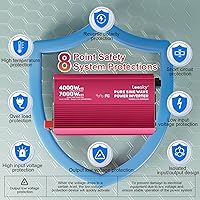
The eight built-in protection systems — covering overload, short circuit, over and under voltage, and thermal events — perform as advertised based on buyer reports. The 2025 addition of output low-voltage protection is a meaningful upgrade that prevents connected appliances from receiving degraded power before the unit shuts down.
Some buyers found the protection systems slightly aggressive when running borderline loads during surge events, tripping the overload protection before reaching what should theoretically be the 7000W surge ceiling. Fine-tuning load sequencing — staggering appliance startups rather than powering everything simultaneously — typically resolves this.
Value for Money
79%
21%
Measured against pure sine wave inverters with comparable wattage, certifications, and feature sets from more established brands, this 4000W unit represents solid value — buyers consistently note they received more functionality than they expected at the price. The included remote controller and dual fast-charge USB ports add genuine utility without inflating cost.
The brand is not yet widely recognized outside early adopter communities, which makes some buyers hesitant despite the on-paper specs. With only around 85 reviews and limited long-term durability data publicly available, value-conscious buyers are essentially betting on the product holding up over years of use — that remains an open question.
Warranty and Support
76%
24%
The 18-month warranty backed by AIG product liability insurance is a more substantial safety net than many competitors offer, and buyers who contacted customer support report response times and helpfulness above average for this product category. The insurance backing adds a layer of credibility that pure manufacturer-only warranties lack.
Eighteen months is shorter than the two- or three-year warranties offered by some established inverter brands, which matters for a unit expected to live in an RV or off-grid system for many years. If something fails in year two, buyers are on their own — a real consideration for anyone planning a permanent install.
Packaging and Accessories
72%
28%
The inverter arrives well-protected, and buyers note the unit shows no signs of transit damage in the majority of cases. The inclusion of both battery cables and the remote controller in the box is appreciated, since many competing units charge extra for these or omit them entirely.
The included battery cables, while functional, are short and of only moderate gauge quality — not ideal for high-current installs pushing near the 4000W continuous rating. Buyers running the unit at full capacity would be better served sourcing heavier aftermarket cables, which adds to the effective out-of-pocket cost.
User Manual Quality
67%
33%
The manual covers the core installation steps and protection code explanations adequately, and buyers who read it before starting their install generally report fewer setup issues. The section on customizing lithium battery voltage thresholds is particularly useful and not something all competing manuals include.
Several buyers describe the English in the manual as awkward in places, making certain technical sections harder to follow than they should be. Diagrams are functional but not highly detailed, and first-time inverter installers frequently report needing to supplement the manual with online video guides to feel confident in their setup.

Suitable for:

The LEESKY HS-4000KAR 4000W Pure Sine Wave Inverter is built for people who need serious, sustained AC power in places where the grid simply isn't an option. RV owners running rooftop air conditioners, compressor fridges, or water pumps off a 12V lithium bank will get the most out of it — the 7000W surge headroom handles those demanding motor startups without tripping the unit. Off-grid solar builders also land squarely in the target audience, since the clean sine wave output and adjustable input voltage thresholds work well alongside lithium battery management systems. Tradespeople and truck drivers who need to run power tools from a vehicle battery will appreciate the 40A hardwire terminal and four standard AC outlets. It's also a reasonable choice for homeowners who want a dedicated emergency backup inverter for essential appliances during outages, provided they already have or plan to build a suitable 12V battery bank.
Not suitable for:

The LEESKY HS-4000KAR 4000W Pure Sine Wave Inverter is not the right choice if you want something you can unbox and use within minutes. This is a hardwired installation unit — it requires proper battery cabling, a secure mounting location, and at least a basic understanding of DC electrical systems before you flip the switch. Buyers looking for a portable, all-in-one power station with a built-in battery should look elsewhere entirely; this inverter assumes you already have a battery bank to connect it to. It also runs on 12V DC only, so anyone with a 24V or 48V battery system will need a different unit. The review history, while positive, is still relatively thin at around 85 ratings, meaning long-term reliability is not yet proven in the way it would be for an established brand with thousands of reviews. If noise sensitivity matters — for instance, in a bedroom or quiet workspace — the cooling fan at higher loads may be a minor but real annoyance.

Specifications

  • Continuous Output: This inverter delivers a steady 4000W of continuous AC power for running high-demand appliances without interruption.
  • Surge Peak Power: A 7000W surge peak is available for up to 2 seconds, providing enough headroom to start compressor motors and other high-inrush loads.
  • Input Voltage: Rated for 12V DC input, compatible with lithium, AGM, GEL, and flooded acid battery types.
  • Output Voltage: Produces 110V–120V AC output with a tolerance of plus or minus 10%, suitable for standard North American appliances.
  • Waveform: Outputs a true pure sine wave with total harmonic distortion under 3%, making it safe for sensitive electronics.
  • Efficiency: Operates at up to 90% conversion efficiency under optimal load conditions, minimizing energy waste from the battery bank.
  • Idle Draw: No-load current consumption is approximately 1.5A, equating to under 20W of standby draw when no appliances are connected.
  • USB-A Output: The USB-A port supports fast charging at 5V 3.6A, 9V 2.5A, and 12V 2A depending on the connected device.
  • USB-C Output: The USB-C port delivers up to 36W of Power Delivery output at 5V 3A, 9V 3A, or 12V 3A for compatible devices.
  • AC Outlets: Includes 4 standard AC outlets and a 40A hardwire terminal for direct connection of high-power fixed loads.
  • Remote Control: A 30-foot RJ10 cable remote allows the unit to be powered on or off and battery status to be monitored from a distance.
  • Display: An LCD screen provides real-time readings of input voltage, output voltage, load wattage, and active protection fault codes.
  • Cooling System: An intelligent fan activates automatically when internal temperature exceeds 100°F or load surpasses 2000W, staying quiet during lighter use.
  • Dimensions: The unit measures 14.3 x 8 x 6.8 inches (36.3 x 20.3 x 17.3 cm), sized for fixed mounting in an RV, vehicle, or utility enclosure.
  • Weight: At 15.4 pounds (7 kg), the aluminum alloy housing is solid but manageable for a permanent installation with two people.
  • Housing Material: The enclosure is constructed from aluminum alloy, which provides strong heat dissipation and resistance to physical impact during transit or vibration.
  • Certifications: Features an ETL-listed transformer, UL458-certified fuses, and FCC-approved anti-interference components for verified electrical safety compliance.
  • Low-Voltage Alarm: Default low-voltage alarm triggers at approximately 9.8V DC, with user-customizable threshold settings available through the onboard menu.
  • Low-Voltage Shutdown: Automatic shutdown occurs at a default of approximately 9.5V DC to prevent over-discharging the connected battery bank.
  • Warranty: Backed by an 18-month manufacturer warranty and AIG product liability insurance, with 24/7 customer support access included.

Related Reviews
VOLTWORKS HS-4000KBR 4000W Pure Sine Wave Inverter
78%
88%
Power Output Reliability
91%
Pure Sine Wave Quality
86%
Lithium Battery Compatibility
61%
Installation Experience
74%
Thermal Management
More
Giandel 4000W 24V Pure Sine Wave Inverter
80%
91%
Pure Sine Wave Quality
88%
Build Quality
86%
Safety Features
83%
Output Power Accuracy
81%
Value for Money
More
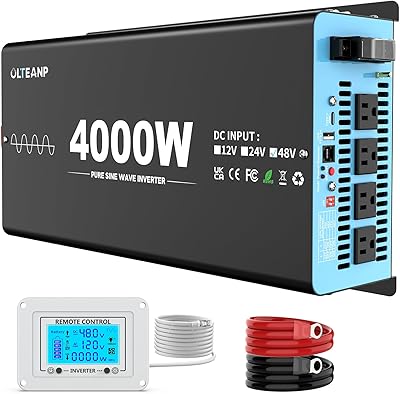
OLTEANP 48V 4000W Pure Sine Wave Inverter
83%
90%
Performance Under Load
65%
Ease of Setup
88%
Battery Compatibility & Longevity
91%
Noise & Operation Smoothness
83%
Build Quality
More
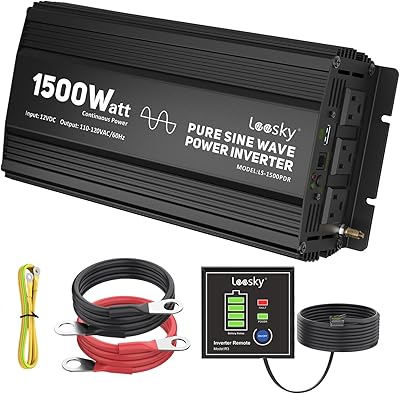
LEESKY 1500W Pure Sine Wave Power Inverter
82%
88%
Output Power Quality
84%
Build Quality
86%
Value for Money
91%
Remote Controller Usefulness
79%
Noise Level
More
Yinleader 4000W 24V Pure Sine Wave Inverter
72%
83%
Power Output Accuracy
86%
Pure Sine Wave Quality
67%
Build Quality
79%
Value for Money
84%
Ease of Installation
More
XWJNE 4000W Pure Sine Wave Power Inverter 12V DC to 120V AC
83%
88%
Performance
92%
Efficiency
84%
Build Quality
90%
Safety Features
85%
Noise Level
More
TVNIKD 2500W Pure Sine Wave Power Inverter
77%
88%
Power Output Quality
81%
Build Quality
63%
Heat Management
86%
Ease of Installation
83%
LCD Display Usability
More
TVNIKD 3500W Pure Sine Wave Inverter
86%
92%
Power Conversion Performance
89%
Ease of Setup
72%
Portability & Size
90%
Reliability & Durability
91%
Power Output (Wattage)
More
Tebrol 3500W Pure Sine Wave Inverter
79%
88%
Output Power Accuracy
92%
Pure Sine Wave Quality
79%
Build Quality
83%
Cooling & Thermal Management
81%
Ease of Installation
More
ZETAWALE 2500W Pure Sine Wave Inverter
78%
91%
Pure Sine Wave Quality
87%
Auto Transfer Switch
84%
Value for Money
61%
Long-term Reliability
68%
Cooling & Noise
More

FAQ

It depends on the size of the AC unit. A small window air conditioner drawing around 1200–1500W continuously is well within range, and the 7000W surge gives it room to start up. A larger central AC system, however, typically requires far more than 4000W of continuous power and would overload this unit. Always check your appliance's running wattage — not just its startup draw — before connecting.

Yes, and the 2025 upgrades were largely aimed at improving lithium compatibility. You can adjust the low-voltage alarm and shutdown thresholds to match your LiFePO4 battery management system's preferred discharge floor, which helps protect cell longevity. It also works with AGM, GEL, and standard flooded lead-acid batteries if that's what your system uses.

The 4000W is the continuous rating — how much power the inverter can sustain indefinitely under normal conditions. The 7000W surge is a short burst capacity, available for only about 2 seconds, designed to handle the spike in current that motors and compressors need the moment they switch on. Once the appliance is running, power draw drops back to its normal operating wattage. Do not plan your load around the surge figure for anything that runs continuously.

It is manageable for a DIY-minded person who is comfortable working with DC electrical systems, but it is not a beginner plug-and-play device. You will need to size and route battery cables correctly, select an appropriate fuse for the DC side, and mount the unit securely. If you have never worked with inverter wiring before, having an electrician or experienced RV technician review your setup before first use is a smart move.

At lighter loads — say, under 2000W — the fan does not run at all, so the unit is completely silent in standby or low-draw situations. Once the load climbs above 2000W or the internal temperature rises, the fan kicks in and produces a noticeable hum. It is not excessively loud, but if you are mounting this near a sleeping area in a small van or RV, it is worth considering the placement carefully.

Absolutely — that is one of its primary use cases. The inverter connects directly to your battery bank, which is charged by your solar panels through a charge controller. The inverter itself does not connect to the solar panels directly. As long as your battery bank can supply enough sustained current for your load, this off-grid inverter will handle the DC-to-AC conversion side of things reliably.

Yes. Because it outputs a true pure sine wave, it is fully compatible with CPAP and BiPAP machines, which are sensitive to waveform quality. A typical CPAP draws somewhere between 30W and 100W, so the load on the inverter is minimal. Just keep in mind that you will want a battery bank large enough to supply that draw for 7–8 hours without hitting the low-voltage cutoff.

The inverter has built-in overload protection that will shut the unit down before any damage occurs. You will see a fault code on the LCD display indicating what triggered the protection. Once you reduce the load and the unit cools or resets, you can restart it. The 2025 upgrade also added output low-voltage protection, which kicks in if the AC output voltage drops below 95V, adding another layer of safeguarding for connected appliances.

Quite possibly. The included cables are around 2 feet long, which works if your battery bank is right next to the inverter. In most RV or vehicle installs, the battery and inverter are not that close together, so you may need to source 4 AWG or heavier gauge cables in the length that suits your layout. Using undersized or overly long cables causes voltage drop and heat, so get this right before running the unit at full load.

Based on early buyer reports, the LCD readings align reasonably well with measurements taken using a separate multimeter, which is a good sign. The display shows input voltage, output voltage, current load in watts, and any active fault codes in real time. It is not a laboratory-grade instrument, but for day-to-day system monitoring in an RV or off-grid cabin, it gives you enough information to catch problems before they become serious.