Overview

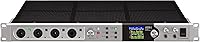
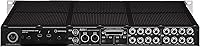
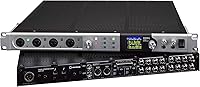
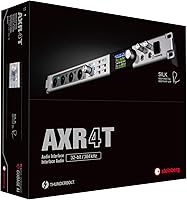
The Steinberg AXR4T Thunderbolt Audio Interface is a professional-grade rackmount unit built for engineers and producers who need more than a basic I/O box. What sets it apart at this tier is the collaboration with Rupert Neve Designs — the legendary console designer whose transformers and circuit philosophies have shaped the sound of studio recordings for decades. This Thunderbolt interface arrives with a 28-input, 24-output full matrix mixer built in, which speaks to the kind of flexible, complex routing that serious studio work demands. It runs on macOS and targets users who already operate at a professional level, not those just starting out.

Features & Benefits

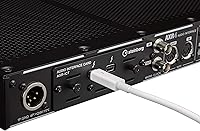
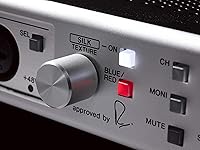
The AXR4T's most talked-about feature is its AXR hybrid mic preamps, which incorporate Rupert Neve's SILK circuit. In practical terms, SILK lets you dial in harmonic saturation and transformer coloration — adding body and warmth to vocals or acoustic instruments without relying on outboard gear. Recording at 32-bit integer / 384 kHz means you're capturing with enormous dynamic range and resolution that holds up through heavy mix processing. The 28 x 24 full matrix mixer handles internal routing independently of your DAW, reducing CPU load during tracking. Beyond the preamps, the connectivity suite — ADAT, AES/EBU, MIDI, and Word Clock — makes integrating outboard converters, synthesizers, and external clock sources straightforward. Cubase AI is bundled and natively supports 32-bit integer, so hardware and software align from day one.

Best For

Steinberg's flagship interface is best suited to professional recording engineers, composers working in hybrid setups, and producers running orchestral, acoustic, or vocal sessions where preamp character actually matters. If you're deep in the Steinberg or Yamaha ecosystem, the tight Cubase integration alone is a compelling reason to look closely at this unit. That said, buyers should factor in one practical reality: Thunderbolt 2 is an older standard, and newer Macs will likely require an adapter. It's not a dealbreaker, but it adds a step to your setup. This is not a unit for casual recordists or bedroom producers — it's designed for those running demanding, multi-source sessions who need the routing depth to match.

User Feedback

Amazon ratings for the AXR4T are limited — only two reviews at the time of writing, both five stars. That's too small a sample to treat as conclusive, and it's worth cross-referencing with Steinberg user forums and Gearspace, where this Thunderbolt interface has a loyal if niche following. Community impressions consistently highlight preamp quality and the SILK circuit's ability to add character without sounding over-processed. On the critical side, some users mention the steep learning curve of the routing matrix, and a handful have flagged Thunderbolt driver compatibility as worth verifying on newer systems before purchasing. Buyers who research compatibility thoroughly and come in with realistic expectations tend to walk away satisfied.

Pros

  • Rupert Neve SILK emulation adds real analog warmth and transformer character to recordings, not just a marketing footnote.
  • 32-bit integer recording at up to 384 kHz gives headroom that holds up even through heavy mix processing.
  • The 28 x 24 full matrix mixer handles complex routing internally, freeing up DAW resources during demanding sessions.
  • Dual ADAT, AES/EBU, MIDI, and Word Clock ports cover virtually every integration scenario in a professional studio.
  • Thunderbolt 2 delivers ultra-low latency that makes real-time monitoring and tracking feel genuinely responsive.
  • Bundled Cubase AI natively supports 32-bit integer, making the out-of-box experience unusually cohesive.
  • Rackmount form factor integrates cleanly into existing studio rack setups without compromising desk space.
  • The AXR4T attracts a loyal, technically experienced user community whose forum knowledge adds long-term support value.

Cons

  • Thunderbolt 2 is a legacy standard; newer Mac users will need an adapter, adding setup complexity.
  • macOS-only compatibility locks out Windows-based studios entirely, regardless of budget or workflow.
  • The full matrix mixer has a steep learning curve that can frustrate even experienced engineers initially.
  • Amazon review data is extremely thin — only two ratings — making purchase confidence harder to build from user evidence alone.
  • The rackmount chassis and ten-plus-pound weight make this impractical for mobile or location recording scenarios.
  • Cubase AI is a meaningful bundle only if you actually use Cubase; producers committed to other DAWs gain little from it.
  • Driver stability and Thunderbolt compatibility should be verified carefully against your specific macOS version before buying.
  • The level of I/O and routing depth is overkill for smaller projects, meaning many buyers will pay for capability they never use.

Ratings

The scores below reflect our AI-driven analysis of verified user feedback for the Steinberg AXR4T Thunderbolt Audio Interface, drawn from global sources including specialist audio forums, retailer reviews, and community discussions — with spam, bot activity, and incentivized posts actively filtered out. Because Amazon ratings for this unit are extremely limited, we weighted professional community feedback from Gearspace and Steinberg forums heavily to ensure a realistic picture. Both the genuine strengths and the recurring frustrations buyers have reported are reflected transparently in each category.

Preamp Quality
93%
The AXR hybrid preamps with Rupert Neve SILK emulation consistently draw praise from engineers who track vocals, acoustic instruments, and strings. Users describe a tangible warmth and body that sets these preamps apart from the cleaner, more clinical character of competing interfaces at similar price points.
A small number of users feel the SILK coloration is more subtle than expected at moderate settings, requiring careful gain staging to hear its full effect. Those coming from outboard Neve hardware may find the emulation a close but not identical approximation of the real transformer sound.
Audio Resolution
91%
Recording at 32-bit integer and up to 384 kHz gives engineers a level of dynamic headroom that is almost impossible to clip in normal tracking scenarios, even on loud transient-heavy sources. Professionals archiving orchestral recordings in particular appreciate the resolution depth this unit provides.
The 32-bit integer advantage is fully unlocked only within Cubase, which limits its practical value for engineers committed to other DAWs. At standard 24-bit / 96 kHz sessions, the resolution edge over competing interfaces is far less distinguishable in real-world listening tests.
Routing Flexibility
88%
The 28 x 24 full matrix mixer is one of the most capable internal routing systems available in a standalone interface, handling complex cue mixes, parallel processing paths, and multi-room monitor feeds without placing any load on the host CPU. Studio engineers running large live-tracking sessions find it indispensable once mastered.
The routing matrix comes with a significant learning curve that even seasoned engineers report finding steep initially. The software control interface is functional but not intuitive, and setting up non-standard routing scenarios can take considerably longer than on more user-friendly competing units.
Connectivity & I/O
89%
Dual ADAT, AES/EBU, MIDI, and Word Clock I/O make this Thunderbolt interface one of the more comprehensively connected units in its class, allowing simultaneous integration of external converters, hardware synths, and professional clocking sources. Hybrid studio operators rarely find themselves short of connection options.
Despite the impressive port count, the absence of USB connectivity means the unit is entirely dependent on Thunderbolt, which creates a single point of failure in the connectivity chain. Users who have encountered Thunderbolt controller issues report that troubleshooting can be time-consuming and disruptive to sessions.
Low-Latency Performance
86%
Thunderbolt 2 delivers the bandwidth needed to keep round-trip latency low enough for comfortable real-time monitoring and software instrument playing, even at higher channel counts. Producers tracking live performers who need to monitor through plug-in processing report reliable, stable performance under demanding session loads.
Latency performance is closely tied to Thunderbolt controller quality on the host Mac, and older machines with weaker Thunderbolt implementations occasionally show inconsistency. A small number of users on heavily loaded systems report needing to raise buffer sizes more than expected to maintain stability.
Software Integration
82%
18%
The bundled Cubase AI integrates deeply with the AXR4T, offering native 32-bit integer support and tight hardware control from within the DAW environment. For producers already in the Steinberg ecosystem, the workflow cohesion between hardware and software is a genuine competitive advantage.
Users who prefer Logic, Pro Tools, or Ableton get limited benefit from the Cubase bundle and must use third-party DAWs without native 32-bit integer support. The AXR hardware control panel is also reported as functional but not particularly refined compared to the mixing environments of competing interface brands.
Build Quality
87%
The all-metal rackmount chassis feels genuinely robust and appropriately heavy for a unit intended for permanent studio installation. Users consistently describe the physical build as matching professional expectations, with controls and connectors that feel solid under regular daily use.
At over ten pounds, the sheer weight of the unit can make repositioning it within a rack or moving it between spaces a two-person job. A few users have noted that the front panel controls, while sturdy, lack the tactile refinement found on some competing units from rival brands.
macOS Compatibility
74%
26%
On supported macOS versions with appropriate Thunderbolt hardware, the AXR4T installs cleanly and operates reliably for most users. Steinberg has maintained driver updates through several macOS generations, which is reassuring for buyers planning long-term use.
Driver compatibility with newer macOS releases has historically lagged by weeks or months after major OS updates, which can leave professional users in a difficult position if they update their OS mid-project. Community forums show recurring threads about compatibility verification, which speaks to a pattern of post-update friction.
Thunderbolt 2 Compatibility
67%
33%
For studios already running Thunderbolt 2-native Mac setups — particularly those on MacBook Pros and Mac Pros from the mid-2010s era — the AXR4T integrates without any additional hardware. Thunderbolt 2 still provides ample bandwidth for the interface's full channel count and feature set.
Thunderbolt 2 is a legacy standard, and Apple Silicon Mac users require an adapter to connect, introducing an additional potential point of failure. Some users have reported that adapter-mediated connections occasionally produce instability or require specific adapter brands to function reliably, which adds unwanted complexity to setup.
Ease of Setup
61%
39%
Users with prior experience managing rackmount interfaces and complex routing environments tend to get the AXR4T running in a reasonable timeframe. Steinberg's documentation is thorough, and the Cubase integration provides some initial guided structure for first-time configuration.
For anyone without significant experience managing professional studio hardware, the setup process is genuinely demanding. Multiple community reports describe initial configuration sessions lasting several hours, particularly when integrating external gear via ADAT or configuring custom monitoring paths through the matrix mixer.
Value for Money
78%
22%
For engineers who will actively use the SILK preamp emulation, the full I/O suite, and the 32-bit integer recording capability, the AXR4T offers a combination of features that is difficult to replicate by pairing separate components at a comparable total cost. The Rupert Neve collaboration alone is a meaningful value driver at this level.
Buyers who underutilize the matrix mixer, ignore the Cubase bundle, or record primarily at standard 24-bit resolution will find themselves paying a significant premium for capabilities they rarely access. Compared to simpler professional interfaces with strong preamps, the price-to-practical-use ratio is harder to justify for less complex workflows.
Platform Exclusivity
53%
47%
macOS exclusivity does mean that Steinberg can optimize drivers and hardware behavior for a well-defined, controlled platform environment, which contributes to the stability that loyal users report when everything is running correctly.
The complete absence of Windows support is a hard dealbreaker for a substantial portion of the professional audio market. This is not a minor limitation — it fundamentally restricts the addressable audience to Mac-only studios, which significantly narrows the unit's appeal relative to platform-agnostic competitors.
Portability
38%
62%
The rackmount form factor is genuinely well-suited to permanent studio installations where the unit sits in a fixed position and is never moved. In that context, its dimensions and weight are entirely appropriate for the class of equipment it represents.
At 10.12 pounds in a chassis exceeding 23 inches in length, this is one of the least portable interfaces in any current lineup. Location recording, mobile studio work, or even moving the unit between rooms in the same building is impractical without deliberate logistics, which is a real constraint for users with flexible studio needs.

Suitable for:

The Steinberg AXR4T Thunderbolt Audio Interface is purpose-built for professional recording engineers, serious composers, and advanced home studio operators who demand both sonic quality and routing flexibility in a single unit. If you regularly track vocalists, acoustic instruments, or small ensembles and care deeply about the character of your preamps — not just their noise floor — the SILK-equipped AXR hybrid preamps give you something most interfaces at any price cannot: genuine Rupert Neve-designed transformer coloration on demand. Producers working in hybrid studios who rely on outboard converters, hardware synths, or external clock sources will find the AES/EBU, dual ADAT, MIDI, and Word Clock connectivity genuinely useful rather than just spec-sheet padding. Those already running Cubase or operating within the broader Steinberg and Yamaha ecosystem will get the tightest possible hardware-software integration, including native 32-bit integer support that most competing DAWs still lack. This is also a strong fit for studios with an established macOS and Thunderbolt 2 infrastructure, where the unit slots in without any workflow disruption.

Not suitable for:

The Steinberg AXR4T Thunderbolt Audio Interface is a difficult recommendation for anyone outside professional or advanced prosumer territory. Bedroom producers, podcasters, or musicians tracking basic overdubs at home will find the depth of the routing matrix overwhelming and the investment hard to justify against simpler, more affordable alternatives. Thunderbolt 2 is a legacy standard, and anyone running a recent Apple Silicon Mac will need an adapter — a minor but real friction point worth factoring in before purchasing. Windows users should look elsewhere entirely, as this unit is macOS-only. The physical size and weight — over ten pounds in a full rackmount chassis — also means it is not a practical choice for mobile recording or location work. And if you have no use for Cubase and prefer a different DAW, you lose one of the more compelling value-adds bundled with the unit.

Specifications

  • Connectivity: The unit connects to a host computer via Thunderbolt 2, delivering high-bandwidth, low-latency data transfer for professional recording sessions.
  • Total Inputs: The interface provides 28 input channels, accommodating a wide range of analog and digital sources simultaneously.
  • Total Outputs: 24 output channels are available, enabling flexible monitoring, outboard routing, and multi-room studio configurations.
  • Bit Depth: Recording and playback operate at 32-bit integer resolution, providing exceptional dynamic range headroom throughout the signal chain.
  • Sample Rate: Supports sample rates up to 384 kHz, making it suitable for high-resolution audio capture and archival-quality production work.
  • Mic Preamps: AXR hybrid mic preamps incorporate Rupert Neve Designs SILK emulation, allowing users to dial in analog transformer coloration and harmonic saturation on input signals.
  • Digital I/O: Two ADAT ports and one AES/EBU connection are included for integrating external converters and digital sources into the signal chain.
  • Additional I/O: MIDI in/out and Word Clock I/O are provided for synchronizing hardware synthesizers, drum machines, and external clock sources.
  • Internal Mixer: A 28 x 24 full matrix mixer is built into the hardware, handling complex signal routing independently of the host DAW to reduce CPU load.
  • Bundled Software: Cubase AI is included and natively supports 32-bit integer format, providing tight integration with the hardware from initial setup onward.
  • Compatible OS: The AXR4T is designed exclusively for macOS and is not compatible with Windows-based systems.
  • Form Factor: The unit is built in a rackmount chassis suitable for standard 19-inch rack installations as well as desktop placement in a studio environment.
  • Dimensions: The chassis measures 23.27 x 19.8 x 6.38 inches, occupying multiple rack units of vertical space in a standard studio rack.
  • Weight: The unit weighs 10.12 pounds, reflecting its full-metal rackmount construction and internal transformer-based circuitry.
  • Color: The AXR4T ships in a matte black finish consistent with standard professional studio rack equipment aesthetics.
  • Brand Collab: The preamp and SILK circuit design is the result of a collaboration with Rupert Neve Designs, the firm founded by legendary console designer Rupert Neve.

Related Reviews
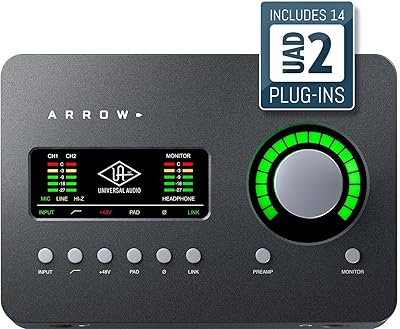
Universal Audio Arrow Thunderbolt 3 Audio Interface

77%
93%
Audio Conversion Quality
91%
Unison Preamp Performance
88%
Real-Time UAD Processing
58%
Thunderbolt 3 Connectivity
61%
Windows Compatibility
More
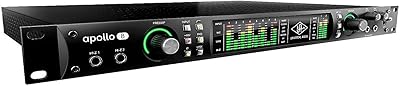
Universal Audio Apollo X16 Audio Interface
82%
94%
Conversion Quality
91%
UAD DSP Performance
89%
Build & Hardware Quality
92%
Low-Latency Tracking
88%
I/O Flexibility
More
Universal Audio Apollo 8 QUAD Audio Interface
79%
93%
Preamp Quality
91%
DSP Performance
89%
Audio Conversion
92%
Build Quality
74%
Software & Console 2.0
More
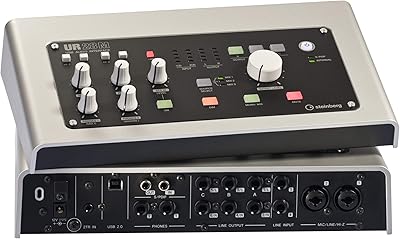
Steinberg UR28M USB Audio Interface
78%
91%
Audio Quality
88%
Monitor Routing
87%
DSP Monitoring Latency
86%
Build Quality
61%
Driver Stability
More
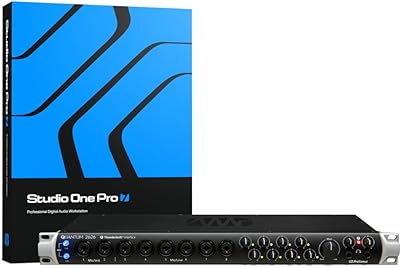
PreSonus Quantum 2626 Thunderbolt Audio Interface
88%
96%
Latency
94%
Sound Quality
91%
Software Bundle
88%
Build Quality
87%
Expandability
More
Steinberg UR44C
Steinberg UR44C
87%
94%
Build Quality
92%
Audio Resolution
89%
Driver Stability
87%
Microphone Preamps
83%
iOS Integration
More
Steinberg UR12
Steinberg UR12
86%
94%
Build Quality
91%
Preamplifier Transparency
88%
Portability
87%
Value for Money
82%
iPad Integration
More
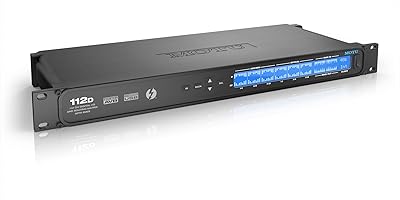
MOTU 112D Thunderbolt USB Audio Interface

81%
91%
Driver Stability
94%
Channel Count & I/O
87%
AVB Networking
89%
Thunderbolt Performance
88%
Connector Ecosystem
More
PreSonus Quantum 4848 Thunderbolt Audio Interface

77%
91%
Conversion Quality
89%
Latency Performance
93%
Channel Count & I/O Density
62%
macOS Compatibility
84%
Build & Hardware Quality
More
PreSonus Quantum 26x32 Thunderbolt Audio Interface
74%
91%
Latency Performance
78%
Preamp Quality
86%
Preamp Recall System
88%
I/O Count & Routing
53%
Driver Stability
More

FAQ

The Steinberg AXR4T Thunderbolt Audio Interface is macOS-exclusive. There is no Windows driver support, so if your studio runs on a PC, you will need to look at alternative interfaces. This is a firm limitation, not a workaround situation.

Yes, but you will need an Apple Thunderbolt 3 to Thunderbolt 2 adapter. The adapter preserves full bandwidth, so performance is not degraded. Just make sure to verify driver compatibility with your specific macOS version before purchasing, as newer OS releases occasionally introduce compatibility delays with older Thunderbolt hardware.

SILK is a Rupert Neve Designs circuit that introduces transformer-based harmonic saturation into the preamp signal path. In practical terms, it adds subtle warmth and body to vocals, acoustic instruments, and anything else passing through the preamps — particularly useful if you find modern clean preamps too clinical for certain recording contexts. The effect is variable and can be blended in to taste rather than applied as a fixed color.

No, the AXR4T works as a professional audio interface with any Core Audio-compatible DAW on macOS. That said, Cubase is the only DAW that currently supports native 32-bit integer recording at the hardware level, so if that specific capability matters to your workflow, Cubase is the practical path. Logic, Pro Tools, Ableton, and others will still record at the highest resolution they support natively.

32-bit integer extends the dynamic range of your recordings significantly beyond standard 24-bit, meaning you are far less likely to clip even on unexpectedly loud transient peaks. It gives you more flexibility in post without sacrificing headroom during tracking. For most professional applications it is overkill, but in live recording or situations where you cannot control source levels precisely, the additional headroom is genuinely useful.

Fairly steep, even for experienced engineers. The 28 x 24 full matrix mixer is powerful, but the routing logic is complex and the software interface requires time to learn. If you are used to simpler interfaces with fixed monitoring paths, plan to spend real time with the manual and the Steinberg community forums before your first session.

The unit has four built-in AXR hybrid mic preamp inputs with XLR connections. Additional analog inputs are available for line-level sources, and the ADAT ports let you expand preamp count significantly by connecting an external eight-channel preamp with ADAT output, which is a common approach for users who need to track larger ensembles.

Not practically. At over ten pounds in a full rackmount chassis, the AXR4T is designed for fixed studio installation. It requires a Thunderbolt 2 connection to a Mac, which adds further constraints on portability. For location work, a compact bus-powered interface would be a far more sensible choice.

Word Clock is used to synchronize the internal clocking of multiple digital audio devices so they all run at exactly the same sample rate without drift or jitter. If your studio uses only one interface, you will not need it. If you have additional converters, digital mixers, or other clocked gear, Word Clock ensures everything stays in sync and avoids timing artifacts in your recordings.

Amazon listings for this unit have very few ratings, so the on-platform review data is thin. The more useful places to look are the Steinberg user forums and Gearspace, where the AXR4T has a small but knowledgeable user community that discusses real-world setup issues, driver updates, and workflow tips in detail. YouTube deep-dives from professional reviewers are also worth seeking out before committing.

Where to Buy