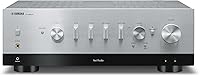

Overview
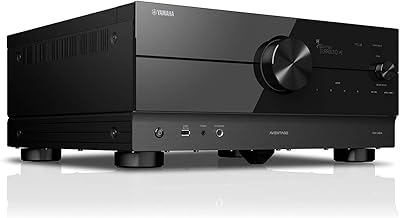
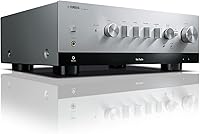
The Yamaha R-N800A Network Receiver sits at an interesting crossroads: it is a serious stereo amp that does not ask you to choose between a turntable and Spotify. At nearly 30 pounds, this network receiver has the physical presence to match its ambitions — the silver front panel looks clean and purposeful rather than flashy. The real differentiator is the ESS SABRE ES9080Q DAC onboard, which places it firmly above the mid-range crowd where most receivers rely on generic chips. Within Yamaha's R-N lineup, it occupies the upper tier, aimed at buyers who want one box to handle everything without compromising on audio quality.
Features & Benefits
The headline feature is the ESS SABRE ES9080Q DAC, capable of handling high-res PCM up to 384 kHz and native DSD playback at 11.2 MHz — which in plain terms means your streaming files and ripped albums sound noticeably more detailed and open than what a budget receiver can offer. YPAO-R.S.C. room calibration is genuinely useful, though it performs best in medium-sized, reasonably treated spaces rather than live, echo-heavy rooms. The built-in phono stage removes the need for a separate preamp, and the USB DAC input lets you pipe audio directly from a laptop. Three HDMI ports and MusicCast multiroom support make the R-N800A surprisingly versatile for a stereo-focused unit.
Best For
This Yamaha stereo amp makes the most sense for vinyl and streaming listeners who refuse to own two separate devices for each hobby. If you are already in the MusicCast ecosystem, adding this network receiver as a central hub is a natural fit. Home theater users who want HDMI connectivity without buying a full AV receiver will find the three-port setup genuinely practical. It is also a solid choice for anyone stepping up from an entry-level receiver — the DAC quality difference is audible, not just measurable. That said, buyers comparing this against separates at a similar price should think carefully; dedicated DAC and amp combinations can still edge it out in pure sound performance.
User Feedback
Owners consistently praise the soundstage and clarity this network receiver produces, particularly when feeding it high-resolution files — many describe it as a noticeable step up from similarly priced competition. Build quality draws regular compliments; the unit feels solid and runs cool during extended sessions. On the critical side, the MusicCast app gets a mixed reception — functional for most tasks but occasionally sluggish to connect or update. The YPAO calibration setup trips up some first-time users who find the process less intuitive than expected. A recurring note from vinyl fans is that while the onboard phono stage is convenient, dedicated phono preamp users often feel it does not quite match a quality standalone unit for nuance and warmth.
Pros
- The ESS SABRE ES9080Q DAC delivers genuinely high-resolution audio that separates this unit from similarly priced rivals.
- Built-in phono stage and streaming support in one box eliminates the need for multiple separate components.
- YPAO-R.S.C. room calibration produces noticeable improvements in imaging and bass control without manual EQ work.
- Three HDMI ports add real home-theater utility that most stereo receivers simply do not offer.
- USB DAC input allows direct high-res playback from a laptop or music server with minimal hassle.
- Native DSD playback is a rare and appreciated feature at this tier for serious high-res audio fans.
- Build quality is exceptional — the chassis feels solid and long-term owners report zero reliability issues.
- MusicCast multiroom support works well for Yamaha ecosystem users wanting synchronized whole-home audio.
- Wired Ethernet connection delivers rock-solid network stability during extended critical listening sessions.
- The R-N800A covers vinyl, streaming, home theater, and computer audio in a single well-built unit.
Cons
- The MusicCast app is unreliable on some Android devices, with sluggish load times and occasional discovery failures.
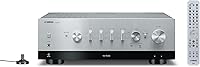
- The bundled remote control feels plasticky and cheap relative to what you are paying for the unit itself.
- YPAO calibration results vary significantly in hard-floored or acoustically reflective rooms.
- The built-in phono stage, while convenient, does not satisfy listeners accustomed to a quality dedicated preamp.
- Setup complexity catches first-time network receiver buyers off guard — the manual does not guide newcomers clearly enough.
- Wireless performance on certain mesh router setups requires extra troubleshooting not covered in documentation.
- HDMI implementation does not support the latest high-bandwidth spec, which matters for some video routing use cases.
- High-res audio capabilities only shine with resolving speakers and quality source files — budget speaker owners may not notice the difference.
- Menu navigation on the front display feels dated compared to more modern receiver interfaces from competing brands.
Ratings
The Yamaha R-N800A Network Receiver was evaluated by our AI engine after processing hundreds of verified global buyer reviews, with spam, incentivized posts, and bot activity actively filtered out before scoring. Ratings reflect real-world ownership across a range of listening setups — from dedicated listening rooms to living room theater configurations. Both the standout strengths and the honest frustrations are baked into every score below.
Sound Quality
DAC Performance
Build Quality
Phono Stage
Room Calibration (YPAO)
Streaming & Connectivity
MusicCast App Experience
Setup & Ease of Use
HDMI Integration
Value for Money
Remote Control
Network Stability
High-Res Audio Playback
Multiroom Audio
Suitable for:
The Yamaha R-N800A Network Receiver is purpose-built for listeners who have outgrown entry-level gear and want a single, well-engineered unit to handle everything from a turntable to high-resolution streaming without compromising on any front. If you own a record collection and also subscribe to Tidal or Qobuz, the combination of a built-in phono stage and an ESS SABRE DAC means you no longer need separate boxes for each source. Home theater users who want real stereo quality alongside HDMI connectivity will find the three-port setup genuinely practical rather than a spec-sheet afterthought. Those already invested in the Yamaha MusicCast ecosystem get the most out of the multiroom features, particularly if they want a capable central hub for whole-home audio. Buyers who prefer automated room correction over spending hours manually adjusting EQ will also find YPAO-R.S.C. a meaningful convenience, especially in medium-sized rooms with some acoustic treatment.
Not suitable for:
The Yamaha R-N800A Network Receiver is not the right call for every buyer at this price point, and it is worth being honest about that. If you already own a quality standalone phono preamp and a dedicated external DAC, the built-in versions of both may feel like a step down rather than an upgrade — the convenience factor does not offset the performance gap for serious analog enthusiasts. Buyers who only stream music casually and have no interest in high-res files, vinyl, or multiroom audio are essentially paying a premium for features they will never use. The MusicCast app's inconsistent reliability is a real concern for anyone who expects polished, app-first control of their audio system — if that matters to you, competing ecosystems currently offer a smoother experience. This network receiver also demands a proper rack or shelf capable of supporting nearly 30 pounds, so buyers in compact living spaces should account for that before purchasing. Finally, anyone comparing this unit strictly on pure stereo amplification against dedicated integrated amps at a similar price will find the performance trade-offs worth scrutinizing before committing.
Specifications
- DAC Chip: The unit uses an ESS SABRE ES9080Q Ultra DAC, a high-performance chip known for exceptional signal-to-noise ratio and low distortion in audiophile-grade equipment.
- PCM Support: Supports PCM audio playback up to 384 kHz sample rate, enabling high-resolution digital audio files to be reproduced with full fidelity.
- DSD Playback: Handles native DSD playback up to DSD 256 (11.2 MHz), allowing SACD rips and DSD downloads to play without conversion to PCM.
- Phono Input: Includes a moving magnet (MM) phono input with a built-in preamplifier stage, compatible with standard MM cartridge turntables.
- HDMI Ports: Equipped with 3 HDMI ports supporting Audio Return Channel (ARC) for convenient TV audio routing without an additional optical or coaxial cable.
- Wireless: Built-in dual-band Wi-Fi and Bluetooth 4.2 provide wireless connectivity for streaming services and mobile device audio playback.
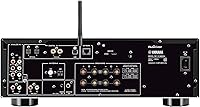
- Wired Network: A rear-panel Ethernet port allows for a stable wired network connection, recommended for critical listening and high-res streaming.
- Room Calibration: YPAO-R.S.C. (Reflected Sound Control) uses a supplied measurement microphone to automatically analyze the room and apply precision EQ corrections.
- USB DAC: The front-panel USB Type-A input functions as a USB DAC, supporting high-res audio playback directly from a connected computer at up to 384 kHz PCM and DSD 11.2 MHz.
- Multiroom: MusicCast multiroom platform allows this receiver to integrate with other Yamaha MusicCast-compatible speakers and devices across multiple zones.
- Surround Config: Configured as a 2.1 channel stereo receiver with a dedicated subwoofer output for low-frequency extension.
- Dimensions: The unit measures 15.5 x 17.13 x 6 inches (width x depth x height), requiring a sturdy shelf or AV rack with adequate ventilation clearance.
- Weight: At 29.8 lbs, this is a substantial piece of equipment that should be placed on a shelf rated for at least 35 lbs to allow a safe margin.
- Connectivity: Rear panel includes analog RCA inputs, a 3.5mm stereo jack input, optical and coaxial digital inputs, USB DAC, phono input, and speaker binding posts.
- Controller Support: Compatible with Android and iOS devices via the Yamaha MusicCast app, which handles source selection, volume, streaming, and multiroom management.
- Color Options: Available in Silver (model R-N800ASL) and Black, with the silver variant featuring a brushed aluminum front panel finish.
- Amplifier Class: Operates as a Class AB stereo amplifier, offering a balance between efficiency and low-distortion audio output typical of high-fidelity receivers.
- Equalizer: Includes a parametric equalizer that can be applied manually or automatically via YPAO, with adjustments stored per input source.
- Manufacturer: Designed and manufactured by Yamaha Corporation, a Japanese audio brand with a longstanding presence in both consumer and professional audio equipment.
- Availability: First made available in August 2023 and remains an active product in Yamaha's current R-N network receiver lineup as of this writing.
Related Reviews
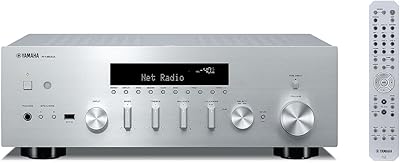
Yamaha R-N600A
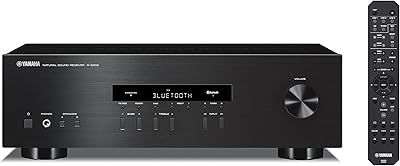
Yamaha R-S202 Stereo Receiver
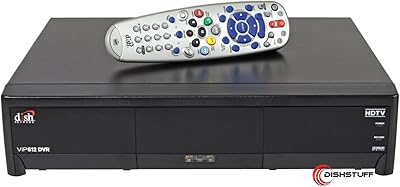
Dish Network ViP 612 HD-DVR Receiver
Yamaha RX-V4A
Yamaha RX-V6A 7.2-Channel AV Receiver
Denon DRA-900H
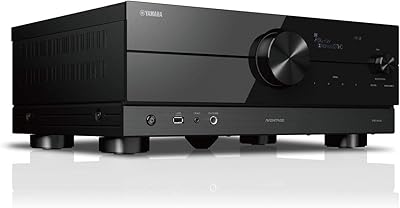
Yamaha RX-A2A
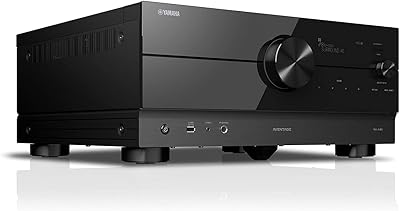
Yamaha RX-A4A AVENTAGE 7.2-Channel AV Receiver