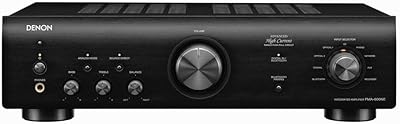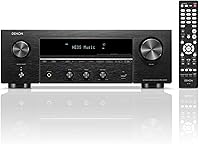
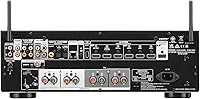
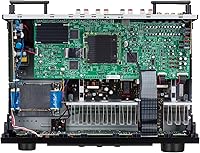
Overview

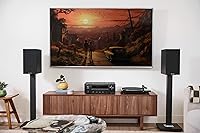
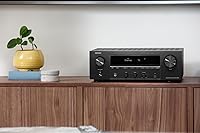
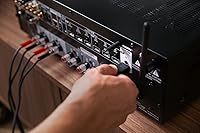
The Denon DRA-900H sits in an interesting spot in the home audio market — it's a proper stereo receiver built around Hi-Fi performance, yet it doesn't ask you to sacrifice the modern conveniences people actually use day to day. At this price point, buyers rightly expect hardware that punches with authority and software that keeps pace with how they listen today. What makes this Denon unit unusual among stereo receivers is its 8K video passthrough capability, which is genuinely rare in a 2-channel focused product. Getting up and running is also less painful than expected, thanks to a color-coded rear panel and an on-screen setup guide that walks you through connections clearly.

Features & Benefits

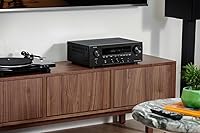
The amplifier section is where this stereo receiver earns its keep. Driving 100 watts per channel through quality Hi-Fi components, it delivers focused, controlled low end and a spacious midrange that reveals real texture in recordings. Streaming runs through the built-in HEOS platform, supporting Wi-Fi, AirPlay 2, and Bluetooth — so queuing music from a phone or streaming app requires no extra hardware. Turntable owners will appreciate the built-in MM phono stage, which removes the need for a separate preamp entirely. A front USB port handles Hi-Res audio files directly, and dual subwoofer pre-outs add meaningful flexibility when dialing in bass response for different room sizes.

Best For

This Denon unit is a strong fit for listeners who care deeply about stereo sound quality but still want their setup to handle TV sources and streaming without extra boxes. If you're building around vinyl, the onboard phono input keeps things clean. It also suits anyone already invested in the HEOS ecosystem, where pairing with compatible speakers for whole-home audio becomes straightforward. One honest caveat: if you're expecting Dolby Atmos or 5.1 surround for a dedicated home theater, 2-channel output won't cover that. This is a music-first machine for small to medium rooms where stereo imaging and amplifier quality genuinely matter.

User Feedback

Owners consistently highlight the wide soundstage and amplifier headroom as standout strengths — many note the unit handles dynamic classical and jazz passages without strain. The setup process draws praise too; the color-coded rear panel genuinely reduces first-time frustration. On the critical side, some users report the HEOS app can be inconsistent, with occasional Wi-Fi drops that require a restart to resolve. Buyers comparing it against Marantz or Yamaha alternatives at a similar tier often find differences subtle, making prior brand experience a real deciding factor. Build quality is broadly described as solid, and the unit fits neatly into standard AV cabinetry without issue.

Pros

  • Amplifier delivers genuine Hi-Fi performance with controlled dynamics and clear instrument separation.
  • Built-in MM phono stage removes the need and cost of a separate turntable preamp.
  • 8K and 4K HDMI passthrough is unusually capable for a stereo-focused receiver.
  • AirPlay 2, HEOS, and Bluetooth cover virtually every wireless streaming scenario without extra hardware.
  • Color-coded rear panel and on-screen setup guide make installation accessible even for first-timers.
  • Dual subwoofer pre-outs offer real bass configuration flexibility without additional equipment.
  • Front USB port plays Hi-Res audio files directly with no format conversion required.
  • Build quality feels appropriately solid and fits neatly into standard AV furniture.
  • Zone 2 output supports whole-home audio expansion as the system grows.
  • eARC support simplifies TV audio routing and reduces cable clutter behind the setup.

Cons

  • The HEOS app is unreliable — Wi-Fi drops and slow response are recurring owner complaints.
  • No automatic room correction means subwoofer and speaker calibration requires full manual tuning.
  • Remote control feels noticeably cheap relative to the quality of the main unit.
  • Front panel display is small and makes navigating large USB libraries genuinely frustrating.
  • MM-only phono input excludes moving-coil cartridge users without an external step-up transformer.
  • Long-term fingerprint and scuff visibility on the front panel finish is a minor but real nuisance.
  • App-dependent features become unreliable on congested or less stable home Wi-Fi networks.
  • Buyers comparing against full AVRs at the same price point may feel the 2-channel limit is hard to justify.

Ratings

The Denon DRA-900H scores here reflect AI-driven analysis of verified global buyer reviews, with spam, bot submissions, and incentivized feedback actively filtered out before scoring. This stereo receiver earns strong marks in several areas but also carries a few consistent pain points that real owners report — and both sides are reflected honestly in the ratings below.

Sound Quality
93%
Owners repeatedly describe the amplifier as punchy and precise without feeling clinical. Instruments in jazz and acoustic recordings come through with genuine separation, and the unit handles dynamic swings in orchestral pieces without compressing the detail out of quieter passages.
A small number of listeners running very demanding speakers found the sound slightly thin at higher volumes in larger rooms. The 2-channel focus means the sonic experience is inherently narrow compared to multi-channel competitors at a similar price.
Amplifier Power & Headroom
88%
The 100W-per-channel output gives the DRA-900H enough muscle to drive moderately demanding bookshelf and floorstanding speakers without audible strain. Buyers running 6-ohm and 8-ohm speakers consistently report clean, controlled dynamics even during extended listening sessions.
Users with power-hungry 4-ohm speakers have flagged some warmth during prolonged high-volume use. The unit is well-suited for small to medium rooms but may leave buyers with larger spaces wanting more headroom.
Streaming & Connectivity
74%
26%
Having AirPlay 2, Bluetooth, and HEOS all built in means most listeners never need a separate streaming device. Switching between a phone queue and a smart home routine is quick, and the multi-room capability works well when other HEOS-compatible speakers are already in the home.
The HEOS app is a recurring frustration in user feedback — Wi-Fi drops, delayed responses, and occasional failures to reconnect after standby are mentioned across multiple verified reviews. The app itself feels noticeably behind the hardware quality level.
Video Passthrough & HDMI Performance
86%
For a stereo receiver, the 8K/60Hz and 4K/120Hz HDMI passthrough capability is genuinely surprising and appreciated by buyers who run it as the hub of a combined TV and audio setup. Dolby Vision and HDR10+ pass through cleanly with no reported lag or handshake issues during gaming.
Six HDMI inputs is generous, but some users note the lack of any onboard video processing beyond passthrough means it relies entirely on the source and display doing the heavy lifting. eARC works as advertised but requires a compatible TV to unlock its full benefit.
Setup & Ease of Use
89%
The color-coded rear panel and on-screen setup guide reduce first-time installation friction significantly. Buyers who described themselves as audio novices still reported getting speakers and sources running correctly within 30 minutes, which is a genuine achievement for this category.
Once the initial setup is complete, navigating the full menu system for advanced settings like subwoofer crossover or zone output levels requires patience and repeated reference to the manual. The front-panel display is functional but small and lacks the clarity of competing units.
Build Quality & Materials
82%
18%
The chassis feels appropriately solid for the price tier — no flex in the top plate, firm knobs, and rear terminals that grip banana plugs and bare wire securely. Several buyers specifically mentioned it sits flat and stable in standard AV furniture without vibration during playback.
The front panel finish attracts fingerprints visibly and shows minor scuffs with regular use. A few buyers noted the remote control feels noticeably cheaper than the main unit, which is a small but persistent disappointment at this price level.
Phono Stage Performance
79%
21%
Turntable owners consistently call out the built-in MM phono stage as a practical and capable feature that removes the need for a separate preamp box. For most entry-to-mid-level cartridges, the equalization curve sounds balanced and the noise floor is acceptably low.
Audiophiles running higher-output MC cartridges will find the MM-only limitation a constraint, requiring an external step-up transformer or preamp. Buyers upgrading from a dedicated outboard phono stage sometimes notice the built-in version lacks the last degree of resolution at the frequency extremes.
Multi-Room Audio
71%
29%
When the HEOS ecosystem is stable, distributing audio to Zone 2 or to linked HEOS speakers across rooms works reliably and adds real everyday convenience. Buyers using it alongside Denon Home or Marantz speakers report the grouping and volume sync functioning as intended.
The multi-room experience is only as good as the HEOS app, and as noted elsewhere, that app introduces inconsistency. Users on congested Wi-Fi networks report more frequent dropouts, and there is no Ethernet fallback for the Zone 2 audio output.
Value for Money
77%
23%
For a buyer who genuinely needs both a capable stereo amplifier and modern video passthrough in a single box, the price is defensible. The phono stage and HEOS integration alone would cost meaningful additional outlay if purchased separately.
Buyers who compare this directly against full surround sound AVRs in the same price bracket often feel the 2-channel limitation is hard to justify. The HEOS app reliability issues also chip away at the value proposition for streaming-heavy households.
Remote Control & App Control
61%
39%
Basic playback and volume control via the physical remote is responsive and accurate. Voice control through Alexa works without issue for users who have it configured, covering the most common commands like input switching and volume adjustment.
The remote itself is lightweight and plasticky in a way that feels out of step with the hardware it controls. The HEOS app, while functional for streaming, is not a reliable substitute for a polished control interface — long press times and delayed feedback are common complaints.
High-Res Audio Playback
84%
Plugging a USB drive loaded with FLAC or WAV files into the front port and getting clean, full-resolution playback is straightforward and genuinely useful for listeners with large local libraries. Buyers report the unit reads most common Hi-Res formats without requiring format conversion.
Navigation of large USB libraries via the front display or remote is clunky and slow. There is no album art display, and organizing or searching a large music collection through the hardware interface rather than the app can become a real annoyance over time.
Subwoofer Integration
81%
19%
Dual subwoofer pre-outs give buyers real flexibility when running stereo subs or bi-amping a single subwoofer, which is an uncommon feature at this tier. Users who took time to calibrate the crossover manually reported noticeably tighter and more articulate bass response.
There is no automatic room correction or calibration microphone included, so dialing in the subwoofer properly requires manual experimentation. Buyers coming from AVRs with built-in room correction like Audyssey may find this manual tuning process time-consuming.
Competitor Comparison Standing
75%
25%
Buyers who researched Marantz and Yamaha alternatives at this price point often settle on the DRA-900H for its combination of HEOS integration and video section depth. The Denon house sound — slightly warmer, with a solid low-mid presence — is frequently cited as the deciding factor.
The competition is genuinely strong. Yamaha equivalents are praised for more stable app ecosystems, and Marantz models offer a similarly refined sound in a package some buyers find more aesthetically appealing. The DRA-900H does not dominate its tier — it competes closely.

Suitable for:

The Denon DRA-900H is built for listeners who put music quality first but refuse to give up the conveniences of modern connected living. It's a natural fit for vinyl enthusiasts who want a turntable-ready setup without hunting down a separate phono preamp, and for streamers who regularly switch between Spotify, Tidal, and local Hi-Res files without wanting extra hardware cluttering the rack. Buyers already invested in the HEOS ecosystem — perhaps with Denon or Marantz wireless speakers elsewhere in the home — will find the multi-room integration genuinely useful rather than a gimmick. It also suits anyone building a hybrid TV-and-music setup in a small to medium room, where the 8K HDMI passthrough means one box handles both picture routing and serious audio amplification. If your priority is stereo imaging, soundstage, and amplifier quality over channel count, this unit delivers that convincingly.

Not suitable for:

Buyers expecting the Denon DRA-900H to anchor a full home theater with surround sound will be immediately limited — this is a 2-channel receiver by design, and no amount of creative wiring changes that fundamental fact. If Dolby Atmos, DTS:X, or even a basic 5.1 setup is on the wish list, this unit is the wrong starting point regardless of its video capabilities. Listeners who depend heavily on a mobile app for daily control should also be cautious, since the HEOS app has a documented history of Wi-Fi instability and sluggish response that real owners regularly flag. Those with large, acoustically demanding listening rooms may find 100 watts per channel approaches its limits under pressure, particularly with lower-impedance or less-efficient speakers. Finally, buyers hoping to run a moving-coil cartridge directly will need an external step-up solution, since the built-in phono stage only supports MM cartridges.

Specifications

  • Channels: The unit operates as a 2-channel stereo amplifier with a 2.2 configuration when dual subwoofer outputs are in use.
  • Power Output: Rated at 100 watts per channel into 8 ohms, driven by high-current amplifier circuitry using Hi-Fi-grade components.
  • HDMI Inputs: Six HDMI inputs support 8K/60Hz and 4K/120Hz passthrough with upscaling available across all input ports.
  • HDMI Outputs: Two HDMI outputs are provided, with the main output supporting eARC for simplified TV audio return.
  • HDR Support: Compatible with Dolby Vision, HDR10+, HLG, and Dynamic HDR at a 40Gbps bandwidth ceiling.
  • HDCP Version: HDCP 2.3 processing is supported across the video section for full compatibility with current content protection standards.
  • Streaming Platforms: Built-in HEOS platform enables access to a wide range of free and premium music streaming services over Wi-Fi or Ethernet.
  • Wireless Standards: Bluetooth and Wi-Fi are both integrated, with AirPlay 2 support for direct streaming from Apple devices.
  • Phono Stage: An integrated moving-magnet phono preamplifier with MM equalization allows direct turntable connection without an external preamp.
  • USB Playback: A front-panel USB Type-A port supports Hi-Res audio file playback from external drives in formats including FLAC and WAV.
  • Zone Outputs: Pre-out connections are provided for the main zone, Zone 2, and dual independent subwoofer channels.
  • Voice Control: Compatible with Amazon Alexa for voice-based volume adjustment, input switching, and playback control.
  • Dimensions: The unit measures 13.3 x 17.1 x 5.9 inches (W x D x H), fitting standard full-width AV furniture bays.
  • Weight: Unit weight is 22 pounds, which is typical for a receiver chassis of this construction quality.
  • Power Requirements: Two AAA batteries are required for the included remote control and are supplied in the box.
  • Availability Date: The product was first made available for purchase on August 23, 2023.
  • Manufacturer: Designed and manufactured by Denon, a brand under the Sound United portfolio with decades of AV receiver engineering history.
  • Model Number: The official model designation is DRA900H, corresponding to ASIN B0CFWHNVXM on the Amazon catalog.

Related Reviews
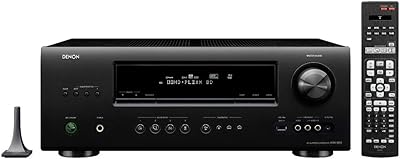
Denon AVR-1612
Denon AVR-1612
67%
84%
Audio Quality
81%
Build Quality
67%
HDMI Connectivity
58%
Ease of Setup
53%
Remote Control
More
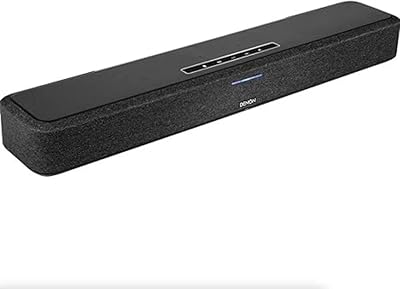
Denon Home 550 Wireless Soundbar
86%
91%
Sound Quality
87%
Ease of Setup
90%
Build Quality
94%
Wireless Connectivity
88%
Alexa Integration
More
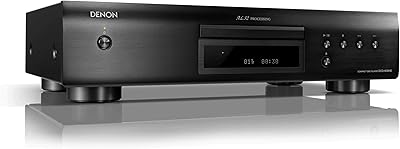
Denon DCD-900NE CD Player
86%
94%
Sound Quality
90%
Build Quality
85%
Connectivity Options
78%
Ease of Use
88%
Vibration Resistance
More
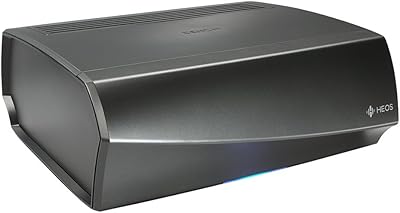
Denon HEOS Amp Wireless Amplifier
86%
91%
Sound Quality
89%
Connectivity Options
94%
Ease of Setup
87%
Multi-Room Performance
78%
App Usability
More
Denon RCD-N12 Bluetooth CD Player
85%
91%
Sound Quality
88%
Ease of Setup
85%
Bluetooth Connectivity
87%
Alexa Integration
90%
Wi-Fi Streaming
More
Denon Home 150 Wireless Smart Speaker
86%
88%
Sound Quality
93%
Ease of Setup
85%
Multi-Room Audio Performance
89%
Voice Control Integration
76%
Connectivity Stability
More
Denon DCD-600NE
Denon DCD-600NE
78%
91%
Sound Quality
78%
Build Quality
88%
Vibration & Interference Control
86%
Pure Direct Mode Effectiveness
84%
AL32 Processing
More
Denon Home 350
Denon Home 350
80%
91%
Sound Quality
88%
Build Quality
86%
HEOS Multi-Room Performance
93%
AirPlay 2 Integration
61%
App Experience (HEOS App)
More
Denon DP-400
Denon DP-400
81%
86%
Sound Quality
78%
Build Quality
93%
Ease of Setup
84%
Tonearm Performance
81%
Speed Accuracy
More
Denon DP-3000NE Fully Automatic Turntable
87%
88%
Ease of Setup
92%
Sound Quality
90%
Build Quality
94%
Automatic Operation
89%
Vibration Control
More

FAQ

No separate preamp needed. The unit has a built-in MM phono stage, so you can connect any moving-magnet cartridge turntable directly to the dedicated phono input. Just note it does not support moving-coil cartridges — if you have an MC cart, you will need an external step-up transformer.

No, this is a 2-channel stereo receiver and does not decode Dolby Atmos, DTS:X, or any multi-channel surround formats. If surround sound is a priority for your setup, you will need to look at a full AV receiver instead.

Honestly, it is functional but inconsistent. When it works, streaming and multi-room control are smooth. However, a notable number of owners report Wi-Fi drop issues, delayed app responses, and the occasional need to restart the unit to re-establish a connection. If app-based control is central to how you use a receiver, factor that in before buying.

Yes. The HDMI section supports 4K/120Hz passthrough with Dolby Vision and HDR10+ at 40Gbps, which covers current-generation consoles cleanly. Multiple users have reported no noticeable latency during gaming through this unit.

Yes, it supports 8K/60Hz HDMI passthrough, so it can sit between an 8K source and an 8K TV without downgrading the signal. That said, 8K content is still rare, so most buyers are benefiting from the 4K/120Hz capability more immediately.

Yes. There is a Zone 2 pre-out that lets you send audio to a second room, either through a separate amplifier or a compatible powered speaker. Combined with HEOS, you can also stream to wireless speakers in other rooms through the app.

HEOS supports a broad range of services including Spotify, Tidal, Amazon Music, Deezer, TuneIn, and others. AirPlay 2 also lets you push audio from any AirPlay-compatible app on an Apple device directly to the receiver.

Easier than most in this category. The rear panel uses color-coded speaker terminals, and the on-screen setup guide walks you through connecting speakers and sources step by step on your TV. Most first-time users report completing a working setup within about 30 minutes.

A single subwoofer works fine. The dual subwoofer pre-outs simply give you the option to run two subs simultaneously if you want, but either output will drive one sub perfectly well on its own.

All three compete closely and the differences are largely matters of preference. Yamaha is often praised for a more stable app ecosystem. Marantz shares a similar house sound to this Denon unit — warm and musical — and some buyers prefer its aesthetics. The Denon edges ahead for buyers already in the HEOS ecosystem or who specifically need the 8K HDMI passthrough in a stereo receiver.