Overview

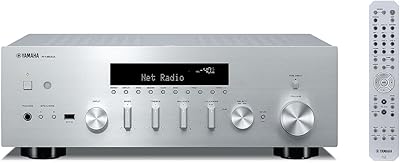
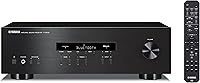
The Yamaha R-S202 Stereo Receiver has been quietly holding its ground in the entry-level audio market since 2016, and its continued popularity says a lot. Yamaha built a reputation on dependable, well-engineered audio gear long before budget receivers became crowded with flashy specs, and this unit reflects that heritage. It is a 2-channel stereo receiver — nothing more, nothing less — so anyone expecting home theater capabilities will need to look elsewhere. The brushed aluminum face and understated black finish make it easy to place on a shelf or media console without looking out of place. Straightforward and built to last, it sits comfortably in the mid-range tier.

Features & Benefits

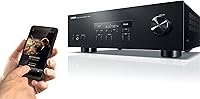
At 100 watts per channel, the R-S202 has enough headroom to fill a mid-sized living room or bedroom without straining, and most listeners will never push it past half volume. Built-in Bluetooth handles wireless streaming from a phone or laptop well enough for casual use — it connects and plays without fuss, though it is not the kind of wireless experience that will impress audiophiles. The Speaker A/B selector is genuinely useful if you want sound in two rooms without buying a second amp. Four RCA inputs give you room to connect a CD player, a TV, and a streaming device simultaneously, and the FM/AM tuner with 40 presets adds a retro-but-practical touch.

Best For

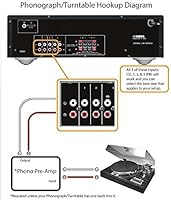
This Yamaha unit makes the most sense for someone stepping away from a soundbar or a basic Bluetooth speaker and wanting real stereo sound for the first time. It is an especially good fit for dedicated listening rooms — a bedroom, a home office, or a compact living space where a clean two-channel setup is all you need. Vinyl fans should know upfront that there is no built-in phono preamp, so a separate one is required for a turntable. For people running speakers in two separate areas — say, a living room and a patio — the A/B switching alone makes this stereo receiver worth considering over comparably priced alternatives.

User Feedback

Long-term owners frequently point to reliable, consistent performance as the standout quality — this is a unit people hold onto for years without complaints. Setup earns consistent praise for being refreshingly simple. On the downside, the Bluetooth can be finicky about re-pairing after the receiver powers off, which annoys users who stream regularly. The 71 dB signal-to-noise ratio is acceptable but not exceptional — some notice a faint background hiss at higher volumes with sensitive speakers. As mentioned, the missing phono preamp is a recurring frustration in reviews from turntable users who assumed it was included. Overall sentiment leans positive, with most criticism landing in the category of minor inconveniences rather than fundamental flaws.

Pros

  • Clean, balanced stereo sound that punches above its weight for casual and attentive listeners alike.
  • 100 watts per channel handles most room sizes and speaker types without strain at everyday volumes.
  • Speaker A/B switching lets you run two separate speaker pairs without buying extra equipment.
  • Four RCA inputs give you enough connections for a CD player, TV, and streaming device simultaneously.
  • The brushed aluminum finish looks noticeably more premium than competing units at a similar price.
  • Setup takes minutes — straightforward labeling, no app required, no firmware updates to manage.
  • Built-in FM/AM tuner with 40 presets is a practical bonus for users who still rely on broadcast radio.
  • Long-term owners consistently report years of trouble-free daily use, which is rare at this price tier.
  • The headphone jack on the front panel makes late-night private listening genuinely convenient.
  • Auto standby reduces idle power draw for users who occasionally forget to power the unit off.

Cons

  • No built-in phono preamp — turntable users must budget for and connect a separate one.
  • Bluetooth does not auto-reconnect after the unit powers off or enters standby mode.
  • Bluetooth range is modest; moving to an adjacent room can trigger dropouts mid-stream.
  • The 71 dB signal-to-noise ratio produces faint background hiss when paired with sensitive speakers at high volume.
  • No digital or optical inputs, making cleaner TV audio connections harder without an external converter.
  • The remote control is flimsy, unlit, and easy to lose — not backlit for dim-room use.
  • Auto standby can kick in too quickly during quiet passages, interrupting playback unexpectedly.
  • Running both speaker systems simultaneously reduces available power per pair noticeably.
  • No Wi-Fi, app control, or smart home integration of any kind.
  • Only available in black — no alternative finish or color options for buyers trying to match existing gear.

Ratings

The Yamaha R-S202 Stereo Receiver scores below are generated by AI after analyzing thousands of verified owner reviews worldwide, with spam, bot-submitted, and incentivized feedback actively filtered out. The result is an honest snapshot of what real buyers consistently praised and where they ran into friction. Both the strengths and the genuine shortcomings are reflected without softening.

Sound Quality
84%
For a receiver at this price tier, the audio output is impressively clean and well-balanced across most listening scenarios — whether it is background music during a dinner party or a focused late-night listening session. Owners regularly note that vocals come through with clarity and that the stereo imaging holds up well with quality bookshelf speakers.
The 71 dB signal-to-noise ratio, while acceptable, does show its limits when paired with highly sensitive speakers — a faint background hiss becomes noticeable at higher volumes. It is not a unit that will satisfy listeners accustomed to separates or higher-end integrated amplifiers.
Build Quality
81%
19%
The brushed aluminum front panel feels noticeably more substantial than competing units at a similar price point, and the overall chassis does not flex or rattle. Long-term owners — some reporting three or more years of daily use — consistently describe it as holding up without any mechanical or electrical degradation.
The rear panel inputs and speaker terminals, while functional, feel slightly plasticky compared to the front-facing build quality. A few users noted that the speaker binding posts accept bare wire and banana plugs but feel less secure than they would prefer for a permanent installation.
Value for Money
88%
At its price point, the R-S202 packs a practical feature set — Bluetooth, A/B speaker switching, multiple RCA inputs, and a tuner — that would cost meaningfully more to replicate with separate components. Buyers who upgrade from a soundbar or a compact shelf system consistently report feeling like they got significantly more than they paid for.
The absence of a built-in phono preamp is the one omission that chips away at the value proposition for turntable users, since a decent external preamp adds cost and another cable to manage. For pure streaming households, the Bluetooth limitations mean some buyers end up adding a dedicated streaming dongle anyway.
Bluetooth Performance
63%
37%
Pairing from a phone or laptop is quick on the first connection, and playback is stable when the source device stays within a reasonable range. For users who just want to stream a playlist without pulling out cables, it gets the job done without any required setup beyond initial pairing.
Re-pairing after the unit powers off or enters standby is the most frequently cited frustration — it does not reconnect automatically the way modern Bluetooth devices typically do. Range is also modest; moving to an adjacent room can cause dropouts, which bothers users who stream from a phone elsewhere in their home.
Ease of Setup
91%
Owners repeatedly describe the initial setup as one of the smoothest they have experienced with any receiver. Connections are clearly labeled, the manual is straightforward, and most users report getting sound through their speakers within minutes of unboxing — a genuine plus for first-time receiver buyers.
The remote control, while functional, is basic and not backlit, which makes adjusting settings in a dimly lit room more awkward than it needs to be. A small number of users also found the input labeling on the back panel slightly cramped and hard to read during installation.
Power Output
79%
21%
100 watts per channel is more than enough to drive most 8-ohm bookshelf or floor-standing speakers to satisfying volumes in a typical apartment or medium-sized room. Users running the unit in larger spaces or open-plan layouts report that it handles the demand without clipping or sounding strained at moderate listening levels.
For larger rooms or low-efficiency speakers, some users find themselves pushing the volume dial further than expected, leaving less headroom before distortion creeps in. It is not the right choice for outdoor setups or anyone trying to drive a large pair of power-hungry floor-standers in a big room.
Speaker A/B Switching
86%
The ability to connect two separate speaker pairs and toggle between them — or run both simultaneously — is one of the most practically useful features this stereo receiver offers at this price. Home users with speakers in a living room and a patio, or a bedroom and a home office, find this eliminates the need for a second amplifier entirely.
Running both speaker systems at once does reduce the available power per pair noticeably, which can limit maximum volume in larger spaces. The switching mechanism itself is a simple front-panel button with no remote control access, which feels like a small missed opportunity for convenience.
FM/AM Tuner
74%
26%
The 40-station preset memory covers more than most listeners will ever need, and the tuner locks onto stations cleanly in areas with decent signal strength. Users who still listen to morning radio or local broadcasts appreciate having a dedicated, reliable tuner built in rather than relying on a streaming app.
In areas with weaker broadcast signals, the tuner struggles more than higher-end receivers, and the lack of RDS display means station identification is limited. For urban listeners with strong FM coverage it works well, but rural users have reported inconsistent reception even with an external antenna.
Input Connectivity
77%
23%
Four RCA inputs give users enough flexibility to keep a CD player, a TV audio output, and a streaming device all connected simultaneously without swapping cables. For a setup that mixes traditional sources with modern ones, this level of input availability is genuinely practical and removes a common friction point.
There is no optical or digital input, which means connecting a TV via a cleaner digital signal path requires an external converter. Users hoping to use this as the center of a more modern home audio stack will likely feel constrained by the all-analog input roster.
Phono Preamp
31%
69%
There is effectively no upside to report here specific to phono — the unit does include a standard RCA input that can accept a turntable signal from an external preamp, so vinyl listeners are not locked out entirely as long as they plan ahead.
The absence of a built-in phono preamp is the single most common complaint in user reviews and catches a meaningful portion of buyers off guard. Turntable users who do not already own an external preamp must purchase one separately, adding cost and complexity to what they expected to be a simple plug-and-play setup.
Headphone Experience
69%
31%
Having a front-panel headphone jack is a practical convenience that gets consistent positive mentions, especially from users who want to listen privately late at night without disturbing others. The output is clean enough for casual headphone listening with most consumer-grade or prosumer headphones.
Dedicated headphone amplifier performance is not on the table here — users with higher-impedance or more demanding headphones find the output underwhelming and lacking in drive. It functions as a convenience feature rather than a genuine headphone stage.
Design & Aesthetics
82%
18%
The brushed aluminum face and minimal control layout give the R-S202 a clean, timeless look that fits naturally into most living spaces without drawing attention. Users consistently comment that it looks more expensive than it is, which matters when it sits openly on a media console or bookshelf.
The black colorway is the only option, which is a limitation for buyers who prefer silver components or are trying to match an existing audio stack. The overall design, while clean, has barely changed since launch — there is a utilitarian quality to it that some buyers find underwhelming compared to more visually distinctive competitors.
Long-Term Reliability
87%
Multi-year ownership reviews are notably positive — users who have run the unit daily for two, three, or even four years report no degradation in performance and no hardware failures. Yamaha's consistent manufacturing standards show up clearly in how this unit ages compared to less established brands at the same price.
A small but notable cluster of reviews describes early failure within the first year, primarily in the form of one channel dropping out. This appears to be an isolated production batch issue rather than a systemic flaw, but it is worth factoring in when considering where to purchase and what return policy applies.
Remote Control
58%
42%
The included remote covers the core functions — volume, input selection, and tuner control — without requiring any programming or setup. For users who mostly adjust volume from the couch, it handles the basics without complaint.
The remote feels cheap relative to the receiver itself, with a thin plastic construction and no backlighting that makes it easy to misplace and frustrating to use in low-light conditions. Several users eventually abandoned it in favor of manually adjusting the front panel or pairing a universal remote.
Auto Standby Function
72%
28%
The auto power standby feature is a quiet but appreciated addition for users who occasionally forget to turn the unit off — it reduces idle power consumption and adds a small but real layer of peace of mind for those who leave the system running.
The standby activation timing catches some users off guard during listening pauses, such as between album sides or during a quiet interlude in a film, triggering the standby mode prematurely. A manual override or adjustable delay timer would address this but is not available on this model.

Suitable for:

The Yamaha R-S202 Stereo Receiver is a strong match for anyone taking their first real step into dedicated home audio — particularly listeners who are tired of the compressed, bass-heavy sound of a soundbar and want genuine stereo separation from a pair of bookshelf or floor-standing speakers. It works well in apartments, bedrooms, and home offices where a clean 2-channel setup is all that is needed, and its 100 watts per channel means it will not run out of headroom in a typical room. People who like to keep things simple — a CD player here, a phone streaming over Bluetooth there, maybe a TV audio feed through one of the RCA inputs — will appreciate how little configuration this unit demands. The A/B speaker switching is a particularly practical feature for anyone who has speakers in two zones, like a living room and a covered patio, and wants to avoid buying a second amplifier. If you value long-term reliability over cutting-edge features, this Yamaha unit has a track record that is hard to argue with at its price point.

Not suitable for:

The Yamaha R-S202 Stereo Receiver is the wrong choice for anyone building a vinyl-first setup who expects a phono preamp to be included — it is not, and the added cost and clutter of a separate preamp can undermine the appeal of an otherwise budget-friendly purchase. Buyers who want to integrate their receiver into a multi-room audio ecosystem or control it through a smart home platform will find nothing here to work with; there is no Wi-Fi, no app control, and no streaming service integration beyond basic Bluetooth. The Bluetooth itself is a limitation worth naming plainly: it does not auto-reconnect after standby, and the range is modest, so anyone who relies heavily on wireless streaming day-to-day may find it more frustrating than convenient over time. Home theater enthusiasts who need Dolby or DTS decoding, multiple HDMI inputs, or more than 2 channels should look at a proper AV receiver instead. And if you are running power-hungry or low-efficiency speakers in a large, open room, the R-S202 may leave you wanting more headroom than it can comfortably deliver.

Specifications

  • Output Power: Delivers 100W per channel into 8 ohms, providing ample headroom for most home listening environments.
  • Frequency Response: Covers 10Hz to 100kHz, ensuring the unit reproduces the full audible spectrum and well beyond it.
  • Signal-to-Noise Ratio: Rated at 71 dB in stereo mode and 70 dB in mono, which is adequate for casual listening but not reference-grade.
  • Bluetooth: Built-in Bluetooth allows wireless audio streaming from smartphones, tablets, and laptops without any additional adapter.
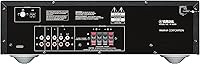
  • RCA Inputs: Includes 4 analog RCA stereo inputs for connecting sources such as CD players, TVs, and Bluetooth receivers.
  • RCA Output: Provides 1 RCA stereo output, suitable for connecting a recording device or a powered subwoofer with a line-level input.
  • Speaker Terminals: Equipped with two sets of speaker terminals supporting Speaker A, Speaker B, or simultaneous A+B operation.
  • Phono Input: No phono preamp is built in; a turntable with a moving-magnet cartridge requires a separate external phono preamp.
  • FM/AM Tuner: Integrated analog tuner supports up to 40 station presets across both FM and AM bands.
  • Input Sensitivity: CD input sensitivity is rated at 500mV with a 47k ohm impedance, in line with standard consumer line-level sources.
  • Headphone Output: A standard 3.5mm headphone terminal on the front panel allows private listening without powering down the speaker outputs.
  • Dimensions: The unit measures 17-1/8″ wide by 5-1/2″ tall, with a depth of approximately 12.63″ including rear connectors.
  • Weight: Weighs 14.8 lbs, making it substantial enough to feel solid on a shelf without being difficult to position.
  • Finish & Color: Features a brushed aluminum front panel in black, giving it a clean, understated appearance suited to most media furniture.
  • Auto Standby: An automatic power standby function activates after a period of audio inactivity to reduce idle power consumption.
  • Power Requirements: Requires 2 AA batteries for the included remote control; main unit operates on standard AC household power.
  • Audio Channels: Strictly a 2-channel stereo receiver with no surround sound processing or multi-channel output capabilities.
  • Manufacturer: Designed and manufactured by Yamaha Electronics, a brand with decades of heritage in consumer and professional audio equipment.
  • Model Number: Official model designation is R-S202BL, where BL denotes the black finish variant of the R-S202 series.
  • Availability: First made available in April 2016 and remains in active production, with no discontinuation announced by the manufacturer.

Related Reviews
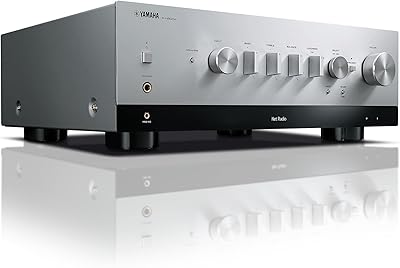
Yamaha R-N600A
Yamaha R-N600A
81%
91%
Sound Quality
93%
DAC Performance
82%
Phono Stage
78%
Streaming & Network Features
61%
MusicCast App Experience
More
Yamaha R-N800A Network Receiver
77%
91%
Sound Quality
93%
DAC Performance
88%
Build Quality
74%
Phono Stage
76%
Room Calibration (YPAO)
More
Donner MAMP5 Stereo Receiver
77%
88%
Value for Money
74%
Sound Quality
67%
Power & Amplification
91%
Connectivity & Inputs
82%
Bluetooth Performance
More
Yamaha A-S301 Integrated Stereo Amplifier
78%
91%
Sound Quality
88%
Build Quality
86%
Value for Money
71%
Phono Stage
84%
Connectivity
More
Onkyo TX-8220 Stereo Receiver
79%
88%
Sound Quality
91%
Build Quality
63%
Bluetooth Performance
84%
Phono Stage Quality
86%
Input & Connectivity Options
More
Citreal Marine Bluetooth Stereo Receiver
74%
76%
Water Resistance
83%
Bluetooth Performance
81%
Ease of Installation
61%
Sound Quality
79%
AM/FM Reception
More
Yamaha RH50A Professional Stereo Headphones
85%
91%
Sound Quality
85%
Comfort for Extended Wear
88%
Noise Isolation
84%
Portability
87%
Build Quality
More
Pyle PLMRM29BT Marine Stereo Receiver
72%
88%
Ease of Installation
72%
Bluetooth Reliability
67%
Sound Quality
81%
Value for Money
58%
Marine Durability
More
Pyle PLCD43BTM Marine Bluetooth Stereo Receiver
71%
88%
Ease of Installation
83%
Bluetooth Connectivity
74%
Sound Quality
54%
AM/FM Reception
71%
Hands-Free Calling
More
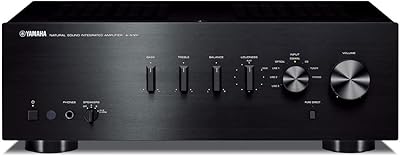
Yamaha A-S701SL Integrated Stereo Amplifier
88%
94%
Sound Quality
91%
Build Quality
88%
Ease of Use
89%
Power Output
85%
Energy Efficiency
More

FAQ

Not without an extra component. The Yamaha R-S202 Stereo Receiver does not include a built-in phono preamp, so a turntable with a standard moving-magnet cartridge will need to go through a separate phono preamp before connecting to one of the RCA inputs. Some turntables come with a preamp built in, which would work fine plugged straight into any of the line-level inputs.

Unfortunately, no — this is one of the more common frustrations owners mention. After the receiver powers off or drops into standby mode, it does not automatically reconnect to the last paired device. You will need to manually re-initiate the Bluetooth connection from your phone or tablet each time, which can get old quickly if you stream frequently.

You can connect two separate pairs of speakers using the A and B speaker terminals on the back. The front-panel selector lets you run Speaker A only, Speaker B only, or both simultaneously. Keep in mind that running both pairs at the same time splits the available power, so very large or inefficient speakers may sound quieter than expected in that mode.

It is genuinely well-suited for that kind of use. At 100 watts per channel, the R-S202 has more than enough power for a bedroom or a modest living room, and most users will never push it past a third of its volume range. Pair it with a decent set of bookshelf speakers and the sound quality will be a significant step up from any soundbar or all-in-one system.

Yes, that is exactly what the A/B speaker switching is designed for. You run one pair of speakers to the A terminals and another pair to the B terminals, then choose which zone gets sound from the front panel. It is a practical solution for covering a living room and a patio or a bedroom and a home office without needing a second amplifier.

No, the input options are all analog RCA only. There are no optical, coaxial digital, or HDMI connections on this unit. If you want to connect a TV using a cleaner digital audio signal, you would need an external digital-to-analog converter to bridge the gap, which adds cost and an extra cable to your setup.

It is modest by current standards. Most users report solid connectivity within the same room, but stepping into an adjacent room or moving behind a wall often causes dropouts. If your phone or laptop will stay close to the unit while you listen, it works reliably. If you plan to leave your source device in another room and stream from there, the experience can be inconsistent.

It will work in the sense that sound will come out, but the built-in headphone output is not a dedicated amplifier stage. Casual listening with standard consumer headphones is fine. However, if you own high-impedance headphones — anything above 150 ohms or so — you may find the output sounds thin or underpowered. For serious headphone use, a dedicated headphone amp is worth considering.

The auto standby function kicks in after a period of no audio signal being detected, powering the unit down to save energy. Some users find it activates a little too eagerly — for example, during a quiet passage between album sides — which can be annoying. Unfortunately, there is no user-accessible setting to disable it or adjust the timing on this model.

Quite well, based on long-term owner feedback. A notable number of reviewers have been running this Yamaha unit daily for three or more years and report no drop-off in performance, no channel failures, and no mechanical issues. It is not flawless — a small cluster of early-failure reports exists — but the overall durability track record is strong for a receiver at this price point, and Yamaha's build standards tend to hold up better than budget alternatives.

Where to Buy