
Overview

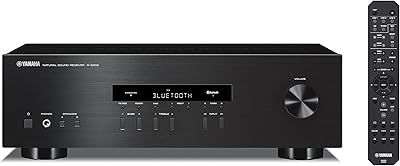
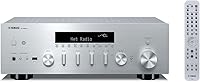
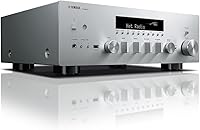
The Yamaha R-N600A sits at an interesting crossroads: it's a proper stereo receiver with deep analog credentials, yet it handles high-resolution streaming as naturally as any dedicated network player. Yamaha built this for the listener who still has a turntable on the shelf but streams Qobuz or Tidal daily — and doesn't want two separate boxes to do it. The built-in ESS SABRE DAC means you're not relying on your source device to handle digital conversion, which matters when you're feeding it a NAS full of FLAC files. Aesthetically, it follows Yamaha's classic silver receiver look — understated, substantial, and very much at home in a proper hi-fi rack.

Features & Benefits

The ESS SABRE ES9010K2M DAC is the hardware centerpiece here, and its impact is immediately noticeable on high-res files — the noise floor drops, imaging tightens, and digital sources stop sounding like an afterthought. The USB front panel handles DSD up to 11.2 MHz natively, so if you have a library of DSD files, you don't need an external DAC or converter. The dedicated phono stage is not a token inclusion — it handles moving-magnet cartridges properly without requiring a separate preamp. Optical input adds practical TV integration, and with 80 watts per channel on tap, this Yamaha stereo receiver drives most bookshelf and floorstanding speakers without strain.

Best For

This network receiver makes the most sense for someone already committed to serious two-channel listening. The pairing of phono input and streaming in a single box is rare at this price tier, removing the need for a standalone phono preamp and a separate streaming DAC simultaneously. It also fits naturally into Yamaha's MusicCast ecosystem if you own other Yamaha hardware. Listeners upgrading from a soundbar or entry-level receiver will notice a real jump in resolution and dynamic range. Worth noting: this is a dedicated stereo unit, not a home theater receiver, so anyone expecting multichannel surround processing should look elsewhere.

User Feedback

Buyers consistently highlight sound quality per dollar as the strongest argument for this network receiver — particularly the DAC performance on hi-res streams, which owners say punches above its price tier. The phono stage draws mostly positive reactions from vinyl listeners, though a handful note it won't satisfy higher-output moving-coil setups. Where opinions divide is around the MusicCast app experience: some find initial network setup easy, while others report Wi-Fi instability across firmware versions. Long-term reliability data remains limited given the late 2023 launch, but early adopters report no hardware concerns. The overall consensus leans positive, with app polish flagged as the one area still needing attention.

Pros

  • Built-in ESS SABRE DAC delivers genuine hi-res performance without needing a separate external unit.
  • The phono stage handles moving-magnet cartridges competently, eliminating a separate preamp purchase.
  • Native DSD 11.2 MHz playback via front USB is rare at this price tier.
  • Wired Ethernet streaming is rock-solid — owners report zero dropouts during extended sessions.
  • 80 watts per channel drives most bookshelf and floorstanding speakers with real headroom to spare.
  • Optical input makes TV audio integration quick and practical without extra hardware.
  • Build quality feels appropriately substantial — this is a component that inspires long-term confidence.
  • MusicCast ecosystem integration works well for Yamaha households with multiple connected devices.
  • The R-N600A genuinely reduces component count without sacrificing resolution or input flexibility.

Cons

  • The MusicCast app crashes and fails to detect the receiver often enough to be a recurring frustration.
  • Wi-Fi connectivity can be unstable; some owners needed firmware updates or router changes to fix dropouts.
  • No HDMI ARC input limits TV integration to optical only, which some buyers find surprising.
  • Moving-coil cartridge users are locked out — the phono stage is strictly moving-magnet.
  • Long-term software support is an open question given the product only launched in late 2023.
  • The unit runs noticeably warm during extended high-volume listening without adequate rack ventilation.
  • Bluetooth audio quality trails network streaming significantly — not suitable as a primary source.
  • Size and weight make this impractical for compact shelving or smaller dedicated listening spaces.

Ratings

Our scores for the Yamaha R-N600A were generated by AI after analyzing verified buyer reviews from global markets, with spam, bot submissions, and incentivized feedback actively filtered out. The result reflects a clear-eyed picture of where this network receiver genuinely excels and where real owners have run into friction. Both the strengths and the recurring pain points are represented transparently in the categories below.

Sound Quality
91%
Owners consistently describe the audio output as clean, detailed, and surprisingly spacious for a stereo receiver in this class. The low noise floor makes a tangible difference when playing hi-res FLAC or DSD files — background detail that gets smeared on lesser hardware comes through with real clarity.
A small number of listeners find the sound profile slightly analytical rather than warm, which can feel fatiguing on bright speaker pairings during long listening sessions. Those coming from tube-based setups may miss a certain harmonic richness.
DAC Performance
93%
The ESS SABRE ES9010K2M chip is a genuine highlight — buyers who previously used external DACs report that the built-in conversion holds its own without needing a separate unit. Streaming Tidal or Qobuz at full resolution sounds noticeably more resolving than on entry-level receivers.
The DAC shines brightest with high-resolution sources; standard 16-bit/44.1 kHz streams show less dramatic improvement over simpler competitors. A few users note that the performance gap closes considerably at lower bitrates.
Phono Stage
82%
18%
Having a competent phono stage built in removes a meaningful cost and clutter barrier for turntable users. Moving-magnet cartridge owners broadly report solid, quiet amplification that does justice to mid-range cartridges without needing a standalone preamp.
Moving-coil cartridge users are left out entirely — the stage is MM-only, which limits options for listeners with higher-end decks. A handful of vinyl purists feel the stage, while adequate, doesn't match dedicated phono preamps in the same price range.
Streaming & Network Features
78%
22%
Wi-Fi, Ethernet, and Bluetooth together cover virtually every streaming scenario, and compatibility with Spotify Connect, AirPlay 2, and MusicCast means most households can connect without workarounds. Wired Ethernet users report rock-solid stability during extended listening sessions.
Wi-Fi performance is less consistent — several owners cite dropout issues and connectivity hiccups that required router adjustments or firmware updates to resolve. The dependency on a stable home network means setup isn't always plug-and-play.
MusicCast App Experience
61%
39%
For users already inside the Yamaha MusicCast ecosystem, the app brings genuine multi-room convenience and source switching from a single interface. When it works well, controlling the receiver remotely feels polished and responsive.
App stability is the single most common complaint across user reviews — crashes, slow loading, and occasional failure to detect the receiver after network changes are recurring themes. Several buyers describe the app as functional but unreliable enough to be frustrating on a regular basis.
Build Quality
88%
The chassis feels appropriately substantial for the price tier — solid metal construction, well-damped feet, and controls that respond with the kind of tactile confidence that plastic-heavy competitors lack. It looks and feels like a proper hi-fi component.
The silver finish, while classic, shows fingerprints readily and the front panel markings can feel understated in low light. A few buyers note the ventilation design runs warm during extended high-volume use.
Setup & Usability
69%
31%
Physical connections are logically laid out, and the rear panel labeling is clear enough that getting speakers and sources connected is straightforward. Ethernet setup in particular is genuinely quick for users who bypass Wi-Fi entirely.
Wi-Fi setup through the app adds unnecessary complexity — multiple users report needing two or three attempts before the receiver connected reliably. First-time network receiver owners may find the initial configuration steeper than expected.
High-Resolution Audio Playback
89%
DSD 11.2 MHz native playback via the front USB port is a feature most competitors skip at this price point, and owners with DSD libraries report it working exactly as advertised without additional drivers on Mac or PC. 384 kHz PCM support is equally well-executed.
The front USB port is the only path to native DSD playback, which means network-based DSD delivery isn't supported in the same way. Users streaming DSD over the network may need to transcode, which slightly undermines the native playback pitch.
Amplifier Power & Speaker Pairing
84%
Eighty watts per channel gives this Yamaha stereo receiver enough muscle to drive most bookshelf and moderate-sensitivity floorstanding speakers without clipping or dynamic compression at realistic listening levels. Owners pairing it with 4-ohm loads report stable, controlled output.
Listeners with large, low-sensitivity floorstanding speakers in bigger rooms may find the power headroom tighter than ideal at higher volumes. This isn't a receiver built for filling a large open-plan space at concert levels.
Connectivity & Input Options
86%
The combination of optical, RCA, phono, USB, and full network connectivity in a single chassis covers nearly every source a modern listener would own. Adding a TV via optical is a quick win for anyone who wants their set's audio routed through a proper stereo system.
There's no HDMI ARC input, which some buyers expected given the optical TV integration angle. Users with multiple digital sources may also wish for an additional coaxial digital input alongside the single optical.
Value for Money
77%
23%
For buyers who would otherwise need a separate phono preamp, external DAC, and streaming device, consolidating everything into this receiver represents genuine value. The DAC quality in particular punches above what the price alone would suggest.
Buyers who don't need the phono stage or high-res USB playback may find simpler network receivers more cost-effective. The app frustrations also factor into the value equation — paying a premium for smart features that feel half-finished is a real sticking point for some.
Long-Term Reliability
72%
28%
Hardware failures are rarely mentioned in early ownership feedback, and Yamaha's general reputation for durable consumer electronics gives buyers reasonable confidence in the physical components. The unit runs cool under normal listening conditions.
The product launched in late 2023, so multi-year reliability data simply doesn't exist yet. A few firmware-related issues have appeared in owner forums, and it remains unclear how consistently Yamaha will support the software side over a five-plus year ownership period.
Bluetooth Performance
74%
26%
Bluetooth works reliably for casual listening from phones and tablets, with stable pairing and decent range within a single room. Owners using it for background music or occasional mobile streaming find it perfectly adequate.
Bluetooth audio quality, while functional, noticeably trails the wired and network streaming options — which is expected, but worth flagging for buyers who planned to use it as a primary source. Codec support is not explicitly documented, which frustrates more technically minded buyers.
Aesthetic & Form Factor
83%
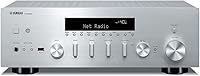
The classic silver receiver look ages well and fits naturally into traditional hi-fi rack setups without clashing with vintage or modern components. The front panel is clean and uncluttered, with a display that communicates source and input clearly.
The unit is sizeable — nearly 17 inches wide and over 26 pounds — so compact shelf setups or smaller furniture may struggle to accommodate it properly. There is no black colorway option for buyers trying to match darker rack aesthetics.

Suitable for:

The Yamaha R-N600A is built for the listener who refuses to choose between analog and digital — specifically someone with a turntable on one end of the rack and a high-resolution streaming subscription on the other. If you've been running your vinyl through a separate phono preamp and your digital sources through an external DAC, consolidating both into a single capable receiver makes a lot of sense here. This network receiver also fits naturally into situations where someone is making a genuine step up from a soundbar or a budget receiver and wants to hear what their speakers are actually capable of. Buyers already invested in the Yamaha MusicCast ecosystem will find the integration genuinely useful rather than gimmicky. And for anyone building a long-term two-channel system who wants wired Ethernet reliability alongside wireless flexibility, the connectivity options cover that ground without compromise.

Not suitable for:

The Yamaha R-N600A is not the right tool for home theater builds — there is no HDMI ARC, no Dolby Atmos processing, and no multichannel amplification beyond a basic 5.1 configuration, so buyers expecting a full surround setup will need to look elsewhere. If your turntable runs a moving-coil cartridge, the MM-only phono stage is a hard limitation that will either require a separate step-up transformer or push you toward a different receiver entirely. Listeners who plan to rely heavily on Bluetooth as their main source will find the experience functional but underwhelming — this network receiver rewards wired or Wi-Fi-based high-res sources, and Bluetooth feels like a secondary afterthought in that context. Anyone with a compact shelf or a smaller listening room should also be aware that this is a full-sized, heavy component that demands proper ventilation and dedicated rack space. Finally, buyers who are sensitive to software quality should factor in the MusicCast app's inconsistent track record — if a polished, reliable control app is non-negotiable, the current state of the software may test your patience.

Specifications

  • Brand & Model: Manufactured by Yamaha; model designation R-N600A (also listed as R-N600ASL for the silver variant).
  • Output Power: Delivers 80 watts per channel into 8 ohms, providing sufficient headroom for a wide range of passive speaker pairings.
  • DAC Chip: Uses the ESS SABRE ES9010K2M Ultra DAC, chosen for its high signal-to-noise ratio and low distortion floor on digital sources.
  • PCM Playback: Supports high-resolution PCM audio up to 384 kHz via the front-panel USB terminal.
  • DSD Support: Handles native DSD playback up to DSD 11.2 MHz (DSD256) through the front USB input without software conversion.
  • Phono Stage: Includes a built-in moving-magnet phono preamplifier, allowing direct turntable connection without an external phono preamp.
  • Connectivity: Equipped with Wi-Fi, Bluetooth, and Ethernet (wired LAN), covering both wireless and hardwired network streaming scenarios.
  • Streaming Protocols: Compatible with AirPlay 2, Spotify Connect, and Yamaha MusicCast, supporting multi-room audio within the Yamaha ecosystem.
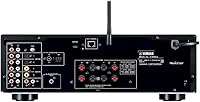
  • Analog Inputs: Rear panel includes RCA line-level inputs and dedicated phono input terminals with ground screw for turntable connection.
  • Digital Inputs: Provides one optical (TOSLINK) digital input on the rear panel and one USB Type-A terminal on the front panel.
  • Output Connectors: Speaker outputs use binding posts compatible with bare wire, pin connectors, and banana plugs; headphone output via 3.5mm front jack.
  • Surround Config: Listed as 5.1-channel capable in configuration, though primary design intent is two-channel stereo amplification.
  • Dimensions: Unit measures 15.37″ deep by 17.12″ wide by 6″ tall, consistent with full-width hi-fi component sizing.
  • Weight: Weighs approximately 26.5 pounds (12.04 kg), reflecting a solid metal chassis construction.
  • Color: Available in Silver (model suffix SL); no black colorway has been officially listed for this variant.
  • Compatible Devices: Designed to connect with passive speakers, turntables with MM cartridges, smartphones, tablets, and personal computers.
  • First Available: Product became available for purchase in October 2023, making long-term field reliability data still limited as of early 2025.
  • Manufacturer: Yamaha Corporation; the R-N600A is part of Yamaha's network receiver lineup positioned in the mid-to-upper consumer hi-fi tier.

Related Reviews
Yamaha R-S202BL Stereo Receiver
86%
88%
Bluetooth Performance
90%
Sound Quality
85%
Setup & Installation
82%
FM/AM Radio Reception
80%
Build Quality
More
Yamaha R-N800A Network Receiver
77%
91%
Sound Quality
93%
DAC Performance
88%
Build Quality
74%
Phono Stage
76%
Room Calibration (YPAO)
More
Undefined Beauty R&R Day Serum 1oz
85%
88%
Effectiveness for Hyperpigmentation
85%
Hydration & Skin Texture
82%
Pore Refining
92%
Gentleness & Skin Sensitivity
90%
Fragrance-Free Formula
More
R&R Collective Frankincense Tallow Face Moisturizer 2 oz
85%
92%
Effectiveness for Hydration
89%
Skin Compatibility (Sensitive Skin)
77%
Absorption and Finish
70%
Fragrance (Frankincense)
95%
Ingredient Quality (Natural and Chemical-Free)
More
Undefined Beauty R&R Sun Serum SPF 50 PA++++ Tinted Mineral Sunscreen (Medium Tint)
89%
95%
SPF Protection
90%
Tinted Formula Performance
88%
Texture and Absorption
85%
Hydration and Moisture
91%
Non-Greasy Finish
More
Undefined Beauty R&R Sun Elixir SPF 30 – Glow Oil for Face, Hair, Scalp & Body
85%
89%
Texture and Absorption
92%
Scent and Fragrance
88%
SPF Protection and Effectiveness
85%
Multi-Use Versatility
75%
Moisturization and Hydration
More
Yamaha CM500 Headset
86%
94%
Microphone Clarity
85%
Comfort & Fit
90%
Build Quality
82%
Noise Isolation
88%
Sound Accuracy
More
Canon EOS R
Canon EOS R
88%
97%
Image Quality
94%
Autofocus Accuracy
91%
Video Performance
88%
Build Quality
90%
Ergonomics & Handling
More
Klipsch R-120SW Subwoofer
80%
91%
Bass Performance
88%
Value for Money
84%
Build Quality
92%
Ease of Setup
79%
Room Integration & Tuning
More
Yamaha HPH-50B Headphones
81%
89%
Comfort for Long Sessions
87%
Sound Quality & Clarity
82%
Build Quality & Durability
91%
Portability & Weight
55%
Noise Isolation
More

FAQ

No separate phono preamp is needed — the built-in phono stage handles moving-magnet cartridges directly. Just connect your turntable's RCA cables to the phono input and attach the ground wire to the ground screw on the rear panel. Keep in mind this is MM-only, so moving-coil cartridges are not supported without an external step-up device.

Yes. Via Spotify Connect and compatible streaming apps, the receiver handles playback independently once you hand off the stream — your phone just acts as a remote and can be locked or set aside. For Tidal and other services, AirPlay 2 or network streaming through MusicCast works similarly depending on the platform.

For USB playback, connect a drive to the front USB terminal and the receiver will handle files up to 384 kHz PCM and DSD up to 11.2 MHz natively. Network-attached storage playback via DLNA is also supported for hi-res FLAC and WAV files, though DSD over network may require transcoding depending on your server software.

Ethernet is the more reliable choice if your rack is near a router or switch — owners who use wired connections report consistently stable playback with no dropouts. Wi-Fi works for most households but has drawn criticism from some users for occasional instability, particularly after firmware updates or router changes. If long-term reliability matters to you, run a cable.

Honestly, it's a mixed bag. When it connects and works correctly, the app is a convenient way to switch inputs, adjust volume, and link multiple Yamaha MusicCast devices in different rooms. The frustration comes from occasional failure to detect the receiver after network changes, slow loading, and sporadic crashes that a number of owners have flagged. It functions, but it's not as polished as the hardware it controls.

For most bookshelf speakers and medium-sensitivity floorstanding designs in a typical room, 80 watts per channel is more than adequate. If you own large, low-sensitivity floorstanding speakers — say, 87 dB or lower — and you listen at high volumes in a big room, you may find the headroom tighter than ideal. For the majority of real-world pairings, it's not an issue.

Yes, using the optical (TOSLINK) input on the rear panel. Most modern TVs have an optical output, so you connect a standard optical cable and select that input on the receiver. It works well for stereo TV audio. Just note there is no HDMI ARC support, so advanced audio formats like Dolby Atmos from streaming boxes will not pass through.

Yes, via AirPlay 2 from an Apple device you can stream Apple Music Lossless at up to 24-bit/48 kHz. For higher-resolution tracks from Apple Music Hi-Res Lossless or Amazon Music Ultra HD, connecting a device via USB or using a compatible network streaming path will let the receiver take full advantage of its DAC capabilities up to 384 kHz.

This Yamaha stereo receiver is a full-width component at just over 17 inches wide, nearly 15.4 inches deep, and 6 inches tall — so it occupies a standard full-size receiver slot. Weight is around 26.5 pounds, so the shelf needs to be sturdy. Make sure there is at least a couple of inches of clearance above and behind the unit for ventilation, as it generates moderate heat during extended use.

For someone stepping up from a budget receiver or a soundbar, the difference in audio quality — particularly with a good pair of speakers — is substantial. The built-in DAC and phono stage mean you're getting components that would normally require separate purchases. The main consideration is whether the app-dependent network features align with how you actually listen; if you prefer simplicity, the added connectivity is a bonus rather than a requirement.