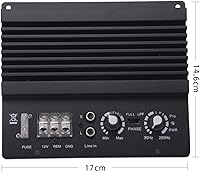
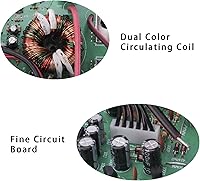
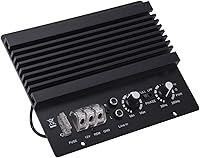
Overview

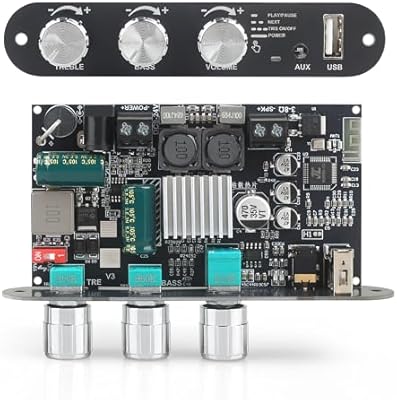
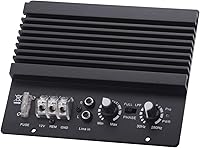
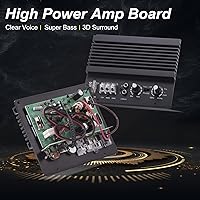
The YaeCCC JK-0616 1000W Mono Car Amplifier Board is a bare-bones PCB-level amplifier aimed squarely at car audio hobbyists who want to drive a subwoofer without spending serious money on a name-brand unit. It runs on a standard 12V DC supply, which means wiring it into most vehicles is pretty straightforward — no exotic power requirements to wrestle with. That said, be upfront with yourself about what you're getting: this amp board ships as a naked circuit board, no enclosure, no mounting brackets, no real documentation. If you're comfortable working with bare electronics and building your own housing, that's perfectly fine. If you expect a boxed, ready-to-mount amplifier, this isn't it.

Features & Benefits

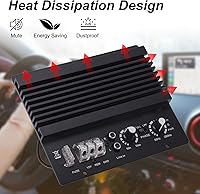
On the spec sheet, this mono amplifier board claims 1000W of output — but keep in mind that figure is almost certainly a peak rating, not a continuous RMS number. Real-world sustained output will be noticeably lower, which is standard practice across budget amplifier boards. What matters more is how it behaves day-to-day: the board includes built-in protection circuitry for overcurrent, overload, and short circuit events, which is genuinely useful and not something every cheap board bothers to include. The PCB itself measures roughly 9.4 by 7.6 inches — compact enough to fit inside a custom subwoofer enclosure. Heat dissipation is handled through the board's own layout, though sustained high-volume sessions will still generate meaningful warmth.

Best For

This bare-board amplifier is really built for one kind of buyer: the DIY car audio person who already knows how to read a wiring diagram and isn't afraid to build a custom enclosure. If that's you — maybe you're retrofitting an older vehicle, building a ported sub box from scratch, or just experimenting with amp configurations in your garage — this mono amplifier board makes a lot of sense as a low-cost starting point. It handles a single subwoofer channel only, so multi-channel setups are off the table. For pure, budget-first builds where the goal is moving air without moving too much cash, it sits in a comfortable spot in the market.

User Feedback

Buyers who've picked up this amp board tend to split along predictable lines. On the positive side, most agree the value-for-money ratio is hard to argue with at this price point — you get a functional, protection-equipped mono board for modest outlay. Those with soldering experience report cleaner installs and fewer headaches. On the flip side, there are consistent complaints about heat accumulation during long listening sessions, and several users note the 1000W figure is optimistic by a wide margin in real-world conditions. A recurring frustration is the minimal documentation included in the package. Long-term reliability appears acceptable for occasional use, though heavy daily use is a different story.

Pros

  • Extremely budget-friendly entry point for anyone getting into car audio amplifier builds
  • Built-in overcurrent, overload, and short circuit protection adds a meaningful safety net for DIY installs
  • Compact PCB footprint fits inside custom enclosures without wasting valuable space
  • Standard 12V DC operation makes integration into almost any vehicle straightforward
  • Mono channel focus keeps the signal path simple and suited for dedicated subwoofer use
  • Heat dissipation layout helps manage thermals during moderate listening sessions
  • Lightweight at just over 1.5 pounds, making it easy to position within tight builds
  • Functional bass reproduction at low frequencies for the price is genuinely respectable
  • Good starting point for hobbyists learning amplifier wiring and car audio fundamentals

Cons

  • Actual sustained output falls well short of the advertised 1000W peak rating
  • No enclosure included — buyers must source or fabricate their own housing before installation
  • Documentation in the box is sparse, leaving less experienced builders to figure out wiring independently
  • Heat buildup becomes noticeable during extended high-volume listening sessions
  • Long-term reliability under daily heavy-use conditions is not well established
  • No multi-channel capability whatsoever — a hard limit for anyone planning a full audio system
  • Surface-mount bare-board format is genuinely intimidating for buyers without electronics experience
  • Customer support and manufacturer responsiveness appear inconsistent based on reported feedback
  • Resale value is negligible, so there is little safety net if the board underperforms

Ratings

The scores below reflect an AI-driven analysis of verified global buyer reviews for the YaeCCC JK-0616 1000W Mono Car Amplifier Board, with spam, incentivized, and bot-generated feedback actively filtered out before scoring. Real ownership experiences — including the frustrations — are weighted equally alongside the praise, so these numbers give you an honest picture of what living with this amp board actually looks like.

Value for Money
83%
Most buyers agree this mono amplifier board punches above its weight financially. For hobbyists building their first custom subwoofer enclosure on a tight budget, getting a protection-equipped mono board at this price point is hard to argue against as a starting point.
The value calculation shifts if you factor in the cost of sourcing an enclosure, connectors, and wiring separately. Buyers who underestimate those add-on costs sometimes feel the final outlay creeps closer to a basic boxed amplifier than expected.
Actual Power Output
52%
48%
The board does generate usable bass output for a single subwoofer driver, and in casual listening sessions at moderate volumes, performance is acceptable for the price tier. Users running modest 4-ohm subs in smaller custom boxes report reasonable low-frequency response.
The 1000W peak rating is widely regarded by experienced buyers as a marketing figure, not a real operating spec. Continuous RMS output is considerably lower, and anyone expecting near-rated output for extended sessions will be disappointed — this is a recurring and consistent complaint.
Build Quality
61%
39%
The PCB itself is reasonably solid for an entry-level board, with decent solder joints and a layout that accommodates the stated protection circuitry. Hobbyists who inspect boards closely before installation generally report nothing alarming about the physical construction.
Component quality is visibly budget-grade on close inspection, and the lack of any housing means the board is vulnerable to vibration, dust, and moisture if not carefully enclosed. Long-term component durability under sustained use is the most commonly flagged concern.
Thermal Management
58%
42%
The PCB layout does incorporate some passive heat management, and during shorter listening sessions at moderate gain settings the board stays within acceptable temperature ranges. Garage experimenters running it intermittently report no major overheating issues.
During extended high-volume use, heat buildup becomes a genuine issue. Without active cooling or a dedicated heatsink, sustained bass-heavy sessions cause the board to run noticeably hot, which several users link directly to accelerated wear over time.
Protection Circuitry
78%
22%
Having overcurrent, overload, and short circuit protection built into a board at this price is a real differentiator. DIY installers who make wiring mistakes during the build process report the protection circuits triggering correctly and preventing permanent board damage.
While the protection features work as a safety net, there is no onboard indicator — no LED, no audible signal — to tell you when a protection mode has triggered. Diagnosing why the board has gone silent requires manual troubleshooting, which catches less experienced builders off guard.
Ease of Installation
47%
53%
For experienced car audio hobbyists who are comfortable identifying PCB terminals and making their own wiring runs, the installation process is fairly logical. The 12V DC single-supply requirement at least keeps the power side of the wiring simple.
The absence of labeled terminals, a wiring diagram, or any meaningful documentation makes this a frustrating install for anyone without prior bare-board experience. Several buyers report spending significant time cross-referencing forum posts just to identify where inputs and outputs connect.
Documentation & Support
34%
66%
Some patient buyers have successfully pieced together an installation approach using community car audio forums and generic mono amplifier board guides that broadly apply to this form factor.
In-box documentation is essentially non-existent, and manufacturer customer support responsiveness is inconsistent at best. For a product aimed partly at hobbyists who may be less experienced, this is one of the most frequently and strongly criticized aspects across user reviews.
Bass Reproduction
71%
29%
Within its realistic power envelope, this bare-board amplifier produces clean enough low-frequency output to satisfy buyers running a single subwoofer in a modest enclosure. Users building ported boxes for daily commute listening report satisfying bass presence for the outlay.
At higher gain settings the bass can lose definition, with some users noting a loose or undefined low end that suggests the board is being pushed past its comfortable operating range. Those with more discerning audio expectations will notice the limitations quickly.
Compact Footprint
81%
19%
The PCB dimensions work genuinely well for custom enclosure builds. Builders designing tight subwoofer boxes or retrofitting amplifiers into older vehicles with limited space appreciate having a capable mono board that does not demand a large footprint.
The compact size does limit the surface area available for passive heat dissipation, which contributes directly to the thermal issues noted under sustained load. It is a real trade-off between size efficiency and thermal headroom.
Component Compatibility
69%
31%
The board is broadly compatible with standard 4-ohm car subwoofers and integrates without issue into most 12V automotive electrical systems. Buyers running common aftermarket subs report no major impedance or signal matching problems during typical use.
Impedance tolerance and compatibility at 2-ohm loads is less well documented, and a few users report instability when experimenting with lower-impedance drivers. Without a proper spec sheet from the manufacturer, buyers are left to test compatibility at their own risk.
Long-term Reliability
49%
51%
For occasional use, weekend projects, or low-duty-cycle audio setups, a meaningful portion of buyers report the board continuing to function without issue over several months of intermittent use.
Under daily heavy-use conditions, reliability drops off noticeably. Multiple buyers report functional degradation or outright failure within a year of regular high-volume use, suggesting component quality margins are tight and not designed for sustained demanding operation.
Packaging & Presentation
55%
45%
The board arrives adequately protected for shipping, and most buyers report receiving it without physical damage to the PCB or components, which matters for a bare board with no external casing to absorb transit stress.
Beyond basic transit protection, packaging adds nothing useful — no accessories, no documentation, and no protective coating or storage bag for the board itself. For buyers who do not install immediately, storing the bare PCB safely requires their own improvisation.

Suitable for:

The YaeCCC JK-0616 1000W Mono Car Amplifier Board is a solid pick for hands-on car audio hobbyists who enjoy building their own setups from the ground up. If you're the type who designs custom subwoofer enclosures, sources your own components, and can solder a clean joint without a second thought, this amp board fits naturally into that workflow. It works particularly well as a cost-effective testbed — useful when you want to experiment with subwoofer configurations before committing to a pricier amplifier. Garage builders retrofitting older vehicles with a single subwoofer channel will find the straightforward 12V wiring requirement genuinely convenient. At this price tier, it also makes sense for anyone running a secondary or seasonal audio project where keeping costs minimal is the priority.

Not suitable for:

Buyers expecting a plug-and-play, boxed amplifier they can bolt under a seat and forget about should steer well clear of this mono amplifier board. The YaeCCC JK-0616 1000W Mono Car Amplifier Board ships as a bare PCB with no enclosure, no pre-attached connectors, and minimal installation guidance — that's a real problem if your electronics experience is limited. Anyone chasing accurate, high-power output numbers should also recalibrate expectations, since the 1000W figure reflects a peak rating that genuine continuous performance won't come close to matching. If you're building a daily-driver audio system and need dependable reliability under sustained heavy use, this bare-board amplifier is a risky foundation. Multi-channel audio setups are simply not possible here — this is strictly a single subwoofer channel solution with no room to expand.

Specifications

  • Model Number: This amplifier board carries the manufacturer model designation JK-0616.
  • Manufacturer: Produced by Yae First Trading Co., Ltd, a Chinese consumer electronics supplier.
  • Power Output: Rated at 1000W mono peak; continuous RMS output will be significantly lower under real operating conditions.
  • Channel Config: Single-channel mono configuration, designed exclusively for subwoofer or full-range single-driver applications.
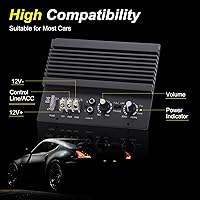
  • Operating Voltage: Requires a 12V DC power supply, with both minimum and maximum supply voltage specified at 12V DC.
  • Form Factor: Bare PCB surface-mount board with no enclosure, housing, or pre-installed mounting hardware included.
  • PCB Dimensions: The circuit board measures approximately 9.41 x 7.64 x 2.17 inches as packaged.
  • Weight: Complete packaged unit weighs 1.52 pounds, making it lightweight for custom enclosure integration.
  • Mounting Type: Surface-mount design intended for integration into user-fabricated enclosures or custom amplifier housings.
  • Protection Circuits: Onboard protection covers overcurrent, overload, and short circuit fault conditions to help prevent board damage.
  • Application: Intended primarily for car audio subwoofer amplification in 12V automotive electrical systems.
  • Frequency Response: Designed for wide frequency handling with an emphasis on low-frequency bass reproduction for subwoofer use.
  • Heat Management: PCB layout incorporates heat dissipation design to manage thermal load during continuous operation.
  • Package Contents: Box contains the amplifier board only; connectors, enclosure, and installation hardware are not included.
  • First Available: This model was first listed for retail sale in January 2020.
  • BSR Ranking: Holds a position within the Audio Component Amplifiers subcategory on Amazon's Best Sellers rankings.

Related Reviews
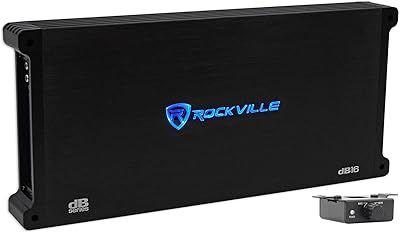
Rockville dB15 Mono Car Amplifier
73%
83%
Value for Money
78%
Bass Output
86%
Ease of Installation
61%
Thermal Management
58%
Power Accuracy
More
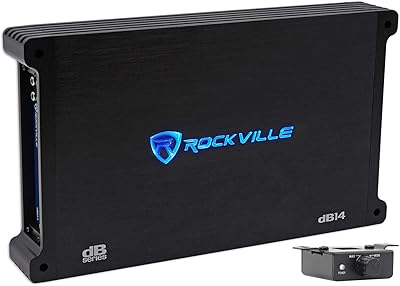
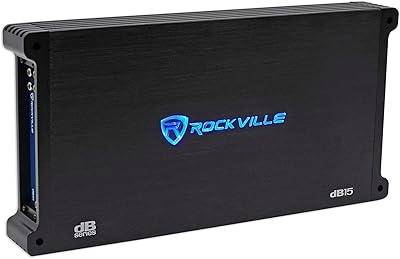
Rockville dB14 Mono Class-D Car Amplifier
74%
83%
Value for Money
78%
Power Accuracy
67%
Build Quality
54%
Long-Term Reliability
86%
Ease of Installation
More
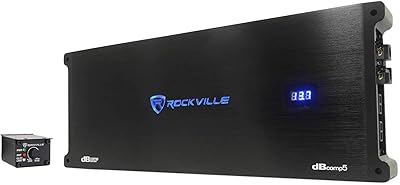
Rockville dBcomp5 Mono Car Amplifier
75%
88%
Verified Power Output
82%
Build Quality
91%
Onboard Tuning Flexibility
87%
1-Ohm Stability
79%
Remote Sub Control
More
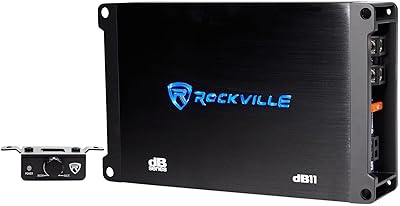
Rockville dB16 Mono Car Amplifier
73%
83%
Bass Output
78%
Value for Money
81%
Ease of Installation
59%
Thermal Management
62%
Power Accuracy
More
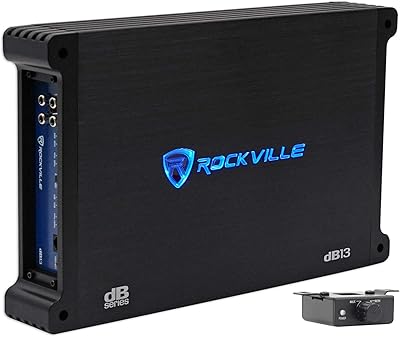
Rockville dB13 Mono Car Amplifier
75%
83%
Value for Money
54%
Power Output Accuracy
61%
Thermal Management
88%
Ease of Installation
79%
Onboard Sound Controls
More
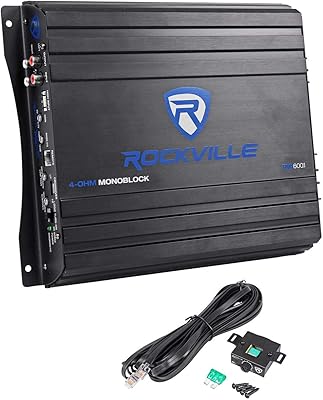
Rockville dB11 Mono Class-D Car Amplifier
82%
91%
Value for Money
86%
Bass Output
88%
Ease of Installation
83%
Signal Clarity & THD
67%
Build Quality
More
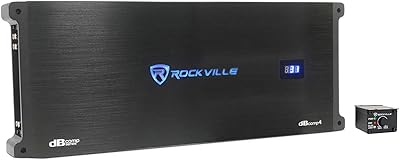
Rockville dBcomp4 3000W Mono Car Amplifier
85%
94%
Power Output
91%
Bass Performance
87%
Ease of Installation
89%
Build Quality
67%
Thermal Management
More
Rockville RVA600.1 Mono Car Amplifier
74%
83%
Value for Money
74%
Sound Quality
88%
Ease of Installation
52%
Power Accuracy
67%
Build Quality
More
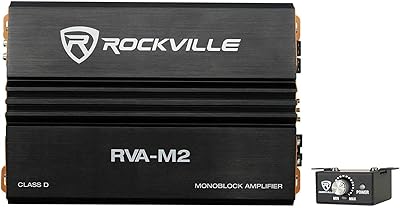
Rockville RVA-M2 Mono Car Amplifier
78%
83%
Value for Money
88%
Power Accuracy
71%
Build Quality
79%
Thermal Management
84%
Filter & Tuning Controls
More
YaeCCC C-266 4-Channel Car Amplifier
69%
78%
Value for Money
67%
Sound Output & Volume
71%
Build Quality & Materials
58%
Heat Management
73%
Installation Experience
More

FAQ

No, it does not. What arrives is a bare circuit board with no housing, no bracket, and no external connectors. You will need to fabricate or source your own enclosure if you want it protected and mounted properly.

The 1000W figure is a peak rating, which is standard marketing practice for budget amplifier boards. Realistic continuous RMS output will be a fraction of that number. Think of it as a rough ceiling under ideal conditions, not a figure you will hit in everyday use.

Yes, it operates on a standard 12V DC supply, which is exactly what most automotive electrical systems provide. Just make sure your wiring gauge is appropriate for the current draw and that you use an inline fuse near the battery terminal for safety.

Basic electronics knowledge goes a long way here. Since there is no plug-and-play wiring harness included, you will need to identify the input, output, power, and ground terminals on the board and make your own connections. Buyers with soldering experience consistently report much smoother installs.

This mono amplifier board is designed for subwoofer applications, and most car subwoofers are 4-ohm or 2-ohm units. That said, always verify the impedance compatibility against the board specifications before connecting a driver, since mismatching impedance can stress the output stage.

It will get warm, especially during extended listening sessions at higher volumes. The PCB layout includes some thermal management, but this is a budget board without a dedicated heatsink or fan. Good airflow around the board inside your enclosure will help meaningfully.

Technically it could work in a 12V DC home audio setup if you have an appropriate power supply, but it is designed and rated for automotive use. Home audio typically runs on different voltage standards, so you would need a regulated 12V DC power supply with sufficient current capacity, which adds cost and complexity.

You can, since the board handles a wide frequency range. However, its mono single-channel output makes it best suited for a dedicated bass or subwoofer driver rather than a full stereo setup.

Several buyers have noted this is one of the weaker points. Documentation is minimal at best — do not expect a detailed wiring guide. Your best resource will be community forums and car audio DIY groups online, where similar boards are well discussed.

User feedback suggests it holds up reasonably well for occasional or moderate use. Heavy daily use at high volumes is where reliability becomes less predictable. At this price point, longevity expectations should be calibrated accordingly — treat it as a capable entry-level board rather than a long-haul workhorse.