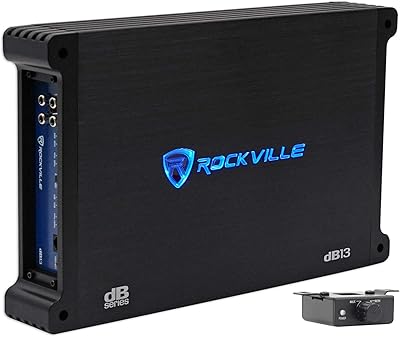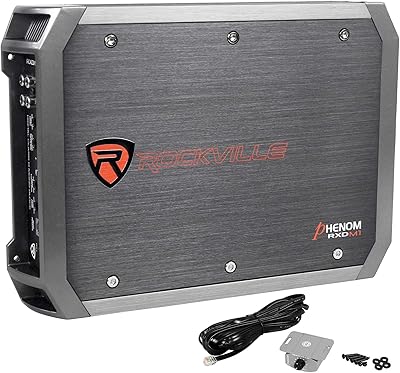

Overview

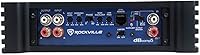
The Rockville dBcomp5 Mono Car Amplifier is a competition-grade mono block built specifically for subwoofer duty — not casual listening, not background music, but serious bass. What sets it apart in a crowded market is its dyno-certified power rating, meaning the numbers on the box have actually been verified rather than inflated for marketing. Running on a high-speed MOSFET power supply and stable down to 1 ohm, this mono amp targets the upper-mid price tier — a sound investment if you are building a real system, but probably overkill if you just want a little extra thump on your daily commute.

Features & Benefits

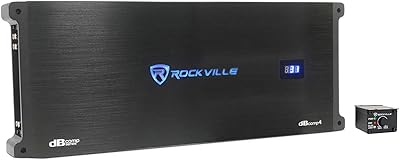
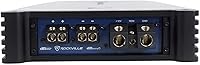
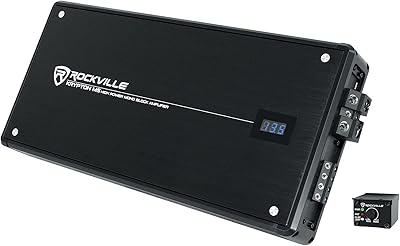
At the core of the dBcomp5 is the ability to push 3500W RMS at 1 ohm — enough headroom to make a large subwoofer genuinely loud without strain. The fully adjustable crossover runs at 24dB per octave, and a built-in subsonic filter covering 15Hz to 55Hz keeps your woofer from chasing frequencies it was never meant to handle. There is also a 12dB bass equalizer onboard, so you can shape the low-end response without bolting on a separate processor. A remote subwoofer control sits on your dash with a clipping indicator — genuinely useful for dialing in the sweet spot. The digital voltage display gives you a real-time window into your electrical system under heavy load.

Best For

This competition amplifier is squarely aimed at SPL builders and bass enthusiasts who need real, verified power — not spec-sheet fiction. If you are running a single large subwoofer or a pair wired down to a 1-ohm load, this amp has the stability and output to keep up. The onboard tuning tools make it appealing to experienced installers who do not want to add a separate equalizer to an already complex build. That said, be honest with yourself: if your car has a stock alternator and basic wiring, this amp will expose those weaknesses fast. It demands a proper electrical system — quality runs, a capable alternator, and ideally a secondary battery if you push it hard.

User Feedback

Across roughly 100 reviews, this mono amp holds a 4-star average, which feels accurate. Buyers who came in prepared — proper wiring, matched subwoofer impedance, solid electrical setup — consistently report that the power output is legitimate and matches the certified rating, which is not a given at this price point. On the other side, several negative reviews trace back to installation missteps or undersized power wiring rather than a faulty unit, though a few long-term reliability concerns do surface. The dash remote gets broadly positive marks for everyday usability. Customer support experiences are mixed, so factor that into your decision if peace of mind after the sale matters to you.

Pros

  • Dyno-certified power rating means the wattage claim is verified, not just marketing copy.
  • Stable at 1 ohm, giving builders flexibility to wire multiple subs without a separate load concern.
  • Built-in crossover, subsonic filter, and bass EQ eliminate the need for an outboard processor.
  • Remote subwoofer control with a clipping indicator makes daily tuning genuinely practical.
  • Onboard voltage display doubles as a real-time health monitor for your electrical system.
  • MOSFET power supply runs efficiently even under sustained high-output conditions.
  • IC-controlled protection circuitry adds a meaningful safety net for the amp and connected gear.
  • Buyers consistently report that real-world output lines up with advertised specs — rare at this price tier.
  • Solid build quality relative to similarly priced competition-focused mono blocks.
  • Surface-mount design keeps installation straightforward for trunk or under-seat builds.

Cons

  • Demands a properly upgraded electrical system — stock wiring and alternators will struggle.
  • At 21.8 pounds and over 27 inches long, fitment can be tight in smaller vehicles.
  • Customer support experiences from Rockville are inconsistent, which matters if something goes wrong post-purchase.
  • Some negative reviews stem from installation errors, making it less forgiving for first-time builders.
  • No multi-channel capability whatsoever — door speakers and tweeters need a completely separate amp.
  • The steep power output may be excessive and wasteful for anyone running a modest single subwoofer setup.
  • Long-term reliability data beyond the first year is limited given the relatively small review pool.
  • Higher electrical infrastructure costs can push the true total cost well above the unit price alone.

Ratings

The scores below reflect an AI-driven analysis of verified global buyer reviews for the Rockville dBcomp5 Mono Car Amplifier, with spam, bot-generated, and incentivized feedback actively filtered out before scoring. Each category is weighted against real-world usage patterns reported by actual owners — from weekend SPL competitors to daily-driver enthusiasts — so both the strengths and the genuine frustrations are represented without sugar-coating.

Verified Power Output
88%
This is where the dBcomp5 earns its strongest buyer praise. Owners who properly wired the amp consistently report that the certified power rating holds up in real use — a meaningful distinction in a category where inflated specs are the norm rather than the exception. For competition builders, that reliability matters enormously.
A handful of buyers who pushed the amp in sustained high-volume sessions noted output seemed to taper slightly under thermal stress, suggesting the peak certified figure requires ideal electrical conditions to sustain. Not a dealbreaker, but worth noting for anyone planning extended SPL runs.
Build Quality
82%
18%
The chassis feels solid and well-constructed for the price tier, with a layout that experienced installers found logical and clean. Heat sinking appears adequate for normal operating conditions, and the terminals and controls have a confident, non-budget feel that matches the mid-to-upper positioning.
A few longer-term owners flagged cosmetic wear around the control knobs after extended use, and the overall finish is functional rather than premium. It is not the most refined-looking amp on a high-visibility install, though for trunk builds hidden behind grilles this is largely irrelevant.
Onboard Tuning Flexibility
91%
Having a fully adjustable crossover, subsonic filter, and 12dB bass EQ built into a single unit removes the need for a separate processor in most builds. Installers appreciated being able to dial in the low-end response precisely without adding cost or complexity, especially on straightforward single-subwoofer setups.
Audiophiles running highly complex multi-driver systems with very specific tuning demands may still find the onboard controls insufficient as a standalone solution. The controls themselves are functional but not the most tactile, making precise incremental adjustments slightly fiddly during installation.
1-Ohm Stability
87%
Running stable at 1 ohm is a core requirement for competition builds and dual-sub configurations wired in parallel, and buyers report the dBcomp5 handles it without triggering protection circuits under normal conditions. This stability gives builders genuine wiring flexibility that lower-rated amps simply cannot offer.
Some buyers who wired aggressively — extremely long runs or lower-quality ground connections — did encounter occasional protection trips at 1 ohm. This is more an installation issue than a design flaw, but it underscores how demanding the amp is of a clean, low-resistance electrical setup.
Remote Sub Control
79%
21%
The dashboard-mounted remote with its built-in clipping indicator gets consistently positive marks from daily drivers who want bass level control without reaching into the trunk. Knowing when the amp is clipping in real time is a practical feature that protects both the amp and the subwoofer during enthusiastic listening.
The remote cable length was flagged by a few buyers as limiting in larger vehicles, and the clipping indicator light was described as difficult to see in bright daylight conditions. For the price, a slightly more refined remote unit would better match the amp's overall capability.
Electrical System Demands
54%
46%
For buyers who came prepared — 0-gauge wiring, upgraded alternator, proper grounding — the amp performed exactly as expected and drew no complaints on the electrical side. The onboard voltage display actively helps owners monitor system health and catch wiring issues before they cause damage.
This is the most consistent source of negative reviews. Buyers who underestimated the power supply requirements ran into voltage sag, protection shutdowns, and subpar performance. The amp is unforgiving of a weak electrical foundation, and the hidden cost of properly supporting it catches many first-time buyers off guard.
Installation Experience
63%
37%
Experienced installers found the layout intuitive, with clearly labeled terminals and logical placement of controls. RCA input and output options add flexibility for complex signal routing, and surface mounting works cleanly on most trunk floors or amp boards without specialized hardware.
Newer builders consistently reported a steeper learning curve than expected, particularly around gain structure and crossover tuning. The amp's size at over 27 inches long also created fitment challenges in compact vehicles, and the 21.8-pound weight makes solo installation awkward in tight spaces.
Thermal Management
74%
26%
Under typical operating conditions — reasonable ambient temperatures with adequate airflow around the unit — the amp runs cool enough that thermal protection rarely activates. The IC-controlled protection system does its job, shutting things down before heat causes lasting damage when airflow is restricted.
Owners who mounted the amp in poorly ventilated enclosures or in vehicles parked in direct sun reported more frequent thermal shutdowns during extended sessions. The heat sink design is adequate but not exceptional, and the amp genuinely needs breathing room to perform consistently.
Protection Circuitry
83%
The multi-mode protection against short circuits, overvoltage, and thermal overload is well-implemented and responsive. Several buyers credited the protection system with saving the amp after wiring errors during initial installation, which speaks to its practical value beyond just being a spec-sheet bullet point.
Occasionally the protection circuit was reported as slightly over-sensitive, triggering briefly at 1 ohm even with clean wiring on particularly cold starts when battery voltage dips momentarily. It self-recovers quickly, but it can be disconcerting for new owners who are not expecting it.
Value for Money
76%
24%
For buyers who factor in the dyno-certified power rating and the built-in tuning suite, the price-to-performance ratio holds up well against comparably rated alternatives. Getting legitimate competition-level output alongside crossover, EQ, and remote control in one package represents solid overall value for informed buyers.
When the full cost of ownership is considered — proper wiring, electrical upgrades, and potentially professional installation — the total spend climbs considerably beyond the unit price. Casual buyers expecting a simple plug-in upgrade are likely to feel the value proposition does not justify what they end up spending.
Customer Support
57%
43%
Some buyers reported satisfactory warranty handling and responsive communication when reaching out to Rockville directly, particularly for straightforward defect claims within the initial ownership period. The brand does have an established presence in the car audio space, which provides some confidence over no-name alternatives.
The customer support experience appears inconsistent across buyers, with a notable cluster of reviews citing slow responses, difficulty processing warranty claims, and limited troubleshooting assistance. For an amp at this price tier, the post-purchase support experience should be more reliable than what the review pool reflects.
Size & Fitment
68%
32%
The generous dimensions are largely a byproduct of the internal components needed to deliver competition-grade power, and trunk builders with dedicated amp racks will find the form factor completely manageable. Surface mounting keeps installation hardware requirements minimal.
At 27.6 inches long and nearly 22 pounds, this mono amp is a physically imposing unit that simply does not fit in compact cars without significant compromise to cargo space or subwoofer enclosure layout. Buyers in hatchbacks or smaller sedans consistently flagged fitment as a genuine obstacle.
Signal Clarity
78%
22%
For a competition-focused mono block, buyers report a clean, low-noise signal that plays well with quality head units and subwoofers. The RCA passthrough is useful for maintaining signal integrity in multi-amp setups, and the crossover roll-off is tight enough to keep unwanted mid-bass bleed minimal.
A small number of buyers noted a faint noise floor on very sensitive subwoofers when gain was set high, though this appeared tied to gain structure errors rather than the amp itself. The signal chain is not audiophile-grade, but it exceeds what most competition and street builds actually require.

Suitable for:

The Rockville dBcomp5 Mono Car Amplifier is the right call for serious bass builders who want verified, high-output power without gambling on inflated specs. SPL competitors running a single large subwoofer or a dual-sub setup wired to a 1-ohm load will find this amp punches exactly where it claims to. Experienced installers who want built-in tuning flexibility — crossover, subsonic filter, and bass EQ all in one unit — will appreciate not needing a separate processor cluttering the trunk. It also makes strong sense for enthusiasts who have already upgraded their electrical system with proper gauge wiring, a high-output alternator, or a secondary battery, because this amp will actually reward that investment. If you take car audio seriously and want a certified power figure you can trust, this mono amp belongs on your shortlist.

Not suitable for:

The Rockville dBcomp5 Mono Car Amplifier is genuinely not the right fit for casual listeners who just want a modest bass upgrade in an otherwise stock vehicle. Running a high-current mono block like this on factory wiring is a recipe for blown fuses, voltage sag, or worse — the electrical demands are real and non-negotiable. If your car still has a base-level alternator and you have not run dedicated power and ground cables, this amp will expose every weak link in that chain before it ever sounds its best. Buyers on a tight overall budget should also weigh the full cost of ownership: proper installation hardware, wiring, and potentially an electrical upgrade can add meaningfully to the total spend. And if you are looking for a multi-channel amp to power door speakers alongside a subwoofer, this is strictly a one-job tool — it does bass, and only bass.

Specifications

  • Brand: Manufactured by Rockville, a brand focused on car audio and professional sound equipment.
  • Model: The model designation is dBcomp5, positioned within Rockville's competition amplifier lineup.
  • Channels: Single-channel mono configuration, designed exclusively for subwoofer or bass driver applications.
  • RMS Power (1Ω): Delivers 3500W RMS at a 1-ohm load, a figure that is dyno-certified rather than self-reported.
  • RMS Power (2Ω): Produces 2200W RMS at a 2-ohm load, offering flexibility depending on subwoofer wiring configuration.
  • Impedance: Rated stable at 1 ohm, allowing builders to wire multiple subwoofers in parallel without instability.
  • Power Supply: Uses a high-speed MOSFET power supply for efficient energy conversion and consistent output under load.
  • Crossover: Fully adjustable low-pass crossover operating at 24dB per octave for precise frequency roll-off control.
  • Subsonic Filter: Built-in subsonic filter adjustable between 15Hz and 55Hz to protect subwoofers from damaging infrasonic frequencies.
  • Bass EQ: Onboard bass equalizer provides up to 12dB of boost or cut for low-frequency tuning without external equipment.
  • Remote Control: Includes a remote dashboard subwoofer level control with a built-in clipping indicator for real-time monitoring.
  • Voltage Display: Features an onboard digital voltage display that shows real-time system voltage during operation.
  • Input/Output: Equipped with RCA line inputs and outputs for flexible signal routing and daisy-chain installation options.
  • Protection: IC-controlled protection circuitry guards against overheating, short circuits, and voltage fluctuations.
  • Operating Voltage: Designed to operate within a 10V to 16V range, compatible with standard 12V automotive electrical systems.
  • Dimensions: Measures 27.6 x 11.5 x 5 inches (L x W x H), requiring adequate trunk or enclosure space for installation.
  • Weight: Weighs 21.8 pounds, reflecting the robust internal components typical of high-output competition amplifiers.
  • Mounting Type: Designed for surface mounting, suitable for trunk floors, amp racks, or custom enclosure panels.

Related Reviews
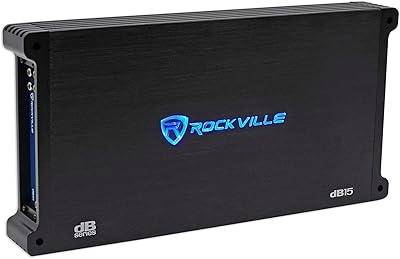
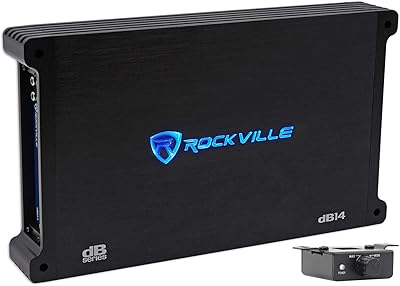
Rockville dB14 Mono Class-D Car Amplifier
74%
83%
Value for Money
78%
Power Accuracy
67%
Build Quality
54%
Long-Term Reliability
86%
Ease of Installation
More
Rockville dB15 Mono Car Amplifier
73%
83%
Value for Money
78%
Bass Output
86%
Ease of Installation
61%
Thermal Management
58%
Power Accuracy
More
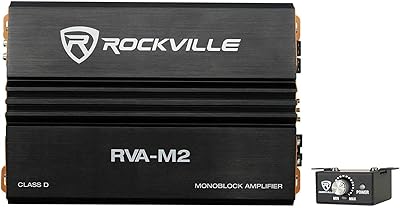
Rockville RVA-M2 Mono Car Amplifier
78%
83%
Value for Money
88%
Power Accuracy
71%
Build Quality
79%
Thermal Management
84%
Filter & Tuning Controls
More
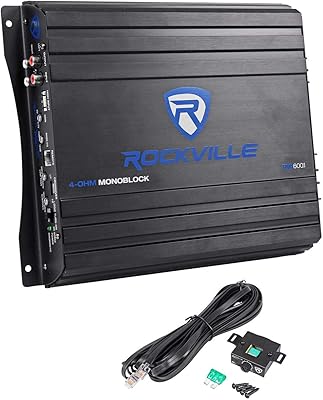
Rockville RVA600.1 Mono Car Amplifier
74%
83%
Value for Money
74%
Sound Quality
88%
Ease of Installation
52%
Power Accuracy
67%
Build Quality
More
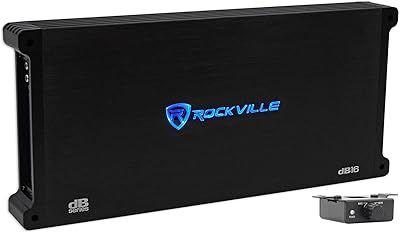
Rockville dB16 Mono Car Amplifier
73%
83%
Bass Output
78%
Value for Money
81%
Ease of Installation
59%
Thermal Management
62%
Power Accuracy
More
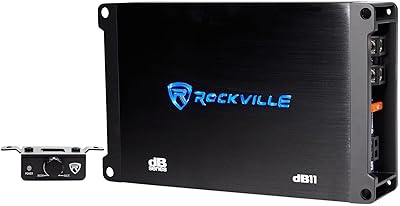
Rockville dB11 1400W Mono Car Amplifier
85%
93%
Bass Performance
70%
Ease of Installation
89%
Compact Design
91%
Sound Clarity
85%
Build Quality
More
Rockville dB13 Mono Car Amplifier
75%
83%
Value for Money
54%
Power Output Accuracy
61%
Thermal Management
88%
Ease of Installation
79%
Onboard Sound Controls
More
Rockville dBcomp4 3000W Mono Car Amplifier
85%
94%
Power Output
91%
Bass Performance
87%
Ease of Installation
89%
Build Quality
67%
Thermal Management
More
Rockville Krypton M5 3000W Mono Car Amplifier
84%
93%
Power Output
92%
Bass Performance
88%
Sound Quality
80%
Ease of Setup
85%
Build Quality
More
Rockville RXD-M1 2000W Mono Car Amplifier
86%
88%
Sound Quality
91%
Power Output
85%
Ease of Installation
87%
Durability & Build Quality
89%
User Control & Adjustments
More

FAQ

This is one of the most common concerns with car amplifiers, and it is a fair one. The dBcomp5 carries a dyno-certified rating, which means the power output has been independently verified rather than just printed on a label. Most buyers who set up the amp correctly report that it performs in line with what is advertised, which puts it ahead of many competitors in this space.

For an amplifier at this power level, you should be running at least 0-gauge power and ground wire — and that is the minimum. A quality big-three upgrade for your vehicle's electrical system is also strongly recommended. Undersized wiring will cause voltage drop, heat, and potentially trigger the amp's protection circuit before it ever reaches peak output.

Technically it will turn on, but you will almost certainly run into problems. A stock alternator is not designed to sustain the current draw a 3500W amp demands at high volume. You will likely see voltage sag, dimming lights, and degraded performance. For best results, pair this with a high-output alternator and consider a secondary battery if you plan to push it hard.

Yes, it runs at 2 ohms as well, delivering 2200W RMS in that configuration. So if you have a single 2-ohm sub or two subs wired to a 2-ohm load, you are still getting serious output — just not the full ceiling the amp is capable of at 1 ohm.

Quite useful, actually. Having a dash-mounted knob lets you dial the bass up or down depending on the music or environment without reaching into the trunk. The clipping indicator built into the remote is a nice touch — it gives you a visual cue when you are pushing the amp too hard, which helps you find the sweet spot without risking distortion or damage.

Not necessarily. The onboard 12dB bass EQ, adjustable crossover, and subsonic filter cover most tuning needs for a subwoofer-focused build. If you are running a competition-level system with highly specific tuning requirements, a dedicated DSP might still make sense, but for the majority of builds this amp has enough onboard control to get great results on its own.

The subsonic filter cuts frequencies below whatever threshold you set — in this case adjustable between 15Hz and 55Hz. Most subwoofers cannot accurately reproduce frequencies much below 20Hz, and trying to do so wastes power and can damage the driver over time. Yes, you should use it. Set it just below the lowest frequency your subwoofer is rated to handle and it will thank you.

The amp is 27.6 inches long, 11.5 inches wide, and 5 inches tall, so it is not a compact unit. You will need to plan the trunk layout carefully, especially if you are also fitting a large subwoofer enclosure. Many installers mount it directly to the enclosure wall or on a dedicated amp rack to keep things organized.

The built-in IC-controlled protection circuitry will shut the amp down before heat causes any internal damage. It will power back on once it cools to a safe temperature. If it is tripping the thermal protection regularly, that is a sign you need better airflow around the unit — do not mount it in a fully enclosed space with no ventilation.

Honestly, probably not as a starting point. This competition amplifier is built for experienced installers and enthusiasts who already understand electrical system requirements, impedance matching, and signal chain tuning. If you are new to car audio, a more modest amp with less demanding power requirements will be easier to install correctly and more forgiving of beginner mistakes. Come back to this one once you have a couple of builds under your belt.