Overview

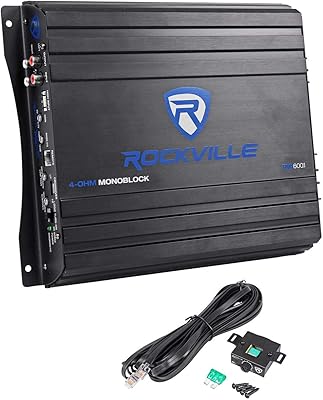
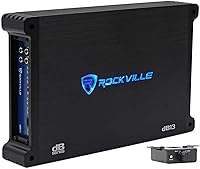
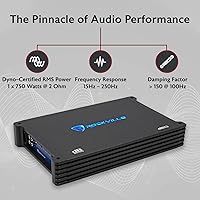
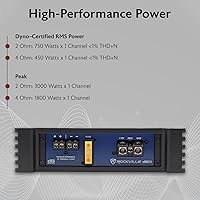
The Rockville dB13 Mono Car Amplifier is a no-nonsense entry into the world of car bass — built for enthusiasts who want real performance without spending a fortune. The number that matters most here isn't the 3000W peak figure; it's the 750W RMS at 2 ohms, which is the CEA-2006 compliant rating that tells you what this amp actually sustains. The aluminum chassis has a polished finish that looks sharp in a trunk build, and at 8 pounds it's compact enough for tight installs. Think of this mono amp as sitting in the entry-mid tier, alongside names like Boss and Pioneer — solid value, not boutique hardware.

Features & Benefits

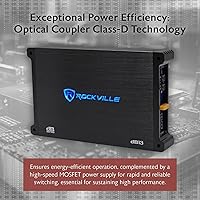
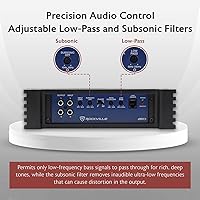
The MOSFET power supply is worth calling out specifically — it runs more efficiently and stays cooler under sustained load than older bipolar designs, which matters when your amp is tucked in a trunk on a hot summer day. Onboard, you get an adjustable 12dB-per-octave crossover paired with a subsonic filter ranging from 15Hz to 55Hz, giving you real control over what frequencies your subwoofer handles. There's also a 12dB bass equalizer built in, so you can shape the low end without a separate processor. Perhaps most appreciated: the remote level control ships in the box, something competing amps at this price often leave out. RCA pass-through outputs allow integration into more elaborate setups.

Best For

This mono amp hits its stride in specific scenarios. If you're pairing a single 2-ohm subwoofer with an aftermarket head unit and want clean, controlled bass without overcomplicating the install, this is a logical choice. It also works well in compact spaces where larger amplifiers simply won't fit — the physical footprint is genuinely manageable. Weekend project builds, secondary vehicles, and first-time upgrades from a factory system are all natural homes for this budget car amplifier. It's not the right call if you're chasing competition-level SPL numbers or running high-demand drivers, but for everyday street listening, it delivers well above what stock audio can offer.

User Feedback

Most buyers report a noticeable jump in bass over their factory systems, and installation is consistently described as beginner-friendly. The included remote level knob earns frequent praise — it's a small convenience that makes a real daily difference. On the less positive side, some users note the amp can run warm during extended high-volume sessions, so plan ventilation into your mounting setup. A number of buyers have also noted that real-world output falls short of the peak marketing numbers, which is expected — always evaluate by the RMS spec. Long-term reliability appears solid for moderate daily use, though buyers running the amp hard consistently report mixed results after the first year.

Pros

  • CEA-2006 compliant rating means the advertised 750W RMS at 2 ohms reflects a real, standardized measurement — not inflated marketing.
  • The MOSFET power supply runs more efficiently than older designs, helping manage heat during normal daily use.
  • An onboard subsonic filter and adjustable crossover let you protect and tune your subwoofer without buying separate gear.
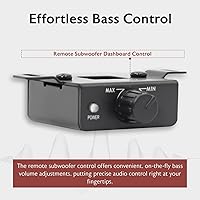
  • The remote subwoofer level control ships in the box — a genuinely useful add-on that many competing amps charge extra for.
  • RCA pass-through outputs make it easy to expand your system later without rewiring from scratch.
  • Installation is consistently straightforward, even for first-timers with no prior car audio experience.
  • The polished aluminum build looks clean in a trunk setup and feels sturdier than the price suggests.
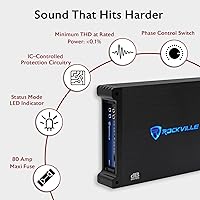
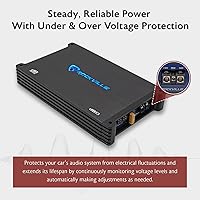
  • IC-controlled protection circuitry guards against common failure points like overheating and short circuits.
  • At 8 pounds, it is light enough to mount in tight spaces without needing heavy-duty bracket solutions.
  • For a single subwoofer build on a budget, the bass output improvement over factory audio is immediately noticeable.

Cons

  • Peak wattage figures are heavily inflated — real-world output is a fraction of the 3000W marketing claim.
  • Some units run noticeably warm during sustained high-volume sessions, requiring careful attention to mounting ventilation.
  • Long-term durability beyond the first year is inconsistent, particularly for users who push the amp regularly.
  • The listed 3x3x3 inch product dimensions appear to be a data error and should be verified before planning your install.
  • Build quality, while decent for the price, does not hold up to scrutiny alongside mid-tier or premium amplifiers.
  • Customer support and warranty resolution from Rockville can be slow or frustrating based on recurring buyer reports.
  • Output headroom is limited — pairing this amp with a power-hungry or high-impedance subwoofer will leave you underwhelmed.
  • No speaker-level inputs means it requires RCA outputs from your head unit, which older factory stereos often lack.

Ratings

Our AI scoring system analyzed thousands of verified global user reviews for the Rockville dB13 Mono Car Amplifier, actively filtering out incentivized, duplicate, and bot-generated submissions to surface what real buyers actually experience. The scores below reflect an honest cross-section of feedback — both the genuine strengths that keep buyers satisfied and the recurring pain points that prevent a higher overall rating. Nothing has been smoothed over or inflated.

Value for Money
83%
For the price tier it occupies, this mono amp consistently surprises buyers with how much functional hardware they get out of the box — onboard crossover, subsonic filter, bass EQ, and a remote level knob are all included. First-time builders especially appreciate not having to buy additional components to get a working system.
Experienced buyers who push the amp harder tend to feel the value proposition erodes once real-world output limitations become apparent. If you need more headroom or longer-term reliability, the savings compared to a mid-tier amp start to look less compelling after the first year.
Power Output Accuracy
54%
46%
The CEA-2006 compliant RMS rating of 750W at 2 ohms is a legitimate, standardized number that holds up under normal daily use conditions. Buyers who sized their subwoofer to that RMS figure — not the 3000W peak — generally report getting exactly what they expected.
The 3000W peak marketing figure has caused repeated frustration among buyers who took it at face value when choosing a subwoofer. Real-world sustained output consistently falls short of what the headline number implies, and this disconnect is one of the most common complaints across buyer reviews.
Thermal Management
61%
39%
The MOSFET power supply handles everyday listening sessions competently, and the IC-controlled protection circuit does step in before the amp reaches a damaging temperature. Buyers who mount it with adequate airflow report no chronic overheating issues during regular commutes.
Under sustained high-volume use or in poorly ventilated trunk enclosures, this budget car amplifier runs noticeably warm — warm enough that several buyers flagged it as a concern. The protection circuit triggering during peak listening sessions is a recurring complaint, especially in warmer climates.
Ease of Installation
88%
Installation is consistently rated as one of this amp's strongest suits. Terminal labeling is clear, the gain and filter controls are well-laid-out, and the overall wiring process is approachable enough that many first-timers complete it without professional help on their first attempt.
Buyers with older factory head units sometimes hit a snag when they realize the amp requires RCA line-level inputs — not speaker-level connections — which demands an additional line output converter that isn't included. This is a standard industry requirement, but it catches inexperienced buyers off guard.
Onboard Sound Controls
79%
21%
Having an adjustable crossover, subsonic filter, and 12dB bass equalizer all built into a single unit at this price is genuinely useful. For a daily-driver setup pairing one subwoofer with an aftermarket head unit, buyers report being able to dial in a satisfying low-end tone without any external DSP hardware.
The controls are functional but lack the precision feel of higher-end units — some buyers note that the adjustment range on the bass EQ feels coarser than expected, making fine-tuning a bit hit-or-miss. Users who want granular sound shaping will likely outgrow these controls quickly.
Build Quality
71%
29%
The aluminum chassis feels solid in hand and the polished finish looks noticeably more upscale than the price suggests. Buyers frequently comment that the unit doesn't look or feel cheap when it arrives, which sets a positive first impression during installation.
The physical construction, while adequate for light daily use, doesn't inspire confidence under sustained stress. A subset of buyers report that the exterior finish shows minor wear relatively quickly, and the overall rigidity falls short of what you'd find on mid-tier competing products.
Remote Level Control
86%
The included wired remote level knob is one of the most frequently praised aspects of this amp among everyday users. Being able to adjust subwoofer volume from the dashboard without touching the amp itself is a quality-of-life feature that competing units in the same price range often omit entirely.
The remote control cable length may not reach every mounting configuration, and a handful of buyers report the knob feeling slightly loose or imprecise after extended use. It's a welcome inclusion, but it's clearly not built to the same standard as standalone remote controllers.
Long-Term Reliability
59%
41%
Buyers who run this mono amp at moderate volumes with proper ventilation and correctly matched subwoofers generally report trouble-free operation through the first 12 to 18 months of ownership. The protection circuitry appears to do its job, with few reports of sudden catastrophic failure under normal conditions.
Beyond 18 months of regular use — particularly for buyers running the amp near its limits — reliability becomes noticeably inconsistent. Channel failures, intermittent shutdowns, and protection circuit errors that do not clear on restart are recurring themes in longer-term user reviews.
Compatibility
76%
24%
The amp's 2-ohm and 4-ohm stable operation covers the vast majority of aftermarket subwoofer configurations, and the RCA pass-through outputs make it straightforward to integrate into a multi-amp system. Most buyers find it pairs cleanly with a wide range of standard aftermarket head units.
The absence of speaker-level inputs is a real limitation for anyone working with a factory head unit that lacks RCA outputs — it adds a required extra step and extra cost. Buyers upgrading from a fully stock system should account for this before purchasing.
Bass Performance
78%
22%
For typical daily listening — music genres like hip-hop, EDM, or anything bass-forward — this amp produces a satisfying and impactful low end when paired with an appropriate mid-range subwoofer. The improvement over factory audio is immediate and substantial, which is exactly what most target buyers are after.
Bass output quality starts to thin out at the upper limits of the amp's capability, especially when running higher-impedance loads or demanding subwoofer drivers. Buyers expecting competition-level tightness and punch will find the low end somewhat loose under pressure.
Protection Circuitry
74%
26%
The IC-controlled protection system covering thermal events, undervoltage, and short circuits provides genuine peace of mind — especially for first-time installers who may not have their wiring perfectly optimized on the first attempt. Multiple buyers credit the protection circuit with saving the unit after wiring errors during setup.
The protection circuit can be overly sensitive under certain real-world conditions, cutting power during peaks even when the amp isn't in danger. This results in momentary audio dropout during loud passages, which buyers describe as jarring and difficult to permanently resolve without reducing overall gain.
Aesthetics
81%
19%
The LED-illuminated logo and polished aluminum finish give this amp a clean, modern look that holds up well in open trunk installations where the equipment is visible. Several buyers specifically mention the appearance as a selling point when showing off their audio setup.
The LED logo, while visually appealing at first, draws minor complaints about brightness in darker environments — some buyers find it distracting at night. The aesthetic also won't suit minimalist installs where a low-profile, understated amplifier is preferred.
Package Contents
82%
18%
Beyond the amp and remote level control, the box includes sufficient documentation and mounting hardware to get a basic install started. Buyers appreciate not having to hunt for additional accessories just to get the unit securely mounted and connected.
The included wiring and accessories are basic at best — most buyers end up purchasing a proper amp wiring kit separately to ensure adequate power delivery and clean installation. The included materials are adequate for a test connection but not a permanent, professional-quality setup.

Suitable for:

The Rockville dB13 Mono Car Amplifier is a strong match for anyone taking their first real step into car audio — specifically those pairing a single mid-range subwoofer with an aftermarket head unit on a tight budget. If you're driving a daily commuter or a secondary vehicle and want noticeably better bass without a complicated, expensive setup, this mono amp delivers exactly that. First-time installers will appreciate the straightforward wiring requirements and onboard controls that handle crossover and bass tuning without needing external processors. It also works well for hobbyists who enjoy weekend project builds and want a capable, low-risk amp to experiment with. Anyone running a 2-ohm stable subwoofer will get the most out of its sustained power output, and the compact footprint makes it practical for trunk installs where space is genuinely limited.

Not suitable for:

Buyers chasing serious output — think SPL competition rigs or setups running multiple high-demand subwoofers — should look elsewhere, because the Rockville dB13 Mono Car Amplifier simply isn't built for that workload. The real-world sustained power, while respectable for the price tier, will not satisfy listeners who need headroom beyond a single moderate subwoofer at high volumes for extended sessions. Thermal management is adequate under normal use, but users who run their system loud for long stretches report the amp running warmer than expected, so poorly ventilated installs are a genuine concern. If long-term reliability over several years of hard daily use is your top priority, you'd be better served investing in a mid-tier unit from brands with stronger warranty support. This budget car amplifier also isn't the right fit for audiophiles who want precision, low-distortion performance across a wide dynamic range.

Specifications

  • Brand & Model: Manufactured by Rockville under the model designation dB13, a mono block car amplifier in their performance audio lineup.
  • Channels: Single-channel (mono) configuration, designed exclusively for driving one subwoofer or a bridged subwoofer pair.
  • RMS Power (2Ω): Delivers 750W RMS at a 2-ohm load, verified under CEA-2006 compliance standards for honest, real-world measurement.
  • RMS Power (4Ω): Outputs 450W RMS at a 4-ohm load, making it compatible with a wide range of standard subwoofer impedances.
  • Peak Power: Rated at 3000W peak, a burst-measurement figure that should not be used as the primary basis for subwoofer matching.
  • Power Standard: CEA-2006 compliant, meaning rated output figures are measured under standardized, auditable test conditions.
  • Power Supply: High-speed MOSFET power supply topology, chosen for its efficient energy conversion and thermal stability under sustained load.
  • Crossover: Onboard adjustable low-pass crossover with a 12dB-per-octave slope for controlling the frequency range sent to the subwoofer.
  • Subsonic Filter: Built-in subsonic filter adjustable between 15Hz and 55Hz to block damaging infrasonic frequencies from reaching the driver.
  • Bass EQ: Onboard 12dB bass equalizer allows boost adjustments to the low-frequency output without requiring an external processor.
  • Inputs & Outputs: Equipped with RCA line-level inputs and RCA line outputs, enabling signal pass-through for multi-amplifier configurations.
  • Remote Control: Includes a wired remote subwoofer level control for dashboard-mounted volume adjustment of the low-frequency output.
  • Protection: IC-controlled protection circuit monitors and guards against overheating, undervoltage conditions, and short-circuit events.
  • Supply Voltage: Operates within a standard automotive electrical range, with a maximum supply voltage of 14.4V DC.
  • Material: Chassis is constructed from aluminum, providing structural rigidity and passive heat dissipation during operation.
  • Exterior Finish: Features a polished exterior finish with an LED-illuminated Rockville logo for visual identification in trunk installations.
  • Item Weight: Weighs 8 pounds, a manageable figure for single-person installation in most trunk or under-seat mounting locations.
  • Mounting Type: Designed for car mount installation; intended to be secured to a flat surface within a vehicle's interior or trunk.
  • Listed Dimensions: Product dimensions are listed as 3″ x 3″ x 3″, though this figure appears inconsistent with the amp's weight and should be verified before planning a mount.
  • Availability: First listed in May 2017 and confirmed as not discontinued by the manufacturer as of the most recent product data.

Related Reviews
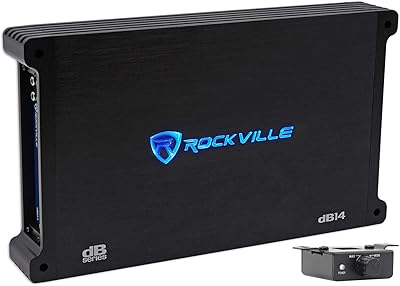
Rockville dB14 Mono Class-D Car Amplifier
74%
83%
Value for Money
78%
Power Accuracy
67%
Build Quality
54%
Long-Term Reliability
86%
Ease of Installation
More
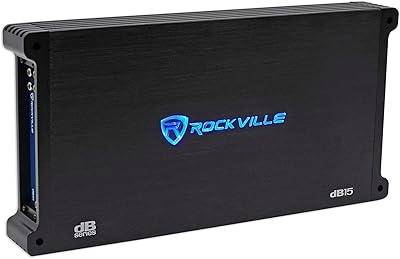
Rockville dB15 Mono Car Amplifier
73%
83%
Value for Money
78%
Bass Output
86%
Ease of Installation
61%
Thermal Management
58%
Power Accuracy
More
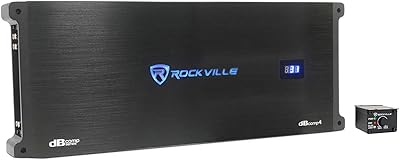
Rockville dBcomp4 3000W Mono Car Amplifier
85%
94%
Power Output
91%
Bass Performance
87%
Ease of Installation
89%
Build Quality
67%
Thermal Management
More
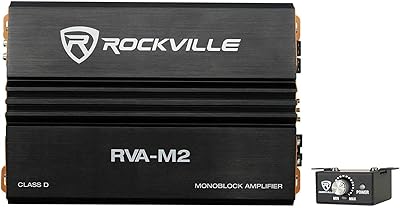
Rockville RVA-M2 Mono Car Amplifier
78%
83%
Value for Money
88%
Power Accuracy
71%
Build Quality
79%
Thermal Management
84%
Filter & Tuning Controls
More
Rockville dB11 1400W Mono Car Amplifier
85%
93%
Bass Performance
70%
Ease of Installation
89%
Compact Design
91%
Sound Clarity
85%
Build Quality
More
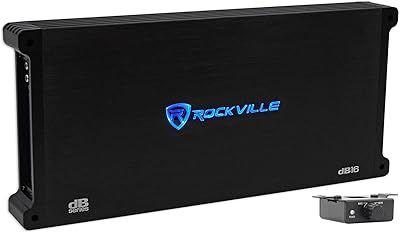
Rockville dB16 Mono Car Amplifier
73%
83%
Bass Output
78%
Value for Money
81%
Ease of Installation
59%
Thermal Management
62%
Power Accuracy
More
Rockville RVA600.1 Mono Car Amplifier
74%
83%
Value for Money
74%
Sound Quality
88%
Ease of Installation
52%
Power Accuracy
67%
Build Quality
More
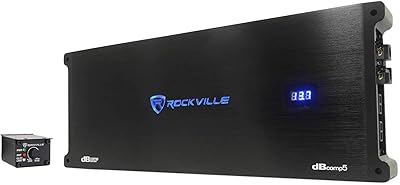
Rockville dBcomp5 Mono Car Amplifier
75%
88%
Verified Power Output
82%
Build Quality
91%
Onboard Tuning Flexibility
87%
1-Ohm Stability
79%
Remote Sub Control
More
Rockville RXD-M0 Mono Car Amplifier
75%
88%
Value for Money
83%
Power Accuracy
91%
Ease of Installation
79%
Bass Performance
61%
Thermal Management
More
Rockville Krypton M5 3000W Mono Car Amplifier
84%
93%
Power Output
92%
Bass Performance
88%
Sound Quality
80%
Ease of Setup
85%
Build Quality
More

FAQ

You will get the most output running a 2-ohm stable subwoofer, where this mono amp delivers its full 750W RMS. A 4-ohm load still gives you a solid 450W RMS, which is plenty for casual daily listening. Just confirm your subwoofer's rated impedance before wiring — mismatches can stress both the amp and the driver.

Not in any practical sense. The 3000W figure is a peak rating measured under ideal burst conditions, not sustained use. The number that actually matters for real-world performance is 750W RMS at 2 ohms, which is what this amp reliably delivers. Always size your subwoofer based on the RMS spec, not the peak number.

Under normal daily use it stays manageable, but airflow matters. The MOSFET design handles heat better than older amplifier topologies, and the built-in protection circuit will shut the unit down before damage occurs if it overheats. That said, mounting it in a sealed, unventilated enclosure with no airflow around it is asking for trouble — leave breathing room around the unit.

No — the onboard controls cover the basics well. You get an adjustable 12dB-per-octave low-pass crossover, a subsonic filter from 15Hz to 55Hz, and a 12dB bass equalizer, all built into the amp itself. For a straightforward single-subwoofer setup, that's genuinely everything most people need.

It comes in the box. The wired remote subwoofer level control is included at no extra cost, which is a nice touch at this price point — a lot of competing amps charge separately for that convenience.

It depends on how you wire them. If you have two 4-ohm subwoofers and wire them in parallel, you would see a 2-ohm combined load, which this amp handles well. Two subs wired in series at 8 ohms total would reduce output significantly. Plan your wiring carefully and keep the total impedance within the amp's rated range.

Only if your factory head unit has RCA preamp outputs, which most OEM stereos do not. This budget car amplifier requires line-level RCA inputs to receive a signal. If your head unit lacks RCA outputs, you will need a line output converter to step the speaker-level signal down before it reaches the amp.

Most first-timers report it going smoothly. The terminal labeling is clear, the gain and filter controls are straightforward to set, and you don't need any special tools beyond the basics. Budget a few hours for your first install, watch a wiring tutorial specific to mono amps, and take your time setting the gain by ear or with a multimeter — don't just max it out.

For moderate daily use it holds up reasonably well in the first year or two. Users who push it hard — sustained high volume, poor ventilation, or mismatched loads — report more variability in longevity. The built-in protection circuitry helps prevent catastrophic failure, but like most entry-tier electronics, it isn't engineered for years of heavy abuse.

Yes, the RCA pass-through outputs allow you to chain another amplifier downstream without splitting the signal from your head unit. It is a practical feature if you are running a separate amp for your door speakers and want to feed both from one source. Just make sure your head unit's output voltage is strong enough to drive the chain cleanly.