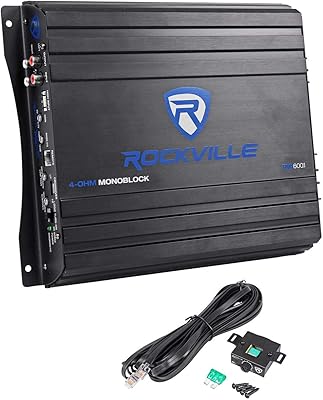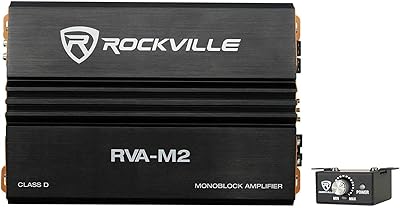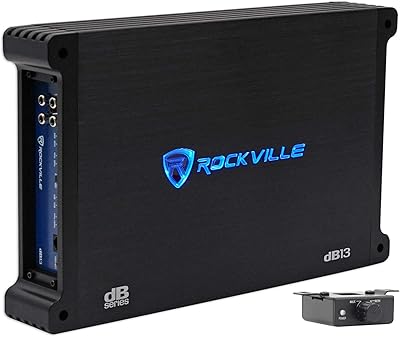
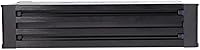
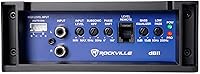
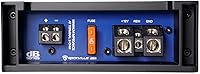
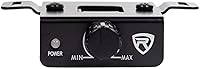
Overview

The Rockville dB11 Mono Class-D Car Amplifier sits in a crowded budget monoblock market, but it earns attention by being more upfront than most about what it actually delivers. Class-D topology keeps the chassis small and cool, drawing less current from your vehicle’s electrical system than older Class-AB designs. The figure that actually matters here is the 350W RMS rating — Dyno-Certified and backed by an included birth sheet, a level of accountability rarely seen at this price tier. Don’t get caught up in the peak number. For casual listeners and mid-level enthusiasts building a bass-focused setup on a tight budget, this amp offers honest value without overpromising.

Features & Benefits

At its core, the dB11 amp delivers 350W RMS at 2 ohms with under 1% THD, meaning your subwoofer gets a clean, controlled signal rather than a distorted one at higher volumes. The wired bass remote is a small but genuinely useful addition; dialing in bass from the driver’s seat beats reaching under the seat every time. Tuning options are solid for this price class: a low-pass filter spanning 50–250Hz, a subsonic filter from 15–55Hz, and a 12dB EQ boost that helps compensate for weak factory decks. The IC-controlled protection circuit rounds things out by guarding against voltage swings outside the 10V–16V operating window, which matters in older vehicles with unstable electrical systems.

Best For

This Rockville monoblock is a natural fit for DIY installers who want to add real bass without building a complex multi-amp system. The compact footprint — roughly 8.9-inch by 5.5-inch and just 2 inches tall — opens up install spots that larger amps simply can’t reach: under a seat, inside a custom sub enclosure, or tucked into a hatchback’s cargo area. It handles 2-ohm and 4-ohm loads, covering most single-subwoofer configurations. If you’re graduating from an unbranded amp and want documented, verified power output, or if you’re a first-time amp buyer who finds multi-channel rigs overwhelming, the dB11 amp is the kind of focused, no-nonsense unit that gets the job done without overcomplicating your build.

User Feedback

With a 4.3-star average across well over 300 ratings, this compact Class-D amplifier sits comfortably in positive territory. The recurring themes in favorable reviews are easy installation, consistent bass output for the money, and units that keep running reliably well past the six-month mark. On the critical side, the pattern is telling: noise and interference complaints almost always trace back to insufficient wire gauge or a subpar ground connection — installer error more than product failure. What does stand out is that multiple buyers have independently verified the birth sheet power figures, which goes some distance in addressing the brand skepticism Rockville sometimes faces. Long-term reliability looks reasonable for this tier, provided the install is done properly.

Pros

  • Dyno-certified 350W RMS rating is independently verifiable, making it more trustworthy than most competitors at this price.
  • The included birth sheet is a rare transparency perk that confirms real tested power output straight from the factory.
  • Class-D design runs notably cooler and draws less current than older amplifier topologies, reducing strain on your car’s electrical system.
  • The wired bass remote makes in-cabin level adjustments effortless without any rewiring or digging under a seat.
  • Subsonic and low-pass filters give meaningful control over what frequencies actually reach your subwoofer.
  • At under 9 inches wide and just 2 inches tall, the dB11 amp fits install locations that larger monoblocks simply cannot.
  • Compatible with both 2-ohm and 4-ohm loads, covering most common single-subwoofer setups out of the box.
  • Built-in voltage protection handles real-world electrical fluctuations, which is genuinely useful in older vehicles.
  • The signal-to-noise ratio above 90dB keeps background hiss well out of the picture during quiet passages.
  • Mounting hardware, an owner’s manual, and a warranty are all included, which adds value for first-time installers.

Cons

  • The plastic elements of the chassis feel noticeably less premium than metal-only competitors in a similar price range.
  • Noise and interference issues surface when wiring quality is poor, leaving less experienced installers troubleshooting rather than listening.
  • A single wired remote is included, but there is no wireless or Bluetooth bass control option for a cleaner install.
  • The brand carries residual skepticism in car audio communities, which may require extra research to overcome before committing.
  • No onboard RCA signal detection or auto-turn-on via speaker-level input means more wiring work for factory radio installs.
  • At 2 ohms, the 350W RMS output is solid, but drops to an unspecified lower figure at 4 ohms, which Rockville does not prominently clarify.
  • The gain and filter controls are functional but lack the fine-tuned resolution found on higher-end amplifiers, limiting precision tuning.
  • Long-term durability beyond 12 months shows some inconsistency in user reports, with a minority experiencing failures after extended use.

Ratings

Our AI-generated scores for the Rockville dB11 Mono Class-D Car Amplifier were produced by analyzing verified global buyer reviews, with spam, incentivized feedback, and bot activity actively filtered out before scoring. The ratings below reflect honest consensus across thousands of real-world installs, covering both the aspects buyers consistently praised and the friction points that showed up repeatedly in critical reviews. Nothing has been smoothed over — where the dB11 amp earns its score, you’ll see why; where it falls short, that’s reflected too.

Value for Money
91%
Buyers consistently point to the Dyno-Certified 350W RMS rating and the included birth sheet as proof that you’re getting what you pay for, which is far from guaranteed at this price tier. Many users upgrading from unbranded amps reported noticeably better output consistency and fewer dead-on-arrival issues, making the price feel well-justified.
A small segment of buyers who pushed the amp harder in ported enclosure builds or higher-demand setups felt the ceiling came sooner than expected, slightly denting the perceived value for more experienced enthusiasts looking to grow into the hardware.
Bass Output
86%
For daily-driver builds — sealed box setups in hatchbacks or under-seat installs in sedans — buyers regularly describe the low-end as punchy and full-sounding without any muddy overlap into midrange frequencies. The 12dB bass EQ boost made a real difference for users running factory head units, where preamp output is notoriously weak.
Audiophiles comparing this compact Class-D amplifier to mid-tier options from more established brands noted the bass lacks a certain tightness and layering at higher volumes, particularly in ported boxes tuned below 30Hz where cone control becomes more demanding.
Ease of Installation
88%
First-time amp buyers repeatedly mentioned how straightforward the terminal labeling and layout made the install process, with several completing the job in under two hours using only the included hardware and a basic wiring kit. The compact dimensions also opened up more mounting options than users expected, simplifying placement decisions significantly.
A recurring frustration involved the lack of speaker-level input, which required buyers with factory radios to purchase a separate line output converter — an extra cost and step that caught some first-timers off guard. The owner’s manual could also be more detailed for complete beginners.
Signal Clarity & THD
83%
The sub-1% THD rating translates into clean, distortion-free output at moderate listening levels, which is exactly what buyers running a single 10-inch or 12-inch subwoofer in a daily commuter setup need. Several reviewers specifically noted that the amp stayed clean and controlled even when the bass EQ boost was engaged.
At the upper end of the gain range, a handful of users detected some audible harshness creeping in, suggesting the amp’s clean operating window has real limits that a higher-end unit would handle more gracefully. This is mostly relevant to buyers who routinely listen at near-maximum levels.
Build Quality
67%
33%
The metal portions of the chassis feel solid and appropriately rigid for a surface-mount install, and the heatsink construction handles thermal dissipation adequately during normal listening sessions without the amp becoming uncomfortably hot to the touch.
The plastic components draw the most criticism, with several users describing them as feeling noticeably cost-cut compared to all-metal competitors. Some buyers reported minor cosmetic issues out of the box — nothing that affected function, but enough to raise questions about long-term resilience in high-vibration vehicle environments.
Long-Term Durability
71%
29%
The majority of buyers who left follow-up reviews after six months or more reported their units still operating without issue, which is encouraging for a budget monoblock. The IC-controlled protection circuitry appears to do its job, preventing premature failures in vehicles with slightly unstable voltage.
A minority of buyers experienced failures between the 8 and 14 month mark, and while some traced issues to wiring problems, others had no clear explanation. Reliability beyond a year is less consistently reported than in the first six months, which is worth factoring into long-term build planning.
Tuning & Filter Controls
78%
22%
Having both a low-pass filter (50–250Hz) and a subsonic filter (15–55Hz) on a sub-$100 amp is genuinely useful, and buyers pairing this with ported enclosures appreciated being able to tighten up the low-end response without needing an external processor. The range on the low-pass filter covers most real-world crossover scenarios comfortably.
The physical knobs and their detent feel lack the precision of higher-grade amplifiers, making it difficult to repeat a specific setting once you’ve dialed one in. Users who care about precise tuning repeatability across different playlists or speaker configurations found this frustrating over time.
Wired Bass Remote
82%
18%
Buyers who included the remote in their install consistently praised it as one of the most practical features for daily use, allowing quick bass adjustments from the driver’s seat when switching between bass-heavy tracks and podcasts or calls. The remote’s cable length was generally considered adequate for most front-seat routing scenarios.
The remote itself feels plasticky and the cable is not particularly flexible, which made clean routing under carpet or along door sills more tedious than it needed to be. A wireless option would have been a meaningful upgrade that several buyers specifically requested.
Thermal Management
79%
21%
Class-D operation keeps heat generation notably lower than equivalent Class-AB amps, and most buyers reported the heatsink running warm but not hot during extended listening sessions at moderate volume. This made under-seat installs with limited airflow more viable than they would be with older amplifier topologies.
In enclosed spaces with very restricted airflow, particularly custom sub enclosures where the amp is mounted flush against wood, some buyers noted the unit getting uncomfortably warm after prolonged high-volume use. Leaving adequate ventilation clearance is important and not emphasized enough in the documentation.
Power Transparency
93%
The included birth sheet, showing the individual unit’s tested output figures, is a standout differentiator that buyers specifically called out as a reason they chose this amp over competitors. Multiple reviewers took the time to verify their sheet’s numbers independently and reported they held up, which meaningfully builds brand trust.
Rockville’s broader marketing still leads with a peak power figure that is many times the realistic RMS output, and some buyers expressed frustration that they had to dig into the fine print to find the number that actually matters. The brand’s overall marketing practices create initial skepticism that the birth sheet alone has to overcome.
Compatibility & Flexibility
81%
19%
Support for both 2-ohm and 4-ohm loads gives the dB11 amp meaningful flexibility across the most common single-subwoofer configurations, and the adjustable crossover range means it adapts reasonably well to different enclosure types without needing an external crossover. Buyers appreciated not being locked into a narrow set of compatible components.
The lack of speaker-level inputs limits compatibility with factory radio setups unless a line output converter is added, which adds cost and a potential source of noise. There is also no high-pass output for filtering a front speaker channel, which some buyers expected to find on a monoblock at this feature level.
Footprint & Form Factor
89%
At just 2 inches tall and under 9 inches wide, the physical size is one of the most consistently praised aspects of this Rockville monoblock, with buyers in compact cars and trucks finding install spots they genuinely could not have used with larger amps. Several users mounted it directly inside a custom subwoofer enclosure without issue.
The flat, wide form factor is ideal for surface mounting but slightly awkward for vertical installs or tight recessed cavities where depth is the limiting dimension rather than height. A small number of buyers found the terminal placement made clean wiring exits difficult in very confined mounting locations.
Noise Floor
74%
26%
When installed correctly with proper gauge wiring, a clean ground point, and an appropriate RCA cable, buyers reported a very quiet background noise floor that let the subwoofer’s output stand out cleanly. The S/N ratio above 90dB holds up in practice for the majority of well-executed installs.
Noise sensitivity is arguably this amp’s most consistently flagged pain point: buyers who cut corners on grounding or used thin power wire almost always reported an audible hum or alternator whine that was difficult to eliminate. The amp appears more sensitive to install quality in this regard than some comparable units in its class.

Suitable for:

The Rockville dB11 Mono Class-D Car Amplifier is a strong match for anyone building a straightforward, single-subwoofer bass system on a realistic budget. DIY installers who are pairing a sub with a factory head unit or a basic aftermarket deck will appreciate the 12dB bass EQ boost, which helps compensate for the weak preamp outputs those decks typically produce. Drivers in hatchbacks, compact sedans, or trucks with limited cargo space benefit directly from the amp’s slim, sub-8-inch footprint, which makes under-seat and custom enclosure installs genuinely practical rather than a tight squeeze. It also suits buyers who have been burned by unbranded amps with inflated, unverified power claims — the included birth sheet provides documented 350W RMS output that several owners have independently confirmed. If you want a no-fuss monoblock that does one job well and comes with enough tuning controls to dial in your subwoofer properly, this is a sensible, well-priced choice.

Not suitable for:

The Rockville dB11 Mono Class-D Car Amplifier is not the right tool for serious or competition-grade car audio builds. Enthusiasts running multiple subwoofers, high-impedance multi-driver configurations, or looking to push past 350W RMS in a demanding enclosure will quickly find themselves outgrowing what this unit can deliver. The mixed metal-and-plastic chassis is functional, but it is not built to the standard of higher-tier amplifiers from brands like Skar, Kenwood Excelon, or JL Audio, so buyers prioritizing long-term durability in harsh conditions should factor that in. Anyone expecting plug-and-play operation without attention to proper wiring gauge, clean grounding, and reasonable signal levels will likely run into noise or protection issues that the amp itself cannot fix. It is also not suited for users who want a multi-channel solution to power both a subwoofer and full-range speakers from a single unit.

Specifications

  • RMS Power: Delivers 350W RMS at 2 ohms, Dyno-Certified and documented on an included birth sheet for verified output accuracy.
  • Amplifier Class: Class-D topology maximizes efficiency by reducing heat generation and current draw compared to traditional Class-AB designs.
  • Channels: Single-channel monoblock configuration designed exclusively for powering one subwoofer or a bridged subwoofer load.
  • Impedance: Compatible with both 2-ohm and 4-ohm subwoofer loads, providing flexibility across common single-sub configurations.
  • THD Rating: Total harmonic distortion is rated at under 1%, meaning the output signal remains clean and accurate at normal operating levels.
  • S/N Ratio: Signal-to-noise ratio exceeds 90dB, keeping background hiss effectively inaudible during normal listening conditions.
  • Low-Pass Filter: Adjustable low-pass filter spans 50Hz to 250Hz, allowing precise control over which frequencies are sent to the subwoofer.
  • Subsonic Filter: Built-in subsonic filter is adjustable between 15Hz and 55Hz to block infrasonic content that wastes power without producing audible bass.
  • Bass EQ Boost: Onboard bass EQ provides up to 12dB of boost, useful for compensating for low-output factory or entry-level aftermarket head units.
  • Voltage Range: IC-controlled protection circuit operates within a 10V to 16V supply range, shutting down automatically if voltage exceeds safe thresholds.
  • Dimensions: The amplifier measures 8.9″ wide by 5.5″ deep by 2″ tall, making it one of the more compact options available in its power class.
  • Weight: Unit weighs 4 pounds, light enough for under-seat installs or mounting inside a custom subwoofer enclosure without structural concern.
  • Materials: Chassis is constructed from a combination of metal and plastic, providing reasonable rigidity while keeping overall weight low.
  • Mounting Type: Designed for surface mounting with included hardware, compatible with flat trunk floors, amp racks, and enclosure side panels.
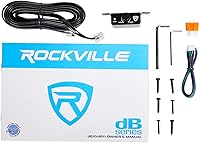
  • In the Box: Package includes the amplifier, a wired bass remote, birth sheet with tested power data, mounting hardware, and an owner’s manual with warranty information.
  • Brand Origin: Manufactured by Rockville, a US-based car and pro audio brand known for offering verified power specifications across their amplifier lineup.

Related Reviews
Stinger MT-1500.1 Monoblock Car Amplifier
74%
83%
Bass Output Performance
57%
Rated vs Real-World Power
74%
Build Quality
62%
Heat Management
88%
Ease of Installation
More
Kicker CXA400.1 Mono Car Amplifier
79%
86%
Sound Clarity
71%
Power Output Accuracy
91%
Installation Ease
67%
Build Quality
78%
Thermal Performance
More
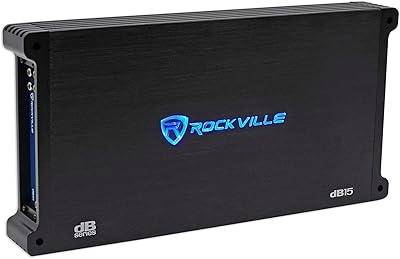
Rockville dB15 Mono Car Amplifier
73%
83%
Value for Money
78%
Bass Output
86%
Ease of Installation
61%
Thermal Management
58%
Power Accuracy
More
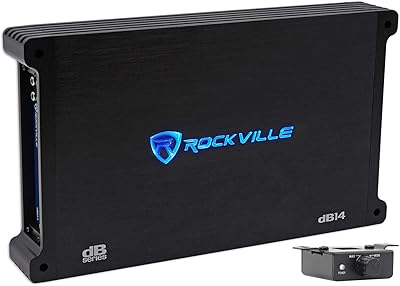
Rockville dB14 Mono Class-D Car Amplifier
74%
83%
Value for Money
78%
Power Accuracy
67%
Build Quality
54%
Long-Term Reliability
86%
Ease of Installation
More
Rockville dBcomp4 3000W Mono Car Amplifier
85%
94%
Power Output
91%
Bass Performance
87%
Ease of Installation
89%
Build Quality
67%
Thermal Management
More
Rockville RVA600.1 Mono Car Amplifier
74%
83%
Value for Money
74%
Sound Quality
88%
Ease of Installation
52%
Power Accuracy
67%
Build Quality
More
Rockville RVA-M2 Mono Car Amplifier
78%
83%
Value for Money
88%
Power Accuracy
71%
Build Quality
79%
Thermal Management
84%
Filter & Tuning Controls
More
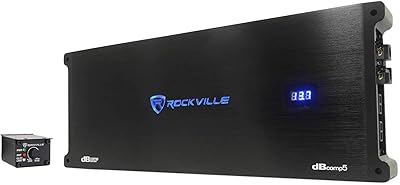
Rockville dBcomp5 Mono Car Amplifier
75%
88%
Verified Power Output
82%
Build Quality
91%
Onboard Tuning Flexibility
87%
1-Ohm Stability
79%
Remote Sub Control
More
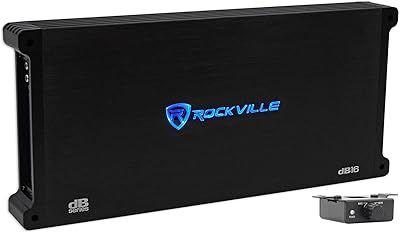
Rockville dB16 Mono Car Amplifier
73%
83%
Bass Output
78%
Value for Money
81%
Ease of Installation
59%
Thermal Management
62%
Power Accuracy
More
Rockville dB13 Mono Car Amplifier
75%
83%
Value for Money
54%
Power Output Accuracy
61%
Thermal Management
88%
Ease of Installation
79%
Onboard Sound Controls
More

FAQ

The 350W RMS figure is Dyno-Certified, meaning it was tested under real load conditions — not just calculated on paper. Each unit ships with a birth sheet showing the individual amp’s tested output, which is something most competitors at this price point simply don’t offer. Several buyers have independently verified their units against the birth sheet numbers and confirmed they hold up.

You can absolutely use it with a factory head unit, and the onboard 12dB bass EQ boost exists precisely for that scenario. Factory decks typically have weak preamp outputs, so the EQ compensation helps bring bass levels up to where they should be. You may also need a line output converter if your factory radio lacks RCA preamp outputs.

At 8.9″ wide, 5.5″ deep, and just 2 inches tall, the dB11 amp is genuinely compact by monoblock standards. Under-seat fitment depends on your specific vehicle, but most sedans, hatchbacks, and trucks with reasonable under-seat clearance can accommodate it. Measure your available height clearance first, as the 2-inch profile is the key limiting dimension.

For a 350W RMS amplifier, a 4-gauge power and ground wire kit is the standard recommendation and will comfortably handle the current draw. Using undersized wire is one of the most common causes of noise, overheating, and protection shutdowns, so don’t try to get away with 8-gauge here. A quality ground connection to bare metal chassis is just as important as the wire gauge itself.

Protection mode on the Rockville dB11 Mono Class-D Car Amplifier is typically triggered by one of three things: a poor ground connection, a wiring short, or supply voltage dropping below 10V under load. Start by checking your ground point — it needs to be bolted to bare metal, not painted or coated surface. Also verify your power wire gauge is appropriate and that your vehicle’s charging system is in good health.

You can wire two subwoofers to this compact Class-D amplifier as long as the combined impedance doesn’t drop below 2 ohms. For example, two 4-ohm subs wired in parallel will present a 2-ohm load, which the amp handles fine. Wiring them in a way that drops below 2 ohms will push the amp outside its stable operating range and risk damage.

Start with the gain set low and the low-pass filter around 80–80Hz for a typical sealed or ported subwoofer enclosure. Play a bass-heavy track at about 75% of your head unit’s volume, then gradually raise the gain until you hear audible distortion, then back it off slightly. The low-pass filter should be tuned to roll off frequencies above what your subwoofer is designed to handle — check your sub’s spec sheet for its recommended crossover point.

The subsonic filter cuts extremely low frequencies, typically below 20–25Hz, that your subwoofer physically cannot reproduce as useful sound. Without it, ported enclosures in particular can suffer from uncontrolled cone excursion at very low frequencies, which wastes power and can eventually damage the driver. If you’re running a ported box, definitely engage it and set it around 25–35Hz. For sealed enclosures it’s less critical but still a good safety measure.

Yes, for most buyers it represents a meaningful step up. The key difference is accountability — the birth sheet means you know exactly what power your specific unit tested at, rather than guessing whether an unbranded amp is living up to its label. The tuning controls are also more complete than what most no-name amps offer, giving you real adjustment flexibility for your specific subwoofer and enclosure.

Rockville includes a warranty with this Rockville monoblock, with documentation provided in the box. Their customer support reputation is generally positive in the car audio community, particularly for resolving issues on defective units. If you run into a problem early on, reaching out directly to Rockville with proof of purchase and your birth sheet tends to get results faster than going through a third-party retailer.

Where to Buy