Overview

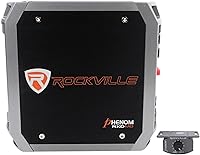
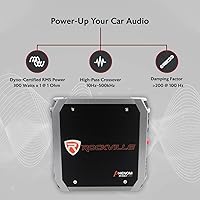
The Rockville RXD-M0 Mono Car Amplifier has carved out a quiet reputation in the budget car audio space since its launch back in 2016. It's a single-channel, Class-D design built specifically for subwoofer duty — not a do-everything amp, but it doesn't pretend to be. What sets it apart from many similarly priced rivals is the dyno-certified power rating, which brings a layer of accountability that's genuinely rare at this price point. The advertised 1200W figure is peak power; the more meaningful number is 300W RMS at 1 ohm, which is still plenty for most mid-size subs. Compact enough to tuck under a seat, it's a practical starting point for anyone building their first bass setup.

Features & Benefits

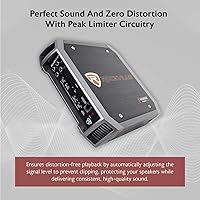
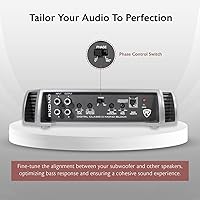
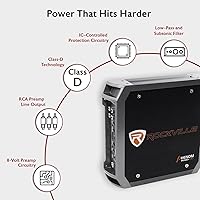
This mono amp gives you more tuning control than you'd expect at this price. The adjustable crossover runs at 12dB per octave, and the subsonic filter sweeps from 15Hz up to 55Hz — useful for protecting ported enclosures from damaging low-frequency excursions. A 12dB bass EQ adds another layer of shaping without needing external processing. The MOSFET power supply handles heat reasonably well under sustained listening, and the IC-controlled protection circuitry covers the usual failure points: thermal shutdown, short circuits, and voltage irregularities. RCA inputs and outputs mean you can loop this Rockville amplifier into a larger setup if you expand later. The included remote level control is a small but genuinely handy addition.

Best For

This subwoofer amp makes the most sense for first-time builders who want solid bass without the complexity or cost of higher-end options. If you're running a single sub — especially one wired to a 1-ohm load — this amp suits that pairing well. It also fits naturally in compact vehicles or any install where mounting space is a real constraint. Listeners who want to tune their bass without diving into DSP menus will appreciate the onboard crossover and EQ controls. For the DIY crowd, the straightforward input and output layout means you won't spend hours troubleshooting a basic wiring job. No frills, no fuss — just a capable single-channel amp at an accessible price point.

User Feedback

Buyers consistently highlight the easy installation process and honest power output as standout positives — most report the amp performs close to what Rockville claims, which isn't always the case in this segment. The value-for-money perception runs strong among first-time users. That said, long-term reliability draws more mixed opinions. Some users report no issues after extended use, while others mention concerns around heat management during prolonged high-volume sessions. A handful flag that the remote control feels cheap relative to the rest of the unit. Compared to similarly priced alternatives, most buyers seem satisfied with the trade-offs — but those pushing the amp hard on a regular basis may want to factor thermal performance into their decision.

Pros

  • Dyno-certified power ratings mean the advertised specs are more trustworthy than most budget competitors.
  • 300W RMS at 1 ohm delivers genuinely satisfying bass for everyday street listening.
  • The onboard subsonic filter and adjustable crossover give real tuning flexibility without extra gear.
  • Class-D efficiency keeps power draw reasonable and the unit relatively cool under normal use.
  • Compact dimensions make it easy to mount in tight spaces where larger amps simply won't fit.
  • RCA loop output allows easy expansion if you decide to add more amplifiers later.
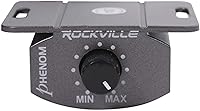
  • The included remote level control is a practical convenience that many amps at this price skip.
  • IC-controlled protection circuitry adds a meaningful safety net against the most common failure points.
  • Installation is consistently praised as straightforward, even for first-timers tackling their own wiring.
  • Strong value-for-money perception among buyers who compare it honestly against similarly priced rivals.

Cons

  • Long-term reliability under heavy, sustained use remains a recurring concern in user feedback.
  • The remote subwoofer control feels noticeably cheap and may not hold up well over time.
  • Heat management can become an issue during extended high-volume listening sessions.
  • At 150W RMS into 4 ohms, output headroom is limited for higher-impedance subwoofer setups.
  • The 1200W peak power figure is marketing language — real-world output is considerably more modest.
  • No built-in speaker-level inputs, which limits compatibility with factory head units lacking RCA outputs.
  • Build quality on some external components does not fully match the core amplifier performance.
  • Buyers expecting high-SPL or competition-level results will quickly outgrow this Rockville amplifier.
  • Limited headroom means pushing the amp near its ceiling regularly may shorten its lifespan.
  • User experiences with 1-ohm stability over long sessions are inconsistent across reported feedback.

Ratings

The scores below reflect our AI-driven analysis of verified global user reviews for the Rockville RXD-M0 Mono Car Amplifier, with spam, bot-generated, and incentivized submissions actively filtered out before scoring. Each category is rated on real-world buyer sentiment, balancing genuine praise against recurring frustrations without glossing over either side. The result is an honest snapshot of where this subwoofer amp earns its keep — and where it falls short.

Value for Money
88%
Among budget-tier mono amps, this Rockville amplifier consistently earns high marks for delivering more than buyers expect at its price point. First-time builders and casual listeners frequently note that the feature set — onboard crossover, subsonic filter, remote control — would cost noticeably more elsewhere.
Buyers who push the amp harder over time sometimes feel the long-term durability does not fully justify even a modest investment. If reliability becomes an issue within the first year, the value equation shifts considerably.
Power Accuracy
83%
The dyno-certified power rating is a meaningful differentiator in a segment where inflated specs are the norm. Most users confirm the amp performs close to its stated 300W RMS at 1 ohm, which is genuinely refreshing for this price bracket.
A minority of users report output that feels softer than expected, particularly when the amp is running warm. The gap between the marketed 1200W peak and the real-world RMS figure also catches some buyers off guard.
Ease of Installation
91%
User feedback on installation is overwhelmingly positive — the terminal layout is logical, labeling is clear, and most DIY installers report completing a clean setup in a single afternoon without professional help. Beginners especially appreciate the lack of complexity.
The amp only accepts RCA inputs, which means factory head unit owners need a line output converter before they can get started — an extra step that catches some first-timers off guard during the planning stage.
Bass Performance
79%
21%
For everyday street listening, this mono amp delivers satisfying, punchy low-end output when paired with a compatible mid-size subwoofer. The onboard bass EQ and adjustable crossover give users enough control to shape the sound without needing external processing.
Enthusiasts chasing deep, competition-level bass will find the output ceiling limiting. At higher impedance loads — particularly 4 ohms — the 150W RMS output leaves less headroom than some subwoofer pairings really need.
Thermal Management
61%
39%
Under moderate listening conditions and with adequate ventilation, this subwoofer amp handles heat reasonably well. The MOSFET power supply and IC-controlled protection circuitry do provide a safety net against the most common thermal failure scenarios.
Extended high-volume sessions — particularly at a 1-ohm load — generate heat that some users find concerning. Reports of thermal protection triggering during long commutes suggest the amp is operating close to its comfort zone under demanding conditions.
Build Quality
67%
33%
The overall chassis feels solid enough for an entry-level unit, and the terminal connections are secure. Most users report no obvious rattles or loose components out of the box, which sets a reasonable baseline for this price tier.
Some external elements — particularly the remote control knob — feel noticeably cheaper than the amp body itself. A handful of users report cosmetic or functional issues appearing after several months of regular use.
Crossover & Tuning Controls
81%
19%
The 12dB per octave crossover and subsonic filter combination gives users meaningful control over their bass output without requiring any external equipment. Being able to sweep the subsonic filter between 15Hz and 55Hz is a genuine practical advantage for protecting ported enclosures.
The controls are functional but lack the precision feel of higher-end units — small adjustments can be difficult to replicate consistently. Users who require very fine frequency tuning may find the onboard options slightly coarse.
Remote Level Control
58%
42%
Having a dash-mounted subwoofer level knob is a convenience most users genuinely appreciate, especially for quickly dropping bass levels in traffic or when switching between music genres without touching the amp.
The remote control unit itself draws consistent criticism for its build quality — it feels flimsy, the cable connection can be inconsistent, and several users report it failing before the amplifier itself shows any issues.
1-Ohm Stability
72%
28%
Most users running a single subwoofer wired to a 1-ohm load report stable operation under typical listening conditions. The amp handles the impedance load adequately for daily driving scenarios where volume levels stay at or below three-quarters of maximum.
Sustained 1-ohm operation at high volumes over long sessions is where stability reports become inconsistent. Some buyers note protection circuits activating more frequently under these conditions, suggesting the amp prefers not to live at its rated lower impedance limit continuously.
Protection Circuitry
77%
23%
The IC-controlled protection system does its job — users report the amp recovering cleanly from accidental short circuits and voltage irregularities without permanent damage. For beginners still learning wiring basics, this safety net adds real peace of mind.
While the protection triggers reliably, some users find it activates even during moderately demanding listening sessions, cutting audio output unexpectedly. This points more to thermal headroom limitations than a fault in the circuitry itself.
Compatibility & Flexibility
74%
26%
RCA loop outputs make it easy to integrate this mono amp into a larger system — useful for buyers who plan to add a second amplifier for full-range speakers down the line. The standard connectivity keeps integration options open.
The absence of speaker-level inputs limits out-of-the-box compatibility with factory stereo systems. Buyers with OEM head units face an additional purchase and installation step before this amp will work in their setup.
Long-Term Reliability
59%
41%
A meaningful portion of buyers report years of trouble-free operation under normal use conditions, which suggests the amp is capable of lasting well beyond its budget-tier price would imply when treated reasonably.
Long-term reliability is the most polarizing aspect in user feedback. A notable share of buyers report performance degradation or outright failure within the first one to two years — particularly among those who push the amp to its limits regularly.
Compact Form Factor
86%
The small footprint is a practical asset for installs in tight spaces — under seats, inside ported boxes, or in compact hatchbacks where every inch of mounting space matters. Users consistently call this out as a genuine advantage over bulkier alternatives.
The compact size does come with a thermal trade-off: less surface area means less passive heat dissipation. In poorly ventilated installs, the small chassis can accumulate heat faster than a larger amp with more exposed surface area would.

Suitable for:

The Rockville RXD-M0 Mono Car Amplifier is a natural fit for first-time car audio enthusiasts who want real, usable bass without committing to a high-end budget. If you're pairing a single subwoofer with a modest head unit and need a 1-ohm stable amp that doesn't require an engineering degree to install, this subwoofer amp checks the right boxes. It works especially well in compact or mid-size vehicles where under-seat mounting is preferable and physical space is a genuine constraint. Buyers who want onboard tuning options — crossover adjustment, subsonic filtering, and a bass EQ — without resorting to external processors will find the feature set more than adequate. DIY installers who value a clean, straightforward wiring layout and appreciate having a remote level control within reach will feel at home with this setup.

Not suitable for:

The Rockville RXD-M0 Mono Car Amplifier is not the right tool for experienced builders chasing serious output or audiophile-grade performance. If you're running multiple subwoofers, need high RMS wattage beyond 300W at 1 ohm, or plan to push your system hard for extended daily sessions, this mono amp may fall short of expectations — particularly around sustained thermal performance under load. Enthusiasts who already own a capable amplifier and are looking to upgrade will likely find the power ceiling limiting. It's also not ideal for anyone expecting premium build quality throughout; the remote control, in particular, has drawn criticism for feeling underwhelming. Those building a competition-level or high-SPL setup should look at purpose-built options with more headroom and better long-term thermal management.

Specifications

  • Amplifier Type: Single-channel (mono) Class-D car amplifier designed specifically for subwoofer applications.
  • Peak Power: Rated at 1200W peak power, which represents maximum instantaneous output under ideal conditions.
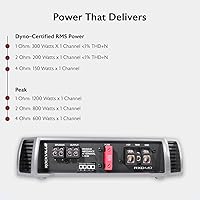
  • RMS at 1 Ohm: Delivers 300W RMS continuous power when driven into a 1-ohm load.
  • RMS at 2 Ohms: Delivers 200W RMS continuous power when driven into a 2-ohm load.
  • RMS at 4 Ohms: Delivers 150W RMS continuous power when driven into a 4-ohm load.
  • Power Supply: High-speed MOSFET power supply for stable, efficient energy conversion under sustained load.
  • Crossover: Fully adjustable 12dB per octave crossover filter for precise frequency management.
  • Subsonic Filter: Adjustable subsonic filter sweeps between 15Hz and 55Hz to protect subwoofer cones from damaging low-frequency excursions.
  • Bass EQ: Onboard bass equalizer offers up to 12dB of boost for additional low-frequency shaping.
  • Protection: IC-controlled circuitry provides automatic protection against overheating, short circuits, and voltage irregularities.
  • Signal I/O: Equipped with RCA line-level inputs and outputs for flexible integration with head units and additional amplifiers.
  • Remote Control: Includes a remote dashboard subwoofer level control for convenient bass adjustment while driving.
  • Channels: Single-channel (mono) configuration; not suitable for full-range or multi-speaker setups.
  • Certification: FCC certified and features dyno-verified power ratings for greater specification accuracy.
  • LED Feature: Illuminated Rockville logo provides a visual indicator that the unit is powered on.
  • Brand & Model: Manufactured by Rockville under model designation RXD-M0, available since May 2016.

Related Reviews
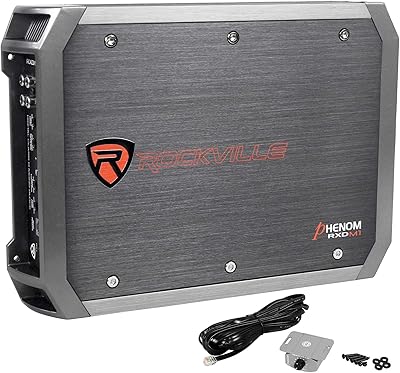
Rockville RXD-M1 2000W Mono Car Amplifier
86%
88%
Sound Quality
91%
Power Output
85%
Ease of Installation
87%
Durability & Build Quality
89%
User Control & Adjustments
More
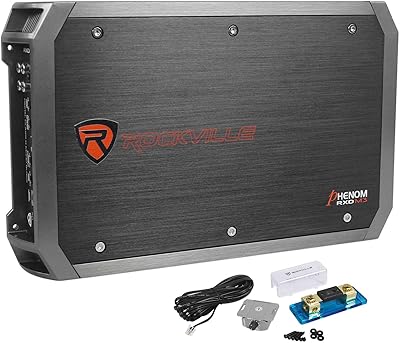
Rockville RXD-M3 Mono Car Amplifier
66%
83%
Value for Money
76%
Power Output
58%
Build Quality
52%
Long-Term Reliability
67%
Thermal Management
More
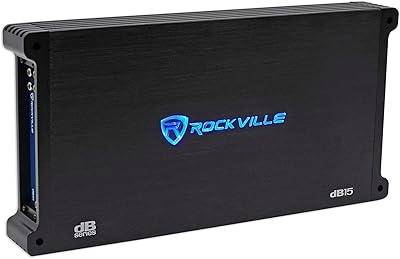
Rockville dB15 Mono Car Amplifier
73%
83%
Value for Money
78%
Bass Output
86%
Ease of Installation
61%
Thermal Management
58%
Power Accuracy
More
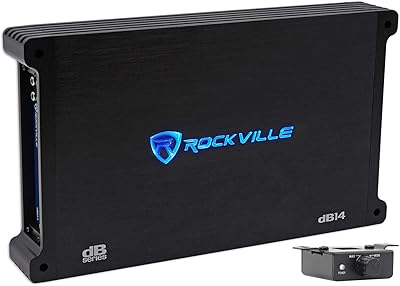
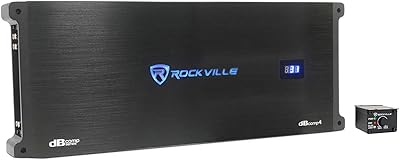
Rockville dB14 Mono Class-D Car Amplifier
74%
83%
Value for Money
78%
Power Accuracy
67%
Build Quality
54%
Long-Term Reliability
86%
Ease of Installation
More
Rockville dB16 Mono Car Amplifier
73%
83%
Bass Output
78%
Value for Money
81%
Ease of Installation
59%
Thermal Management
62%
Power Accuracy
More
Rockville dB11 1400W Mono Car Amplifier
85%
93%
Bass Performance
70%
Ease of Installation
89%
Compact Design
91%
Sound Clarity
85%
Build Quality
More
Rockville RVA600.1 Mono Car Amplifier
74%
83%
Value for Money
74%
Sound Quality
88%
Ease of Installation
52%
Power Accuracy
67%
Build Quality
More
Rockville dBcomp5 Mono Car Amplifier
75%
88%
Verified Power Output
82%
Build Quality
91%
Onboard Tuning Flexibility
87%
1-Ohm Stability
79%
Remote Sub Control
More
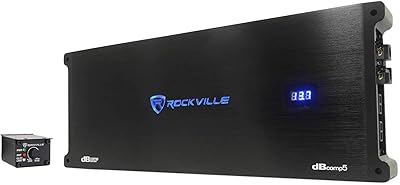
Rockville dBcomp4 3000W Mono Car Amplifier
85%
94%
Power Output
91%
Bass Performance
87%
Ease of Installation
89%
Build Quality
67%
Thermal Management
More
Rockville dB13 Mono Car Amplifier
75%
83%
Value for Money
54%
Power Output Accuracy
61%
Thermal Management
88%
Ease of Installation
79%
Onboard Sound Controls
More

FAQ

The 1200W figure is peak power, which reflects a momentary maximum under perfect laboratory conditions. The number that matters for everyday listening is the RMS rating: 300W at 1 ohm, 200W at 2 ohms, and 150W at 4 ohms. For a budget mono amp, 300W RMS is genuinely solid and enough to drive most mid-size subwoofers satisfyingly.

Yes, the Rockville RXD-M0 Mono Car Amplifier is rated and designed to operate at a 1-ohm load. That said, running any amp at 1 ohm generates more heat than higher impedance loads, so make sure your install has adequate ventilation, especially if you listen at high volumes regularly.

Unfortunately, this subwoofer amp only accepts RCA line-level inputs, so a factory head unit without RCA preamp outputs will require a line output converter (LOC) to step down the speaker-level signal. LOCs are inexpensive and widely available, but it is an extra step worth factoring into your install plan.

Most users report a straightforward experience. You will need a power cable run from the battery, a ground cable, a remote turn-on wire from the head unit, RCA signal cables, and speaker wire to your subwoofer. The terminal labeling is clear, and the layout is logical enough that a first-timer with basic wiring knowledge can complete the job in an afternoon.

This mono amp has a compact footprint that works well for under-seat mounting in many vehicles, provided there is sufficient clearance for airflow. It also mounts cleanly in a trunk or enclosure box. Just avoid completely enclosed, unventilated spaces since heat dissipation affects long-term performance.

The subsonic filter cuts frequencies below the range you set — anywhere from 15Hz to 55Hz — before they reach your subwoofer. This is especially useful with ported enclosures, which can allow very low bass frequencies to over-excite the driver and potentially cause damage. Setting it around 25Hz to 35Hz for a ported box is a common starting point.

It does the job — you can adjust subwoofer output level from your dash without touching the amp. That said, user feedback suggests the physical quality of the remote knob feels a bit basic compared to the amplifier itself. It works as intended but does not feel particularly premium in hand.

Under normal listening conditions, thermal management is reasonable. Where some users report issues is during extended sessions at high volume, particularly at 1-ohm loads. If you commute long distances at high output levels, ensuring the amp has breathing room and is not tucked into a sealed space will go a long way toward keeping temperatures in check.

This is a single-channel mono amplifier, so bridging does not apply — it operates in mono by design. If you want to add a second subwoofer down the line, your best option is to wire both subs together to achieve a compatible impedance load, or add a second amplifier using the RCA loop output on this Rockville amplifier.

Rockville typically backs their amplifiers with a one-year warranty, though it is always worth confirming current terms directly with the manufacturer or the retailer at the time of purchase. Rockville has a U.S.-based support presence, and replacement parts or service inquiries can generally be directed through their official channels.

Where to Buy