Overview

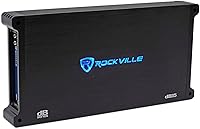
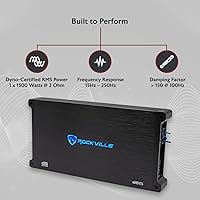
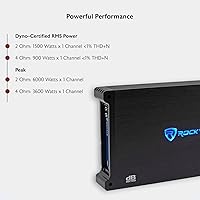
The Rockville dB15 Mono Car Amplifier has been a fixture in the budget subwoofer space since 2017, and its continued ranking among the top 250 car mono amplifiers on Amazon says something about its staying power. That said, knowing what you are actually buying matters here. The headline 6000W figure is peak output — the number that invites comparisons to Boss or Power Acoustik — while the 1500W Dyno-Certified RMS at 2 ohms is the real working power you will rely on daily. This mono amp sits in a practical middle ground: more credible than rock-bottom entry gear, but priced well below the Rockford Fosgate or Kicker tier it occasionally gets compared to.

Features & Benefits

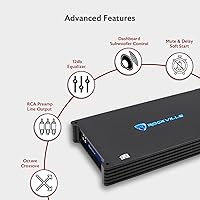
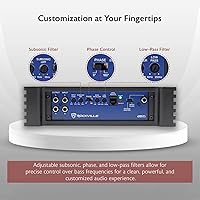
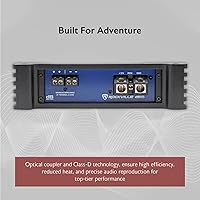
The Class-D Optical Coupler design improves efficiency considerably over older Class-AB amps — less wasted energy means less heat building up during long drives, which matters when the amp is tucked under a seat. The fully adjustable 12dB/octave crossover gives you genuine control over where your sub starts playing, without needing an external DSP. The subsonic filter — adjustable between 15Hz and 55Hz — is particularly useful when running a ported box, since it cuts infrasonic energy that wastes amplifier output and risks woofer damage. A 150-amp fuse, MOSFET power supply, and IC-controlled protection round out a spec sheet that punches above typical value-tier expectations.

Best For

The dB15 is a strong pick for anyone putting together a daily driver sub setup without wanting to break the bank. It is particularly well-suited to 2-ohm stable builds, where you get the full rated output without needing an additional external crossover or signal processor — the onboard controls handle that job. DIY installers will appreciate how straightforward the wiring and calibration process is; this is not an amp that demands hours of fine-tuning. If you are stepping up from a budget Boss or Pyle unit and are not ready to spend on Kicker or JL Audio, this Rockville subwoofer amplifier occupies exactly the right gap in the market.

User Feedback

Buyers consistently praise the bass output relative to price and an installation process that does not intimidate non-professionals — the layout and labeling are genuinely intuitive. The included bass remote gets highlighted often as a small but appreciated convenience that pricier amps sometimes skip entirely. Where opinions divide is around sustained performance: a portion of owners question whether the amp maintains its rated power under prolonged high-volume use, and some note the chassis runs noticeably warm when pushed hard. The peak versus RMS gap is a recurring frustration for buyers who did not parse the wattage claims carefully before purchasing, making upfront transparency on that point essential.

Pros

  • Dyno-Certified 1500W RMS at 2 ohms offers honest, usable power for a single subwoofer build.
  • Class-D topology runs noticeably cooler and more efficiently than older Class-AB budget amps.
  • Onboard subsonic filter protects woofers from infrasonic damage, especially valuable with ported enclosures.
  • Fully adjustable 12dB/octave crossover removes the need for a separate external signal processor.
  • The included dashboard bass remote is a practical, frequently praised feature many competitors skip.
  • Straightforward wiring and intuitive layout make installation accessible for non-professional builders.
  • IC-controlled protection against overload, thermal stress, and short circuits adds real-world reliability.
  • A 150-amp fuse rating gives a reasonable independent reference point for estimating true output.
  • Aluminium polished chassis feels solid and holds up well in typical under-seat or trunk installations.
  • Strong long-term sales rank in the car mono amplifier category reflects consistent buyer satisfaction.

Cons

  • Sustained high-volume use can cause noticeable heat buildup, a concern in tight, low-airflow installs.
  • Real-world output under prolonged load may fall short of the rated RMS figure for some users.
  • The 6000W peak figure is easily misread as usable power, causing frustration when expectations are not met.
  • No multi-channel capability means a second amplifier is required for any full-range speaker expansion.
  • Wattage marketing using both peak and RMS figures creates confusion that competitors with cleaner specs avoid.
  • Build quality, while adequate for the price, does not match what dedicated audio brands offer at higher budgets.
  • Thermal performance under extended competition-style use has not been validated by independent third-party testing.
  • Buyers expecting performance comparable to Kicker or Rockford Fosgate equivalents will likely be disappointed.

Ratings

Our AI rating engine analyzed thousands of verified owner reviews for the Rockville dB15 Mono Car Amplifier from global marketplaces, actively filtering out incentivized, bot-generated, and duplicate submissions to surface what real buyers actually experience. The scores below reflect both the genuine strengths that keep this mono amp consistently ranked in its category and the recurring pain points that prospective buyers deserve to know before purchasing.

Value for Money
83%
Most owners feel they got more amp than the price suggests, especially those upgrading from bottom-tier brands. The combination of a Dyno-Certified RMS rating, built-in crossover, subsonic filter, and bass remote at this price point is difficult to match from competitors without spending noticeably more.
A segment of buyers felt misled by the peak wattage marketing and considered the value weaker once they understood the actual RMS output. For those who bought expecting competition-level performance, the price-to-power ratio felt less favorable in hindsight.
Bass Output
78%
22%
For daily commuting and casual street listening, the dB15 moves serious air from a single subwoofer in a sealed or ported box. Owners running a 2-ohm load consistently describe the bass as punchy, deep, and noticeably stronger than what entry-level alternatives delivered in the same install.
At extended high volumes, some users report that the perceived output plateaus or softens compared to initial impressions, raising questions about whether the amp maintains its rated power under sustained thermal stress. It is not a competition-grade performer when pushed to its limits.
Ease of Installation
86%
DIY installers with basic car audio knowledge consistently praise how straightforward the wiring and setup process is. Terminal labeling is clear, the gain and filter controls are accessible on the amp face, and most owners report being up and running within a couple of hours without professional help.
A handful of first-time installers noted the manual could be more detailed, particularly around gain setting and subsonic filter calibration. Without some prior knowledge of amplifier setup, getting the most out of the adjustable controls requires outside research.
Thermal Management
61%
39%
Under moderate listening conditions and with reasonable airflow around the chassis, the Class-D design keeps operating temperatures within acceptable limits for daily use. Owners who mounted it in open trunk spaces with ventilation around the unit generally report no heat-related issues.
This is a recurring complaint in user feedback — the amp runs noticeably hot during prolonged high-volume sessions, and a subset of owners have had thermal protection kick in unexpectedly. Installing it in a tight, enclosed space without airflow significantly amplifies this risk.
Power Accuracy
58%
42%
The 150-amp fuse rating provides an independent reference point that aligns roughly with the 1500W RMS claim when applying the standard fuse-based estimation method. Owners who understood RMS versus peak distinctions upfront generally found the actual output credible and consistent with the certified rating.
The 6000W peak figure causes significant confusion and is the single most cited source of buyer disappointment across reviews. Many owners felt the advertised numbers were misleading, and real-world output under load did not always feel consistent with even the RMS specification over extended use.
Build Quality
72%
28%
The polished aluminium chassis feels solid and well-assembled out of the box, and most owners describe it as noticeably more substantial than plastic-bodied budget competitors. Component choices like the MOSFET power supply and IC protection circuitry reinforce the sense that care was taken in the internal construction.
Some buyers who have owned premium amplifiers note the finish and internal build do not hold up to direct comparison with brands like Rockford Fosgate or JL Audio at higher price tiers. A few long-term owners have reported minor cosmetic wear on the polished exterior over time.
Dashboard Bass Remote
88%
The included remote is consistently one of the most praised aspects of this Rockville subwoofer amplifier in owner feedback. Being able to adjust subwoofer level from the driver seat without fumbling behind the dash is a practical, daily-use convenience that owners frequently describe as something they did not realize they needed until they had it.
A small number of users reported the remote connection feeling slightly loose over time, and the control range is limited to level adjustment only — it does not offer frequency or phase control, which more advanced listeners might want.
Crossover Performance
77%
23%
The fully adjustable 12dB/octave low-pass crossover works well for the vast majority of single-subwoofer builds, allowing owners to blend the sub smoothly with their existing speakers without needing an external processor. Most users found the adjustment range generous enough to suit a variety of subwoofer types and enclosures.
Audiophiles and experienced builders note that the 12dB/octave slope is less steep than the 24dB/octave found on higher-end amplifiers, which can result in slightly less surgical frequency separation. The crossover also lacks independent high-pass outputs for main speakers.
Subsonic Filter
81%
19%
Owners running ported enclosures specifically appreciate having a usable subsonic filter built into the amp rather than needing to source it externally. The 15Hz to 55Hz adjustment range is practical and covers the frequencies most relevant to protecting common subwoofer drivers from over-excursion.
The filter adjustment is straightforward but lacks the precision markings or detents that would help less experienced users set it accurately by ear. Without measurement tools, dialing in the ideal cutoff point requires some trial and error.
Long-Term Reliability
67%
33%
The majority of owners who use the amp within its intended operating conditions — moderate volumes, adequate ventilation, stable 12V supply — report multi-year trouble-free operation. The IC-controlled protection circuitry has saved a number of installs from damage during wiring faults or impedance mismatches.
A meaningful subset of reviews describe failures within the first year, often tied to thermal stress from poor install locations or sustained high-volume use. Warranty support from Rockville receives mixed feedback, with some owners describing a more frustrating resolution process than expected.
Signal Clarity
73%
27%
At normal listening levels, the dB15 produces clean, distortion-free bass output that owners describe as punchy and well-defined rather than muddy. The differential crossover circuitry contributes to a tighter low-frequency response compared to simpler budget designs.
At higher gain settings some users detect audible distortion creeping in, particularly with lower-quality source signals. This is less a flaw specific to this amp and more a function of Class-D topology at the budget tier, but it is worth noting for listeners who prioritize clean headroom.
Compatibility
84%
The 11V to 16V operating range makes this mono amp compatible with the full spectrum of standard automotive 12V electrical systems, including those with mild alternator fluctuation. RCA preamp outputs also give users flexibility to chain the signal to additional equipment if needed.
Because it is strictly a mono single-channel design, the amp cannot serve any role beyond driving a subwoofer. Buyers who later want to power door speakers will need a completely separate amplifier, which is worth factoring in from the start.
Wattage Transparency
44%
56%
Rockville does provide both a peak and a Dyno-Certified RMS figure, which is more transparency than some competitors in the value segment who only publish peak numbers. The 150-amp fuse rating also gives buyers an independent reference point to cross-check the RMS claim.
The 6000W peak headline dominates the product listing and creates unrealistic expectations for a large portion of buyers. This is the most consistently cited frustration in negative reviews, and the gap between how the amp is marketed and what it delivers at sustained load undermines trust significantly.

Suitable for:

The Rockville dB15 Mono Car Amplifier is a practical choice for daily drivers who want a meaningful bass upgrade without committing to a high-end audio budget. It works particularly well for builders running a single subwoofer in a 2-ohm configuration, since the onboard crossover and subsonic filter eliminate the need for additional signal processing hardware. DIY installers with moderate experience will find the wiring layout approachable, and the included dashboard bass remote is a genuine quality-of-life addition that makes day-to-day adjustments easy. If you are currently running a budget amp from Boss, Pyle, or a similar entry-level brand and feel like you are leaving power on the table, this mono amp represents a credible step up at a price that does not demand a full system overhaul. It has held its ground in the market since 2017, which in the budget car audio space is a reasonable indicator that it delivers enough value to keep selling.

Not suitable for:

Buyers who prioritize peak sustained output for competition-level builds or extended high-volume listening sessions should look elsewhere — the dB15 has drawn criticism from users who push it hard for long periods and find that real-world output under load does not always match the rated figures. Enthusiasts comparing this against true RMS-rated competition amplifiers from Kicker, Rockford Fosgate, or JL Audio will likely find the performance gap noticeable, especially at the upper end of the power range. The Rockville dB15 Mono Car Amplifier is also not the right pick for anyone planning a multi-channel setup, since it is strictly a mono unit designed for subwoofer duty only. If thermal headroom is a concern in a tight install space with poor airflow, the heat output under sustained load reported by some users could be a real problem. Buyers who frequently listen at high volumes for hours at a stretch are better served by an amplifier with a stronger thermal management track record.

Specifications

  • Amplifier Type: Single-channel (mono) Class-D amplifier designed exclusively for subwoofer use.
  • Peak Output: Rated at 6000W peak, intended for comparison with other brands that advertise peak figures.
  • RMS Power: 1500W Dyno-Certified RMS at 2 ohms, representing the continuous working power output under real conditions.
  • Channels: Single mono channel — this amplifier is not suitable for powering full-range speakers or multi-channel setups.
  • Crossover: Fully adjustable 12dB/octave low-pass crossover with differential circuitry for precise subwoofer frequency control.
  • Subsonic Filter: Adjustable subsonic filter covering 15Hz to 55Hz to block infrasonic frequencies that can damage woofer drivers.
  • Fuse Rating: 150-amp fuse, which using the standard fuse-based estimation formula suggests an RMS output in the 1200W–1800W range.
  • Voltage Range: Operates on a supply voltage between 11V and 16V, compatible with standard 12V automotive electrical systems.
  • Housing Material: Polished aluminium exterior with rustproof construction for durability in typical vehicle install environments.
  • Item Weight: 13.87 pounds, making it a moderately heavy unit appropriate for fixed surface-mount installations.
  • Mounting Type: Surface mount design, typically installed in a trunk, under a seat, or inside a custom enclosure bay.
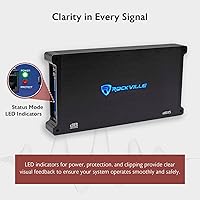
  • Included Accessories: Comes with a dashboard-mounted subwoofer level remote, RCA preamp outputs, and LED status indicators.
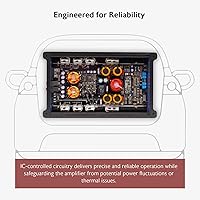
  • Protection System: IC-controlled circuitry provides overload, thermal, and short-circuit protection for sustained operational reliability.
  • Power Supply: High-speed MOSFET power supply supports efficient energy conversion with reduced heat generation compared to Class-AB designs.
  • Certifications: Meets CE, FCC, and RoHS compliance standards for electromagnetic compatibility and restricted substance regulations.
  • Phase Control: Includes a phase control switch to align subwoofer output with the rest of the audio system for a tighter sound stage.
  • Signal Technology: Optical Coupler Class-D topology improves switching efficiency and contributes to lower idle current draw.
  • Availability: First listed in May 2017 and remains an active, non-discontinued product in the Rockville lineup.

Related Reviews
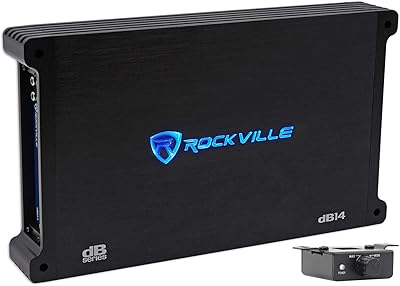
Rockville dB14 Mono Class-D Car Amplifier
74%
83%
Value for Money
78%
Power Accuracy
67%
Build Quality
54%
Long-Term Reliability
86%
Ease of Installation
More
Rockville dBcomp5 Mono Car Amplifier
75%
88%
Verified Power Output
82%
Build Quality
91%
Onboard Tuning Flexibility
87%
1-Ohm Stability
79%
Remote Sub Control
More
Rockville dB11 1400W Mono Car Amplifier
85%
93%
Bass Performance
70%
Ease of Installation
89%
Compact Design
91%
Sound Clarity
85%
Build Quality
More
Rockville RVA600.1 Mono Car Amplifier
74%
83%
Value for Money
74%
Sound Quality
88%
Ease of Installation
52%
Power Accuracy
67%
Build Quality
More
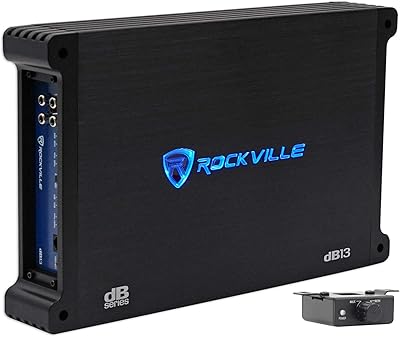
Rockville dB13 Mono Car Amplifier
75%
83%
Value for Money
54%
Power Output Accuracy
61%
Thermal Management
88%
Ease of Installation
79%
Onboard Sound Controls
More
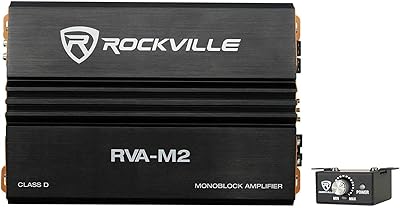
Rockville RVA-M2 Mono Car Amplifier
78%
83%
Value for Money
88%
Power Accuracy
71%
Build Quality
79%
Thermal Management
84%
Filter & Tuning Controls
More
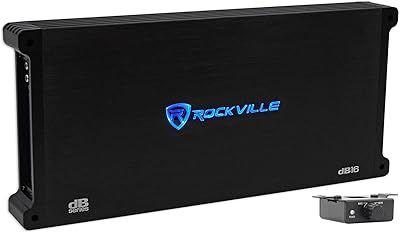
Rockville dB16 Mono Car Amplifier
73%
83%
Bass Output
78%
Value for Money
81%
Ease of Installation
59%
Thermal Management
62%
Power Accuracy
More
Rockville dBcomp4 3000W Mono Car Amplifier
85%
94%
Power Output
91%
Bass Performance
87%
Ease of Installation
89%
Build Quality
67%
Thermal Management
More
Rockville RXD-M1 2000W Mono Car Amplifier
86%
88%
Sound Quality
91%
Power Output
85%
Ease of Installation
87%
Durability & Build Quality
89%
User Control & Adjustments
More
Rockville Krypton M5 3000W Mono Car Amplifier
84%
93%
Power Output
92%
Bass Performance
88%
Sound Quality
80%
Ease of Setup
85%
Build Quality
More

FAQ

The 6000W is a peak rating, not something you will see in everyday use. The figure that actually matters is the 1500W Dyno-Certified RMS at 2 ohms — that is the continuous output the amp is built to sustain. A useful cross-check: multiply the 150-amp fuse rating by 10, which lands you roughly in the 1200W to 1800W RMS range, consistent with the rated spec.

Yes, but you will get less power output than the rated 1500W RMS, which is measured at 2 ohms. Running a 4-ohm sub is perfectly safe — the amp is stable at both impedances — but if maximizing output is your goal, wiring your subwoofer to a 2-ohm load will get you the most from this mono amp.

The dB15 has a fully adjustable 12dB/octave low-pass crossover built in, so for most single-subwoofer setups you will not need an external processor. You can dial in the crossover frequency directly on the amp to match your subwoofer and enclosure. That said, if you are running a more complex multi-sub or tuned competition setup, an external DSP may give you finer control.

The subsonic filter cuts out extremely low frequencies — below around 15Hz to 55Hz depending on where you set it — that your subwoofer cannot reproduce efficiently anyway. Those infrasonic signals waste amplifier headroom and can cause excessive woofer excursion, especially in a ported box. If you are running a ported enclosure, enabling the subsonic filter is a good idea to protect your driver.

It is genuinely useful in day-to-day driving. Being able to turn bass up for music and dial it back for podcasts or phone calls without fumbling under the seat makes a noticeable difference in comfort. Most buyers who mention it in feedback do so positively, and it is the kind of feature that sounds minor until you use it regularly.

At moderate volumes it runs warm but manageable. Where users run into trouble is sustained high-volume use in tight, poorly ventilated spaces — a few owners have reported more heat than expected under those conditions. Mounting it in an open area with some airflow around the chassis is the safest approach; avoid sealing it inside a completely enclosed box without ventilation.

No — it is a mono amplifier designed specifically for subwoofers. It has a single channel with a low-pass crossover, so it is not designed or appropriate for powering tweeters, midrange drivers, or door speakers. You would need a separate multi-channel amp for those.

Generally, yes. The Class-D design, built-in subsonic filter, and Dyno-Certified RMS rating put this Rockville subwoofer amplifier in a more credible position than most entry-level Boss or Pyle mono amps, which often have inflated specs and less refined protection circuitry. It is not a premium amp, but it is a step up in build quality and feature set.

It is one of the more approachable installs in this class. The terminals are clearly labeled, the gain, crossover, and filter controls are on the amp face and easy to adjust, and the wiring is straightforward for a single-sub setup. If you have a basic understanding of car audio wiring — power, ground, remote turn-on, RCA inputs — you should be able to get it running without professional help.

Rockville typically offers a one-year limited warranty on their amplifiers, though it is always worth confirming the current terms directly with the retailer or on Rockville's website at time of purchase. Their customer support has a mixed reputation in the community — generally responsive for basic issues, though warranty claims can vary in how smoothly they are handled depending on the situation.

Where to Buy