Overview

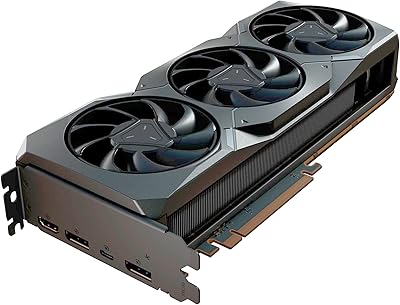
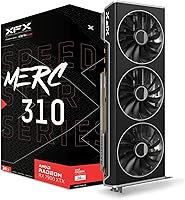
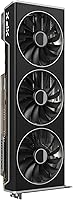
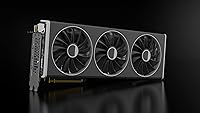
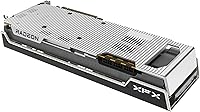
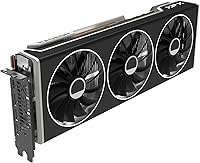
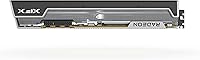
The XFX MERC310 RX 7900 XTX Graphics Card represents XFX's most serious push into the enthusiast tier, and it shows. XFX has been an AMD board partner for decades, and the MERC310 sits at the top of their lineup — a name that signals larger cooling hardware and factory refinements over the reference design. The RX 7900 XTX itself is AMD's highest-end RDNA 3 consumer GPU, competing directly with Nvidia's best. Build quality is immediately impressive: this is a dense, substantial card that feels engineered rather than assembled. At the premium end of the market, it needs to justify its cost in real performance, and mostly it does.

Features & Benefits

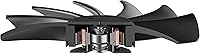
The headline spec is 24GB of GDDR6 running across a 384-bit memory bus — a genuinely useful advantage when textures get heavy at 4K or when you're running GPU-accelerated creative workloads. Most competing cards at this tier offer less. The RDNA 3 architecture pushes boost clocks to 2615 MHz, and the efficiency gains translate to strong frame rates without runaway power draw. XFX's triple-fan MERC cooler keeps temperatures well in check under sustained load, and noise levels are notably restrained for a card this powerful. DisplayPort 2.1 support means you're ready for next-gen high-refresh 4K monitors without an adapter compromise. AMD's FSR 3 and Radeon Anti-Lag add meaningful software value, though driver maturity still trails Nvidia slightly in edge cases.

Best For

This Radeon flagship makes the most sense for serious 4K gamers who push demanding titles at maximum settings and want headroom to spare. The VRAM buffer also makes it genuinely useful for video editors, 3D artists, and anyone running GPU-accelerated rendering pipelines. If you're in AMD's ecosystem — whether for FreeSync monitors, open-source compute, or simply preferring Radeon's software stack — the MERC310 fits naturally. One practical caveat: at 13.54 inches long and nearly 6 pounds, this is a large card. Case compatibility matters here; compact mid-towers may not accommodate it without a fight. Plan your build accordingly before purchasing.

User Feedback

Across more than 9,000 ratings, this XFX card holds a strong 4.5-star average, which is notable at this price point where buyers tend to be vocal and unforgiving. The most consistent praise centers on thermal performance — owners frequently note how quiet the card stays even during long gaming sessions. The VRAM advantage also earns appreciation from users who've hit walls with competing cards. Recurring concerns are worth noting: a handful of buyers have flagged driver-related quirks, particularly in productivity applications, and a few report card length causing fitment issues in tighter cases. Long-term reliability feedback is largely positive, with some users pleasantly noting lower-than-expected idle temperatures during everyday desktop use.

Pros

  • 24GB GDDR6 VRAM is among the highest available at this tier, providing real headroom for 4K textures and creative workloads.
  • The MERC triple-fan cooler keeps temperatures genuinely low under sustained gaming loads, not just in short bursts.
  • Noise levels under load are notably restrained for a card of this performance class.
  • DisplayPort 2.1 support future-proofs your display setup for next-gen high-refresh 4K monitors.
  • RDNA 3 architecture delivers strong rasterization performance without the extreme power draw of some competing designs.
  • AMD FSR 3 and Radeon Anti-Lag add practical frame rate and latency benefits across a wide range of supported titles.
  • The MERC310 earns a 4.5-star consensus across more than 9,000 ratings, reflecting broad satisfaction at scale.
  • Idle temperatures are lower than many owners expect, keeping the system quiet during everyday desktop use.
  • XFX's long history as an AMD partner translates to a well-validated, stable board design rather than a rushed reference clone.

Cons

  • At 13.54 inches, the card is too long for many mid-tower and compact cases without careful pre-purchase measurement.
  • AMD driver edge cases still surface occasionally, particularly in productivity and niche professional applications.
  • The card weighs nearly 6 pounds, which puts real stress on PCIe slots — a GPU support bracket is a practical necessity.
  • FSR 3 game support, while growing, still trails Nvidia DLSS 3 in breadth of compatible titles.
  • Power supply requirements are substantial; buyers with older or budget PSUs will likely need an upgrade.
  • CUDA-dependent software workflows are a genuine compatibility obstacle that AMD cannot fully address with drivers alone.
  • Some buyers report longer-than-expected wait times for RMA resolution when warranty claims arise.
  • The physical footprint makes cable management more difficult in already-crowded builds.

Ratings

Our AI rating system analyzed thousands of verified global purchases of the XFX MERC310 RX 7900 XTX Graphics Card, actively filtering out incentivized reviews, duplicate accounts, and low-signal feedback to surface what real buyers actually experienced. The scores below reflect both the genuine strengths that drive its strong 4.5-star consensus and the recurring pain points that prospective buyers deserve to know about upfront.

Gaming Performance
93%
At 4K with demanding titles, this Radeon flagship consistently delivers frame rates that enthusiast buyers expect at this tier. Owners running open-world games and modern shooters report smooth, high-fidelity experiences with settings maxed out, and the RDNA 3 architecture handles rasterization workloads without the thermal thrashing seen in some competing designs.
In a small subset of Nvidia-optimized titles, the performance gap versus competing cards narrows less favorably, and ray tracing performance specifically trails the RTX 4080 class in several benchmarked scenarios. For buyers prioritizing ray tracing fidelity above all else, this is worth factoring into the decision.
Thermal Management
91%
The triple-fan MERC cooler is one of the standout aspects owners mention unprompted. Under sustained gaming loads that would push many cards into throttling territory, temperatures stay well within a comfortable range, and the large heatsink surface area distributes heat evenly across the card's considerable length.
Under prolonged stress testing or GPU-compute workloads that pin utilization at 100 percent for extended periods, temperatures do climb higher than during typical gaming sessions. A small number of users in poorly ventilated cases reported hitting thermal limits that casual gamers in well-airflowed builds never encountered.
Noise Levels
88%
Owners are consistently pleasantly surprised by how quiet the MERC310 runs during real-world gaming. The fans ramp up gradually rather than aggressively, and several reviewers noted they could comfortably use open-back headphones without the card fan noise becoming a distraction during long sessions.
At maximum fan speed under extreme load, the card is audible in a quiet room. It is not loud by class standards, but buyers expecting near-silent operation regardless of workload may occasionally notice the cooler during demanding rendering jobs or stress tests.
VRAM & Memory
96%
Twenty-four gigabytes of GDDR6 on a 384-bit bus is a genuine competitive advantage that owners feel in practice, not just on paper. Content creators report loading large texture packs, high-resolution assets, and multi-layer video timelines without the memory pressure warnings that haunt thinner cards in the same performance bracket.
The VRAM advantage is most tangible in specific high-demand scenarios like 4K modded gaming or GPU rendering; buyers doing lighter 1440p gaming will rarely stress even a fraction of this capacity, meaning they are paying a premium for headroom they may not realistically use.
Build Quality
89%
The card feels overbuilt in the best sense — the shroud is rigid, the backplate adds structural integrity, and nothing flexes or rattles when handled. Several owners noted that the card looked and felt noticeably more premium than previous GPU generations they had owned, which matters when spending at this price tier.
The sheer weight of 5.72 lbs creates legitimate sag concerns over time without a support bracket, and a small number of owners reported visible PCIe slot stress after extended use without additional bracing. This is a class-wide issue for heavy triple-fan cards, but buyers should budget for a support bracket.
Driver Stability
71%
29%
For the vast majority of gaming use cases, AMD's current driver stack is stable and regularly updated. Radeon Software has matured considerably, and day-one driver support for major title releases has improved meaningfully compared to AMD's reputation from a few years prior.
Driver edge cases still surface with enough frequency that buyers should be aware. Productivity application compatibility, occasional black screen recovery issues in specific monitor configurations, and isolated instability in OpenCL workloads were recurring themes in critical reviews. AMD's drivers are better than their historical reputation but not yet as polished as Nvidia's in professional contexts.
Software Ecosystem
74%
26%
FSR 3 has expanded to a solid library of supported titles and delivers genuine performance uplift in compatible games. Radeon Anti-Lag reduces input latency in a perceptible way, and the Adrenalin software suite covers overclocking, monitoring, and streaming tools in a single unified interface without requiring third-party tools for basic functions.
FSR 3 game support still lags behind the breadth of DLSS 3 compatible titles, and buyers heavily invested in Nvidia-exclusive features like Reflex, Broadcast, or deep DLSS integration will find the AMD equivalent ecosystem thinner in comparison. The software is functional, but it is not yet the compelling differentiator AMD needs it to be.
Case Compatibility
62%
38%
For buyers in full ATX towers or open-air test benches, the card slots in without issue, and the physical dimensions are well within what large cases are designed to accommodate. Most users building in premium full-size enclosures report zero fitment problems.
At 13.54 inches, the MERC310 causes genuine fitment problems in many popular mid-tower cases, and this was one of the most common sources of negative reviews from buyers who did not check clearance specs before purchasing. Several owners had to return the card or purchase a new case, making pre-purchase case research essentially mandatory.
Display Connectivity
92%
Three DisplayPort 2.1 outputs and one HDMI 2.1 port cover virtually every modern display scenario without adapters. Buyers running high-refresh 4K monitors or exploring multi-display productivity setups found the port selection comprehensive, and DisplayPort 2.1 bandwidth support genuinely future-proofs the card for next-generation displays.
There is only a single HDMI port, which can be a minor inconvenience for users who prefer HDMI for specific devices or consoles connected to the same display chain. This is a minor issue and one most users work around easily, but it is worth noting for complex multi-device setups.
4K Readiness
94%
This is arguably where the MERC310 makes its strongest case — 4K gaming at high refresh rates is precisely the workload it was designed around, and owners report that it handles modern 4K titles with texture and shadow settings that previous generation cards struggled with. The combination of raw compute, VRAM depth, and DisplayPort 2.1 output makes this one of the most complete 4K packages available.
Buyers targeting 4K at very high refresh rates in demanding titles will still benefit from FSR or resolution scaling to maintain consistent frame times, as native 4K at maximum settings in the most demanding modern games still challenges even this hardware. Managing expectations around native versus upscaled 4K is worthwhile.
Content Creation Value
83%
GPU-accelerated rendering in Blender, DaVinci Resolve, and similar applications benefits noticeably from the 24GB buffer and RDNA 3 compute throughput. Video editors working with high-resolution timelines report snappier scrubbing and faster export times compared to mid-range alternatives they had previously used.
ROCm support on Windows remains less mature than CUDA for certain AI and machine learning frameworks, meaning buyers using the card specifically for local AI inference or PyTorch workloads may hit compatibility walls that require workarounds. The card is strong for creative workloads but not a drop-in CUDA replacement.
Value for Money
78%
22%
Relative to its direct competition, the MERC310 offers a compelling VRAM-per-dollar ratio and strong 4K gaming performance that buyers who research the market tend to acknowledge. Owners who purchased during promotional pricing windows or alongside VRAM-intensive software workflows tend to rate value highly.
At its standard asking price, buyers in the enthusiast segment are making a significant investment, and some feel the premium over close competitors is not fully justified by real-world gaming performance margins alone. Those not leveraging the full VRAM capacity or 4K output pipeline may feel the value proposition is thinner than the specs suggest.
Long-term Reliability
81%
19%
The overwhelming majority of long-term owners report no hardware failures, and XFX's track record as a long-standing AMD board partner lends credibility to the build quality. The card's thermal margins under normal use reduce component stress over time, which typically correlates positively with longevity.
A non-trivial number of reviews mention extended RMA wait times when warranty claims were necessary, which tempers overall confidence for buyers who prioritize responsive post-purchase support. XFX's warranty process exists and functions, but it is not as frictionless as some competing brands' service experiences.

Suitable for:

The XFX MERC310 RX 7900 XTX Graphics Card is built for a specific kind of buyer: someone who games seriously at 4K and refuses to compromise on texture quality or frame pacing. If you regularly play open-world titles, modern shooters, or graphically demanding RPGs at maximum settings, the 24GB VRAM buffer means you are unlikely to hit memory walls that plague thinner cards even in future releases. Content creators will also find this card punches well above average — GPU-accelerated rendering in Blender, DaVinci Resolve, or 3D modeling applications benefits directly from both the raw compute throughput and the generous memory capacity. It is equally compelling for multi-monitor setups or anyone pairing it with a high-refresh 4K display, since DisplayPort 2.1 support handles that bandwidth without compromise. Buyers who are already committed to the AMD ecosystem — FreeSync monitors, Ryzen platforms, or open-source compute workloads — will feel right at home with the MERC310's software stack.

Not suitable for:

The XFX MERC310 RX 7900 XTX Graphics Card is not the right call for every enthusiast, and it is worth being honest about that. If you primarily game at 1080p or 1440p, the performance headroom here is more than you will ever realistically use, and the investment does not scale down to those resolutions the way a mid-range card does. Buyers in compact builds should think carefully: at 13.54 inches long and nearly 6 pounds, this card will not fit in many mini-ITX or smaller mid-tower cases without serious planning. Those who depend heavily on CUDA-specific software — certain AI tools, video plugins, or professional applications that are explicitly optimized for Nvidia hardware — may also find the AMD platform creates friction in their workflow. And if driver stability is a hard requirement for a mission-critical workstation, AMD's track record, while improving, still occasionally lags Nvidia's in niche productivity scenarios.

Specifications

  • GPU Chip: Powered by the AMD Radeon RX 7900 XTX silicon built on the RDNA 3 architecture.
  • VRAM: Equipped with 24GB of GDDR6 memory for handling high-resolution textures and large creative workloads.
  • Memory Interface: Uses a 384-bit memory bus, enabling high memory bandwidth critical for 4K rendering and GPU compute tasks.
  • Memory Speed: GDDR6 modules run at 20 Gbps effective speed, sustaining strong data throughput under sustained load.
  • Boost Clock: The GPU boosts up to 2615 MHz under optimal thermal and power conditions.
  • Cooling System: XFX MERC triple-fan cooler spans the full card length to distribute heat across a large surface area.
  • Display Outputs: Provides one HDMI 2.1 port and three DisplayPort 2.1 ports for broad multi-monitor and high-bandwidth display support.
  • Max Resolution: Officially supports up to 3840x2160 (4K) output, with DisplayPort 2.1 enabling higher refresh rates at that resolution.
  • Card Length: Measures 13.54 inches (344mm) in length, requiring a full-size ATX case or larger for comfortable fitment.
  • Card Width: Spans 5.04 inches (128mm) in width, occupying 2.5 to 3 expansion slots depending on the motherboard layout.
  • Card Thickness: Stands 2.24 inches (57mm) tall from PCB base to top of cooler shroud.
  • Weight: The card weighs 5.72 lbs (approximately 2.6kg), necessitating a GPU support bracket in most builds.
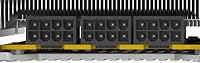
  • Power Connectors: Requires two 8-pin PCIe power connectors (or equivalent 16-pin adapter) from the power supply.
  • Recommended PSU: AMD recommends a minimum 800W power supply unit for stable operation under full gaming load.
  • API Support: Fully supports DirectX 12 Ultimate, Vulkan 2.2, and OpenGL 4.6 for broad game and application compatibility.
  • Model Number: XFX part number is RX-79XMERCB9, used for warranty registration and RMA identification.
  • Platform: Compatible with PCIe 4.0 slots and backward compatible with PCIe 3.0 motherboards at reduced bandwidth.
  • Ratings: Holds a 4.5-star average rating based on over 9,255 verified user ratings on Amazon.

Related Reviews
PowerColor Hellhound RX 7900 XTX Graphics Card
78%
91%
4K Gaming Performance
88%
Thermal Management
84%
Noise Levels
93%
VRAM Capacity
82%
Value for Money
More
Sapphire Nitro+ AMD Radeon RX 7900 XTX 24GB GDDR6 Graphics Card
85%
94%
Performance
92%
Cooling Efficiency
89%
Noise Levels
91%
Graphics Quality (8K/4K)
87%
Build Quality/Durability
More
ASUS TUF RX 7900 XTX Graphics Card
80%
91%
Thermal Performance
94%
Build Quality
89%
Gaming Performance
86%
Noise Levels
93%
VRAM Capacity
More
XFX Radeon RX 7900 XT 20GB
79%
88%
Gaming Performance at 4K
93%
VRAM Capacity & Headroom
86%
Thermal Management
61%
Power Consumption
67%
Driver Stability & Software
More
XFX RX 7700 XT 12GB Graphics Card
78%
88%
1440p Gaming Performance
84%
Value for Money
93%
VRAM Capacity
76%
Thermal Performance
69%
Noise Levels
More
Sapphire Radeon RX 7900 XT Graphics Card
78%
91%
Rasterization Performance
63%
Ray Tracing Performance
93%
VRAM Capacity
88%
Build Quality
84%
Thermal Management
More
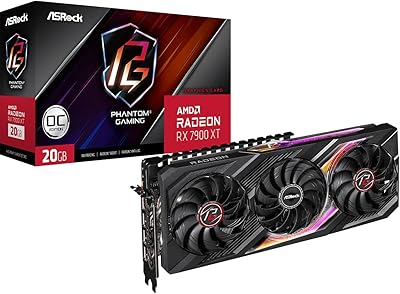
ASRock RX 7900 XT Phantom Gaming Graphics Card
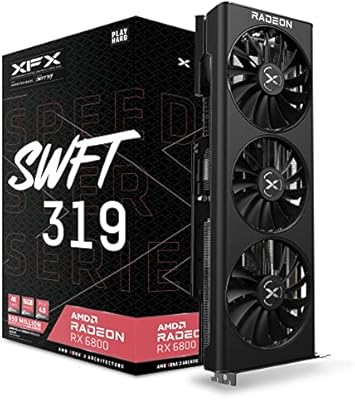
81%
88%
Gaming Performance
91%
Thermal Management
84%
Noise Levels
93%
VRAM & Memory
89%
Build Quality
More
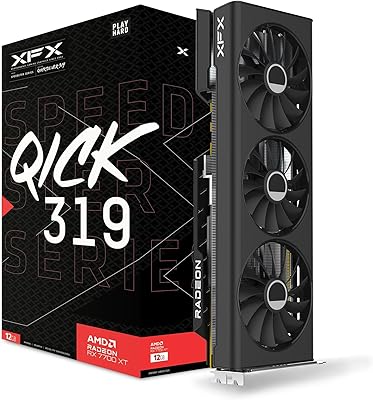
XFX RX 7700 XT Graphics Card
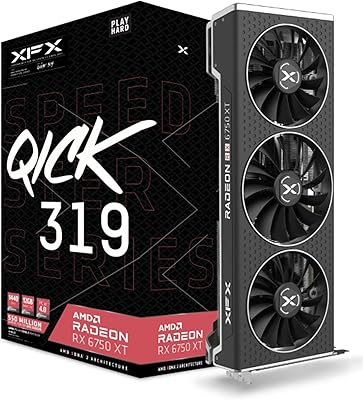
79%
91%
1440p Gaming Performance
88%
Thermal Management
86%
Cooling Noise Level
84%
Value for Money
67%
Driver Stability
More
XFX Speedster MERC319 RX 7800 XT 16GB GDDR6 Graphics Card
85%
91%
Overall Performance
94%
Gaming Performance at 4K
88%
Cooling Efficiency
87%
Value for Money
85%
Build Quality
More
XFX RX 6750 XT 12GB Graphics Card
79%
91%
1440p Gaming Performance
67%
4K Gaming Capability
89%
Thermal Management
86%
Noise Level
93%
VRAM Adequacy
More

FAQ

It depends on your specific case. At 13.54 inches long, the MERC310 is on the larger end of what most mid-towers support. Check your case manufacturer's listed maximum GPU length before buying — many popular mid-towers cap out around 320–330mm, and this card needs at least 344mm of clearance. Full-size ATX and E-ATX cases generally have no issue.

AMD recommends at least an 800W PSU for the RX 7900 XTX platform, and that is a reasonable floor rather than a conservative estimate. If you have a high-end CPU alongside it, stepping up to an 850W or 1000W unit from a reputable brand gives you clean headroom and protects against transient power spikes during heavy gaming.

At 4K rasterization, they trade blows fairly closely depending on the title, but the MERC310 holds a meaningful VRAM advantage with 24GB versus 16GB. The RTX 4080 has an edge in DLSS 3 support and tends to be slightly smoother in Nvidia-optimized titles. If you are in an AMD ecosystem or prioritize raw VRAM capacity, the Radeon card makes a compelling case. If DLSS or CUDA workloads matter to you, Nvidia has the edge.

Owners consistently report that the triple-fan MERC cooler is one of the quieter solutions at this performance tier. Under typical gaming loads, temperatures stay well-controlled and fan noise is not intrusive. During extreme stress tests or prolonged rendering sessions it will spin up, but it is not the kind of fan whine that becomes distracting during regular use.

AMD's driver situation has improved substantially over recent years, but it is fair to say they still occasionally lag Nvidia in niche productivity applications and edge-case stability. For gaming, the vast majority of users report no meaningful issues. If your workflow depends on specific CUDA-based software or you use the GPU heavily in professional applications, it is worth checking AMD's compatibility for those specific tools before committing.

Absolutely. The 24GB VRAM is a real practical advantage in DaVinci Resolve, Blender, and similar applications where large frame buffers and GPU compute matter. AMD's ROCm platform supports GPU-accelerated workloads on Linux, and Radeon Pro drivers extend compatibility further. Just verify that your specific software supports OpenCL or ROCm acceleration, since some tools are built exclusively around CUDA.

Technically yes — DisplayPort 2.1 has the bandwidth headroom for 8K display signals, and the card lists 8K support. In practice, running games at 8K at playable frame rates is a different story and would require significant resolution scaling. For 8K video playback or display output purposes, though, the connectivity is there.

The card has four physical outputs — three DisplayPort 2.1 and one HDMI 2.1 — and AMD supports up to four simultaneous displays through Eyefinity. That covers most multi-monitor gaming or productivity setups comfortably.

At nearly 6 pounds, this is one of the heavier cards on the market, and running it without any support long-term puts real stress on the PCIe slot. A support bracket is not strictly mandatory, but it is cheap insurance against gradual sag that can eventually affect the PCIe connection or warp the motherboard. Most experienced builders treat it as standard practice for cards in this weight class.

XFX typically offers a limited warranty on their MERC-series cards, though the exact duration and regional terms can vary. It is worth registering your card directly on XFX's website after purchase using the model number RX-79XMERCB9, as registration is often required to access full warranty coverage and makes any future RMA process considerably faster.

Where to Buy